Below are some easy procedures which you can try out when test driving your car. However, if you are not confident of trying out the steps listed below, do give it a miss!
Brake system
With the engine off, pump the brake pedal. Then, with your foot on the brake, start the engine. With power brakes, the pedal should sink slightly as the engine starts. Then, push the brake pedal down hard for a minute. If it sinks further, the brake master cylinder may be problematic.
Automatic transmission - Step 1
- Shift the lever into the "P" (Parking) position.
- Start the engine, and wait till the engine rpm is reduced to normal level (approximately 850 rpm).
- With your foot holding down the brake pedal, shift to the "R" (Reverse) position. After only a short delay (0.3 - 0.8 seconds), the transmission should engage very smoothly (you should feel a smooth push towards the back), without any sharp jerk.
- Shift to "N" (Neutral), and the transmission should release.
- Then shift to the "D" (Drive) position. After the same short delay (0.3 - 0.8 seconds), the vehicle should twitch smoothly forward.
- Now, still holding the brake pedal down, try to shift from D to R and vice versa.
*Note:
• If there is any strong jerk or noise while shifting, it is not advisable to buy the car.
• If there is a long delay (more than 1 - 1.5 seconds) between the moment you shift the lever and the moment the transmission engages, such a transmission is either too worn or has some defect, it is not advisable to buy the car.
Automatic transmission - Step 2
Shift to the "D" position and drive gently, with smooth and gradual acceleration. As you cruise on the road, the gear shifts should be smooth and you should not feel like the car is having difficulties in switching gear. However, you should feel the gear shift at the moment the rpm drops down; it feels like the car slows down for a very short instance. You can note the transmission shifting moment by the slight change in the engine sound. If the transmission is extremely worn, it may shift with quite a strong jerk or shudder (especially from first to second speed). It may even feel like someone kicking the car in the back. If you press down the accelerator pedal for a few seconds at a speed of 40-50 km/h, you should feel the downshifting to a lower gear. That is, if the automatic transmission works properly.
Automatic transmission - Step 3
While driving at 60-70 km/h on a level road (without using the accelerator), switch overdrive ON. You should feel an upshifting to the next speed. Switch it to "OFF" and you should feel a downshifting. This is to check if the overdrive system is in good working condition.
Slipping is another indicator of the transmission experiencing problem. When the transmission is excessively worn it may slip - which means you press the accelerator, the engine rpm increases but the speed remains the same.
Brake system
With the engine off, pump the brake pedal. Then, with your foot on the brake, start the engine. With power brakes, the pedal should sink slightly as the engine starts. Then, push the brake pedal down hard for a minute. If it sinks further, the brake master cylinder may be problematic.
 |
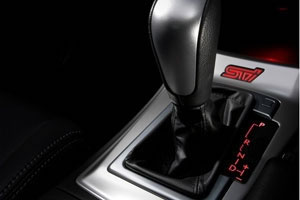
Automatic transmission - Step 1
- Shift the lever into the "P" (Parking) position.
- Start the engine, and wait till the engine rpm is reduced to normal level (approximately 850 rpm).
- With your foot holding down the brake pedal, shift to the "R" (Reverse) position. After only a short delay (0.3 - 0.8 seconds), the transmission should engage very smoothly (you should feel a smooth push towards the back), without any sharp jerk.
- Shift to "N" (Neutral), and the transmission should release.
- Then shift to the "D" (Drive) position. After the same short delay (0.3 - 0.8 seconds), the vehicle should twitch smoothly forward.
- Now, still holding the brake pedal down, try to shift from D to R and vice versa.
*Note:
• If there is any strong jerk or noise while shifting, it is not advisable to buy the car.
• If there is a long delay (more than 1 - 1.5 seconds) between the moment you shift the lever and the moment the transmission engages, such a transmission is either too worn or has some defect, it is not advisable to buy the car.
Automatic transmission - Step 2
Shift to the "D" position and drive gently, with smooth and gradual acceleration. As you cruise on the road, the gear shifts should be smooth and you should not feel like the car is having difficulties in switching gear. However, you should feel the gear shift at the moment the rpm drops down; it feels like the car slows down for a very short instance. You can note the transmission shifting moment by the slight change in the engine sound. If the transmission is extremely worn, it may shift with quite a strong jerk or shudder (especially from first to second speed). It may even feel like someone kicking the car in the back. If you press down the accelerator pedal for a few seconds at a speed of 40-50 km/h, you should feel the downshifting to a lower gear. That is, if the automatic transmission works properly.
 |
Automatic transmission - Step 3
While driving at 60-70 km/h on a level road (without using the accelerator), switch overdrive ON. You should feel an upshifting to the next speed. Switch it to "OFF" and you should feel a downshifting. This is to check if the overdrive system is in good working condition.
Slipping is another indicator of the transmission experiencing problem. When the transmission is excessively worn it may slip - which means you press the accelerator, the engine rpm increases but the speed remains the same.
 |
Manual transmission - Step 1
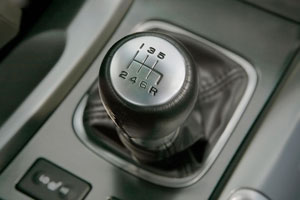
Shift the transmission lever into neutral. Apply the parking brake. With the engine idling, press the clutch pedal all the way, hold it down, and listen for any noise. Then release the pedal and listen for noise again. There should be no loud noise at both positions.
Manual transmission - Step 2
Try to drive the vehicle at different speed intervals. Every speed should shift smoothly and easily without any noise, jerk or difficulty in engaging the gear. While driving at the second or third gear, depress the accelerator pedal suddenly for a moment. The transmission should not slip.
If you feel any slipping (e.g. the engine rpm increases but the speed remains the same), chances are the clutch has to be replaced.
Try to drive with acceleration and deceleration - there should be no whining or humming noise under any condition. All the gears should shift easily and noiselessly.
 |
Shock absorber
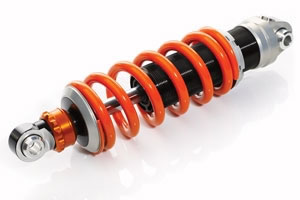
As you drive through a hump or uneven road, you should not feel like you are on a boat or feeling wavy all over. Such an experience may be cause by overused or dysfunctional shock absorbers. Alternatively, you can stand at each corner of the car, front and rear, and push the car's bumper up and down until the car bounces. Stop putting pressure on the car. If the car continues bouncing (more than twice), it is a sure sign that the shock absorbers are bad. A good shock absorber should spring the car back to its original position almost immediately, without the car bouncing.
Is a second opinion necessary?
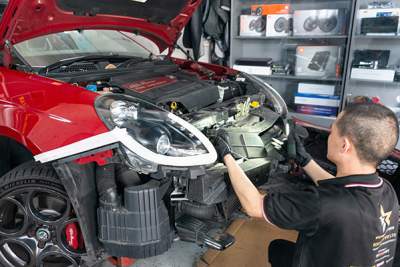
If you are still not convinced after the test drive, it is worth spending some money to have an inspection centre to check out the car after your own initial inspection. There could be some problems associated with the undercarriage that is only visible when the car is jacked up. Warning: If the seller refuses to allow his vehicle to be sent to an inspection centre - walk away. He's obviously hiding something.
Now that you've thoroughly inspected the car inside and out and give it a go on the roads, give it your honest opinion.
Remember, no used car is perfect. If the car is in good mechanical condition, you can overlook some of its cosmetic faults. Remember to point out the minor faults to the seller. You can use these faults to bargain for a better price.
Having a inspection centre check the vehicle before you sign the papers is a good idea. You could save yourself bouts of headaches and a great deal of money.
Good luck! Remember, millions of people buy good quality used cars every year and enjoy them for many miles. However, there are those who get stuck with lemons too. Take your time. Make a wise decision.