View page in desktop
|
Report error
  •   Apple app store icon
  • Google play store icon
Terms of Service
|
Privacy Policy
|
PDPA
|
Site Map
©2004-2026 Sgcarmart, Singapore. All rights reserved.
  • A Coupe SUV
  • A New Look Interior
  • Quality Performance
  • Conclusion
  • Home
  • Car Articles
  • reviews
  • reviews Listings
  • Polestar Reviews
  • Polestar 4 First Drive Review

    01 Jul 2024

    |

    14,741 views

    With plenty of on-road pace and quality, and with some interesting design choices, the new Polestar 4 is an alternative approach to the coupe-SUV.

    What We Like

    Cool looks
    High-quality cabin with good user experience
    Uncompromised rear passenger space
    Plenty fast
    Good balance between sportiness and comfort

    What We Dislike

    Electronically-controlled air-con vents
    Many of the nice goodies are optional extras

    Alongside the Polestar 3, the brand is also introducing a second model to market - this new Polestar 4.

    And while they may seem quite similar on the surface (there might even be a passing visual resemblance, not helped by the fact that both are available in white), they are in fact quite different cars.
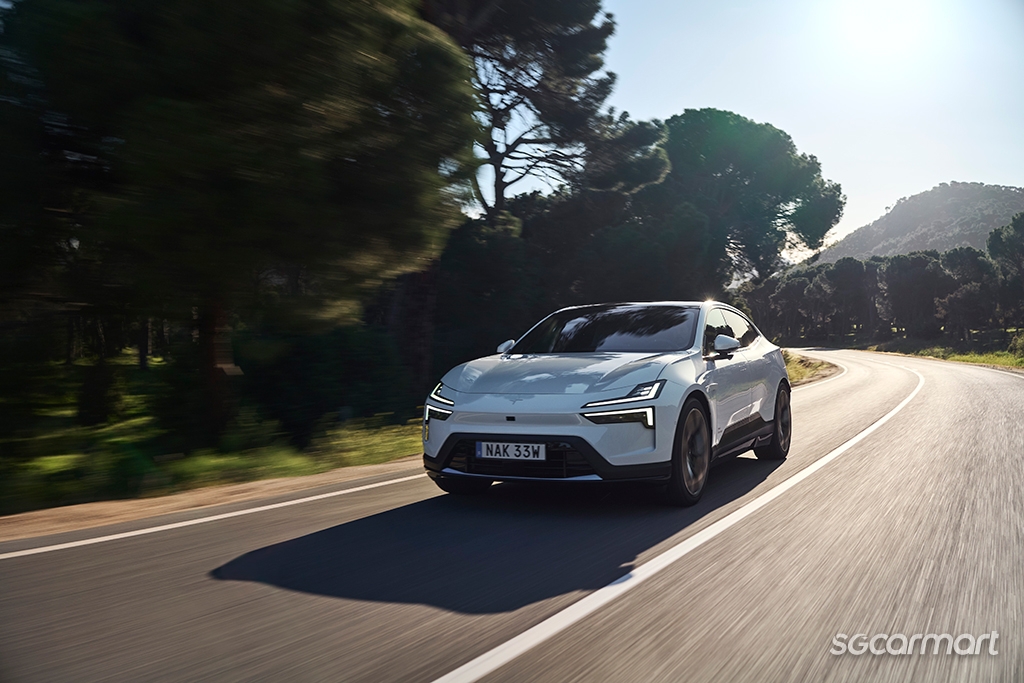
    The Polestar 4 is the latest model that the brand is introducing to market, and marks the second new model being released this year

    For starters, they are built on different platform, even if their fundamental basic shape (the 3 a more traditional SUV, the 4 a now-trendy coupe-SUV) may not be dissimilar in size nor segment.

    And, their intentions are quite different. Where the Polestar 3 is a more conventional premium SUV, the Polestar 4 has more left-field ambitions and is more performance-focused.
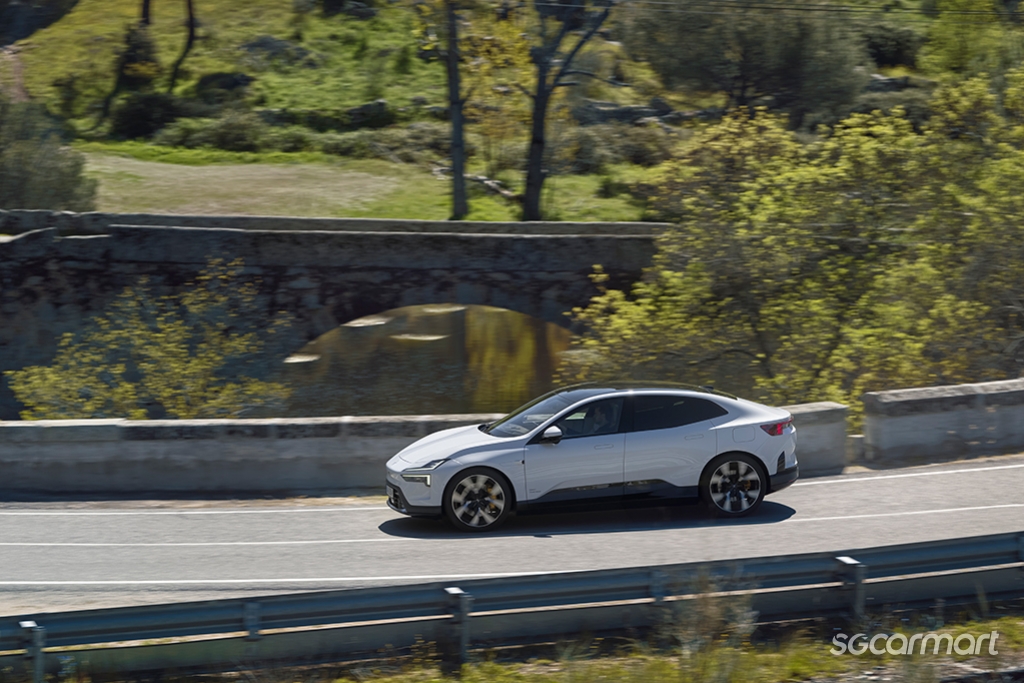
    The Polestar 4 is situated between the Polestar 2 and range-topping Polestar 3 within the brand's model lineup

    Coming to grips with it

    First off, yes, this is that confusing thing that is a coupe-SUV. And more confusingly, it also sits size-wise between the Polestar 2 and 3, so the numbering nomenclature may puzzle some. Unlike perhaps a carmaker like BMW where number is directly indicative of size, for Polestar its more to do with the actual chronological rollout of its models.

    And it's a big-ish car - at 4,839mm long, 2,139mm wide, 1,544mm tall, and with a 2,999m wheelbase, the dimensions are not far removed from the Polestar 3.

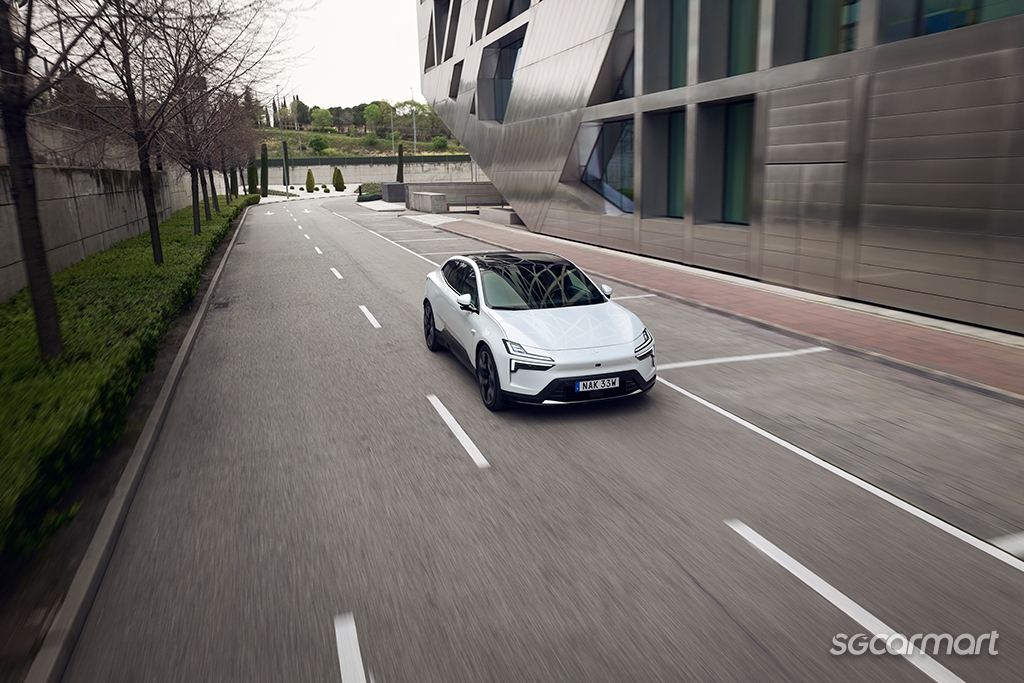
    But you can also immediately tell that this car is designed to be different. For starters, the head lights have the same dual blade design, but the 'blades' are actually split apart. The low nose and aggressive front-end also speak to the car's sporty intentions. There's also an illuminated brand logo up front, but the illumination is done in a halo manner (comparable to cove lighting in a house).
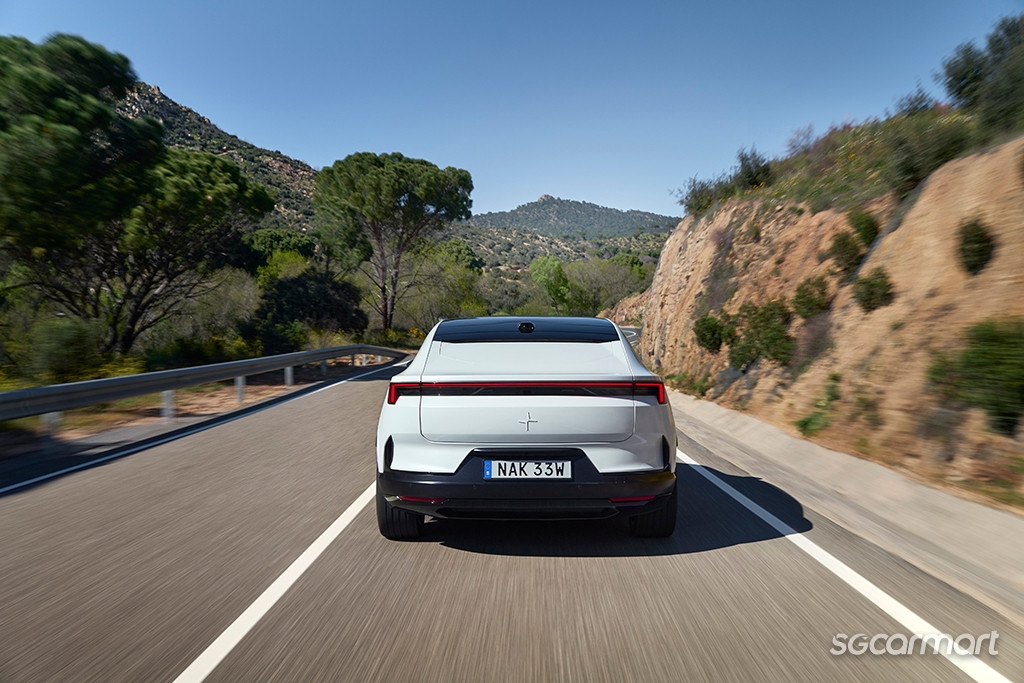
    Having purposefully done away with a rear windscreen, the Polestar 4 has a unique and distinctive rear facade

    But the big news with the Polestar 4 is that it does not have a rear windscreen. Yup, you read that right. Instead, the car uses HD cameras and a digital rear view mirror (more on that later). This design decision actually allowed the engineers to move the rear roof header further backwards, which means that the tapering of the roofline does not affect headroom in the interior.

    Overall, I would say it's quite a pleasing-looking vehicle. The overall shapes and lines feel organic - not just another typical boxy SUV with some of the roof chopped off. And in white (or Snow, as Polestar calls it), it definitely pops.
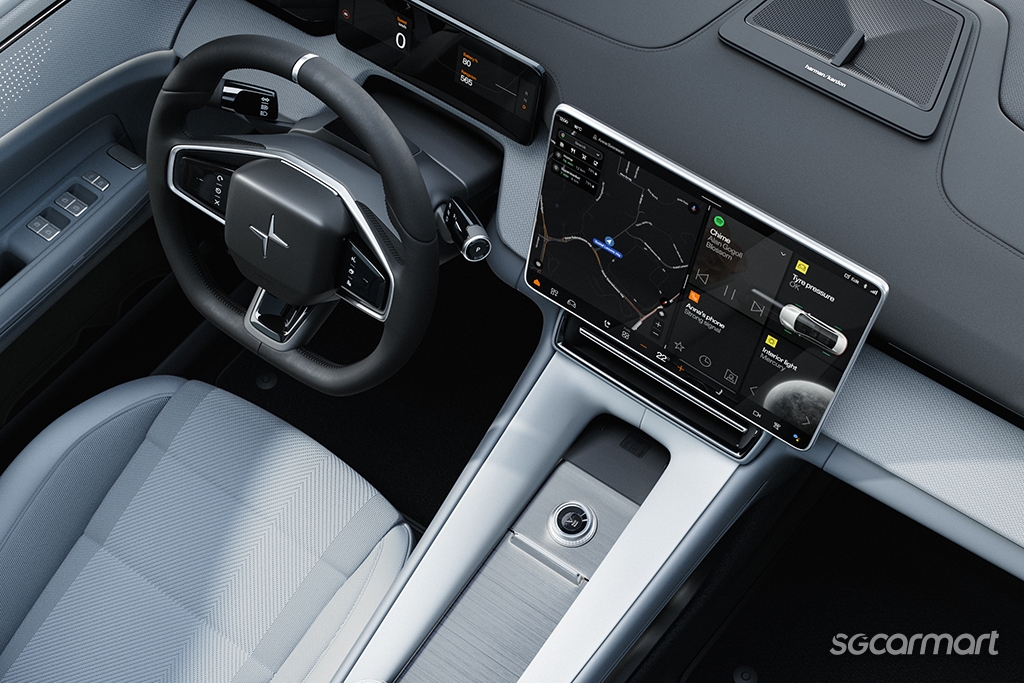
    The cabin ranks high on sleek Scandi minimalism, but also gets a few interesting touches that add a little spark of playfulness

    Getting into a new space

    Slide into the rear seat and that decision immediately makes sense. Unlike 'typical' coupe-SUVs, the rear cabin feels uncompromised at all. Headroom is quite good for my 1.7m height, legroom is good enough, and it feels pretty spacious. The massive panoramic glass roof, which stretches all the way until behind your head, also really contribute to that sense of airiness. There's glass everywhere within you field of view.

    Move up front, and again you can immediately tell that Polestar has made distinct efforts to set this model apart. The infotainment screen is now in landscape (as opposed to portrait on the 2 and 3), and offers a newly designed user interface. Google Maps dominates (appropriately, since navigation is easily the most used function), but you can drag a 'divider line' such that it takes up half, three quarters, or the entire screen. I will now point out that our prototype test vehicle was a little buggy and slow to respond, but testing on other vehicles shows that this works reasonably well.
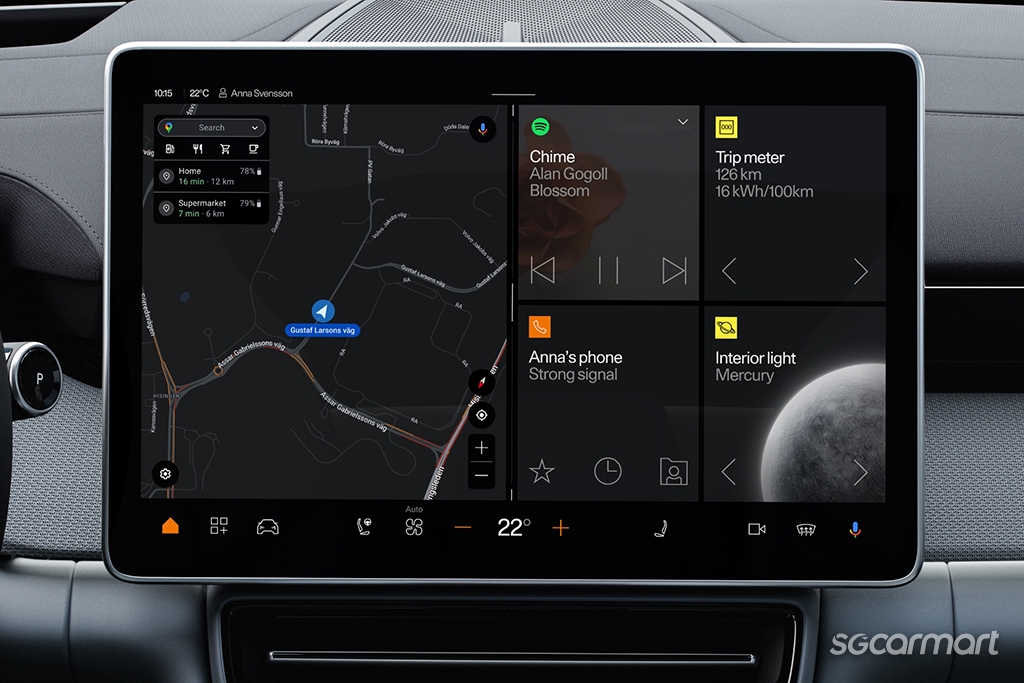
    The horizontally-oriented infotainment screen features a sleek new user interface that's both pretty and very intuitive to use

    What that allows you to do is to choose to display either two or four other 'quick access' widgets, such as media, telephone, car settings and ambient lighting.

    About that ambient lighting: Polestar has chosen a rather quirky approach, so ambient lighting choices are not colour-based specifically, but rather the colours are tied to planets and the Sun of our solar system. It's wonderfully silly and cool at the same time.

    Also, electronic air-con vents are, well, a thing now. You can leave it to choose automatically, or manually select for it to aim at your face, aim away from your face, or pan. Too much digital decision-making for my liking. Auto, it is.
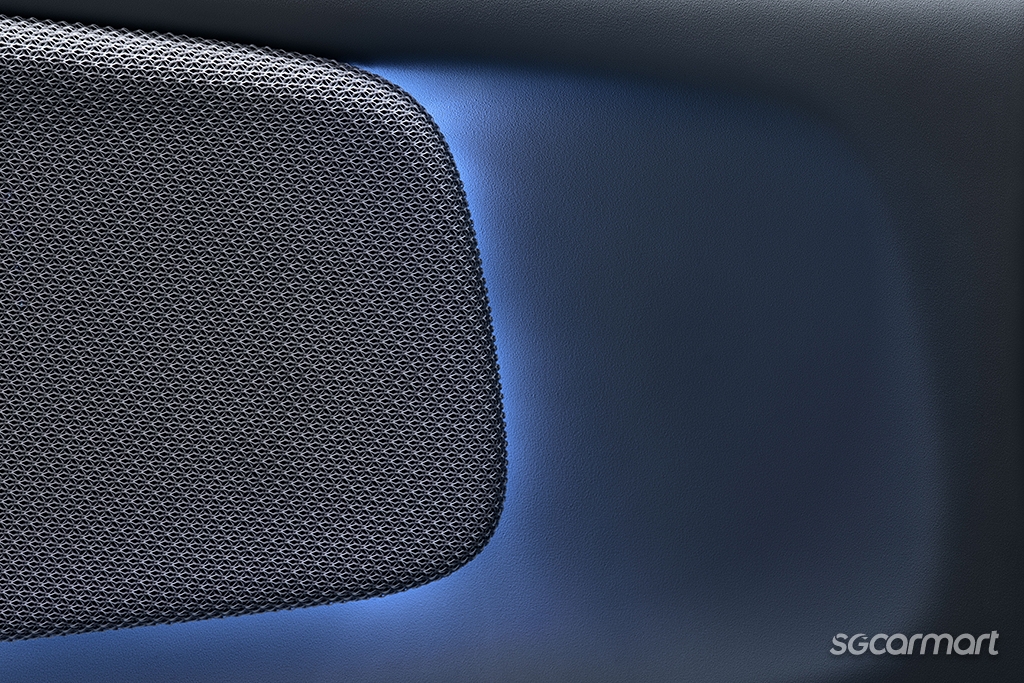
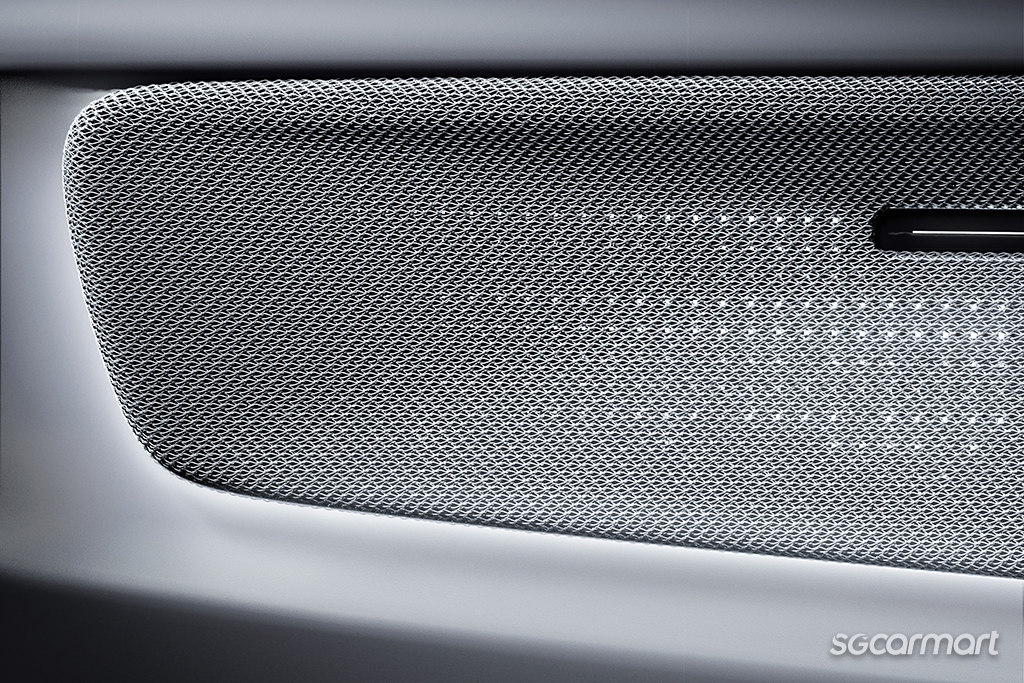
    Planet-themed ambient lighting helps to subtly illuminate the cabin

    I do like the materials in the cabin, such as the MicroTech fabric. There's also an optional 'Star Knit' trim available on the door panels that have patterned perforations through which ambient light can peek through.

    The overall aesthetic is still predominantly Scandi minimalist and high-quality (no surprises there), but the additional touches inject it with a bit more cheerfulness and youthful energy, which is fitting for this Polestar 4.
    Out on the open road

    Now, the Polestar 4 is positioned as a performance model, and it doesn't disappoint on this front. This Dual Motor variant has 400kW and 686Nm of torque available (exactly twice what the Single Motor variant has since the two motors are the same), which makes it the most powerful Polestar that's presently available. 0-100km/h takes just 3.8 seconds, and it feels every bit as quick as that. On full bore accelerations, you are pinned back into the seat.

    This particular test vehicle has the Performance Pack fitted, which gets you Polestar Engineered chassis tuning, 22-inch Performance forged alloy wheels, and sticky Pirelli P Zero tyres. Does it transform into a sports car? Of course not. This is still a quite big, quite heavy coupe-SUV. For what it is, it is quite sporty. Body roll is well-managed in the stiffer damping settings, the car's low CG and lower ride height afford better body control through corners, and you can drive it hard through bendy mountain roads.
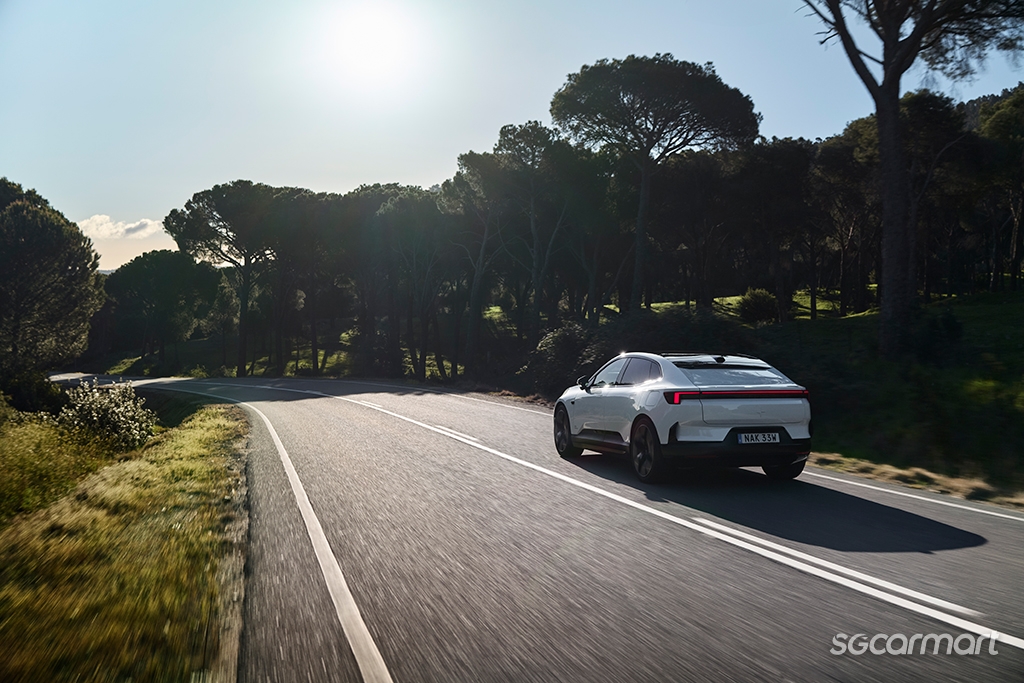
    With 0-100km/h dispatched in just 3.8 seconds, the Polestar 4 is the fastest and most powerful Polestar today

    More relevantly, I think it offers a well-balanced mix of performance and comfort. In the standard settings, it's an effortlessly capable (and still very quick) cruiser, perfect for long highway journeys. Quiet, too, even when riding on big 22-inch wheels. If you want to attack some corners, the car can be made sharper and more aggressive, without reaching a point of being uncomfortable.

    The Polestar 4 is also offered with the full suite of assistance systems, all of which are already familiar and work well.
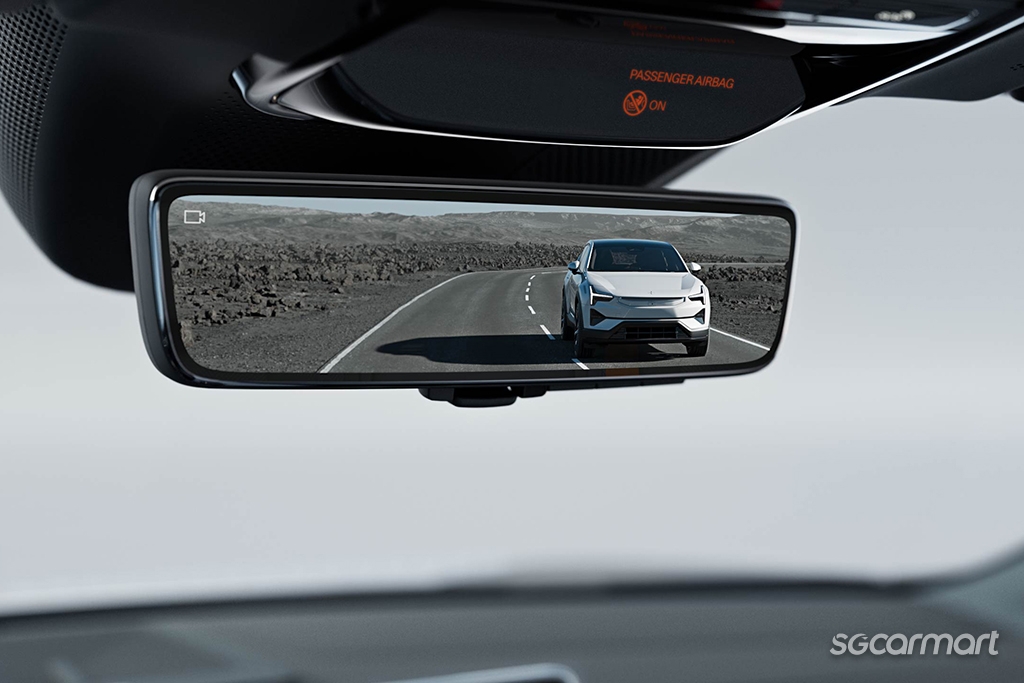
    The digital rear-view mirror will take a bit of getting used to, but it is overall a well-executed solution that frees up more interior space for rear passengers

    Now, rear visibility. Honestly? I like this all-camera setup. Rear visibility in any coupe-SUV would typically be compromised anyway, so it's not like you're missing out on much. And, the camera system actually affords you a much wider field of vision, without any risk of being blocked by bobbing rear passenger heads. Yes, it will take a little bit of time to get used to a slightly different visual perspective, but after a while I don't find myself thinking much about it at all.
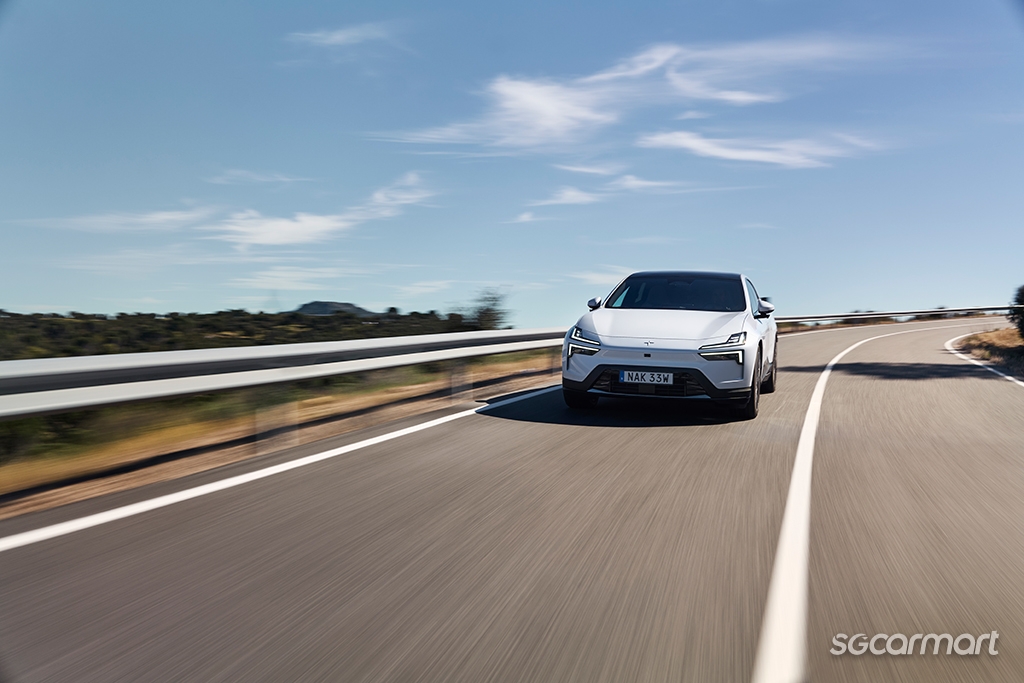
    The Polestar 4 is a well-executed EV with ample on road pace and quality, but reveals itself in subtle ways

    From a new lens

    Making sense of the Polestar 4 isn't so easy. On one hand, some of its bones are rooted in more 'traditional' expectations. Besides the SUV basis, you're also going to have plenty of overlap with the Polestar 3 in terms of equipment, materials, even specific parts. And the car's visual identity doesn't stray overly far from the Polestar 'look'.

    On the other hand, this is also Polestar's attempt to be more 'untraditional' - to make bold new choices that can position the Polestar 4 as a more left-field choice, and in doing so imbue it with more unique personality.

    The result is a model that harder to singularly characterise. A coupe-SUV with typical-SUV interior space. A sporty EV with typical EV comfort and utility.
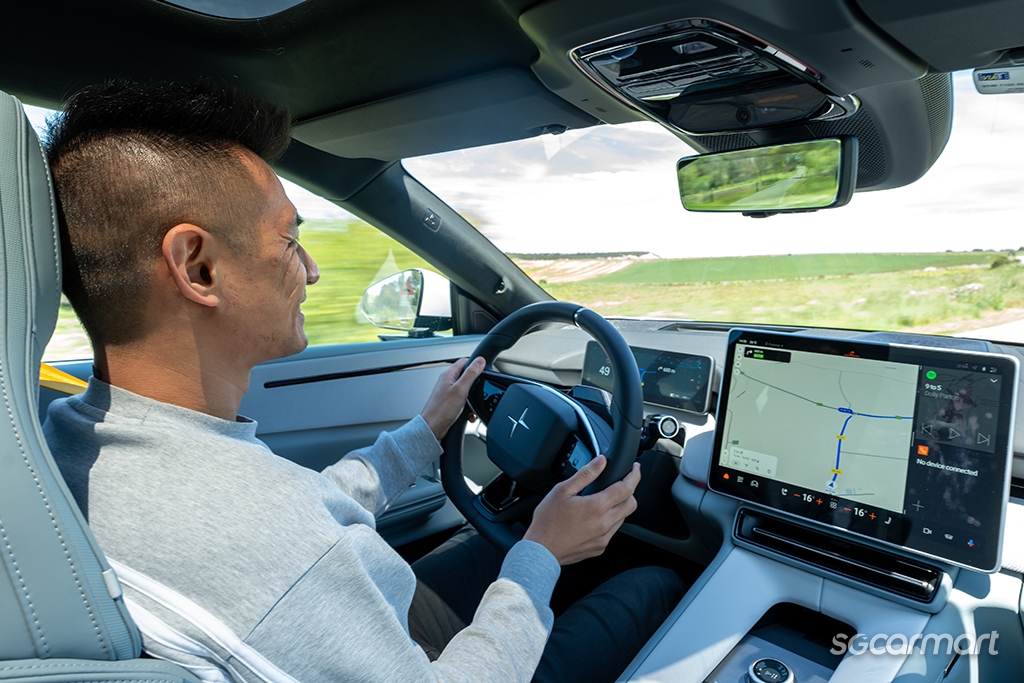
    Enjoyable to pilot, easy to live with and not overtly-shouty about its capabilities, the Polestar 4 is a more discreet approach to electric performance

    I think the result generally works quite well, though the brand's general propensity for being understated perhaps works against its own desired outcomes. The Polestar 4 is a very capable EV with plenty of pace and on-road quality, and I do like some of the quirky touches that have gone into it, but I do wonder if it may be a little too subtle for its own good - especially in a growing EV segment that appears to have little appetite for subtlety. The illuminated logo is a perfect example - subtle, as opposed to more shouty, in-your-face illumination we're seeing from rival brands. This car isn't shouty about being different, though there is no denying that it is.

    Discreet and discerning. That's probably how best to describe this car. And I wonder if that's exactly the sort of customer that Polestar is aiming for with the Polestar 4, too. 

    Interested in the new Polestar 4? Sgcarmart understands that local test drives are expected to begin in September, and that the car is available for viewing now.  

    Desmond Chan
    Story by Desmond Chan in Madrid, Spain
    Desmond thinks the world would be better if cars were smaller and less powerful. He wants to live in the 70s.
    24.4k

    Tags

    polestar polestar 4 polesar 4 long range dual motor polestar suv ev coupe suv electric

    AllReviewsNewsAdviceFeaturesVideos
    • A Coupe SUV
    • A New Look Interior
    • Quality Performance
    • Conclusion
    • Home
    • Car Articles
    • reviews
    • reviews Listings
    • Polestar Reviews

    Polestar 4 First Drive Review

    01 Jul 2024

    |

    14,741 views

    With plenty of on-road pace and quality, and with some interesting design choices, the new Polestar 4 is an alternative approach to the coupe-SUV.

    What We Like

    Cool looks
    High-quality cabin with good user experience
    Uncompromised rear passenger space
    Plenty fast
    Good balance between sportiness and comfort

    What We Dislike

    Electronically-controlled air-con vents
    Many of the nice goodies are optional extras

    Alongside the Polestar 3, the brand is also introducing a second model to market - this new Polestar 4.

    And while they may seem quite similar on the surface (there might even be a passing visual resemblance, not helped by the fact that both are available in white), they are in fact quite different cars.

    The Polestar 4 is the latest model that the brand is introducing to market, and marks the second new model being released this year

    For starters, they are built on different platform, even if their fundamental basic shape (the 3 a more traditional SUV, the 4 a now-trendy coupe-SUV) may not be dissimilar in size nor segment.

    And, their intentions are quite different. Where the Polestar 3 is a more conventional premium SUV, the Polestar 4 has more left-field ambitions and is more performance-focused.

    The Polestar 4 is situated between the Polestar 2 and range-topping Polestar 3 within the brand's model lineup

    Coming to grips with it

    First off, yes, this is that confusing thing that is a coupe-SUV. And more confusingly, it also sits size-wise between the Polestar 2 and 3, so the numbering nomenclature may puzzle some. Unlike perhaps a carmaker like BMW where number is directly indicative of size, for Polestar its more to do with the actual chronological rollout of its models.

    And it's a big-ish car - at 4,839mm long, 2,139mm wide, 1,544mm tall, and with a 2,999m wheelbase, the dimensions are not far removed from the Polestar 3.

    But you can also immediately tell that this car is designed to be different. For starters, the head lights have the same dual blade design, but the 'blades' are actually split apart. The low nose and aggressive front-end also speak to the car's sporty intentions. There's also an illuminated brand logo up front, but the illumination is done in a halo manner (comparable to cove lighting in a house).

    Having purposefully done away with a rear windscreen, the Polestar 4 has a unique and distinctive rear facade

    But the big news with the Polestar 4 is that it does not have a rear windscreen. Yup, you read that right. Instead, the car uses HD cameras and a digital rear view mirror (more on that later). This design decision actually allowed the engineers to move the rear roof header further backwards, which means that the tapering of the roofline does not affect headroom in the interior.

    Overall, I would say it's quite a pleasing-looking vehicle. The overall shapes and lines feel organic - not just another typical boxy SUV with some of the roof chopped off. And in white (or Snow, as Polestar calls it), it definitely pops.

    The cabin ranks high on sleek Scandi minimalism, but also gets a few interesting touches that add a little spark of playfulness

    Getting into a new space

    Slide into the rear seat and that decision immediately makes sense. Unlike 'typical' coupe-SUVs, the rear cabin feels uncompromised at all. Headroom is quite good for my 1.7m height, legroom is good enough, and it feels pretty spacious. The massive panoramic glass roof, which stretches all the way until behind your head, also really contribute to that sense of airiness. There's glass everywhere within you field of view.

    Move up front, and again you can immediately tell that Polestar has made distinct efforts to set this model apart. The infotainment screen is now in landscape (as opposed to portrait on the 2 and 3), and offers a newly designed user interface. Google Maps dominates (appropriately, since navigation is easily the most used function), but you can drag a 'divider line' such that it takes up half, three quarters, or the entire screen. I will now point out that our prototype test vehicle was a little buggy and slow to respond, but testing on other vehicles shows that this works reasonably well.

    The horizontally-oriented infotainment screen features a sleek new user interface that's both pretty and very intuitive to use

    What that allows you to do is to choose to display either two or four other 'quick access' widgets, such as media, telephone, car settings and ambient lighting.

    About that ambient lighting: Polestar has chosen a rather quirky approach, so ambient lighting choices are not colour-based specifically, but rather the colours are tied to planets and the Sun of our solar system. It's wonderfully silly and cool at the same time.

    Also, electronic air-con vents are, well, a thing now. You can leave it to choose automatically, or manually select for it to aim at your face, aim away from your face, or pan. Too much digital decision-making for my liking. Auto, it is.

    Planet-themed ambient lighting helps to subtly illuminate the cabin

    I do like the materials in the cabin, such as the MicroTech fabric. There's also an optional 'Star Knit' trim available on the door panels that have patterned perforations through which ambient light can peek through.

    The overall aesthetic is still predominantly Scandi minimalist and high-quality (no surprises there), but the additional touches inject it with a bit more cheerfulness and youthful energy, which is fitting for this Polestar 4.

    Out on the open road

    Now, the Polestar 4 is positioned as a performance model, and it doesn't disappoint on this front. This Dual Motor variant has 400kW and 686Nm of torque available (exactly twice what the Single Motor variant has since the two motors are the same), which makes it the most powerful Polestar that's presently available. 0-100km/h takes just 3.8 seconds, and it feels every bit as quick as that. On full bore accelerations, you are pinned back into the seat.

    This particular test vehicle has the Performance Pack fitted, which gets you Polestar Engineered chassis tuning, 22-inch Performance forged alloy wheels, and sticky Pirelli P Zero tyres. Does it transform into a sports car? Of course not. This is still a quite big, quite heavy coupe-SUV. For what it is, it is quite sporty. Body roll is well-managed in the stiffer damping settings, the car's low CG and lower ride height afford better body control through corners, and you can drive it hard through bendy mountain roads.

    With 0-100km/h dispatched in just 3.8 seconds, the Polestar 4 is the fastest and most powerful Polestar today

    More relevantly, I think it offers a well-balanced mix of performance and comfort. In the standard settings, it's an effortlessly capable (and still very quick) cruiser, perfect for long highway journeys. Quiet, too, even when riding on big 22-inch wheels. If you want to attack some corners, the car can be made sharper and more aggressive, without reaching a point of being uncomfortable.

    The Polestar 4 is also offered with the full suite of assistance systems, all of which are already familiar and work well.

    The digital rear-view mirror will take a bit of getting used to, but it is overall a well-executed solution that frees up more interior space for rear passengers

    Now, rear visibility. Honestly? I like this all-camera setup. Rear visibility in any coupe-SUV would typically be compromised anyway, so it's not like you're missing out on much. And, the camera system actually affords you a much wider field of vision, without any risk of being blocked by bobbing rear passenger heads. Yes, it will take a little bit of time to get used to a slightly different visual perspective, but after a while I don't find myself thinking much about it at all.

    The Polestar 4 is a well-executed EV with ample on road pace and quality, but reveals itself in subtle ways

    From a new lens

    Making sense of the Polestar 4 isn't so easy. On one hand, some of its bones are rooted in more 'traditional' expectations. Besides the SUV basis, you're also going to have plenty of overlap with the Polestar 3 in terms of equipment, materials, even specific parts. And the car's visual identity doesn't stray overly far from the Polestar 'look'.

    On the other hand, this is also Polestar's attempt to be more 'untraditional' - to make bold new choices that can position the Polestar 4 as a more left-field choice, and in doing so imbue it with more unique personality.

    The result is a model that harder to singularly characterise. A coupe-SUV with typical-SUV interior space. A sporty EV with typical EV comfort and utility.

    Enjoyable to pilot, easy to live with and not overtly-shouty about its capabilities, the Polestar 4 is a more discreet approach to electric performance

    I think the result generally works quite well, though the brand's general propensity for being understated perhaps works against its own desired outcomes. The Polestar 4 is a very capable EV with plenty of pace and on-road quality, and I do like some of the quirky touches that have gone into it, but I do wonder if it may be a little too subtle for its own good - especially in a growing EV segment that appears to have little appetite for subtlety. The illuminated logo is a perfect example - subtle, as opposed to more shouty, in-your-face illumination we're seeing from rival brands. This car isn't shouty about being different, though there is no denying that it is.

    Discreet and discerning. That's probably how best to describe this car. And I wonder if that's exactly the sort of customer that Polestar is aiming for with the Polestar 4, too. 

    Interested in the new Polestar 4? Sgcarmart understands that local test drives are expected to begin in September, and that the car is available for viewing now.  

    Desmond Chan
    Story by Desmond Chan in Madrid, Spain
    Desmond thinks the world would be better if cars were smaller and less powerful. He wants to live in the 70s.
    24.4k

    Tags

    polestar polestar 4 polesar 4 long range dual motor polestar suv ev coupe suv electric

    Newsletter

    Be Notified On The Latest News

    • A Coupe SUV
    • A New Look Interior
    • Quality Performance
    • Conclusion
    Newsletter

    Be Notified On The Latest News

    • A Coupe SUV
    • A New Look Interior
    • Quality Performance
    • Conclusion

    You May Also Like

    We try out roadside parking with the new OBU!

    We try out roadside parking with the new OBU!

    New cars are safer: Opt for one when you can

    New cars are safer: Opt for one when you can

    EV NEXT: Peace of mind with battery SOH certification

    EV NEXT: Peace of mind with battery SOH certification

    Mazda 6e Fastback GT Electric review

    Mazda 6e Fastback GT Electric review

    Is parallel import hesitancy growing among car buyers?

    Is parallel import hesitancy growing among car buyers?

    Sgcarmart Explores: Bras Basah!

    Sgcarmart Explores: Bras Basah!

    Big Test: Which brand makes the best hybrid?

    Big Test: Which brand makes the best hybrid?

    Opinion: Is it time for a change to our road traffic laws?

    Opinion: Is it time for a change to our road traffic laws?

    Toyota RAV4 Hybrid vs Subaru Forester e-Boxer

    Toyota RAV4 Hybrid vs Subaru Forester e-Boxer

    Hongqi Singapore opens its showroom doors

    Hongqi Singapore opens its showroom doors

    The BYD Sealion 8 seven-seater SUV arrives in Singapore

    The BYD Sealion 8 seven-seater SUV arrives in Singapore

    A first look at Chery's iCaur V23 and Jaecoo J8 in Singapore

    A first look at Chery's iCaur V23 and Jaecoo J8 in Singapore

    Motoring Icons: JDM legends - Honda NSX

    Motoring Icons: JDM legends - Honda NSX

    Tesla launches Model Y L in Singapore, first six-seater here

    Tesla launches Model Y L in Singapore, first six-seater here

    7 things we learnt about the Zeekr 7GT

    7 things we learnt about the Zeekr 7GT

    Mercedes-Benz GLC debuts alongside Studio opening

    Mercedes-Benz GLC debuts alongside Studio opening

    You May Also Like

    We try out roadside parking with the new OBU!

    We try out roadside parking with the new OBU!

    New cars are safer: Opt for one when you can

    New cars are safer: Opt for one when you can

    EV NEXT: Peace of mind with battery SOH certification

    EV NEXT: Peace of mind with battery SOH certification

    Mazda 6e Fastback GT Electric review

    Mazda 6e Fastback GT Electric review

    Is parallel import hesitancy growing among car buyers?

    Is parallel import hesitancy growing among car buyers?

    Sgcarmart Explores: Bras Basah!

    Sgcarmart Explores: Bras Basah!

    Big Test: Which brand makes the best hybrid?

    Big Test: Which brand makes the best hybrid?

    Opinion: Is it time for a change to our road traffic laws?

    Opinion: Is it time for a change to our road traffic laws?

    Toyota RAV4 Hybrid vs Subaru Forester e-Boxer

    Toyota RAV4 Hybrid vs Subaru Forester e-Boxer

    Hongqi Singapore opens its showroom doors

    Hongqi Singapore opens its showroom doors

    The BYD Sealion 8 seven-seater SUV arrives in Singapore

    The BYD Sealion 8 seven-seater SUV arrives in Singapore

    A first look at Chery's iCaur V23 and Jaecoo J8 in Singapore

    A first look at Chery's iCaur V23 and Jaecoo J8 in Singapore

    Motoring Icons: JDM legends - Honda NSX

    Motoring Icons: JDM legends - Honda NSX

    Tesla launches Model Y L in Singapore, first six-seater here

    Tesla launches Model Y L in Singapore, first six-seater here

    7 things we learnt about the Zeekr 7GT

    7 things we learnt about the Zeekr 7GT

    Mercedes-Benz GLC debuts alongside Studio opening

    Mercedes-Benz GLC debuts alongside Studio opening

    Related Articles

    Mercedes-Benz brings the all-electric GLB to Singapore

    Mercedes-Benz brings the all-electric GLB to Singapore

    New cars are safer: Opt for one when you can

    New cars are safer: Opt for one when you can

    MG 4 Urban Review

    MG 4 Urban Review

    We try out roadside parking with the new OBU!

    We try out roadside parking with the new OBU!

    Mercedes-Benz's electric CLA Shooting Brake is here in SG!

    Mercedes-Benz's electric CLA Shooting Brake is here in SG!

    Motoring Icons: JDM legends - Honda NSX

    Motoring Icons: JDM legends - Honda NSX

    Tesla Model Y L Premium AWD 88kWh Review

    Tesla Model Y L Premium AWD 88kWh Review

    The BYD Atto 3 gets a mid-life "Evo-lution"

    The BYD Atto 3 gets a mid-life "Evo-lution"

    Related Articles

    Mercedes-Benz brings the all-electric GLB to Singapore

    Mercedes-Benz brings the all-electric GLB to Singapore

    New cars are safer: Opt for one when you can

    New cars are safer: Opt for one when you can

    MG 4 Urban Review

    MG 4 Urban Review

    We try out roadside parking with the new OBU!

    We try out roadside parking with the new OBU!

    Mercedes-Benz's electric CLA Shooting Brake is here in SG!

    Mercedes-Benz's electric CLA Shooting Brake is here in SG!

    Motoring Icons: JDM legends - Honda NSX

    Motoring Icons: JDM legends - Honda NSX

    Tesla Model Y L Premium AWD 88kWh Review

    Tesla Model Y L Premium AWD 88kWh Review

    The BYD Atto 3 gets a mid-life "Evo-lution"

    The BYD Atto 3 gets a mid-life "Evo-lution"