 |
Reducing a car's carbon footprint goes far beyond just its emissions figures. The world's motor manufacturers and Holllywood celebs will have you believe that hybrids are a way to save the environment. In actual fact, the entire process of manufacturing a hybrid does a lot more harm to the green cause than a conventional vehicle.
When building a truly green car, several factors should be considered. Like, how much energy is required to exploit the raw materials before production begins? What environmental impact will the vehicle have during production? What will its on-road effects be? And finally, how best to recycle its used parts and return them to the production line?
Mercedes-Benz being the inventor of the automobile has taken it upon themselves to lead the change in creating greener automobiles for the future. The first step in that direction was in introducing a recycling take back system in 1993. This move has led the European Union to make the take back system compulsory for all European manufacturers in 2007.
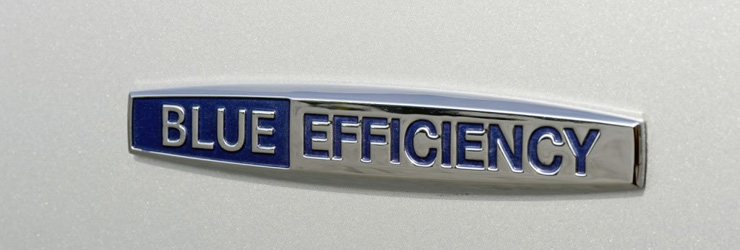
Most recently, Mercedes-Benz has introduced a slew of innovations that improve its efficiency through some small measures that combine to great effect for efficiency. BlueEFFICIENCY is a trademark Mercedes-Benz has given to its economical and ecofriendly passenger cars that incorporate many different measures to improve its efficiency. These measures are compiled by development engineers across different disciplines with the aim of reducing weight, aerodynamic drag and rolling resistance. Other measures include optimising engine technology and better energy management to achieve greater efficiency.
A gram here and a gram there makes a big difference
Mercedes-Benz engineers look to reducing the weight of their vehicles when looking to improve fuel efficiency. Even though the engineers are fastidious about reducing the weight of the vehicle, the safety aspects of the vehicle are never traded for better economy. The BlueEFFICIENCY models are built with an aluminum space-frame chassis that reduce the weight of the weight of the car using tubular struts that are lightweight while maintaining the rigidity required for the chassis.
Besides a lightweight chassis, the engineers went on to producing lightweight forged wheels along with improved firewall insulation. This meticulous practice of weight reduction has achieved more than 30% weight savings in certain models. Another technology Mercedes-Benz applied to its cars involves placing a plastic membrane that absorbs wind noise between glass panels of its windshields. This allows engineers to use thinner glass panels that helps reduce the thickness of the windscreen and save a further 1.2 kilograms in the process.
It's in the wind™
The aerodynamic can have a great effect on its economy. In the 1940s, Mercedes-Benz was the first manufacturer to introduce wind tunnel testing in its car development phase. Today it has become an integral part of any car's development process. The cars in Mercedes-Benz BlueEFFICIENCY range feature a radiator shutter that opens and closes according to the engine loading.
When building a truly green car, several factors should be considered. Like, how much energy is required to exploit the raw materials before production begins? What environmental impact will the vehicle have during production? What will its on-road effects be? And finally, how best to recycle its used parts and return them to the production line?
Mercedes-Benz being the inventor of the automobile has taken it upon themselves to lead the change in creating greener automobiles for the future. The first step in that direction was in introducing a recycling take back system in 1993. This move has led the European Union to make the take back system compulsory for all European manufacturers in 2007.
Most recently, Mercedes-Benz has introduced a slew of innovations that improve its efficiency through some small measures that combine to great effect for efficiency. BlueEFFICIENCY is a trademark Mercedes-Benz has given to its economical and ecofriendly passenger cars that incorporate many different measures to improve its efficiency. These measures are compiled by development engineers across different disciplines with the aim of reducing weight, aerodynamic drag and rolling resistance. Other measures include optimising engine technology and better energy management to achieve greater efficiency.
A gram here and a gram there makes a big difference
Mercedes-Benz engineers look to reducing the weight of their vehicles when looking to improve fuel efficiency. Even though the engineers are fastidious about reducing the weight of the vehicle, the safety aspects of the vehicle are never traded for better economy. The BlueEFFICIENCY models are built with an aluminum space-frame chassis that reduce the weight of the weight of the car using tubular struts that are lightweight while maintaining the rigidity required for the chassis.
Besides a lightweight chassis, the engineers went on to producing lightweight forged wheels along with improved firewall insulation. This meticulous practice of weight reduction has achieved more than 30% weight savings in certain models. Another technology Mercedes-Benz applied to its cars involves placing a plastic membrane that absorbs wind noise between glass panels of its windshields. This allows engineers to use thinner glass panels that helps reduce the thickness of the windscreen and save a further 1.2 kilograms in the process.
 |
It's in the wind™
The aerodynamic can have a great effect on its economy. In the 1940s, Mercedes-Benz was the first manufacturer to introduce wind tunnel testing in its car development phase. Today it has become an integral part of any car's development process. The cars in Mercedes-Benz BlueEFFICIENCY range feature a radiator shutter that opens and closes according to the engine loading.
This helps in reducing the amount of aerodynamic drag caused by the radiator. Other innovations in aerodynamics include a partially covered grille, underbody cladding, reduction of the vehicle height plus a streamlined design contributes to the overall aerodynamic efficiency of the car. All these little innovations combine to improve the efficiency of the car by an additional 1.2%.
Turn on, turn off
A rather clever innovation in the Mercedes-Benz BlueEFFICIENCY vehicles is the minimisation of energy loss through the different system of the car. For example, when the vehicle is traveling along a long stretch of road, a valve in the servo pump switches off the power steering. This releases the engine from having to constantly provide power to this component.
Another innovation is the clutch disengagement technology that slips a car with an automatic transmission into neutral (when the gear is in Drive) when the car is stationary. This helps reduce fuel consumption by lowering the revs and when you are ready to go again, the system immediately engages back to drive at the slightest touch of the throttle.
The braking system also makes efficient use of the kinetic energy in braking by using it to recharge the car's battery. A fully charged battery means that the car's generator can be disengaged from the engine and thus reducing fuel consumption.
Round round
Rolling resistance occurs because as a tyre rolls over undulating surfaces in its life, deformities will develop over time. These deformities tend to have a braking effect on the car and are known as rolling resistance. A higher rolling resistance translates to higher fuel consumption and CO2. At 100km/h, the amount of rolling resistance in a tyre has a greater effect on the fuel economy than aerodynamic drag.
Mercedes-Benz together with its partners developed new tyres that were less susceptible to rolling resistance. Through light weight tyres and multi-layered mesh of high strength steel, engineers were able to retard the rate of distortion and thus contribute significantly to fuel economy. Saving up to 17% while reducing CO2 emissions.
As demonstrated by Mercedes-Benz, it does not take redesigning a car's entire drive train to contribute to a greener motoring experience. Little innovations through clever use of aerodynamics, engine management and better lightweight tyres can have a profound impact on a car's fuel economy and carbon emissions.
Look out for our next installment as we take a look at how Mercedes-Benz engine technology has contributed to a new blue sky™
For more information visit www.mercedes-benz.com.sg
Turn on, turn off
A rather clever innovation in the Mercedes-Benz BlueEFFICIENCY vehicles is the minimisation of energy loss through the different system of the car. For example, when the vehicle is traveling along a long stretch of road, a valve in the servo pump switches off the power steering. This releases the engine from having to constantly provide power to this component.
Another innovation is the clutch disengagement technology that slips a car with an automatic transmission into neutral (when the gear is in Drive) when the car is stationary. This helps reduce fuel consumption by lowering the revs and when you are ready to go again, the system immediately engages back to drive at the slightest touch of the throttle.
The braking system also makes efficient use of the kinetic energy in braking by using it to recharge the car's battery. A fully charged battery means that the car's generator can be disengaged from the engine and thus reducing fuel consumption.
Round round
Rolling resistance occurs because as a tyre rolls over undulating surfaces in its life, deformities will develop over time. These deformities tend to have a braking effect on the car and are known as rolling resistance. A higher rolling resistance translates to higher fuel consumption and CO2. At 100km/h, the amount of rolling resistance in a tyre has a greater effect on the fuel economy than aerodynamic drag.
Mercedes-Benz together with its partners developed new tyres that were less susceptible to rolling resistance. Through light weight tyres and multi-layered mesh of high strength steel, engineers were able to retard the rate of distortion and thus contribute significantly to fuel economy. Saving up to 17% while reducing CO2 emissions.
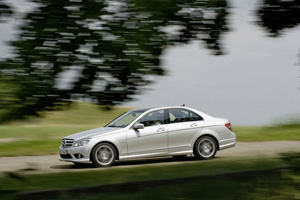 |
As demonstrated by Mercedes-Benz, it does not take redesigning a car's entire drive train to contribute to a greener motoring experience. Little innovations through clever use of aerodynamics, engine management and better lightweight tyres can have a profound impact on a car's fuel economy and carbon emissions.
Look out for our next installment as we take a look at how Mercedes-Benz engine technology has contributed to a new blue sky™
For more information visit www.mercedes-benz.com.sg