View page in desktop
|
Report error
  •   Apple app store icon
  • Google play store icon
Terms of Service
|
Privacy Policy
|
PDPA
|
Site Map
©2004-2026 Sgcarmart, Singapore. All rights reserved.
  • Home
  • Car Articles
  • features
  • features Listings
  • Features
  • Zero emissions

    08 Nov 2010

    |

    2,763 views

    Mercedes-Benz BlueEFFICIENCY technologies goes far beyond just improving the efficiency of normal petrol driven vehicles. It has an even greater and tougher goal to achieve. Zero emissions. In this article, we take a look at the progress Mercedes-Benz has made with their BlueEFFICIENCY technologies


    The threat of global warming has forced manufacturers from all over the world to not only reduce engine capacities but also to improve efficiency of their vehicles. At Mercedes-Benz, things are no different. Being a key player in the automotive industry, Mercedes-Benz takes it upon themselves to lead the industry in finding greener and more innovative ways to cut down on emissions.

    While they have made great leaps in improving the efficiency of their current models through their BlueEFFICIENCY technologies, the holy grail of the automotive industry rests in the ability to produce a sustainable zero emissions technology for transportation. In this, Mercedes-Benz has once again proven themselves to be a pioneer.

    In 1994, Mercedes-Benz took a giant leap forward by introducing the world's first fuel-cell vehicle. It was a Mercedes-Benz van named NECAR. Since then, the German marque has invested well over a billion dollars into the research and development of this innovative technology. And in 2010, they launched the first series-produced fuel-cell car to the public with the B-class F-CELL.

    Fuel-cell vehicles obtain their electrical energy from a chemical reaction between hydrogen and oxygen. Whereas conventional electric cars draw their power from a battery to drive the electric motor. There are two distinct advantages to fuel-cell technology.
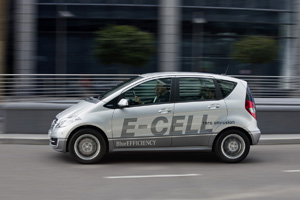

    Firstly, it is very clean, with pure water being the only emission. Secondly, it performs impressively, with Mercedes-Benz fuel-cell models capable of accelerating from 0-100 km/h in less than 11 seconds, while boasting an electronically limited top speed of 150 km/h. The technologies highlighted below falls under one name, the Mercedes-Benz BlueEFFICIENCY technology.

    BlueZERO F-Cell technology - The future of green right now

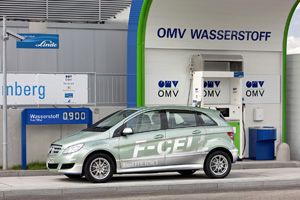
    Mercedes-Benz unveiled the BlueZERO F-CELL concept last year in the B-Class F-CELL that combines zero emissions with long distance comfort and practical performance. Fuel-cell vehicles requires no mineral fuels such as petroleum. Instead, it relies on electric power generated by a reaction between hydrogen and oxygen in the fuel cell.
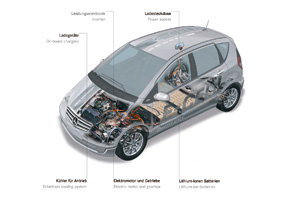
    The only by-product of this chemical reaction is, are you ready for it? Water. The technology is so clean that you could take a cup to the exhaust and drink from it. The F-CELL is also innovative in the way it is built. All the key drive components are built in a sandwich-floor concept between the axels and beneath the occupants. This protects the components while at the same time frees up space in the vehicle's interior which leaves more space for occupants and cargo.

    BlueZERO E-Cell technology - Zero emissions in a city landscape

    The second drive concept, BlueZERO E-Cell, involves using a 120-volt lithium-ion battery that was specially developed by Mercedes-Benz. This drive concept operates on just electricity alone without the need for fossil fuels. It is an ideal mode of transportation for those who drive exclusively in an urban environment only. This technology has a low-noise emission and can travel for up to 200 kilometres on a full charge.

    Mercedes-Benz always placing safety above all else uses the sandwich floor concept which allows the drivetrain to be positioned between the axles and beneath the occupants. Another advantage of this is that the usually voluminous storage of batteries (now placed underneath the floor) doesn't impede the space for occupants or boot capacity.

    BlueZERO E-Cell Plus technology - Bringing two worlds together

    The third drive concept known as the BlueZERO E-Cell Plus uses a 1-litre turbocharged petrol engine fitted at the rear of the vehicle. This engine powers a generator which provides the electricity. The three-cylinder petrol engine will 'top-up' the charge in the lithium ion battery when necessary. This allows the vehicle to cover up to 600 kilometres on just one tank of fuel. It can cover an additional 100 kilometres on electric power alone. This long range makes the BlueZERO E-Cell Plus ideal for both rural and urban driving conditions. Proving that it is possible to produce a car that remains ecofriendly without compromising performance.

    When Karl Benz built the first complete automobile back in 1885, he paved the way for automobiles of the future. More than a century later, Mercedes-Benz is once again paving the way for the future of zero emissions motoring with advances in their BlueEFFICIENCY technologies.

    For more information visit www.mercedes-benz.com.sg

    Freelancer
    Photos by Mercedes-Benz
    I've been writing about cars for many years, and I wonder if I'm getting any better at it.
    Text by Benjamin G. Kline
    24.4k

    Tags

    mercedes benz blueefficiency blueefficiency green technology bluezero f cell technology hydrogen fuel cell bluezero e cell technology

    AllReviewsNewsAdviceFeaturesVideos
    • Home
    • Car Articles
    • features
    • features Listings
    • Features

    Zero emissions

    08 Nov 2010

    |

    2,763 views

    Mercedes-Benz BlueEFFICIENCY technologies goes far beyond just improving the efficiency of normal petrol driven vehicles. It has an even greater and tougher goal to achieve. Zero emissions. In this article, we take a look at the progress Mercedes-Benz has made with their BlueEFFICIENCY technologies


    The threat of global warming has forced manufacturers from all over the world to not only reduce engine capacities but also to improve efficiency of their vehicles. At Mercedes-Benz, things are no different. Being a key player in the automotive industry, Mercedes-Benz takes it upon themselves to lead the industry in finding greener and more innovative ways to cut down on emissions.

    While they have made great leaps in improving the efficiency of their current models through their BlueEFFICIENCY technologies, the holy grail of the automotive industry rests in the ability to produce a sustainable zero emissions technology for transportation. In this, Mercedes-Benz has once again proven themselves to be a pioneer.

    In 1994, Mercedes-Benz took a giant leap forward by introducing the world's first fuel-cell vehicle. It was a Mercedes-Benz van named NECAR. Since then, the German marque has invested well over a billion dollars into the research and development of this innovative technology. And in 2010, they launched the first series-produced fuel-cell car to the public with the B-class F-CELL.

    Fuel-cell vehicles obtain their electrical energy from a chemical reaction between hydrogen and oxygen. Whereas conventional electric cars draw their power from a battery to drive the electric motor. There are two distinct advantages to fuel-cell technology.


    Firstly, it is very clean, with pure water being the only emission. Secondly, it performs impressively, with Mercedes-Benz fuel-cell models capable of accelerating from 0-100 km/h in less than 11 seconds, while boasting an electronically limited top speed of 150 km/h. The technologies highlighted below falls under one name, the Mercedes-Benz BlueEFFICIENCY technology.

    BlueZERO F-Cell technology - The future of green right now

    Mercedes-Benz unveiled the BlueZERO F-CELL concept last year in the B-Class F-CELL that combines zero emissions with long distance comfort and practical performance. Fuel-cell vehicles requires no mineral fuels such as petroleum. Instead, it relies on electric power generated by a reaction between hydrogen and oxygen in the fuel cell.

    The only by-product of this chemical reaction is, are you ready for it? Water. The technology is so clean that you could take a cup to the exhaust and drink from it. The F-CELL is also innovative in the way it is built. All the key drive components are built in a sandwich-floor concept between the axels and beneath the occupants. This protects the components while at the same time frees up space in the vehicle's interior which leaves more space for occupants and cargo.

    BlueZERO E-Cell technology - Zero emissions in a city landscape

    The second drive concept, BlueZERO E-Cell, involves using a 120-volt lithium-ion battery that was specially developed by Mercedes-Benz. This drive concept operates on just electricity alone without the need for fossil fuels. It is an ideal mode of transportation for those who drive exclusively in an urban environment only. This technology has a low-noise emission and can travel for up to 200 kilometres on a full charge.

    Mercedes-Benz always placing safety above all else uses the sandwich floor concept which allows the drivetrain to be positioned between the axles and beneath the occupants. Another advantage of this is that the usually voluminous storage of batteries (now placed underneath the floor) doesn't impede the space for occupants or boot capacity.


    BlueZERO E-Cell Plus technology - Bringing two worlds together

    The third drive concept known as the BlueZERO E-Cell Plus uses a 1-litre turbocharged petrol engine fitted at the rear of the vehicle. This engine powers a generator which provides the electricity. The three-cylinder petrol engine will 'top-up' the charge in the lithium ion battery when necessary. This allows the vehicle to cover up to 600 kilometres on just one tank of fuel. It can cover an additional 100 kilometres on electric power alone. This long range makes the BlueZERO E-Cell Plus ideal for both rural and urban driving conditions. Proving that it is possible to produce a car that remains ecofriendly without compromising performance.

    When Karl Benz built the first complete automobile back in 1885, he paved the way for automobiles of the future. More than a century later, Mercedes-Benz is once again paving the way for the future of zero emissions motoring with advances in their BlueEFFICIENCY technologies.

    For more information visit www.mercedes-benz.com.sg

    Freelancer
    Photos by Mercedes-Benz
    I've been writing about cars for many years, and I wonder if I'm getting any better at it.
    Text by Benjamin G. Kline
    24.4k

    Tags

    mercedes benz blueefficiency blueefficiency green technology bluezero f cell technology hydrogen fuel cell bluezero e cell technology

    Newsletter

    Be Notified On The Latest News

    Newsletter

    Be Notified On The Latest News

    Related Articles

    Opinion: Is it time for a change to our road traffic laws?

    Opinion: Is it time for a change to our road traffic laws?

    Should I buy a car in July / August / September 2026?

    Should I buy a car in July / August / September 2026?

    16 noteworthy production models at the 2026 Auto Beijing!

    16 noteworthy production models at the 2026 Auto Beijing!

    Opinion: Why do we even need green number plates?

    Opinion: Why do we even need green number plates?

    We try out roadside parking with the new OBU!

    We try out roadside parking with the new OBU!

    7 things we learnt about the Zeekr 7GT

    7 things we learnt about the Zeekr 7GT

    Sgcarmart Explores: 2026 National Day Edition!

    Sgcarmart Explores: 2026 National Day Edition!

    Zeekr On Ice: Lessons from a frozen playground

    Zeekr On Ice: Lessons from a frozen playground

    Related Articles

    Opinion: Is it time for a change to our road traffic laws?

    Opinion: Is it time for a change to our road traffic laws?

    Should I buy a car in July / August / September 2026?

    Should I buy a car in July / August / September 2026?

    16 noteworthy production models at the 2026 Auto Beijing!

    16 noteworthy production models at the 2026 Auto Beijing!

    Opinion: Why do we even need green number plates?

    Opinion: Why do we even need green number plates?

    We try out roadside parking with the new OBU!

    We try out roadside parking with the new OBU!

    7 things we learnt about the Zeekr 7GT

    7 things we learnt about the Zeekr 7GT

    Sgcarmart Explores: 2026 National Day Edition!

    Sgcarmart Explores: 2026 National Day Edition!

    Zeekr On Ice: Lessons from a frozen playground

    Zeekr On Ice: Lessons from a frozen playground

    You May Also Like

    Sgcarmart Explores: Bras Basah!

    Sgcarmart Explores: Bras Basah!

    New cars are safer: Opt for one when you can

    New cars are safer: Opt for one when you can

    Maxus MIFA 7 Elite: Going big for the little moments

    Maxus MIFA 7 Elite: Going big for the little moments

    We try out roadside parking with the new OBU!

    We try out roadside parking with the new OBU!

    Sgcarmart Explores: East Coast Park!

    Sgcarmart Explores: East Coast Park!

    Opinion: Why do we even need green number plates?

    Opinion: Why do we even need green number plates?

    Mazda 6e Fastback GT Electric review

    Mazda 6e Fastback GT Electric review

    The BYD Sealion 8 seven-seater SUV arrives in Singapore

    The BYD Sealion 8 seven-seater SUV arrives in Singapore

    Opinion: Is it time for a change to our road traffic laws?

    Opinion: Is it time for a change to our road traffic laws?

    Hongqi Singapore opens its showroom doors

    Hongqi Singapore opens its showroom doors

    A first look at Chery's iCaur V23 and Jaecoo J8 in Singapore

    A first look at Chery's iCaur V23 and Jaecoo J8 in Singapore

    Is parallel import hesitancy growing among car buyers?

    Is parallel import hesitancy growing among car buyers?

    New to driving? Here's how to become a better driver

    New to driving? Here's how to become a better driver

    Tesla launches Model Y L in Singapore, first six-seater here

    Tesla launches Model Y L in Singapore, first six-seater here

    Toyota RAV4 Hybrid vs Subaru Forester e-Boxer

    Toyota RAV4 Hybrid vs Subaru Forester e-Boxer

    Motoring Icons: JDM legends - Honda NSX

    Motoring Icons: JDM legends - Honda NSX

    You May Also Like

    Sgcarmart Explores: Bras Basah!

    Sgcarmart Explores: Bras Basah!

    New cars are safer: Opt for one when you can

    New cars are safer: Opt for one when you can

    Maxus MIFA 7 Elite: Going big for the little moments

    Maxus MIFA 7 Elite: Going big for the little moments

    We try out roadside parking with the new OBU!

    We try out roadside parking with the new OBU!

    Sgcarmart Explores: East Coast Park!

    Sgcarmart Explores: East Coast Park!

    Opinion: Why do we even need green number plates?

    Opinion: Why do we even need green number plates?

    Mazda 6e Fastback GT Electric review

    Mazda 6e Fastback GT Electric review

    The BYD Sealion 8 seven-seater SUV arrives in Singapore

    The BYD Sealion 8 seven-seater SUV arrives in Singapore

    Opinion: Is it time for a change to our road traffic laws?

    Opinion: Is it time for a change to our road traffic laws?

    Hongqi Singapore opens its showroom doors

    Hongqi Singapore opens its showroom doors

    A first look at Chery's iCaur V23 and Jaecoo J8 in Singapore

    A first look at Chery's iCaur V23 and Jaecoo J8 in Singapore

    Is parallel import hesitancy growing among car buyers?

    Is parallel import hesitancy growing among car buyers?

    New to driving? Here's how to become a better driver

    New to driving? Here's how to become a better driver

    Tesla launches Model Y L in Singapore, first six-seater here

    Tesla launches Model Y L in Singapore, first six-seater here

    Toyota RAV4 Hybrid vs Subaru Forester e-Boxer

    Toyota RAV4 Hybrid vs Subaru Forester e-Boxer

    Motoring Icons: JDM legends - Honda NSX

    Motoring Icons: JDM legends - Honda NSX