View page in desktop
|
Report error
  •   Apple app store icon
  • Google play store icon
Terms of Service
|
Privacy Policy
|
PDPA
|
Site Map
©2004-2026 Sgcarmart, Singapore. All rights reserved.
  • Home
  • Car Articles
  • news
  • news Listings
  • Other News
  • Air quality improves as traffic levels fall

    06 May 2020

    |

    156 views

    Singapore's air quality has improved as a result of reduced economic and social activities brought about by the COVID-19 outbreak.


    Singapore's air quality has improved as a result of reduced economic and social activities brought about by the COVID-19 outbreak.

    In response to queries from The Straits Times, the National Environment Agency (NEA) said key pollutant levels have been falling even before the circuit breaker measures started. The levels fell further after the measures kicked in on 7 April 2020.
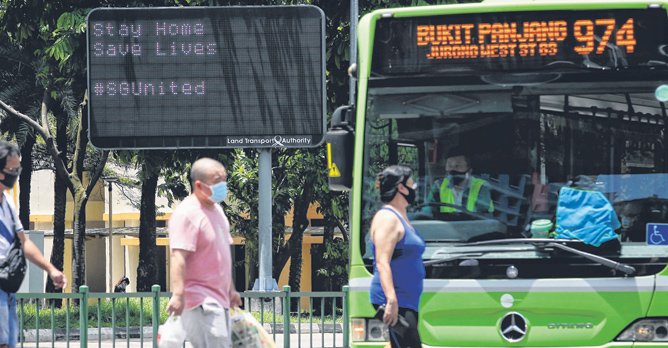
    Singapore's key pollutant levels have fallen since circuit breaker measures kicked in on 7 April 2020
    According to the NEA, the average Nitrogen Dioxide (NO2) level in the two weeks before the circuit breaker period was 17µg/m3 (micrograms, or one-millionth of a gram, per cubic metre of air) - down from 27µg/m3 in the same period last year.

    "Preliminary analysis shows that in the two weeks since the circuit breaker measures were introduced, there was a further improvement in air quality, with the average level of NO2 decreasing to 13µg/m3," the NEA said.

    It noted that this was "probably due to a reduction in vehicular traffic with some businesses implementing work from home practices prior to the circuit breaker, as well as the slowing down of industrial activities in tandem with the global economic situation".

    The agency said the average levels of PM10 and PM2.5 (particulate matter of 10 and 2.5 microns in size), carbon monoxide and sulphur dioxide had fallen by between 8% and 43%. After the circuit breaker measures kicked in, these pollutant levels fell further, but by "less than 1%".
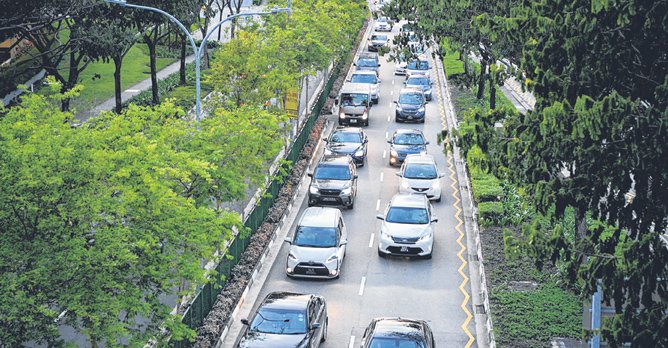
    Average levels of PM10 and PM2.5 carbon monoxide and sulphur dioxide had fallen by between 8% and 43% two weeks before the circuit breaker
    Absolute readings for these four pollutants were unavailable at the time of writing, but the NEA said all the daily pollutant levels are now "within World Health Organisation air quality guidelines". Singapore has long been unable to meet some of these guidelines, especially for particulate matter.

    All five pollutants are hazardous to health, with elevated levels linked to several respiratory and cardiovascular diseases as well as strokes and cancers.

    A study published in the European Heart Journal last year estimated that up to 8.8 million premature deaths a year around the world are linked to air pollution, with the average reduction in lifespan at around three years. Ironically, the coronavirus lockdowns are reducing that death toll.

    In a report released on 30 April 2020, the Centre for Research on Energy and Clean Air said European countries under lockdown had seen 11,000 fewer deaths last month compared with the same period last year. This, it said, was because of a sharp drop in fossil fuel pollution. But experts reckon the situation may be short-lived.
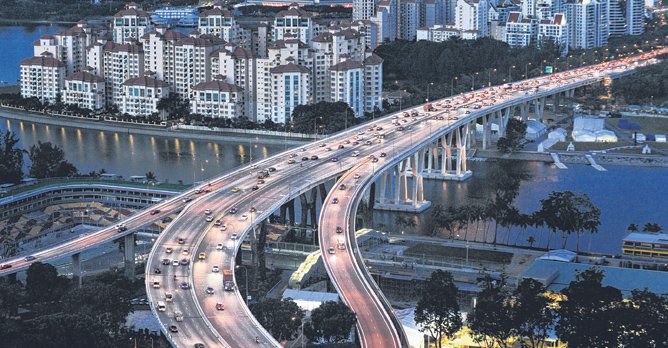
    Experts however warn that when COVID-19 measures are lifted, air quality will revert to what it was before
    Dr. Koh Tieh Yong, Associate Professor of Atmospheric Science at the Singapore University of Social Sciences, said the main sources of nitrogen dioxide here are vehicular traffic and oil refining. "Traffic volume fell noticeably due to work from home practices, while global demand for petroleum products decreased due to economic slowdown. However, the current improvements are transient."

    He said that when COVID-19 measures are lifted, air quality will revert to what it was before. "This is because our transport and industrial technologies have not changed. For sustained improvements in urban air quality, we need to make revolutionary changes. For example, the widespread adoption of electric vehicles and the predominant use of renewable energy in generating electricity and powering industries," he added.

    To this end, Dr. Koh said, the economic stimulus by governments the world over in response to COVID-19 "comes at an opportune time. Major greenhouse gas emitting industries have the capacity to reconsider their energy options as their energy consumption now is anomalously low, allowing them to redesign their technological base to tap into new energy sources."
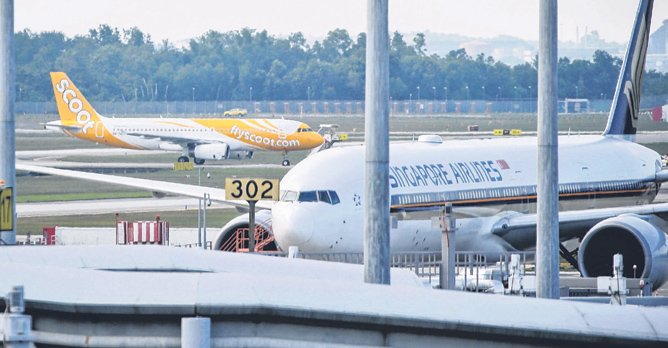
    A slow recovery is expected for the tourism sector, which would mean fewer commercial flights - a contributor to air pollution and greenhouse gases
    As to when economic and social activities will return to pre-pandemic levels, Nanyang Business School Adjunct Associate Professor Zafar Momin said the reversal will be "gradual".

    Manufacturing, for instance, could restart fairly quickly, but "restaurants and bars, conferences, religious congregations and large sporting events may reopen much more slowly". Public transport, he reckoned, will "ramp up as economic sectors reopen".

    But Dr. Momin said tourism "may struggle for the longest time to return to pre-COVID normalcy", which means fewer commercial flights, a contributor to air pollution and greenhouse gases.

    24.4k

    Tags

    singapore air quality air pollution traffic pollution covid-19

    AllReviewsNewsAdviceFeaturesVideos
    • Home
    • Car Articles
    • news
    • news Listings
    • Other News

    Air quality improves as traffic levels fall

    06 May 2020

    |

    156 views

    Singapore's air quality has improved as a result of reduced economic and social activities brought about by the COVID-19 outbreak.


    Singapore's air quality has improved as a result of reduced economic and social activities brought about by the COVID-19 outbreak.

    In response to queries from The Straits Times, the National Environment Agency (NEA) said key pollutant levels have been falling even before the circuit breaker measures started. The levels fell further after the measures kicked in on 7 April 2020.

    Singapore's key pollutant levels have fallen since circuit breaker measures kicked in on 7 April 2020
    According to the NEA, the average Nitrogen Dioxide (NO2) level in the two weeks before the circuit breaker period was 17µg/m3 (micrograms, or one-millionth of a gram, per cubic metre of air) - down from 27µg/m3 in the same period last year.

    "Preliminary analysis shows that in the two weeks since the circuit breaker measures were introduced, there was a further improvement in air quality, with the average level of NO2 decreasing to 13µg/m3," the NEA said.

    It noted that this was "probably due to a reduction in vehicular traffic with some businesses implementing work from home practices prior to the circuit breaker, as well as the slowing down of industrial activities in tandem with the global economic situation".

    The agency said the average levels of PM10 and PM2.5 (particulate matter of 10 and 2.5 microns in size), carbon monoxide and sulphur dioxide had fallen by between 8% and 43%. After the circuit breaker measures kicked in, these pollutant levels fell further, but by "less than 1%".

    Average levels of PM10 and PM2.5 carbon monoxide and sulphur dioxide had fallen by between 8% and 43% two weeks before the circuit breaker
    Absolute readings for these four pollutants were unavailable at the time of writing, but the NEA said all the daily pollutant levels are now "within World Health Organisation air quality guidelines". Singapore has long been unable to meet some of these guidelines, especially for particulate matter.

    All five pollutants are hazardous to health, with elevated levels linked to several respiratory and cardiovascular diseases as well as strokes and cancers.

    A study published in the European Heart Journal last year estimated that up to 8.8 million premature deaths a year around the world are linked to air pollution, with the average reduction in lifespan at around three years. Ironically, the coronavirus lockdowns are reducing that death toll.

    In a report released on 30 April 2020, the Centre for Research on Energy and Clean Air said European countries under lockdown had seen 11,000 fewer deaths last month compared with the same period last year. This, it said, was because of a sharp drop in fossil fuel pollution. But experts reckon the situation may be short-lived.

    Experts however warn that when COVID-19 measures are lifted, air quality will revert to what it was before
    Dr. Koh Tieh Yong, Associate Professor of Atmospheric Science at the Singapore University of Social Sciences, said the main sources of nitrogen dioxide here are vehicular traffic and oil refining. "Traffic volume fell noticeably due to work from home practices, while global demand for petroleum products decreased due to economic slowdown. However, the current improvements are transient."

    He said that when COVID-19 measures are lifted, air quality will revert to what it was before. "This is because our transport and industrial technologies have not changed. For sustained improvements in urban air quality, we need to make revolutionary changes. For example, the widespread adoption of electric vehicles and the predominant use of renewable energy in generating electricity and powering industries," he added.

    To this end, Dr. Koh said, the economic stimulus by governments the world over in response to COVID-19 "comes at an opportune time. Major greenhouse gas emitting industries have the capacity to reconsider their energy options as their energy consumption now is anomalously low, allowing them to redesign their technological base to tap into new energy sources."

    A slow recovery is expected for the tourism sector, which would mean fewer commercial flights - a contributor to air pollution and greenhouse gases
    As to when economic and social activities will return to pre-pandemic levels, Nanyang Business School Adjunct Associate Professor Zafar Momin said the reversal will be "gradual".

    Manufacturing, for instance, could restart fairly quickly, but "restaurants and bars, conferences, religious congregations and large sporting events may reopen much more slowly". Public transport, he reckoned, will "ramp up as economic sectors reopen".

    But Dr. Momin said tourism "may struggle for the longest time to return to pre-COVID normalcy", which means fewer commercial flights, a contributor to air pollution and greenhouse gases.
    24.4k

    Tags

    singapore air quality air pollution traffic pollution covid-19

    Newsletter

    Be Notified On The Latest News

    Newsletter

    Be Notified On The Latest News

    Latest COE Prices

    September 2026 | 1st BIDDING
    NEXT TENDER: 23 Sep 2026
    CAT A
    $133,009
    CAT B
    $135,001
    CAT C
    $93,101
    CAT E
    $137,890
    View Full Results

    Latest COE Prices

    September 2026 | 1st BIDDING
    NEXT TENDER: 23 Sep 2026
    CAT A
    $133,009
    CAT B
    $135,001
    CAT C
    $93,101
    CAT E
    $137,890
    View Full Results

    Related Articles

    Hongqi E-HS9 Review

    Hongqi E-HS9 Review

    We try out roadside parking with the new OBU!

    We try out roadside parking with the new OBU!

    Opinion: Is it time for a change to our road traffic laws?

    Opinion: Is it time for a change to our road traffic laws?

    IM6 Electric Performance Review

    IM6 Electric Performance Review

    Sgcarmart Explores: Bras Basah!

    Sgcarmart Explores: Bras Basah!

    Cars of 2026

    Cars of 2026

    Tesla launches Model Y L in Singapore, first six-seater here

    Tesla launches Model Y L in Singapore, first six-seater here

    New cars are safer: Opt for one when you can

    New cars are safer: Opt for one when you can

    Related Articles

    Hongqi E-HS9 Review

    Hongqi E-HS9 Review

    We try out roadside parking with the new OBU!

    We try out roadside parking with the new OBU!

    Opinion: Is it time for a change to our road traffic laws?

    Opinion: Is it time for a change to our road traffic laws?

    IM6 Electric Performance Review

    IM6 Electric Performance Review

    Sgcarmart Explores: Bras Basah!

    Sgcarmart Explores: Bras Basah!

    Cars of 2026

    Cars of 2026

    Tesla launches Model Y L in Singapore, first six-seater here

    Tesla launches Model Y L in Singapore, first six-seater here

    New cars are safer: Opt for one when you can

    New cars are safer: Opt for one when you can

    You May Also Like

    We try out roadside parking with the new OBU!

    We try out roadside parking with the new OBU!

    New cars are safer: Opt for one when you can

    New cars are safer: Opt for one when you can

    EV NEXT: Peace of mind with battery SOH certification

    EV NEXT: Peace of mind with battery SOH certification

    Multi-Pathway approach: Toyota was always right

    Multi-Pathway approach: Toyota was always right

    Mazda 6e Fastback GT Electric review

    Mazda 6e Fastback GT Electric review

    Don't get yourself trapped in your high-tech EV

    Don't get yourself trapped in your high-tech EV

    Big Test: Which brand makes the best hybrid?

    Big Test: Which brand makes the best hybrid?

    Is parallel import hesitancy growing among car buyers?

    Is parallel import hesitancy growing among car buyers?

    The rise of PHEVs: A closer look at the numbers

    The rise of PHEVs: A closer look at the numbers

    Sgcarmart Explores: Bras Basah!

    Sgcarmart Explores: Bras Basah!

    Opinion: Is it time for a change to our road traffic laws?

    Opinion: Is it time for a change to our road traffic laws?

    A first look at Chery's iCaur V23 and Jaecoo J8 in Singapore

    A first look at Chery's iCaur V23 and Jaecoo J8 in Singapore

    Hongqi Singapore opens its showroom doors

    Hongqi Singapore opens its showroom doors

    The BYD Sealion 8 seven-seater SUV arrives in Singapore

    The BYD Sealion 8 seven-seater SUV arrives in Singapore

    iCaur V23 100kW Review

    iCaur V23 100kW Review

    7 things we learnt about the Zeekr 7GT

    7 things we learnt about the Zeekr 7GT

    You May Also Like

    We try out roadside parking with the new OBU!

    We try out roadside parking with the new OBU!

    New cars are safer: Opt for one when you can

    New cars are safer: Opt for one when you can

    EV NEXT: Peace of mind with battery SOH certification

    EV NEXT: Peace of mind with battery SOH certification

    Multi-Pathway approach: Toyota was always right

    Multi-Pathway approach: Toyota was always right

    Mazda 6e Fastback GT Electric review

    Mazda 6e Fastback GT Electric review

    Don't get yourself trapped in your high-tech EV

    Don't get yourself trapped in your high-tech EV

    Big Test: Which brand makes the best hybrid?

    Big Test: Which brand makes the best hybrid?

    Is parallel import hesitancy growing among car buyers?

    Is parallel import hesitancy growing among car buyers?

    The rise of PHEVs: A closer look at the numbers

    The rise of PHEVs: A closer look at the numbers

    Sgcarmart Explores: Bras Basah!

    Sgcarmart Explores: Bras Basah!

    Opinion: Is it time for a change to our road traffic laws?

    Opinion: Is it time for a change to our road traffic laws?

    A first look at Chery's iCaur V23 and Jaecoo J8 in Singapore

    A first look at Chery's iCaur V23 and Jaecoo J8 in Singapore

    Hongqi Singapore opens its showroom doors

    Hongqi Singapore opens its showroom doors

    The BYD Sealion 8 seven-seater SUV arrives in Singapore

    The BYD Sealion 8 seven-seater SUV arrives in Singapore

    iCaur V23 100kW Review

    iCaur V23 100kW Review

    7 things we learnt about the Zeekr 7GT

    7 things we learnt about the Zeekr 7GT