After years of research, BMW aims to materialise accident free mobility via BMW ActiveAssist - a package of partially and highly automated driving technologies.
Experts at BMW Group Research and Technology have built a research prototype, which can pilot its way at fast speeds with high precision, adhere to a marked out circular course regardless of road surface, and execute an obstacle evading lane change.
The sensors delivering the necessary information are akin to the standard fitted systems on today's vehicles - although research started as far back as 2009.
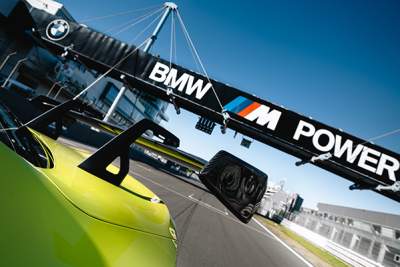
In late 2009, the BMW Group rolled out its BMW Track Trainer research project to showcase highly automated driving on the racing line around the tough Nurburgring race track.
Developed by engineers at BMW Group Research and Technology, the BMW Track Trainer later demonstrated its effectiveness on other circuits around the globe, including the Laguna Seca and Hockenheimring.
BMW's Emergency Stop Assistant research project contributed additional valuable information. If the driver is weakened - for example by a medical emergency like a heart attack - the function switches the vehicle into highly automated driving mode, steers it safely to the side of the road and automatically activates an emergency call.
In 2011, a test vehicle covered 65km on a multilane highway in automated mode. The research prototype accelerated, braked and overtook other cars along the way without any driver intervention - while observing traffic laws and keeping pace with the traffic at speeds of up to 130km/h. The prototype has since covered approximately 15,000km.
Since February 2013, the BMW Group and Continental have been working together to introduce several test vehicles with near production technology. The BMW Group's next major goal is to introduce highly automated driving on European motorways and tackle the challenges - such as crossing national borders and negotiating roadworks.