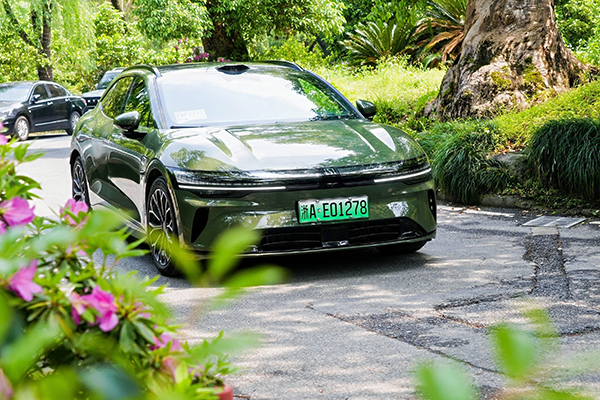
Driver assistance systems use smart sensors to constantly analyse the vehicle's surroundings and driving behaviour so that in a dangerous situation, they can react in an instant. Automakers are increasingly networking these systems to enhance safety and comfort for drivers and passengers.
The trend towards automated driving means that individual computers have to run more and more software, and the overall system is becoming considerably more complex. That's why embedded systems will need more computing power in the future. The AMALTHEA4public project involves 21 partners from Germany, Spain, Sweden, and Turkey, with the German project partners focusing primarily on automotive industry requirements. AMALTHEA4public will run through August 2017.
By using several central processing units (CPUs) that work in parallel, it's possible to give the computing power of embedded systems a major boost. Compared to the single-core CPUs used today, these parallel CPUs are several times faster at the same cycle frequency. Currently, the programs that the industry is using to develop embedded systems are not designed to incorporate parallel computing with multi and many-core processors.
The researchers are working off of AMALTHEA, a previous project, which designed and launched a software platform for multi-core systems. They plan to expand this platform to support many-core systems, so companies can connect it with all their development tools. The researchers are also drawing from the findings of other publicly funded projects. The platform is based on Eclipse, an open-source development environment, and is available free of charge to anyone who wishes to use it.