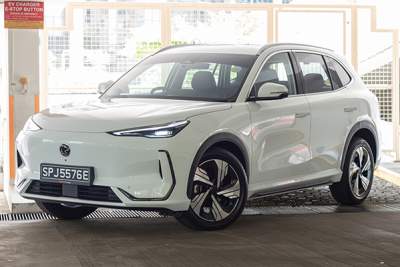
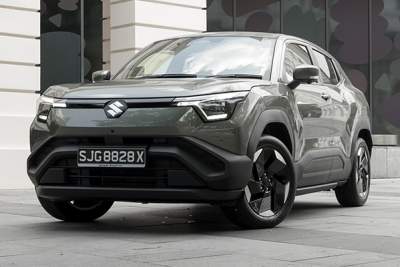
A number of motor distributors believe the stringent loan restrictions announced last year - in addition to the re-classification of Category A Certificates of Entitlement (COEs) from February - have led to the increase in the number of cars with a lower Open Market Value (OMV) to be registered.
According to The Business Times, the car dealers were responding to a letter from the Land Transport Authority (LTA) last week, which credited the introduction of a power cap, in addition to the usual engine-displacement criterion, for the rise in number of cars with a lower OMV being registered.
In the letter, the LTA disagreed with a reader who claimed "the addition of an engine power criterion in Category A has not improved the demarcation between premium and mass market cars".
Since February 2014, cars under Category A should have an engine capacity of up to 1,600cc and power output no higher than 130bhp. The move was seen to keep luxury models with small engines away from the small car category - once dominated by bread and butter cars.
In its reply letter, the LTA revealed the introduction of the power cap "has resulted in a significant decrease of almost 30 percent in the median OMV of cars registered in Cat A over the past six months. Correspondingly, there are also now more cars with lower OMV of up to $20,000 registered in Cat A".
However, some distributors credit the increase in sales of cheaper cars to the vehicle-financing restrictions introduced last year - where car buyers have to place a downpayment no more than 60 percent, and repay the remaining amount in no longer than five years. Before the change, it was possible to borrow up to 100 percent of the car price, and pay the loan over a maximum period of 10 years.
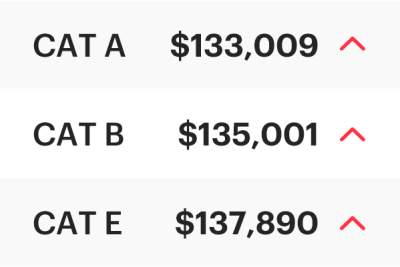
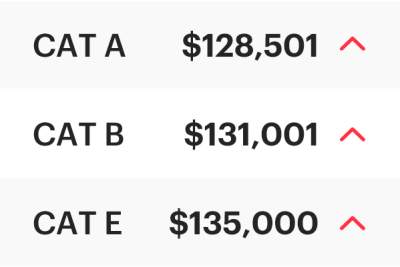
The Sales Manager of a luxury dealership backed up the claim and pointed to the difference between Cat A and Cat B COE premiums from the past six months. In the second tender of January this year, a Cat A and Cat B COEs were priced $72,290 and $79,000 respectively, but in the most recent tender two weeks ago, Cat A COEs were $62,890 while Cat B was valued at $65,001.
The Sales Manager explained, "Cat A has fallen $9,400 or 13.0 percent, but Cat B has dropped by more - $13,999 or 17.7 percent. COE supply issues aside, it shows that indirectly, there is now less demand for Cat B, with its more expensive models, than for Cat A."
The difference between Cat A and Cat B premiums has narrowed from $6,791 in late January to $2,111 late last month. Previously, when the gap became narrow, buyers opted for bigger cars as they were perceived to be better value for money - which in turn would increase the premium prices of Cat B and widen the gap again.
The Sales Manager added that if the gap between Cat A and B remains small, it indicates that demand for Cat B is softening, possibly due to the stringent loan curbs' impact on affordability.