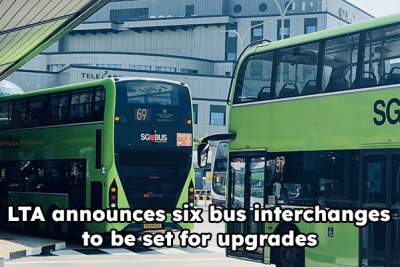
SBS Transit and SMRT will together receive over $1 million in incentives for exceeding targets last year in a pilot scheme, reported The Straits Times. SBS Transit has been awarded $710,286 for ensuring that 11 of its 12 bus services under trial ran at more punctual intervals. SMRT will get $345,714 for improvements to seven of its 10 routes in the scheme.
For these services, the operators managed to cut down commuters' excess waiting time - the difference between actual and scheduled waiting times - by between 12 seconds and 36 seconds. The operators were assessed between June and November last year under the Bus Service Reliability Framework, an ongoing two-year trial. Under this framework, an operator can earn as much as $6,000 a month for every six seconds it shaves off the waiting time, but it can also be fined up to $4,000 for every six seconds exceeded.
Land Transport Authority (LTA) said the incentives will help to offset the costs incurred by the operators in hiring more staff to help monitor the distance travelled and time intervals of the buses.
While some commuters said the buses appeared to be more punctual, others asked what would happen if there were no more incentives for the operators.
SBS Transit said yesterday that it was 'firmly committed to improving service reliability - with or without the incentives'. SMRT said it will use the extra funds to invest in technologies to track and analyse driver behaviour, which can improve bus punctuality.
SIM University urban transport management expert Park Byung Joon said that given that service levels will eventually hit a ceiling, it is unlikely the LTA will have to keep dishing out incentives. In London, where there is a similar scheme, bus operators made huge strides in the first few years, but later hit a plateau.
Dr. Park said it remains to be seen if the operators here can extend their good performance to the rest of the fleets, given that 22 routes are just a fraction of the more than 360 being run. But the LTA said there were no immediate plans to revise the standards, as this was a trial 'where both the authority and the operators are learning'.