Reports of crowded trains on the first day of lower service frequency have prompted Transport Minister Khaw Boon Wan to ask for a review of service reductions which kicked in the week of 13 April 2020.
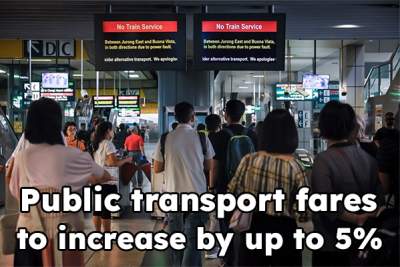
Mr. Khaw wrote on his Facebook page yesterday that the service adjustments had "caused some crowding in some stretches" of the North-South, East-West and Circle lines on 17 April 2020 - the first day when train service frequency was pared down to reflect the 70% to 75% drop in ridership.
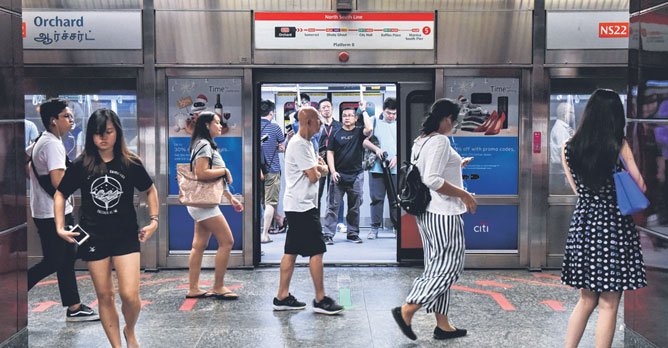

In response to queries from The Sunday Times earlier, the Land Transport Authority (LTA) said it was monitoring the situation and will make the necessary adjustments.
Mr. Khaw said, "I have told LTA to err on the side of generosity. That is, to over-provide rather than under-provide." He said that during this circuit breaker period, the "priority is safe distancing and ensuring our essential workers can reach their workplaces safely and punctually".
On Friday, MRT service intervals were five and 10 minutes for peak and non-peak periods respectively - down from two and five minutes before the COVID-19 outbreak prompted people to work from home, and students to go on home-based learning.
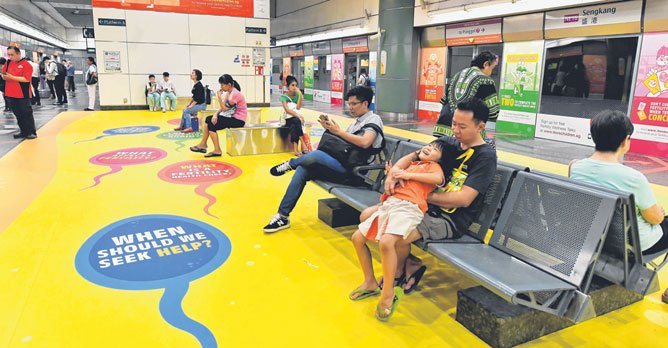
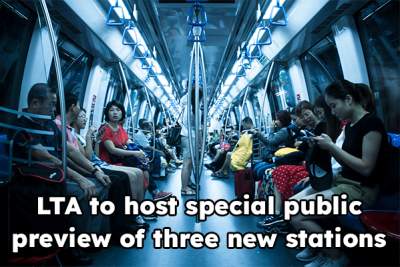
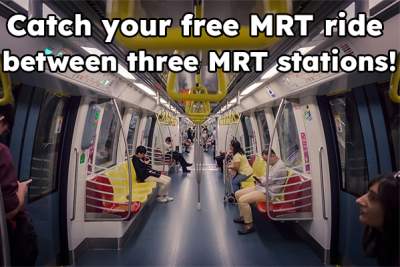
Photos of packed train carriages were also widely circulated, showing commuters occupying even spaces marked out by safe distancing crosses.
Among those responding to the public reaction was Professor Teo Yik Ying, Dean of the Saw Swee Hock School of Public Health at the National University of Singapore. Professor Teo told The Sunday Times, "Reducing service frequency is a fair response (to the drop in demand), but it should be done off-peak."
He added that during peak hours, there are essential workers who need to travel by public transport for work. Having crowded public transport, he said, would thus be "counter to our circuit breaker objectives".
He added that going by the many posts on the topic, the "situation is frustrating for many", and he hopes service frequency can be adjusted quickly.
Singapore University of Social Sciences Transport Economist Walter Theseira said, "The principle behind service reductions to save public money is sound, as services cannot break even with low passenger loading. But clearly, fine-tuning is needed. It may be that the essential services workers have to be required to implement staggered opening and closing times to spread out the load. Otherwise, it will be very difficult to reduce services and maintain safe distancing."