Let's talk about EVs, again.
While EVs are the future that every carmaker touts, it's plainly evident to anyone here in Singapore that EV uptake is still relatively slow.
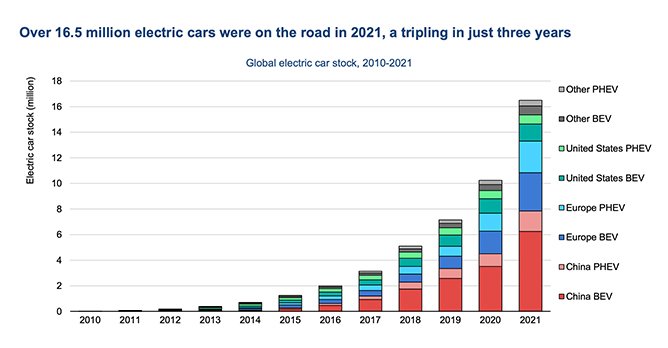
 Globally, EV sales have significantly picked up in recent years Based on the IEA's Global Electric Vehicle Outlook 2022 report, electrified car sales in 2021 have tripled in just three years, driven largely by China. China sold more electric cars (defined in this report as BEVs and PHEVs) in 2020 than the rest of the world combined, and now accounted for 16% of domestic car sales in 2021. In Europe, electric cars account for 17% of auto sales in 2021. In the U.S.A, electric cars account for 4.5% of new car sales, buoyed largely by Tesla (accounting for half). Globally, EV sales share stands at 8.6%.
In Singapore? There was a total of 45,442 new cars registered in 2021. While LTA does not have a specific category for EVs (they get lumped into the 'Others' category, which includes hybrids), LTA does have a statistic for the total vehicle population by fuel type.
 In Singapore, BEVs and PHEVs make up just 0.56% of the total car population In 2021, the number of BEVs and PHEVs combined stand at 3,634, compared to 1,769 in 2020. It would be reasonable to assume that the key bulk of the 1,865 increase is from new registrations (EVs here are generally not old enough to be deregistered and/or replaced). Even using that somewhat optimistic figure, Singapore's EV sales share is just 4%.
Furthermore, the EVs in Singapore amount to just 0.56% of the total car population. That stands in stark contrast against an outlier country like Norway (22.1%), but also regions like China (2.6%), Europe (2.3%), and even petrol-mad America (0.9%).
Why?
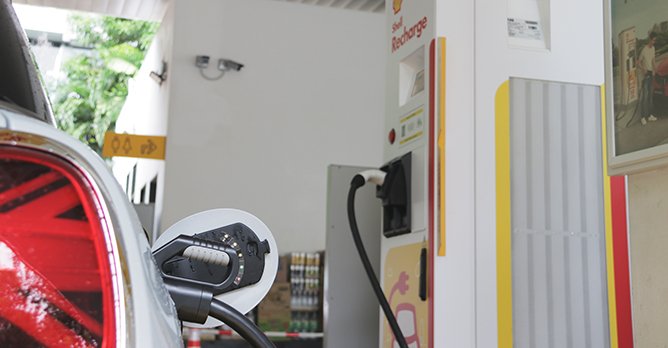 While infrastructure could be more robust, it is not the singular limiting factor to EV uptake There are, of course, concerns about charging infrastructure, though there is presently a push to grow the charging network significantly. We can also moan about COE and outrageous car prices, but that's not an EV-specific gripe. And yes, as we've evaluated previously, while you can save on 'fuel', it's not actually cheaper to buy and own an EV today.
Why is that so? I think there is one crucial component that we can, and should, evaluate - price. Once aggregated for COE, the price of a car in Singapore is determined chiefly by two things - cost, and profit.
Cost refers to the car's OMV - how much it's valued, and thus subsequently taxed. While specific OMV ranges from car to car, these figures are indicative of the car's value coming out of the factory.
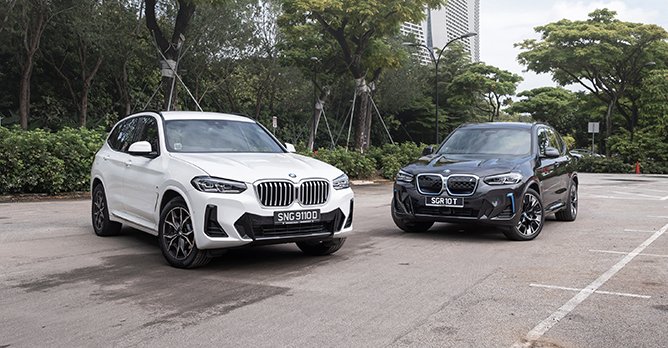 A cost comparison can give us more clarity on the price disparity between ICE and EV models Profit is simply the markup that dealers make on each car sold.
With readily available data, let's compare models with both ICE and BEV variants, and look at the relative pricing and see if there are any obvious conclusions to draw. For these calculations, we will use the respective base variants for comparison.
* Calculated using data available on sgcarmart and LTA.
Cost
Profit
So, what do the numbers tell us?
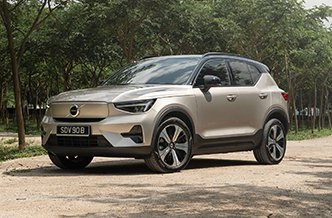
The XC40 B4 (left) has a significantly lower OMV compared to its Recharge variant First, the cost of EVs exceed that of equivalent ICEs across the board, and to quite a significant extent. This can be chalked down to the higher cost of the relevant electrical components (like batteries, electric motors and all the necessary hard and software), as well as economies of scale.
With EV takeup where it is, the economies of scale of petrol-powered cars is still higher - not to mention the generous years of manufacturing experience that further help bring down costs.
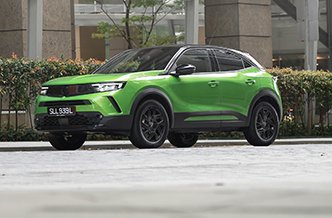
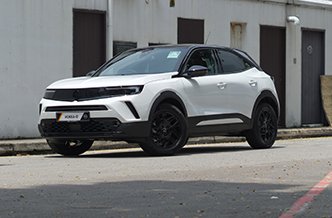
The electric Mokka-e (right) is actually being sold at a lower profit margin than its ICE variant When we look at the distributor side of things, the conclusions are less clear. Some EVs are being sold at a higher markup compared to their ICE equivalents, and some are lower. There is undeniably a fluidity to pricing that's affected by market conditions.
You could put the onus on distributors to incentivise EV adoption by lowering margins. However, we have to also understand that considering the lower proportion of EVs sold compared to ICE equivalents, there is financial logic to the need for a higher margin, especially for more premium models. Low margin plus low volume does not a good business make.
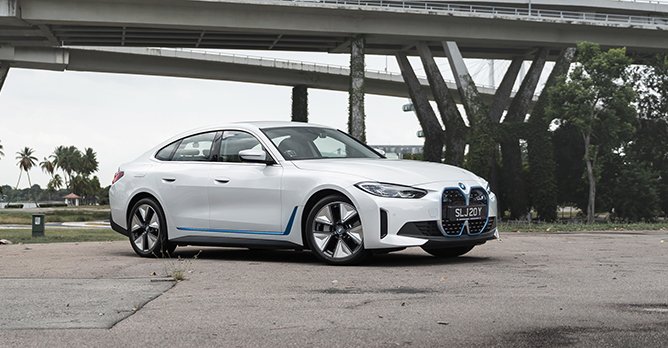
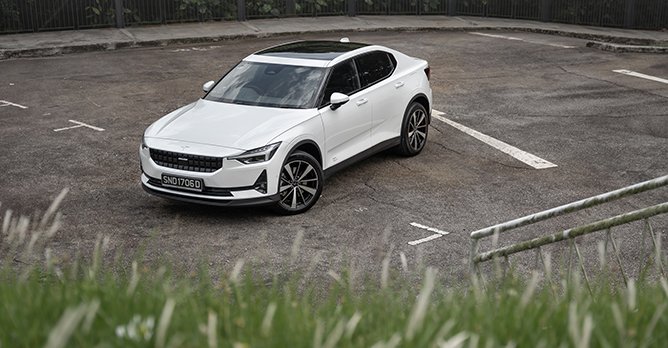 For EV uptake to be more viable moving forward, the cost price of EVs have to continue to come down Yes, there is still a conversation that needs to be had about the tax incentives offered by the local authorities for EVs, which at this point is clearly not enough when compared to other countries. And, this analysis does omit PHEVs from the equation, for the sake of relative clarity and brevity.
But one thing is clear, at least from out brief analysis - for EVs to become more cost viable to consumers, the cost price of the car out of the factory needs to come down further. At the very least to have price parity with ICE equivalents, but the hope is, of course, that with more technological development and greater economies of scale, the cost price of an EV will eventually be lower than ICE models.
While EVs are the future that every carmaker touts, it's plainly evident to anyone here in Singapore that EV uptake is still relatively slow.
In Singapore? There was a total of 45,442 new cars registered in 2021. While LTA does not have a specific category for EVs (they get lumped into the 'Others' category, which includes hybrids), LTA does have a statistic for the total vehicle population by fuel type.
Furthermore, the EVs in Singapore amount to just 0.56% of the total car population. That stands in stark contrast against an outlier country like Norway (22.1%), but also regions like China (2.6%), Europe (2.3%), and even petrol-mad America (0.9%).
Why?
Why is that so? I think there is one crucial component that we can, and should, evaluate - price. Once aggregated for COE, the price of a car in Singapore is determined chiefly by two things - cost, and profit.
Cost refers to the car's OMV - how much it's valued, and thus subsequently taxed. While specific OMV ranges from car to car, these figures are indicative of the car's value coming out of the factory.
With readily available data, let's compare models with both ICE and BEV variants, and look at the relative pricing and see if there are any obvious conclusions to draw. For these calculations, we will use the respective base variants for comparison.
* Calculated using data available on sgcarmart and LTA.
Cost
| Brand | Model | COE | ICE | EV | % diff |
| BMW | X3/iX3 | B | $46,618 | $58,967 | +26% |
| BMW | 4 Series/i4 Gran Coupe | B | $51,180 | $64,704 | +26% |
| BMW | 7 Series/i7 | B | $103,000 | $152,896 | +48% |
| Mercedes | GLA200/EQA | B | $34,327 | $58,800 | +71% |
| Mercedes | GLB200/EQB | B | $37,319 | $57,748 | +55% |
| Mercedes | GLC300/EQC | B | $51,818 | $74,198 | +43% |
| Opel | Mokka/Mokka-e | A | $21,209 | $35,000 | +65% |
| Peugeot | 2008/e-2008 | A | $21,462 | $38,000 | +77% |
| Volvo | XC40 B4/Recharge | B | $29,306 | $43,500 | +48% |
Profit
| Brand | Model | COE | ICE | EV | Diff |
| BMW | X3/iX3 | B | 28% | 44% | +16% |
| BMW | 4 Series/i4 Gran Coupe | B | 20% | 33% | +13% |
| BMW | 7 Series/i7 | B | 26% | 21% | -5% |
| Mercedes | GLA200/EQA | B | 46% | 45% | -1% |
| Mercedes | GLB200/EQB | B | 42% | 35% | -7% |
| Mercedes | GLC300/EQC | B | 31% | 41% | +10% |
| Opel | Mokka/Mokka-e | A | 24% | 16% | -8% |
| Peugeot | 2008/e-2008 | A | 7% | 12% | +5% |
| Volvo | XC40 B4/Recharge | B | 32% | 24% | -8% |
So, what do the numbers tell us?
With EV takeup where it is, the economies of scale of petrol-powered cars is still higher - not to mention the generous years of manufacturing experience that further help bring down costs.
You could put the onus on distributors to incentivise EV adoption by lowering margins. However, we have to also understand that considering the lower proportion of EVs sold compared to ICE equivalents, there is financial logic to the need for a higher margin, especially for more premium models. Low margin plus low volume does not a good business make.
But one thing is clear, at least from out brief analysis - for EVs to become more cost viable to consumers, the cost price of the car out of the factory needs to come down further. At the very least to have price parity with ICE equivalents, but the hope is, of course, that with more technological development and greater economies of scale, the cost price of an EV will eventually be lower than ICE models.