Seat Arona 1.0 ECOTSI DSG FR
Looks and feels more expensive
More refined powertrain
Has added driver assistance features
Kia Stonic 1.0T SX Sunroof
Funkier styling
Offered with the option of a sunroof
Much cheaper to buy
Turbocharged 1.0-litre cars are gaining popularity these days, thanks to the low road taxes, excellent fuel economy and good amount of torque they offer.
They're even more favourable in compact crossover guise, given the trend that tends towards such body styles in the past decade.
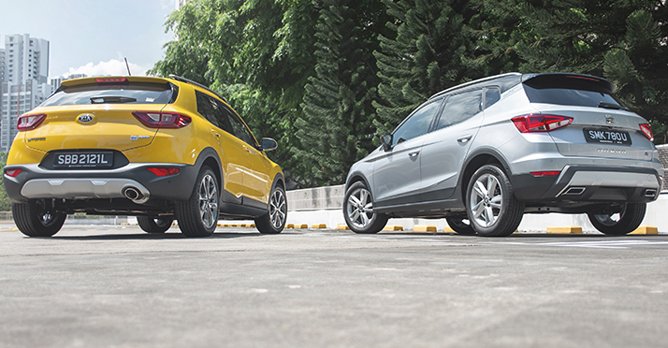
 1.0-litre cars, especially crossovers like the Kia Stonic (left) and the Seat Arona (right), are becoming increasingly popularSo if you're thinking of jumping on the 1.0-litre crossover bandwagon, two models that deserve some serious consideration are the Kia Stonic and the Seat Arona. We spent a day finding out just which one you may prefer.
Clothes make the car
Right off the bat, the Stonic appears to be the bubblier-looking car, while the Arona comes off as something a little more serious and mature.
The face, as well as the generally rounder disposition of the Stonic, makes it appear to be smiling at you, while the sharper-looking Arona looks more aggressive.
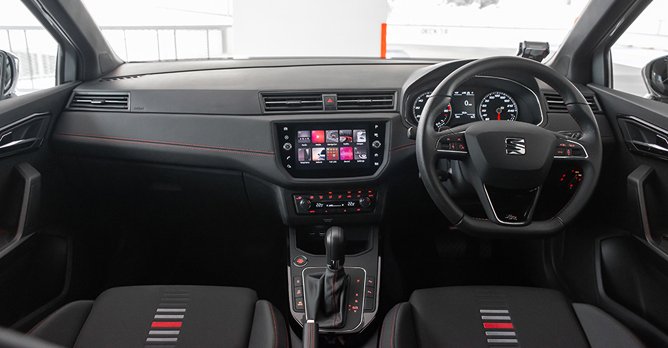 Cabin of the Arona looks and feels more premium than its Korean rival'sInside, the Arona offers an interior that feels slightly plusher. There is less use of hard plastics and the switchgear generally feels smoother to operate, while its sleeker dashboard design further extends its edge over the Kia.
The Arona also comes with a few more cubbyholes, a larger 400-litre boot (as opposed to the Stonic's 352 litres) and a bit more passenger room in the back.
Still, there's no denying that the Stonic's cabin has been well put-together, and is a step up from previous generation Kia models.
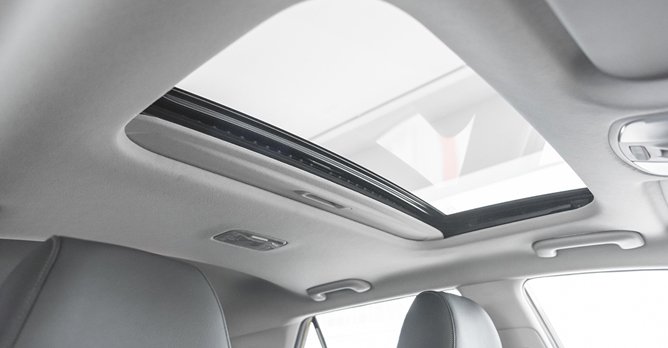 The Stonic's sunroof is a welcoming feature as it adds to the feeling of airiness in the carWhile it may also lose out slightly in terms of roominess, space all around is adequate for adults and its sunroof (which the Arona doesn't have) adds to the feeling of airiness.
They're even more favourable in compact crossover guise, given the trend that tends towards such body styles in the past decade.
Clothes make the car
Right off the bat, the Stonic appears to be the bubblier-looking car, while the Arona comes off as something a little more serious and mature.
The face, as well as the generally rounder disposition of the Stonic, makes it appear to be smiling at you, while the sharper-looking Arona looks more aggressive.
The Arona also comes with a few more cubbyholes, a larger 400-litre boot (as opposed to the Stonic's 352 litres) and a bit more passenger room in the back.
Still, there's no denying that the Stonic's cabin has been well put-together, and is a step up from previous generation Kia models.
It's also important to note that at time of writing (as of 18 April 2019), the Stonic costs nearly $14,000 less than the Arona, which is a massive compensating factor for buyers.
On the go
Both cars are pretty on par in terms of straight-line performance, with the boosted 1.0-litre of the Stonic offering 118bhp and 171Nm of torque, and the Arona's offering 114bhp and 200Nm.
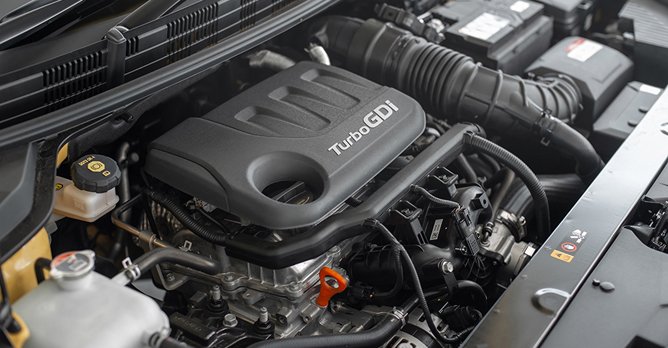 Although the Stonic's turbocharged 1.0-litre has more power, it has less torque and refinement than the Arona'sFrom 0-100km/h, the difference between their abilities is only 0.6 seconds. The Arona has that slight advantage here, and it's probably down to the quicker-shifting nature of its DSG transmission.
The Stonic employs a dual-clutch tranny as well, but it's admittedly less refined and decisive as its Seat rival's. Its engine, too, feels a little gruffer, and its brakes are a little spongier.
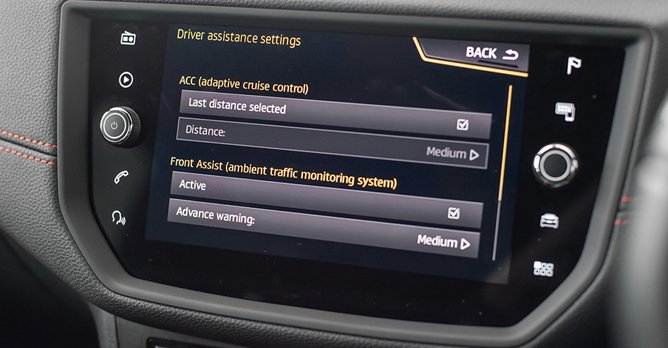 While more expensive, the Arona does come with extra driver assistance features and is currently the most affordable European crossover hereOverall, it's the Arona that delivers a slightly more spirited, more agile experience. It does, however, offer a firmer ride than the Stonic, which is something family types may not quite appreciate.
For the premium that it commands, the Arona offers a little more quality, a little more space and a little more fun behind the wheel.
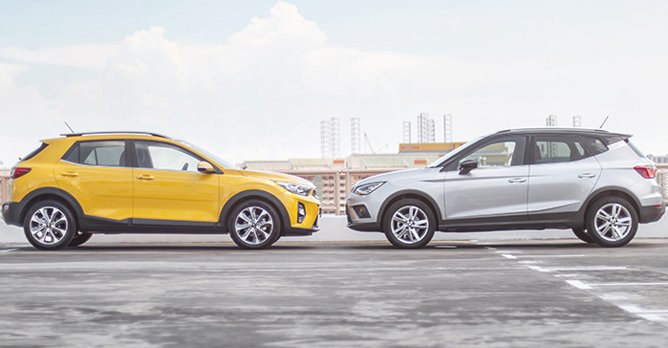 The Stonic (left) is undoubtedly great value for money while the Arona (right) offers a more spirited drive and better finishBut $14,000 is a whopping sum for anyone dipping their fingers in this pool, so if you're not fussed about its few shortcomings against the Seat, then there's no reason to not like this value-for-money compact Kia, too.
On the go
Both cars are pretty on par in terms of straight-line performance, with the boosted 1.0-litre of the Stonic offering 118bhp and 171Nm of torque, and the Arona's offering 114bhp and 200Nm.
The Stonic employs a dual-clutch tranny as well, but it's admittedly less refined and decisive as its Seat rival's. Its engine, too, feels a little gruffer, and its brakes are a little spongier.
For the premium that it commands, the Arona offers a little more quality, a little more space and a little more fun behind the wheel.