View page in desktop
|
Report error
  •   Apple app store icon
  • Google play store icon
Terms of Service
|
Privacy Policy
|
PDPA
|
Site Map
©2004-2026 Sgcarmart, Singapore. All rights reserved.
  • Home
  • Car Articles
  • advice
  • advice Listings
  • Car Ownership Advice
  • EVs boast zero tailpipe-emissions, but how is the electricity that powers them generated?

    11 Nov 2021

    |

    9,248 views

    While electric cars are undeniably better for the environment, it would do us good to pay more attention to the promise of "zero-emissions".

    While we're huge fans of electric vehicles here at Sgcarmart, we also need to admit that discussions surrounding electric vehicles have been quite trigger-happy with buzz-terms like "green", "environmentally friendly" and most notably (notoriously), "zero emissions".

    As more and more EVs arrive at our doorsteps and shopping malls, however, it's worth taking some time to pause and consider the bigger, more complete picture. Across various infrastructural contexts, the green credentials of a single model can differ quite significantly. Here, we attempt to understand how Singapore's energy scene continues to interact with our cars of tomorrow. 
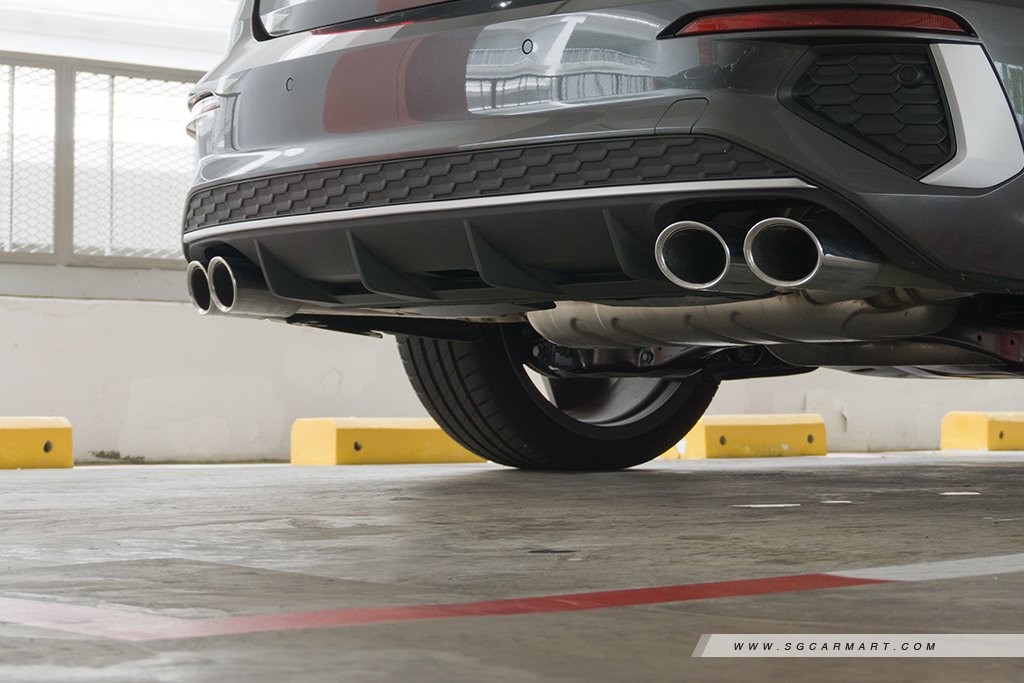
    Apart from slowing global warming, eliminating tailpipe emissions also contributes to better air quality

    Zero emissions: One part of the picture

    Carbon emissions have long been the unshakeable, immovable core of all EV-related discussions. But this isn't a homogenous concept; we miss important nuances when we don't break it down into its smaller parts. As such, the following are the three sub-categories that should be essential knowledge for every EV-driver:

    1. Tailpipe emissions, a.k.a the shining star (or culprit, depending on your perspective) of most policy reforms and carmaker announcements worldwide. 

    This is the one that also dictates your new Merc's Vehicular Emissions Schemes (VES) banding plus rebates locally. As a double-pronged weapon contributing to both global warming and air pollution, tailpipe emissions are completely eradicated with an EV. A good start… but most certainly not where things end.
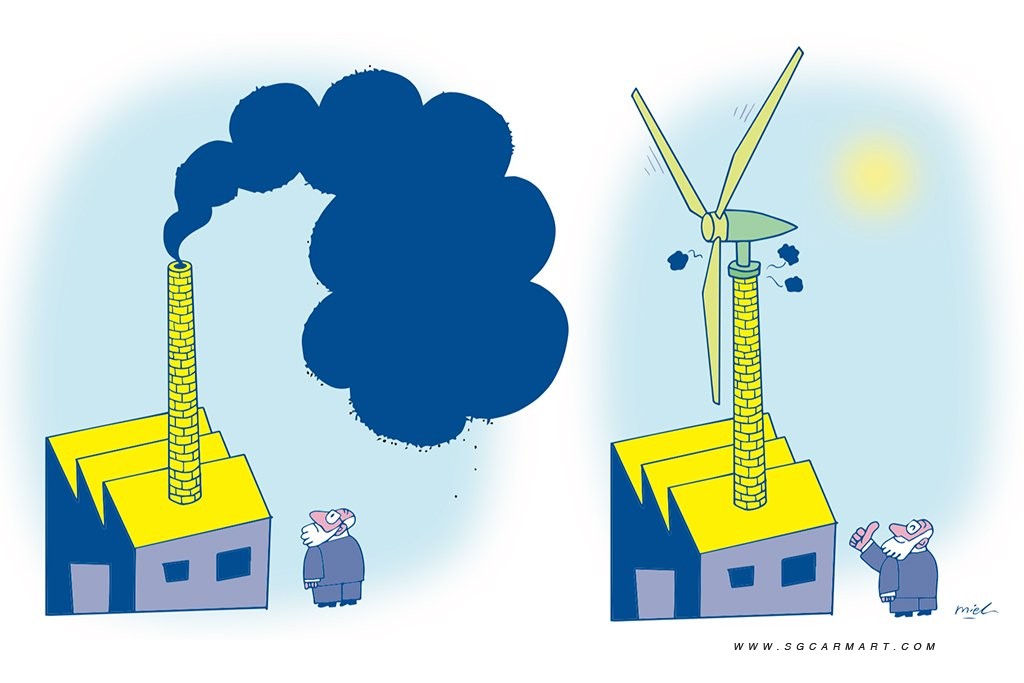
    Grid emissions - emissions from the process of electricity generation - are sometimes overlooked

    2. Grid emissions, a.k.a. the one that got Joe Nguyen, the LTA, and even Elon Musk and PM Lee themselves all embroiled in the Tesla Model S saga of 2016. "Grid" here refers to the electricity grid from which a given area draws power. 

    While electric vehicles are technically emission-free as they're zipping around silently (okay, with the exception of BlueSG's mini-rockets), the same probably can't be said about the electricity itself on which they run.

    After all, electricity has to be generated. As it stands, natural gas - the cleanest-burning among fossil fuels - is responsible for close to 95 per cent of our electricity generation, meaning our electricity technically isn't emission-free. This explains why EVs still get taxed for emissions locally using a calculated Grid Emission Factor (GEF) - this number been steadily decreasing over the years, though; hooray!

    This one's a bit more important for Singapore so hang on just a while; we'll get into this again further down.
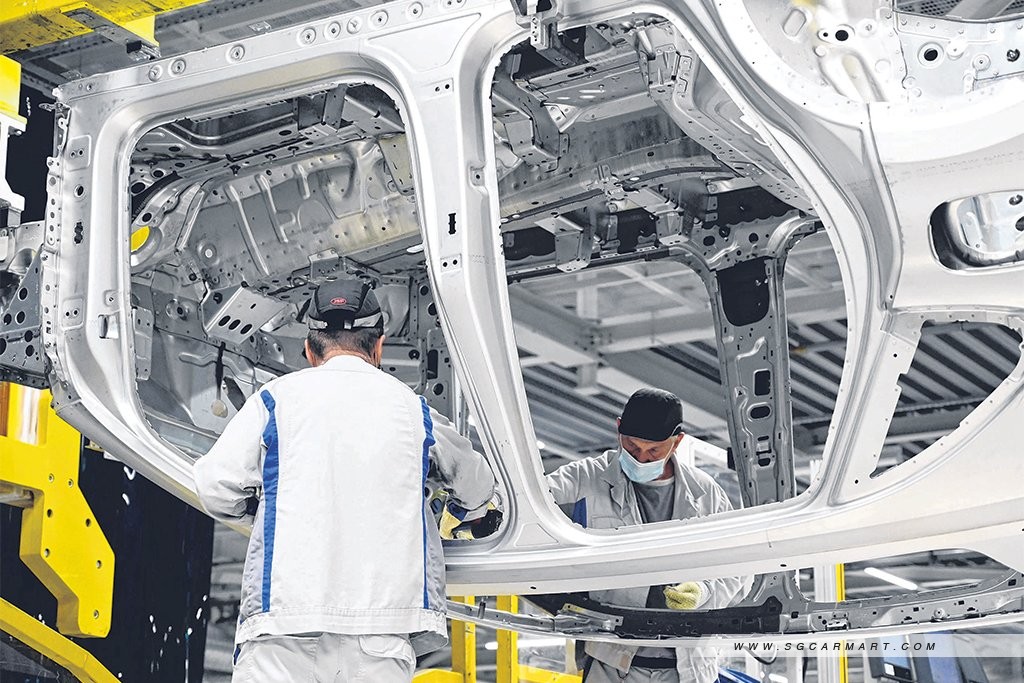
    Emissions begin at the point of manufacturing, and continue even after an EV's active days have concluded

    3. Lifecycle emissions, a.k.a. the one that still gets EVs a bad rep among environmental groups. Lifecycle emissions refer to an EV's emissions (or for that matter, any car's) throughout its entire lifespan. From factory to scrapyard. 

    Yes - it already begins when your new Tesla Model 3's headlamps are being affixed to its body. Apart from emissions from manufacturing plants, environmental degradation also occurs when mining for rare earth materials, such as lithium and cobalt - essential components for many batteries. More complications follow when EVs need to be scrapped, since batteries need to be recycled and disposed of safely.
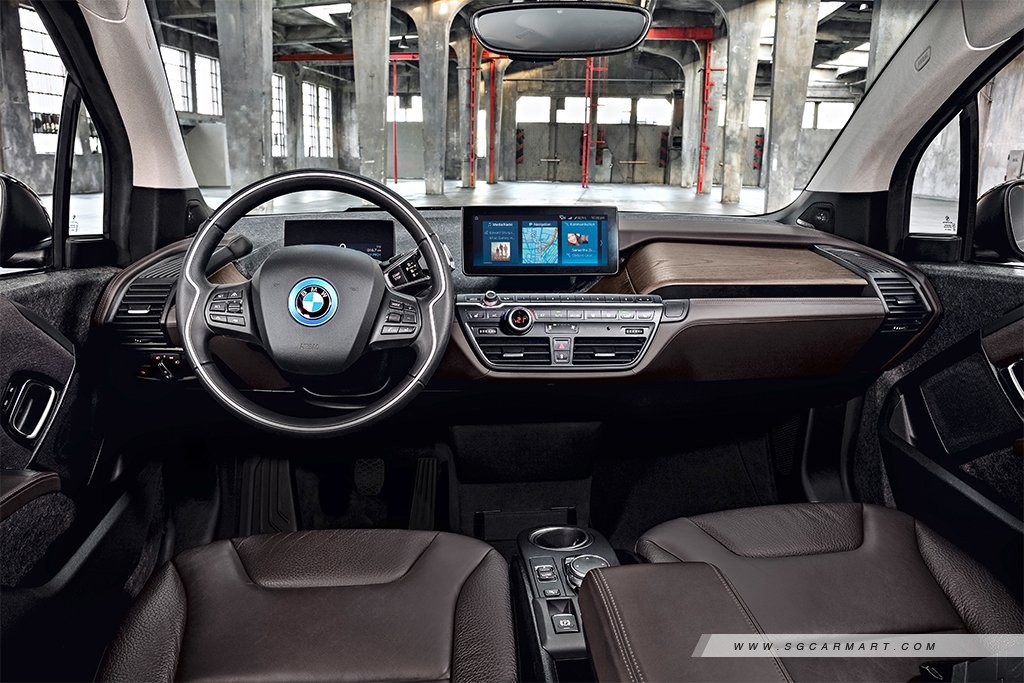
    Consistency is key: EVs like the BMW i3 increasingly incorporate recycled/recyclable materials

    Still, with the advancement of technology and scaling up of EV-production, recycling processes are being optimised increasingly so that fewer components go to the landfill whenever an electric car (and its battery) finally says goodbye to the tarmac. The end game is a circular economy, where everything is recycled, reused or repurposed. 

    Most carmakers are also making sure their electric cars aren't just "green" in name. The BMW i3, for instance, features an interior that comprises 25 per cent renewable raw materials and recycled plastics.

    ctaimage

    Sgcarmart

    Join the Sgcarmart Community

    Become a Community member to enjoy exclusive promos & freebies for you and your car!

    Join us on Telegram link red arrow
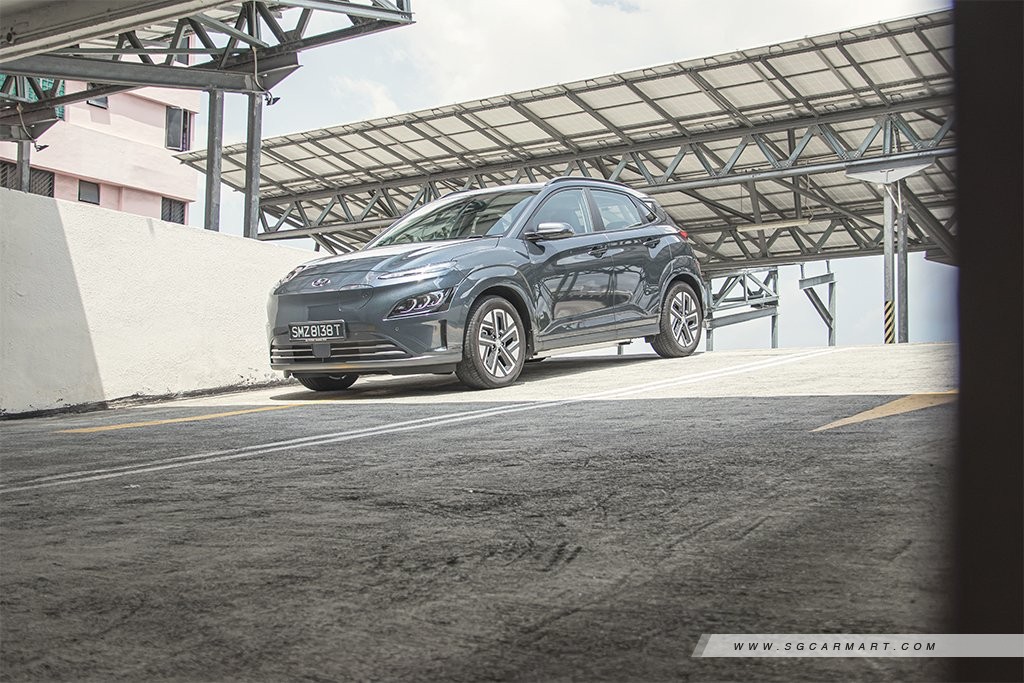
    The Hyundai Kona Electric, a mass market EV model, has an electricity consumption of 15kWh/100km

    How your EV comes into play with its power consumption

    Understanding how EVs might alter our electricity consumption is crucial as our energy landscape continues to shift under both market and environmental pressures. We're going to get into some math here - just rough gauges, of course, since the specifics are difficult to measure - so hold on tight.

    The electricity consumption of a mass market EV like the Hyundai Kona Electric stands at roughly 15kWh/100km. This means it consumes 1800kWh, or 1.8mWh per year assuming a mileage of 12,000km. 

    Base metric:1 kilowatt hour (kWh)
    1,000kWh =1 megawatt hour (mWh)
    1,000mWh=1 gigawatt hour (gWh)

    Multiplied across the entire vehicle population of 630,000ish cars, that's about 1,134,000mWh (1,134gWh) of additional electricity consumption annually. While clocking in under the electricity consumption of Singapore's household sector in 2020 (4,000gWh), and even the transport sector's (1,400gWh), these are still huge numbers to suddenly be dealing with. 

    But we're not suddenly dealing with them, are we? Based on LTA statistics, new car registrations averaged out at approximately 53,870 per year between 2011 and 2020. Applying the stats above to 54,000 EVs would amount to an extra 97,200mWh (97.2gWh) of additional electricity consumption annually. 

    All this means that… It actually seems we'll have the capacity to cope with the switch to EVs considering the extended timeline we've given ourselves.
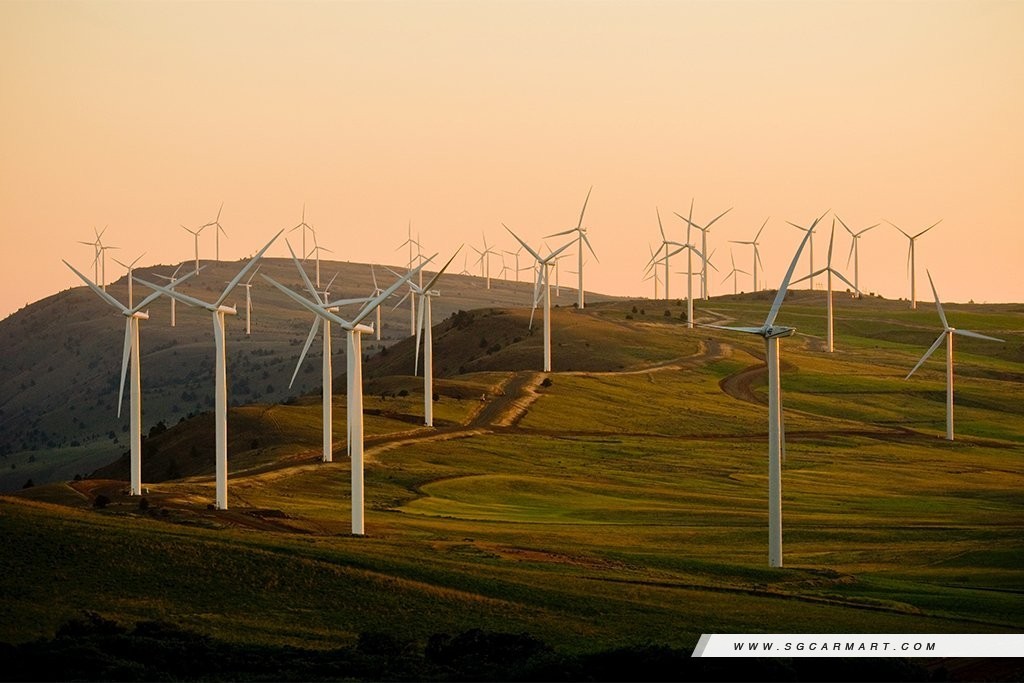
    Wind farms require both the right climatic conditions as well as lots of space to truly be viable

    Where Singapore stands apart: Grid emissions in an alternative-energy disadvantaged country

    Coming back to what we mentioned earlier, the category of grid emissions in particular is worth paying extra attention to here in Singapore. 

    An EV's green credentials are likely to be the most optimised if you're bundled up in Iceland, for example. The Nordic island country's electricity mix is completely renewable thanks to its geographical endowments; in 2016, geothermal energy was responsible for close to 27 per cent of electricity production, while hydropower made up the rest. 

    Singapore, however, is quite different - whence, in the land of public housing and shopping malls, doth the waters flow powerfully and freely enough? Wind farms also require acres of space either inland or offshore, and given how dense we are, nuclear energy cannot be deployed safely too. You've probably already realised the problem: We're too small. 
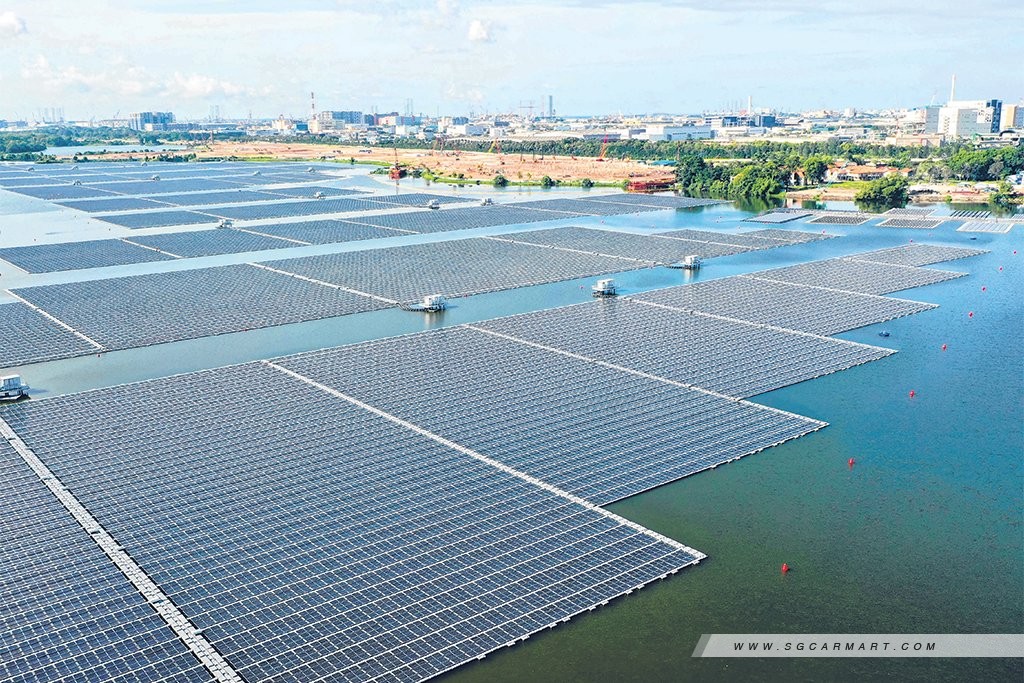
    Here comes the sun: Tengeh Reservoir now features a whopping 122,000 solar panels

    On the flip side, we do have one source of energy, and in blinding abundance as well: The sun.

    But efforts to utilise its power unfortunately haven't advanced to a point where it can become our de-facto, dominant source. While solar energy is an undeniable force to be reckoned with here, harnessing it in sufficient quantities for an entire nation would require large-scale deployment… bringing us right back to our land-constraint headache. 

    Still, though, that doesn't mean that Singapore has given up. Our first large-scale solar farm, featuring a never-ending 122,000 panels, was opened in Tengeh Reservoir, with more set to follow. By 2020, we should be producing enough solar energy to power 350,000 households for a year. 
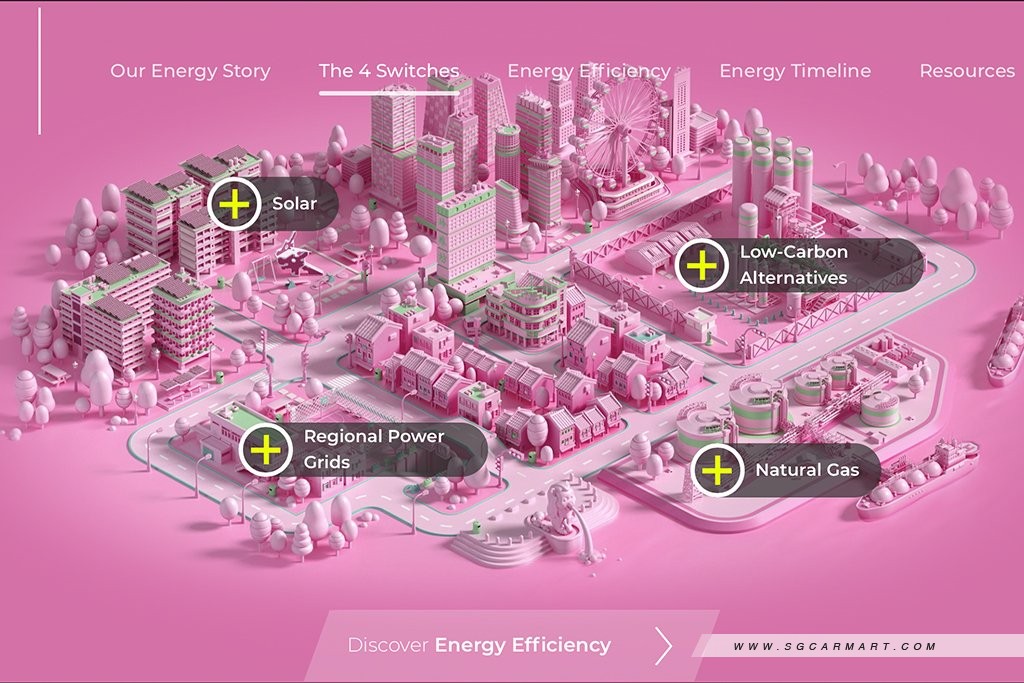
    The Four Switches, a metaphor concocted by the EMA, help to explain how Singapore intends to decarbonise its power sector in the coming years

    Our Energy Market Authority's (EMA) press release team has also been busy announcing exciting news over the past month. Geothermal energy is actually being explored in the Northern and Eastern regions of Singapore as a potential source for power generation (hot springs, you say?).

    Simultaneously, pilot projects are coming to life to import low-carbon energy from our neighbours (current plans include hydroelectric energy from Laos, and solar energy from Indonesia). These will comprise 30 per cent of our power supply by 2035.

    In other words, EVs are unlikely to reach their maximum potential for emission-reduction in "an alternative-energy disadvantaged" place like Singapore, as the authorities put it. But Singapore is trying (you can refer to the EMA's rather endearing metaphor of The Four Switches to understand more). And we can rest assured that things will only pick up from hereon.
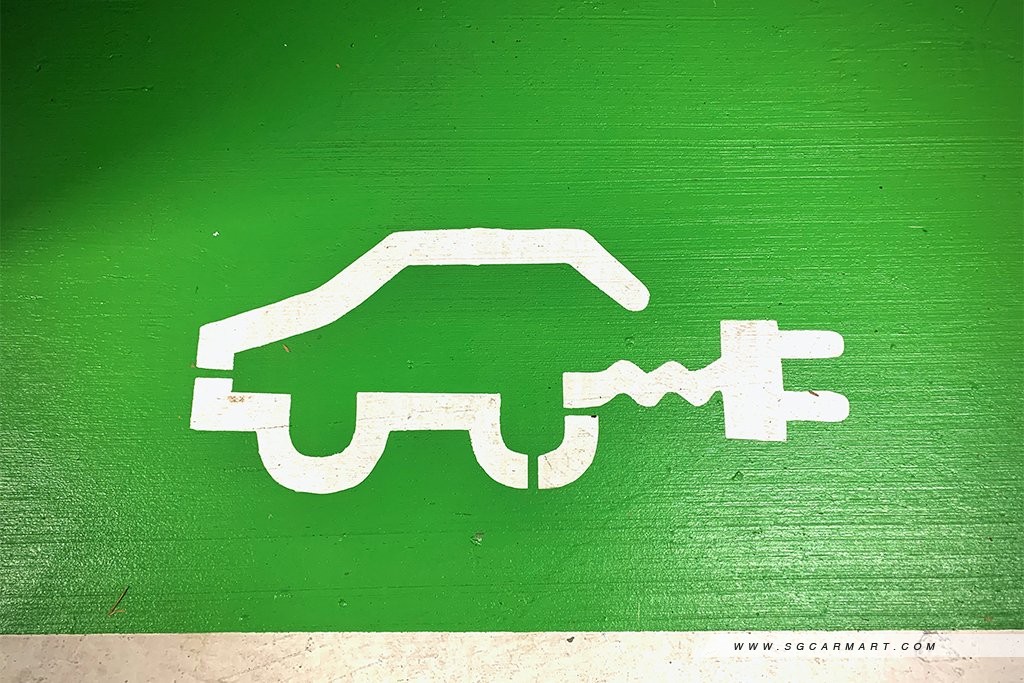
    In case anyone tries to convince you otherwise - no, EVs are not more pollutive than combustion-engined cars even if we consider all its emissions

    A mere matter of degree: EVs still better for the environment

    As EVs continue to be embraced as the new darlings of the climate fight, it's important to recall that the environmental impact of a car ultimately goes beyond what it emits when on the move. With regards to grid emissions especially, Singapore will have to continue fighting hard to surmount the odds stacked against it. We have to remain constantly aware of this: There's clean, and then there's cleaner.

    Nonetheless, EVs unambiguously, indubitably spell a greener age for the automotive and transport sector. By the very virtue of eliminating tailpipe emissions, the absence of less visible pollutants like carbon monoxide already significantly improves our quality of life. 

    Furthermore, EVs on the whole are already less pollutive than combustion engines when electricity is generated by coal; even less so in a place like Singapore when electricity is generated by natural gas. As Singapore intensifies its diversification into more renewable energy sources, this should only continue to hold true.

    ctaimage

    Sgcarmart

    Join the Sgcarmart Community

    Become a Community member to enjoy exclusive promos & freebies for you and your car!

    • Be the first to enjoy exclusive promos & giveaways
    • Enjoy membership perks for Sgcarmart services

    Join us on Telegram link red arrow

    Mattheus Wee
    Story by Mattheus Wee
    Mattheus is happy he lives in a world with (hot) hatchbacks and good coffeeshops. He also genuinely appreciates an honest MPV.
    Photos by Editorial Team, Unsplash, Newspress
    24.4k

    Tags

    ev resource evs singapore energy mix electricity grid tesla lta

    AllReviewsNewsAdviceFeaturesVideos
    • Home
    • Car Articles
    • advice
    • advice Listings
    • Car Ownership Advice

    EVs boast zero tailpipe-emissions, but how is the electricity that powers them generated?

    11 Nov 2021

    |

    9,248 views

    While electric cars are undeniably better for the environment, it would do us good to pay more attention to the promise of "zero-emissions".

    While we're huge fans of electric vehicles here at Sgcarmart, we also need to admit that discussions surrounding electric vehicles have been quite trigger-happy with buzz-terms like "green", "environmentally friendly" and most notably (notoriously), "zero emissions".

    As more and more EVs arrive at our doorsteps and shopping malls, however, it's worth taking some time to pause and consider the bigger, more complete picture. Across various infrastructural contexts, the green credentials of a single model can differ quite significantly. Here, we attempt to understand how Singapore's energy scene continues to interact with our cars of tomorrow. 

    Apart from slowing global warming, eliminating tailpipe emissions also contributes to better air quality

    Zero emissions: One part of the picture

    Carbon emissions have long been the unshakeable, immovable core of all EV-related discussions. But this isn't a homogenous concept; we miss important nuances when we don't break it down into its smaller parts. As such, the following are the three sub-categories that should be essential knowledge for every EV-driver:

    1. Tailpipe emissions, a.k.a the shining star (or culprit, depending on your perspective) of most policy reforms and carmaker announcements worldwide. 

    This is the one that also dictates your new Merc's Vehicular Emissions Schemes (VES) banding plus rebates locally. As a double-pronged weapon contributing to both global warming and air pollution, tailpipe emissions are completely eradicated with an EV. A good start… but most certainly not where things end.

    Grid emissions - emissions from the process of electricity generation - are sometimes overlooked

    2. Grid emissions, a.k.a. the one that got Joe Nguyen, the LTA, and even Elon Musk and PM Lee themselves all embroiled in the Tesla Model S saga of 2016. "Grid" here refers to the electricity grid from which a given area draws power. 

    While electric vehicles are technically emission-free as they're zipping around silently (okay, with the exception of BlueSG's mini-rockets), the same probably can't be said about the electricity itself on which they run.

    After all, electricity has to be generated. As it stands, natural gas - the cleanest-burning among fossil fuels - is responsible for close to 95 per cent of our electricity generation, meaning our electricity technically isn't emission-free. This explains why EVs still get taxed for emissions locally using a calculated Grid Emission Factor (GEF) - this number been steadily decreasing over the years, though; hooray!

    This one's a bit more important for Singapore so hang on just a while; we'll get into this again further down.

    Emissions begin at the point of manufacturing, and continue even after an EV's active days have concluded

    3. Lifecycle emissions, a.k.a. the one that still gets EVs a bad rep among environmental groups. Lifecycle emissions refer to an EV's emissions (or for that matter, any car's) throughout its entire lifespan. From factory to scrapyard. 

    Yes - it already begins when your new Tesla Model 3's headlamps are being affixed to its body. Apart from emissions from manufacturing plants, environmental degradation also occurs when mining for rare earth materials, such as lithium and cobalt - essential components for many batteries. More complications follow when EVs need to be scrapped, since batteries need to be recycled and disposed of safely.

    Consistency is key: EVs like the BMW i3 increasingly incorporate recycled/recyclable materials

    Still, with the advancement of technology and scaling up of EV-production, recycling processes are being optimised increasingly so that fewer components go to the landfill whenever an electric car (and its battery) finally says goodbye to the tarmac. The end game is a circular economy, where everything is recycled, reused or repurposed. 

    Most carmakers are also making sure their electric cars aren't just "green" in name. The BMW i3, for instance, features an interior that comprises 25 per cent renewable raw materials and recycled plastics.

    ctaimage

    Sgcarmart

    Join the Sgcarmart Community

    Become a Community member to enjoy exclusive promos & freebies for you and your car!

    Join us on Telegram link red arrow

    The Hyundai Kona Electric, a mass market EV model, has an electricity consumption of 15kWh/100km

    How your EV comes into play with its power consumption

    Understanding how EVs might alter our electricity consumption is crucial as our energy landscape continues to shift under both market and environmental pressures. We're going to get into some math here - just rough gauges, of course, since the specifics are difficult to measure - so hold on tight.

    The electricity consumption of a mass market EV like the Hyundai Kona Electric stands at roughly 15kWh/100km. This means it consumes 1800kWh, or 1.8mWh per year assuming a mileage of 12,000km. 

    Base metric:1 kilowatt hour (kWh)
    1,000kWh =1 megawatt hour (mWh)
    1,000mWh=1 gigawatt hour (gWh)

    Multiplied across the entire vehicle population of 630,000ish cars, that's about 1,134,000mWh (1,134gWh) of additional electricity consumption annually. While clocking in under the electricity consumption of Singapore's household sector in 2020 (4,000gWh), and even the transport sector's (1,400gWh), these are still huge numbers to suddenly be dealing with. 

    But we're not suddenly dealing with them, are we? Based on LTA statistics, new car registrations averaged out at approximately 53,870 per year between 2011 and 2020. Applying the stats above to 54,000 EVs would amount to an extra 97,200mWh (97.2gWh) of additional electricity consumption annually. 

    All this means that… It actually seems we'll have the capacity to cope with the switch to EVs considering the extended timeline we've given ourselves.

    Wind farms require both the right climatic conditions as well as lots of space to truly be viable

    Where Singapore stands apart: Grid emissions in an alternative-energy disadvantaged country

    Coming back to what we mentioned earlier, the category of grid emissions in particular is worth paying extra attention to here in Singapore. 

    An EV's green credentials are likely to be the most optimised if you're bundled up in Iceland, for example. The Nordic island country's electricity mix is completely renewable thanks to its geographical endowments; in 2016, geothermal energy was responsible for close to 27 per cent of electricity production, while hydropower made up the rest. 

    Singapore, however, is quite different - whence, in the land of public housing and shopping malls, doth the waters flow powerfully and freely enough? Wind farms also require acres of space either inland or offshore, and given how dense we are, nuclear energy cannot be deployed safely too. You've probably already realised the problem: We're too small. 

    Here comes the sun: Tengeh Reservoir now features a whopping 122,000 solar panels

    On the flip side, we do have one source of energy, and in blinding abundance as well: The sun.

    But efforts to utilise its power unfortunately haven't advanced to a point where it can become our de-facto, dominant source. While solar energy is an undeniable force to be reckoned with here, harnessing it in sufficient quantities for an entire nation would require large-scale deployment… bringing us right back to our land-constraint headache. 

    Still, though, that doesn't mean that Singapore has given up. Our first large-scale solar farm, featuring a never-ending 122,000 panels, was opened in Tengeh Reservoir, with more set to follow. By 2020, we should be producing enough solar energy to power 350,000 households for a year. 

    The Four Switches, a metaphor concocted by the EMA, help to explain how Singapore intends to decarbonise its power sector in the coming years

    Our Energy Market Authority's (EMA) press release team has also been busy announcing exciting news over the past month. Geothermal energy is actually being explored in the Northern and Eastern regions of Singapore as a potential source for power generation (hot springs, you say?).

    Simultaneously, pilot projects are coming to life to import low-carbon energy from our neighbours (current plans include hydroelectric energy from Laos, and solar energy from Indonesia). These will comprise 30 per cent of our power supply by 2035.

    In other words, EVs are unlikely to reach their maximum potential for emission-reduction in "an alternative-energy disadvantaged" place like Singapore, as the authorities put it. But Singapore is trying (you can refer to the EMA's rather endearing metaphor of The Four Switches to understand more). And we can rest assured that things will only pick up from hereon.

    In case anyone tries to convince you otherwise - no, EVs are not more pollutive than combustion-engined cars even if we consider all its emissions

    A mere matter of degree: EVs still better for the environment

    As EVs continue to be embraced as the new darlings of the climate fight, it's important to recall that the environmental impact of a car ultimately goes beyond what it emits when on the move. With regards to grid emissions especially, Singapore will have to continue fighting hard to surmount the odds stacked against it. We have to remain constantly aware of this: There's clean, and then there's cleaner.

    Nonetheless, EVs unambiguously, indubitably spell a greener age for the automotive and transport sector. By the very virtue of eliminating tailpipe emissions, the absence of less visible pollutants like carbon monoxide already significantly improves our quality of life. 

    Furthermore, EVs on the whole are already less pollutive than combustion engines when electricity is generated by coal; even less so in a place like Singapore when electricity is generated by natural gas. As Singapore intensifies its diversification into more renewable energy sources, this should only continue to hold true.

    ctaimage

    Sgcarmart

    Join the Sgcarmart Community

    Become a Community member to enjoy exclusive promos & freebies for you and your car!

    • Be the first to enjoy exclusive promos & giveaways
    • Enjoy membership perks for Sgcarmart services
    Join us on Telegram link red arrow

    Mattheus Wee
    Story by Mattheus Wee
    Mattheus is happy he lives in a world with (hot) hatchbacks and good coffeeshops. He also genuinely appreciates an honest MPV.
    Photos by Editorial Team, Unsplash, Newspress
    24.4k

    Tags

    ev resource evs singapore energy mix electricity grid tesla lta

    All Advice Categories

    Car BuyingCar SellingCar OwnershipCar TechnicalCar MaintenanceMiscellaneous

    All Advice Categories

    Car BuyingCar SellingCar OwnershipCar TechnicalCar MaintenanceMiscellaneous

    Related Motor Directory Categories

      Solar Films & TintingPaint ProtectionTyres & RimsSpray PaintingUpholstery - Seats & TopsDecals, Stickers & Number Plates

    Related Motor Directory Categories

      Solar Films & TintingPaint ProtectionTyres & RimsSpray PaintingUpholstery - Seats & TopsDecals, Stickers & Number Plates

    You May Also Like

    Sgcarmart Explores: Bras Basah!

    Sgcarmart Explores: Bras Basah!

    New cars are safer: Opt for one when you can

    New cars are safer: Opt for one when you can

    Maxus MIFA 7 Elite: Going big for the little moments

    Maxus MIFA 7 Elite: Going big for the little moments

    The all new XPENG Mona L03 is one smart coupe SUV

    The all new XPENG Mona L03 is one smart coupe SUV

    Sgcarmart Explores: East Coast Park!

    Sgcarmart Explores: East Coast Park!

    The BYD Sealion 8 seven-seater SUV arrives in Singapore

    The BYD Sealion 8 seven-seater SUV arrives in Singapore

    Opinion: Why do we even need green number plates?

    Opinion: Why do we even need green number plates?

    Is parallel import hesitancy growing among car buyers?

    Is parallel import hesitancy growing among car buyers?

    Must-Have Car Accessories Every EV Driver Should Own

    Must-Have Car Accessories Every EV Driver Should Own

    Hongqi Singapore opens its showroom doors

    Hongqi Singapore opens its showroom doors

    Don't get yourself trapped in your high-tech EV

    Don't get yourself trapped in your high-tech EV

    Ferrari 849 Testarossa Spider - with the sky included

    Ferrari 849 Testarossa Spider - with the sky included

    Mercedes-Benz GLB250+ Review

    Mercedes-Benz GLB250+ Review

    Tesla launches Model Y L in Singapore, first six-seater here

    Tesla launches Model Y L in Singapore, first six-seater here

    A first look at Chery's iCaur V23 and Jaecoo J8 in Singapore

    A first look at Chery's iCaur V23 and Jaecoo J8 in Singapore

    New to driving? Here's how to become a better driver

    New to driving? Here's how to become a better driver

    You May Also Like

    Sgcarmart Explores: Bras Basah!

    Sgcarmart Explores: Bras Basah!

    New cars are safer: Opt for one when you can

    New cars are safer: Opt for one when you can

    Maxus MIFA 7 Elite: Going big for the little moments

    Maxus MIFA 7 Elite: Going big for the little moments

    The all new XPENG Mona L03 is one smart coupe SUV

    The all new XPENG Mona L03 is one smart coupe SUV

    Sgcarmart Explores: East Coast Park!

    Sgcarmart Explores: East Coast Park!

    The BYD Sealion 8 seven-seater SUV arrives in Singapore

    The BYD Sealion 8 seven-seater SUV arrives in Singapore

    Opinion: Why do we even need green number plates?

    Opinion: Why do we even need green number plates?

    Is parallel import hesitancy growing among car buyers?

    Is parallel import hesitancy growing among car buyers?

    Must-Have Car Accessories Every EV Driver Should Own

    Must-Have Car Accessories Every EV Driver Should Own

    Hongqi Singapore opens its showroom doors

    Hongqi Singapore opens its showroom doors

    Don't get yourself trapped in your high-tech EV

    Don't get yourself trapped in your high-tech EV

    Ferrari 849 Testarossa Spider - with the sky included

    Ferrari 849 Testarossa Spider - with the sky included

    Mercedes-Benz GLB250+ Review

    Mercedes-Benz GLB250+ Review

    Tesla launches Model Y L in Singapore, first six-seater here

    Tesla launches Model Y L in Singapore, first six-seater here

    A first look at Chery's iCaur V23 and Jaecoo J8 in Singapore

    A first look at Chery's iCaur V23 and Jaecoo J8 in Singapore

    New to driving? Here's how to become a better driver

    New to driving? Here's how to become a better driver

    Related Articles

    Tesla Model Y L Premium AWD 88kWh Review

    Tesla Model Y L Premium AWD 88kWh Review

    New cars are safer: Opt for one when you can

    New cars are safer: Opt for one when you can

    Maxus MIFA 7 Elite Review

    Maxus MIFA 7 Elite Review

    Toyota bZ4X Review

    Toyota bZ4X Review

    The BYD Sealion 8 seven-seater SUV arrives in Singapore

    The BYD Sealion 8 seven-seater SUV arrives in Singapore

    Maxus MIFA 7 Elite: Going big for the little moments

    Maxus MIFA 7 Elite: Going big for the little moments

    Hongqi Singapore opens its showroom doors

    Hongqi Singapore opens its showroom doors

    Mercedes-Benz CLA180 Progressive Review

    Mercedes-Benz CLA180 Progressive Review

    Related Articles

    Tesla Model Y L Premium AWD 88kWh Review

    Tesla Model Y L Premium AWD 88kWh Review

    New cars are safer: Opt for one when you can

    New cars are safer: Opt for one when you can

    Maxus MIFA 7 Elite Review

    Maxus MIFA 7 Elite Review

    Toyota bZ4X Review

    Toyota bZ4X Review

    The BYD Sealion 8 seven-seater SUV arrives in Singapore

    The BYD Sealion 8 seven-seater SUV arrives in Singapore

    Maxus MIFA 7 Elite: Going big for the little moments

    Maxus MIFA 7 Elite: Going big for the little moments

    Hongqi Singapore opens its showroom doors

    Hongqi Singapore opens its showroom doors

    Mercedes-Benz CLA180 Progressive Review

    Mercedes-Benz CLA180 Progressive Review