View page in desktop
|
Report error
  •   Apple app store icon
  • Google play store icon
Terms of Service
|
Privacy Policy
|
PDPA
|
Site Map
©2004-2026 Sgcarmart, Singapore. All rights reserved.
  • Home
  • Car Articles
  • advice
  • advice Listings
  • Miscellaneous Advice
  • Here's how you can drive a manual transmission equipped car like a professional driver

    24 Nov 2022

    |

    16,356 views

    Manual cars are getting less common, and the skill to operate one well is gradually becoming a lost art - but with this guide, you too can be a master.


    Cars equipped with a manual transmission
    are few and far between these days, but car enthusiasts commonly regard these machines as the ones to have, citing the enhanced connection between man and machine.

    Despite being a skill that's relatively easy to pick up, it is one that takes a fair bit of effort and practice to master. And if you are someone who has opted for a manual by choice, this is the article for you to take your driving skills up another notch.
     
     
    1. Seating position
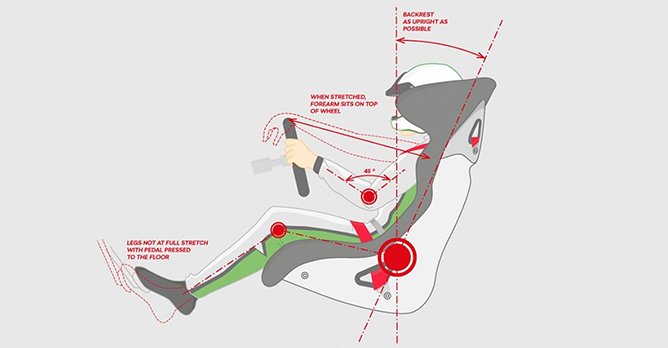
    This image by Skoda Motorsport is one of the best guides you can find on the correct seating position for drivers
    If you work in an office, the importance of the ergonomics of a chair will likely be something you are already familiar with. And if you aren't, let's just say there's a reason why Chiropractors are so popular with working adults.

    But an ideal seating position doesn't just affect your comfort and spinal health. Adopting a good seating position also affects the control you have over your car - sitting right is the first step to driving a car properly, and even more so for a manual. Unlike driving an automatic, you need the gear lever and clutch pedal within comfortable reach in order to operate them properly. Moreover, a good position also minimises discomfort and fatigue during extended driving stints, such as on a road trip.

    As a general guide, you'll want to keep the backrest as upright as possible - this affects your vision of the road and the feedback your body feels when the car is in motion. Your legs should not be at full stretch when you press the pedals to the floor - a good way to gauge would be to fully depress the clutch pedal and adjust the seat to allow a slight bend in your leg. While seated properly, stretch out your arm and place it over the steering wheel - your wrist should be just on top of the steering wheel.
     
     
    2. Clutch control

    Clutch control takes time and effort to perfect - when you get there eventually, the result would be an amazingly smooth drive!
    The function of the clutch seems simple enough - depress the pedal and the clutch disengages the transmission from the engine, allowing the gear to be changed.

    Operating the clutch properly while driving is, however, a little more complicated. If you were to let off the clutch pedal too abruptly, the car will jerk, and you might even stall the car when moving off. If you were to let go of the clutch too slowly, you will induce excessive wear on the clutch, and anyone near you will realise your lack of expertise in driving a manual.

    The point is, practice makes perfect, and with some conscious effort in perfecting clutch control, you'll go a long way at mastering it. Soon, you'll be able to drive a manual car smoothly and comfortably without causing your passengers to puke out their lunch.
     
     
    3. Using the correct gear

    Knowing the right gear to use for a particular situation is an important part of driving a manual car properly
    The main draw of a manual transmission is the complete control of power to the wheels, and the freedom to choose any gear to drive in. But subpar drivers often squander the opportunity by using the wrong gears when driving.

    You see, internal combustion engines put out useable power at a range of engine RPM. This characteristic is why a gearbox is even needed.

    The idea is to keep the engine within its power band for the most effective power output.

    Lower gears are used to move the car off from a dead stop, and are also useful on inclines by multiplying the torque that is sent to the ground through the gear ratio reduction. Likewise, higher gears allow the car to cruise along without overworking the engine at a high RPM.

    The lower gears provide more wheel torque - smart drivers know how utilise the gears to keep the engine in its power band
    Hence, using the correct gear will help prevent excessive stress on the engine, and allow it to operate at maximum efficiency.

    While you shouldn't use too low a gear, as the high RPM will affect efficiency and the longevity of the engine (accidentally downshifting to a lower gear can even cause disastrous engine damage as it can bring the RPM exceedingly high), you shouldn't use too high a gear as well.

    If you were to mash the throttle at low RPMs and a high gear, not only would the engine struggle to pick up speed, you would also be putting undue stress on it, potentially damaging the engine.
     
     
    4. Don't ride the clutch

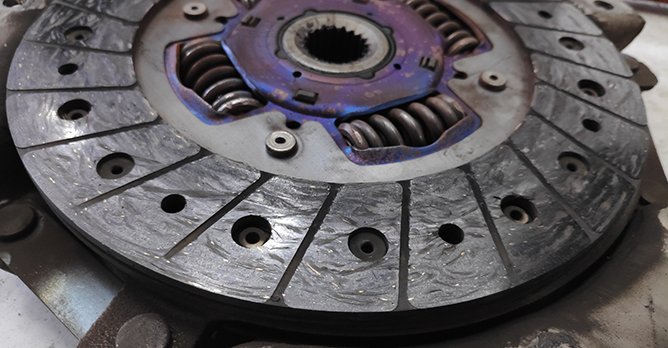
    Resting your foot on the clutch pedal will result in premature wear of the clutch pad
    In case you didn't know, you shouldn't be resting your foot on the clutch pedal after you have gotten into gear.

    Resting your foot on the clutch pedal is known as riding the clutch. By doing so, the pressure of your foot prevents the clutch from fully engaging. This results in clutch slippage, which will reduce the efficiency of power transfer from the engine to the wheels, and also cause the premature wear of your car's clutch (there are cases where a brand new clutch only lasted for mere months due to this poor habit).

    So, make use of the footrest to the left of the clutch pedal. Don't be lazy and leave your foot on the clutch pedal thinking that it's alright.
     
     
    5. Rev-matching

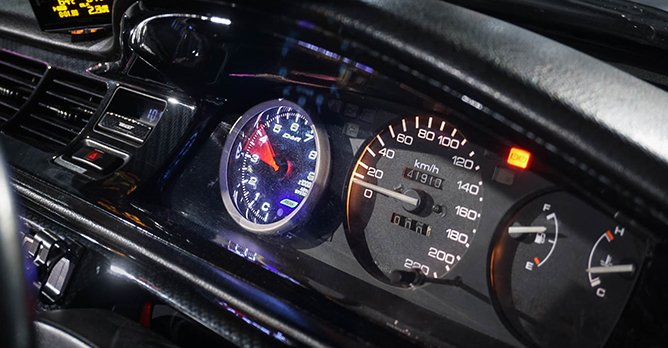
    In my opinion, a well-executed rev-match results in the best sound you can get from an engine
    Watch any motorsport, and you would notice the momentary rise in engine RPMs when the drivers down shifts before a turn. In fact, some sporty cars these days will even do it automatically when you downshift.

    While at a particular wheel speed, a lower gear would result in a higher engine RPM. Hence, when you downshift to a lower gear, the engine RPM is now too low for the gear, causing a braking effect on the driven wheels, which might even lock up the wheel momentarily.

    In the cabin, this translates into a jerky motion that is not just uncomfortable, but can also result in a momentary loss of traction on the driven wheels. This disruptive effect will put a large amount of stress on the drivetrain, and can even upset the balance of the car while in motion. If you were going at speed or driving on a low grip surface, it can easily cause you to lose control of the car.

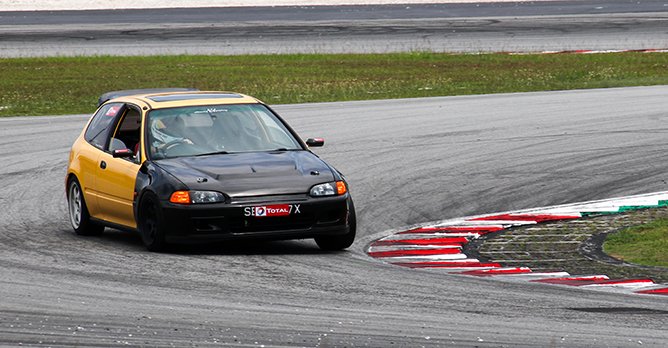
    Rev-matching and heel-toe downshifting allow you to keep your car in control when driving at the limits of grip
    Rev-matching is a technique used to negate these ill-effects, you do so by giving the accelerator a quick jab to bring up the RPM before releasing the clutch to engage the lower gear. As the terminology suggests, this technique attempts to match the targeted engine RPM after the downshift, the result if done correctly, is a smooth transition to a lower gear without upsetting the car.

    Once you have mastered rev-matching, you can then venture into heel-toe downshifts, which simply put, is to combine the act of rev-matching along with braking (which require some fancy footwork). This skill is essential in performance driving as it allows you to slow a manual car down without upsetting its balance, all while remaining in the favourable power band.
     
     
    Here are some articles that you might be interested in:
     
    Are you a new driver taking to the road? Read our helpful hints first!
     
    5 habits that good drivers possess
     
    5 dangerous driving habits to watch out for when driving in Singapore

    Be careful around trucks - they can squash you like an ant

    Car crashes are always happening on rainy days! But why?

    Paddle shifters - are they better than a standard manual transmission?
     
     
    Want to kickstart your journey with a manual car? Check out these used manual cars that are available now!
    Goh Zhi Xuan
    Goh Zhi Xuan
    Zhi Xuan is still living in the 80s when it comes to cars. The irony - he's born in 95'.
    Photos by Editorial Team
    Skoda
    24.4k

    Tags

    how to drive driving advice driving skill manual car manual transmission manual gearbox drive manual car row your own gear change gear operate clutch class 3 car class 3 license drive manual car like a pro

    AllReviewsNewsAdviceFeaturesVideos
    • Home
    • Car Articles
    • advice
    • advice Listings
    • Miscellaneous Advice

    Here's how you can drive a manual transmission equipped car like a professional driver

    24 Nov 2022

    |

    16,356 views

    Manual cars are getting less common, and the skill to operate one well is gradually becoming a lost art - but with this guide, you too can be a master.


    Cars equipped with a manual transmission
    are few and far between these days, but car enthusiasts commonly regard these machines as the ones to have, citing the enhanced connection between man and machine.

    Despite being a skill that's relatively easy to pick up, it is one that takes a fair bit of effort and practice to master. And if you are someone who has opted for a manual by choice, this is the article for you to take your driving skills up another notch.
     
     
    1. Seating position

    This image by Skoda Motorsport is one of the best guides you can find on the correct seating position for drivers
    If you work in an office, the importance of the ergonomics of a chair will likely be something you are already familiar with. And if you aren't, let's just say there's a reason why Chiropractors are so popular with working adults.

    But an ideal seating position doesn't just affect your comfort and spinal health. Adopting a good seating position also affects the control you have over your car - sitting right is the first step to driving a car properly, and even more so for a manual. Unlike driving an automatic, you need the gear lever and clutch pedal within comfortable reach in order to operate them properly. Moreover, a good position also minimises discomfort and fatigue during extended driving stints, such as on a road trip.

    As a general guide, you'll want to keep the backrest as upright as possible - this affects your vision of the road and the feedback your body feels when the car is in motion. Your legs should not be at full stretch when you press the pedals to the floor - a good way to gauge would be to fully depress the clutch pedal and adjust the seat to allow a slight bend in your leg. While seated properly, stretch out your arm and place it over the steering wheel - your wrist should be just on top of the steering wheel.
     
     
    2. Clutch control
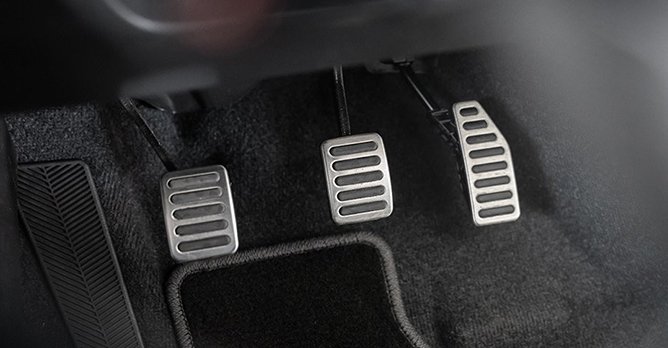
    Clutch control takes time and effort to perfect - when you get there eventually, the result would be an amazingly smooth drive!
    The function of the clutch seems simple enough - depress the pedal and the clutch disengages the transmission from the engine, allowing the gear to be changed.

    Operating the clutch properly while driving is, however, a little more complicated. If you were to let off the clutch pedal too abruptly, the car will jerk, and you might even stall the car when moving off. If you were to let go of the clutch too slowly, you will induce excessive wear on the clutch, and anyone near you will realise your lack of expertise in driving a manual.

    The point is, practice makes perfect, and with some conscious effort in perfecting clutch control, you'll go a long way at mastering it. Soon, you'll be able to drive a manual car smoothly and comfortably without causing your passengers to puke out their lunch.
     
     
    3. Using the correct gear
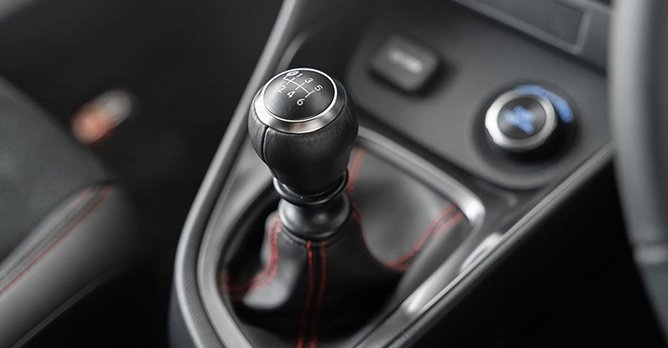
    Knowing the right gear to use for a particular situation is an important part of driving a manual car properly
    The main draw of a manual transmission is the complete control of power to the wheels, and the freedom to choose any gear to drive in. But subpar drivers often squander the opportunity by using the wrong gears when driving.

    You see, internal combustion engines put out useable power at a range of engine RPM. This characteristic is why a gearbox is even needed.

    The idea is to keep the engine within its power band for the most effective power output.

    Lower gears are used to move the car off from a dead stop, and are also useful on inclines by multiplying the torque that is sent to the ground through the gear ratio reduction. Likewise, higher gears allow the car to cruise along without overworking the engine at a high RPM.
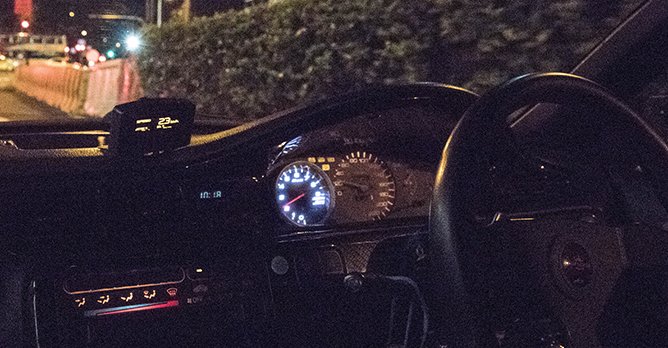
    The lower gears provide more wheel torque - smart drivers know how utilise the gears to keep the engine in its power band
    Hence, using the correct gear will help prevent excessive stress on the engine, and allow it to operate at maximum efficiency.

    While you shouldn't use too low a gear, as the high RPM will affect efficiency and the longevity of the engine (accidentally downshifting to a lower gear can even cause disastrous engine damage as it can bring the RPM exceedingly high), you shouldn't use too high a gear as well.

    If you were to mash the throttle at low RPMs and a high gear, not only would the engine struggle to pick up speed, you would also be putting undue stress on it, potentially damaging the engine.
     
     
    4. Don't ride the clutch
    Resting your foot on the clutch pedal will result in premature wear of the clutch pad
    In case you didn't know, you shouldn't be resting your foot on the clutch pedal after you have gotten into gear.

    Resting your foot on the clutch pedal is known as riding the clutch. By doing so, the pressure of your foot prevents the clutch from fully engaging. This results in clutch slippage, which will reduce the efficiency of power transfer from the engine to the wheels, and also cause the premature wear of your car's clutch (there are cases where a brand new clutch only lasted for mere months due to this poor habit).

    So, make use of the footrest to the left of the clutch pedal. Don't be lazy and leave your foot on the clutch pedal thinking that it's alright.
     
     
    5. Rev-matching
    In my opinion, a well-executed rev-match results in the best sound you can get from an engine
    Watch any motorsport, and you would notice the momentary rise in engine RPMs when the drivers down shifts before a turn. In fact, some sporty cars these days will even do it automatically when you downshift.

    While at a particular wheel speed, a lower gear would result in a higher engine RPM. Hence, when you downshift to a lower gear, the engine RPM is now too low for the gear, causing a braking effect on the driven wheels, which might even lock up the wheel momentarily.

    In the cabin, this translates into a jerky motion that is not just uncomfortable, but can also result in a momentary loss of traction on the driven wheels. This disruptive effect will put a large amount of stress on the drivetrain, and can even upset the balance of the car while in motion. If you were going at speed or driving on a low grip surface, it can easily cause you to lose control of the car.
    Rev-matching and heel-toe downshifting allow you to keep your car in control when driving at the limits of grip
    Rev-matching is a technique used to negate these ill-effects, you do so by giving the accelerator a quick jab to bring up the RPM before releasing the clutch to engage the lower gear. As the terminology suggests, this technique attempts to match the targeted engine RPM after the downshift, the result if done correctly, is a smooth transition to a lower gear without upsetting the car.

    Once you have mastered rev-matching, you can then venture into heel-toe downshifts, which simply put, is to combine the act of rev-matching along with braking (which require some fancy footwork). This skill is essential in performance driving as it allows you to slow a manual car down without upsetting its balance, all while remaining in the favourable power band.
     
     
    Here are some articles that you might be interested in:
     
    Are you a new driver taking to the road? Read our helpful hints first!
     
    5 habits that good drivers possess
     
    5 dangerous driving habits to watch out for when driving in Singapore

    Be careful around trucks - they can squash you like an ant

    Car crashes are always happening on rainy days! But why?

    Paddle shifters - are they better than a standard manual transmission?
     
     
    Want to kickstart your journey with a manual car? Check out these used manual cars that are available now!

    Goh Zhi Xuan
    Goh Zhi Xuan
    Zhi Xuan is still living in the 80s when it comes to cars. The irony - he's born in 95'.
    Photos by Editorial Team
    Skoda
    24.4k

    Tags

    how to drive driving advice driving skill manual car manual transmission manual gearbox drive manual car row your own gear change gear operate clutch class 3 car class 3 license drive manual car like a pro

    professional driver
    improve driving
    driving skills
    downshift
    upshift
    change gear
    racing
    track driving
    spirited driving
    car control
    drive car properly
    rev match
    rev-match
    rpm
    rotations per minute
    clutch control
    heeltoe
    heel and toe
    heel toe
    blip throttle
    braking
    professional driver
    improve driving
    driving skills
    downshift
    upshift
    change gear
    racing
    track driving
    spirited driving
    car control
    drive car properly
    rev match
    rev-match
    rpm
    rotations per minute
    clutch control
    heeltoe
    heel and toe
    heel toe
    blip throttle
    braking

    All Advice Categories

    Car BuyingCar SellingCar OwnershipCar TechnicalCar MaintenanceMiscellaneous

    All Advice Categories

    Car BuyingCar SellingCar OwnershipCar TechnicalCar MaintenanceMiscellaneous

    Related Motor Directory Categories

      Audio System - In Car EntertainmentKeys & RemoteCar Towing & Roadside AssistanceDecals, Stickers & Number PlatesCar MatsMobile Battery & Tyre Replacement

    Related Motor Directory Categories

      Audio System - In Car EntertainmentKeys & RemoteCar Towing & Roadside AssistanceDecals, Stickers & Number PlatesCar MatsMobile Battery & Tyre Replacement

    You May Also Like

    We try out roadside parking with the new OBU!

    We try out roadside parking with the new OBU!

    New cars are safer: Opt for one when you can

    New cars are safer: Opt for one when you can

    EV NEXT: Peace of mind with battery SOH certification

    EV NEXT: Peace of mind with battery SOH certification

    Is parallel import hesitancy growing among car buyers?

    Is parallel import hesitancy growing among car buyers?

    Mazda 6e Fastback GT Electric review

    Mazda 6e Fastback GT Electric review

    Multi-Pathway approach: Toyota was always right

    Multi-Pathway approach: Toyota was always right

    Big Test: Which brand makes the best hybrid?

    Big Test: Which brand makes the best hybrid?

    Sgcarmart Explores: Bras Basah!

    Sgcarmart Explores: Bras Basah!

    Opinion: Is it time for a change to our road traffic laws?

    Opinion: Is it time for a change to our road traffic laws?

    Toyota RAV4 Hybrid vs Subaru Forester e-Boxer

    Toyota RAV4 Hybrid vs Subaru Forester e-Boxer

    Hongqi Singapore opens its showroom doors

    Hongqi Singapore opens its showroom doors

    The BYD Sealion 8 seven-seater SUV arrives in Singapore

    The BYD Sealion 8 seven-seater SUV arrives in Singapore

    A first look at Chery's iCaur V23 and Jaecoo J8 in Singapore

    A first look at Chery's iCaur V23 and Jaecoo J8 in Singapore

    The rise of PHEVs: A closer look at the numbers

    The rise of PHEVs: A closer look at the numbers

    Motoring Icons: JDM legends - Honda NSX

    Motoring Icons: JDM legends - Honda NSX

    Tesla launches Model Y L in Singapore, first six-seater here

    Tesla launches Model Y L in Singapore, first six-seater here

    You May Also Like

    We try out roadside parking with the new OBU!

    We try out roadside parking with the new OBU!

    New cars are safer: Opt for one when you can

    New cars are safer: Opt for one when you can

    EV NEXT: Peace of mind with battery SOH certification

    EV NEXT: Peace of mind with battery SOH certification

    Is parallel import hesitancy growing among car buyers?

    Is parallel import hesitancy growing among car buyers?

    Mazda 6e Fastback GT Electric review

    Mazda 6e Fastback GT Electric review

    Multi-Pathway approach: Toyota was always right

    Multi-Pathway approach: Toyota was always right

    Big Test: Which brand makes the best hybrid?

    Big Test: Which brand makes the best hybrid?

    Sgcarmart Explores: Bras Basah!

    Sgcarmart Explores: Bras Basah!

    Opinion: Is it time for a change to our road traffic laws?

    Opinion: Is it time for a change to our road traffic laws?

    Toyota RAV4 Hybrid vs Subaru Forester e-Boxer

    Toyota RAV4 Hybrid vs Subaru Forester e-Boxer

    Hongqi Singapore opens its showroom doors

    Hongqi Singapore opens its showroom doors

    The BYD Sealion 8 seven-seater SUV arrives in Singapore

    The BYD Sealion 8 seven-seater SUV arrives in Singapore

    A first look at Chery's iCaur V23 and Jaecoo J8 in Singapore

    A first look at Chery's iCaur V23 and Jaecoo J8 in Singapore

    The rise of PHEVs: A closer look at the numbers

    The rise of PHEVs: A closer look at the numbers

    Motoring Icons: JDM legends - Honda NSX

    Motoring Icons: JDM legends - Honda NSX

    Tesla launches Model Y L in Singapore, first six-seater here

    Tesla launches Model Y L in Singapore, first six-seater here

    Related Articles

    Top Car Dashboard Camera Choices to Consider in 2025

    Top Car Dashboard Camera Choices to Consider in 2025

    Opinion: Why do we even need green number plates?

    Opinion: Why do we even need green number plates?

    Mazda launches the Mazda6e electric sedan in Singapore

    Mazda launches the Mazda6e electric sedan in Singapore

    Mazda 6e Fastback GT Electric review

    Mazda 6e Fastback GT Electric review

    Jaecoo 8 Plug-in Hybrid Review

    Jaecoo 8 Plug-in Hybrid Review

    BYD launches the compact Atto 1 EV in Singapore

    BYD launches the compact Atto 1 EV in Singapore

    Toyota RAV4 Hybrid vs Subaru Forester e-Boxer

    Toyota RAV4 Hybrid vs Subaru Forester e-Boxer

    10 noteworthy production-ready cars at JMS 2025

    10 noteworthy production-ready cars at JMS 2025

    Related Articles

    Top Car Dashboard Camera Choices to Consider in 2025

    Top Car Dashboard Camera Choices to Consider in 2025

    Opinion: Why do we even need green number plates?

    Opinion: Why do we even need green number plates?

    Mazda launches the Mazda6e electric sedan in Singapore

    Mazda launches the Mazda6e electric sedan in Singapore

    Mazda 6e Fastback GT Electric review

    Mazda 6e Fastback GT Electric review

    Jaecoo 8 Plug-in Hybrid Review

    Jaecoo 8 Plug-in Hybrid Review

    BYD launches the compact Atto 1 EV in Singapore

    BYD launches the compact Atto 1 EV in Singapore

    Toyota RAV4 Hybrid vs Subaru Forester e-Boxer

    Toyota RAV4 Hybrid vs Subaru Forester e-Boxer

    10 noteworthy production-ready cars at JMS 2025

    10 noteworthy production-ready cars at JMS 2025