View page in desktop
|
Report error
  •   Apple app store icon
  • Google play store icon
Terms of Service
|
Privacy Policy
|
PDPA
|
Site Map
©2004-2026 Sgcarmart, Singapore. All rights reserved.
  • Home
  • Car Articles
  • advice
  • advice Listings
  • Car Buying Advice
  • Mythbusted: Is a smaller engine always more fuel efficient?

    08 Dec 2022

    |

    27,414 views

    A smaller engine always uses less fuel, since its capacity is smaller - while that seems to make perfect sense, it really might not be the case these days.


    How do you make a car more fuel efficient? At one point it seemed that a smaller engine is the secret to that. Economy cars such as the famed Kei-class cars from Japan are well known as budget personal car offerings, and these were found with engine capacities ranging from 360cc to 660cc.

    Indeed, in earlier days, powerful cars with large engines (think of American muscle cars) were gas guzzlers, while economy-oriented family cars tend to be fitted with smaller engines to achieve an acceptable fuel economy. So does this mean that as long as an engine is smaller, it will always be more fuel efficient? It isn't exactly so, and here are a few reasons why.
     

    Technological improvement has changed things up
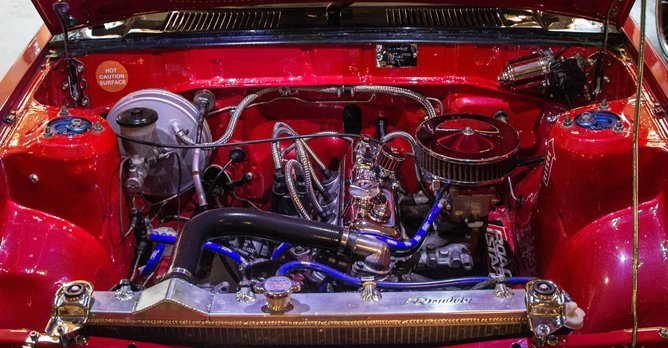
    Engines with older technology tend to consume more fuel
    With the advancement of technology, car drivetrains are getting more efficient and refined. It's pretty normal for a larger engine built with modern technology to be as efficient as smaller engines of the yesteryears.

    The improvement in fuel consumption can be associated with engine technology such as fuel injection - introduced as a replacement for mechanically controlled fuel systems that uses carburettors, the precise and controlled fuel injection system allowed a bump in efficiency.

    A high-tech engine such as this TSI engine in the Skoda Scala is able to offer an impressive fuel economy
    In modern times, much more has been achieved with high-tech systems such as direct fuel injection, cylinder deactivation, start-stop systems and forced-induction.

    You can just take a closer look at the Skoda Scala that is equipped with a 1.5-litre TSI engine. This high-tech engine features high-compression, forced-induction, direct fuel injection, cylinder deactivation and start-stop to achieve an impressive official fuel economy of 19.6km/L, all while packing quite a punch.

    And it isn't just modern engine tech that has made a difference - the efficiency and features of a modern automatic gearbox also helps to lighten the load on the engine, resulting in improved fuel economy.
     
     
    A small, low-powered engine can be overworked on a larger sized car

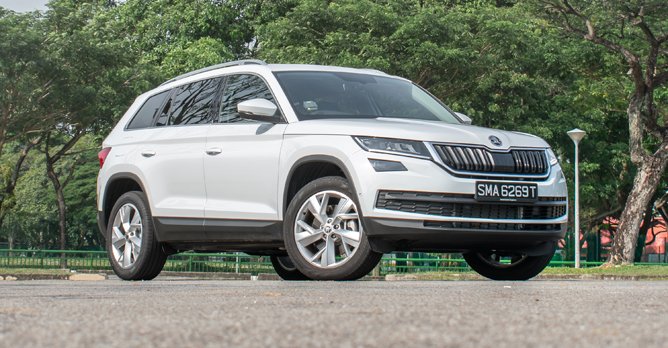
    A large, heavy car with a smaller engine can result in subpar real-world fuel consumption
    This might sound counter intuitive, but there can be implementations where a smaller engine ends up being even more fuel-thirsty.

    Technical data sheets always show that a particular car with a smaller engine variant will have a better fuel economy. But in real world practice, you might end up accelerating and revving the engine harder just to get the car up to speed quickly enough. The situation becomes worse if you are hauling a huge load, or if the car is large and heavy - you'll end up pushing the smaller engine above its most efficient zone.

    As a result, it is possible to end up with a car that's not only lacklustre to drive, but also guzzles more fuel than a counterpart with a larger engine.
     
     
    The aid of hybrid and mild-hybrid technology

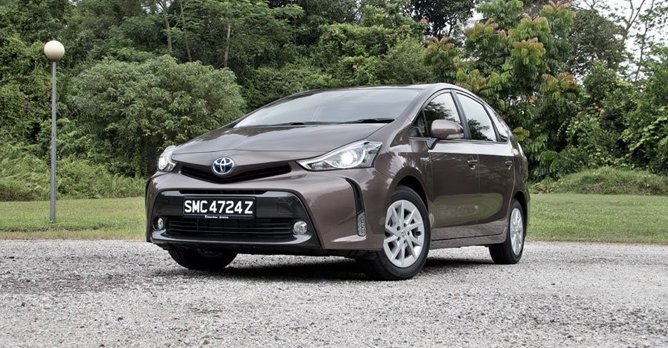
    Despite being a 7-seater MPV, the Prius+ Hybrid manages 25.6km/L
    Hybrid drivetrains combine an electric motor to a conventional engine to assist it in propelling the car.

    All internal combustion engines have a specific and rather narrow zone of efficiency within its entire RPM range. An electric motor can aid the engine in the less efficient zones, greatly improving the fuel economy.

    Hence, a larger engine with the assistance of a hybrid system can easily achieve the fuel consumption of a smaller conventional engine equipped car.

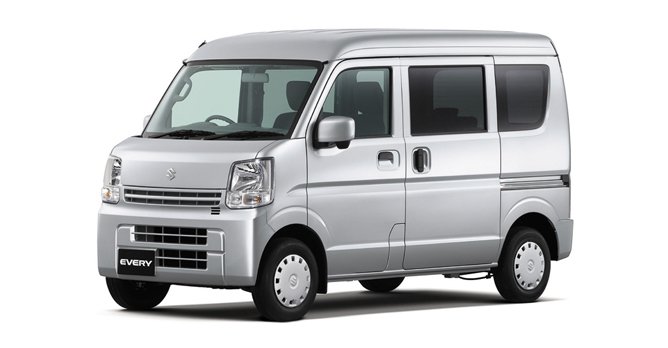
    The 660cc Suzuki Every fails to match the impressive fuel economy of the Prius Plus Hybrid
    This can be easily seen from cars such as the Toyota Prius, where the use of hybrid technology allows for some really impressive fuel economy to be achieved.

    To put it into numbers, the Toyota Prius+ Hybrid achieves a fuel consumption of 25.6km/L.

    Meanwhile the much smaller and lighter Suzuki Every, which has a 660cc engine, only manages 19km/L.

    The positive effects of hybrid drivetrains on fuel economy are clear to see.
     
     
    Performance oriented engines tend to guzzle fuel regardless of capacity

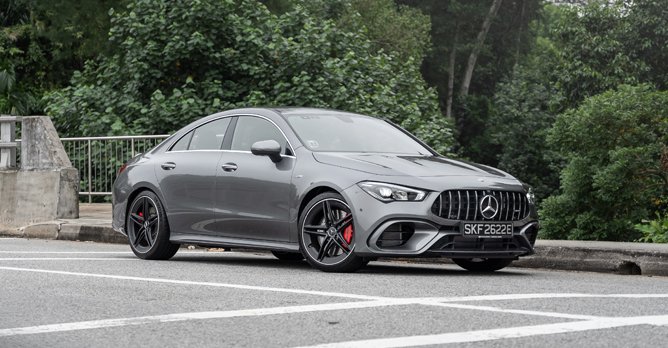
    The powerful 2.0-litre engine in the CLA45 S is quite the gas guzzler, even when pitted against engines with a larger capacity
    Unlike engines that are destined to go into passenger cars, performance oriented engines tend to use much more fuel in order to produce lots of power - fuel economy clearly takes the backseat in these sporty cars.

    It isn't surprising that a smaller-sized performance engine can very well consume much more petrol than a larger engine that was designed with fuel efficiency in mind.

    Here's an example - the Mercedes-Benz CLA45 S, which has a 2.0-litre engine and weighs 1,675kg, has a fuel consumption of 10.6km/L. In comparison, the BMW 840i, which is a larger and heavier car weighing in at 1,800kg and has a 3.0-litre engine, has a much better fuel consumption of 13.3km/L.

    And in real world usage, the results can be even greater, especially when you account for the manner which performance cars tend to be enjoyed.
     
    In most cases, smaller engines do typically tend to sip on fuel. But with the aid of modern technology, it is no longer always the case. When you are shopping for a car and you find one with a rather large engine, don't just strike it off the list. Take a closer look at the spec sheet, and you might be surprised by how great its fuel consumption is.
     
     
    Here are some other articles that you might be interested in:
     
    Never commit these acts of road rage while driving no matter how angry you are
     
    Want to level up your driving skills? Here are five exercise that will make you a better driver!

    Here's how you can drive a manual transmission equipped car like a professional driver

    Even the best car safety systems wouldn't be able to save you if you have these bad habits

    Newbie drivers take note - here are the road rules you should remember
     
     
    Looking to buy a new car to replace your old and fuel hungry one? Check out all the new cars available now!
    Goh Zhi Xuan
    Goh Zhi Xuan
    Zhi Xuan is still living in the 80s when it comes to cars. The irony - he's born in 95'.
    Photos by Editorial Team
    FIN
    Suzuki
    24.4k

    Tags

    myth mythbusting car myths advice small engine smaller capacity engine large engine large capacity engine fuel injection direct fuel injection gdi gasoline direct injection cylinder deactivation

    AllReviewsNewsAdviceFeaturesVideos
    • Home
    • Car Articles
    • advice
    • advice Listings
    • Car Buying Advice

    Mythbusted: Is a smaller engine always more fuel efficient?

    08 Dec 2022

    |

    27,414 views

    A smaller engine always uses less fuel, since its capacity is smaller - while that seems to make perfect sense, it really might not be the case these days.


    How do you make a car more fuel efficient? At one point it seemed that a smaller engine is the secret to that. Economy cars such as the famed Kei-class cars from Japan are well known as budget personal car offerings, and these were found with engine capacities ranging from 360cc to 660cc.

    Indeed, in earlier days, powerful cars with large engines (think of American muscle cars) were gas guzzlers, while economy-oriented family cars tend to be fitted with smaller engines to achieve an acceptable fuel economy. So does this mean that as long as an engine is smaller, it will always be more fuel efficient? It isn't exactly so, and here are a few reasons why.
     

    Technological improvement has changed things up

    Engines with older technology tend to consume more fuel
    With the advancement of technology, car drivetrains are getting more efficient and refined. It's pretty normal for a larger engine built with modern technology to be as efficient as smaller engines of the yesteryears.

    The improvement in fuel consumption can be associated with engine technology such as fuel injection - introduced as a replacement for mechanically controlled fuel systems that uses carburettors, the precise and controlled fuel injection system allowed a bump in efficiency.
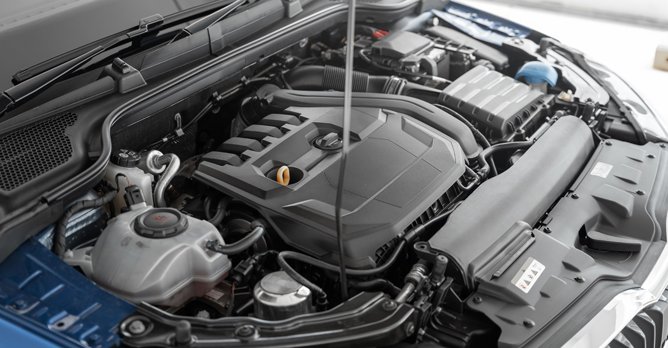
    A high-tech engine such as this TSI engine in the Skoda Scala is able to offer an impressive fuel economy
    In modern times, much more has been achieved with high-tech systems such as direct fuel injection, cylinder deactivation, start-stop systems and forced-induction.

    You can just take a closer look at the Skoda Scala that is equipped with a 1.5-litre TSI engine. This high-tech engine features high-compression, forced-induction, direct fuel injection, cylinder deactivation and start-stop to achieve an impressive official fuel economy of 19.6km/L, all while packing quite a punch.

    And it isn't just modern engine tech that has made a difference - the efficiency and features of a modern automatic gearbox also helps to lighten the load on the engine, resulting in improved fuel economy.
     
     
    A small, low-powered engine can be overworked on a larger sized car
    A large, heavy car with a smaller engine can result in subpar real-world fuel consumption
    This might sound counter intuitive, but there can be implementations where a smaller engine ends up being even more fuel-thirsty.

    Technical data sheets always show that a particular car with a smaller engine variant will have a better fuel economy. But in real world practice, you might end up accelerating and revving the engine harder just to get the car up to speed quickly enough. The situation becomes worse if you are hauling a huge load, or if the car is large and heavy - you'll end up pushing the smaller engine above its most efficient zone.

    As a result, it is possible to end up with a car that's not only lacklustre to drive, but also guzzles more fuel than a counterpart with a larger engine.
     
     
    The aid of hybrid and mild-hybrid technology
    Despite being a 7-seater MPV, the Prius+ Hybrid manages 25.6km/L
    Hybrid drivetrains combine an electric motor to a conventional engine to assist it in propelling the car.

    All internal combustion engines have a specific and rather narrow zone of efficiency within its entire RPM range. An electric motor can aid the engine in the less efficient zones, greatly improving the fuel economy.

    Hence, a larger engine with the assistance of a hybrid system can easily achieve the fuel consumption of a smaller conventional engine equipped car.
    The 660cc Suzuki Every fails to match the impressive fuel economy of the Prius Plus Hybrid
    This can be easily seen from cars such as the Toyota Prius, where the use of hybrid technology allows for some really impressive fuel economy to be achieved.

    To put it into numbers, the Toyota Prius+ Hybrid achieves a fuel consumption of 25.6km/L.

    Meanwhile the much smaller and lighter Suzuki Every, which has a 660cc engine, only manages 19km/L.

    The positive effects of hybrid drivetrains on fuel economy are clear to see.
     
     
    Performance oriented engines tend to guzzle fuel regardless of capacity
    The powerful 2.0-litre engine in the CLA45 S is quite the gas guzzler, even when pitted against engines with a larger capacity
    Unlike engines that are destined to go into passenger cars, performance oriented engines tend to use much more fuel in order to produce lots of power - fuel economy clearly takes the backseat in these sporty cars.

    It isn't surprising that a smaller-sized performance engine can very well consume much more petrol than a larger engine that was designed with fuel efficiency in mind.

    Here's an example - the Mercedes-Benz CLA45 S, which has a 2.0-litre engine and weighs 1,675kg, has a fuel consumption of 10.6km/L. In comparison, the BMW 840i, which is a larger and heavier car weighing in at 1,800kg and has a 3.0-litre engine, has a much better fuel consumption of 13.3km/L.

    And in real world usage, the results can be even greater, especially when you account for the manner which performance cars tend to be enjoyed.
     
    In most cases, smaller engines do typically tend to sip on fuel. But with the aid of modern technology, it is no longer always the case. When you are shopping for a car and you find one with a rather large engine, don't just strike it off the list. Take a closer look at the spec sheet, and you might be surprised by how great its fuel consumption is.
     
     
    Here are some other articles that you might be interested in:
     
    Never commit these acts of road rage while driving no matter how angry you are
     
    Want to level up your driving skills? Here are five exercise that will make you a better driver!

    Here's how you can drive a manual transmission equipped car like a professional driver

    Even the best car safety systems wouldn't be able to save you if you have these bad habits

    Newbie drivers take note - here are the road rules you should remember
     
     
    Looking to buy a new car to replace your old and fuel hungry one? Check out all the new cars available now!

    Goh Zhi Xuan
    Goh Zhi Xuan
    Zhi Xuan is still living in the 80s when it comes to cars. The irony - he's born in 95'.
    Photos by Editorial Team
    FIN
    Suzuki
    24.4k

    Tags

    myth mythbusting car myths advice small engine smaller capacity engine large engine large capacity engine fuel injection direct fuel injection gdi gasoline direct injection cylinder deactivation

    coasting
    cruise control
    cvt
    continuously variable transmission
    powerful car
    weak engine
    weak car
    high performance engines
    fuel saving
    fuel economy
    petrol saving
    gas guzzler
    use a lot of petrol
    fuel consumption
    cheaper to run
    lower cost
    expensive
    coasting
    cruise control
    cvt
    continuously variable transmission
    powerful car
    weak engine
    weak car
    high performance engines
    fuel saving
    fuel economy
    petrol saving
    gas guzzler
    use a lot of petrol
    fuel consumption
    cheaper to run
    lower cost
    expensive

    All Advice Categories

    Car BuyingCar SellingCar OwnershipCar TechnicalCar MaintenanceMiscellaneous

    All Advice Categories

    Car BuyingCar SellingCar OwnershipCar TechnicalCar MaintenanceMiscellaneous

    Related Motor Directory Categories

      Car RentalCommercial Vehicle RentalUsed Car DealersNew Car DealersCar Leasing

    Related Motor Directory Categories

      Car RentalCommercial Vehicle RentalUsed Car DealersNew Car DealersCar Leasing

    Related Articles

    New to driving? Here's how to become a better driver

    New to driving? Here's how to become a better driver

    Elevate every drive with these car audio upgrades

    Elevate every drive with these car audio upgrades

    10-Year COE Survival Kit: Essential Checklist

    10-Year COE Survival Kit: Essential Checklist

    Value-for-Money Servicing Packages for Your Car

    Value-for-Money Servicing Packages for Your Car

    Related Articles

    New to driving? Here's how to become a better driver

    New to driving? Here's how to become a better driver

    Elevate every drive with these car audio upgrades

    Elevate every drive with these car audio upgrades

    10-Year COE Survival Kit: Essential Checklist

    10-Year COE Survival Kit: Essential Checklist

    Value-for-Money Servicing Packages for Your Car

    Value-for-Money Servicing Packages for Your Car

    You May Also Like

    Sgcarmart Explores: Bras Basah!

    Sgcarmart Explores: Bras Basah!

    New cars are safer: Opt for one when you can

    New cars are safer: Opt for one when you can

    Maxus MIFA 7 Elite: Going big for the little moments

    Maxus MIFA 7 Elite: Going big for the little moments

    We try out roadside parking with the new OBU!

    We try out roadside parking with the new OBU!

    Sgcarmart Explores: East Coast Park!

    Sgcarmart Explores: East Coast Park!

    Opinion: Why do we even need green number plates?

    Opinion: Why do we even need green number plates?

    Mazda 6e Fastback GT Electric review

    Mazda 6e Fastback GT Electric review

    Opinion: Is it time for a change to our road traffic laws?

    Opinion: Is it time for a change to our road traffic laws?

    The BYD Sealion 8 seven-seater SUV arrives in Singapore

    The BYD Sealion 8 seven-seater SUV arrives in Singapore

    Hongqi Singapore opens its showroom doors

    Hongqi Singapore opens its showroom doors

    A first look at Chery's iCaur V23 and Jaecoo J8 in Singapore

    A first look at Chery's iCaur V23 and Jaecoo J8 in Singapore

    Is parallel import hesitancy growing among car buyers?

    Is parallel import hesitancy growing among car buyers?

    Toyota RAV4 Hybrid vs Subaru Forester e-Boxer

    Toyota RAV4 Hybrid vs Subaru Forester e-Boxer

    New to driving? Here's how to become a better driver

    New to driving? Here's how to become a better driver

    Tesla launches Model Y L in Singapore, first six-seater here

    Tesla launches Model Y L in Singapore, first six-seater here

    Motoring Icons: JDM legends - Honda NSX

    Motoring Icons: JDM legends - Honda NSX

    You May Also Like

    Sgcarmart Explores: Bras Basah!

    Sgcarmart Explores: Bras Basah!

    New cars are safer: Opt for one when you can

    New cars are safer: Opt for one when you can

    Maxus MIFA 7 Elite: Going big for the little moments

    Maxus MIFA 7 Elite: Going big for the little moments

    We try out roadside parking with the new OBU!

    We try out roadside parking with the new OBU!

    Sgcarmart Explores: East Coast Park!

    Sgcarmart Explores: East Coast Park!

    Opinion: Why do we even need green number plates?

    Opinion: Why do we even need green number plates?

    Mazda 6e Fastback GT Electric review

    Mazda 6e Fastback GT Electric review

    Opinion: Is it time for a change to our road traffic laws?

    Opinion: Is it time for a change to our road traffic laws?

    The BYD Sealion 8 seven-seater SUV arrives in Singapore

    The BYD Sealion 8 seven-seater SUV arrives in Singapore

    Hongqi Singapore opens its showroom doors

    Hongqi Singapore opens its showroom doors

    A first look at Chery's iCaur V23 and Jaecoo J8 in Singapore

    A first look at Chery's iCaur V23 and Jaecoo J8 in Singapore

    Is parallel import hesitancy growing among car buyers?

    Is parallel import hesitancy growing among car buyers?

    Toyota RAV4 Hybrid vs Subaru Forester e-Boxer

    Toyota RAV4 Hybrid vs Subaru Forester e-Boxer

    New to driving? Here's how to become a better driver

    New to driving? Here's how to become a better driver

    Tesla launches Model Y L in Singapore, first six-seater here

    Tesla launches Model Y L in Singapore, first six-seater here

    Motoring Icons: JDM legends - Honda NSX

    Motoring Icons: JDM legends - Honda NSX