View page in desktop
|
Report error
  •   Apple app store icon
  • Google play store icon
Terms of Service
|
Privacy Policy
|
PDPA
|
Site Map
©2004-2026 Sgcarmart, Singapore. All rights reserved.
  • Home
  • Car Articles
  • features
  • features Listings
  • Features
  • Aerodynamics: It's never just been about EVs

    03 Jun 2024

    |

    1,184 views

    What sorts of links might a droplet-shaped car from the 1920s and the Audi Q4 e-tron share? We find out on a recent road trip through Southern Germany.

    It is only now - stuck in a standstill jam on a Munich-bound highway so clogged up that we've been forced onto the curb to create a passage for emergency vehicles - that the first reference to range anxiety has finally emerged.

    Not bad, considering that we've spent nearly two days thus far with the Audi Q4 e-tron already. The stretches covered in between haven't been short either.
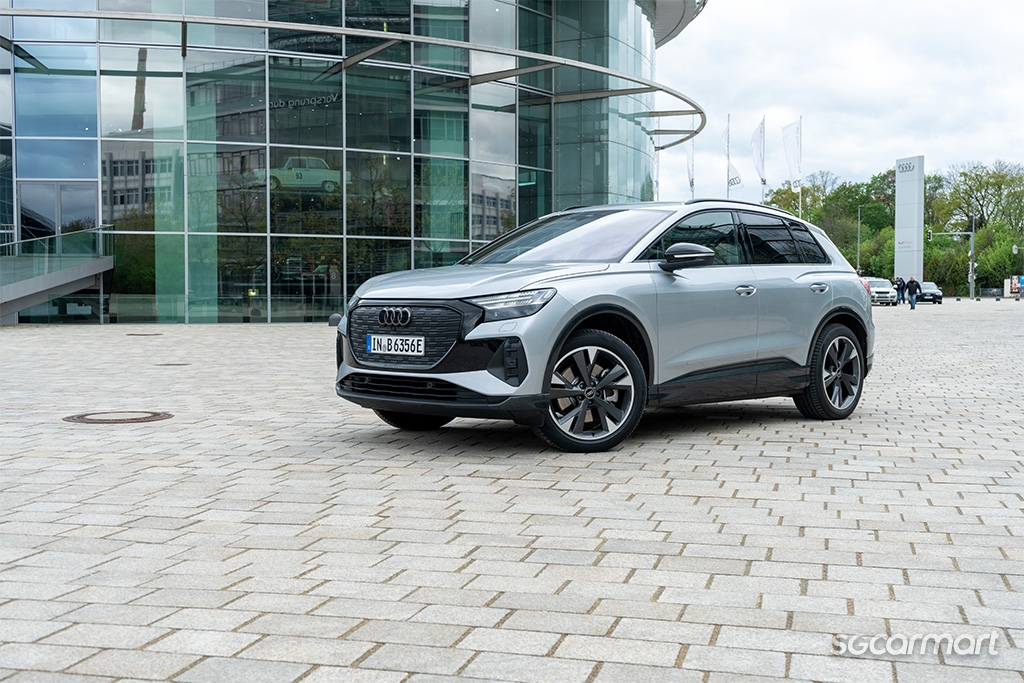
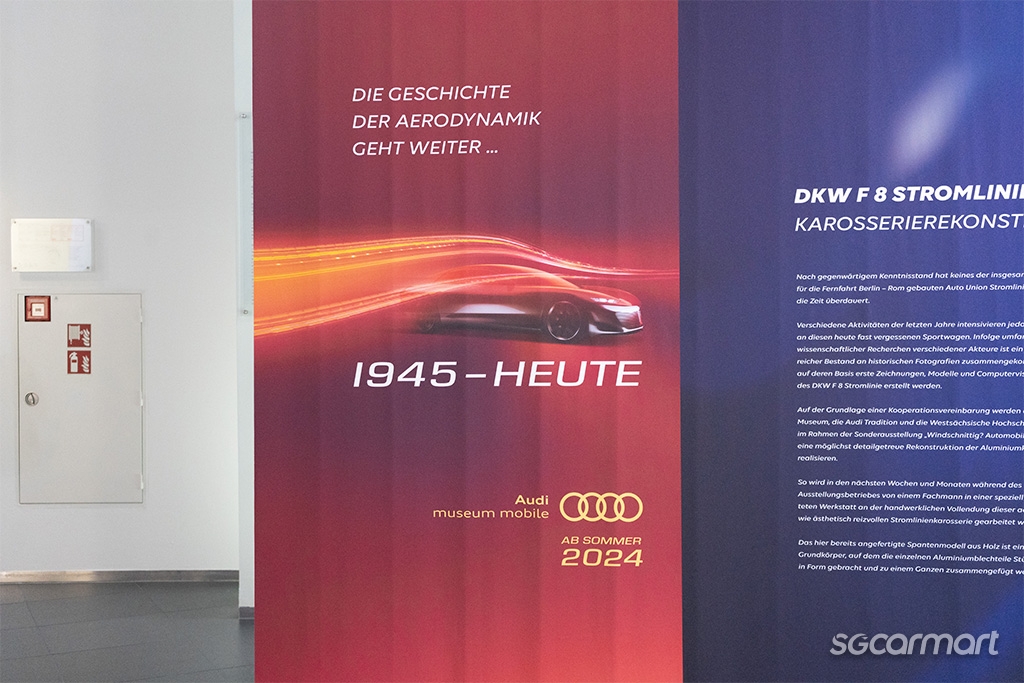
    While not the most aerodynamic EV on the market today, the Q4 e-tron presents an interesting starting point for an enquiry into the history of automotive streamlining on our electric road trip through Southern Germany

    All it takes is a quick check of the Q4 e-tron's digital driver's display - and a car-wide consensus not to gun it at its electronically-dictated 180km/h limit from hereon - to gain the assurance that we'll make it to the next point, more than 100km away, just fine. The conversation quickly turns instead towards how this jam might affect the rest of our programme.

    A few factors should be given credit for the fact that the topic of range has only been brought up for the briefest moments on our electric road trip: Well-planned stops, Southern Germany's ultra-fast chargers, and the Q4 e-tron's ability to support a robust DC current of up to 135kW.

    But also, credit is due to the car's fundamental capabilities: Its 77kWh battery, and decently aerodynamic body, giving it a real-world range of close to 400km.
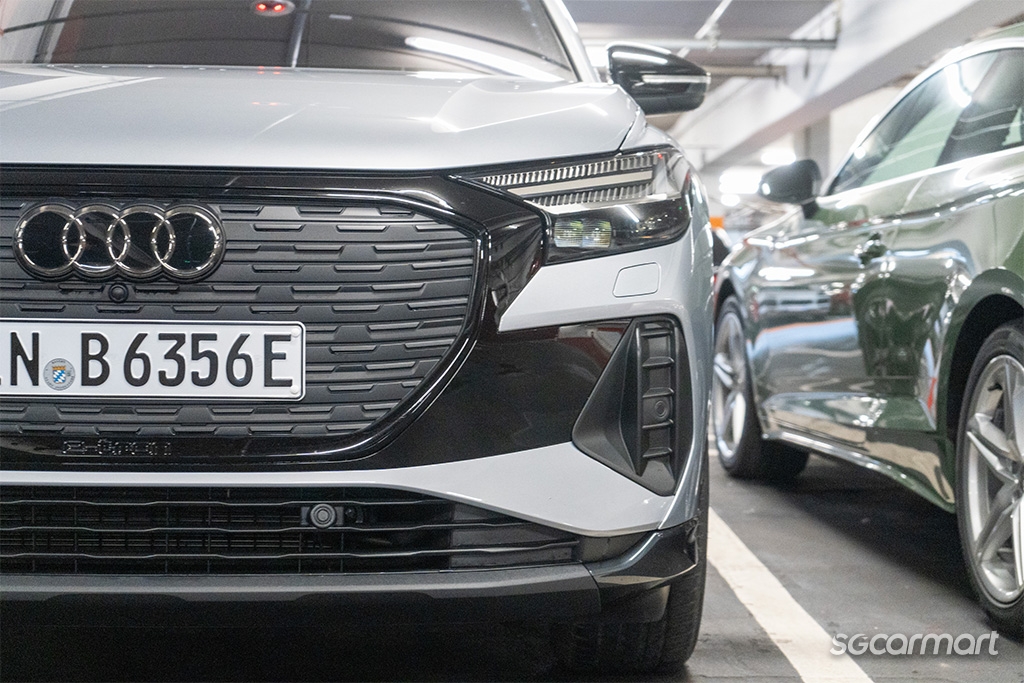
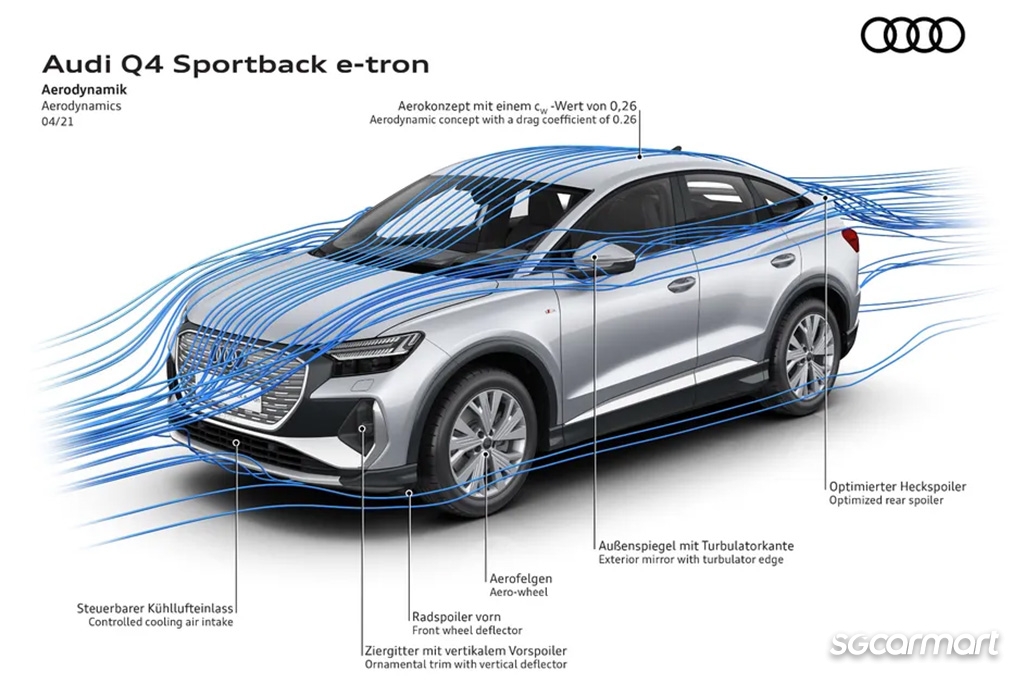
    These vertical deflectors below the car's head lights are but one of the special design elements on the Q4 e-tron meant to optimise airflow around the car. Here, an illustration of the Q4 e-tron Sportback also illuminates other components on the car that help to reduce drag 

    For something ostensibly so plucky, you'd expect at first that this might exhibit the sort of resistance to the air that a moving refrigerator would. Yet peer closer and the calculated design cues start to make themselves clearer.

    There is its adjustable cooling air inlet, beneath its 'grille', which can open up to swallow cool air when the car is being charged, but remains closed mostly. Besides that, those 'air curtains' seen below the head lights, as well as the three dimensional spoilers in front of the front wheels, also aim to optimise airflow. Even the side mirrors have what are called 'turbulator edges', made to make the air around swirl in a specific manner.
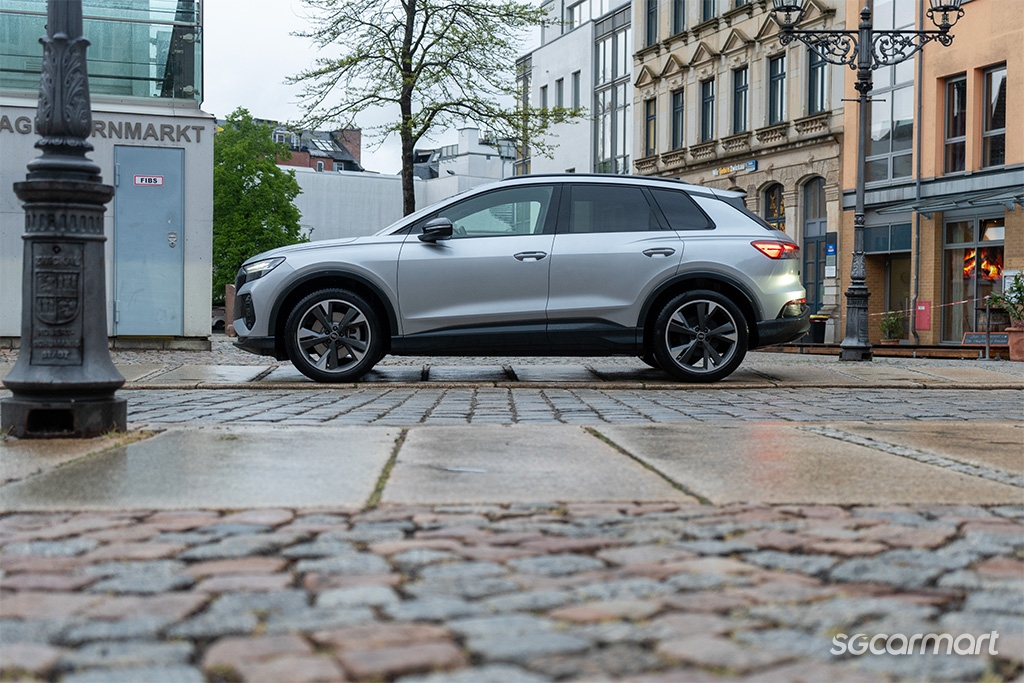
    For such a stout-looking SUV, the Q4 e-tron boasts a commendable drag coefficient of just 0.28Cd 

    But one important element won't be visible to most of us anyway: An intentionally smooth underbody. As such, for such a stout and compact SUV, the Q4 e-tron boasts a remarkable drag coefficient of just 0.28Cd, its Sportback fraternal twin dragging that figure even further down to 0.26Cd.

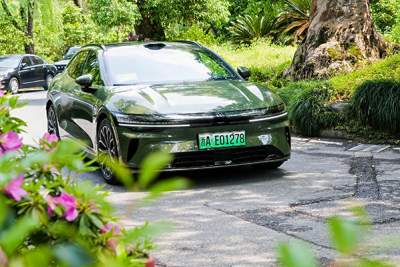
    In a world where cars like the Lucid Air and Hyundai Ioniq 6 exist, these numbers may not sound impressive at first - but then remember that those cars are not tall, high-riding SUVs.
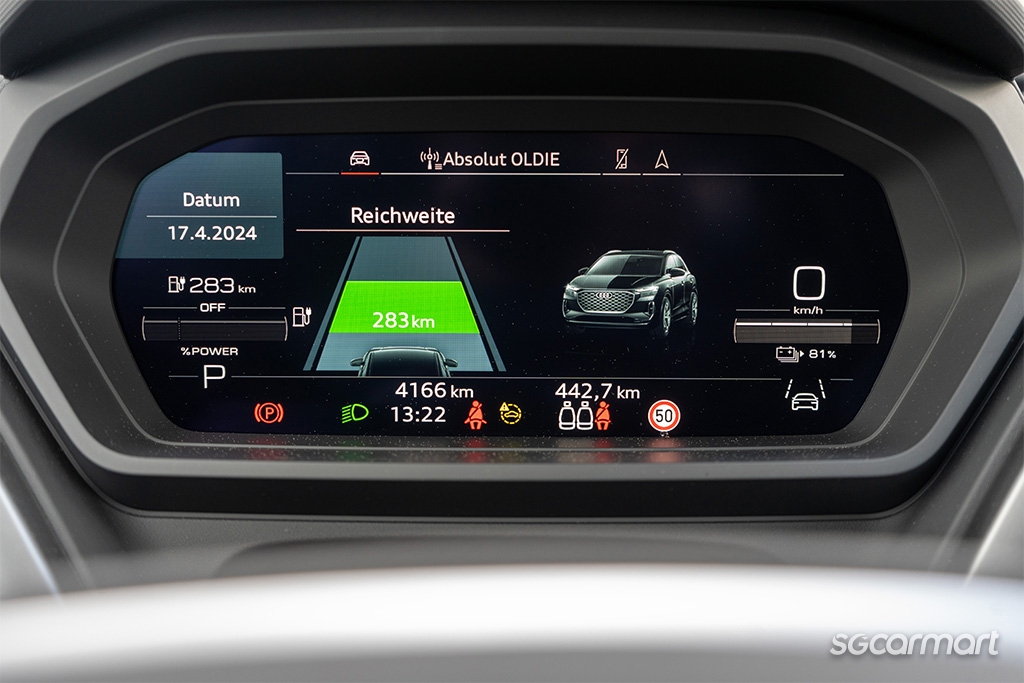
    The concept of aerodynamic efficiency has returned to the fore, as discourse around range - and range anxiety - becomes louder with the rise of EVs 

    EVs and aerodynamics

    Discourse around aerodynamics appears to have picked up steam - or shall we say, been given a jolt of electricity - as electric vehicles (EVs) come to the forefront of the automotive industry.

    If the equation wasn't comprehensible before, marketing materials for virtually every newly-launched EV are spelling things out clearly: A more aerodynamic car equates slipping through the air with more ease. A car that slips through the air more easily means better energy efficiency. Better energy efficiency equates better range. And of course, better range equates less anxiety.

    It's not wrong to assume, then, that the concept of aerodynamics is only now being given the time of day with electrification as its focus.

    Yet this isn't true.
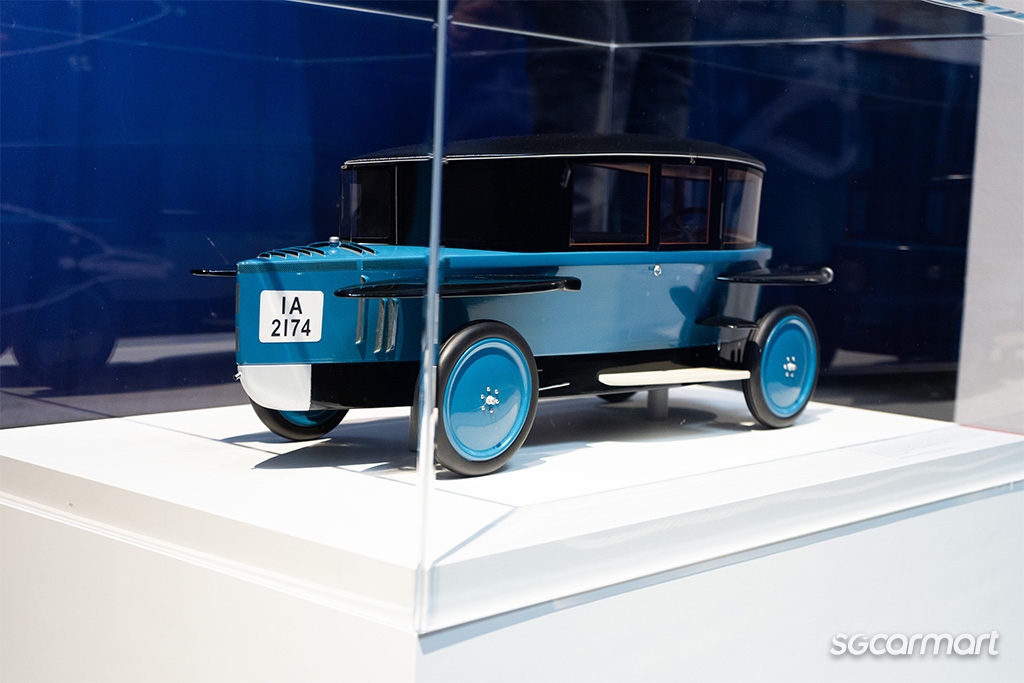
    The Rumpler Tropfenwagen was one of the earliest series production cars to be built with aerodynamics in mind 

    At the nascence of modern carmaking: Streamlining for efficiency and speed

    The obsession with streamlining cars can already be traced back to the dawn of the 1900s, leading to the birth of some highly odd-looking machines by as early as the 1920s. For the most noteworthy examples, look to otherworldly cars like the Rumpler Tropfenwagen ('Tropfen' translates to 'droplet' in English), or the egg-shaped Schloerwagen (named after German engineer Karl Schloer).

    This obsessive pursuit of automotive aerodynamics - at least in recorded modern history - appears to have emerged alongside a specific piece of technology that has its roots in aeroplanes: Wind tunnel testing.

    In fact, two of the most prominent names in the field were Austrian - Edmund Rumpler (responsible for the aforementioned Rumpler Tropfenwagen), and Paul Jaray, who tried working with some of the largest carmakers back then to bring his aerodynamic ideas to fruition, including - you guessed it - Audi. In both cases, Rumpler and Jaray took their backgrounds in aviation and applied them to the automotive field.
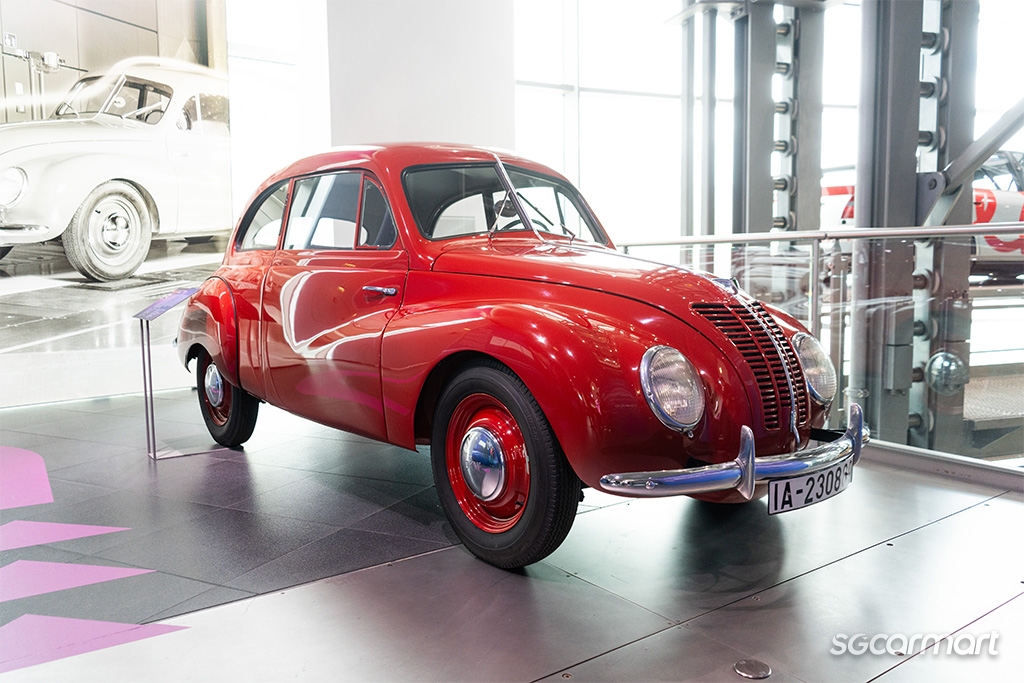
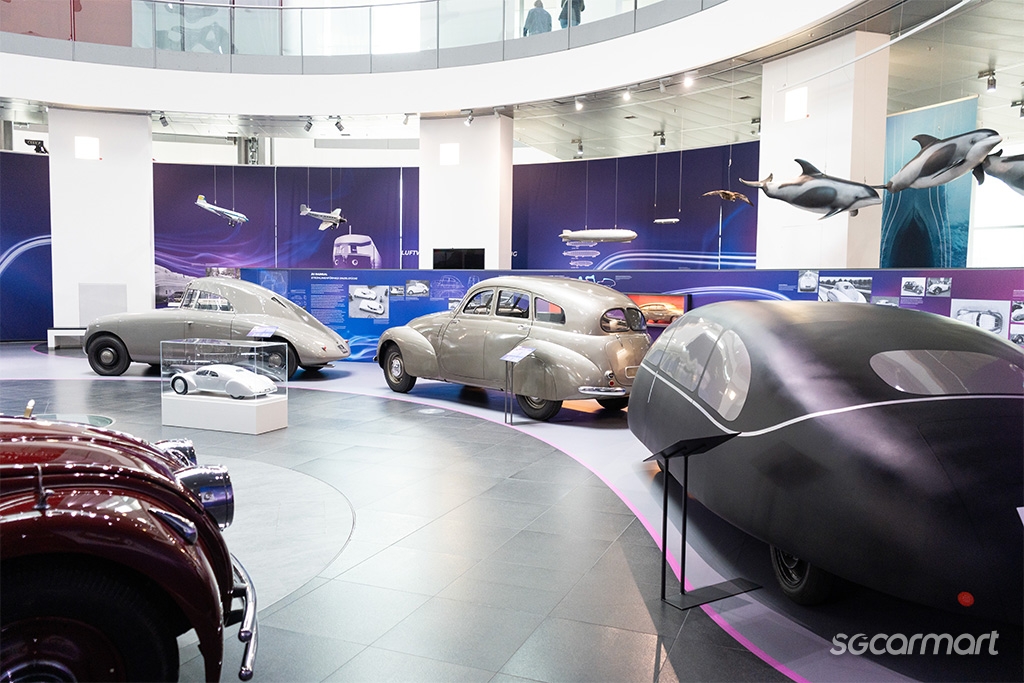
    Streamlining had started to impact series production cars on a wider scale by the 1940s - with cars like the DKW F9 Prototype (in red) designed with aerodynamics in mind 

    It doesn't take more than three or four examples of the most notable first cars to get a visual sense of what the ideal aerodynamic form is. Think rounded edges; smooth lines; few protrusions. 

    Nature, as we are told in the two-part Aerodynamics Exhibition by Audi bookending our Q4 e-tron road trip (you'll find Part 1 in Audi museum mobile, while Part 2, currently still at Zwickau's August Horch Museum, will reunite with it in July in Ingolstadt), is the best teacher; and a droplet, as the Tropfenwagen demonstrated, presents a template for the perfect shape.

    The Schloerwagen of the 1930s is singular aerodynamic pursuit manifested in extreme form: An egg-shaped machine based on a Mercedes-Benz 170H, that was 2.1 metres wide so that it could tuck its four wheels under its slippery body. 
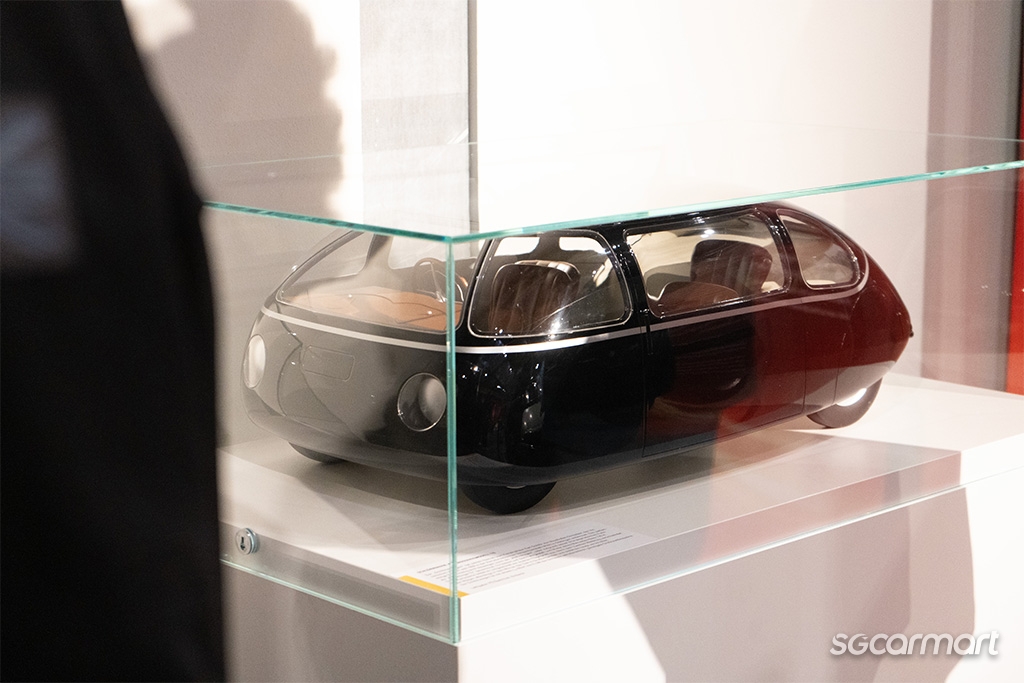
    A scaled down model of the Schloerwagen, which was based on the Mercedes-Benz 170H

    That gave it an insane drag coefficient of just 0.113Cd - helping it improve on the Merc's fuel efficiency by between 20 to 40% despite weighing 200kg more. (It wasn't perfect even from an engineering perspective, though; its shape and distorted centre of gravity apparently made it vulnerable to crosswinds.) 

    But here's where cars like the Schloerwagen - in their otherworldly blobbiness - illuminate yet another application of aerodynamics more commonly spoken about in the realm of supercars: Speed. 

    A comparison test between the Schloerwagen and the original 170H showed that the former could hit a significantly higher top speed of 135km/h - or 20km/h more than the Merc - as a result of its abnormal shape helping to reduce drag.

    Sure - these earlier ventures could have been struck off as 'science for the sake of science'. But it wasn't as if there was a sudden lull between the early 1900s and the present 21st century.
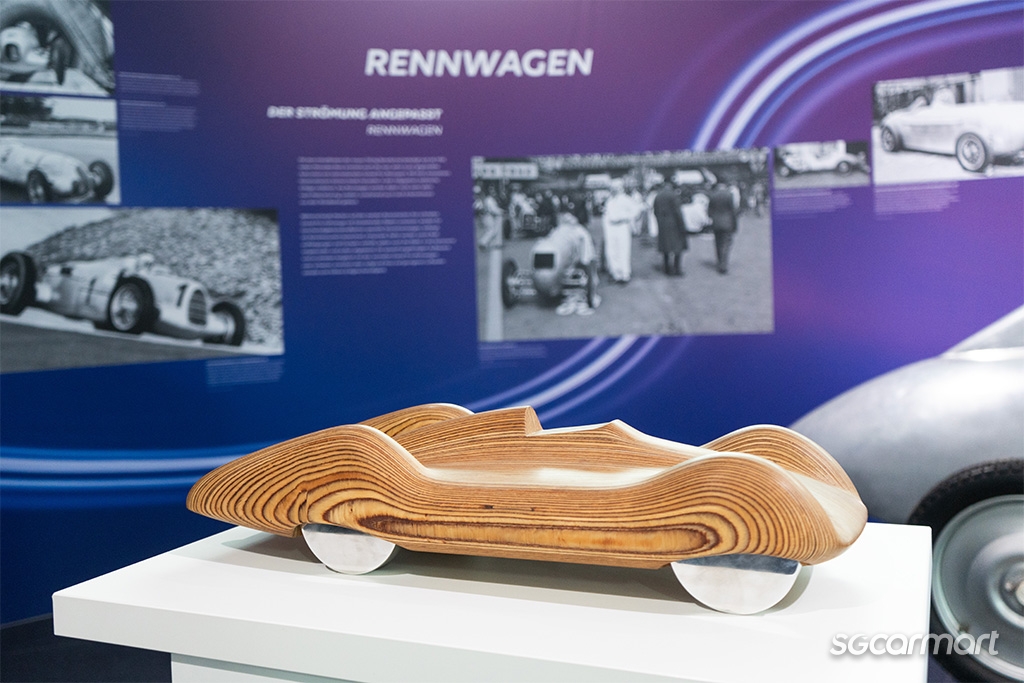
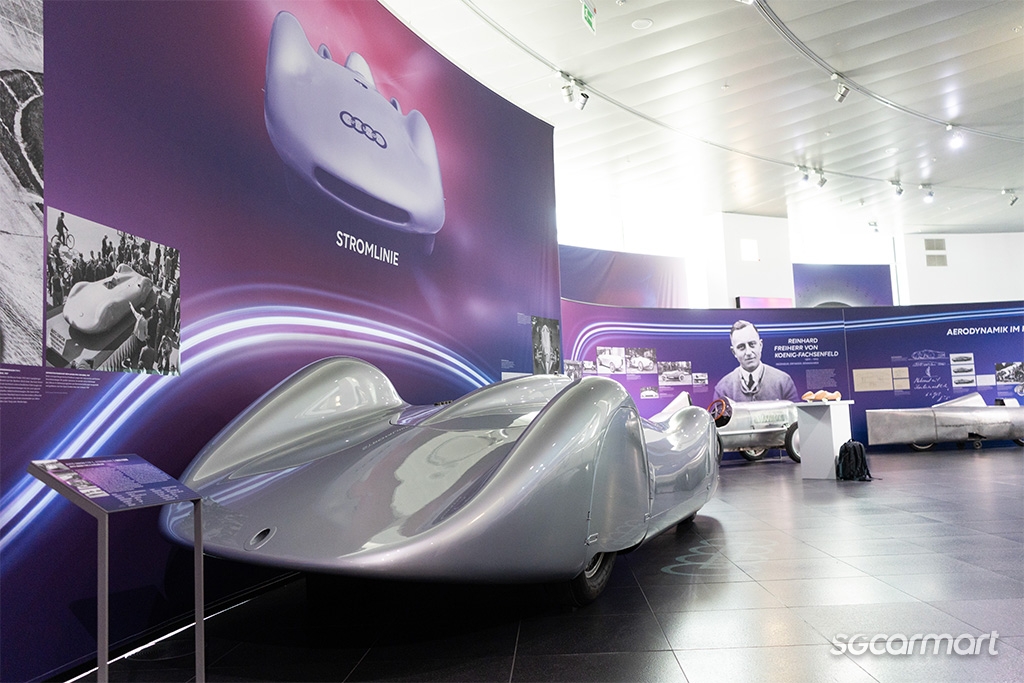
    The study of aerodynamics was also applied heavily towards motorsports - although that's another huge story altogether 

    As technology advanced and new auteurs in automotive design rose to prominence, aerodynamic efficiency and beautiful design no longer pulled so strongly in opposing directions.

    Audi is no stranger to building streamlined cars itself. When it debuted in the 1980s, the third-generation Audi 100 was a beautiful exercise in design, which also boasted a low drag coefficient of just 0.30Cd for its time. 

    In the longer, multiversal history of modern Audi as a company, there is yet another car that had a similar goal that ultimately manifested in svelte form: The NSU Ro 80, which was one of the arguable pioneers of the 'wedge' shape.

    Think those are stuck in the past? The pre-facelifted A3 Sedan (the figure for the refreshed one we recently drove has not been officially disclosed, but is likely to be on par essentially) boasted a drag coefficient of just 0.25Cd. Its larger sibling, two sizes up - the A6 - does it one better, with a 0.24Cd drag coefficient. 
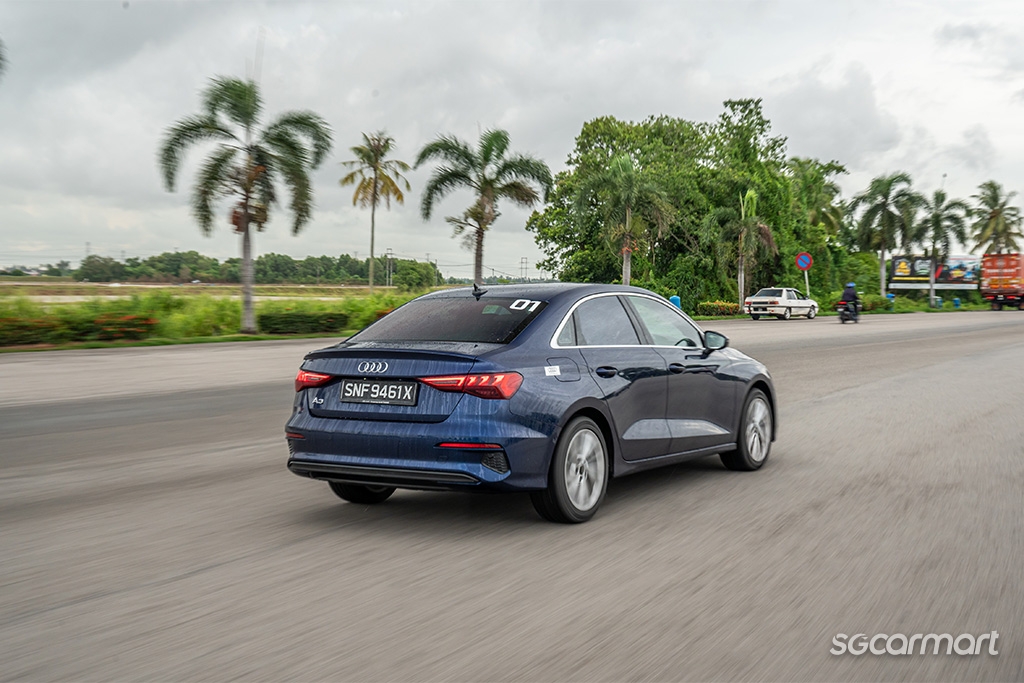
    The A3 Sedan is one of the most slippery cars in its segment, with a potential drag coefficient of just 0.25Cd

    On the one hand, all this is to say that the topic of aerodynamics is firstly, certainly not new. It's also never really fallen out of focus for carmakers.

    At the same time, however, it's undeniably been a while since we've had nearly every manufacturer return to the same page. 

    Your magnificent Audi SQ7 could have gotten away with poor fuel consumption on the back of its stupendous, fighter-jet power and sumptuous luxury - but when the time comes for Audi to introduce a fully electric seven-seater SUV to its lineup, you can bet a 5-Room HDB flat that "What's its range?" will be among the first questions asked by its would-be buyers. The climate has changed for sure.

    No amount of scientific underpinning changes the reality of a business-oriented manufacturer: Consistency in design language has to hold. And ultimately, a car has to be visually appealing enough to sell (decently) well. 

    A replica of the Jaray-Ley T6, at Audi museum mobile

    Paul Jaray took it upon himself early in his career to design a slippery-shaped car for three different brands - Apollo, Dixis and, well, Audi. And since the perfectly optimised shape has no room for variation, the cars - now known as the Jaray-Ley T6s - all looked the same.

    That brings us back to the Q4 e-tron. 

    How the importance of aerodynamics is interpreted ultimately remains up to the discretion and priority-alignment of every individual carmaker. Still, the pursuit of aerodynamics has been around longer than you think - and it will persist still, as one of the key loci of the automotive world. 

    By some stroke of luck, later tests run on the Tropfenwagen in the 1970s would reveal its incredibly low drag coefficient (for its time) - a figure that is shared with the star of our trip: 0.28Cd. Yes, that's the figure boasted by the Q4 e-tron.

    It's hard to imagine that these two vehicles boast the same drag coefficient figure: 0.28Cd

    I look at the Q4 e-tron now and wonder what Edmund Rumpler would feel now if he were still around to see it himself: His pedantic pursuit of aerodynamic perfection and its alien, commercially unsuccessful form - vis-a-vis the conventional-looking compact crossover now promising to unleash Audi's electric vision across a wider-than-ever scale on. 

    Progress does indeed occur through technology. It's unlikely that the Schloerwagen will ever be matched in its streamlined abilities (WIRED describes it as "simply too singular in purpose, with little concession to the other things we want from our cars), but perhaps - just perhaps - we're inching close (or closer) to it. 

    Here are a few other stories that may interest you! 

    Mythbusted: Does a faster car always consume more fuel?

    Charting progress through technology during my time in Germany

    Silence, sweat, solitude: The Q8 e-tron Efficiency League

    Mattheus Wee
    Story by Mattheus Wee in Munich, Germany
    Mattheus is happy he lives in a world with (hot) hatchbacks and good coffeeshops. He also genuinely appreciates an honest MPV.
    Additional photos by Audi Singapore
    24.4k

    Tags

    commentary audi q4 e-tron audi a3 audi a6 rumpler tropfenwagen edmund rumpler paul jaray jaray-ley t6 audi aerodynamics exhibition audi museum mobile audi forum ingolstadt audi hq ingolstadt audi ingolstadt

    AllReviewsNewsAdviceFeaturesVideos
    • Home
    • Car Articles
    • features
    • features Listings
    • Features

    Aerodynamics: It's never just been about EVs

    03 Jun 2024

    |

    1,184 views

    What sorts of links might a droplet-shaped car from the 1920s and the Audi Q4 e-tron share? We find out on a recent road trip through Southern Germany.

    It is only now - stuck in a standstill jam on a Munich-bound highway so clogged up that we've been forced onto the curb to create a passage for emergency vehicles - that the first reference to range anxiety has finally emerged.

    Not bad, considering that we've spent nearly two days thus far with the Audi Q4 e-tron already. The stretches covered in between haven't been short either.

    While not the most aerodynamic EV on the market today, the Q4 e-tron presents an interesting starting point for an enquiry into the history of automotive streamlining on our electric road trip through Southern Germany

    All it takes is a quick check of the Q4 e-tron's digital driver's display - and a car-wide consensus not to gun it at its electronically-dictated 180km/h limit from hereon - to gain the assurance that we'll make it to the next point, more than 100km away, just fine. The conversation quickly turns instead towards how this jam might affect the rest of our programme.

    A few factors should be given credit for the fact that the topic of range has only been brought up for the briefest moments on our electric road trip: Well-planned stops, Southern Germany's ultra-fast chargers, and the Q4 e-tron's ability to support a robust DC current of up to 135kW.

    But also, credit is due to the car's fundamental capabilities: Its 77kWh battery, and decently aerodynamic body, giving it a real-world range of close to 400km.

    These vertical deflectors below the car's head lights are but one of the special design elements on the Q4 e-tron meant to optimise airflow around the car. Here, an illustration of the Q4 e-tron Sportback also illuminates other components on the car that help to reduce drag 

    For something ostensibly so plucky, you'd expect at first that this might exhibit the sort of resistance to the air that a moving refrigerator would. Yet peer closer and the calculated design cues start to make themselves clearer.

    There is its adjustable cooling air inlet, beneath its 'grille', which can open up to swallow cool air when the car is being charged, but remains closed mostly. Besides that, those 'air curtains' seen below the head lights, as well as the three dimensional spoilers in front of the front wheels, also aim to optimise airflow. Even the side mirrors have what are called 'turbulator edges', made to make the air around swirl in a specific manner.

    For such a stout-looking SUV, the Q4 e-tron boasts a commendable drag coefficient of just 0.28Cd 

    But one important element won't be visible to most of us anyway: An intentionally smooth underbody. As such, for such a stout and compact SUV, the Q4 e-tron boasts a remarkable drag coefficient of just 0.28Cd, its Sportback fraternal twin dragging that figure even further down to 0.26Cd.

    In a world where cars like the Lucid Air and Hyundai Ioniq 6 exist, these numbers may not sound impressive at first - but then remember that those cars are not tall, high-riding SUVs.

    The concept of aerodynamic efficiency has returned to the fore, as discourse around range - and range anxiety - becomes louder with the rise of EVs 

    EVs and aerodynamics

    Discourse around aerodynamics appears to have picked up steam - or shall we say, been given a jolt of electricity - as electric vehicles (EVs) come to the forefront of the automotive industry.

    If the equation wasn't comprehensible before, marketing materials for virtually every newly-launched EV are spelling things out clearly: A more aerodynamic car equates slipping through the air with more ease. A car that slips through the air more easily means better energy efficiency. Better energy efficiency equates better range. And of course, better range equates less anxiety.

    It's not wrong to assume, then, that the concept of aerodynamics is only now being given the time of day with electrification as its focus.

    Yet this isn't true.

    The Rumpler Tropfenwagen was one of the earliest series production cars to be built with aerodynamics in mind 

    At the nascence of modern carmaking: Streamlining for efficiency and speed

    The obsession with streamlining cars can already be traced back to the dawn of the 1900s, leading to the birth of some highly odd-looking machines by as early as the 1920s. For the most noteworthy examples, look to otherworldly cars like the Rumpler Tropfenwagen ('Tropfen' translates to 'droplet' in English), or the egg-shaped Schloerwagen (named after German engineer Karl Schloer).

    This obsessive pursuit of automotive aerodynamics - at least in recorded modern history - appears to have emerged alongside a specific piece of technology that has its roots in aeroplanes: Wind tunnel testing.

    In fact, two of the most prominent names in the field were Austrian - Edmund Rumpler (responsible for the aforementioned Rumpler Tropfenwagen), and Paul Jaray, who tried working with some of the largest carmakers back then to bring his aerodynamic ideas to fruition, including - you guessed it - Audi. In both cases, Rumpler and Jaray took their backgrounds in aviation and applied them to the automotive field.

    Streamlining had started to impact series production cars on a wider scale by the 1940s - with cars like the DKW F9 Prototype (in red) designed with aerodynamics in mind 

    It doesn't take more than three or four examples of the most notable first cars to get a visual sense of what the ideal aerodynamic form is. Think rounded edges; smooth lines; few protrusions. 

    Nature, as we are told in the two-part Aerodynamics Exhibition by Audi bookending our Q4 e-tron road trip (you'll find Part 1 in Audi museum mobile, while Part 2, currently still at Zwickau's August Horch Museum, will reunite with it in July in Ingolstadt), is the best teacher; and a droplet, as the Tropfenwagen demonstrated, presents a template for the perfect shape.

    The Schloerwagen of the 1930s is singular aerodynamic pursuit manifested in extreme form: An egg-shaped machine based on a Mercedes-Benz 170H, that was 2.1 metres wide so that it could tuck its four wheels under its slippery body. 

    A scaled down model of the Schloerwagen, which was based on the Mercedes-Benz 170H

    That gave it an insane drag coefficient of just 0.113Cd - helping it improve on the Merc's fuel efficiency by between 20 to 40% despite weighing 200kg more. (It wasn't perfect even from an engineering perspective, though; its shape and distorted centre of gravity apparently made it vulnerable to crosswinds.) 

    But here's where cars like the Schloerwagen - in their otherworldly blobbiness - illuminate yet another application of aerodynamics more commonly spoken about in the realm of supercars: Speed. 

    A comparison test between the Schloerwagen and the original 170H showed that the former could hit a significantly higher top speed of 135km/h - or 20km/h more than the Merc - as a result of its abnormal shape helping to reduce drag.

    Sure - these earlier ventures could have been struck off as 'science for the sake of science'. But it wasn't as if there was a sudden lull between the early 1900s and the present 21st century.

    The study of aerodynamics was also applied heavily towards motorsports - although that's another huge story altogether 

    As technology advanced and new auteurs in automotive design rose to prominence, aerodynamic efficiency and beautiful design no longer pulled so strongly in opposing directions.

    Audi is no stranger to building streamlined cars itself. When it debuted in the 1980s, the third-generation Audi 100 was a beautiful exercise in design, which also boasted a low drag coefficient of just 0.30Cd for its time. 

    In the longer, multiversal history of modern Audi as a company, there is yet another car that had a similar goal that ultimately manifested in svelte form: The NSU Ro 80, which was one of the arguable pioneers of the 'wedge' shape.

    Think those are stuck in the past? The pre-facelifted A3 Sedan (the figure for the refreshed one we recently drove has not been officially disclosed, but is likely to be on par essentially) boasted a drag coefficient of just 0.25Cd. Its larger sibling, two sizes up - the A6 - does it one better, with a 0.24Cd drag coefficient. 
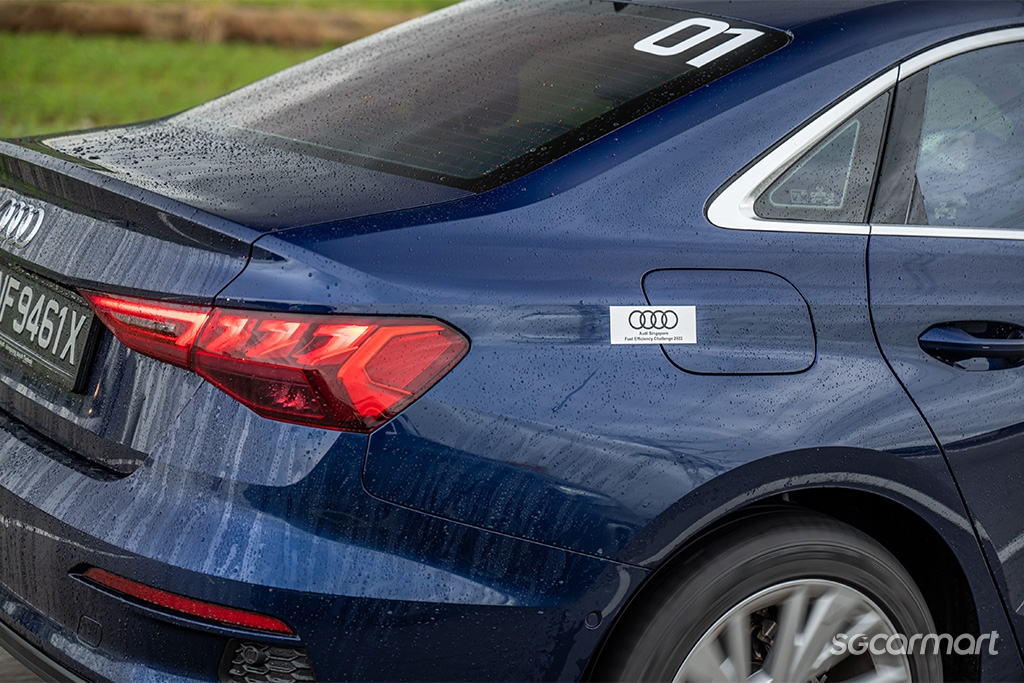
    The A3 Sedan is one of the most slippery cars in its segment, with a potential drag coefficient of just 0.25Cd

    On the one hand, all this is to say that the topic of aerodynamics is firstly, certainly not new. It's also never really fallen out of focus for carmakers.

    At the same time, however, it's undeniably been a while since we've had nearly every manufacturer return to the same page. 

    Your magnificent Audi SQ7 could have gotten away with poor fuel consumption on the back of its stupendous, fighter-jet power and sumptuous luxury - but when the time comes for Audi to introduce a fully electric seven-seater SUV to its lineup, you can bet a 5-Room HDB flat that "What's its range?" will be among the first questions asked by its would-be buyers. The climate has changed for sure.

    No amount of scientific underpinning changes the reality of a business-oriented manufacturer: Consistency in design language has to hold. And ultimately, a car has to be visually appealing enough to sell (decently) well. 
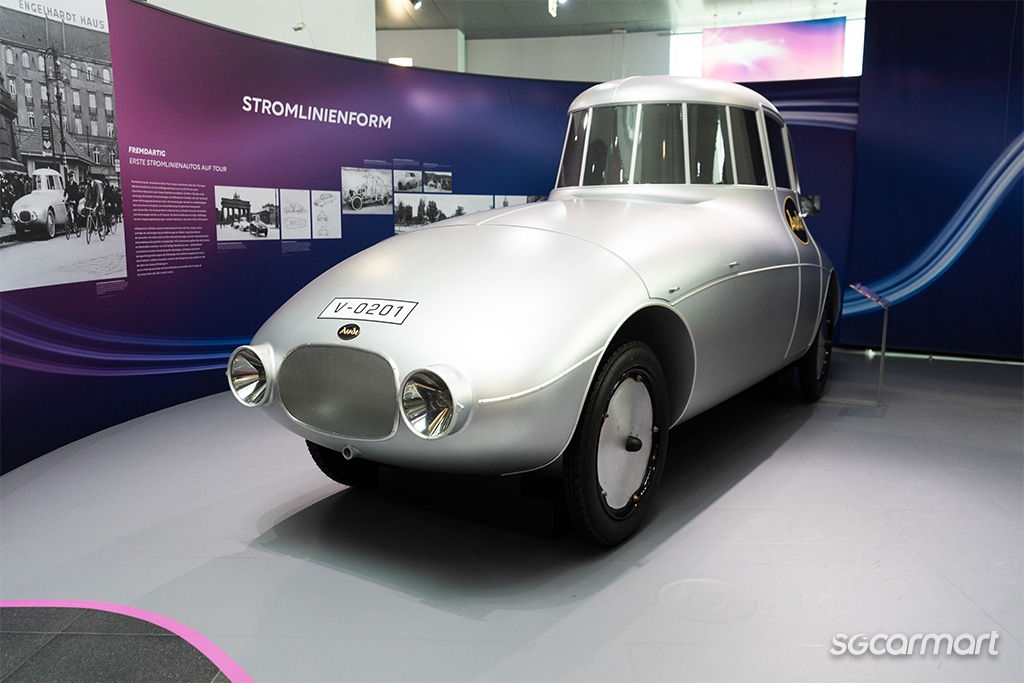
    A replica of the Jaray-Ley T6, at Audi museum mobile

    Paul Jaray took it upon himself early in his career to design a slippery-shaped car for three different brands - Apollo, Dixis and, well, Audi. And since the perfectly optimised shape has no room for variation, the cars - now known as the Jaray-Ley T6s - all looked the same.

    That brings us back to the Q4 e-tron. 

    How the importance of aerodynamics is interpreted ultimately remains up to the discretion and priority-alignment of every individual carmaker. Still, the pursuit of aerodynamics has been around longer than you think - and it will persist still, as one of the key loci of the automotive world. 

    By some stroke of luck, later tests run on the Tropfenwagen in the 1970s would reveal its incredibly low drag coefficient (for its time) - a figure that is shared with the star of our trip: 0.28Cd. Yes, that's the figure boasted by the Q4 e-tron.
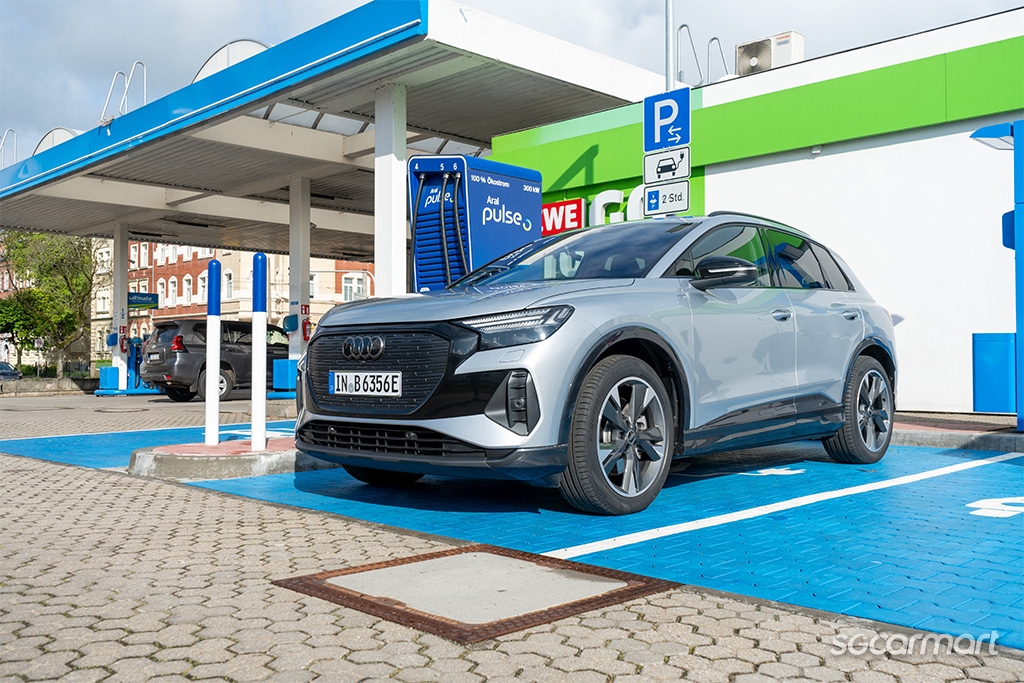
    It's hard to imagine that these two vehicles boast the same drag coefficient figure: 0.28Cd

    I look at the Q4 e-tron now and wonder what Edmund Rumpler would feel now if he were still around to see it himself: His pedantic pursuit of aerodynamic perfection and its alien, commercially unsuccessful form - vis-a-vis the conventional-looking compact crossover now promising to unleash Audi's electric vision across a wider-than-ever scale on. 

    Progress does indeed occur through technology. It's unlikely that the Schloerwagen will ever be matched in its streamlined abilities (WIRED describes it as "simply too singular in purpose, with little concession to the other things we want from our cars), but perhaps - just perhaps - we're inching close (or closer) to it. 

    Here are a few other stories that may interest you! 

    Mythbusted: Does a faster car always consume more fuel?

    Charting progress through technology during my time in Germany

    Silence, sweat, solitude: The Q8 e-tron Efficiency League

    Mattheus Wee
    Story by Mattheus Wee in Munich, Germany
    Mattheus is happy he lives in a world with (hot) hatchbacks and good coffeeshops. He also genuinely appreciates an honest MPV.
    Additional photos by Audi Singapore
    24.4k

    Tags

    commentary audi q4 e-tron audi a3 audi a6 rumpler tropfenwagen edmund rumpler paul jaray jaray-ley t6 audi aerodynamics exhibition audi museum mobile audi forum ingolstadt audi hq ingolstadt audi ingolstadt

    Newsletter

    Be Notified On The Latest News

    Newsletter

    Be Notified On The Latest News

    You May Also Like

    Sgcarmart Explores: Bras Basah!

    Sgcarmart Explores: Bras Basah!

    New cars are safer: Opt for one when you can

    New cars are safer: Opt for one when you can

    Maxus MIFA 7 Elite: Going big for the little moments

    Maxus MIFA 7 Elite: Going big for the little moments

    Sgcarmart Explores: East Coast Park!

    Sgcarmart Explores: East Coast Park!

    Opinion: Why do we even need green number plates?

    Opinion: Why do we even need green number plates?

    The BYD Sealion 8 seven-seater SUV arrives in Singapore

    The BYD Sealion 8 seven-seater SUV arrives in Singapore

    Must-Have Car Accessories Every EV Driver Should Own

    Must-Have Car Accessories Every EV Driver Should Own

    Hongqi Singapore opens its showroom doors

    Hongqi Singapore opens its showroom doors

    A first look at Chery's iCaur V23 and Jaecoo J8 in Singapore

    A first look at Chery's iCaur V23 and Jaecoo J8 in Singapore

    Mercedes-Benz GLB250+ Review

    Mercedes-Benz GLB250+ Review

    The all new XPENG Mona L03 is one smart coupe SUV

    The all new XPENG Mona L03 is one smart coupe SUV

    Is parallel import hesitancy growing among car buyers?

    Is parallel import hesitancy growing among car buyers?

    The 5 main things you must know about the XPENG L03

    The 5 main things you must know about the XPENG L03

    Tesla launches Model Y L in Singapore, first six-seater here

    Tesla launches Model Y L in Singapore, first six-seater here

    New to driving? Here's how to become a better driver

    New to driving? Here's how to become a better driver

    Motoring Icons: JDM legends - Honda NSX

    Motoring Icons: JDM legends - Honda NSX

    You May Also Like

    Sgcarmart Explores: Bras Basah!

    Sgcarmart Explores: Bras Basah!

    New cars are safer: Opt for one when you can

    New cars are safer: Opt for one when you can

    Maxus MIFA 7 Elite: Going big for the little moments

    Maxus MIFA 7 Elite: Going big for the little moments

    Sgcarmart Explores: East Coast Park!

    Sgcarmart Explores: East Coast Park!

    Opinion: Why do we even need green number plates?

    Opinion: Why do we even need green number plates?

    The BYD Sealion 8 seven-seater SUV arrives in Singapore

    The BYD Sealion 8 seven-seater SUV arrives in Singapore

    Must-Have Car Accessories Every EV Driver Should Own

    Must-Have Car Accessories Every EV Driver Should Own

    Hongqi Singapore opens its showroom doors

    Hongqi Singapore opens its showroom doors

    A first look at Chery's iCaur V23 and Jaecoo J8 in Singapore

    A first look at Chery's iCaur V23 and Jaecoo J8 in Singapore

    Mercedes-Benz GLB250+ Review

    Mercedes-Benz GLB250+ Review

    The all new XPENG Mona L03 is one smart coupe SUV

    The all new XPENG Mona L03 is one smart coupe SUV

    Is parallel import hesitancy growing among car buyers?

    Is parallel import hesitancy growing among car buyers?

    The 5 main things you must know about the XPENG L03

    The 5 main things you must know about the XPENG L03

    Tesla launches Model Y L in Singapore, first six-seater here

    Tesla launches Model Y L in Singapore, first six-seater here

    New to driving? Here's how to become a better driver

    New to driving? Here's how to become a better driver

    Motoring Icons: JDM legends - Honda NSX

    Motoring Icons: JDM legends - Honda NSX

    Related Articles

    Sgcarmart Explores: Bras Basah!

    Sgcarmart Explores: Bras Basah!

    Aion UT Premium Review

    Aion UT Premium Review

    BMW iX3 Review

    BMW iX3 Review

    The 5 main things you must know about the XPENG L03

    The 5 main things you must know about the XPENG L03

    New to driving? Here's how to become a better driver

    New to driving? Here's how to become a better driver

    PARF rebates cut by 45%: Six quick takeaways and thoughts

    PARF rebates cut by 45%: Six quick takeaways and thoughts

    Potential fixes to our COE system

    Potential fixes to our COE system

    New cars are safer: Opt for one when you can

    New cars are safer: Opt for one when you can

    Related Articles

    Sgcarmart Explores: Bras Basah!

    Sgcarmart Explores: Bras Basah!

    Aion UT Premium Review

    Aion UT Premium Review

    BMW iX3 Review

    BMW iX3 Review

    The 5 main things you must know about the XPENG L03

    The 5 main things you must know about the XPENG L03

    New to driving? Here's how to become a better driver

    New to driving? Here's how to become a better driver

    PARF rebates cut by 45%: Six quick takeaways and thoughts

    PARF rebates cut by 45%: Six quick takeaways and thoughts

    Potential fixes to our COE system

    Potential fixes to our COE system

    New cars are safer: Opt for one when you can

    New cars are safer: Opt for one when you can