View page in desktop
|
Report error
  •   Apple app store icon
  • Google play store icon
Terms of Service
|
Privacy Policy
|
PDPA
|
Site Map
©2004-2026 Sgcarmart, Singapore. All rights reserved.
  • Home
  • Car Articles
  • features
  • features Listings
  • Features
  • When will diesels really be gone?

    17 Jul 2024

    |

    96,932 views

    LTA wants diesel vehicles off our roads. When will that actually happen? (Short answer: Not anytime soon.)

    LTA announced earlier this month that new registration of diesel cars and taxis will cease from 2025. This is to support Singapore's vision for all vehicles to run on cleaner energy by 2040.

    According to LTA, diesel cars and taxis have taken up less than 1% of new registrations since 2021. 

    When looking at published LTA stats, the numbers tell that story (though an incomplete one). It's immediately worth pointing out here that LTA does not publish the specific statistics for diesel taxis. Also, diesel-electric models have been excluded from the data analysis, as they form a tiny fraction of the overall numbers, and LTA has not defined if these models are part of the 2025 deadline (we assume not).

    For passenger cars, the percentage of new car registrations of diesel models relative to the total registrations has been falling since 2018:

    Year201520162017201820192020202120222023
    Diesel cars2,7904,4355,2592,0951,348483541435165
    Total passenger cars57,58987,50491,92280,28172,34444,46545,44230,93930,225
    Diesel percentage4.8%5.1%5.7%2.6%1.9%1.1%1.2%1.4%0.5%

    The 2016/2017 spike was driven largely by diesel BMW models - specifically (and in all likelihood) the 1 Series 116d and 2 Series Gran Tourer 216d models. 

    Since then, however, new diesel car registrations have significantly tapered off - due to changing legislation and taxes, as well as evolving market demand. 
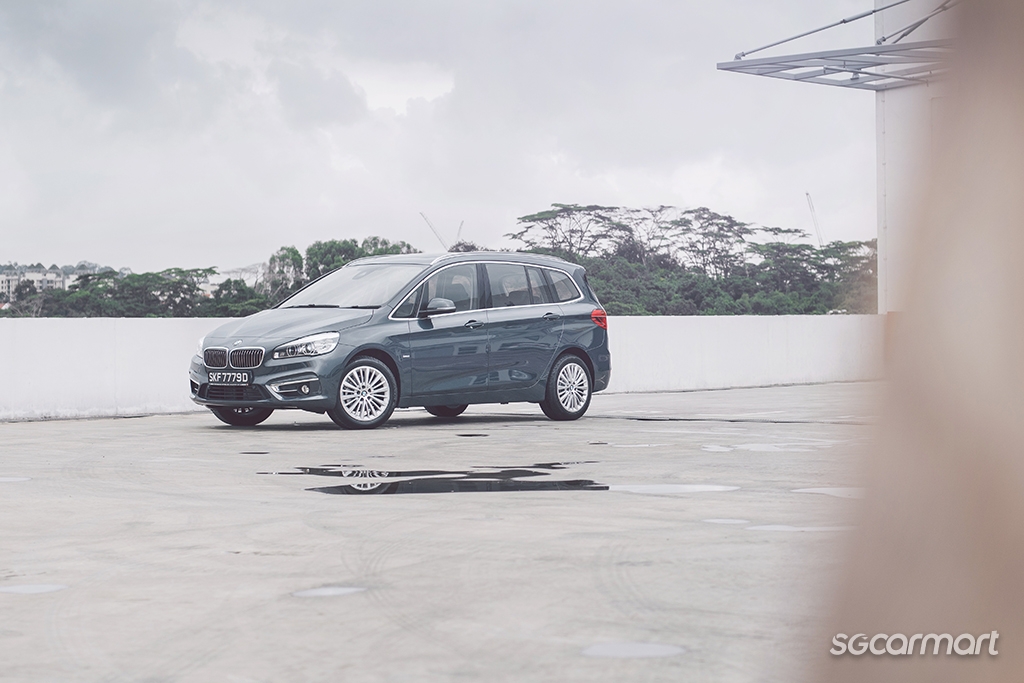
    2016/2017 saw a spike in new diesel car registrations, but diesel car sales have tapered off significantly since then

    Now, if we look at the larger overall car population, and the diesel proportion of it, the trend lines are slightly different.

    Taxis

    Year20132014201520162017201820192020202120222023
    Diesel24,14424,49324,24423,74818,85115,0899,7596,5084,9514,0122,860
    Hybrid6621,6081,8892,4924,1595,3378,6269,1179,6179,66110,284
    Total27,69528,73628,25927,53423,14020,58118,54115,67814,88714,08413,620

    For taxis, the overall diesel population has been falling since 2014, and by quite a remarkable rate (since 2017, between 19% to 35% year on year).

    Yes, in that same time, the switch to hybrid taxis has been notable (with year-on-year percentage increases since 2014), but the overall taxi population has also fallen year on year since 2015. This is an indication of the shrinking taxi market as a whole. As of 2023, the diesel taxi populations stands at a relatively tiny 2,860, so in a relatively short time we should expect diesel taxis to more or less be completely phased out. 

    Passenger Cars

    Year20132014201520162017201820192020202120222023
    Diesel1,4123,2065,97610,36415,51417,25318,04918,07618,13618,26118,037
    Total621,345616,609602,311601,257612,256615,452630,596634,042645,150650,667651,302

    For passenger cars, it's a different story. In fact, the diesel car population has been growing since 2014, reaching its peak in 2022. In that same time, the overall car population has also been growing ever so slightly since 2017. Consequently, the diesel population of passenger cars since 2018 constitutes around 2.8% of the overall car population. 

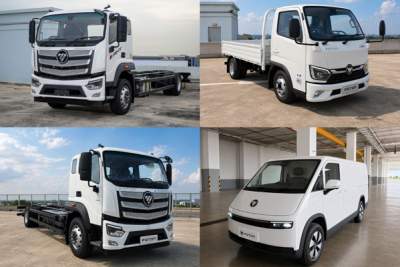
    Recently, all-electric commercial vehicle options have expanded notably, but diesel goods vehicles still make up a significant proportion of all vehicles on our roads

    So, what effect will this 2025 deadline have?

    The more cynical among us may say that the impact is insignificant. The diesel taxi population is already so small, and the diesel car population in 2023 makes up just 2.8% of all passenger cars on the road. Even prior to this new mandate, few distributors were bringing in new diesel models, so the choice of a new diesel model already is limited. 

    When will diesels be gone? The answer, in all likelihood, is a long, long time more away. Given that the passenger car diesel population peaked in 2022 (and the typical 10-year COE cycle), it will be a good amount of time before these cars stop plying our roads (not accounting for renewed COEs). We're probably looking at 2030 and after when the diesel car population will dramatically shrink.

    The population of diesel car and taxis will eventually peter out, and while it is a necessary first step to cleaning up our transport ecosystem, it will be the eventual 'greenification' of commercial vehicles that will have the most significant impact

    As we previously explored, more significant is the commercial vehicle population, where diesel makes up a much more significant percentage.

    In 2023, the diesel Goods & Other Vehicles population stood at 128,381, which represents 89.2% of all Goods & Other Vehicles, and actually 13.2% of all vehicles on the road. And, there has thus far been no clear mandate on the 'greenification' of that particular segment of vehicles.

    While there are incentives in place to encourage cleaner vehicles, such as the Commercial Vehicles Emissions Scheme and Early Turnover Scheme that have been extended to March 2025, there have been no hard deadlines set out (unlike for cars and taxis). Encouragingly, we are seeing the introduction of new electric commercial vehicles to market, and a notable growth in adoption, but as of 2023, the 3,338 examples make up just 2.3% of the total Goods & Other Vehicles population. 

    But in another view, this is the first and necessary (albeit small) step in cleaning up our transport ecosystem. Such changes, important and relevant as they may be, will not happen overnight. It will not even happen quickly at all. But each small step is a necessary and incremental progress towards a cleaner future. 

    So yes, you can expect that the diesel pumps at petrol stations won't be going anywhere. Barring policy changes or new mandates, diesel vehicles will be on our roads for a long time more. 

    Desmond Chan
    Story by Desmond Chan
    Desmond thinks the world would be better if cars were smaller and less powerful. He wants to live in the 70s.
    Photos by Editorial Team
    24.4k

    Tags

    commentary diesel lta diesel cars law singapore singapore cars,

    AllReviewsNewsAdviceFeaturesVideos
    • Home
    • Car Articles
    • features
    • features Listings
    • Features

    When will diesels really be gone?

    17 Jul 2024

    |

    96,932 views

    LTA wants diesel vehicles off our roads. When will that actually happen? (Short answer: Not anytime soon.)

    LTA announced earlier this month that new registration of diesel cars and taxis will cease from 2025. This is to support Singapore's vision for all vehicles to run on cleaner energy by 2040.

    According to LTA, diesel cars and taxis have taken up less than 1% of new registrations since 2021. 

    When looking at published LTA stats, the numbers tell that story (though an incomplete one). It's immediately worth pointing out here that LTA does not publish the specific statistics for diesel taxis. Also, diesel-electric models have been excluded from the data analysis, as they form a tiny fraction of the overall numbers, and LTA has not defined if these models are part of the 2025 deadline (we assume not).

    For passenger cars, the percentage of new car registrations of diesel models relative to the total registrations has been falling since 2018:

    Year201520162017201820192020202120222023
    Diesel cars2,7904,4355,2592,0951,348483541435165
    Total passenger cars57,58987,50491,92280,28172,34444,46545,44230,93930,225
    Diesel percentage4.8%5.1%5.7%2.6%1.9%1.1%1.2%1.4%0.5%

    The 2016/2017 spike was driven largely by diesel BMW models - specifically (and in all likelihood) the 1 Series 116d and 2 Series Gran Tourer 216d models. 

    Since then, however, new diesel car registrations have significantly tapered off - due to changing legislation and taxes, as well as evolving market demand. 

    2016/2017 saw a spike in new diesel car registrations, but diesel car sales have tapered off significantly since then

    Now, if we look at the larger overall car population, and the diesel proportion of it, the trend lines are slightly different.

    Taxis

    Year20132014201520162017201820192020202120222023
    Diesel24,14424,49324,24423,74818,85115,0899,7596,5084,9514,0122,860
    Hybrid6621,6081,8892,4924,1595,3378,6269,1179,6179,66110,284
    Total27,69528,73628,25927,53423,14020,58118,54115,67814,88714,08413,620

    For taxis, the overall diesel population has been falling since 2014, and by quite a remarkable rate (since 2017, between 19% to 35% year on year).

    Yes, in that same time, the switch to hybrid taxis has been notable (with year-on-year percentage increases since 2014), but the overall taxi population has also fallen year on year since 2015. This is an indication of the shrinking taxi market as a whole. As of 2023, the diesel taxi populations stands at a relatively tiny 2,860, so in a relatively short time we should expect diesel taxis to more or less be completely phased out. 

    Passenger Cars

    Year20132014201520162017201820192020202120222023
    Diesel1,4123,2065,97610,36415,51417,25318,04918,07618,13618,26118,037
    Total621,345616,609602,311601,257612,256615,452630,596634,042645,150650,667651,302

    For passenger cars, it's a different story. In fact, the diesel car population has been growing since 2014, reaching its peak in 2022. In that same time, the overall car population has also been growing ever so slightly since 2017. Consequently, the diesel population of passenger cars since 2018 constitutes around 2.8% of the overall car population. 
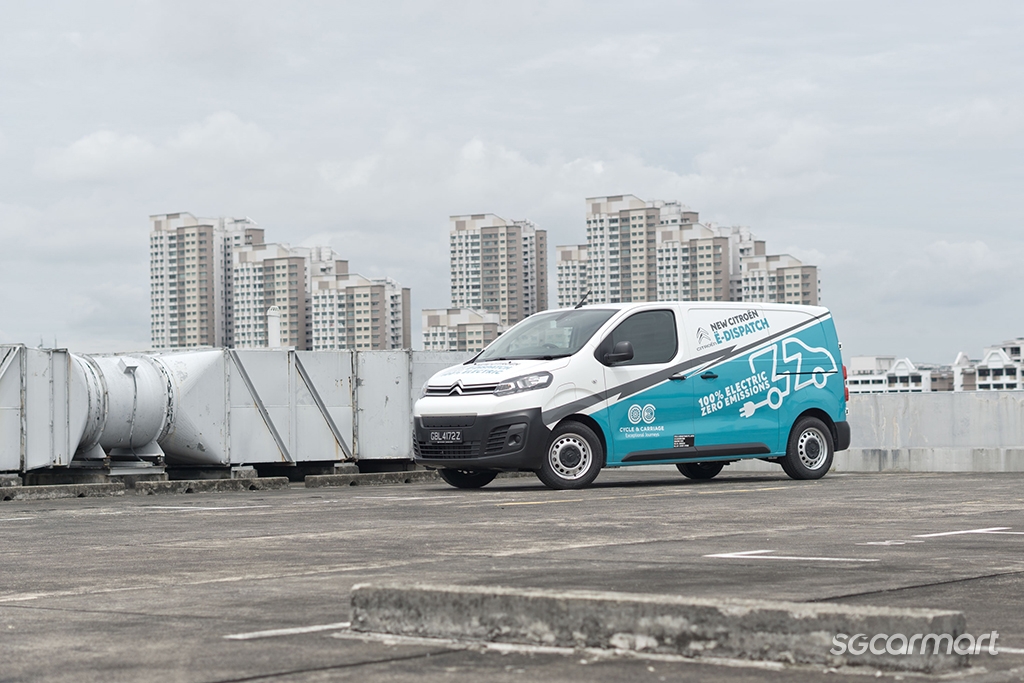
    Recently, all-electric commercial vehicle options have expanded notably, but diesel goods vehicles still make up a significant proportion of all vehicles on our roads

    So, what effect will this 2025 deadline have?

    The more cynical among us may say that the impact is insignificant. The diesel taxi population is already so small, and the diesel car population in 2023 makes up just 2.8% of all passenger cars on the road. Even prior to this new mandate, few distributors were bringing in new diesel models, so the choice of a new diesel model already is limited. 

    When will diesels be gone? The answer, in all likelihood, is a long, long time more away. Given that the passenger car diesel population peaked in 2022 (and the typical 10-year COE cycle), it will be a good amount of time before these cars stop plying our roads (not accounting for renewed COEs). We're probably looking at 2030 and after when the diesel car population will dramatically shrink.
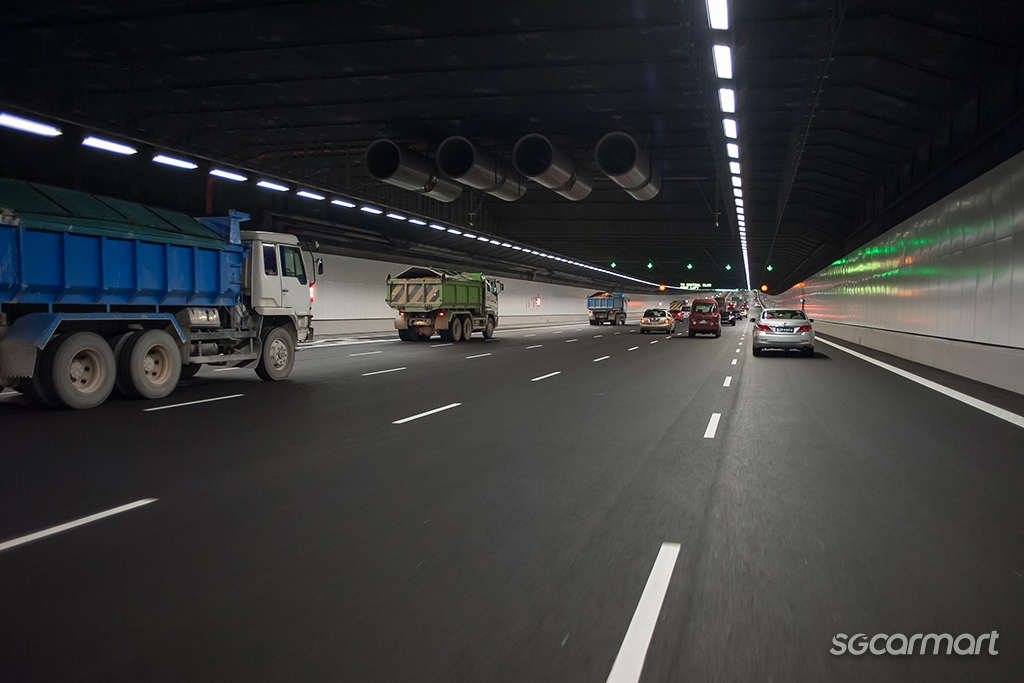
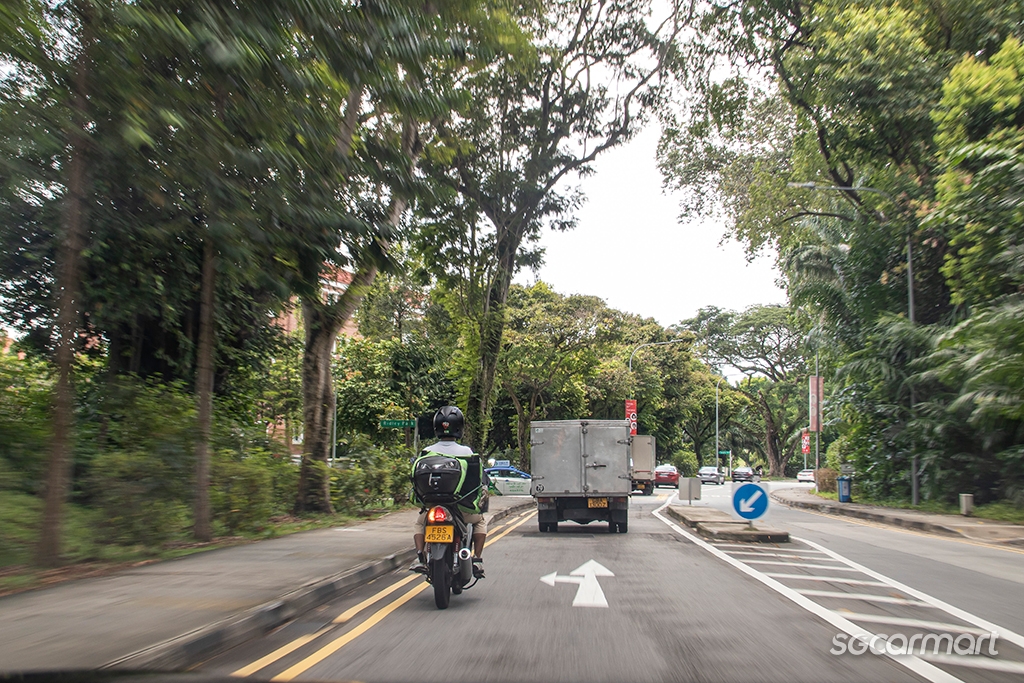
    The population of diesel car and taxis will eventually peter out, and while it is a necessary first step to cleaning up our transport ecosystem, it will be the eventual 'greenification' of commercial vehicles that will have the most significant impact

    As we previously explored, more significant is the commercial vehicle population, where diesel makes up a much more significant percentage.

    In 2023, the diesel Goods & Other Vehicles population stood at 128,381, which represents 89.2% of all Goods & Other Vehicles, and actually 13.2% of all vehicles on the road. And, there has thus far been no clear mandate on the 'greenification' of that particular segment of vehicles.

    While there are incentives in place to encourage cleaner vehicles, such as the Commercial Vehicles Emissions Scheme and Early Turnover Scheme that have been extended to March 2025, there have been no hard deadlines set out (unlike for cars and taxis). Encouragingly, we are seeing the introduction of new electric commercial vehicles to market, and a notable growth in adoption, but as of 2023, the 3,338 examples make up just 2.3% of the total Goods & Other Vehicles population. 

    But in another view, this is the first and necessary (albeit small) step in cleaning up our transport ecosystem. Such changes, important and relevant as they may be, will not happen overnight. It will not even happen quickly at all. But each small step is a necessary and incremental progress towards a cleaner future. 

    So yes, you can expect that the diesel pumps at petrol stations won't be going anywhere. Barring policy changes or new mandates, diesel vehicles will be on our roads for a long time more. 

    Desmond Chan
    Story by Desmond Chan
    Desmond thinks the world would be better if cars were smaller and less powerful. He wants to live in the 70s.
    Photos by Editorial Team
    24.4k

    Tags

    commentary diesel lta diesel cars law singapore singapore cars,

    Newsletter

    Be Notified On The Latest News

    Newsletter

    Be Notified On The Latest News

    You May Also Like

    Sgcarmart Explores: Bras Basah!

    Sgcarmart Explores: Bras Basah!

    New cars are safer: Opt for one when you can

    New cars are safer: Opt for one when you can

    Maxus MIFA 7 Elite: Going big for the little moments

    Maxus MIFA 7 Elite: Going big for the little moments

    Sgcarmart Explores: East Coast Park!

    Sgcarmart Explores: East Coast Park!

    Opinion: Why do we even need green number plates?

    Opinion: Why do we even need green number plates?

    The BYD Sealion 8 seven-seater SUV arrives in Singapore

    The BYD Sealion 8 seven-seater SUV arrives in Singapore

    Hongqi Singapore opens its showroom doors

    Hongqi Singapore opens its showroom doors

    Must-Have Car Accessories Every EV Driver Should Own

    Must-Have Car Accessories Every EV Driver Should Own

    A first look at Chery's iCaur V23 and Jaecoo J8 in Singapore

    A first look at Chery's iCaur V23 and Jaecoo J8 in Singapore

    Mercedes-Benz GLB250+ Review

    Mercedes-Benz GLB250+ Review

    The 5 main things you must know about the XPENG L03

    The 5 main things you must know about the XPENG L03

    Is parallel import hesitancy growing among car buyers?

    Is parallel import hesitancy growing among car buyers?

    Tesla launches Model Y L in Singapore, first six-seater here

    Tesla launches Model Y L in Singapore, first six-seater here

    New to driving? Here's how to become a better driver

    New to driving? Here's how to become a better driver

    Toyota RAV4 Hybrid vs Subaru Forester e-Boxer

    Toyota RAV4 Hybrid vs Subaru Forester e-Boxer

    The all new XPENG Mona L03 is one smart coupe SUV

    The all new XPENG Mona L03 is one smart coupe SUV

    You May Also Like

    Sgcarmart Explores: Bras Basah!

    Sgcarmart Explores: Bras Basah!

    New cars are safer: Opt for one when you can

    New cars are safer: Opt for one when you can

    Maxus MIFA 7 Elite: Going big for the little moments

    Maxus MIFA 7 Elite: Going big for the little moments

    Sgcarmart Explores: East Coast Park!

    Sgcarmart Explores: East Coast Park!

    Opinion: Why do we even need green number plates?

    Opinion: Why do we even need green number plates?

    The BYD Sealion 8 seven-seater SUV arrives in Singapore

    The BYD Sealion 8 seven-seater SUV arrives in Singapore

    Hongqi Singapore opens its showroom doors

    Hongqi Singapore opens its showroom doors

    Must-Have Car Accessories Every EV Driver Should Own

    Must-Have Car Accessories Every EV Driver Should Own

    A first look at Chery's iCaur V23 and Jaecoo J8 in Singapore

    A first look at Chery's iCaur V23 and Jaecoo J8 in Singapore

    Mercedes-Benz GLB250+ Review

    Mercedes-Benz GLB250+ Review

    The 5 main things you must know about the XPENG L03

    The 5 main things you must know about the XPENG L03

    Is parallel import hesitancy growing among car buyers?

    Is parallel import hesitancy growing among car buyers?

    Tesla launches Model Y L in Singapore, first six-seater here

    Tesla launches Model Y L in Singapore, first six-seater here

    New to driving? Here's how to become a better driver

    New to driving? Here's how to become a better driver

    Toyota RAV4 Hybrid vs Subaru Forester e-Boxer

    Toyota RAV4 Hybrid vs Subaru Forester e-Boxer

    The all new XPENG Mona L03 is one smart coupe SUV

    The all new XPENG Mona L03 is one smart coupe SUV

    Related Articles

    Opinion: Is it time for a change to our road traffic laws?

    Opinion: Is it time for a change to our road traffic laws?

    Should I buy a car in July / August / September 2026?

    Should I buy a car in July / August / September 2026?

    16 noteworthy production models at the 2026 Auto Beijing!

    16 noteworthy production models at the 2026 Auto Beijing!

    Opinion: Why do we even need green number plates?

    Opinion: Why do we even need green number plates?

    The 5 main things you must know about the XPENG L03

    The 5 main things you must know about the XPENG L03

    XPENG's Munich moment: The importance of the Mona L03

    XPENG's Munich moment: The importance of the Mona L03

    Ferrari 849 Testarossa Spider: What you must know

    Ferrari 849 Testarossa Spider: What you must know

    7 things we learnt about the Zeekr 7GT

    7 things we learnt about the Zeekr 7GT

    Related Articles

    Opinion: Is it time for a change to our road traffic laws?

    Opinion: Is it time for a change to our road traffic laws?

    Should I buy a car in July / August / September 2026?

    Should I buy a car in July / August / September 2026?

    16 noteworthy production models at the 2026 Auto Beijing!

    16 noteworthy production models at the 2026 Auto Beijing!

    Opinion: Why do we even need green number plates?

    Opinion: Why do we even need green number plates?

    The 5 main things you must know about the XPENG L03

    The 5 main things you must know about the XPENG L03

    XPENG's Munich moment: The importance of the Mona L03

    XPENG's Munich moment: The importance of the Mona L03

    Ferrari 849 Testarossa Spider: What you must know

    Ferrari 849 Testarossa Spider: What you must know

    7 things we learnt about the Zeekr 7GT

    7 things we learnt about the Zeekr 7GT