View page in desktop
|
Report error
  •   Apple app store icon
  • Google play store icon
Terms of Service
|
Privacy Policy
|
PDPA
|
Site Map
©2004-2026 Sgcarmart, Singapore. All rights reserved.
  • Home
  • Car Articles
  • features
  • features Listings
  • Features
  • We speak to Chief Engineer Ted Klaus, the new Mr. NSX

    27 Sep 2016

    |

    6,356 views

    We uncover the technical side of Honda's second generation NSX mid-engined supercar, and find out where it fits in today's hierarchy of 'everyday' sports cars.


    The recently launched second generation all new NSX - Honda's most expensive road-going production car to date - set tongues a wagging when it was revealed in Singapore. In a post-event interview with it's Chief Engineer, Mr. Ted Klaus (TK), sgCarMart was told that the time spent to build one NSX supercar equalled to that of 800 family-sized Accord sedans. 
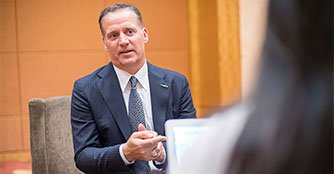
    According to Mr. Klaus, the original NSX wasn't without controversy, and took some time for people to truly appreciate

    SGCM: The original NSX was an extremely well-received and highly-celebrated model. Did its reputation affect/influence the design of the new model? 

    TK: The original NSX was actually not well-received. It stirred up a lot of controversy, and many people misunderstood the car. But then, like fine wine, with time, people started using and experiencing the car the way we intended. They grew to love it, almost like a member of the family.

    So the biggest challenge for us was to make this new type of technology and bring it closer to the driver. For example, the A-pillar and the amazing visibility. The original concept clarified that for us. If we were going to call a car an NSX, we would have to recreate that exact kind of cockpit feeling, which included being able to see the car's fenders as they curve out the edge of the road. Other design elements like the taillight comes directly from the original NSX.

    SGCM: The original car was designed as an everyday car. How does this new one compare?

    TK: The meaning of 'everyday' - it's like an outcome. Anyone who drives the new car will feel the same lovely movement of the chassis from the old one. The new NSX has the same broad kind of accessible torque response the old one has. For a mid-engined car, the NSX remains easy-to-drive and has a nice linear power delivery.

    SGCM: When the NSX first came out in 1990, the supercar landscape was quite different from what it is now. What was it like then?

    TK: When the first NSX came out, sports cars or as I like to call them focus sports cars, were not so diversified. You had the Porsche 911, the Chevrolet Corvette, and the Ferrari. You also had simpler sports cars coming out like the Datsun 240Z, as well as British and Italian-made ones.

    The 911 was a little tricky to drive with its rear-engined layout, Ferraris required many compromises when it came to seating and driving position, so we wanted the NSX to out-perform said cars and yet remain accessible to every driver, everyday. Mr. Honda wanted to make technology that was very open-minded. I know that's ridiculous to say because of the car prices in Singapore, but the mindset is an open one, not exclusive.

    SGCM: How does the new NSX stand out from the likes of supercars made by the likes of Koenigsegg, Pagani, GTA Spano, etc.?

    TK: The NSX is the only car that directly supports not only acceleration and braking, but also cornering. The NSX is not the most powerful car - you can never understand the NSX by the numbers alone. The driving experience of the first generation NSX was rich and three-dimensional, so this is the position of the new NSX as well. We don't need to be the most powerful car, but we want to provide the most unique and yet timeless sports car driving experience.

    This second generation NSX supersedes the one that went on sale in Japan in 1990. The original featured the world's first all-aluminium monocoque body which formed the heart of the NSX's legendary power-to-weight ratio. 25 years later, and the all new NSX is just as cutting-edge as its predecessor, with currently more power than any Porsche 911 on sale and any McLaren Sports Series model available.

    "We wanted the interior and exterior to be interconnected," said Mr. Klaus in reference to the new NSX's design

    SGCM: Stylistically, the new NSX is very different from the previous one. What influenced this new design?

    TK: We wanted to create this very kind of powerful feeling but still keep the elegance. We wanted the interior and exterior to be 'interconnected'. We wanted to connect power with sophistication, artistic form with function.

    The other thing people should know about the NSX is that it was developed in Japan, but then transferred to the Designer Michelle Christensen in the U.S.A. So it's a combination of not only Japan and the U.S.A, but male and female.

    SGCM: What has the engineering team done to assuage concerns that the new car will be technologically over-complicated?

    TK: We don't let technology control the driver, instead we make it support them. Like the original NSX with its front suspension, the new one is a very compliant car. But at the same time, we utilise the electrified torque transfer to linearise the response. I know it all sounds very complicated, but watching people drive the car, they get out there and it's like 'wow, it just works'. If people get a chance to drive the new NSX, they will realise that we respect that the driver is the smartest part of the car.

    SGCM: What's been the hardest engineering aspect of this new car?

    TK: There were two. First it was getting the engine and the electric motors to work harmoniously. The other was to make the show car feasible for aerodynamics, cooling and global safety standards.

    SGCM: With regards to the NSX, which is your proudest engineering feat?

    TK: Our biggest accomplishment is that the driver can just jump in the vehicle, and they can accelerate and brake, and corner in this extremely fast machine, without creating sweat between the steering wheel and their hand. Not everyone is going to be happy with that answer, because some people want sweat. But the NSX's DNA isn't about sweat, we believe no sweat makes the driver calm so that their brain can really come alive with the car.
    Sabrina Lee
    Text by Sabrina Lee, Photos by Low Fai Ming
    Writing may be my thing, but cars, well, that's just pure passion that I simply cannot get rid off.
    24.4k

    Tags

    interview honda nsx ted klaus honda second generation nsx honda mid engined supercar honda nsx sports car honda nsx chief engineer

    AllReviewsNewsAdviceFeaturesVideos
    • Home
    • Car Articles
    • features
    • features Listings
    • Features

    We speak to Chief Engineer Ted Klaus, the new Mr. NSX

    27 Sep 2016

    |

    6,356 views

    We uncover the technical side of Honda's second generation NSX mid-engined supercar, and find out where it fits in today's hierarchy of 'everyday' sports cars.


    The recently launched second generation all new NSX - Honda's most expensive road-going production car to date - set tongues a wagging when it was revealed in Singapore. In a post-event interview with it's Chief Engineer, Mr. Ted Klaus (TK), sgCarMart was told that the time spent to build one NSX supercar equalled to that of 800 family-sized Accord sedans. 

    According to Mr. Klaus, the original NSX wasn't without controversy, and took some time for people to truly appreciate

    SGCM: The original NSX was an extremely well-received and highly-celebrated model. Did its reputation affect/influence the design of the new model? 

    TK: The original NSX was actually not well-received. It stirred up a lot of controversy, and many people misunderstood the car. But then, like fine wine, with time, people started using and experiencing the car the way we intended. They grew to love it, almost like a member of the family.

    So the biggest challenge for us was to make this new type of technology and bring it closer to the driver. For example, the A-pillar and the amazing visibility. The original concept clarified that for us. If we were going to call a car an NSX, we would have to recreate that exact kind of cockpit feeling, which included being able to see the car's fenders as they curve out the edge of the road. Other design elements like the taillight comes directly from the original NSX.

    SGCM: The original car was designed as an everyday car. How does this new one compare?

    TK: The meaning of 'everyday' - it's like an outcome. Anyone who drives the new car will feel the same lovely movement of the chassis from the old one. The new NSX has the same broad kind of accessible torque response the old one has. For a mid-engined car, the NSX remains easy-to-drive and has a nice linear power delivery.

    SGCM: When the NSX first came out in 1990, the supercar landscape was quite different from what it is now. What was it like then?

    TK: When the first NSX came out, sports cars or as I like to call them focus sports cars, were not so diversified. You had the Porsche 911, the Chevrolet Corvette, and the Ferrari. You also had simpler sports cars coming out like the Datsun 240Z, as well as British and Italian-made ones.

    The 911 was a little tricky to drive with its rear-engined layout, Ferraris required many compromises when it came to seating and driving position, so we wanted the NSX to out-perform said cars and yet remain accessible to every driver, everyday. Mr. Honda wanted to make technology that was very open-minded. I know that's ridiculous to say because of the car prices in Singapore, but the mindset is an open one, not exclusive.

    SGCM: How does the new NSX stand out from the likes of supercars made by the likes of Koenigsegg, Pagani, GTA Spano, etc.?

    TK: The NSX is the only car that directly supports not only acceleration and braking, but also cornering. The NSX is not the most powerful car - you can never understand the NSX by the numbers alone. The driving experience of the first generation NSX was rich and three-dimensional, so this is the position of the new NSX as well. We don't need to be the most powerful car, but we want to provide the most unique and yet timeless sports car driving experience.
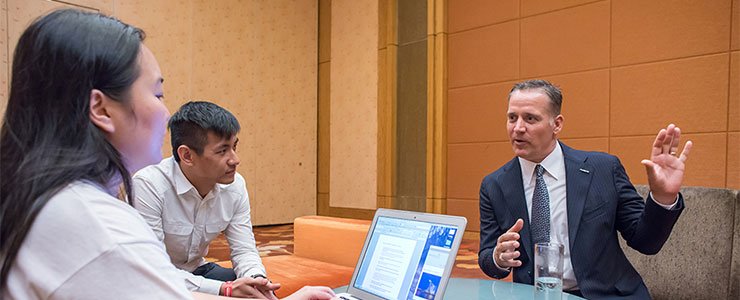
    This second generation NSX supersedes the one that went on sale in Japan in 1990. The original featured the world's first all-aluminium monocoque body which formed the heart of the NSX's legendary power-to-weight ratio. 25 years later, and the all new NSX is just as cutting-edge as its predecessor, with currently more power than any Porsche 911 on sale and any McLaren Sports Series model available.

    "We wanted the interior and exterior to be interconnected," said Mr. Klaus in reference to the new NSX's design

    SGCM: Stylistically, the new NSX is very different from the previous one. What influenced this new design?

    TK: We wanted to create this very kind of powerful feeling but still keep the elegance. We wanted the interior and exterior to be 'interconnected'. We wanted to connect power with sophistication, artistic form with function.

    The other thing people should know about the NSX is that it was developed in Japan, but then transferred to the Designer Michelle Christensen in the U.S.A. So it's a combination of not only Japan and the U.S.A, but male and female.

    SGCM: What has the engineering team done to assuage concerns that the new car will be technologically over-complicated?

    TK: We don't let technology control the driver, instead we make it support them. Like the original NSX with its front suspension, the new one is a very compliant car. But at the same time, we utilise the electrified torque transfer to linearise the response. I know it all sounds very complicated, but watching people drive the car, they get out there and it's like 'wow, it just works'. If people get a chance to drive the new NSX, they will realise that we respect that the driver is the smartest part of the car.

    SGCM: What's been the hardest engineering aspect of this new car?

    TK: There were two. First it was getting the engine and the electric motors to work harmoniously. The other was to make the show car feasible for aerodynamics, cooling and global safety standards.

    SGCM: With regards to the NSX, which is your proudest engineering feat?

    TK: Our biggest accomplishment is that the driver can just jump in the vehicle, and they can accelerate and brake, and corner in this extremely fast machine, without creating sweat between the steering wheel and their hand. Not everyone is going to be happy with that answer, because some people want sweat. But the NSX's DNA isn't about sweat, we believe no sweat makes the driver calm so that their brain can really come alive with the car.

    Sabrina Lee
    Text by Sabrina Lee, Photos by Low Fai Ming
    Writing may be my thing, but cars, well, that's just pure passion that I simply cannot get rid off.
    24.4k

    Tags

    interview honda nsx ted klaus honda second generation nsx honda mid engined supercar honda nsx sports car honda nsx chief engineer

    Newsletter

    Be Notified On The Latest News

    Newsletter

    Be Notified On The Latest News

    You May Also Like

    Sgcarmart Explores: Bras Basah!

    Sgcarmart Explores: Bras Basah!

    New cars are safer: Opt for one when you can

    New cars are safer: Opt for one when you can

    Maxus MIFA 7 Elite: Going big for the little moments

    Maxus MIFA 7 Elite: Going big for the little moments

    We try out roadside parking with the new OBU!

    We try out roadside parking with the new OBU!

    Sgcarmart Explores: East Coast Park!

    Sgcarmart Explores: East Coast Park!

    Opinion: Why do we even need green number plates?

    Opinion: Why do we even need green number plates?

    Mazda 6e Fastback GT Electric review

    Mazda 6e Fastback GT Electric review

    The BYD Sealion 8 seven-seater SUV arrives in Singapore

    The BYD Sealion 8 seven-seater SUV arrives in Singapore

    Opinion: Is it time for a change to our road traffic laws?

    Opinion: Is it time for a change to our road traffic laws?

    Hongqi Singapore opens its showroom doors

    Hongqi Singapore opens its showroom doors

    A first look at Chery's iCaur V23 and Jaecoo J8 in Singapore

    A first look at Chery's iCaur V23 and Jaecoo J8 in Singapore

    Is parallel import hesitancy growing among car buyers?

    Is parallel import hesitancy growing among car buyers?

    Toyota RAV4 Hybrid vs Subaru Forester e-Boxer

    Toyota RAV4 Hybrid vs Subaru Forester e-Boxer

    New to driving? Here's how to become a better driver

    New to driving? Here's how to become a better driver

    Tesla launches Model Y L in Singapore, first six-seater here

    Tesla launches Model Y L in Singapore, first six-seater here

    The Mazda6e is now here in SG and ready for test drives

    The Mazda6e is now here in SG and ready for test drives

    You May Also Like

    Sgcarmart Explores: Bras Basah!

    Sgcarmart Explores: Bras Basah!

    New cars are safer: Opt for one when you can

    New cars are safer: Opt for one when you can

    Maxus MIFA 7 Elite: Going big for the little moments

    Maxus MIFA 7 Elite: Going big for the little moments

    We try out roadside parking with the new OBU!

    We try out roadside parking with the new OBU!

    Sgcarmart Explores: East Coast Park!

    Sgcarmart Explores: East Coast Park!

    Opinion: Why do we even need green number plates?

    Opinion: Why do we even need green number plates?

    Mazda 6e Fastback GT Electric review

    Mazda 6e Fastback GT Electric review

    The BYD Sealion 8 seven-seater SUV arrives in Singapore

    The BYD Sealion 8 seven-seater SUV arrives in Singapore

    Opinion: Is it time for a change to our road traffic laws?

    Opinion: Is it time for a change to our road traffic laws?

    Hongqi Singapore opens its showroom doors

    Hongqi Singapore opens its showroom doors

    A first look at Chery's iCaur V23 and Jaecoo J8 in Singapore

    A first look at Chery's iCaur V23 and Jaecoo J8 in Singapore

    Is parallel import hesitancy growing among car buyers?

    Is parallel import hesitancy growing among car buyers?

    Toyota RAV4 Hybrid vs Subaru Forester e-Boxer

    Toyota RAV4 Hybrid vs Subaru Forester e-Boxer

    New to driving? Here's how to become a better driver

    New to driving? Here's how to become a better driver

    Tesla launches Model Y L in Singapore, first six-seater here

    Tesla launches Model Y L in Singapore, first six-seater here

    The Mazda6e is now here in SG and ready for test drives

    The Mazda6e is now here in SG and ready for test drives

    Related Articles

    Opinion: Is it time for a change to our road traffic laws?

    Opinion: Is it time for a change to our road traffic laws?

    New cars are safer: Opt for one when you can

    New cars are safer: Opt for one when you can

    Opinion: Why do we even need green number plates?

    Opinion: Why do we even need green number plates?

    DENZA B5 luxury SUV launched in Singapore

    DENZA B5 luxury SUV launched in Singapore

    Tesla Model Y RWD 110 Facelift Review

    Tesla Model Y RWD 110 Facelift Review

    Mazda launches the Mazda6e electric sedan in Singapore

    Mazda launches the Mazda6e electric sedan in Singapore

    Toyota RAV4 Hybrid vs Subaru Forester e-Boxer

    Toyota RAV4 Hybrid vs Subaru Forester e-Boxer

    Mercedes-Benz GLC debuts alongside Studio opening

    Mercedes-Benz GLC debuts alongside Studio opening

    Related Articles

    Opinion: Is it time for a change to our road traffic laws?

    Opinion: Is it time for a change to our road traffic laws?

    New cars are safer: Opt for one when you can

    New cars are safer: Opt for one when you can

    Opinion: Why do we even need green number plates?

    Opinion: Why do we even need green number plates?

    DENZA B5 luxury SUV launched in Singapore

    DENZA B5 luxury SUV launched in Singapore

    Tesla Model Y RWD 110 Facelift Review

    Tesla Model Y RWD 110 Facelift Review

    Mazda launches the Mazda6e electric sedan in Singapore

    Mazda launches the Mazda6e electric sedan in Singapore

    Toyota RAV4 Hybrid vs Subaru Forester e-Boxer

    Toyota RAV4 Hybrid vs Subaru Forester e-Boxer

    Mercedes-Benz GLC debuts alongside Studio opening

    Mercedes-Benz GLC debuts alongside Studio opening