View page in desktop
|
Report error
  •   Apple app store icon
  • Google play store icon
Terms of Service
|
Privacy Policy
|
PDPA
|
Site Map
©2004-2026 Sgcarmart, Singapore. All rights reserved.
  • Home
  • Car Articles
  • features
  • features Listings
  • Features
  • Singapore needs a bolder approach to EVs that goes beyond simply offering tax incentives to match ICE cars

    04 Jun 2021

    |

    19,597 views

    To really encourage EV ownership, Singapore needs to rethink its approach to EVs as far as financial rebates and ownership incentives are concerned.


    The global automotive industry is steadily and rapidly evolving, with Electric Vehicles (EV) being the clear next step forward. With significant work required to combat climate change, as well as changing legislation forcing the hand of car manufacturers, EVs are the future, whether we like it or not. And certainly, many countries (and car companies alike) are pushing boldly ahead with the transition towards EVs.

    But, it seem like Singapore is comparatively slow when it comes to the adoption of EVs. During Budget 2021, Finance Minister Heng Swee Kiat announced that additional incentives will be introduced to narrow the cost differential between EVs and Internal Combustion Engine (ICE) cars.

    Is it enough?

    Rebates and incentives are just not sufficient
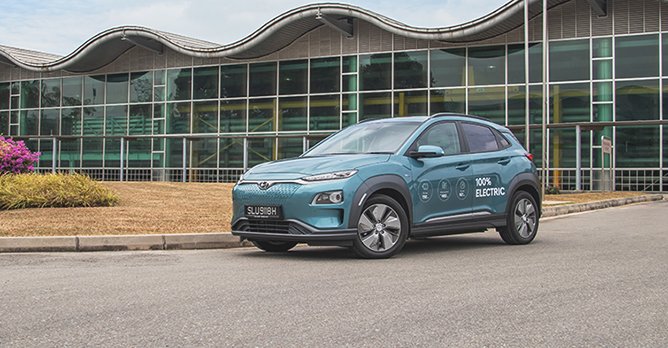
    Even with the latest rebates, EVs are generally still priced higher than comparable ICE cars
    The Additional Registration Fee (ARF) floor will be lowered from $5,000 to zero for electric cars from Jan 2022 to Dec 2023. This is supposed to allow buyers to maximise the rebates from the EV Early Adoption Incentive (EEAI), which runs from January 2021 to December 2023. The EEAI is a rebate that offers 45% off ARF, capped at $20,000. Additionally, road tax for EVs will be adjusted to be comparable to ICE cars.

    Does the EEAI make a notable difference? Let's look at one example: The Hyundai Kona, offered in both Hybrid and Electric variants.

    Based on Hyundai's latest price list, the Kona Electric is $38,889 more expensive than the Hybrid. Because the Electric is VES Band A1 and the Hybrid A2, that means the Electric gets an additional $10,000 VES Rebate. Couple that with the full $20,000 EEAI, and the $30,000 of rebates still falls some way short of the price differential. Therefore, while it does narrow the gap, it still fails to bring the Electric to price parity.

    Eventually, EVs need to be cheaper than a comparable ICE car
    In Germany, any privately owned EVs registered until the end of 2020 will have a 10-year tax exemption, and EVs with a sales price below €40,000 will qualify for a €9,000 subsidy until December 2021. That is something in the region of a 22% incentive. In most EU countries, EV owners also get a significant tax break.

    Eventually, price parity between EVs and ICE cars needs to be achieved, and actually surpassed. After all, just because an EV is cheaper doesn't mean all drivers will buy one - owning an EV right now still comes with certain compromises when it comes to using it daily. But at least, it should more financially enticing for those who do chose to make the switch. 

    And what about road tax? Again, parity shouldn't be the answer.

    Road tax for EVs should not be benchmarked against ICE cars
    Presently, road tax is calculated based on engine capacity and the age of vehicle. The practical logic (discounting the economics of it) is that larger capacity vehicles, as well as older vehicles, would tend to be more pollutive for the environment. Therefore, based on this logic, it would be reasonable to impose a higher tax to discourage such vehicles on our roads.

    Road tax for EVs should not be benchmarked against ICE cars.

    Regardless of an EVs power output, tailpipe emissions remain the same - zero. If anything, road tax for EVs should actually be lower than ICE cars. That would send the right message to buyers - that buying and driving EVs is encouraged, not just tolerated. Countries like Germany and the U.K. exempt EVs from ownership or road tax, which is a much more tantalising benefit for buyers.

    Currently, there are also insufficient ownership incentives for EV drivers.

    To get more people to make the switch, more tangible day-to-day benefits need to be considered
    In California, a coveted benefit of EV driving is single-driver access to most High-Occupancy Vehicle (or Carpool) lanes. In Norway, EV benefits are plenty - half price tolls, half price parking, and use of bus and taxi lanes. Moving forward, some key cities are banning ICE cars from the city centres, only offering driving access to EVs. 

    In Singapore, what do EV drivers get? The access to maybe two to four EV lots in some shopping centres? That's clearly not enough. Whether its discounted parking, reduced ERP rates or perhaps even usage of bus lanes during peak hours, driving an EV should reap additional  day-to-day benefits.  

    Opaque infrastructure development

    A clearer roadmap about the build up of charging infrastructure will be helpful in encouraging individuals to buy EVs
    Of course, the lack of charging infrastructure is another limiting factor. While Singapore has outlined the 'aim' of having 60,000 charging points at public carparks and private premises by 2030, more specificity and a clearer roadmap is required.

    What forms will these charging points take? What will be the charging station density be per carpark? Will more DC fast charging stations be stood up? What about Tesla Superchargers?

    Right now, there's just too little detail and information on this front, which of course makes it less encouraging even for customers keen to make the switch to electric. Greater clarity and purpose will also better motivate buyers.

    Lack of ambition

    The current approach to trying to benchmark EVs against ICE cars just isn't the right approach
    How about drivers' attitude towards EVs? Are EVs fundamentally compatible with Singaporean drivers' values?

    Right now, EVs are still viewed as a novelty, which is inherently problematic. Given the significant cost of a car, it's not something that you can approach like just a new high-tech toy, like the latest iPhone.

    Underlying all these is a a simple reality - our present approach to EVs is just wrong. Why is the Government comparing ICE cars and EVs like-for-like, and trying to draw some level of equivalence? An EV is not equally as harmful to the environment as an ICE car. Therefore, they should not be judged (and thus taxed) using the same set of criteria.

    Simply making EVs as equally affordable to buy and own than ICE cars is not good enough. Also, if the ownership experience doesn't provide tangible daily benefits to EV drivers, then there is again less incentive for people to make the switch to electric. 

    If status quo is maintained, most drivers will still default to the cheaper to buy and more convenient to use ICE models
    If the Government is serious about going electric and reducing ICE cars in our roads, a much bolder approach is required.

    Right now, the Government is simply trying to reduce disincentives when it comes to buying an EV, while still maintaining a status quo across the whole car industry. However, it's clear that the status quo can no longer exist if we are committed to a cleaner and better future. 

    To nudge individuals towards the adoption of EVs, clear and direct messaging is required - that EVs are fundamentally better and encouraged on our roads. Compared to buying an owning an ICE car, the Government needs to offer higher rebates and more incentives to make buying and owning an EV the more attractive proposition. Only then will individuals be encouraged to make the switch.

    Singapore needs greater collective ambition when it comes to making the transition to EVs
    A UN Environment Programme report found that exponentially greater steps are needed to reduce global emissions to be able to get back on track of meeting the 1.5°C temperature goal of the Paris Agreement. Even if all current commitments are met, we are heading for a 3.2°C temperature rise. Collective ambition must increase more than fivefold over current levels to deliver the cuts needed.

    Which begs the question: Where is Singapore's collective ambition?
    Desmond Chan
    Desmond Chan
    Desmond thinks the world would be better if cars were smaller and less powerful. He wants to live in the 70s.
    Photos by Editorial Team
    24.4k

    Tags

    electric ev electric car rebate tax rebate ves charging charging points tax breaks ev rebates ev incentives government lta,

    AllReviewsNewsAdviceFeaturesVideos
    • Home
    • Car Articles
    • features
    • features Listings
    • Features

    Singapore needs a bolder approach to EVs that goes beyond simply offering tax incentives to match ICE cars

    04 Jun 2021

    |

    19,597 views

    To really encourage EV ownership, Singapore needs to rethink its approach to EVs as far as financial rebates and ownership incentives are concerned.


    The global automotive industry is steadily and rapidly evolving, with Electric Vehicles (EV) being the clear next step forward. With significant work required to combat climate change, as well as changing legislation forcing the hand of car manufacturers, EVs are the future, whether we like it or not. And certainly, many countries (and car companies alike) are pushing boldly ahead with the transition towards EVs.

    But, it seem like Singapore is comparatively slow when it comes to the adoption of EVs. During Budget 2021, Finance Minister Heng Swee Kiat announced that additional incentives will be introduced to narrow the cost differential between EVs and Internal Combustion Engine (ICE) cars.

    Is it enough?

    Rebates and incentives are just not sufficient

    Even with the latest rebates, EVs are generally still priced higher than comparable ICE cars
    The Additional Registration Fee (ARF) floor will be lowered from $5,000 to zero for electric cars from Jan 2022 to Dec 2023. This is supposed to allow buyers to maximise the rebates from the EV Early Adoption Incentive (EEAI), which runs from January 2021 to December 2023. The EEAI is a rebate that offers 45% off ARF, capped at $20,000. Additionally, road tax for EVs will be adjusted to be comparable to ICE cars.

    Does the EEAI make a notable difference? Let's look at one example: The Hyundai Kona, offered in both Hybrid and Electric variants.

    Based on Hyundai's latest price list, the Kona Electric is $38,889 more expensive than the Hybrid. Because the Electric is VES Band A1 and the Hybrid A2, that means the Electric gets an additional $10,000 VES Rebate. Couple that with the full $20,000 EEAI, and the $30,000 of rebates still falls some way short of the price differential. Therefore, while it does narrow the gap, it still fails to bring the Electric to price parity.
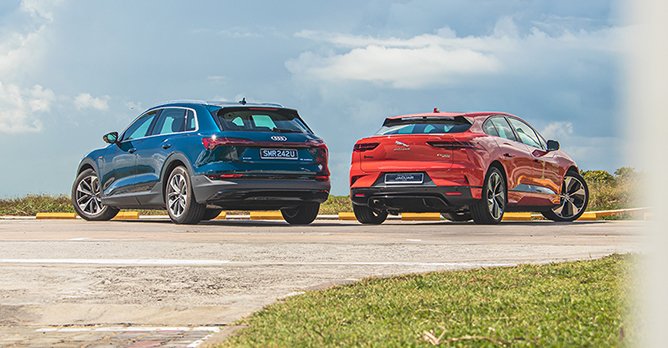
    Eventually, EVs need to be cheaper than a comparable ICE car
    In Germany, any privately owned EVs registered until the end of 2020 will have a 10-year tax exemption, and EVs with a sales price below €40,000 will qualify for a €9,000 subsidy until December 2021. That is something in the region of a 22% incentive. In most EU countries, EV owners also get a significant tax break.

    Eventually, price parity between EVs and ICE cars needs to be achieved, and actually surpassed. After all, just because an EV is cheaper doesn't mean all drivers will buy one - owning an EV right now still comes with certain compromises when it comes to using it daily. But at least, it should more financially enticing for those who do chose to make the switch. 

    And what about road tax? Again, parity shouldn't be the answer.
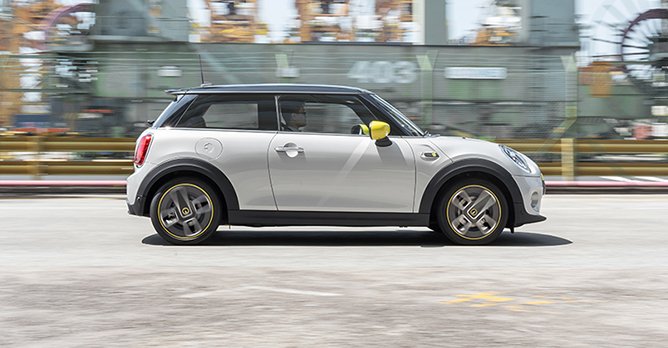
    Road tax for EVs should not be benchmarked against ICE cars
    Presently, road tax is calculated based on engine capacity and the age of vehicle. The practical logic (discounting the economics of it) is that larger capacity vehicles, as well as older vehicles, would tend to be more pollutive for the environment. Therefore, based on this logic, it would be reasonable to impose a higher tax to discourage such vehicles on our roads.

    Road tax for EVs should not be benchmarked against ICE cars.

    Regardless of an EVs power output, tailpipe emissions remain the same - zero. If anything, road tax for EVs should actually be lower than ICE cars. That would send the right message to buyers - that buying and driving EVs is encouraged, not just tolerated. Countries like Germany and the U.K. exempt EVs from ownership or road tax, which is a much more tantalising benefit for buyers.

    Currently, there are also insufficient ownership incentives for EV drivers.
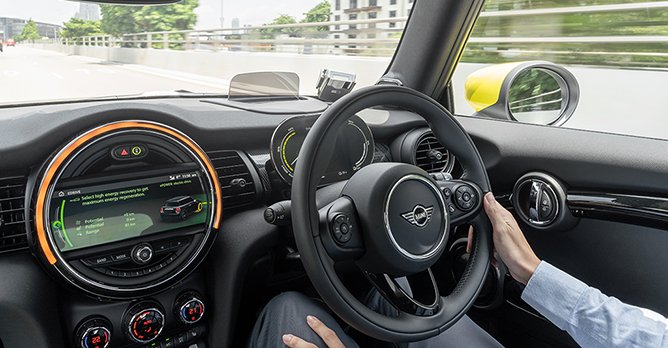
    To get more people to make the switch, more tangible day-to-day benefits need to be considered
    In California, a coveted benefit of EV driving is single-driver access to most High-Occupancy Vehicle (or Carpool) lanes. In Norway, EV benefits are plenty - half price tolls, half price parking, and use of bus and taxi lanes. Moving forward, some key cities are banning ICE cars from the city centres, only offering driving access to EVs. 

    In Singapore, what do EV drivers get? The access to maybe two to four EV lots in some shopping centres? That's clearly not enough. Whether its discounted parking, reduced ERP rates or perhaps even usage of bus lanes during peak hours, driving an EV should reap additional  day-to-day benefits.  

    Opaque infrastructure development
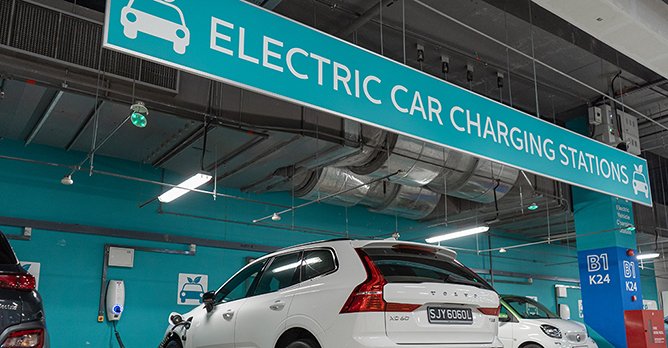
    A clearer roadmap about the build up of charging infrastructure will be helpful in encouraging individuals to buy EVs
    Of course, the lack of charging infrastructure is another limiting factor. While Singapore has outlined the 'aim' of having 60,000 charging points at public carparks and private premises by 2030, more specificity and a clearer roadmap is required.

    What forms will these charging points take? What will be the charging station density be per carpark? Will more DC fast charging stations be stood up? What about Tesla Superchargers?

    Right now, there's just too little detail and information on this front, which of course makes it less encouraging even for customers keen to make the switch to electric. Greater clarity and purpose will also better motivate buyers.

    Lack of ambition
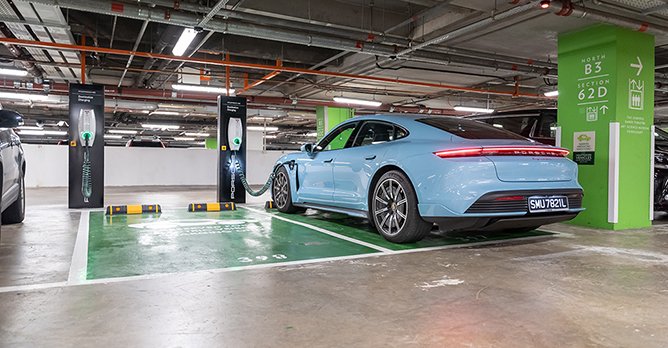
    The current approach to trying to benchmark EVs against ICE cars just isn't the right approach
    How about drivers' attitude towards EVs? Are EVs fundamentally compatible with Singaporean drivers' values?

    Right now, EVs are still viewed as a novelty, which is inherently problematic. Given the significant cost of a car, it's not something that you can approach like just a new high-tech toy, like the latest iPhone.

    Underlying all these is a a simple reality - our present approach to EVs is just wrong. Why is the Government comparing ICE cars and EVs like-for-like, and trying to draw some level of equivalence? An EV is not equally as harmful to the environment as an ICE car. Therefore, they should not be judged (and thus taxed) using the same set of criteria.

    Simply making EVs as equally affordable to buy and own than ICE cars is not good enough. Also, if the ownership experience doesn't provide tangible daily benefits to EV drivers, then there is again less incentive for people to make the switch to electric. 
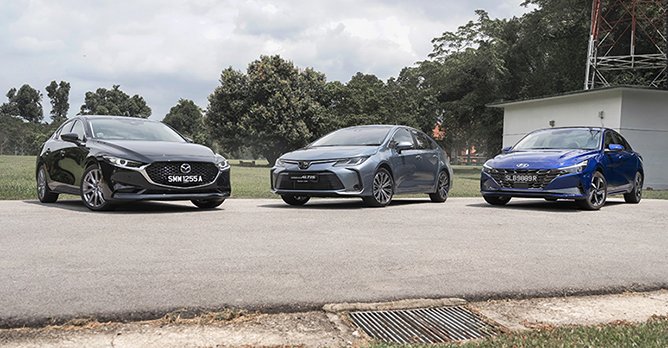
    If status quo is maintained, most drivers will still default to the cheaper to buy and more convenient to use ICE models
    If the Government is serious about going electric and reducing ICE cars in our roads, a much bolder approach is required.

    Right now, the Government is simply trying to reduce disincentives when it comes to buying an EV, while still maintaining a status quo across the whole car industry. However, it's clear that the status quo can no longer exist if we are committed to a cleaner and better future. 

    To nudge individuals towards the adoption of EVs, clear and direct messaging is required - that EVs are fundamentally better and encouraged on our roads. Compared to buying an owning an ICE car, the Government needs to offer higher rebates and more incentives to make buying and owning an EV the more attractive proposition. Only then will individuals be encouraged to make the switch.
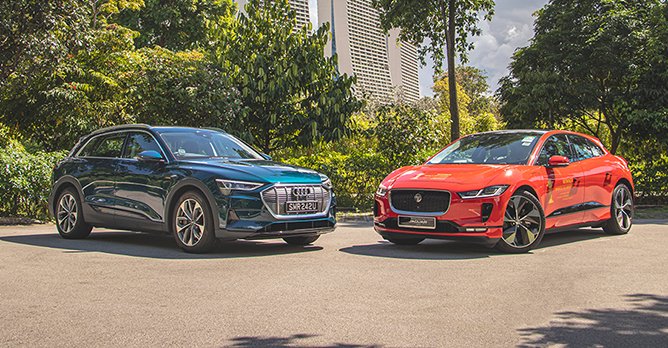
    Singapore needs greater collective ambition when it comes to making the transition to EVs
    A UN Environment Programme report found that exponentially greater steps are needed to reduce global emissions to be able to get back on track of meeting the 1.5°C temperature goal of the Paris Agreement. Even if all current commitments are met, we are heading for a 3.2°C temperature rise. Collective ambition must increase more than fivefold over current levels to deliver the cuts needed.

    Which begs the question: Where is Singapore's collective ambition?

    Desmond Chan
    Desmond Chan
    Desmond thinks the world would be better if cars were smaller and less powerful. He wants to live in the 70s.
    Photos by Editorial Team
    24.4k

    Tags

    electric ev electric car rebate tax rebate ves charging charging points tax breaks ev rebates ev incentives government lta,

    Newsletter

    Be Notified On The Latest News

    Newsletter

    Be Notified On The Latest News

    You May Also Like

    Sgcarmart Explores: Bras Basah!

    Sgcarmart Explores: Bras Basah!

    New cars are safer: Opt for one when you can

    New cars are safer: Opt for one when you can

    Maxus MIFA 7 Elite: Going big for the little moments

    Maxus MIFA 7 Elite: Going big for the little moments

    We try out roadside parking with the new OBU!

    We try out roadside parking with the new OBU!

    Sgcarmart Explores: East Coast Park!

    Sgcarmart Explores: East Coast Park!

    Opinion: Why do we even need green number plates?

    Opinion: Why do we even need green number plates?

    Mazda 6e Fastback GT Electric review

    Mazda 6e Fastback GT Electric review

    Opinion: Is it time for a change to our road traffic laws?

    Opinion: Is it time for a change to our road traffic laws?

    The BYD Sealion 8 seven-seater SUV arrives in Singapore

    The BYD Sealion 8 seven-seater SUV arrives in Singapore

    Hongqi Singapore opens its showroom doors

    Hongqi Singapore opens its showroom doors

    A first look at Chery's iCaur V23 and Jaecoo J8 in Singapore

    A first look at Chery's iCaur V23 and Jaecoo J8 in Singapore

    Is parallel import hesitancy growing among car buyers?

    Is parallel import hesitancy growing among car buyers?

    Toyota RAV4 Hybrid vs Subaru Forester e-Boxer

    Toyota RAV4 Hybrid vs Subaru Forester e-Boxer

    New to driving? Here's how to become a better driver

    New to driving? Here's how to become a better driver

    Tesla launches Model Y L in Singapore, first six-seater here

    Tesla launches Model Y L in Singapore, first six-seater here

    Motoring Icons: JDM legends - Honda NSX

    Motoring Icons: JDM legends - Honda NSX

    You May Also Like

    Sgcarmart Explores: Bras Basah!

    Sgcarmart Explores: Bras Basah!

    New cars are safer: Opt for one when you can

    New cars are safer: Opt for one when you can

    Maxus MIFA 7 Elite: Going big for the little moments

    Maxus MIFA 7 Elite: Going big for the little moments

    We try out roadside parking with the new OBU!

    We try out roadside parking with the new OBU!

    Sgcarmart Explores: East Coast Park!

    Sgcarmart Explores: East Coast Park!

    Opinion: Why do we even need green number plates?

    Opinion: Why do we even need green number plates?

    Mazda 6e Fastback GT Electric review

    Mazda 6e Fastback GT Electric review

    Opinion: Is it time for a change to our road traffic laws?

    Opinion: Is it time for a change to our road traffic laws?

    The BYD Sealion 8 seven-seater SUV arrives in Singapore

    The BYD Sealion 8 seven-seater SUV arrives in Singapore

    Hongqi Singapore opens its showroom doors

    Hongqi Singapore opens its showroom doors

    A first look at Chery's iCaur V23 and Jaecoo J8 in Singapore

    A first look at Chery's iCaur V23 and Jaecoo J8 in Singapore

    Is parallel import hesitancy growing among car buyers?

    Is parallel import hesitancy growing among car buyers?

    Toyota RAV4 Hybrid vs Subaru Forester e-Boxer

    Toyota RAV4 Hybrid vs Subaru Forester e-Boxer

    New to driving? Here's how to become a better driver

    New to driving? Here's how to become a better driver

    Tesla launches Model Y L in Singapore, first six-seater here

    Tesla launches Model Y L in Singapore, first six-seater here

    Motoring Icons: JDM legends - Honda NSX

    Motoring Icons: JDM legends - Honda NSX

    Related Articles

    Opinion: Is it time for a change to our road traffic laws?

    Opinion: Is it time for a change to our road traffic laws?

    Should I buy a car in July / August / September 2026?

    Should I buy a car in July / August / September 2026?

    16 noteworthy production models at the 2026 Auto Beijing!

    16 noteworthy production models at the 2026 Auto Beijing!

    Opinion: Why do we even need green number plates?

    Opinion: Why do we even need green number plates?

    We try out roadside parking with the new OBU!

    We try out roadside parking with the new OBU!

    7 things we learnt about the Zeekr 7GT

    7 things we learnt about the Zeekr 7GT

    EV NEXT: Peace of mind with battery SOH certification

    EV NEXT: Peace of mind with battery SOH certification

    Sgcarmart Explores: 2026 National Day Edition!

    Sgcarmart Explores: 2026 National Day Edition!

    Related Articles

    Opinion: Is it time for a change to our road traffic laws?

    Opinion: Is it time for a change to our road traffic laws?

    Should I buy a car in July / August / September 2026?

    Should I buy a car in July / August / September 2026?

    16 noteworthy production models at the 2026 Auto Beijing!

    16 noteworthy production models at the 2026 Auto Beijing!

    Opinion: Why do we even need green number plates?

    Opinion: Why do we even need green number plates?

    We try out roadside parking with the new OBU!

    We try out roadside parking with the new OBU!

    7 things we learnt about the Zeekr 7GT

    7 things we learnt about the Zeekr 7GT

    EV NEXT: Peace of mind with battery SOH certification

    EV NEXT: Peace of mind with battery SOH certification

    Sgcarmart Explores: 2026 National Day Edition!

    Sgcarmart Explores: 2026 National Day Edition!