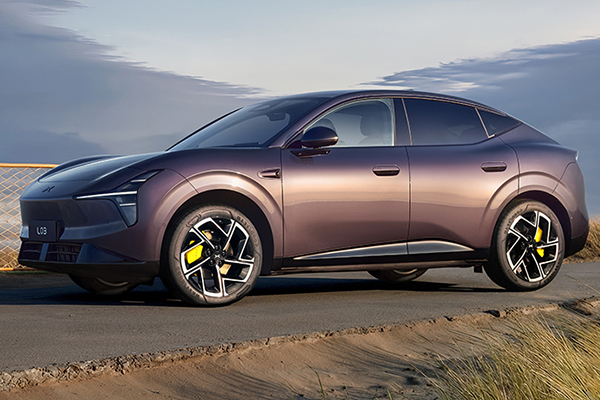
Between April to July 2021, a number of Japan's most prominent automobile manufacturers came together in a partnership that they believed would help the transportation industry decarbonise. Instead of targeting the sedans and crossovers that most of us touch and feel everyday, however, their sights were set on something more specific.
In case you're unfamiliar, we're referring to the Commercial Japan Partnership Technologies Corporation - or CJPT, for short. Jointly, the crew is composed of Toyota, ISUZU, Daihatsu and Suzuki (Hino Motors is a technical partner, though not a member), and each brings specific expertise to the table.
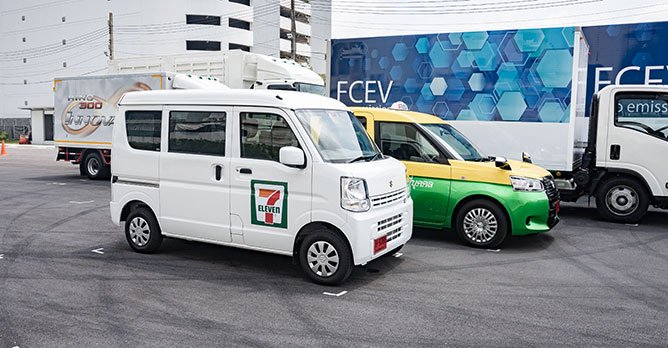
 Apart from FCEVs, the CJPT's showcase included other vehicles in its portfolio, including self-charging hybrids, BEVs, and even ICE kei vans The alliance's name itself should be clear. Through close collaboration on joint research and development efforts, the CJPT's goal is to develop battery electric vehicles (BEVs), fuel cell electric vehicles (FCEV), autonomous driving technologies and other new EV platforms centred on the commercial-purpose vehicles.
The broader goal? Carbon neutrality, of course, in the form of a 'multiple pathways' approach.
Beyond being concerned with just the vehicles themselves, the CJPT is also throwing itself into arenas such as the production itself of clean energy. On the data and tech front, computer-aided software engineering (CASE) has been specifically highlighted as well as an artery through which the group's efforts are supposed to surge forth.
Underpinning it all, the partnership wants to focus on local resources - both human and material - and to explain why we specially headed to Bangkok for the firm's special event, Thailand has been earmarked as a starting point (more on this later).
Beneath the surface: Why the commercial vehicle sector is so important
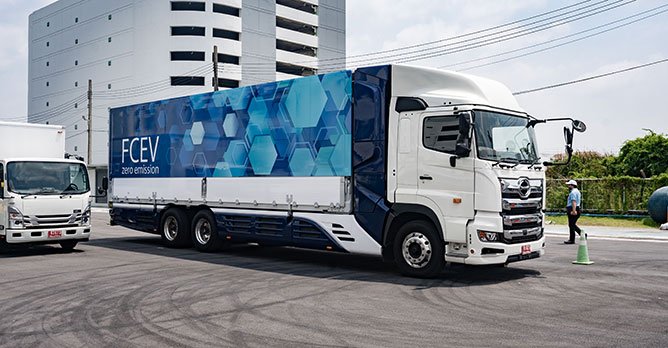 The importance and relevancy of vehicles such as trucks cannot be understated, considering how key they are to the transport sector as a whole Before you dust your hands off the kei vans, trucks, and taxis showcased by the firm out of disinterest, it might be worth looking around more closely at our roads.
At our own whim, we might leave our cars at home on a lazy, wet Sunday. But other precious cargo - such as the latest order from Redmart, mail, even public transport commuters - need to be ferried around day in and day out, come rain or shine.
In other words, vehicles like delivery vans and lorries, and buses clock a lot more mileage than the average private car. Making sure that these vehicles, in turn, emit less - or emit nothing at all - from their tailpipes, is thus arguably even more crucial.
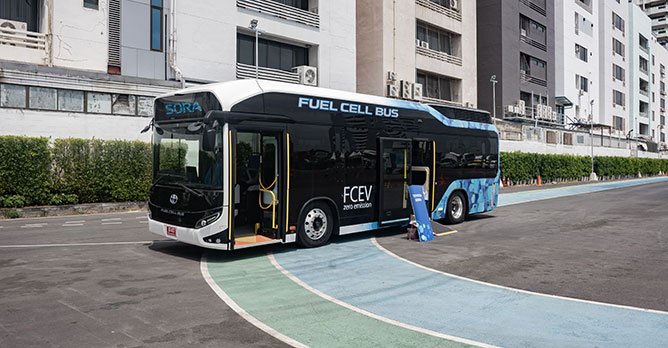 The Toyota SORA should fit in nicely with the Singapore government's pledge to transition to cleaner energy public buses by 2040 From this perspective, it's not hard to see, for example, how vehicles like the Toyota SORA Bus can fit into our transport landscape (the hydrogen-powered gentle giant only emits water vapour). Singapore currently has 5,800 buses plying our streets, and both diesel-electric and fully-electric models have been slowly added to the public fleet over the last five years. By 2040, all of them will have to be electrified in some way.
Recall the fact, too, that the Singaporean-Malaysian land border is one of the busiest in the world. Cross-border trucking - whether it's vegetables, poultry, or controversy-courting eggs - undoubtedly contributes heavily to this. Zooming solely into our local context, policies like the Early Turnover Scheme - which encourages operators of goods vehicles to replace older diesel-powered models with cleaner energy ones - are also indications of where the CJPT's efforts may fit in.
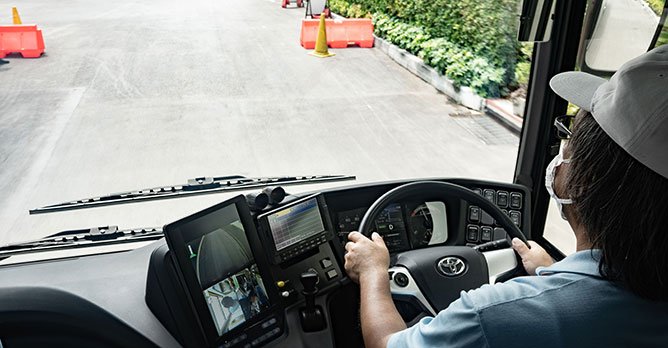 Quality of life for drivers in the logistics/transport sector should improve, too, with 'cleaner' vehicles But the other less apparent benefit is the improvement of the quality of life for those working in the transport and logistics industries; acoustic comfort is improved since cleaner drivetrains are often also smoother and quieter.
All the talk about "Saving the combustion engine!" is surely justified when it comes to our favourite hot hatches and supercars, but it's hard to imagine the average delivery driver chanting the same when faced with the gruff, grating engine noise of his truck for hours. That much was clear when we got behind the wheel of a conventional ICE truck right after driving a fuel cell-powered one of similar size.
About the CJPT's 'multiple pathways' approach
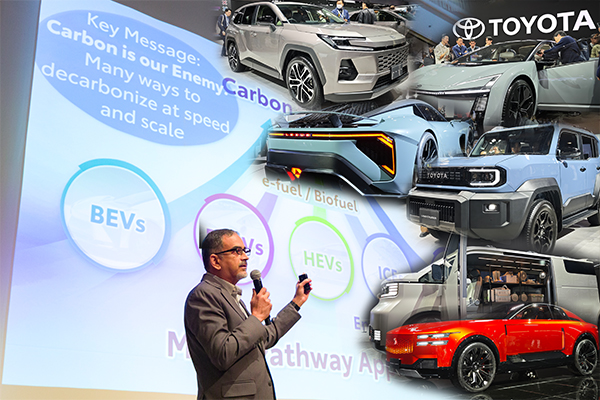
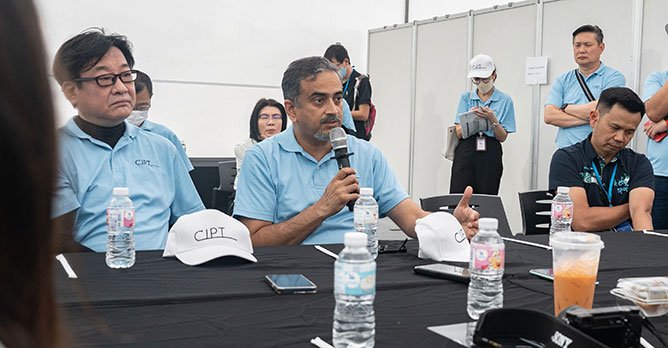 Mr. Pras Ganesh highlights the importance of multiple solutions Unlike the more hardline stances taken by some carmakers, you'll note that the CJPT's planned portfolio includes not just battery electric vehicles (BEVs), but also fuel cell electric vehicles (FCEVs), and for the time being, self-charging hybrids and even ICE vehicles as well.
"We do not believe that one solution is better than the other. Very often, sometimes people try to force us to say, 'Please tell us which is a better solution'," Pras Ganesh, Asia Region Management, CJPT, tells us (Pras is also Toyota Daihatsu Engineering & Manufacturing Executive VP & Corporate Information Security Officer).
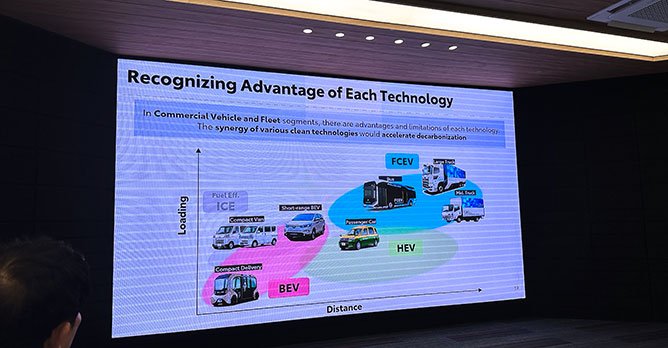 The CJPT believes the different vehicles in its portfolio will serve different use cases across Asia "We believe the customer will select the solution that makes sense, and what we would like to do is show that each of these solutions can actually achieve decarbonisation or reduction of carbon, depending on the usage, and depending on the requirements."
While the CJPT says it doesn't have a prescription for the vehicle use, it did present a detailed chart of how it saw each type of drivetrain being more appropriate in terms of their carrying loads and the distances they have to travel.
BEVs make more sense for shorter distances and lighter loads; FCEVs, which weigh lighter than similarly-sized BEVs and can be refilled far more quickly, make sense for heavy trucks that do long hauls.
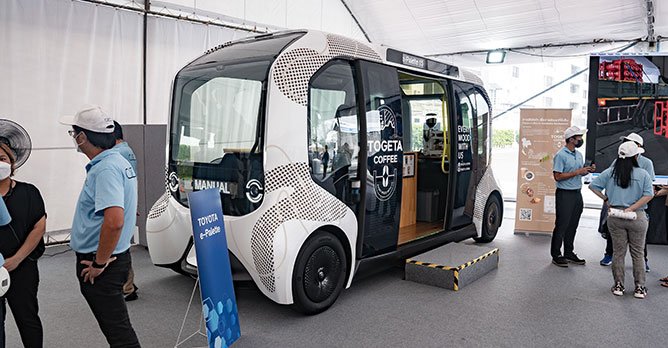 Even self-driving BEVs will someday be part of the transport landscape (Toyota e-Palette pictured) Crucially, the CJPT also doesn't see decarbonisation as a single line that will suddenly be crossed in a fixed number of years, but as a constant work-in-progress that requires action as soon as possible. For immediate intervention, this is where the self-charging hybrids and 'fuel-efficient ICE vehicles' (such as Suzuki and Daihatsu's kei vans, CJPT says) come in.
"Even smaller ICEs - if they are low carbon emitting vehicles, especially for last mile delivery - are an excellent solution that can be used today, immediately, even under the weather conditions or other areas," Pras suggests.
Furthermore, the CJPT cites the myriad of infrastructural and cultural landscapes across Asia as reason all the more to offer choice to in the market. Being able to cut emissions all the way to zero is great - but until that can reasonably happen, any level of reduction now should already start to occur.
The hydrogen question
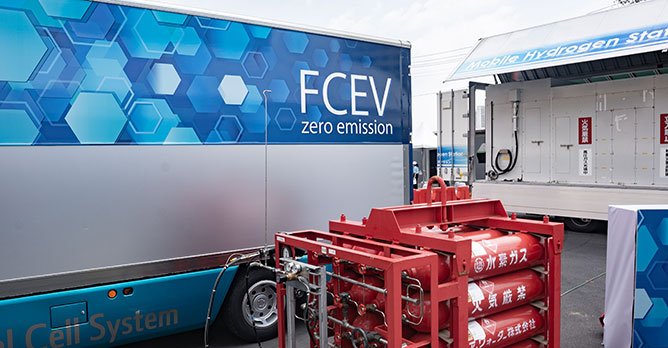 The CJPT remains bullish on the prospects of hydrogen power, thanks to the energy source's versatility To return to the topic of FCEVs, questions about hydrogen power naturally still remain - namely, on the feasibility of scaling it up sufficiently for it to be affordable. But the CJPT, as Pras says, remains "bullish" on its future.
"Hydrogen is a very attractive kind of energy source because you can produce it from renewable energy. Most importantly, you can store it; you can transport it. You can use it for mobility, but you can use it for industrial feedstock."
Likening its versatility to "the Swiss Knife of energy, because it can be used in so many sources," Pras also notes that certain heavy industries will only be decarbonised with green hydrogen, and that the transport and logistics sector can slot nicely into the growing push that we're seeing for the energy source worldwide. As we've previously noted, this applies even in Singapore, where a National Hydrogen Strategy was unveiled in just October last year.
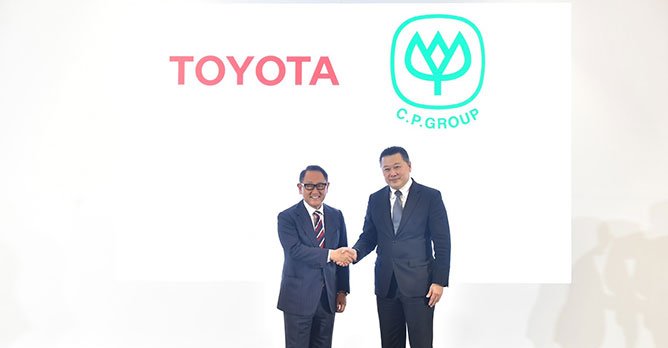 A partnership with Thailand's largest private company was inked last year for carbon neutrality projects Within the CJPT itself, efforts thus far have been promising.
The fuel cell-powered trucks we drove and rode feel ready for instant deployment. And to return to the significance of Thailand, one of the ways in which a recently-inked partnership with the country's largest private conglomerate, CP Group, is materialising, is in the form of hydrogen gas sustainably derived from local farm waste.
For something more 'low-stakes' - or 'low-sticks' - we're even served skewers cooked by a hydrogen-gas powered grill co-developed with a local university (we're assured safety remains a key priority in the production of prototypes). Yum.
Decarbonising with immediacy, even as the loftier goals remain in sight
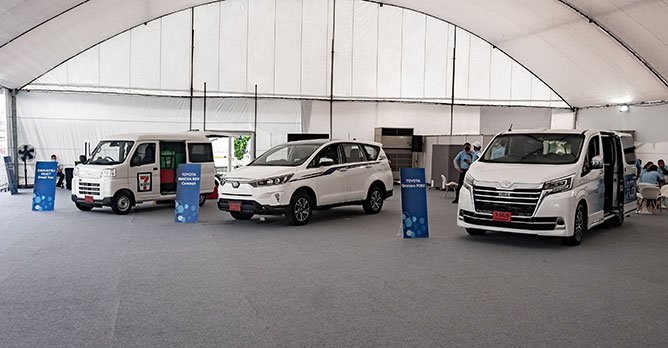 The best and quickest way forward: The CJPT remains committed to its 'multiple pathways' approach The CJPT promises that more developments are on their way, and that we will be routinely updated as they concretely emerge.
"Even 10 years ago, we weren't speaking so much about BEVs, now we're talking about BEVs", Pras points out. "Technologies change… we must adapt to them and not close the door to a certain technology. We have to continuously see what are the technologies that have the greatest potential, and we should encourage these technologies."
Till then, the CJPT says it will keep working on each piece of the puzzle - from India, to Thailand, to Singapore; from long-haul to last-mile vehicles; from the energy source to infrastructure.
Here are a few other articles that may interest you!
2023 Bangkok International Motor Show: Four main highlights through the eyes of a first-time attendee!
Another element of electromobility: Why BMW is throwing its weight behind hydrogen power now
What's next for better, cleaner energy? A quick rundown of everything we should watch out for in 2023
We test out Scania's New Truck Generation
In case you're unfamiliar, we're referring to the Commercial Japan Partnership Technologies Corporation - or CJPT, for short. Jointly, the crew is composed of Toyota, ISUZU, Daihatsu and Suzuki (Hino Motors is a technical partner, though not a member), and each brings specific expertise to the table.
The broader goal? Carbon neutrality, of course, in the form of a 'multiple pathways' approach.
Beyond being concerned with just the vehicles themselves, the CJPT is also throwing itself into arenas such as the production itself of clean energy. On the data and tech front, computer-aided software engineering (CASE) has been specifically highlighted as well as an artery through which the group's efforts are supposed to surge forth.
Underpinning it all, the partnership wants to focus on local resources - both human and material - and to explain why we specially headed to Bangkok for the firm's special event, Thailand has been earmarked as a starting point (more on this later).
Beneath the surface: Why the commercial vehicle sector is so important
At our own whim, we might leave our cars at home on a lazy, wet Sunday. But other precious cargo - such as the latest order from Redmart, mail, even public transport commuters - need to be ferried around day in and day out, come rain or shine.
In other words, vehicles like delivery vans and lorries, and buses clock a lot more mileage than the average private car. Making sure that these vehicles, in turn, emit less - or emit nothing at all - from their tailpipes, is thus arguably even more crucial.
Recall the fact, too, that the Singaporean-Malaysian land border is one of the busiest in the world. Cross-border trucking - whether it's vegetables, poultry, or controversy-courting eggs - undoubtedly contributes heavily to this. Zooming solely into our local context, policies like the Early Turnover Scheme - which encourages operators of goods vehicles to replace older diesel-powered models with cleaner energy ones - are also indications of where the CJPT's efforts may fit in.
All the talk about "Saving the combustion engine!" is surely justified when it comes to our favourite hot hatches and supercars, but it's hard to imagine the average delivery driver chanting the same when faced with the gruff, grating engine noise of his truck for hours. That much was clear when we got behind the wheel of a conventional ICE truck right after driving a fuel cell-powered one of similar size.
About the CJPT's 'multiple pathways' approach
"We do not believe that one solution is better than the other. Very often, sometimes people try to force us to say, 'Please tell us which is a better solution'," Pras Ganesh, Asia Region Management, CJPT, tells us (Pras is also Toyota Daihatsu Engineering & Manufacturing Executive VP & Corporate Information Security Officer).
While the CJPT says it doesn't have a prescription for the vehicle use, it did present a detailed chart of how it saw each type of drivetrain being more appropriate in terms of their carrying loads and the distances they have to travel.
BEVs make more sense for shorter distances and lighter loads; FCEVs, which weigh lighter than similarly-sized BEVs and can be refilled far more quickly, make sense for heavy trucks that do long hauls.
"Even smaller ICEs - if they are low carbon emitting vehicles, especially for last mile delivery - are an excellent solution that can be used today, immediately, even under the weather conditions or other areas," Pras suggests.
Furthermore, the CJPT cites the myriad of infrastructural and cultural landscapes across Asia as reason all the more to offer choice to in the market. Being able to cut emissions all the way to zero is great - but until that can reasonably happen, any level of reduction now should already start to occur.
The hydrogen question
"Hydrogen is a very attractive kind of energy source because you can produce it from renewable energy. Most importantly, you can store it; you can transport it. You can use it for mobility, but you can use it for industrial feedstock."
Likening its versatility to "the Swiss Knife of energy, because it can be used in so many sources," Pras also notes that certain heavy industries will only be decarbonised with green hydrogen, and that the transport and logistics sector can slot nicely into the growing push that we're seeing for the energy source worldwide. As we've previously noted, this applies even in Singapore, where a National Hydrogen Strategy was unveiled in just October last year.
The fuel cell-powered trucks we drove and rode feel ready for instant deployment. And to return to the significance of Thailand, one of the ways in which a recently-inked partnership with the country's largest private conglomerate, CP Group, is materialising, is in the form of hydrogen gas sustainably derived from local farm waste.
For something more 'low-stakes' - or 'low-sticks' - we're even served skewers cooked by a hydrogen-gas powered grill co-developed with a local university (we're assured safety remains a key priority in the production of prototypes). Yum.
Decarbonising with immediacy, even as the loftier goals remain in sight
"Even 10 years ago, we weren't speaking so much about BEVs, now we're talking about BEVs", Pras points out. "Technologies change… we must adapt to them and not close the door to a certain technology. We have to continuously see what are the technologies that have the greatest potential, and we should encourage these technologies."
Till then, the CJPT says it will keep working on each piece of the puzzle - from India, to Thailand, to Singapore; from long-haul to last-mile vehicles; from the energy source to infrastructure.
Here are a few other articles that may interest you!
2023 Bangkok International Motor Show: Four main highlights through the eyes of a first-time attendee!
Another element of electromobility: Why BMW is throwing its weight behind hydrogen power now
What's next for better, cleaner energy? A quick rundown of everything we should watch out for in 2023
We test out Scania's New Truck Generation