Of late, SUVs have been giving us more reasons to buy them. They no longer have the ugly-styled faces and the boxy bodies. Instead, they are distinguishable from afar, with aggressive looks that can scare cars away when travelling on the expressways. There are also an increasing number of them that seats seven passengers. There's the BMW X5, Audi Q7 and the Volvo XC90 to name a few.
But of course, while they are all able to allow seven passengers to snug in comfort, the prices are a tad steep. You pay not only for the handsome looks and the ample space, but also for the premium feel of the badge. The Chevrolet Captiva, on the other hand, offers what these higher-end cars are capable of but only at a more affordable price.
The seven-seater SUV has been around since 2006 with not much aggression and good looks to it. But things have changed. The Captiva - which shares the same SUV platform as the Opel Antara, also known as the Vauxhall Antara or the Holden Captiva - has taken luxury, style and power to a whole new level that should see to Chevrolet's much deserved success in the near future.
Exterior
On the outside, the Captiva looks sharper than before, thanks to a dramatic makeover of its front end. The face now sports Chevrolet's signature grille that can also be seen on the latest facelifted Cruze while the fenders have been made more stout and muscular. The bonnet has also been restructured with sharp lines at the edge to integrate the rectangular headlamps that give the overall fascia a more arrogant and aggressive stance.
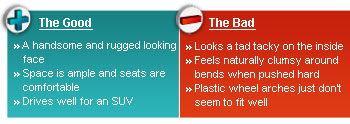
Some may find the oversized radiator grille a little too loud but it's this distinct feature that allows the looks of the SUV to be unmatched even by some of its continental peers, making it one of the most handsome cars in its class.
But of course, while they are all able to allow seven passengers to snug in comfort, the prices are a tad steep. You pay not only for the handsome looks and the ample space, but also for the premium feel of the badge. The Chevrolet Captiva, on the other hand, offers what these higher-end cars are capable of but only at a more affordable price.
The seven-seater SUV has been around since 2006 with not much aggression and good looks to it. But things have changed. The Captiva - which shares the same SUV platform as the Opel Antara, also known as the Vauxhall Antara or the Holden Captiva - has taken luxury, style and power to a whole new level that should see to Chevrolet's much deserved success in the near future.
Exterior
On the outside, the Captiva looks sharper than before, thanks to a dramatic makeover of its front end. The face now sports Chevrolet's signature grille that can also be seen on the latest facelifted Cruze while the fenders have been made more stout and muscular. The bonnet has also been restructured with sharp lines at the edge to integrate the rectangular headlamps that give the overall fascia a more arrogant and aggressive stance.
Some may find the oversized radiator grille a little too loud but it's this distinct feature that allows the looks of the SUV to be unmatched even by some of its continental peers, making it one of the most handsome cars in its class.
 |
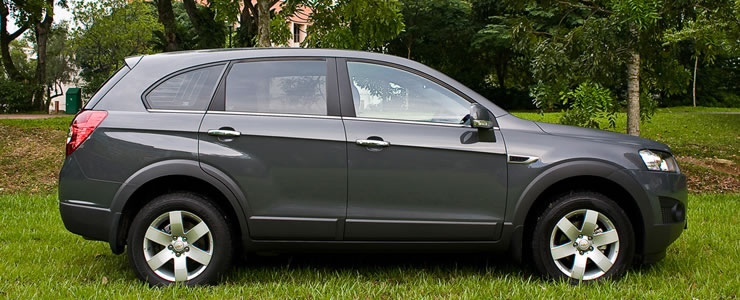
Measuring close to 4.7 metres in length and 1.7 metres in height, the Captiva reveals its sizeable proportions only when viewed from the side. It still looks neat and purposeful though with the deeply raked line running across from the A-pillars right to the tail lamps and the sloping roofline that enhances its sporty looks and dynamism.
From here, side mirrors are the only change you'll see as it now comes with indicators. The swelled up wheel arches manages well to retain the rugged and vigorous feel, too, although we reckon the car would look better if they were extended from the sheet metal itself rather than a plastic add-on.
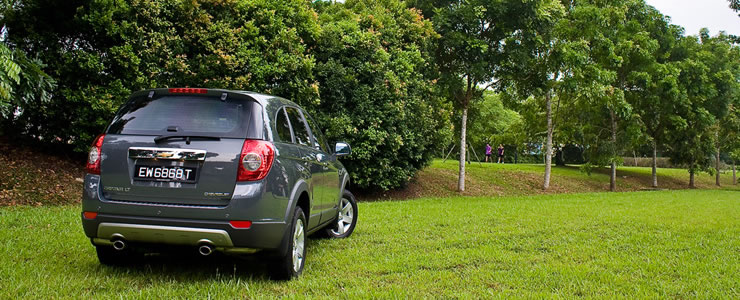
Like the side profile, changes are less obvious on the back. Almost everything from its predecessor can be found in this facelifted model - the dual exhaust pipes are still evident, with tail lights being as huge as before and the chrome finishing covering the boot handle that takes centre stage.
Unlike some cars on the roads that we see nowadays, the Captiva looks very natural and does not pass off as an SUV that tries hard to be unique. It manages to retain its understated elegance which creates a tunnel vision of it being an eye catcher that can attract people in just a glance.
 |
Interior
Like the Cruze and the Spark, the interior of the Captiva doesn't have the luxurious feel or look to match its exterior. Instead, it has a tacky look to it that can be uncovered without having to look hard. Still, the fact that the built quality is solid and the space is ample all-round makes it hard for you to fault the car.
The neatly designed dashboard, while covered with hard plastics, breaks off from the sea of drab black boredom with elements of silver 'wrap-rounds' and ice blue back lighting to enhance the looks of the cabin. Plus, buttons and controls are straightforward and they fall easily to hand. One of the newly added 'button' that's new to the facelifted titanic is its bluetooth function - it integrates well with your mobile and is extremely user-friendly. Pair it up with the four-digit number that appears on screen and you're ready to roll.
Space wise is where the manufacturer has excelled. With three rows that sit seven passengers in total, the Captiva is like an MPV in disguise. It provides plenty of storage space and once you get use to the mechanism that folds the second row, you'll find that kids will have relatively easy access to the third row bench.
Like the Cruze and the Spark, the interior of the Captiva doesn't have the luxurious feel or look to match its exterior. Instead, it has a tacky look to it that can be uncovered without having to look hard. Still, the fact that the built quality is solid and the space is ample all-round makes it hard for you to fault the car.
The neatly designed dashboard, while covered with hard plastics, breaks off from the sea of drab black boredom with elements of silver 'wrap-rounds' and ice blue back lighting to enhance the looks of the cabin. Plus, buttons and controls are straightforward and they fall easily to hand. One of the newly added 'button' that's new to the facelifted titanic is its bluetooth function - it integrates well with your mobile and is extremely user-friendly. Pair it up with the four-digit number that appears on screen and you're ready to roll.
Space wise is where the manufacturer has excelled. With three rows that sit seven passengers in total, the Captiva is like an MPV in disguise. It provides plenty of storage space and once you get use to the mechanism that folds the second row, you'll find that kids will have relatively easy access to the third row bench.
Granted that the third row seats are better suited for children over short trips, they fold flat when not in use to increase load space by a couple of notches. Then again like most seven-seater SUVs, boot space disappears with all seats in place. It gets pretty comfortable too. Due to the stature of the car, passengers enjoy ample headroom and shoulder space with the exception of seats six and seven.
As mentioned afore, the cabin may look a tad too sober with no hint of any flair for design or lavish consideration. But it's a solidly built machine that can last you a long, long time. More importantly, it's a vehicle that serves your backs well, giving you the support needed to drive on our stressful roads.
As mentioned afore, the cabin may look a tad too sober with no hint of any flair for design or lavish consideration. But it's a solidly built machine that can last you a long, long time. More importantly, it's a vehicle that serves your backs well, giving you the support needed to drive on our stressful roads.
 |
The Drive
Under the restructured bonnet lies a 2.4-litre DOHC ECOTEC powerplant that mates well with the six-speed automatic gearbox to produce figures that are higher than its predecessor. As a result, the drivetrain makes for a level of driving enjoyment you would seldom associate with SUVs.
The Captiva generates a maximum amount of power and torque of 164bhp and 230Nm respectively, allowing the movable mass to hit the century mark in a stealthy 10.8 seconds. While it may seem like a walk in the park on paper, it's noticeably athletic when you consider its kerb weight to be over one and a half tonnes. This naturally creates a more civilised and well-behaved car, more so when the shifts on the improved transmission is silky and incisive.
On the tarmac, the Captiva is an enthusiastic fellow, allowing drivers to overtake without much fuss. And when you're driving at illegal speeds on the highway, taxis and other pesky cars on the first lane are bound to give way to you when they see this car charging towards them in their rear view mirror.
Under the restructured bonnet lies a 2.4-litre DOHC ECOTEC powerplant that mates well with the six-speed automatic gearbox to produce figures that are higher than its predecessor. As a result, the drivetrain makes for a level of driving enjoyment you would seldom associate with SUVs.
The Captiva generates a maximum amount of power and torque of 164bhp and 230Nm respectively, allowing the movable mass to hit the century mark in a stealthy 10.8 seconds. While it may seem like a walk in the park on paper, it's noticeably athletic when you consider its kerb weight to be over one and a half tonnes. This naturally creates a more civilised and well-behaved car, more so when the shifts on the improved transmission is silky and incisive.
On the tarmac, the Captiva is an enthusiastic fellow, allowing drivers to overtake without much fuss. And when you're driving at illegal speeds on the highway, taxis and other pesky cars on the first lane are bound to give way to you when they see this car charging towards them in their rear view mirror.
But huge SUVs like this aren't made to tackle corners, which is the only unfortunate setback for this Korean-made car. It feels a tad clumsy when pushed around bends despite having a tauter suspension that reduces body roll while the steering could do with a bit more weight and feel. That said, the ride is never too harsh even over scarred roads and even surfaces.
Conclusion
The Chevrolet Cruze, Spark and, now, the Captiva are evidence of how far the American brand has come. Although these models are merely facelifted, the improvements simply show what Chevy is capable of. Priced much lower than most of its continental peers, the updated Captiva looks the part of a very strong proposition that can worry some of its competitors in its class.
The only big question is - can the car captivate Singaporeans?
What do you think? Jot down your opinions at the comment box below.
Conclusion
The Chevrolet Cruze, Spark and, now, the Captiva are evidence of how far the American brand has come. Although these models are merely facelifted, the improvements simply show what Chevy is capable of. Priced much lower than most of its continental peers, the updated Captiva looks the part of a very strong proposition that can worry some of its competitors in its class.
The only big question is - can the car captivate Singaporeans?
What do you think? Jot down your opinions at the comment box below.