View page in desktop
|
Report error
  •   Apple app store icon
  • Google play store icon
Terms of Service
|
Privacy Policy
|
PDPA
|
Site Map
©2004-2026 Sgcarmart, Singapore. All rights reserved.
  • Home
  • Car Articles
  • reviews
  • reviews Listings
  • Polestar Reviews
  • Polestar 5 First Drive Review

    09 Sep 2025

    |

    11,621 views

    With huge ambition and a huge price tag to match, the Polestar 5 deploys hyperspeed performance with quality, tranquillity and sophistication.

    What We Like

    Cool sci-fi looks
    Expensive-feeling yet sustainable cabin materials
    Blistering pace
    Handles well
    High levels of sophistication and on-road comfort

    What We Dislike

    Have you seen the price of the thing?
    Won't realistically seat three in the back
    Boot space is on the smaller side

    Now, Polestar is one of the newer brands in the market, and its product rollout has been… interesting, to say the least.

    Things kicked off with the Polestar 1, a limited-production plug-in hybrid that had performance and coolness in spades.

    The brand’s full commitment to EVs meant that the first series production model was the Polestar 2, which strived to be somewhat accessible. Then, the Polestar 3 and 4 that followed were your now-popular SUV formats, though overall quality and price also went up.

    Naturally, the next car to follow in this numerical rollout is this: The Polestar 5.
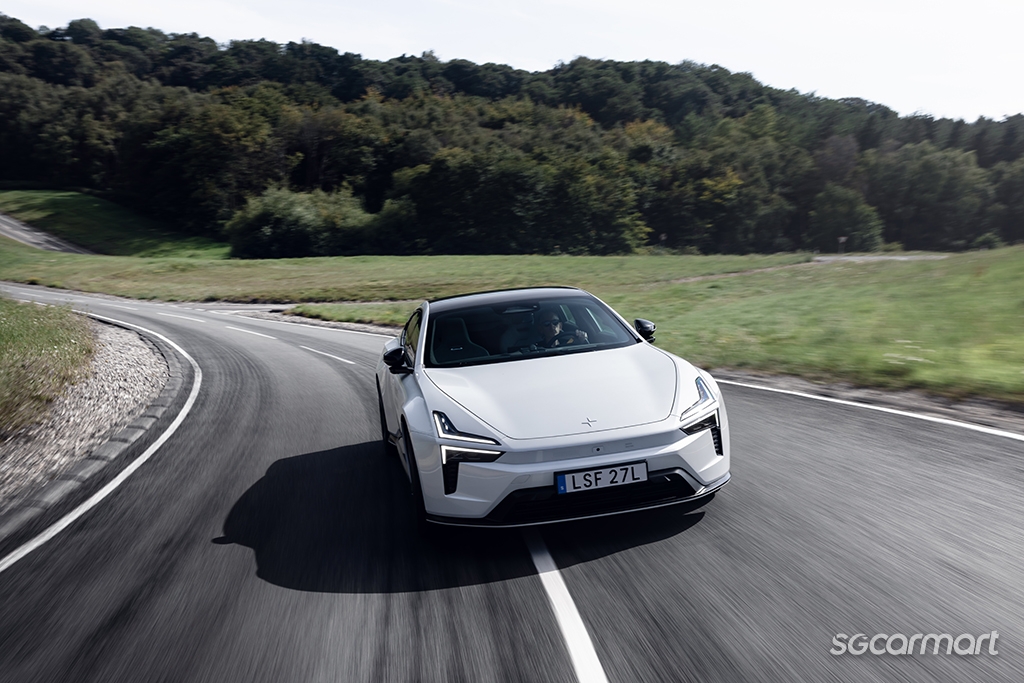
    The new Polestar 5 is what the brand is calling its 'manifesto car'

    But this, Polestar says, is its manifesto car - the model that’s supposed to best communicate the brand’s ambitions.

    It’s also the brand’s biggest in-house development. Where the 2, 3 and 4 shared a lot of mechanical similarities with their Volvo counterparts, the 5 has been completely developed in-house and from the ground up.

    Two things you need to know off the bat - it's got plenty of performance, and it’s certainly going to be very expensive.
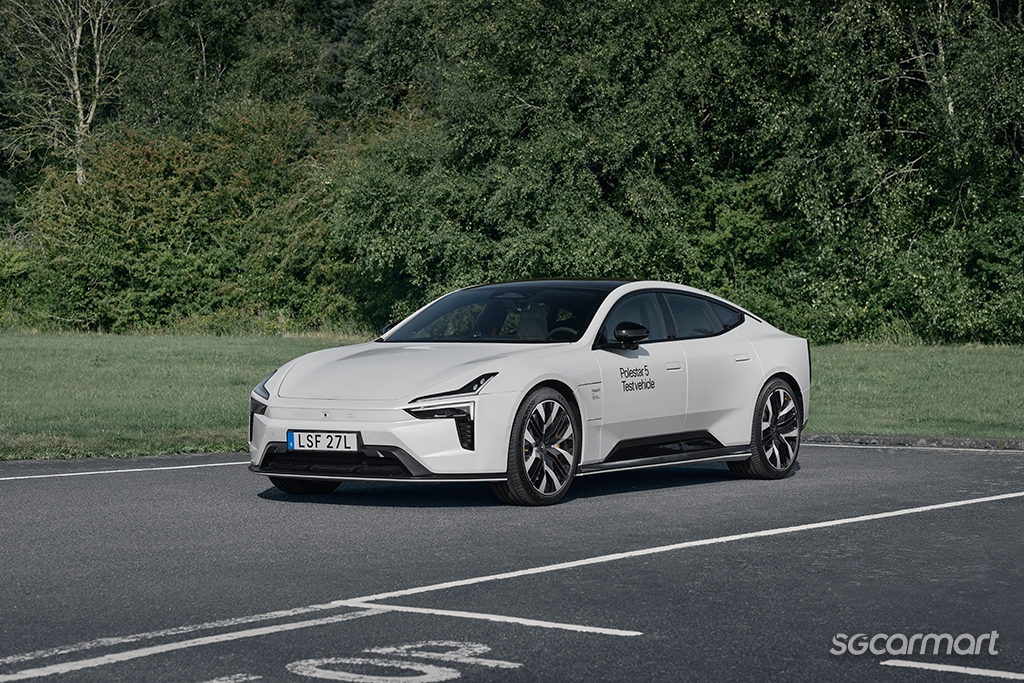
    The Polestar 5 looks remarkably similar to the Precept Concept, and retains a lot of its futuristic vibes

    A first look

    What is the Polestar 5? The brand calls this a ‘performance four-door GT’.

    It was first previewed to the world in concept form as the Polestar Precept Concept, and in the flesh it very much still retains those futuristic stylings. Low slung (standing at just 1,420mm tall) and with distinctive light signatures, this is a car that commands visual attention. It is most arresting from the rear – you could place this in your science-fiction universe of choice (Star Wars, Blade Runner, Cyberpunk 2077, Halo) and it would fit completely right in. I may or may not have spent 15 minutes just staring at the car’s behind and satisfying my inner sci-fi nerd.

    Step inside the cabin, and the sci-fi aesthetic persists, though it is a more recognisable space consistent with Polestar recent products (the 3 and 4, to be specific). In the driver’s seat, everything around you looks and feels expensive and premium. I did not have much time to play around with the touchscreen and digital systems, but they look more or less similar to what’s found on the Polestar 4. Many of the design elements are again similar, though here executed to a higher level of sustainability.
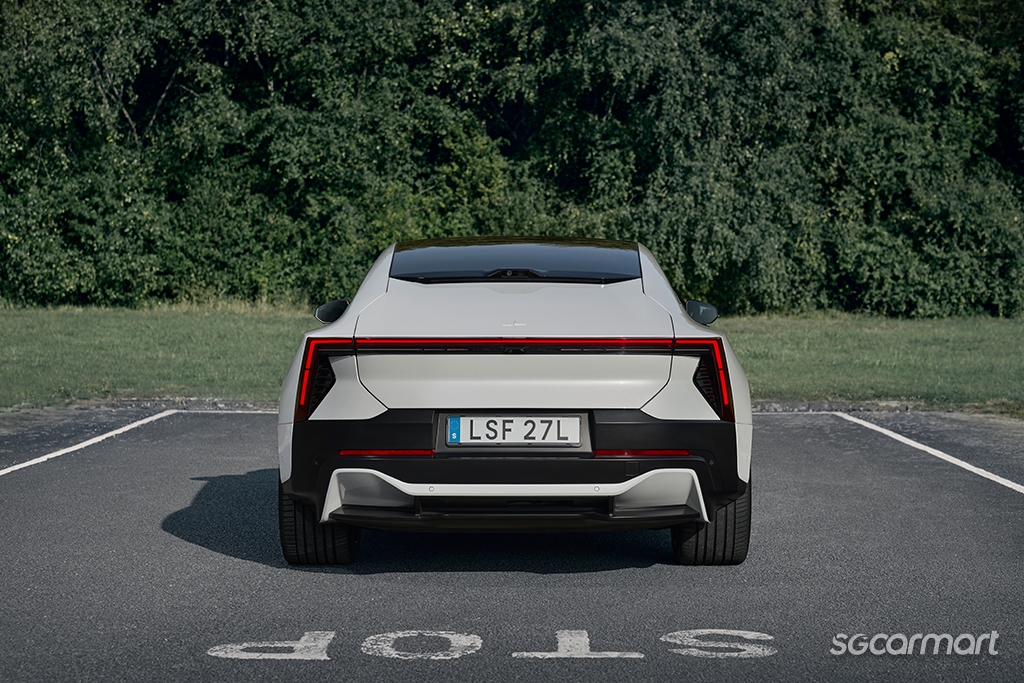
    The car's rear view is the most stark, and would not be at all out of place in a sci-fi movie

    Interestingly for a car that’s not shy about performance, you won’t find a single strand of carbon fibre on the car (carbon fibre is a common and typical solution in the quest for weight savings). This was a deliberate decision – the brand’s focus on sustainability meant adopting different, more sustainable materials, even if it may perhaps not have the absolute weight savings that carbon fibre offers. One such solution is ampliTex, a natural fibre composite that in here features a Polestar-specific weave. The premium Bridge of Weir leather is generally considered the most traceable and sustainable leather in the world. Recycled PET plastic bottles are used to make the headliner and carpets.

    And personally, I like it. It’s of course a matter of individual taste, but I am drawn to alternative materials.
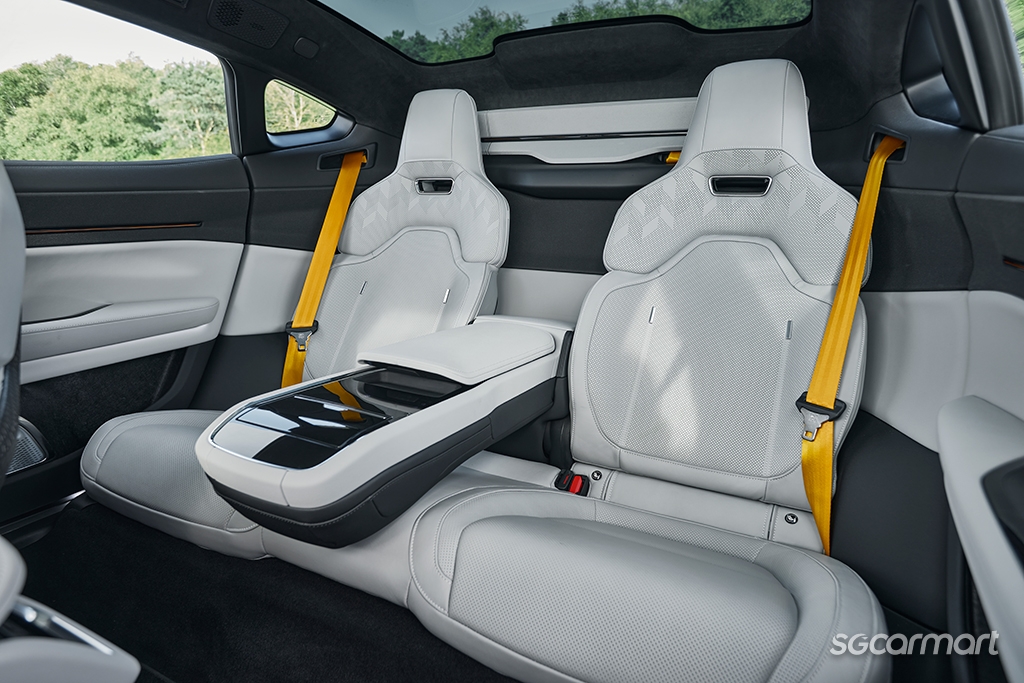
    The rear bench is surprisingly commodious when it comes to head and legroom, though it's best used as a two-seater rather than a three-seater

    What’s most surprising is the space in the rear. Given the car’s low ride height and sloping roof line, you’d expect a dearth of kneeroom and especially headroom. Yet, that’s not the case at all. As a result of a few specific choices, such as deleting the rear windscreen and moving the rear roof header backwards (a solution first seen on the Polestar 4), as well as configuring the battery pack to create a ‘footwell’, space in the rear is perfectly commodious for an average-sized adult.

    It's worth here pointing out that this is a 2+2ish. The rear is designed primarily for two people (each seat is somewhat bucket-like). The middle seat is really rather narrow, usable in a pinch but typically better served having the ‘armrest’ down. That also gives access to useful adjustment functions for the air-con and music (these functions were not yet activated on the pre-production test vehicle that I drove).
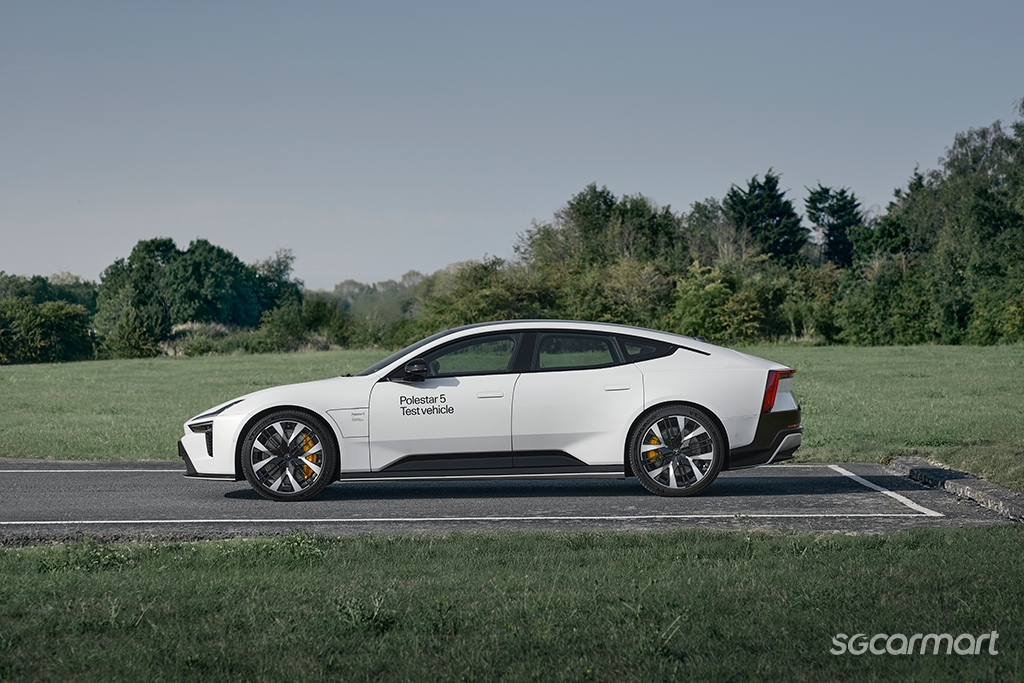
    The Polestar 5 is built on a bespoke Polestar Performance Architecture that was developed entirely in-house

    Getting a move on

    The Polestar 5 is significant because it’s the first model that’s developed in-house by Polestar. Unlike its previous models that use shared platforms across the Geely Group, the Polestar 5 has a new bespoke Polestar Performance Architecture, with a bonded aluminium chassis and bespoke steering and suspension components. The rear electric motor is also developed in-house.

    At the Millbrook Proving Ground, I got to take the car through a handling course, onto a ‘drag strip’, as well as the high speed bowl.

    The obvious thing about the Polestar 5 is its performance figures: 650kW and 1,015Nm of torque on this Performance model. That's honestly an absurd amount of performance. The car has a claimed 0-60mph time of 3.1 seconds, and launching it a few times down the strip, the on-board computer consistently registered sub-3 second timings. 
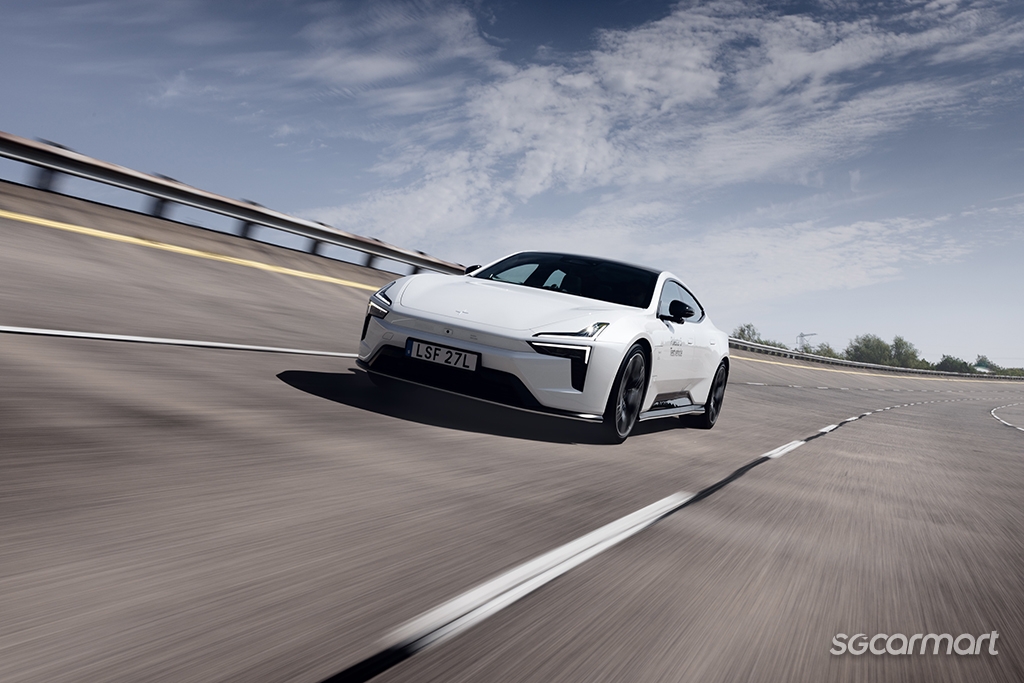
    In a straight line, the Polestar has monstrous pace, thanks to two motors that deliver 650kW and 1,015Nm of torque

    So yes, it’s got pace for days, though its somehow not quite as violent-feeling as I expected. Stops like hell, too, when you get hard on the brakes. Even at hard, ABS-triggering braking, the car remains stable and composed (possibly because at 2.5 tonnes, it is still a heavy car).

    The high speed bowl allows us to simulate highway driving speeds, and here the car delivers the sort of cruising comfort you expect from a executive sedan (and the surfaces at the bowl we were on were extremely bumpy). The car feels stable and planted, power delivery smooth and easy-going while doing 120km/h.

    And then, the handling course. The real test. 
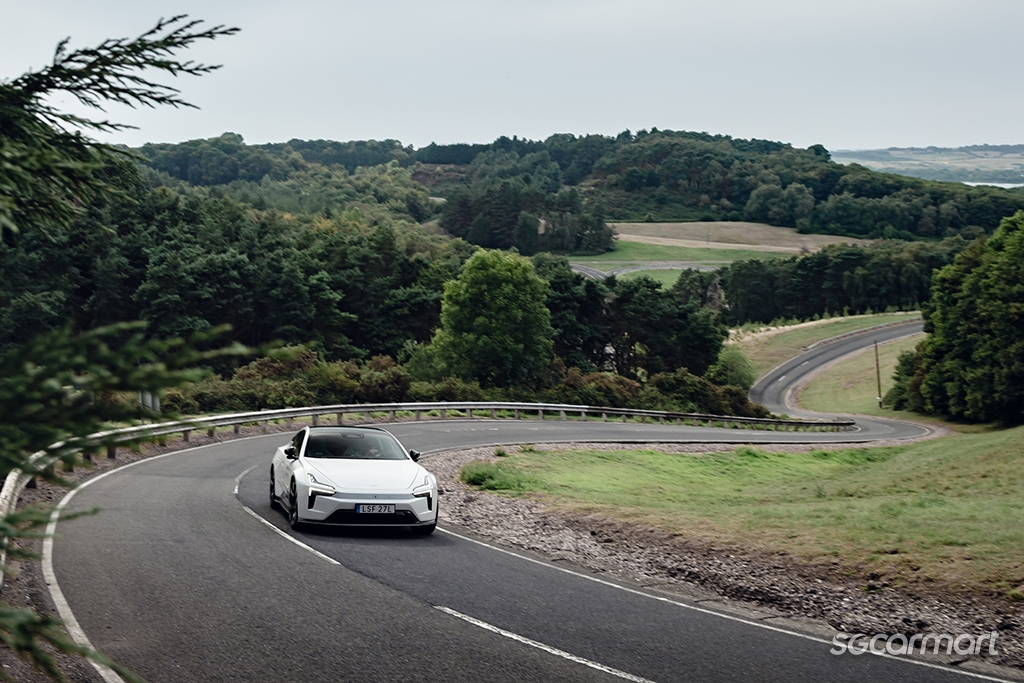
    On twisty roads, the Polestar 5 feels composed and responsive, with natural and predictable handling characteristics

    Round bendy roads, the car feels responsive and accurate. Handling feels natural and predictable. The steering, though a lot lighter than I had anticipated, loads up well in corners, and the car moves around in a way that hides its size and weight well. And it is a big, heavy car - over 5m long, and weighing 2.5 tonnes.

    But it does shrink around you when you are driving, which is quite impressive. Thats the bespoke platform doing its job. There’s sophistication to how it feels on the road – the MagneRide dampers doing a good job of managing overall stability while not being unnecessarily stiff. 

    What surprised me most was that the Polestar 5 did not feel like what I had anticipated. I had expected a quite aggressive and performance-forward car (most 3-second cars are). And the Polestar 5 isn’t. In fact, it almost purposefully disguises that. There’s a tranquillity about it, even when pushed a little harder.

    But don’t for a moment mistake that for a lack of capability – in the hands of the right people (read: Polestar test drivers), the car can be seriously flogged around.
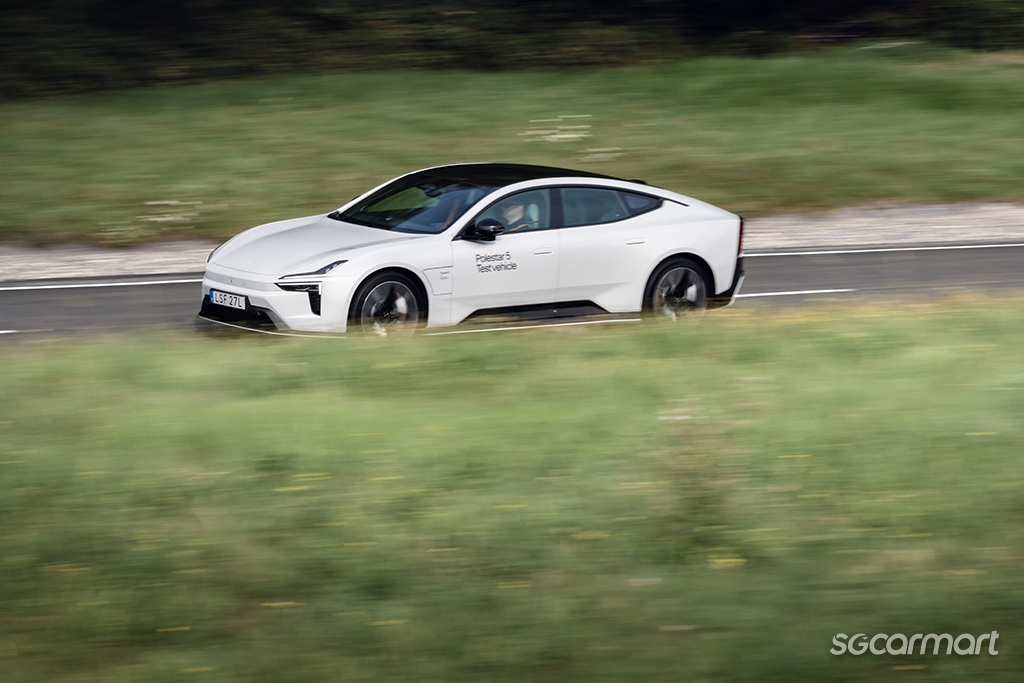
    The Polestar 5 gets top-billing in the brand's model lineup, but has an accompanying large price tag to match

    Top positioning, top dollar

    The Polestar 5 is branded a performance GT, and it is GT all the time, performance on demand.

    Every manufacturer wants to tout the superior combination of driver-focused performance and passenger-focused comfort. The reality is that one always is going to compromise the other. The question really is about where each brand finds that balance.

    The Polestar 5 balances more towards the comfort side of the equation – it’s a pleasing, easy-to-drive four-door GT that packs outrageous pace and good handling chops when you need it.

    And then of course, there’s the elephant in the room: This space is firmly dominated by one car – the Porsche Taycan.

    The Taycan was launched in 2019, and since then, even with the EV boom, there hasn’t really been that many cars that have managed to compete in this segment. It’s also a very particular sort of space – expensive, niche, sporty – targeted at a particular sort of buyer.
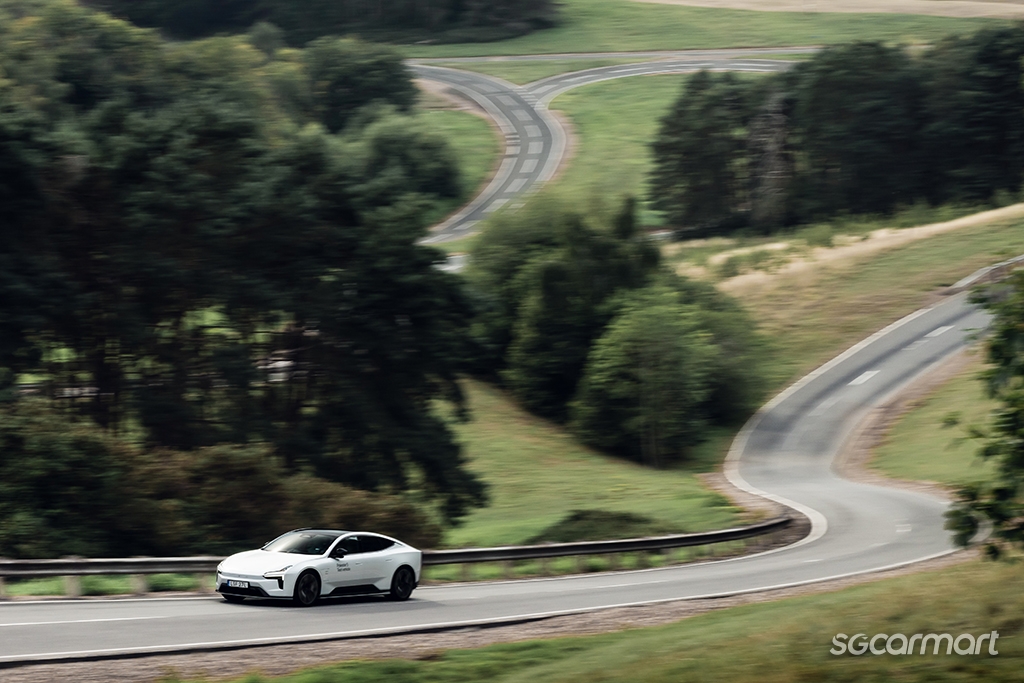
    The Porsche Taycan is a bar-setter in this segment, and Polestar's approach with the 5 is detectably different, which lends it its own character

    The Polestar 5 obviously is throwing its name into that hat, but the approach is rather different. There’s a discreetness to performance with this car that gives it its own character, though perhaps then also specifying its appeal. In an EV landscape where manufacturers tend to be quite shouty about performance, this Polestar 5 isn’t.

    I think that’s okay. No one is likely to out-Porsche Porsche when it comes to the sporty handling front. It’s almost prudent to take a different approach as a way of distinguishing a new product. And the Polestar 5 does that, even if that may not have as much mass appeal.

    And then, of course, there’s the matter of pricing. Polestar has indicated that this Performance variant will have a starting price of EUR142,900. For context, that’s around Taycan GTS money (base MSRP of EUR148,800).

    In Singapore, that same Taycan GTS is asking $671,307 before COE. Tag on the COE and that’s basically $800k. I mean, wow. For a Polestar.  

    Even the less-pricey Dual Motor model (which gets less power, naturally) has a indicative pricing of EUR119,900, which is around Taycan 4S money (S$545,607 before COE). That still puts it in the high $600s, a huge number no matter which way you look at it.  
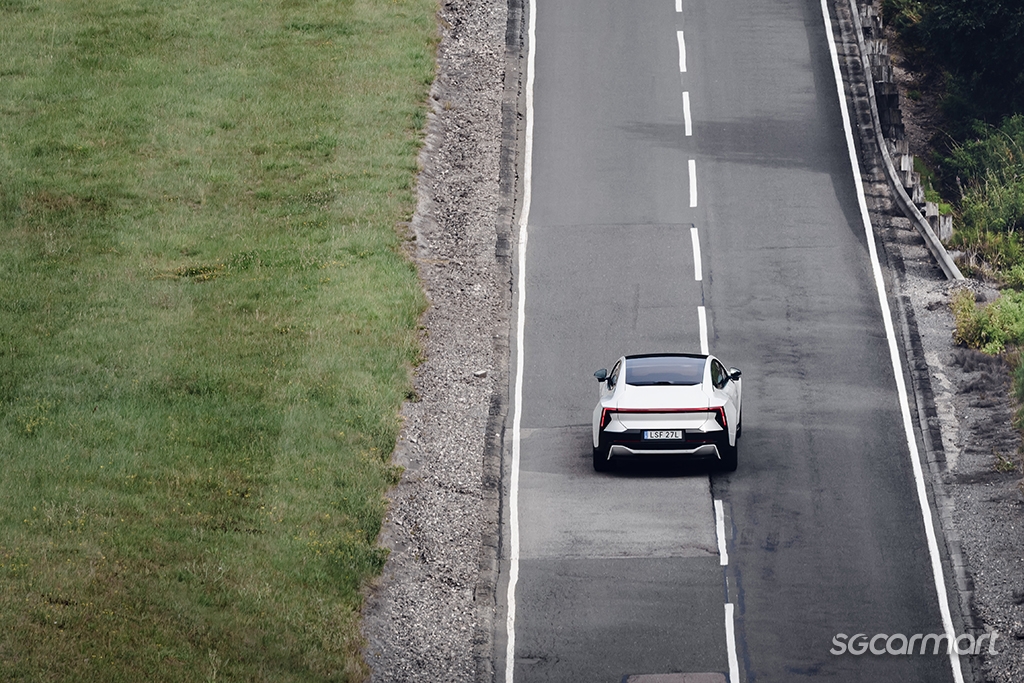
    In all likelihood, not that many will be sold, but the Polestar 5 is certainly reflective of the brand's ambition and capability to deliver a product packed with performance, refinement and sophistication

    Polestar Singapore has confirmed that the Polestar 5 will be an indent-only model for Singapore, which will come as little or no surprise.

    This is going to be a (very) low-volume model. Even Polestar executives admit as much. But as its manifesto car, Polestar does not need to sell many 5s. It just needs it to exist, and to demonstrate to the world its ambitions and capabilities.

    But zooming a little further outwards, trying to parse Polestar’s positioning in the industry is more complicated. It seems that with its latest products, the brand has pivoted slightly to an even more upmarket positioning - perhaps a concession that if it cannot achieve high volume sales, it may instead need to pursue higher margin products to maintain financial viability. But the next products are an even-more-niche roadster (the 6), and then a very mass-appealing crossover (the 7). Confused? Me too.

    Regardless, the new Polestar 5 is a statement of intent. Given its hyper-cool looks, it’s already going to get people talking. That’s a step in the right direction. And at least from my brief experience with it, the product has got the goods to back it up. 

    Desmond Chan
    Story by Desmond Chan in Millbrook, United Kingdom
    Desmond thinks the world would be better if cars were smaller and less powerful. He wants to live in the 70s.
    24.4k

    Tags

    overseas drive polestar polestar 5 first drive polestar 5 review

    AllReviewsNewsAdviceFeaturesVideos
    • Home
    • Car Articles
    • reviews
    • reviews Listings
    • Polestar Reviews

    Polestar 5 First Drive Review

    09 Sep 2025

    |

    11,621 views

    With huge ambition and a huge price tag to match, the Polestar 5 deploys hyperspeed performance with quality, tranquillity and sophistication.

    What We Like

    Cool sci-fi looks
    Expensive-feeling yet sustainable cabin materials
    Blistering pace
    Handles well
    High levels of sophistication and on-road comfort

    What We Dislike

    Have you seen the price of the thing?
    Won't realistically seat three in the back
    Boot space is on the smaller side

    Now, Polestar is one of the newer brands in the market, and its product rollout has been… interesting, to say the least.

    Things kicked off with the Polestar 1, a limited-production plug-in hybrid that had performance and coolness in spades.

    The brand’s full commitment to EVs meant that the first series production model was the Polestar 2, which strived to be somewhat accessible. Then, the Polestar 3 and 4 that followed were your now-popular SUV formats, though overall quality and price also went up.

    Naturally, the next car to follow in this numerical rollout is this: The Polestar 5.

    The new Polestar 5 is what the brand is calling its 'manifesto car'

    But this, Polestar says, is its manifesto car - the model that’s supposed to best communicate the brand’s ambitions.

    It’s also the brand’s biggest in-house development. Where the 2, 3 and 4 shared a lot of mechanical similarities with their Volvo counterparts, the 5 has been completely developed in-house and from the ground up.

    Two things you need to know off the bat - it's got plenty of performance, and it’s certainly going to be very expensive.

    The Polestar 5 looks remarkably similar to the Precept Concept, and retains a lot of its futuristic vibes

    A first look

    What is the Polestar 5? The brand calls this a ‘performance four-door GT’.

    It was first previewed to the world in concept form as the Polestar Precept Concept, and in the flesh it very much still retains those futuristic stylings. Low slung (standing at just 1,420mm tall) and with distinctive light signatures, this is a car that commands visual attention. It is most arresting from the rear – you could place this in your science-fiction universe of choice (Star Wars, Blade Runner, Cyberpunk 2077, Halo) and it would fit completely right in. I may or may not have spent 15 minutes just staring at the car’s behind and satisfying my inner sci-fi nerd.

    Step inside the cabin, and the sci-fi aesthetic persists, though it is a more recognisable space consistent with Polestar recent products (the 3 and 4, to be specific). In the driver’s seat, everything around you looks and feels expensive and premium. I did not have much time to play around with the touchscreen and digital systems, but they look more or less similar to what’s found on the Polestar 4. Many of the design elements are again similar, though here executed to a higher level of sustainability.

    The car's rear view is the most stark, and would not be at all out of place in a sci-fi movie

    Interestingly for a car that’s not shy about performance, you won’t find a single strand of carbon fibre on the car (carbon fibre is a common and typical solution in the quest for weight savings). This was a deliberate decision – the brand’s focus on sustainability meant adopting different, more sustainable materials, even if it may perhaps not have the absolute weight savings that carbon fibre offers. One such solution is ampliTex, a natural fibre composite that in here features a Polestar-specific weave. The premium Bridge of Weir leather is generally considered the most traceable and sustainable leather in the world. Recycled PET plastic bottles are used to make the headliner and carpets.

    And personally, I like it. It’s of course a matter of individual taste, but I am drawn to alternative materials.

    The rear bench is surprisingly commodious when it comes to head and legroom, though it's best used as a two-seater rather than a three-seater

    What’s most surprising is the space in the rear. Given the car’s low ride height and sloping roof line, you’d expect a dearth of kneeroom and especially headroom. Yet, that’s not the case at all. As a result of a few specific choices, such as deleting the rear windscreen and moving the rear roof header backwards (a solution first seen on the Polestar 4), as well as configuring the battery pack to create a ‘footwell’, space in the rear is perfectly commodious for an average-sized adult.

    It's worth here pointing out that this is a 2+2ish. The rear is designed primarily for two people (each seat is somewhat bucket-like). The middle seat is really rather narrow, usable in a pinch but typically better served having the ‘armrest’ down. That also gives access to useful adjustment functions for the air-con and music (these functions were not yet activated on the pre-production test vehicle that I drove).

    The Polestar 5 is built on a bespoke Polestar Performance Architecture that was developed entirely in-house

    Getting a move on

    The Polestar 5 is significant because it’s the first model that’s developed in-house by Polestar. Unlike its previous models that use shared platforms across the Geely Group, the Polestar 5 has a new bespoke Polestar Performance Architecture, with a bonded aluminium chassis and bespoke steering and suspension components. The rear electric motor is also developed in-house.

    At the Millbrook Proving Ground, I got to take the car through a handling course, onto a ‘drag strip’, as well as the high speed bowl.

    The obvious thing about the Polestar 5 is its performance figures: 650kW and 1,015Nm of torque on this Performance model. That's honestly an absurd amount of performance. The car has a claimed 0-60mph time of 3.1 seconds, and launching it a few times down the strip, the on-board computer consistently registered sub-3 second timings. 

    In a straight line, the Polestar has monstrous pace, thanks to two motors that deliver 650kW and 1,015Nm of torque

    So yes, it’s got pace for days, though its somehow not quite as violent-feeling as I expected. Stops like hell, too, when you get hard on the brakes. Even at hard, ABS-triggering braking, the car remains stable and composed (possibly because at 2.5 tonnes, it is still a heavy car).

    The high speed bowl allows us to simulate highway driving speeds, and here the car delivers the sort of cruising comfort you expect from a executive sedan (and the surfaces at the bowl we were on were extremely bumpy). The car feels stable and planted, power delivery smooth and easy-going while doing 120km/h.

    And then, the handling course. The real test. 

    On twisty roads, the Polestar 5 feels composed and responsive, with natural and predictable handling characteristics

    Round bendy roads, the car feels responsive and accurate. Handling feels natural and predictable. The steering, though a lot lighter than I had anticipated, loads up well in corners, and the car moves around in a way that hides its size and weight well. And it is a big, heavy car - over 5m long, and weighing 2.5 tonnes.

    But it does shrink around you when you are driving, which is quite impressive. Thats the bespoke platform doing its job. There’s sophistication to how it feels on the road – the MagneRide dampers doing a good job of managing overall stability while not being unnecessarily stiff. 

    What surprised me most was that the Polestar 5 did not feel like what I had anticipated. I had expected a quite aggressive and performance-forward car (most 3-second cars are). And the Polestar 5 isn’t. In fact, it almost purposefully disguises that. There’s a tranquillity about it, even when pushed a little harder.

    But don’t for a moment mistake that for a lack of capability – in the hands of the right people (read: Polestar test drivers), the car can be seriously flogged around.

    The Polestar 5 gets top-billing in the brand's model lineup, but has an accompanying large price tag to match

    Top positioning, top dollar

    The Polestar 5 is branded a performance GT, and it is GT all the time, performance on demand.

    Every manufacturer wants to tout the superior combination of driver-focused performance and passenger-focused comfort. The reality is that one always is going to compromise the other. The question really is about where each brand finds that balance.

    The Polestar 5 balances more towards the comfort side of the equation – it’s a pleasing, easy-to-drive four-door GT that packs outrageous pace and good handling chops when you need it.

    And then of course, there’s the elephant in the room: This space is firmly dominated by one car – the Porsche Taycan.

    The Taycan was launched in 2019, and since then, even with the EV boom, there hasn’t really been that many cars that have managed to compete in this segment. It’s also a very particular sort of space – expensive, niche, sporty – targeted at a particular sort of buyer.

    The Porsche Taycan is a bar-setter in this segment, and Polestar's approach with the 5 is detectably different, which lends it its own character

    The Polestar 5 obviously is throwing its name into that hat, but the approach is rather different. There’s a discreetness to performance with this car that gives it its own character, though perhaps then also specifying its appeal. In an EV landscape where manufacturers tend to be quite shouty about performance, this Polestar 5 isn’t.

    I think that’s okay. No one is likely to out-Porsche Porsche when it comes to the sporty handling front. It’s almost prudent to take a different approach as a way of distinguishing a new product. And the Polestar 5 does that, even if that may not have as much mass appeal.

    And then, of course, there’s the matter of pricing. Polestar has indicated that this Performance variant will have a starting price of EUR142,900. For context, that’s around Taycan GTS money (base MSRP of EUR148,800).

    In Singapore, that same Taycan GTS is asking $671,307 before COE. Tag on the COE and that’s basically $800k. I mean, wow. For a Polestar.  

    Even the less-pricey Dual Motor model (which gets less power, naturally) has a indicative pricing of EUR119,900, which is around Taycan 4S money (S$545,607 before COE). That still puts it in the high $600s, a huge number no matter which way you look at it.  

    In all likelihood, not that many will be sold, but the Polestar 5 is certainly reflective of the brand's ambition and capability to deliver a product packed with performance, refinement and sophistication

    Polestar Singapore has confirmed that the Polestar 5 will be an indent-only model for Singapore, which will come as little or no surprise.

    This is going to be a (very) low-volume model. Even Polestar executives admit as much. But as its manifesto car, Polestar does not need to sell many 5s. It just needs it to exist, and to demonstrate to the world its ambitions and capabilities.

    But zooming a little further outwards, trying to parse Polestar’s positioning in the industry is more complicated. It seems that with its latest products, the brand has pivoted slightly to an even more upmarket positioning - perhaps a concession that if it cannot achieve high volume sales, it may instead need to pursue higher margin products to maintain financial viability. But the next products are an even-more-niche roadster (the 6), and then a very mass-appealing crossover (the 7). Confused? Me too.

    Regardless, the new Polestar 5 is a statement of intent. Given its hyper-cool looks, it’s already going to get people talking. That’s a step in the right direction. And at least from my brief experience with it, the product has got the goods to back it up. 

    Desmond Chan
    Story by Desmond Chan in Millbrook, United Kingdom
    Desmond thinks the world would be better if cars were smaller and less powerful. He wants to live in the 70s.
    24.4k

    Tags

    overseas drive polestar polestar 5 first drive polestar 5 review

    Newsletter

    Be Notified On The Latest News

    Newsletter

    Be Notified On The Latest News

    Related Articles

    Mercedes-Benz CLA250+ AMG Line Review

    Mercedes-Benz CLA250+ AMG Line Review

    XPENG G6 Performance Facelift Review

    XPENG G6 Performance Facelift Review

    Polestar 4 lineup gets new SUV variant

    Polestar 4 lineup gets new SUV variant

    The Polestar 4 coupe is now more environmentally friendly

    The Polestar 4 coupe is now more environmentally friendly

    Polestar continues Europe expansion in the Baltic region

    Polestar continues Europe expansion in the Baltic region

    Polestar publishes life cycle assessment for Polestar 5

    Polestar publishes life cycle assessment for Polestar 5

    Related Articles

    Mercedes-Benz CLA250+ AMG Line Review

    Mercedes-Benz CLA250+ AMG Line Review

    XPENG G6 Performance Facelift Review

    XPENG G6 Performance Facelift Review

    Polestar 4 lineup gets new SUV variant

    Polestar 4 lineup gets new SUV variant

    The Polestar 4 coupe is now more environmentally friendly

    The Polestar 4 coupe is now more environmentally friendly

    Polestar continues Europe expansion in the Baltic region

    Polestar continues Europe expansion in the Baltic region

    Polestar publishes life cycle assessment for Polestar 5

    Polestar publishes life cycle assessment for Polestar 5

    You May Also Like

    Get your next rental from AKA Car Rental

    Get your next rental from AKA Car Rental

    New to driving? Here's how to become a better driver

    New to driving? Here's how to become a better driver

    Sgcarmart Explores: 2026 National Day Edition!

    Sgcarmart Explores: 2026 National Day Edition!

    Dunlop's new tyres for an electrified world

    Dunlop's new tyres for an electrified world

    Corvette Stingray Review

    Corvette Stingray Review

    Omoda & Jaecoo is forging ahead with its Super AI cockpit

    Omoda & Jaecoo is forging ahead with its Super AI cockpit

    A first look at the Sitrak Light eTruck!

    A first look at the Sitrak Light eTruck!

    The new Pirelli Cinturato Rosso with Seal Inside Tech!

    The new Pirelli Cinturato Rosso with Seal Inside Tech!

    You May Also Like

    Get your next rental from AKA Car Rental

    Get your next rental from AKA Car Rental

    New to driving? Here's how to become a better driver

    New to driving? Here's how to become a better driver

    Sgcarmart Explores: 2026 National Day Edition!

    Sgcarmart Explores: 2026 National Day Edition!

    Dunlop's new tyres for an electrified world

    Dunlop's new tyres for an electrified world

    Corvette Stingray Review

    Corvette Stingray Review

    Omoda & Jaecoo is forging ahead with its Super AI cockpit

    Omoda & Jaecoo is forging ahead with its Super AI cockpit

    A first look at the Sitrak Light eTruck!

    A first look at the Sitrak Light eTruck!

    The new Pirelli Cinturato Rosso with Seal Inside Tech!

    The new Pirelli Cinturato Rosso with Seal Inside Tech!