View page in desktop
|
Report error
  •   Apple app store icon
  • Google play store icon
Terms of Service
|
Privacy Policy
|
PDPA
|
Site Map
©2004-2026 Sgcarmart, Singapore. All rights reserved.
  • Home
  • Car Articles
  • features
  • features Listings
  • Features
  • Designing around real life: The BMW iX3 in Bangkok

    21 Jul 2026

    |

    1,997 views

    Cars are expected to do more than ever before. In Bangkok, BMW's new iX3 showed how the brand is approaching the demands of everyday electric mobility.

    Bangkok is not a city that flatters cars.

    Looking at a map, getting across town can seem straightforward. In reality, traffic has a habit of turning a 20-minute drive into something much longer, accompanied by motorcycles appearing from improbable angles and an almost constant soundtrack of horns, construction works and vehicles squeezing into spaces that seem too small for them.

    If BMW wanted to demonstrate how its latest electric SUV handles the realities of modern driving rather than the idealised version, Bangkok was a sensible place to do it.
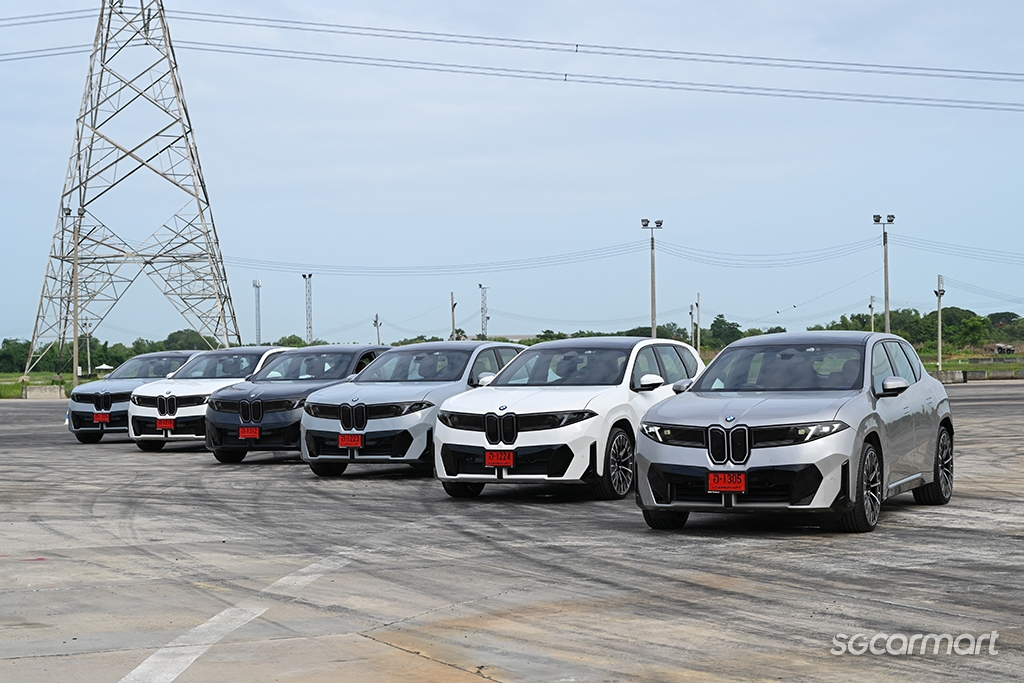
    Track sessions may not reflect everyday driving, but they are often the quickest way to understand a vehicle's underlying character

    That was the backdrop for BMW Thailand's ASEAN media drive of the new BMW iX3, held at Pathum Thani Speedway and on roads surrounding the circuit. The iX3 is the first production model built on BMW's Neue Klasse architecture, which promises advancements in design, digitalisation and electrification.

    Manufacturers often claim every new model changes everything. Most don't. But expectations have changed. Buyers today want more than performance and practicality. They expect intuitive technology, useful range, rapid charging and a cabin that can comfortably support everything from family commitments to long workdays. After spending time with the iX3 in Bangkok, the more interesting question wasn't whether BMW had built a faster electric SUV. It was whether BMW had built one that better fits the way people live today.

    BMW Group Thailand President and CEO Kris Joo touched on this during the launch. "Reading about technology can provide an initial understanding, but experiencing it behind the wheel creates an entirely different impression." After several hours behind the wheel, it's hard to disagree.

    First impressions matter

    In a market crowded with SUVs, design often shapes an opinion before a specification sheet ever enters the conversation.

    The first thing that struck me when the iX3 rolled into view was its size. At 4,782mm long, this is no compact crossover pretending to be an SUV. It has genuine road presence and feels larger in person than it does in photographs. The new interpretation of BMW's kidney grille will inevitably attract attention. BMW says the vertically oriented design references the original Neue Klasse models from the 1960s. Whether buyers make that connection probably matters less than whether the design works today. Standing in front of the car at Pathum Thani Speedway, it felt distinctive without looking overly dramatic. What surprised me more were the details that didn't immediately stand out.
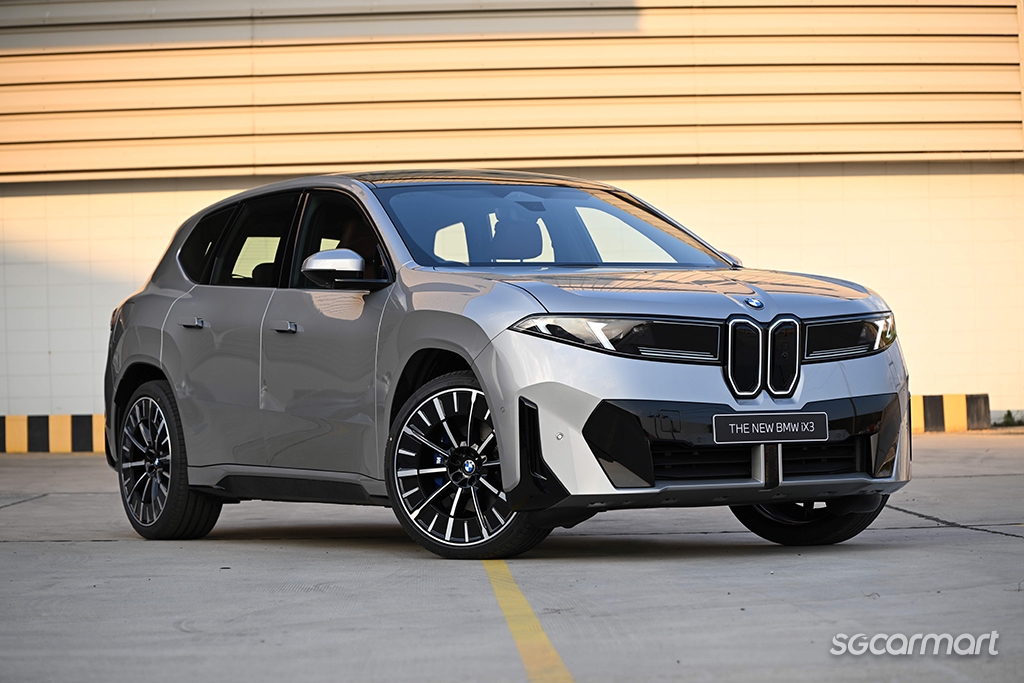
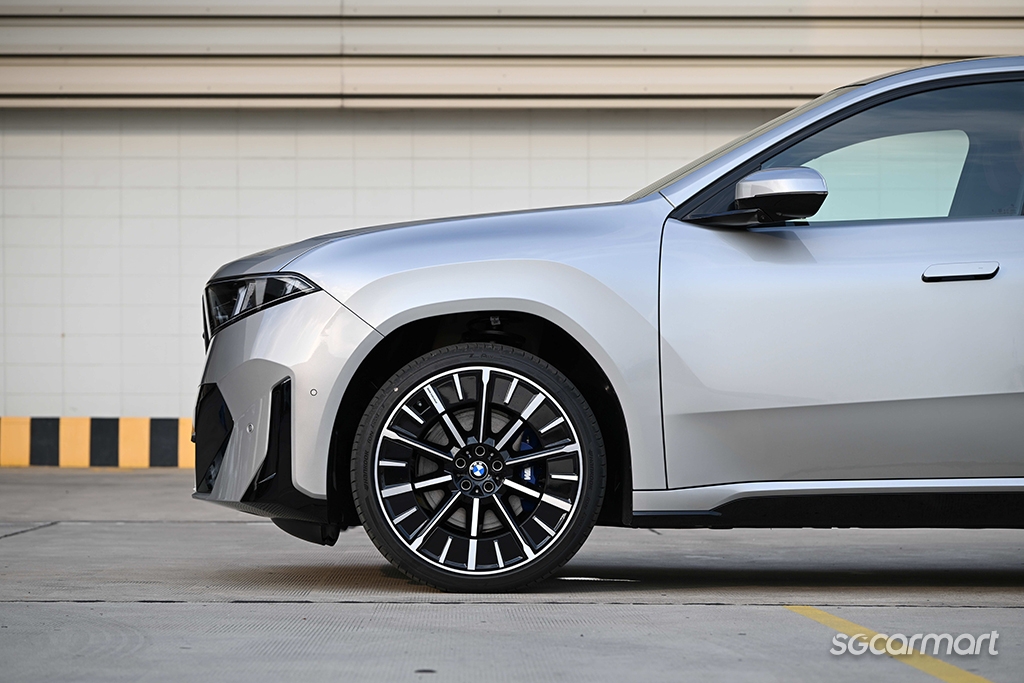
    Cleaner surfaces and flush detailing help improve efficiency while contributing to a quieter cabin at higher speeds

    There was something about the iX3's profile that felt less busy than many current SUVs. It wasn't until I spent a few minutes walking around the car that I realised the wheel arches were painted in body colour. It's a small detail, but because they flow into the rest of the bodywork, the design feels more unified. Many SUVs use contrasting trim around the arches, which can visually break up the shape. Here, everything appears to flow together more naturally.

    The iX3 also avoids excessive creases and decorative body lines. Viewed from the side, there are fewer visual interruptions than you might expect, giving the vehicle a cleaner appearance without making it look anonymous.

    Flush door handles and flush glazing help the iX3 achieve a drag coefficient of 0.24, an impressive figure for an SUV of this size. The number itself is unlikely to matter to most buyers, but on the roads around Pathum Thani the car remained notably quiet, with very little wind noise filtering into the cabin. Practicality appears well considered too.

    The rear cargo area offers 520 litres of luggage space, expanding to 1,750 litres with the rear seats folded. Up front sits a 58-litre storage compartment beneath the bonnet. It's a useful place to keep charging cables and smaller items separate from the main luggage area, freeing up the boot for everything else.

    When your car becomes a second living space

    For many people, a car is no longer just a means of getting from one destination to another. It's where conversations happen between appointments. It's where drivers gather their thoughts before heading into a meeting. Sometimes, it's the only quiet space between a busy work schedule and family commitments.

    That makes the cabin more important than ever.
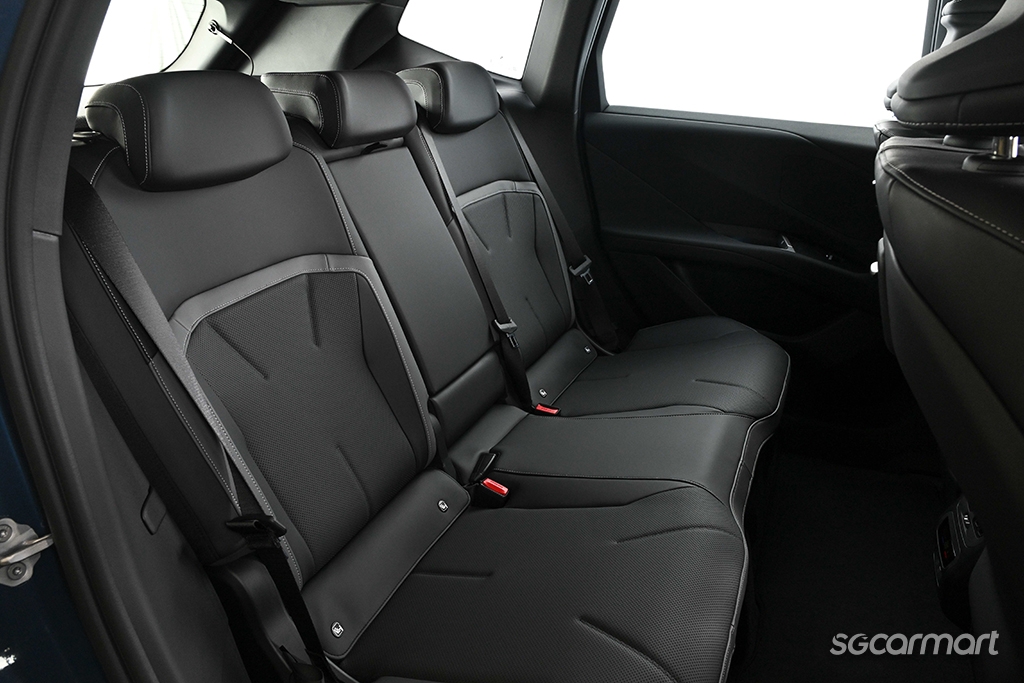
    Modern cars have become more than just transport. The iX3's spacious cabin is designed to function as a comfortable environment between work, family and everything in between

    The sense of space inside the iX3 is immediately noticeable. Not the sort of space manufacturers sometimes describe as "good for the segment", but genuinely usable room for five adults. The rear seats feel more like a proper bench than three individual seats squeezed together. A panoramic glass roof stretches overhead, while climate comfort glazing helps keep heat and UV exposure under control. Despite spending much of the programme under Bangkok's heat, the cabin never felt uncomfortably exposed. The dashboard is dominated by BMW's new panoramic display architecture. Looking at press images before the event, I wasn't entirely convinced. In person, it works better than expected. The layout feels more integrated than the increasingly common approach of attaching an oversized screen to the dashboard and calling it innovation.

    Singapore-bound examples receive the M Sport package as standard, bringing electrically adjustable massage seats, an M steering wheel and the level of material quality buyers would expect at this end of the market. The ambient lighting wasn't something we experienced while driving, as most of our time with the vehicle took place in daylight. It became more noticeable later while the iX3 was stationary indoors during a product briefing. Thankfully, BMW hasn't turned it into a headline feature. Rather than dominating the cabin, the lighting sits subtly in the background.

    Not every driver will embrace the display-heavy layout immediately. There is still a learning curve for anyone stepping out of an older vehicle. Even so, BMW appears to have made a conscious effort to reduce clutter and keep the experience approachable.

    Less time learning, more time driving

    People spend enough time figuring out technology.

    The challenge for carmakers today isn't simply adding more screens or features. It's making those features intuitive enough that drivers barely have to think about them. BMW's new Panoramic iDrive system is a good example. Information is projected across the base of the windscreen from one side of the cabin to the other, displaying navigation instructions, speed and driver-assistance information within the driver's natural field of view.

    A few times during the drive I instinctively glanced towards the centre screen looking for directions before realising the information was already projected ahead of me. It took surprisingly little time to adjust. By the end of the route, I found myself relying on the windscreen display more than the centre screen.

    Navigation instructions appear directly ahead of the driver, making unfamiliar roads easier to navigate

    Above it sits a 3D head-up display capable of projecting navigation cues directly onto the road ahead. On unfamiliar roads around Pathum Thani, that proved genuinely useful.

    The central touchscreen remains within easy reach of the driver, supported by QuickSelect widgets designed to reduce menu diving. BMW refers to this approach as "Shy Tech", technology that remains available without constantly demanding interaction.

    Physical controls haven't disappeared entirely either. Volume functions, wiper controls and gear selection still retain tangible interfaces. That may not sound revolutionary, but it makes everyday interactions feel more straightforward.

    BMW says the system was informed by data collected from more than 10 million connected vehicles and extensive customer studies. Whether that guarantees good design is another question entirely. Plenty of products are developed using vast amounts of data and still end up frustrating people. From what we experienced during the drive, however, the system felt surprisingly easy to adapt to.

    Performance without the drama

    Most modern EVs are fast.

    That's no longer a distinguishing feature. What matters more is how effortlessly they deliver that performance. BMW used Pathum Thani Speedway to demonstrate what it calls the Heart of Joy, one of four high-performance computers responsible for managing key vehicle functions.

    The technical explanation is lengthy. The driving experience isn't. The car simply responds quickly.

    Pathum Thani Speedway provided a controlled environment to explore the iX3's new Heart of Joy control system and its impact on steering, braking and throttle responses

    Throttle inputs feel immediate. Steering responses feel natural. Brake inputs produce smooth, predictable results. BMW says the system processes information 10 times faster than conventional control units. That's not something you can verify from behind the wheel, but the vehicle does feel unusually cohesive, as though its major systems are working together rather than independently.

    With 345kW and 645Nm from its dual-motor all-wheel-drive setup, the iX3 reaches 100km/h in 4.9 seconds. Quick acceleration is no longer unusual in the EV world. What impressed me more was how composed the vehicle remained when changing direction at speed.

    The brake calibration deserves particular praise. Many electric vehicles still struggle to deliver smooth transitions between regenerative braking and conventional braking. Throughout the drive, the iX3 handled that transition with very little fuss.

    Time matters

    One of the biggest barriers to EV adoption remains the perception that life has to revolve around charging.

    The iX3's WLTP-rated range of up to 805km goes a long way towards reducing that concern, at least on paper. Even allowing for the inevitable gap between laboratory testing and real-world usage, that's a substantial figure. For drivers in Singapore, it means charging becomes something you think about less often. Regional journeys also become easier to contemplate.

    With a claimed 805km WLTP range and rapid charging capability, the iX3 is designed to reduce the planning often associated with EV ownership

    Charging performance appears equally competitive. BMW claims a 10-minute stop at an 800V DC charger can add up to 372km of range, while a charge from 10% to 80% takes approximately 21 minutes. The battery uses cylindrical cells integrated directly into the pack, while the pack itself forms part of the vehicle structure. According to BMW, the result is improved energy density and greater efficiency. The engineering is impressive, but what matters most is the outcome.

    Less time charging.

    Less time planning.

    More time simply getting on with the journey.

    Safety and sustainability

    Safety remains non-negotiable. Sustainability is becoming increasingly important too.

    The iX3 achieved a five-star Euro NCAP rating under the updated 2026 testing standards, making it one of the first vehicles assessed under the stricter protocols. That result feels particularly relevant in cities such as Bangkok, where motorcycles, cyclists and pedestrians often share the same limited road space. Euro NCAP also highlighted the iX3's strong performance in crash-avoidance scenarios involving vulnerable road users, including pedestrians and cyclists.

    Sustainability also featured heavily throughout BMW's presentations. Normally, this part of a vehicle launch tends to blur into the background. Every manufacturer now talks about emissions reductions and recycled materials. The figures presented here felt more substantial than the usual talking points.

    According to BMW, the iX3's overall product carbon footprint across 200,000km is 34% lower than its predecessor. Around one-third of the vehicle incorporates secondary materials, including recycled PET, recycled plastics and aluminium with significant recycled content. Whether that influences a purchase decision will vary from buyer to buyer. For those paying attention to how vehicles are made as well as how they perform, BMW appears to have invested considerable effort here.

    So what's it like?

    Stepping out of the iX3 at the end of the programme, I found myself thinking less about individual specifications and more about the overall experience. The technology faded into the background surprisingly quickly. The cabin was comfortable, while performance felt effortless. Nothing felt as though it demanded attention for the sake of it.

    In Singapore, the BMW iX3 50 xDrive M Sport is priced from $389,888. That places it firmly in premium territory, where buyers are likely to judge it not simply on range or performance, but on how well it fits into daily life.

    The iX3 marks the beginning of BMW's Neue Klasse era, with a design that prioritises simplicity and everyday usability over visual drama

    The strongest impression wasn't any single feature. It was how little compromise the car seemed to ask from its driver.

    The cabin is spacious without feeling overwhelming. The technology is advanced without constantly demanding interaction. The range and charging figures suggest EV ownership should require less planning than it once did.

    BMW chose Bangkok as the backdrop for this drive because few cities better illustrate the demands placed on drivers today—busy schedules, crowded roads and never quite enough time. The iX3 makes a convincing case for itself. Not because it reinvents the car, but because it feels designed to fit into everyday life rather than demanding that drivers adapt to it.

    Freelancer
    Story by Lance Lim in Bangkok, Thailand
    I've been writing about cars for many years, and I wonder if I'm getting any better at it.
    24.4k

    Tags

    overseas drives bmw bmw ix3 ev electric suv ix3 ix3 suv all electric bmw neue klasse bmw neue klasse ix3 neue klasse

    AllReviewsNewsAdviceFeaturesVideos
    • Home
    • Car Articles
    • features
    • features Listings
    • Features

    Designing around real life: The BMW iX3 in Bangkok

    21 Jul 2026

    |

    1,997 views

    Cars are expected to do more than ever before. In Bangkok, BMW's new iX3 showed how the brand is approaching the demands of everyday electric mobility.

    Bangkok is not a city that flatters cars.

    Looking at a map, getting across town can seem straightforward. In reality, traffic has a habit of turning a 20-minute drive into something much longer, accompanied by motorcycles appearing from improbable angles and an almost constant soundtrack of horns, construction works and vehicles squeezing into spaces that seem too small for them.

    If BMW wanted to demonstrate how its latest electric SUV handles the realities of modern driving rather than the idealised version, Bangkok was a sensible place to do it.

    Track sessions may not reflect everyday driving, but they are often the quickest way to understand a vehicle's underlying character

    That was the backdrop for BMW Thailand's ASEAN media drive of the new BMW iX3, held at Pathum Thani Speedway and on roads surrounding the circuit. The iX3 is the first production model built on BMW's Neue Klasse architecture, which promises advancements in design, digitalisation and electrification.

    Manufacturers often claim every new model changes everything. Most don't. But expectations have changed. Buyers today want more than performance and practicality. They expect intuitive technology, useful range, rapid charging and a cabin that can comfortably support everything from family commitments to long workdays. After spending time with the iX3 in Bangkok, the more interesting question wasn't whether BMW had built a faster electric SUV. It was whether BMW had built one that better fits the way people live today.

    BMW Group Thailand President and CEO Kris Joo touched on this during the launch. "Reading about technology can provide an initial understanding, but experiencing it behind the wheel creates an entirely different impression." After several hours behind the wheel, it's hard to disagree.

    First impressions matter

    In a market crowded with SUVs, design often shapes an opinion before a specification sheet ever enters the conversation.

    The first thing that struck me when the iX3 rolled into view was its size. At 4,782mm long, this is no compact crossover pretending to be an SUV. It has genuine road presence and feels larger in person than it does in photographs. The new interpretation of BMW's kidney grille will inevitably attract attention. BMW says the vertically oriented design references the original Neue Klasse models from the 1960s. Whether buyers make that connection probably matters less than whether the design works today. Standing in front of the car at Pathum Thani Speedway, it felt distinctive without looking overly dramatic. What surprised me more were the details that didn't immediately stand out.

    Cleaner surfaces and flush detailing help improve efficiency while contributing to a quieter cabin at higher speeds

    There was something about the iX3's profile that felt less busy than many current SUVs. It wasn't until I spent a few minutes walking around the car that I realised the wheel arches were painted in body colour. It's a small detail, but because they flow into the rest of the bodywork, the design feels more unified. Many SUVs use contrasting trim around the arches, which can visually break up the shape. Here, everything appears to flow together more naturally.

    The iX3 also avoids excessive creases and decorative body lines. Viewed from the side, there are fewer visual interruptions than you might expect, giving the vehicle a cleaner appearance without making it look anonymous.

    Flush door handles and flush glazing help the iX3 achieve a drag coefficient of 0.24, an impressive figure for an SUV of this size. The number itself is unlikely to matter to most buyers, but on the roads around Pathum Thani the car remained notably quiet, with very little wind noise filtering into the cabin. Practicality appears well considered too.

    The rear cargo area offers 520 litres of luggage space, expanding to 1,750 litres with the rear seats folded. Up front sits a 58-litre storage compartment beneath the bonnet. It's a useful place to keep charging cables and smaller items separate from the main luggage area, freeing up the boot for everything else.

    When your car becomes a second living space

    For many people, a car is no longer just a means of getting from one destination to another. It's where conversations happen between appointments. It's where drivers gather their thoughts before heading into a meeting. Sometimes, it's the only quiet space between a busy work schedule and family commitments.

    That makes the cabin more important than ever.
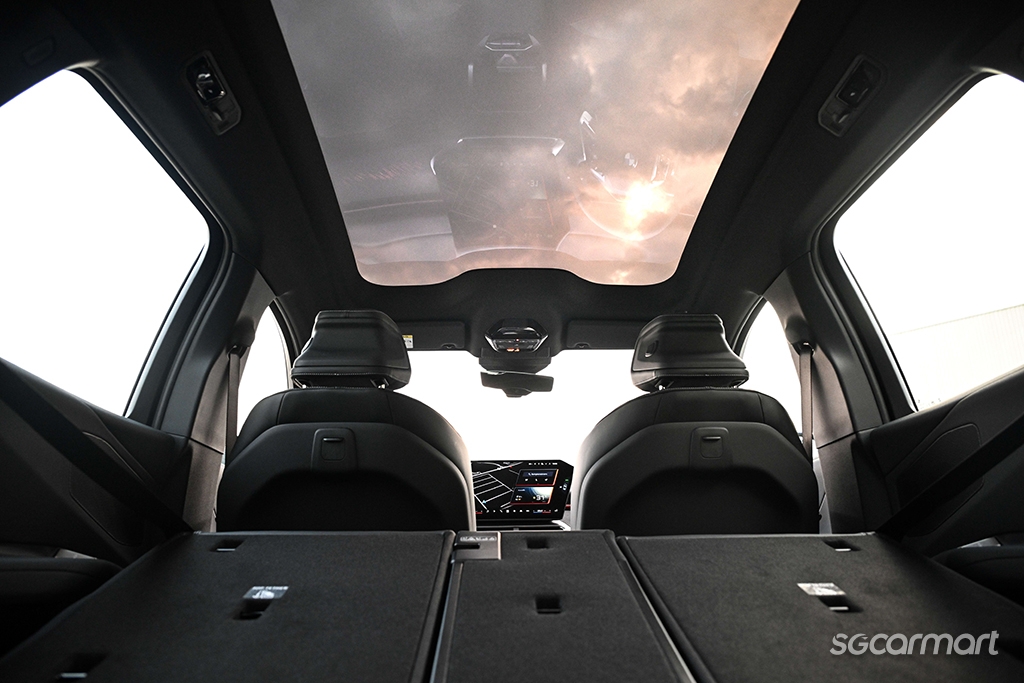
    Modern cars have become more than just transport. The iX3's spacious cabin is designed to function as a comfortable environment between work, family and everything in between

    The sense of space inside the iX3 is immediately noticeable. Not the sort of space manufacturers sometimes describe as "good for the segment", but genuinely usable room for five adults. The rear seats feel more like a proper bench than three individual seats squeezed together. A panoramic glass roof stretches overhead, while climate comfort glazing helps keep heat and UV exposure under control. Despite spending much of the programme under Bangkok's heat, the cabin never felt uncomfortably exposed. The dashboard is dominated by BMW's new panoramic display architecture. Looking at press images before the event, I wasn't entirely convinced. In person, it works better than expected. The layout feels more integrated than the increasingly common approach of attaching an oversized screen to the dashboard and calling it innovation.

    Singapore-bound examples receive the M Sport package as standard, bringing electrically adjustable massage seats, an M steering wheel and the level of material quality buyers would expect at this end of the market. The ambient lighting wasn't something we experienced while driving, as most of our time with the vehicle took place in daylight. It became more noticeable later while the iX3 was stationary indoors during a product briefing. Thankfully, BMW hasn't turned it into a headline feature. Rather than dominating the cabin, the lighting sits subtly in the background.

    Not every driver will embrace the display-heavy layout immediately. There is still a learning curve for anyone stepping out of an older vehicle. Even so, BMW appears to have made a conscious effort to reduce clutter and keep the experience approachable.

    Less time learning, more time driving

    People spend enough time figuring out technology.

    The challenge for carmakers today isn't simply adding more screens or features. It's making those features intuitive enough that drivers barely have to think about them. BMW's new Panoramic iDrive system is a good example. Information is projected across the base of the windscreen from one side of the cabin to the other, displaying navigation instructions, speed and driver-assistance information within the driver's natural field of view.

    A few times during the drive I instinctively glanced towards the centre screen looking for directions before realising the information was already projected ahead of me. It took surprisingly little time to adjust. By the end of the route, I found myself relying on the windscreen display more than the centre screen.
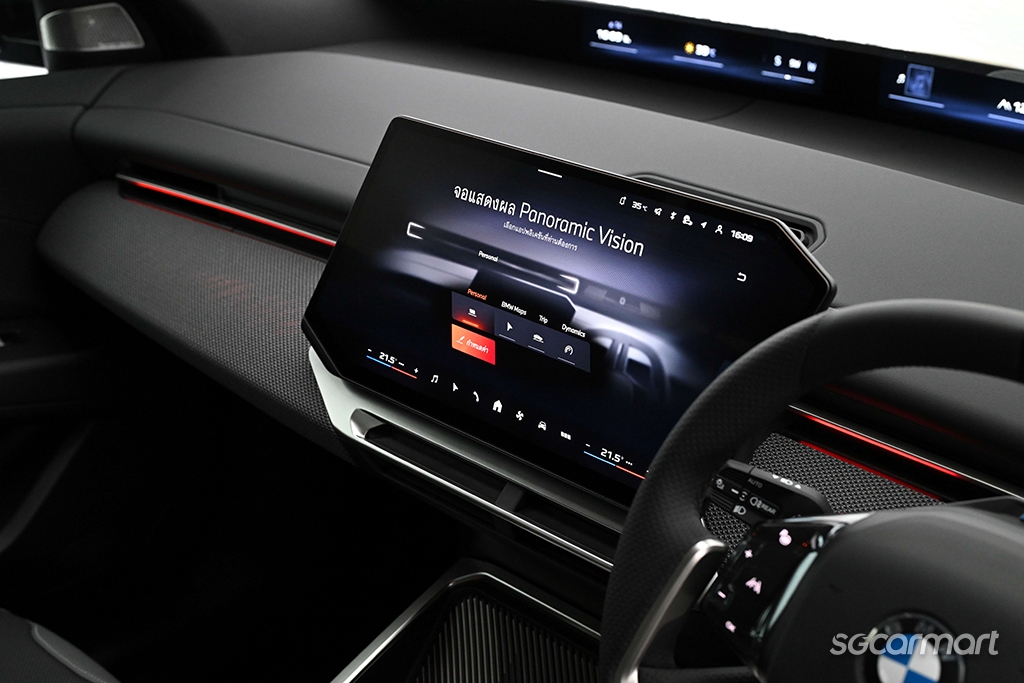
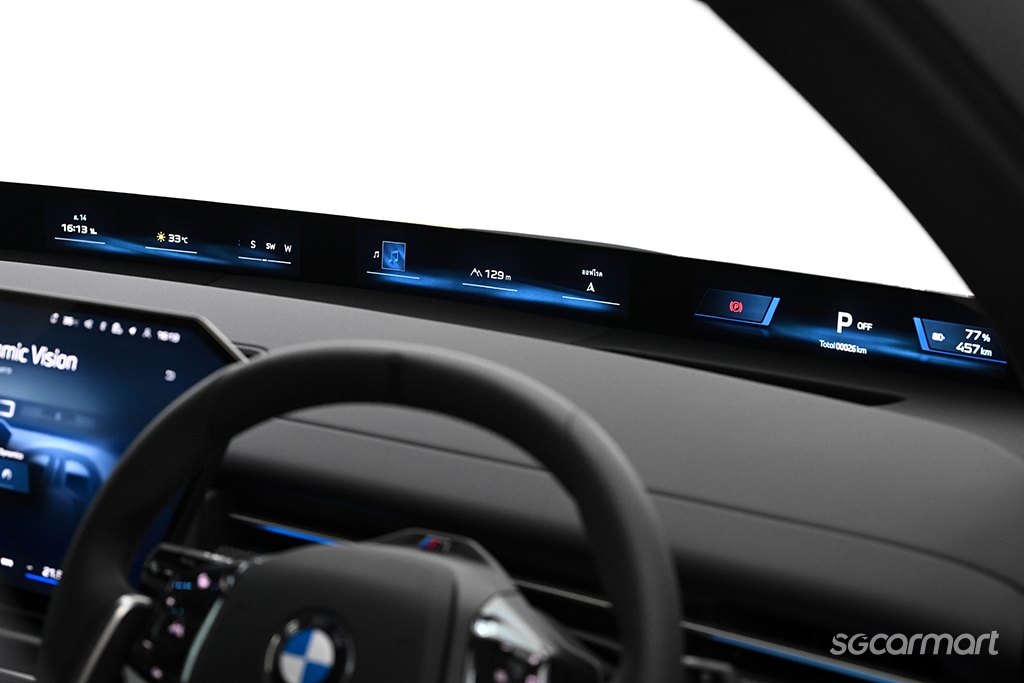
    Navigation instructions appear directly ahead of the driver, making unfamiliar roads easier to navigate

    Above it sits a 3D head-up display capable of projecting navigation cues directly onto the road ahead. On unfamiliar roads around Pathum Thani, that proved genuinely useful.

    The central touchscreen remains within easy reach of the driver, supported by QuickSelect widgets designed to reduce menu diving. BMW refers to this approach as "Shy Tech", technology that remains available without constantly demanding interaction.

    Physical controls haven't disappeared entirely either. Volume functions, wiper controls and gear selection still retain tangible interfaces. That may not sound revolutionary, but it makes everyday interactions feel more straightforward.

    BMW says the system was informed by data collected from more than 10 million connected vehicles and extensive customer studies. Whether that guarantees good design is another question entirely. Plenty of products are developed using vast amounts of data and still end up frustrating people. From what we experienced during the drive, however, the system felt surprisingly easy to adapt to.

    Performance without the drama

    Most modern EVs are fast.

    That's no longer a distinguishing feature. What matters more is how effortlessly they deliver that performance. BMW used Pathum Thani Speedway to demonstrate what it calls the Heart of Joy, one of four high-performance computers responsible for managing key vehicle functions.

    The technical explanation is lengthy. The driving experience isn't. The car simply responds quickly.
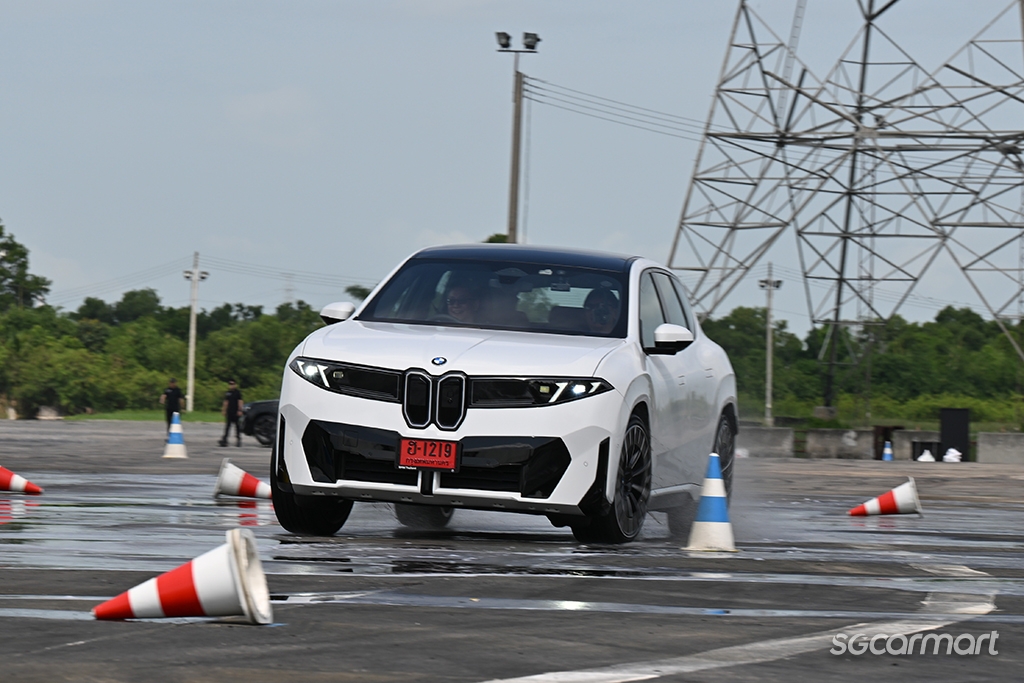
    Pathum Thani Speedway provided a controlled environment to explore the iX3's new Heart of Joy control system and its impact on steering, braking and throttle responses

    Throttle inputs feel immediate. Steering responses feel natural. Brake inputs produce smooth, predictable results. BMW says the system processes information 10 times faster than conventional control units. That's not something you can verify from behind the wheel, but the vehicle does feel unusually cohesive, as though its major systems are working together rather than independently.

    With 345kW and 645Nm from its dual-motor all-wheel-drive setup, the iX3 reaches 100km/h in 4.9 seconds. Quick acceleration is no longer unusual in the EV world. What impressed me more was how composed the vehicle remained when changing direction at speed.

    The brake calibration deserves particular praise. Many electric vehicles still struggle to deliver smooth transitions between regenerative braking and conventional braking. Throughout the drive, the iX3 handled that transition with very little fuss.

    Time matters

    One of the biggest barriers to EV adoption remains the perception that life has to revolve around charging.

    The iX3's WLTP-rated range of up to 805km goes a long way towards reducing that concern, at least on paper. Even allowing for the inevitable gap between laboratory testing and real-world usage, that's a substantial figure. For drivers in Singapore, it means charging becomes something you think about less often. Regional journeys also become easier to contemplate.
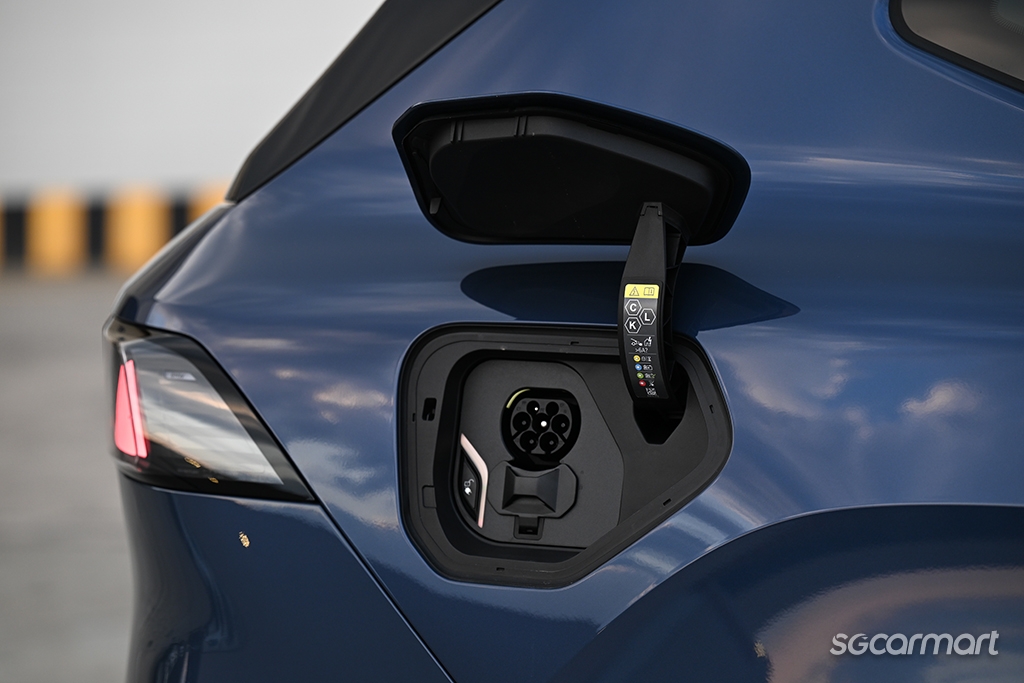
    With a claimed 805km WLTP range and rapid charging capability, the iX3 is designed to reduce the planning often associated with EV ownership

    Charging performance appears equally competitive. BMW claims a 10-minute stop at an 800V DC charger can add up to 372km of range, while a charge from 10% to 80% takes approximately 21 minutes. The battery uses cylindrical cells integrated directly into the pack, while the pack itself forms part of the vehicle structure. According to BMW, the result is improved energy density and greater efficiency. The engineering is impressive, but what matters most is the outcome.

    Less time charging.

    Less time planning.

    More time simply getting on with the journey.

    Safety and sustainability

    Safety remains non-negotiable. Sustainability is becoming increasingly important too.

    The iX3 achieved a five-star Euro NCAP rating under the updated 2026 testing standards, making it one of the first vehicles assessed under the stricter protocols. That result feels particularly relevant in cities such as Bangkok, where motorcycles, cyclists and pedestrians often share the same limited road space. Euro NCAP also highlighted the iX3's strong performance in crash-avoidance scenarios involving vulnerable road users, including pedestrians and cyclists.

    Sustainability also featured heavily throughout BMW's presentations. Normally, this part of a vehicle launch tends to blur into the background. Every manufacturer now talks about emissions reductions and recycled materials. The figures presented here felt more substantial than the usual talking points.

    According to BMW, the iX3's overall product carbon footprint across 200,000km is 34% lower than its predecessor. Around one-third of the vehicle incorporates secondary materials, including recycled PET, recycled plastics and aluminium with significant recycled content. Whether that influences a purchase decision will vary from buyer to buyer. For those paying attention to how vehicles are made as well as how they perform, BMW appears to have invested considerable effort here.

    So what's it like?

    Stepping out of the iX3 at the end of the programme, I found myself thinking less about individual specifications and more about the overall experience. The technology faded into the background surprisingly quickly. The cabin was comfortable, while performance felt effortless. Nothing felt as though it demanded attention for the sake of it.

    In Singapore, the BMW iX3 50 xDrive M Sport is priced from $389,888. That places it firmly in premium territory, where buyers are likely to judge it not simply on range or performance, but on how well it fits into daily life.
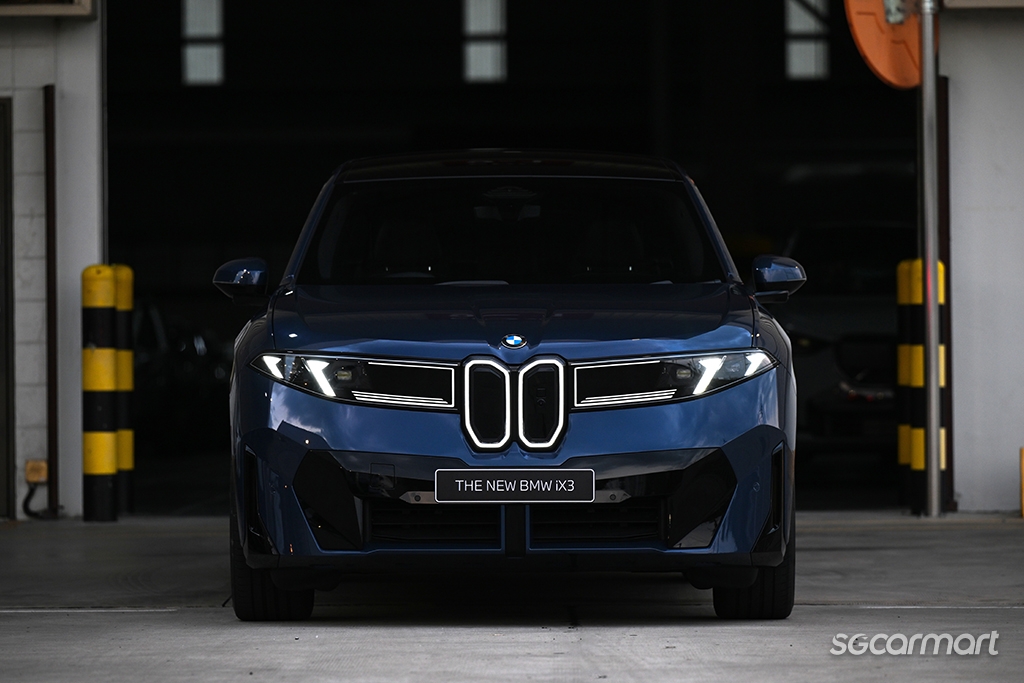
    The iX3 marks the beginning of BMW's Neue Klasse era, with a design that prioritises simplicity and everyday usability over visual drama

    The strongest impression wasn't any single feature. It was how little compromise the car seemed to ask from its driver.

    The cabin is spacious without feeling overwhelming. The technology is advanced without constantly demanding interaction. The range and charging figures suggest EV ownership should require less planning than it once did.

    BMW chose Bangkok as the backdrop for this drive because few cities better illustrate the demands placed on drivers today—busy schedules, crowded roads and never quite enough time. The iX3 makes a convincing case for itself. Not because it reinvents the car, but because it feels designed to fit into everyday life rather than demanding that drivers adapt to it.


    Freelancer
    Story by Lance Lim in Bangkok, Thailand
    I've been writing about cars for many years, and I wonder if I'm getting any better at it.
    24.4k

    Tags

    overseas drives bmw bmw ix3 ev electric suv ix3 ix3 suv all electric bmw neue klasse bmw neue klasse ix3 neue klasse

    Newsletter

    Be Notified On The Latest News

    Newsletter

    Be Notified On The Latest News

    Related Articles

    Should I buy a car in July / August / September 2026?

    Should I buy a car in July / August / September 2026?

    16 noteworthy production models at the 2026 Auto Beijing!

    16 noteworthy production models at the 2026 Auto Beijing!

    Opinion: Why do we even need green number plates?

    Opinion: Why do we even need green number plates?

    Us against the world: Which is the best off-roader?

    Us against the world: Which is the best off-roader?

    The all new XPENG Mona L03 is one smart coupe SUV

    The all new XPENG Mona L03 is one smart coupe SUV

    Ferrari 849 Testarossa Spider - with the sky included

    Ferrari 849 Testarossa Spider - with the sky included

    The 5 main things you must know about the XPENG L03

    The 5 main things you must know about the XPENG L03

    Ferrari 849 Testarossa Spider: What you must know

    Ferrari 849 Testarossa Spider: What you must know

    Related Articles

    Should I buy a car in July / August / September 2026?

    Should I buy a car in July / August / September 2026?

    16 noteworthy production models at the 2026 Auto Beijing!

    16 noteworthy production models at the 2026 Auto Beijing!

    Opinion: Why do we even need green number plates?

    Opinion: Why do we even need green number plates?

    Us against the world: Which is the best off-roader?

    Us against the world: Which is the best off-roader?

    The all new XPENG Mona L03 is one smart coupe SUV

    The all new XPENG Mona L03 is one smart coupe SUV

    Ferrari 849 Testarossa Spider - with the sky included

    Ferrari 849 Testarossa Spider - with the sky included

    The 5 main things you must know about the XPENG L03

    The 5 main things you must know about the XPENG L03

    Ferrari 849 Testarossa Spider: What you must know

    Ferrari 849 Testarossa Spider: What you must know

    You May Also Like

    The BYD Sealion 8 seven-seater SUV arrives in Singapore

    The BYD Sealion 8 seven-seater SUV arrives in Singapore

    New cars are safer: Opt for one when you can

    New cars are safer: Opt for one when you can

    Maxus MIFA 7 Elite: Going big for the little moments

    Maxus MIFA 7 Elite: Going big for the little moments

    Sgcarmart Explores: Bras Basah!

    Sgcarmart Explores: Bras Basah!

    Is parallel import hesitancy growing among car buyers?

    Is parallel import hesitancy growing among car buyers?

    The all new XPENG Mona L03 is one smart coupe SUV

    The all new XPENG Mona L03 is one smart coupe SUV

    Don't get yourself trapped in your high-tech EV

    Don't get yourself trapped in your high-tech EV

    Opinion: Why do we even need green number plates?

    Opinion: Why do we even need green number plates?

    The rise of PHEVs: A closer look at the numbers

    The rise of PHEVs: A closer look at the numbers

    Hongqi Singapore opens its showroom doors

    Hongqi Singapore opens its showroom doors

    Must-Have Car Accessories Every EV Driver Should Own

    Must-Have Car Accessories Every EV Driver Should Own

    Ferrari 849 Testarossa Spider - with the sky included

    Ferrari 849 Testarossa Spider - with the sky included

    Sgcarmart Explores: East Coast Park!

    Sgcarmart Explores: East Coast Park!

    Sgcarmart Explores: Holland Village!

    Sgcarmart Explores: Holland Village!

    Tesla launches Model Y L in Singapore, first six-seater here

    Tesla launches Model Y L in Singapore, first six-seater here

    Mercedes-Benz GLB250+ Review

    Mercedes-Benz GLB250+ Review

    You May Also Like

    The BYD Sealion 8 seven-seater SUV arrives in Singapore

    The BYD Sealion 8 seven-seater SUV arrives in Singapore

    New cars are safer: Opt for one when you can

    New cars are safer: Opt for one when you can

    Maxus MIFA 7 Elite: Going big for the little moments

    Maxus MIFA 7 Elite: Going big for the little moments

    Sgcarmart Explores: Bras Basah!

    Sgcarmart Explores: Bras Basah!

    Is parallel import hesitancy growing among car buyers?

    Is parallel import hesitancy growing among car buyers?

    The all new XPENG Mona L03 is one smart coupe SUV

    The all new XPENG Mona L03 is one smart coupe SUV

    Don't get yourself trapped in your high-tech EV

    Don't get yourself trapped in your high-tech EV

    Opinion: Why do we even need green number plates?

    Opinion: Why do we even need green number plates?

    The rise of PHEVs: A closer look at the numbers

    The rise of PHEVs: A closer look at the numbers

    Hongqi Singapore opens its showroom doors

    Hongqi Singapore opens its showroom doors

    Must-Have Car Accessories Every EV Driver Should Own

    Must-Have Car Accessories Every EV Driver Should Own

    Ferrari 849 Testarossa Spider - with the sky included

    Ferrari 849 Testarossa Spider - with the sky included

    Sgcarmart Explores: East Coast Park!

    Sgcarmart Explores: East Coast Park!

    Sgcarmart Explores: Holland Village!

    Sgcarmart Explores: Holland Village!

    Tesla launches Model Y L in Singapore, first six-seater here

    Tesla launches Model Y L in Singapore, first six-seater here

    Mercedes-Benz GLB250+ Review

    Mercedes-Benz GLB250+ Review