SMRT offers amnesty for rail staff who own up to lapses
03 Nov 2017|1,042 views
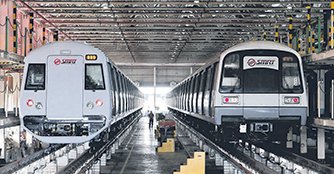
SMRT has asked rail staff to step forward and own up if they have been cutting corners in their work and assured them they will not be penalised if they admit to any breaches during this 'amnesty' period, which ends on Friday (3rd November). Once the amnesty period ends, SMRT's internal audit will conduct a wide-scale inspection and audit, and lapses discovered then will be penalised.
SMRT Group Chief Executive Desmond Kuek said the company does not condone any wrongdoing. "In order to quickly establish (the) extent of such improper practices, an amnesty period was allowed for staff to volunteer information in open reporting as a mitigation against further disciplinary action," Mr. Kuek added.
The move follows Tuesday's (31st October) revelation that some employees responsible for maintaining the pumps of a storm water pit had signed off on work that was not done. It is suspected that the falsification of the quarterly maintenance records went back as far as December last year. The manager and staff responsible have been suspended and are assisting in investigations, while SMRT also replaced its Vice President of Maintenance a week after the flooding, which caused train services to be down for about 20 hours over two days in October.
National University of Singapore transport researcher Lee Der-Horng was not in favour of the 'amnesty' approach. He felt it would be more effective to conduct checks and identify problem areas and staff. But an experienced auditor, who spoke on condition of anonymity, said of the amnesty process, "The objective is to get to the nub of the problems as fast as you can." "If you do an extensive audit, it takes time. In the meantime, for example, if the train breaks down because of a lack of maintenance, even though it was supposed to have been serviced regularly, it creates a bigger issue. Once this is tackled, then we can deal with accountability," he added.
Mr. Yee Chia Hsing, a member of the Government Parliamentary Committee for Transport, said, "I can understand that some people may think that giving an amnesty is letting the staff off too easily." "However, if we want to work towards an outcome of upping the standard of maintenance, and given it is easier for people to own up and report rather than for the audit inspection team to discover the non-compliance, I can understand their rationale for doing this," he added.
SMRT has asked rail staff to step forward and own up if they have been cutting corners in their work and assured them they will not be penalised if they admit to any breaches during this 'amnesty' period, which ends on Friday (3rd November). Once the amnesty period ends, SMRT's internal audit will conduct a wide-scale inspection and audit, and lapses discovered then will be penalised.
SMRT Group Chief Executive Desmond Kuek said the company does not condone any wrongdoing. "In order to quickly establish (the) extent of such improper practices, an amnesty period was allowed for staff to volunteer information in open reporting as a mitigation against further disciplinary action," Mr. Kuek added.
The move follows Tuesday's (31st October) revelation that some employees responsible for maintaining the pumps of a storm water pit had signed off on work that was not done. It is suspected that the falsification of the quarterly maintenance records went back as far as December last year. The manager and staff responsible have been suspended and are assisting in investigations, while SMRT also replaced its Vice President of Maintenance a week after the flooding, which caused train services to be down for about 20 hours over two days in October.
National University of Singapore transport researcher Lee Der-Horng was not in favour of the 'amnesty' approach. He felt it would be more effective to conduct checks and identify problem areas and staff. But an experienced auditor, who spoke on condition of anonymity, said of the amnesty process, "The objective is to get to the nub of the problems as fast as you can." "If you do an extensive audit, it takes time. In the meantime, for example, if the train breaks down because of a lack of maintenance, even though it was supposed to have been serviced regularly, it creates a bigger issue. Once this is tackled, then we can deal with accountability," he added.
Mr. Yee Chia Hsing, a member of the Government Parliamentary Committee for Transport, said, "I can understand that some people may think that giving an amnesty is letting the staff off too easily." "However, if we want to work towards an outcome of upping the standard of maintenance, and given it is easier for people to own up and report rather than for the audit inspection team to discover the non-compliance, I can understand their rationale for doing this," he added.

Latest COE Prices
July 2026 | 1st BIDDING
NEXT TENDER: 22 Jul 2026
CAT A$129,000
CAT B$130,889
CAT C$95,000
CAT E$129,801
View Full Results Thank You For Your Subscription.