View page in desktop
|
Report error
  •   Apple app store icon
  • Google play store icon
Terms of Service
|
Privacy Policy
|
PDPA
|
Site Map
|
Whistleblowing Portal
©2004-2026 Sgcarmart, Singapore. All rights reserved.
  • Home
  • Car Articles
  • features
  • features Listings
  • Features
  • Smart Fortwo Electric Drive - how practical is it for our little sunny island?

    05 Apr 2012

    |

    8,782 views

    With the hype about electric vehicles, we find out if they are as practical as their petrol brethrens on our local roads.


    Smart – A brief introduction

    Smart may be a brand that is foreign to those who are less automobile-inclined. The European marque is actually an automotive branch of Daimler AG, the same people who brings us Mercedes-Benz. Devised as a manufacturer of micro-cars, Smart’s initial portfolio includes the City Coupe and City Cabrio, which was in production from 1998 to 2000. A handful might also remember the funky-looking Smart roadster which made its world premiere in 2003.

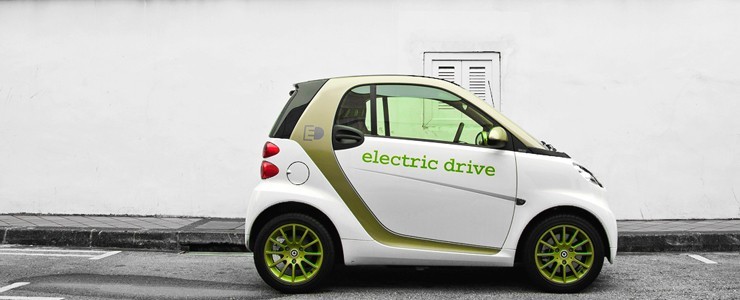
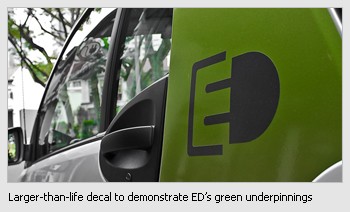
    In 2004 the City Coupe and City Cabrio were renamed Fortwo (a perfect name since it seats two only). The Fortwo was given a revamp in 2008, with a newly-engineered Electric Drive (ED) variant, running purely on electricity. The Fortwo ED was first launched in European and North American cities. Visually, the Smart petrol and ED variants look identical, with only the “plug-in” logo on the ED’s C-pillar to tell them apart.

    Is Electric the way to go?

    When it comes to electric vehicles, it seems that people are more interested in the range rather than outright speed. On paper, a full charge will allow the ED to cover around 135km, which theoretically, is more than enough to cover our island spanning 45km at its widest. Figures from the local authorities have also shown that the average commuter travels around 50km in a day. Sounds like the ED is good to go?
    For sprints off the line, the 30kW electric motor sending motion via the rear wheels will propel the ED from naught to 60km/h in 6.5 seconds. Flat-out, the puny city car will reach just north of 100km/h, but only if you squeeze every ounce of power available from the electric motor.

    Instead of the pump-and-go experience that local motorists are so used to with the petrol-driven automobiles, the ED will require a lengthy eight hours for a full-charge, or 3.5 hours for a 60% ‘refuel’ in quick-charge mode. In this sense, it does require some careful planning for errands-running, which means no supper trip to the bah-chor mee store on the next street if the ED is dry and drinking at its charging dock for the night.

    In reality, otherwise, the car is pretty much as claimed - our test car returns with 117km on the clock with 10% power left on the batteries, which is not too distant from the figures on the brochure.

    A Lamb in the Lion’s den

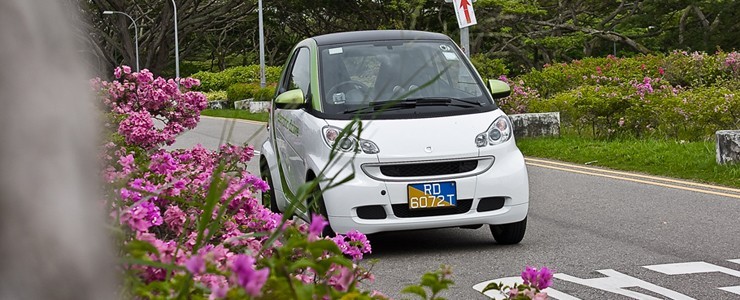
    Driving on our roads, it is without doubt that the ED is one of the smallest, if not the tiniest, box of metal on fours. Where in the city the ED enjoys absolute ease buzzing through tight corners or small parking lots, it does feel a tad intimidated when met with the behemoths of our road – 18-wheelers for instance.

    High-speed cruising, too, may not be the car’s strength. Surprisingly however, the micro-car feels much at ease travelling at just below our highway speed limits, with negligible road and wind noise penetrating the cabin, a stark contrast from what you would expect from a car this small and tall.
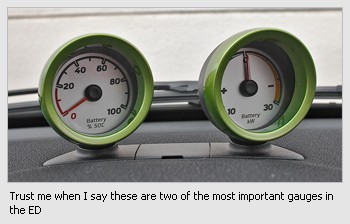
    A peek into the cabin reveals that the ED was designed with practicality as the top priority. Clever engineering and careful pre-planning mean that the battery pack fills the space between the axles – where the fuel tank is located on the petrol-driven models. A closer look at the interior further proves that the designers are mind-blogged on fuss-free motoring – radio and air-conditioning are operated using the most basic forms of turn knobs and switches. Even the wing mirror controls are manual – all in the mind of saving precious electricity.

    A simplistic analogue speedometer takes centre stage in the driver console, flanked by a handful of warning lights such as the handbrake signal. All these add up to a driving experience that is more closely related to that of a buggy, especially so with the restricted ergonomics in the ED (with the fixed steering column, all you do is get in and drive off – the same way in a buggy).

    Electric ≠ Saving Gaia
    Many equate the use of electric substitutes for our daily commutes to saving the Earth. In local context, the truth is however that such a move is merely a shift of the source of pollution (we get our daily supply of the invisible energy via the burning of fossil fuel). More effectively, what electric cars can do is to reduce harmful emission in urban areas.

    Electric cars have a heavier reliance on ‘refuel’ stations - they spend more relatively more time to get their recharge than fuel-powered alternatives. In addition, with most of the local population inhabiting high-rise flats, the practicality of having an electric car locally thus lie heavily on the availability of support infrastructure. If however, you are the lucky few with charging docks situated at your office basement, and if you are travelling alone or at most in pairs, the ED provides a reliable, fuss-free form of transport.

    Nicholas Low
    Text and Photos by Nicholas Low
    Writing may be my thing, but cars, well, that's just pure passion that I simply cannot get rid off.
    24.4k

    Tags

    smart fortwo smart fortwo smart ed electric drive smart fortwo ed smart fortwo electric drive singapore

    AllReviewsNewsAdviceFeaturesVideos
    • Home
    • Car Articles
    • features
    • features Listings
    • Features

    Smart Fortwo Electric Drive - how practical is it for our little sunny island?

    05 Apr 2012

    |

    8,782 views

    With the hype about electric vehicles, we find out if they are as practical as their petrol brethrens on our local roads.


    Smart – A brief introduction

    Smart may be a brand that is foreign to those who are less automobile-inclined. The European marque is actually an automotive branch of Daimler AG, the same people who brings us Mercedes-Benz. Devised as a manufacturer of micro-cars, Smart’s initial portfolio includes the City Coupe and City Cabrio, which was in production from 1998 to 2000. A handful might also remember the funky-looking Smart roadster which made its world premiere in 2003.

    In 2004 the City Coupe and City Cabrio were renamed Fortwo (a perfect name since it seats two only). The Fortwo was given a revamp in 2008, with a newly-engineered Electric Drive (ED) variant, running purely on electricity. The Fortwo ED was first launched in European and North American cities. Visually, the Smart petrol and ED variants look identical, with only the “plug-in” logo on the ED’s C-pillar to tell them apart.


    Is Electric the way to go?

    When it comes to electric vehicles, it seems that people are more interested in the range rather than outright speed. On paper, a full charge will allow the ED to cover around 135km, which theoretically, is more than enough to cover our island spanning 45km at its widest. Figures from the local authorities have also shown that the average commuter travels around 50km in a day. Sounds like the ED is good to go?

    For sprints off the line, the 30kW electric motor sending motion via the rear wheels will propel the ED from naught to 60km/h in 6.5 seconds. Flat-out, the puny city car will reach just north of 100km/h, but only if you squeeze every ounce of power available from the electric motor.

    Instead of the pump-and-go experience that local motorists are so used to with the petrol-driven automobiles, the ED will require a lengthy eight hours for a full-charge, or 3.5 hours for a 60% ‘refuel’ in quick-charge mode. In this sense, it does require some careful planning for errands-running, which means no supper trip to the bah-chor mee store on the next street if the ED is dry and drinking at its charging dock for the night.

    In reality, otherwise, the car is pretty much as claimed - our test car returns with 117km on the clock with 10% power left on the batteries, which is not too distant from the figures on the brochure.


    A Lamb in the Lion’s den

    Driving on our roads, it is without doubt that the ED is one of the smallest, if not the tiniest, box of metal on fours. Where in the city the ED enjoys absolute ease buzzing through tight corners or small parking lots, it does feel a tad intimidated when met with the behemoths of our road – 18-wheelers for instance.

    High-speed cruising, too, may not be the car’s strength. Surprisingly however, the micro-car feels much at ease travelling at just below our highway speed limits, with negligible road and wind noise penetrating the cabin, a stark contrast from what you would expect from a car this small and tall.

    A peek into the cabin reveals that the ED was designed with practicality as the top priority. Clever engineering and careful pre-planning mean that the battery pack fills the space between the axles – where the fuel tank is located on the petrol-driven models. A closer look at the interior further proves that the designers are mind-blogged on fuss-free motoring – radio and air-conditioning are operated using the most basic forms of turn knobs and switches. Even the wing mirror controls are manual – all in the mind of saving precious electricity.

    A simplistic analogue speedometer takes centre stage in the driver console, flanked by a handful of warning lights such as the handbrake signal. All these add up to a driving experience that is more closely related to that of a buggy, especially so with the restricted ergonomics in the ED (with the fixed steering column, all you do is get in and drive off – the same way in a buggy).

    Electric ≠ Saving Gaia
    Many equate the use of electric substitutes for our daily commutes to saving the Earth. In local context, the truth is however that such a move is merely a shift of the source of pollution (we get our daily supply of the invisible energy via the burning of fossil fuel). More effectively, what electric cars can do is to reduce harmful emission in urban areas.

    Electric cars have a heavier reliance on ‘refuel’ stations - they spend more relatively more time to get their recharge than fuel-powered alternatives. In addition, with most of the local population inhabiting high-rise flats, the practicality of having an electric car locally thus lie heavily on the availability of support infrastructure. If however, you are the lucky few with charging docks situated at your office basement, and if you are travelling alone or at most in pairs, the ED provides a reliable, fuss-free form of transport.
    Nicholas Low
    Text and Photos by Nicholas Low
    Writing may be my thing, but cars, well, that's just pure passion that I simply cannot get rid off.
    24.4k

    Tags

    smart fortwo smart fortwo smart ed electric drive smart fortwo ed smart fortwo electric drive singapore

    Newsletter

    Be Notified On The Latest News

    Newsletter

    Be Notified On The Latest News

    You May Also Like

    Sgcarmart Explores: Bras Basah!

    Sgcarmart Explores: Bras Basah!

    New cars are safer: Opt for one when you can

    New cars are safer: Opt for one when you can

    Leapmotor B10: The electric SUV focused on what matters

    Leapmotor B10: The electric SUV focused on what matters

    Tesla Model 3 Facelift Review

    Tesla Model 3 Facelift Review

    The rise of PHEVs: A closer look at the numbers

    The rise of PHEVs: A closer look at the numbers

    The all new XPENG Mona L03 is one smart coupe SUV

    The all new XPENG Mona L03 is one smart coupe SUV

    Cars of 2026

    Cars of 2026

    Multi-Pathway approach: Toyota was always right

    Multi-Pathway approach: Toyota was always right

    Sgcarmart Explores: East Coast Park!

    Sgcarmart Explores: East Coast Park!

    Kia Niro Hybrid Facelift Review

    Kia Niro Hybrid Facelift Review

    BYD Atto 3 Evo Facelift Review

    BYD Atto 3 Evo Facelift Review

    Lexus ES350h Hybrid Review

    Lexus ES350h Hybrid Review

    BYD Sealion 8 DM-i Review

    BYD Sealion 8 DM-i Review

    Mercedes-Benz GLC Electric Review

    Mercedes-Benz GLC Electric Review

    Don't get yourself trapped in your high-tech EV

    Don't get yourself trapped in your high-tech EV

    Hongqi Singapore opens its showroom doors

    Hongqi Singapore opens its showroom doors

    Related Articles

    Opinion: Is it time for a change to our road traffic laws?

    Opinion: Is it time for a change to our road traffic laws?

    Should I buy a car in July / August / September 2026?

    Should I buy a car in July / August / September 2026?

    16 noteworthy production models at the 2026 Auto Beijing!

    16 noteworthy production models at the 2026 Auto Beijing!

    Opinion: Why do we even need green number plates?

    Opinion: Why do we even need green number plates?

    Why AVATR's European expansion matters for Singapore

    Why AVATR's European expansion matters for Singapore

    Mycarforum pays Aion a visit!

    Mycarforum pays Aion a visit!

    Reimagined retro icons electrify Paris Motor Show

    Reimagined retro icons electrify Paris Motor Show

    BYD Ti7 First Drive: Rise of the urban adventure SUV

    BYD Ti7 First Drive: Rise of the urban adventure SUV