The BMW Group is using a new Augmented Reality (AR) application in vehicle concept and prototype engineering, speeding up the process by as much as 12 months, from individual vehicle sections through to complex production stages.
AR goggles allow real geometries - on a vehicle body, for instance - to be overlaid with true-to-scale holographic 3D models, so a range of concept variants and assembly processes for future series vehicles can be assessed flexibly and cost-efficiently.
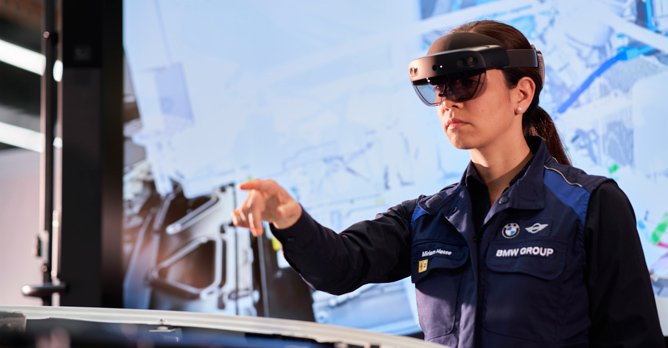

Computer Aided Design files of components are drag-and-dropped from the web-based database to the AR goggles, which the specialists can then use to reproduce the data in 3D and their original size in a realistic environment.
The AR application is controlled by hand, allowing direct interaction with virtual components.
With the AR application, a simple hand movement is enough to modify not only the size but also the position and angle of components. In addition, cross-sections can be created to provide a view of the vehicle's inner structures. Another advantage is the collaborative working: People at different locations around the world can now employ multi-user mode to team up and review designs and concepts together, and identify any errors.