View page in desktop
|
Report error
  •   Apple app store icon
  • Google play store icon
Terms of Service
|
Privacy Policy
|
PDPA
|
Site Map
©2004-2026 Sgcarmart, Singapore. All rights reserved.
  • Home
  • Car Articles
  • advice
  • advice Listings
  • Car Buying Advice
  • Can you actually save money by buying a hybrid car?

    16 Apr 2020

    |

    14,930 views

    With the economy now taking a nosedive and fuel prices collapsing, is buying a hybrid the most sensible option? We break down the costs to see what will make best use of your money!


    You see them everywhere, being driven by private-hire firms and as part of taxi fleets, and for good reason: Hybrids are monumental at saving fuel. But what if you're not spending the entire day crunching miles?

    With fuel prices at an all-time low, we take this opportunity to reassess if they still remain the penny-pinching machines we love!

    Circuit breaker or bank-breaker?
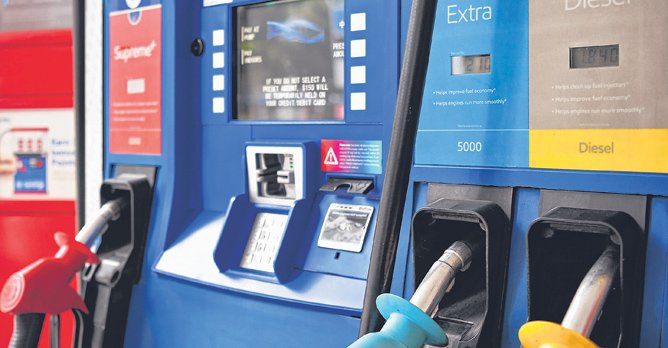
    With petrol prices at an all-time low, we look at whether purchasing a hybrid is still the shrewd choice it once was
    A few important thing to note before we move on: Since this comparison is being done simply to see if you still ought to shop for a hybrid despite the record low fuel prices, we will be simply drawing down the difference in prices from the difference in fuel costs between the respective hybrid and non-hybrid versions of the cars in order to demonstrate their differences in the breakeven period.

    Of course, in the real world, this breakeven period can still differ due to a multitude of reasons including differences in brake pad wear and oil change intervals (if any).

    All comparisons will be using the current price of petrol of $2.09 per litre for RON 95 for all retailers (as of 14 April 2020, obtained from Fuel Kaki's website here) before any discounts.

    The affordable hybrid

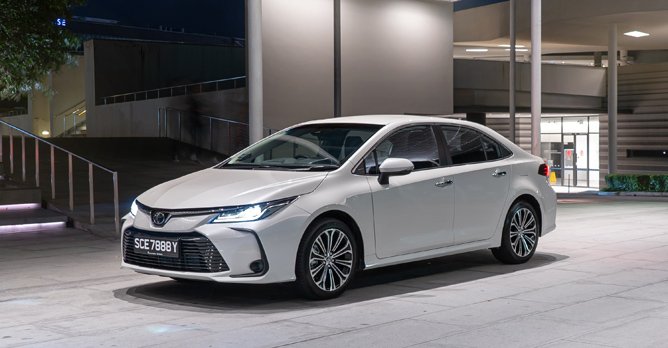
    First up, we have the bread-and-butter hybrids, and representing this segment we have opted to draw a comparison between the recently-launched Toyota Corolla Altis Hybrid and its non-hybrid variant, the Toyota Corolla Altis Elegance. For this comparison we are using the tested fuel consumption figures obtained during our test drives of both cars.

    Car modelToyota Corolla Altis 1.6 EleganceToyota Corolla Altis Hybrid 1.8
    Price$99,888$115,888
    Fuel Consumption
    13.3km/L20km/L
    Cost per 100km7.5L/100km x $2.09 = $15.675L/100km x $2.09 = $10.45
     
    Purchase price difference$115,888 - $99,888 = $16,000
    Fuel economy difference (per 100km)$15.67 - $10.45 = $5.22
    Breakeven mileage$16,000 / $5.22 = 306,513km
     
    Should you opt for the hybrid or non-hybrid variants of the Toyota Corolla Altis? We break down the fuel costs for you!
    With petrol prices at a low of $2.09 a litre, a price difference of $16,000 will give you a breakeven mileage of 306,513km.

    Now that might seem like a lot of fuel and driving, so for comparison we have divided the mileage by the average distance covered by a private car in Singapore, which, at 17,500km, gives you an average ownership span of 17 years and six months before that breakeven period. Hardly worth the wait.

    The luxury and performance hybrid

    But what if you're shopping for a different kind of hybrid? Perhaps something a little more luxurious or sporty? For this comparison, we use Porsche's own fuel and electrical energy consumption figures for the Porsche Panamera PDK and the Porsche Panamera E-Hybrid 4 PDK respectively, both base models of their respective lineup.

    Car ModelPorsche Panamera PDK 3.0 Porsche Panamera E-Hybrid 4 PDK 3.0
    Purchase Price$370,388$425,788
    Fuel consumption13.1 km/L or 7.6L/100km40 km/L or 2.5L/100km
    Electrical energy consumption-15.9kWh/100km
    Cost per 100km7.6 x $2.09/L = $15.882.5 x $2.09/L = $5.22
    15.9kWh x $0.24/kWh = $3.81
    $5.22 + $3.81 = $9.03

    Purchase price difference$425,788 - $370,388 = $55,400
    Fuel economy difference (per 100km)$15.88 - $9.03 = $6.85
    Breakeven mileage$55,400 / $6.85 = 808,759km


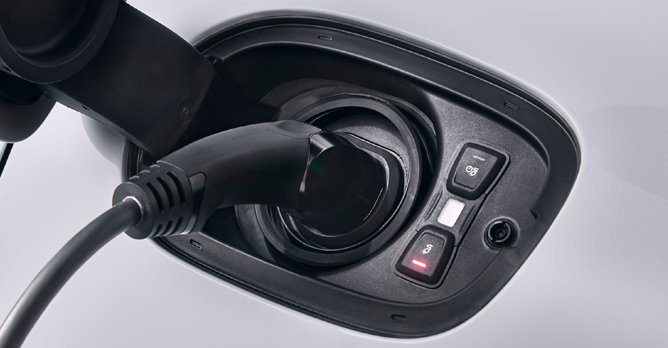
    Vast difference in per kWh cost at different charging stations mean that the recharging costs for a plug-in hybrid can vary greatly
    Are hybrid options at the other end of the market an inexpensive option to squeeze out more power from your ride? Looking at that breakeven mileage, the answer is clearly no.

    Once again, if we divide that mileage by the average amount travelled by a Singaporean private car, we get a breakeven period of approximately 46 years. You are clearly still paying for any additional power you get from the hybrid versions of your performance and luxury vehicles.

    But there's more that can be leaned here. Comparing the consumption figures provided by Porsche and multiplying them against current prices for fuel and electricity, we can see that the cost per 100km is split near even between petrol and electricity.

    What this means is that even if fuel prices return to $2.30 per litre, you will only be adding $0.53 dollars to each 100km travelled, as long as you keep your battery charged.


    It will take a long time for the Porsche Panamera E-Hybrid 4 PDK 3.0 to claw back its extra cost with its fuel economy savings
    But here's where you can make a real difference: The source and price of your electricity. The cost prices used above are the stated electricity prices for residential consumers from the Energy Market Authority, i.e., they are the per kWh cost you can expect to pay when charging at a domestic wallbox from your home.

    A quick survey via the Greenlots charging app, however, reveals that you can find charging costs as low as $1.50 per hour at a Type 2 charging station, (equating to around $0.20 per kWh of real world charging) as well as fast charging lots, which will cost up to $0.55 per kWh of charging.

    For comparison, charging exclusively at that fast charging rate will mean a total of $13.97 per 100km for the energy consumption rates of the Porsche Panamera E-Hybrid 4 PDK 3.0, a paltry saving against the non-hybrid Porsche Panamera PDK 3.0's $15.88.

    What about something different?

    Well, consider this: Hybrid technology has made great strides since the first Honda Insight and the Toyota Prius, to the effect that there are now also hybrids available for those unwilling to pay a larger upfront cost.

    For example, the Subaru Forester e-Boxer is currently available from just $119,800, a mere $5,000 above the non-hybrid Subaru Forester 2.0i-S EyeSight-equipped equivalent. We use Subaru's official consumption figures for this comparison.

    Car modelSubaru Forester 2.0i-S EyeSightSubaru Forester e-BOXER Mild Hybrid 2.0i-S EyeSight
    Price$114,800$119,800
    Fuel Consumption13.5 km/L14.9 km/L
    Cost per 100km7.4L/100km x $2.09 = $15.466.7km/L x $2.09 = $14

    Purchase price difference$119,800 - $114,800 = $5,000
    Fuel economy difference (per 100km)$15.46 - $14 = $1.46
    Breakeven mileage$5,000 / $1.46 = 342,465km

    Unfortunately, even despite the reduction in upfront cost price difference, the breakeven mileage is still a hardly achievable 342,465km, given the equally significant cut in cost savings per kilometer against the pair of Toyotas.

    Other fringe benefits

    Owning a plug-in hybrid could save you precious time looking for a parking lot
    Of course, saving money isn't the end of it all. If you're considering between buying a hybrid and non-hybrid car, you'll also want to think about the many fringe benefits that hybrids cars can bring.

    These include the option of utilising green parking lots, the greater range extending your time between each trip to the fuel pump, as well as the fact that their electric responsiveness gives you an edge when jostling for space in city traffic. What this all translates into is more timed saved when driving a hybrid car. Time is money, after all.

    *This article was updated on 24 April 2020 due to errors in calculation.

    Here are some related articles that might interest you

    Tips you need to know when buying a car in Singapore 

    Should you buy an electric car in Singapore right now?

    Can you actually save money by buying a hybrid car?

    Top 5 Parallel importers in Central Singapore 

    12 hybrid cars you can buy in Singapore that will save your wallet 

    Looking to get a fuel saver yourself? Why not look through our list of the best hybrids?
    Clarence Seow
    Clarence Seow
    A true epicurean, he has three pleasures: Good food, good sleep, and, of course, fun cars.
    Photos by Editorial Team
    Newslink, Porsche
    24.4k

    Tags

    hybrid car buying price breakeven period petrol prices toyota corolla altis toyota corolla altis porsche panamera porsche panamera subaru forester subaru forester

    AllReviewsNewsAdviceFeaturesVideos
    • Home
    • Car Articles
    • advice
    • advice Listings
    • Car Buying Advice

    Can you actually save money by buying a hybrid car?

    16 Apr 2020

    |

    14,930 views

    With the economy now taking a nosedive and fuel prices collapsing, is buying a hybrid the most sensible option? We break down the costs to see what will make best use of your money!


    You see them everywhere, being driven by private-hire firms and as part of taxi fleets, and for good reason: Hybrids are monumental at saving fuel. But what if you're not spending the entire day crunching miles?

    With fuel prices at an all-time low, we take this opportunity to reassess if they still remain the penny-pinching machines we love!

    Circuit breaker or bank-breaker?

    With petrol prices at an all-time low, we look at whether purchasing a hybrid is still the shrewd choice it once was
    A few important thing to note before we move on: Since this comparison is being done simply to see if you still ought to shop for a hybrid despite the record low fuel prices, we will be simply drawing down the difference in prices from the difference in fuel costs between the respective hybrid and non-hybrid versions of the cars in order to demonstrate their differences in the breakeven period.

    Of course, in the real world, this breakeven period can still differ due to a multitude of reasons including differences in brake pad wear and oil change intervals (if any).

    All comparisons will be using the current price of petrol of $2.09 per litre for RON 95 for all retailers (as of 14 April 2020, obtained from Fuel Kaki's website here) before any discounts.

    The affordable hybrid

    First up, we have the bread-and-butter hybrids, and representing this segment we have opted to draw a comparison between the recently-launched Toyota Corolla Altis Hybrid and its non-hybrid variant, the Toyota Corolla Altis Elegance. For this comparison we are using the tested fuel consumption figures obtained during our test drives of both cars.

    Car modelToyota Corolla Altis 1.6 EleganceToyota Corolla Altis Hybrid 1.8
    Price$99,888$115,888
    Fuel Consumption
    13.3km/L20km/L
    Cost per 100km7.5L/100km x $2.09 = $15.675L/100km x $2.09 = $10.45
     
    Purchase price difference$115,888 - $99,888 = $16,000
    Fuel economy difference (per 100km)$15.67 - $10.45 = $5.22
    Breakeven mileage$16,000 / $5.22 = 306,513km
     
    Should you opt for the hybrid or non-hybrid variants of the Toyota Corolla Altis? We break down the fuel costs for you!
    With petrol prices at a low of $2.09 a litre, a price difference of $16,000 will give you a breakeven mileage of 306,513km.

    Now that might seem like a lot of fuel and driving, so for comparison we have divided the mileage by the average distance covered by a private car in Singapore, which, at 17,500km, gives you an average ownership span of 17 years and six months before that breakeven period. Hardly worth the wait.

    The luxury and performance hybrid

    But what if you're shopping for a different kind of hybrid? Perhaps something a little more luxurious or sporty? For this comparison, we use Porsche's own fuel and electrical energy consumption figures for the Porsche Panamera PDK and the Porsche Panamera E-Hybrid 4 PDK respectively, both base models of their respective lineup.

    Car ModelPorsche Panamera PDK 3.0 Porsche Panamera E-Hybrid 4 PDK 3.0
    Purchase Price$370,388$425,788
    Fuel consumption13.1 km/L or 7.6L/100km40 km/L or 2.5L/100km
    Electrical energy consumption-15.9kWh/100km
    Cost per 100km7.6 x $2.09/L = $15.882.5 x $2.09/L = $5.22
    15.9kWh x $0.24/kWh = $3.81
    $5.22 + $3.81 = $9.03

    Purchase price difference$425,788 - $370,388 = $55,400
    Fuel economy difference (per 100km)$15.88 - $9.03 = $6.85
    Breakeven mileage$55,400 / $6.85 = 808,759km


    Vast difference in per kWh cost at different charging stations mean that the recharging costs for a plug-in hybrid can vary greatly
    Are hybrid options at the other end of the market an inexpensive option to squeeze out more power from your ride? Looking at that breakeven mileage, the answer is clearly no.

    Once again, if we divide that mileage by the average amount travelled by a Singaporean private car, we get a breakeven period of approximately 46 years. You are clearly still paying for any additional power you get from the hybrid versions of your performance and luxury vehicles.

    But there's more that can be leaned here. Comparing the consumption figures provided by Porsche and multiplying them against current prices for fuel and electricity, we can see that the cost per 100km is split near even between petrol and electricity.

    What this means is that even if fuel prices return to $2.30 per litre, you will only be adding $0.53 dollars to each 100km travelled, as long as you keep your battery charged.
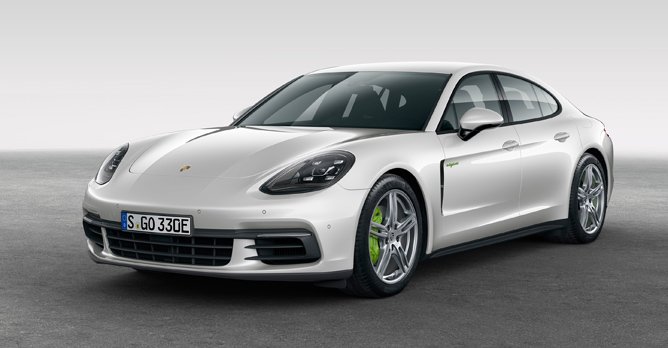

    It will take a long time for the Porsche Panamera E-Hybrid 4 PDK 3.0 to claw back its extra cost with its fuel economy savings
    But here's where you can make a real difference: The source and price of your electricity. The cost prices used above are the stated electricity prices for residential consumers from the Energy Market Authority, i.e., they are the per kWh cost you can expect to pay when charging at a domestic wallbox from your home.

    A quick survey via the Greenlots charging app, however, reveals that you can find charging costs as low as $1.50 per hour at a Type 2 charging station, (equating to around $0.20 per kWh of real world charging) as well as fast charging lots, which will cost up to $0.55 per kWh of charging.

    For comparison, charging exclusively at that fast charging rate will mean a total of $13.97 per 100km for the energy consumption rates of the Porsche Panamera E-Hybrid 4 PDK 3.0, a paltry saving against the non-hybrid Porsche Panamera PDK 3.0's $15.88.

    What about something different?

    Well, consider this: Hybrid technology has made great strides since the first Honda Insight and the Toyota Prius, to the effect that there are now also hybrids available for those unwilling to pay a larger upfront cost.

    For example, the Subaru Forester e-Boxer is currently available from just $119,800, a mere $5,000 above the non-hybrid Subaru Forester 2.0i-S EyeSight-equipped equivalent. We use Subaru's official consumption figures for this comparison.

    Car modelSubaru Forester 2.0i-S EyeSightSubaru Forester e-BOXER Mild Hybrid 2.0i-S EyeSight
    Price$114,800$119,800
    Fuel Consumption13.5 km/L14.9 km/L
    Cost per 100km7.4L/100km x $2.09 = $15.466.7km/L x $2.09 = $14

    Purchase price difference$119,800 - $114,800 = $5,000
    Fuel economy difference (per 100km)$15.46 - $14 = $1.46
    Breakeven mileage$5,000 / $1.46 = 342,465km

    Unfortunately, even despite the reduction in upfront cost price difference, the breakeven mileage is still a hardly achievable 342,465km, given the equally significant cut in cost savings per kilometer against the pair of Toyotas.

    Other fringe benefits
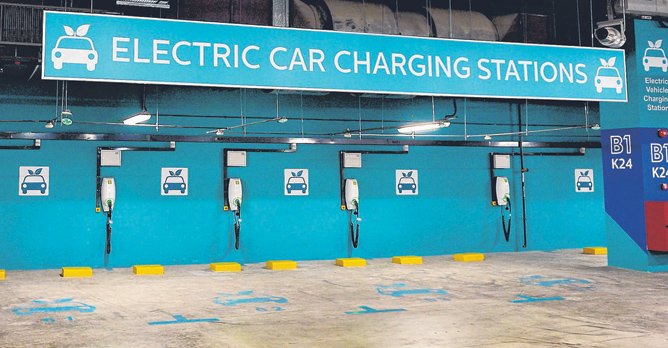
    Owning a plug-in hybrid could save you precious time looking for a parking lot
    Of course, saving money isn't the end of it all. If you're considering between buying a hybrid and non-hybrid car, you'll also want to think about the many fringe benefits that hybrids cars can bring.

    These include the option of utilising green parking lots, the greater range extending your time between each trip to the fuel pump, as well as the fact that their electric responsiveness gives you an edge when jostling for space in city traffic. What this all translates into is more timed saved when driving a hybrid car. Time is money, after all.

    *This article was updated on 24 April 2020 due to errors in calculation.

    Here are some related articles that might interest you

    Tips you need to know when buying a car in Singapore 

    Should you buy an electric car in Singapore right now?

    Can you actually save money by buying a hybrid car?

    Top 5 Parallel importers in Central Singapore 

    12 hybrid cars you can buy in Singapore that will save your wallet 

    Looking to get a fuel saver yourself? Why not look through our list of the best hybrids?

    Clarence Seow
    Clarence Seow
    A true epicurean, he has three pleasures: Good food, good sleep, and, of course, fun cars.
    Photos by Editorial Team
    Newslink, Porsche
    24.4k

    Tags

    hybrid car buying price breakeven period petrol prices toyota corolla altis toyota corolla altis porsche panamera porsche panamera subaru forester subaru forester

    Related Motor Directory Categories

      Car RentalCommercial Vehicle RentalUsed Car DealersNew Car DealersCar Leasing

    Related Motor Directory Categories

      Car RentalCommercial Vehicle RentalUsed Car DealersNew Car DealersCar Leasing

    All Advice Categories

    Car BuyingCar SellingCar OwnershipCar TechnicalCar MaintenanceMiscellaneous

    All Advice Categories

    Car BuyingCar SellingCar OwnershipCar TechnicalCar MaintenanceMiscellaneous

    You May Also Like

    Get your next rental from AKA Car Rental

    Get your next rental from AKA Car Rental

    New to driving? Here's how to become a better driver

    New to driving? Here's how to become a better driver

    Sgcarmart Explores: 2026 National Day Edition!

    Sgcarmart Explores: 2026 National Day Edition!

    Dunlop's new tyres for an electrified world

    Dunlop's new tyres for an electrified world

    Corvette Stingray Review

    Corvette Stingray Review

    Omoda & Jaecoo is forging ahead with its Super AI cockpit

    Omoda & Jaecoo is forging ahead with its Super AI cockpit

    A first look at the Sitrak Light eTruck!

    A first look at the Sitrak Light eTruck!

    The new Pirelli Cinturato Rosso with Seal Inside Tech!

    The new Pirelli Cinturato Rosso with Seal Inside Tech!

    You May Also Like

    Get your next rental from AKA Car Rental

    Get your next rental from AKA Car Rental

    New to driving? Here's how to become a better driver

    New to driving? Here's how to become a better driver

    Sgcarmart Explores: 2026 National Day Edition!

    Sgcarmart Explores: 2026 National Day Edition!

    Dunlop's new tyres for an electrified world

    Dunlop's new tyres for an electrified world

    Corvette Stingray Review

    Corvette Stingray Review

    Omoda & Jaecoo is forging ahead with its Super AI cockpit

    Omoda & Jaecoo is forging ahead with its Super AI cockpit

    A first look at the Sitrak Light eTruck!

    A first look at the Sitrak Light eTruck!

    The new Pirelli Cinturato Rosso with Seal Inside Tech!

    The new Pirelli Cinturato Rosso with Seal Inside Tech!

    Related Articles

    Opinion: Why do we even need green number plates?

    Opinion: Why do we even need green number plates?

    The BYD Sealion 8 seven-seater SUV arrives in Singapore

    The BYD Sealion 8 seven-seater SUV arrives in Singapore

    Every car in Singapore that currently has a $0 ARF

    Every car in Singapore that currently has a $0 ARF

    Which electric vehicle charging provider should you use?

    Which electric vehicle charging provider should you use?

    Leapmotor C10 Review

    Leapmotor C10 Review

    XPENG's Munich moment: The importance of the Mona L03

    XPENG's Munich moment: The importance of the Mona L03

    IM6 Luxury vs Tesla Model Y RWD 110

    IM6 Luxury vs Tesla Model Y RWD 110

    The 5 main things you must know about the XPENG L03

    The 5 main things you must know about the XPENG L03

    Related Articles

    Opinion: Why do we even need green number plates?

    Opinion: Why do we even need green number plates?

    The BYD Sealion 8 seven-seater SUV arrives in Singapore

    The BYD Sealion 8 seven-seater SUV arrives in Singapore

    Every car in Singapore that currently has a $0 ARF

    Every car in Singapore that currently has a $0 ARF

    Which electric vehicle charging provider should you use?

    Which electric vehicle charging provider should you use?

    Leapmotor C10 Review

    Leapmotor C10 Review

    XPENG's Munich moment: The importance of the Mona L03

    XPENG's Munich moment: The importance of the Mona L03

    IM6 Luxury vs Tesla Model Y RWD 110

    IM6 Luxury vs Tesla Model Y RWD 110

    The 5 main things you must know about the XPENG L03

    The 5 main things you must know about the XPENG L03