View page in desktop
|
Report error
  •   Apple app store icon
  • Google play store icon
Terms of Service
|
Privacy Policy
|
PDPA
|
Site Map
©2004-2026 Sgcarmart, Singapore. All rights reserved.
  • Home
  • Car Articles
  • features
  • features Listings
  • Features
  • Getting to know Toyota's new Prius

    22 Jan 2016

    |

    7,104 views

    We caught up with Koji Toyoshima, Chief Engineer for the Toyota Prius, to find out more about the latest version of the Japanese hybrid vehicle.


    We took a break from the hustle and bustle of the exhibition hall at the recent Singapore Motor Show 2016 and spent some time with Toyota's Chief Engineer for the fourth generation Prius, Koji Toyoshima (KT). The Toyota Prius first went on sale in Japan in 1997 and was the first mass-produced hybrid vehicle. It was subsequently introduced worldwide in 2000. The Japanese automotive manufacturer now promises better driving dynamics and fuel economy with the new Toyota Prius and here's how they have done it.

    SGCM: Like many other hybrid cars from the Lexus and Toyota, the new Prius is still equipped with a nickel hydride battery. Is there a reason why the lighter and more powerful lithium-ion battery wasn't a part of the plan for the car? Were there any issues faced?

    Mr. Toyoshima enthusiastically reveals the engineering journey of the fourth generation Prius

    KT: We have been working on the development of the lithium-ion batteries and we are trying to ensure that this type of battery is suitable for use in any part of the mold.

    We will need to conduct more research and study, especially into aspects like durability, as we don't want to cause any inconvenience to the customers.

    The reason for this is because we understand the current battery system very well and this knowledge took quite awhile to perfect. Without adequate research and development for the lithium-ion batteries, we run a risk of charging deterioration.

    If you are using a lithium-ion battery, you will need to pay more attention to the car's external environments and temperatures, especially during charging. Heat management, performance and fuel efficiency are some of the characteristics that will have to be reconsidered if we change the type of battery we use.

    Until we can confidently and perfectly control the temperature of the lithium-ion battery and its performance, we will chose to improve on the current system instead of replacing it.

    SGCM: To our understanding, the new Prius is the first model built under the Toyota's New Global Architecture (TNGA) strategy to cut development and production costs by sharing components across models. Where else will we see this platform being used?
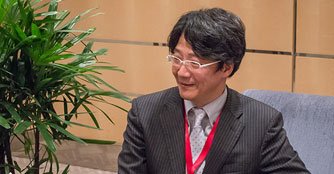
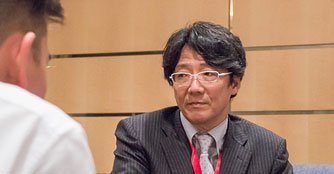
    The smile on Mr. Toyoshima's face reflects how happy he is with the handling capabilities of the new Prius

    KT: To greatly improve core vehicle performance and product appeal, the TNGA platform will also be used for compact cars like the Toyota Corolla. Globally, the Toyota Camry is also one of the targeted models that is next in line.

    SGCM: How would you respond to naysayers who claim that hybrid vehicles are not fun or perhaps even have no soul?

    KT: Well, originally in the Japanese and United States market, the people who bought the Prius primarily wanted one for its fuel efficiency.

    In my opinion, those customers who bought the Prius were happy with the amount of money it helped save on petrol. Since they achieved this objective, they have likely turned a blind eye to its driving dynamics.

    We know that things have to be continually improved and for the fourth generation Prius, we have improved its driving dynamics entirely. Of course, we still place fuel efficiency as the priority, and it is still the best, but we have worked heavily on its 'fun to drive' aspects.



    SGCM:
    Since Toyota has promised a sportier Prius in terms of handling, can you explain more on how its dynamics have been improved and do you think its target audience has shifted?
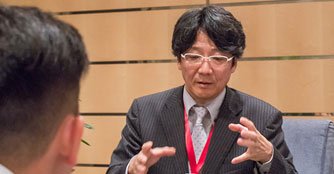
    Mr. Toyoshima explains the importance of strengthening the Prius in order for it to drive better

    KT: The first thing we did was to reduce the Prius' centre of gravity (CG). Once its CG is lowered, the car becomes more stable. We then worked on the upper body of the car. Think of it as an athlete. A sprinter for example. The strength of their legs are of utmost importance but they have to train their upper bodies as well.

    After increasing the rigity and strength of the Prius' 'upper body,' we improved on its suspension by installing a double-wishbone suspension. Better suspension means better car movement. With that, you can now drive the car in a safe manner with a peace of mind, and with comfort. The drivers who drive such cars would have less stress, and the driver can drive the car better. Who are the Prius' target audience? Everybody.

    SGCM:
    Since original target audience for the Prius heavily prioritises fuel efficiency in their cars, will there be an all-electric Prius down the road?

    KT: Toyota is looking into an all-electric Prius, but I can't reveal what stage of the development process we are at or how soon an all-electric Prius will hit the market. A lot of research and development is needed in order to make the car reliant on electricity alone.

    That is why instead of exploring the idea of an all-electric Prius, we are researching more into a hydrogen-powered one. In the broader term, the Toyota Mirai is an all-electric car but its electricty is generated from hydrogen. While the Mirai's electricity is produced by hydrogen, this hydrogen is not produce in a carbon-neutral manner.

    We can extract hydrogen from methane, but it still generates CO2. The ultimate objective is to reduce and eliminate CO2 emissions. In order to ahieve that we need to do a lot of things. This is why we are studying all electric vehicles and working on all available technologies.
    Low-spirited that he may never get to engineer a hybrid 86

    SGCM: Since we are on the topic of eco-friendly technology. Can we expect sportier variants from Toyota, such as the 86 to join the hybrid lineup as well?

    KT: A hybrid 86 is an interesting idea. We can create a product with this technology, but unfortunately it will need to make proper business sense before we can explore any further. A hybrid 86 might not speak to the majority of its target audience.

    SGCM: Seeing that you have been heavily involved in the Prius' history and creation, what were some of the feedbacks that owners of the previous generation Prius' gave about the car?

    We got all sorts of feedbacks. Some great, some not so good. The positive feedbacks were obviously its unrivalled fuel economy, quiet drive and reliable technology. Those on the negative end of things were about the car not being very fun to drive and the interior, which looked and felt cheap for the price they were paying.

    Editorial Team
    Text by Editorial Team
    Sgcarmart's Editorial Team has got plenty of soul, but none of them are soldiers. Oorah!
    Photos by Regan Ong
    24.4k

    Tags

    singapore motor show toyota toyota motor corporation toyota singapore toyota prius prius new koji toyoshima interview

    AllReviewsNewsAdviceFeaturesVideos
    • Home
    • Car Articles
    • features
    • features Listings
    • Features

    Getting to know Toyota's new Prius

    22 Jan 2016

    |

    7,104 views

    We caught up with Koji Toyoshima, Chief Engineer for the Toyota Prius, to find out more about the latest version of the Japanese hybrid vehicle.


    We took a break from the hustle and bustle of the exhibition hall at the recent Singapore Motor Show 2016 and spent some time with Toyota's Chief Engineer for the fourth generation Prius, Koji Toyoshima (KT). The Toyota Prius first went on sale in Japan in 1997 and was the first mass-produced hybrid vehicle. It was subsequently introduced worldwide in 2000. The Japanese automotive manufacturer now promises better driving dynamics and fuel economy with the new Toyota Prius and here's how they have done it.

    SGCM: Like many other hybrid cars from the Lexus and Toyota, the new Prius is still equipped with a nickel hydride battery. Is there a reason why the lighter and more powerful lithium-ion battery wasn't a part of the plan for the car? Were there any issues faced?

    Mr. Toyoshima enthusiastically reveals the engineering journey of the fourth generation Prius

    KT: We have been working on the development of the lithium-ion batteries and we are trying to ensure that this type of battery is suitable for use in any part of the mold.

    We will need to conduct more research and study, especially into aspects like durability, as we don't want to cause any inconvenience to the customers.

    The reason for this is because we understand the current battery system very well and this knowledge took quite awhile to perfect. Without adequate research and development for the lithium-ion batteries, we run a risk of charging deterioration.

    If you are using a lithium-ion battery, you will need to pay more attention to the car's external environments and temperatures, especially during charging. Heat management, performance and fuel efficiency are some of the characteristics that will have to be reconsidered if we change the type of battery we use.

    Until we can confidently and perfectly control the temperature of the lithium-ion battery and its performance, we will chose to improve on the current system instead of replacing it.

    SGCM: To our understanding, the new Prius is the first model built under the Toyota's New Global Architecture (TNGA) strategy to cut development and production costs by sharing components across models. Where else will we see this platform being used?

    The smile on Mr. Toyoshima's face reflects how happy he is with the handling capabilities of the new Prius

    KT: To greatly improve core vehicle performance and product appeal, the TNGA platform will also be used for compact cars like the Toyota Corolla. Globally, the Toyota Camry is also one of the targeted models that is next in line.

    SGCM: How would you respond to naysayers who claim that hybrid vehicles are not fun or perhaps even have no soul?

    KT: Well, originally in the Japanese and United States market, the people who bought the Prius primarily wanted one for its fuel efficiency.

    In my opinion, those customers who bought the Prius were happy with the amount of money it helped save on petrol. Since they achieved this objective, they have likely turned a blind eye to its driving dynamics.

    We know that things have to be continually improved and for the fourth generation Prius, we have improved its driving dynamics entirely. Of course, we still place fuel efficiency as the priority, and it is still the best, but we have worked heavily on its 'fun to drive' aspects.


    SGCM:
    Since Toyota has promised a sportier Prius in terms of handling, can you explain more on how its dynamics have been improved and do you think its target audience has shifted?
    Mr. Toyoshima explains the importance of strengthening the Prius in order for it to drive better

    KT: The first thing we did was to reduce the Prius' centre of gravity (CG). Once its CG is lowered, the car becomes more stable. We then worked on the upper body of the car. Think of it as an athlete. A sprinter for example. The strength of their legs are of utmost importance but they have to train their upper bodies as well.

    After increasing the rigity and strength of the Prius' 'upper body,' we improved on its suspension by installing a double-wishbone suspension. Better suspension means better car movement. With that, you can now drive the car in a safe manner with a peace of mind, and with comfort. The drivers who drive such cars would have less stress, and the driver can drive the car better. Who are the Prius' target audience? Everybody.

    SGCM:
    Since original target audience for the Prius heavily prioritises fuel efficiency in their cars, will there be an all-electric Prius down the road?

    KT: Toyota is looking into an all-electric Prius, but I can't reveal what stage of the development process we are at or how soon an all-electric Prius will hit the market. A lot of research and development is needed in order to make the car reliant on electricity alone.

    That is why instead of exploring the idea of an all-electric Prius, we are researching more into a hydrogen-powered one. In the broader term, the Toyota Mirai is an all-electric car but its electricty is generated from hydrogen. While the Mirai's electricity is produced by hydrogen, this hydrogen is not produce in a carbon-neutral manner.

    We can extract hydrogen from methane, but it still generates CO2. The ultimate objective is to reduce and eliminate CO2 emissions. In order to ahieve that we need to do a lot of things. This is why we are studying all electric vehicles and working on all available technologies.

    Low-spirited that he may never get to engineer a hybrid 86

    SGCM: Since we are on the topic of eco-friendly technology. Can we expect sportier variants from Toyota, such as the 86 to join the hybrid lineup as well?

    KT: A hybrid 86 is an interesting idea. We can create a product with this technology, but unfortunately it will need to make proper business sense before we can explore any further. A hybrid 86 might not speak to the majority of its target audience.

    SGCM: Seeing that you have been heavily involved in the Prius' history and creation, what were some of the feedbacks that owners of the previous generation Prius' gave about the car?

    We got all sorts of feedbacks. Some great, some not so good. The positive feedbacks were obviously its unrivalled fuel economy, quiet drive and reliable technology. Those on the negative end of things were about the car not being very fun to drive and the interior, which looked and felt cheap for the price they were paying.

    Editorial Team
    Text by Editorial Team
    Sgcarmart's Editorial Team has got plenty of soul, but none of them are soldiers. Oorah!
    Photos by Regan Ong
    24.4k

    Tags

    singapore motor show toyota toyota motor corporation toyota singapore toyota prius prius new koji toyoshima interview

    Newsletter

    Be Notified On The Latest News

    Newsletter

    Be Notified On The Latest News

    You May Also Like

    The BYD Sealion 8 seven-seater SUV arrives in Singapore

    The BYD Sealion 8 seven-seater SUV arrives in Singapore

    New cars are safer: Opt for one when you can

    New cars are safer: Opt for one when you can

    Maxus MIFA 7 Elite: Going big for the little moments

    Maxus MIFA 7 Elite: Going big for the little moments

    Sgcarmart Explores: Bras Basah!

    Sgcarmart Explores: Bras Basah!

    Is parallel import hesitancy growing among car buyers?

    Is parallel import hesitancy growing among car buyers?

    The all new XPENG Mona L03 is one smart coupe SUV

    The all new XPENG Mona L03 is one smart coupe SUV

    Don't get yourself trapped in your high-tech EV

    Don't get yourself trapped in your high-tech EV

    Opinion: Why do we even need green number plates?

    Opinion: Why do we even need green number plates?

    The rise of PHEVs: A closer look at the numbers

    The rise of PHEVs: A closer look at the numbers

    Must-Have Car Accessories Every EV Driver Should Own

    Must-Have Car Accessories Every EV Driver Should Own

    Hongqi Singapore opens its showroom doors

    Hongqi Singapore opens its showroom doors

    Ferrari 849 Testarossa Spider - with the sky included

    Ferrari 849 Testarossa Spider - with the sky included

    Sgcarmart Explores: Holland Village!

    Sgcarmart Explores: Holland Village!

    Tesla launches Model Y L in Singapore, first six-seater here

    Tesla launches Model Y L in Singapore, first six-seater here

    Big Test: Which brand makes the best hybrid?

    Big Test: Which brand makes the best hybrid?

    Mercedes-Benz GLB250+ Review

    Mercedes-Benz GLB250+ Review

    You May Also Like

    The BYD Sealion 8 seven-seater SUV arrives in Singapore

    The BYD Sealion 8 seven-seater SUV arrives in Singapore

    New cars are safer: Opt for one when you can

    New cars are safer: Opt for one when you can

    Maxus MIFA 7 Elite: Going big for the little moments

    Maxus MIFA 7 Elite: Going big for the little moments

    Sgcarmart Explores: Bras Basah!

    Sgcarmart Explores: Bras Basah!

    Is parallel import hesitancy growing among car buyers?

    Is parallel import hesitancy growing among car buyers?

    The all new XPENG Mona L03 is one smart coupe SUV

    The all new XPENG Mona L03 is one smart coupe SUV

    Don't get yourself trapped in your high-tech EV

    Don't get yourself trapped in your high-tech EV

    Opinion: Why do we even need green number plates?

    Opinion: Why do we even need green number plates?

    The rise of PHEVs: A closer look at the numbers

    The rise of PHEVs: A closer look at the numbers

    Must-Have Car Accessories Every EV Driver Should Own

    Must-Have Car Accessories Every EV Driver Should Own

    Hongqi Singapore opens its showroom doors

    Hongqi Singapore opens its showroom doors

    Ferrari 849 Testarossa Spider - with the sky included

    Ferrari 849 Testarossa Spider - with the sky included

    Sgcarmart Explores: Holland Village!

    Sgcarmart Explores: Holland Village!

    Tesla launches Model Y L in Singapore, first six-seater here

    Tesla launches Model Y L in Singapore, first six-seater here

    Big Test: Which brand makes the best hybrid?

    Big Test: Which brand makes the best hybrid?

    Mercedes-Benz GLB250+ Review

    Mercedes-Benz GLB250+ Review

    Related Articles

    Hongqi Singapore opens its showroom doors

    Hongqi Singapore opens its showroom doors

    The lowdown on the 2026 Sgcarmart CARnival

    The lowdown on the 2026 Sgcarmart CARnival

    Opinion: Why do we even need green number plates?

    Opinion: Why do we even need green number plates?

    Don't get yourself trapped in your high-tech EV

    Don't get yourself trapped in your high-tech EV

    COE Analysis Apr' 2026: Is real change finally on its way?

    COE Analysis Apr' 2026: Is real change finally on its way?

    Motoring Icons: JDM legends - Honda NSX

    Motoring Icons: JDM legends - Honda NSX

    Is parallel import hesitancy growing among car buyers?

    Is parallel import hesitancy growing among car buyers?

    Mercedes-Benz CLA180 Progressive Review

    Mercedes-Benz CLA180 Progressive Review

    Related Articles

    Hongqi Singapore opens its showroom doors

    Hongqi Singapore opens its showroom doors

    The lowdown on the 2026 Sgcarmart CARnival

    The lowdown on the 2026 Sgcarmart CARnival

    Opinion: Why do we even need green number plates?

    Opinion: Why do we even need green number plates?

    Don't get yourself trapped in your high-tech EV

    Don't get yourself trapped in your high-tech EV

    COE Analysis Apr' 2026: Is real change finally on its way?

    COE Analysis Apr' 2026: Is real change finally on its way?

    Motoring Icons: JDM legends - Honda NSX

    Motoring Icons: JDM legends - Honda NSX

    Is parallel import hesitancy growing among car buyers?

    Is parallel import hesitancy growing among car buyers?

    Mercedes-Benz CLA180 Progressive Review

    Mercedes-Benz CLA180 Progressive Review