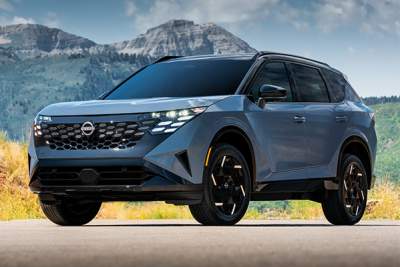
Just weeks after it revealed its updated electrification targets for 2030, Nissan has announced that it is now developing new modular components for its battery-electric and e-POWER hybrid drivetrains.
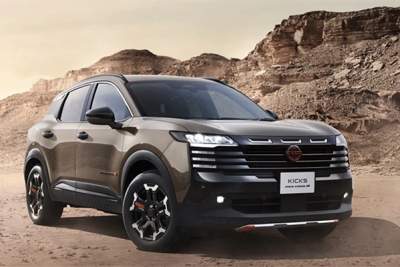
The firm, which brought to market the battery electric Leaf (read our review of the current Leaf here) as early as 2010, is calling the new approach 'X-in-one'. It states that this new approach is being adopted to raise the competitiveness of its battery-electric and e-POWER vehicles (Don't forget to catch our review of the current Nissan Note e-POWER and Kicks e-POWER).
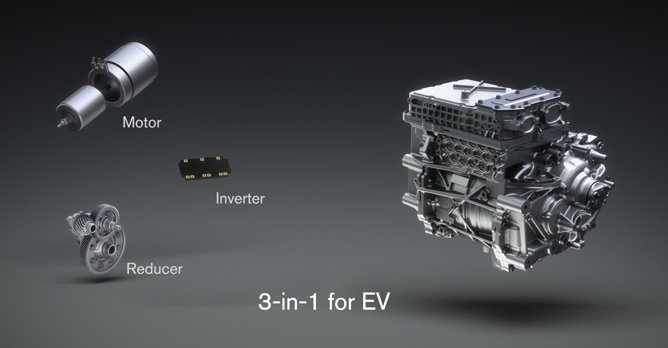
 A prototype battery-electric drivetrain has already been developed, complete with a motor, inverter, and reducer Improvements that can be expected from the modularisation of its electrified drivetrains include a 30% reduction in development and manufacturing costs, as well as a reduction in size and weight of the drivetrains themselves.
This latter point should translate to improve driving performance for Nissan's vehicles. Nissan additionally claims that a reduction in noise and vibration levels can also be expected.
And to the benefit of the environment, the newly developed motor is also expected to have less than 1% of its total weight comprise of heavy rare earth elements. The environmentally pollutive processes involved in the extraction of these rare earth elements have long been a challenge to the environmentally-friendly status of electric cars.
Nissan states that two prototypes of this new modular drivetrains have already been developed. The first, a three-in-one battery-electric system, with a modular electric motor, inverter, and reducer will be used in the firm's electric vehicles. An additional five-in-one prototype has also been developed, sporting an additional modularised generator and increaser, is planned for use in its e-POWER vehicles.
The firm, which brought to market the battery electric Leaf (read our review of the current Leaf here) as early as 2010, is calling the new approach 'X-in-one'. It states that this new approach is being adopted to raise the competitiveness of its battery-electric and e-POWER vehicles (Don't forget to catch our review of the current Nissan Note e-POWER and Kicks e-POWER).
This latter point should translate to improve driving performance for Nissan's vehicles. Nissan additionally claims that a reduction in noise and vibration levels can also be expected.
And to the benefit of the environment, the newly developed motor is also expected to have less than 1% of its total weight comprise of heavy rare earth elements. The environmentally pollutive processes involved in the extraction of these rare earth elements have long been a challenge to the environmentally-friendly status of electric cars.
Nissan states that two prototypes of this new modular drivetrains have already been developed. The first, a three-in-one battery-electric system, with a modular electric motor, inverter, and reducer will be used in the firm's electric vehicles. An additional five-in-one prototype has also been developed, sporting an additional modularised generator and increaser, is planned for use in its e-POWER vehicles.