Lightweight battery option for Porsche 911 GT3, 911 GT3 RS & Boxster Spyder
27 Nov 2009|3,542 views
Weighing less than 6 kg or 13 lb, the new battery is more than 10 kg or 22 lb lighter than a conventional 60 Ah lead battery. The new lithium-ion battery will be available as of January 2010 for the 911 GT3, 911 GT 3 RS, and Boxster Spyder as an option delivered with the car, selling at a price in the German market of Euro 1,904 including 19 per cent value-added tax.
The battery is delivered as a separate unit together with the car and may subsequently be fitted as an alternative to the regular, conventional starter battery. The cars are delivered with both batteries, therefore they are ready for use throughout the whole year. Since, while the lightweight battery offers a very high standard of everyday driving qualities, its starting capacity is limited at temperatures below 0o C or 32o F due to its specific features.
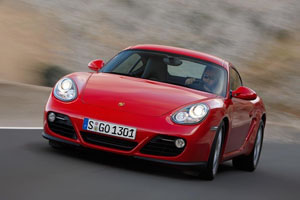
The primary reason for developing and introducing the new battery was its lower weight. In sports cars built consistently for superior driving dynamics such as the two versions of the 911 GT3 and the Boxster Spyder, less weight naturally means even greater agility and driving dynamics.
 |
On a conventional car battery only about 30 per cent of the total capacity is actually available for practical use due to the configuration of the system, while this restriction does not apply to the lithium-ion battery. On the contrary, through its characteristic structure - and, in particular, the independence of the chemical composition of the electrolytes from the charge status - a lithium-ion battery consistently offers almost 100 per cent of its capacity.
Delivery of power by the lithium-ion battery throughout its useful charge range is likewise significantly better, providing its full power, for example, when starting the engine almost independently of the current charge level.
After the engine has started, the new Porsche battery shows further benefits in the charge process, being able through its smaller internal resistance to take up more power than a conventional battery and thus re-charge more quickly.
Yet a further benefit is that a lithium-ion battery allows a significantly greater number of charging and discharging cycles, plus the two further advantages that the self-discharging effect is lower and the service life of the battery longer.
Weighing less than 6 kg or 13 lb, the new battery is more than 10 kg or 22 lb lighter than a conventional 60 Ah lead battery. The new lithium-ion battery will be available as of January 2010 for the 911 GT3, 911 GT 3 RS, and Boxster Spyder as an option delivered with the car, selling at a price in the German market of Euro 1,904 including 19 per cent value-added tax.
The battery is delivered as a separate unit together with the car and may subsequently be fitted as an alternative to the regular, conventional starter battery. The cars are delivered with both batteries, therefore they are ready for use throughout the whole year. Since, while the lightweight battery offers a very high standard of everyday driving qualities, its starting capacity is limited at temperatures below 0o C or 32o F due to its specific features.
The primary reason for developing and introducing the new battery was its lower weight. In sports cars built consistently for superior driving dynamics such as the two versions of the 911 GT3 and the Boxster Spyder, less weight naturally means even greater agility and driving dynamics.
|
On a conventional car battery only about 30 per cent of the total capacity is actually available for practical use due to the configuration of the system, while this restriction does not apply to the lithium-ion battery. On the contrary, through its characteristic structure - and, in particular, the independence of the chemical composition of the electrolytes from the charge status - a lithium-ion battery consistently offers almost 100 per cent of its capacity.
Delivery of power by the lithium-ion battery throughout its useful charge range is likewise significantly better, providing its full power, for example, when starting the engine almost independently of the current charge level.
After the engine has started, the new Porsche battery shows further benefits in the charge process, being able through its smaller internal resistance to take up more power than a conventional battery and thus re-charge more quickly.
Yet a further benefit is that a lithium-ion battery allows a significantly greater number of charging and discharging cycles, plus the two further advantages that the self-discharging effect is lower and the service life of the battery longer.


Latest COE Prices
June 2026 | 2nd BIDDING
NEXT TENDER: 08 Jul 2026
CAT A$123,847
CAT B$123,502
CAT C$93,001
CAT E$129,002
View Full Results 
Thank You For Your Subscription.


Tags
Products & Services

For Owners
Quick Links
About Sgcarmart