Driverless truck hits the roads on Jurong Island
25 Oct 2017|1,142 views

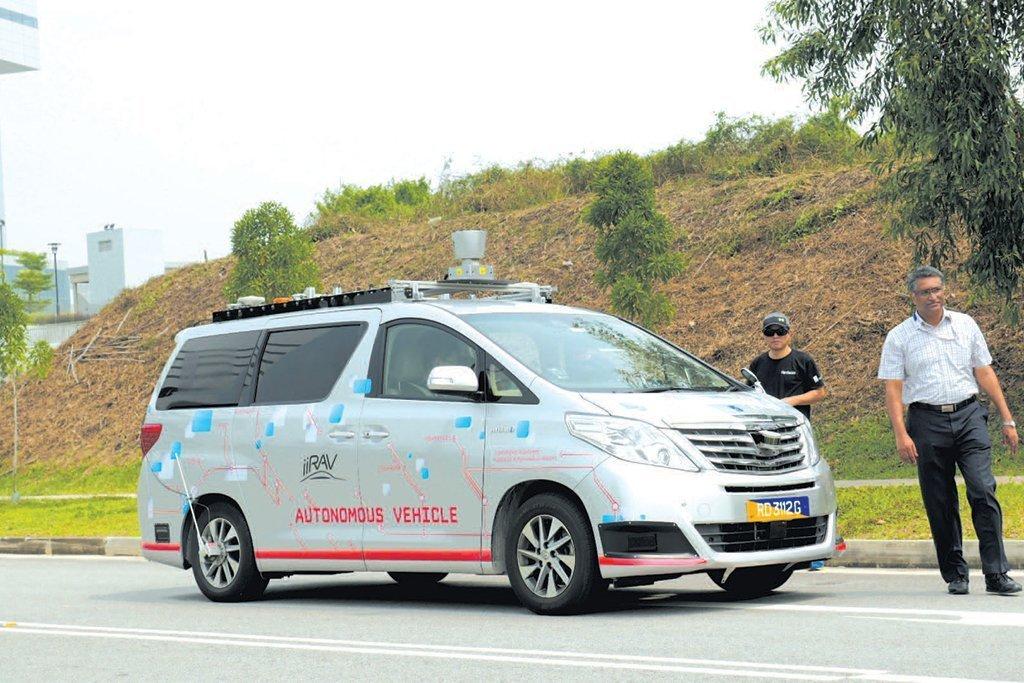
Belgian logistics group Katoen Natie has started operating its first driverless truck at ExxonMobil's manufacturing site on Jurong Island. The truck transports polymer products between the company's packaging and intermediate storage facilities. It operates round the clock, seven days a week, to move some 250,000 tonnes of goods a year. At a demonstration yesterday, Katoen Natie said the autonomous truck project will be expanded gradually after a six-month trial to 12 trucks, moving some three million tonnes of products annually.

Katoen Natie Singapore Chief Executive Koen Cardon said he sees a shortage of labour as a real challenge for the logistics group in the years ahead. "We need to get smarter, and we need to get more productive," he said. "This is exactly what we are doing with this project." In consultation with Singapore Management University, which recommended Dutch autonomous vehicle specialist VDL as a partner, Katoen Natie fitted a 15m flatbed truck with sensors and guidance systems early this year.
Between May and last month, the truck underwent trials on site. Mr. Cardon said, "This project is a perfect example of the innovation we bring to the forefront to create value for our customers, as well as creating the opportunities to upgrade the skills of our workforce." Elsewhere, Singapore is pushing ahead to roll out driverless vehicles from 2020.
In January, Scania and Toyota Tsusho signed an agreement with PSA and the Ministry of Transport to design, develop and test a truck-platooning system - where a human-driven truck leads a convoy of driverless trucks via wireless communications - for use on the roads. ST Kinetics announced in April that it planned to put two autonomous buses on the roads from October 2020.
And last December, Nanyang Technological University (NTU) announced plans to launch a driverless shuttle that can ferry up to 15 passengers on a 1.5km route between CleanTech Park and the university campus. Driverless cars and trucks have been tested successfully in Europe, clocking tens of thousands of kilometres - many on public roads - in the past three years.
Belgian logistics group Katoen Natie has started operating its first driverless truck at ExxonMobil's manufacturing site on Jurong Island. The truck transports polymer products between the company's packaging and intermediate storage facilities. It operates round the clock, seven days a week, to move some 250,000 tonnes of goods a year. At a demonstration yesterday, Katoen Natie said the autonomous truck project will be expanded gradually after a six-month trial to 12 trucks, moving some three million tonnes of products annually.
The company would not reveal the cost of the driverless truck, saying only that 70 percent of funding came from Government subsidies. It added that the unmanned vehicle would pay for itself within a year. The truck is guided by 3,800 transponders buried in the tarmac along a fixed route and travels at a top speed of 25km/h - the limit in the petrochemical complex. The company said its next step would be to use GPRS-guided trucks, as well as to introduce unmanned trucks on public roads.
Katoen Natie Singapore Chief Executive Koen Cardon said he sees a shortage of labour as a real challenge for the logistics group in the years ahead. "We need to get smarter, and we need to get more productive," he said. "This is exactly what we are doing with this project." In consultation with Singapore Management University, which recommended Dutch autonomous vehicle specialist VDL as a partner, Katoen Natie fitted a 15m flatbed truck with sensors and guidance systems early this year.
Between May and last month, the truck underwent trials on site. Mr. Cardon said, "This project is a perfect example of the innovation we bring to the forefront to create value for our customers, as well as creating the opportunities to upgrade the skills of our workforce." Elsewhere, Singapore is pushing ahead to roll out driverless vehicles from 2020.
In January, Scania and Toyota Tsusho signed an agreement with PSA and the Ministry of Transport to design, develop and test a truck-platooning system - where a human-driven truck leads a convoy of driverless trucks via wireless communications - for use on the roads. ST Kinetics announced in April that it planned to put two autonomous buses on the roads from October 2020.
And last December, Nanyang Technological University (NTU) announced plans to launch a driverless shuttle that can ferry up to 15 passengers on a 1.5km route between CleanTech Park and the university campus. Driverless cars and trucks have been tested successfully in Europe, clocking tens of thousands of kilometres - many on public roads - in the past three years.


Latest COE Prices
May 2026 | 2nd BIDDING
NEXT TENDER: 04 Jun 2026
CAT A$124,229
CAT B$129,501
CAT C$92,223
CAT E$130,000
View Full Results 
Thank You For Your Subscription.








Tags
Products & Services

For Owners
Quick Links
About Sgcarmart