Toyota harvests solar energy to power U.K. engine production
22 Aug 2014|1,366 views
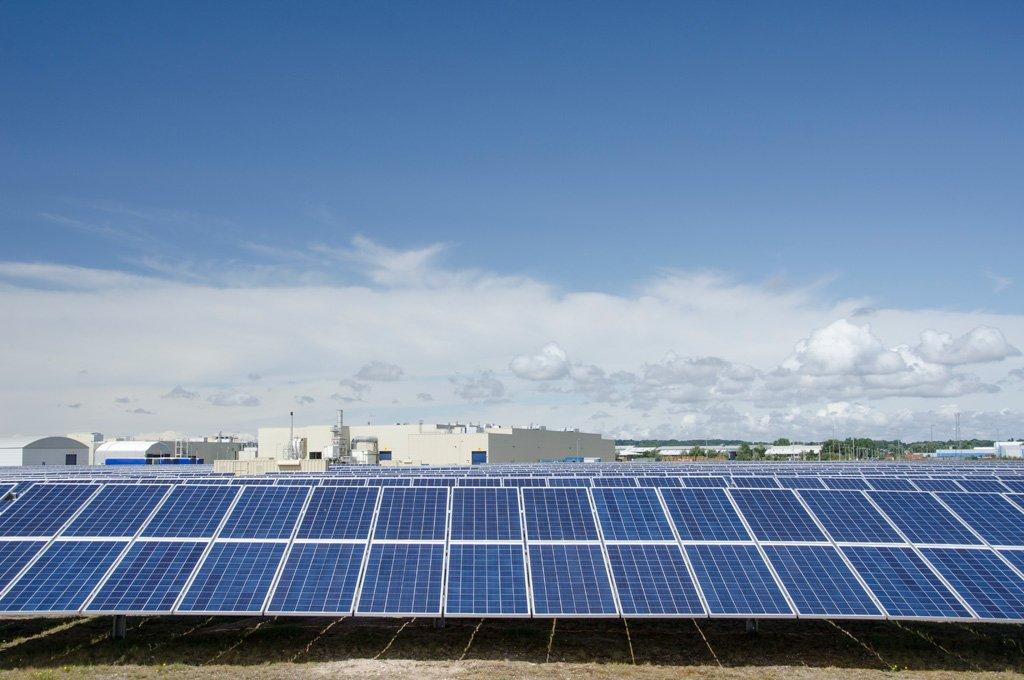

Almost 13,000 solar panels will provide up to 10 percent of all the electricity required for manufacturing at the site, which makes petrol and hybrid engines for Toyota Avensis and Auris models sold throughout Europe.
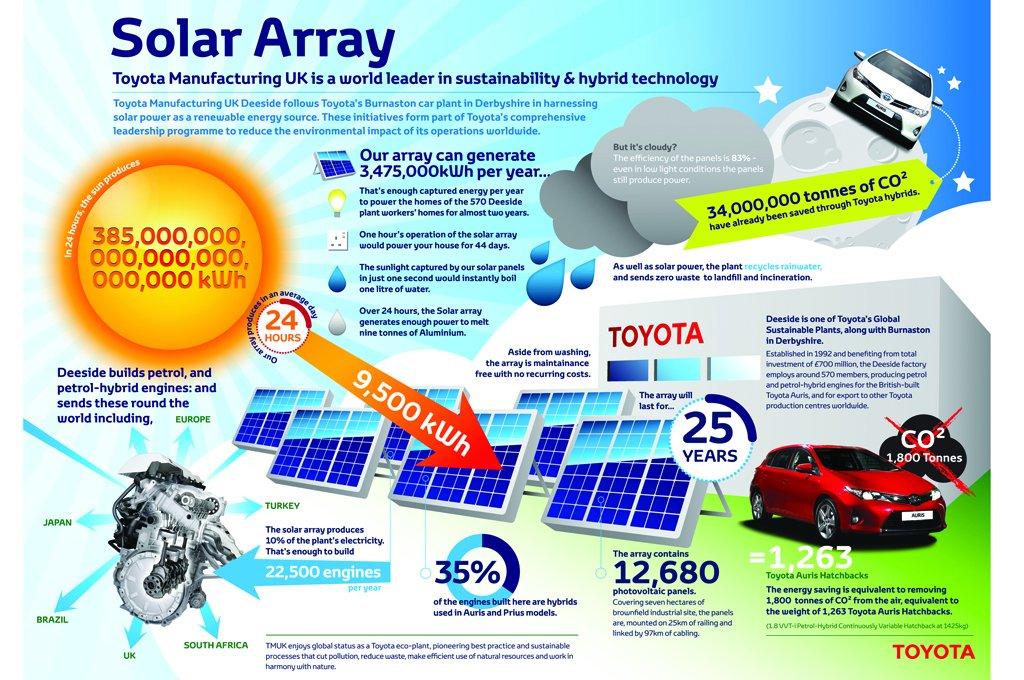
The solar array, commissioned as a multi-million pound project delivered by British Gas, will significantly reduce the site's carbon emission annually by 1,800 tonnes, a figure matching the combined weight of 1,260 Auris hatchbacks. The facility can generate up to 3,475,000kWh of electricity annually - enough to produce up to 22,500 car engines.
Established in 1992 and backed by a total investment of £700 million (S$1.45 billion), the Deeside factory employs around 570 people, producing petrol and hybrid petrol engines for the British market and for export to Toyota production centres worldwide.
Toyota's Burnaston factory in Derbyshire showed the way in harnessing solar power as a renewable energy source when it installed one of Britain's largest solar arrays in 2011.
The solar initiatives are part of Toyota's leadership strategy to reduce the environmental impact of its operations worldwide. Toyota Manufacturing U.K. enjoys global status as a leading eco-plant, pioneering best practice and sustainable processes that cut pollution, reduce waste, make efficient use of natural resources and work in harmony with nature.
A large scale embedded solar array was switched on the the 21st of August, at Toyota U.K.'s engine production centre at Deeside in North Wales.
Almost 13,000 solar panels will provide up to 10 percent of all the electricity required for manufacturing at the site, which makes petrol and hybrid engines for Toyota Avensis and Auris models sold throughout Europe.
The solar array, commissioned as a multi-million pound project delivered by British Gas, will significantly reduce the site's carbon emission annually by 1,800 tonnes, a figure matching the combined weight of 1,260 Auris hatchbacks. The facility can generate up to 3,475,000kWh of electricity annually - enough to produce up to 22,500 car engines.
Established in 1992 and backed by a total investment of £700 million (S$1.45 billion), the Deeside factory employs around 570 people, producing petrol and hybrid petrol engines for the British market and for export to Toyota production centres worldwide.
Toyota's Burnaston factory in Derbyshire showed the way in harnessing solar power as a renewable energy source when it installed one of Britain's largest solar arrays in 2011.
The solar initiatives are part of Toyota's leadership strategy to reduce the environmental impact of its operations worldwide. Toyota Manufacturing U.K. enjoys global status as a leading eco-plant, pioneering best practice and sustainable processes that cut pollution, reduce waste, make efficient use of natural resources and work in harmony with nature.
Almost 13,000 solar panels will provide up to 10 percent of all the electricity required for manufacturing at the site, which makes petrol and hybrid engines for Toyota Avensis and Auris models sold throughout Europe.
The solar array, commissioned as a multi-million pound project delivered by British Gas, will significantly reduce the site's carbon emission annually by 1,800 tonnes, a figure matching the combined weight of 1,260 Auris hatchbacks. The facility can generate up to 3,475,000kWh of electricity annually - enough to produce up to 22,500 car engines.
Established in 1992 and backed by a total investment of £700 million (S$1.45 billion), the Deeside factory employs around 570 people, producing petrol and hybrid petrol engines for the British market and for export to Toyota production centres worldwide.
Toyota's Burnaston factory in Derbyshire showed the way in harnessing solar power as a renewable energy source when it installed one of Britain's largest solar arrays in 2011.
The solar initiatives are part of Toyota's leadership strategy to reduce the environmental impact of its operations worldwide. Toyota Manufacturing U.K. enjoys global status as a leading eco-plant, pioneering best practice and sustainable processes that cut pollution, reduce waste, make efficient use of natural resources and work in harmony with nature.


Latest COE Prices
April 2026 | 1st BIDDING
NEXT TENDER: 22 Apr 2026
CAT A$118,000
CAT B$121,000
CAT C$80,001
CAT E$121,001
View Full Results 
Thank You For Your Subscription.












Tags
Products & Services

For Owners
Quick Links
About Sgcarmart