Cupra uses 3D printing for the Leon Competicion
27 Mar 2020|1,042 views


Cupra's team of innovative engineers is transforming the way vehicles are developed by printing car parts by using state-of-the-art multi-jet fusion technology to fashion parts in a fast and efficient way.
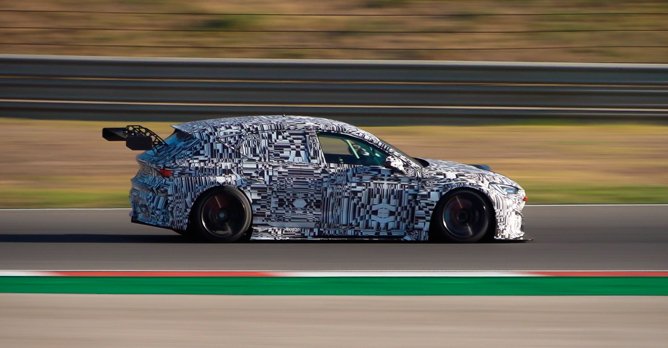
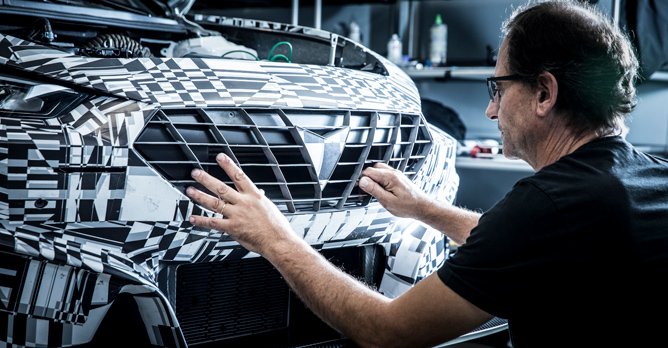
For the new Leon Competicion racing car, engineers at Cupra have 3D printed the model's door mirrors, air intakes and cooling intakes.

The process of printing a mirror can take around 20 hours, but Cupra can print six at a time, giving the team the ability to create different designs simultaneously. This means Cupra can quickly test the varying prototypes in a wind tunnel to find out which is best for aerodynamics.
When taken to this controlled environment, the printed parts are fitted to the car and face winds of more than 290km/h, while sensors study the impact on individual surfaces.
As the smallest margins can make the difference in motorsport, it is crucial the 3D printed parts play their part in reducing fuel consumption while also increasing stability, speed and safety.
The final development of the 3D printed parts was on a racing circuit, with Cupra testing the Leon Competicion on the Portimao track in Portugal. So far, Cupra has been printing parts for its Leon Competicion, its 290km/h, 335bhp 2.0-litre touring car inspired by the new Seat Leon family hatchback, and the e-Racer, an electric touring car that does zero to 100km/h in 3.2 seconds.
Cupra's team of innovative engineers is transforming the way vehicles are developed by printing car parts by using state-of-the-art multi-jet fusion technology to fashion parts in a fast and efficient way.
For the new Leon Competicion racing car, engineers at Cupra have 3D printed the model's door mirrors, air intakes and cooling intakes.
The process of printing a mirror can take around 20 hours, but Cupra can print six at a time, giving the team the ability to create different designs simultaneously. This means Cupra can quickly test the varying prototypes in a wind tunnel to find out which is best for aerodynamics.
When taken to this controlled environment, the printed parts are fitted to the car and face winds of more than 290km/h, while sensors study the impact on individual surfaces.
As the smallest margins can make the difference in motorsport, it is crucial the 3D printed parts play their part in reducing fuel consumption while also increasing stability, speed and safety.
The final development of the 3D printed parts was on a racing circuit, with Cupra testing the Leon Competicion on the Portimao track in Portugal. So far, Cupra has been printing parts for its Leon Competicion, its 290km/h, 335bhp 2.0-litre touring car inspired by the new Seat Leon family hatchback, and the e-Racer, an electric touring car that does zero to 100km/h in 3.2 seconds.


Latest COE Prices
June 2026 | 2nd BIDDING
NEXT TENDER: 08 Jul 2026
CAT A$123,847
CAT B$123,502
CAT C$93,001
CAT E$129,002
View Full Results 
Thank You For Your Subscription.










Tags
Products & Services

For Owners
Quick Links
About Sgcarmart