MG 4 Urban Review
07 May 2026|9,906 views
What We Like
Increased interior and cargo space
Upgraded equipment levels
Simple and straightforward operation
No real drop-off in terms of range, even with a smaller battery
Perky drive
What We Dislike
Lost a little of its visual edge
Affordability hurt by local taxes
I've always liked the MG 4.
Small hatchback, rear-wheel drive agility, plenty of point and shoot pace, nicely weighted steering, simple to use car - it's the sort of car I can see myself driving (full disclosure: I like small cars).
Now, the second-generation model has been introduced, and with it comes a somewhat new name - this MG 4 Urban.
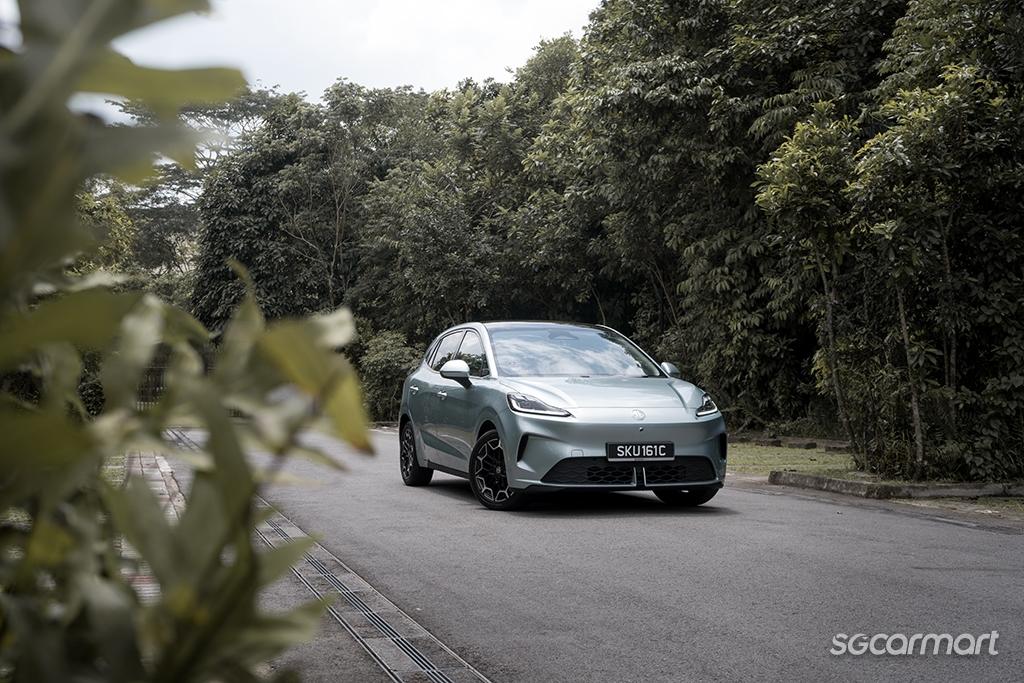
The second-generation MG 4 is now here, and the big news is that it now sits atop a dedicated EV platform that is strictly front-wheel drive
Besides the name, there are some significant differences: Most notably, the car now rides atop a new dedicated EV platform, with the headline change being that the car is now solely front-wheel driven.
So, is it still as likeable as I remembered?
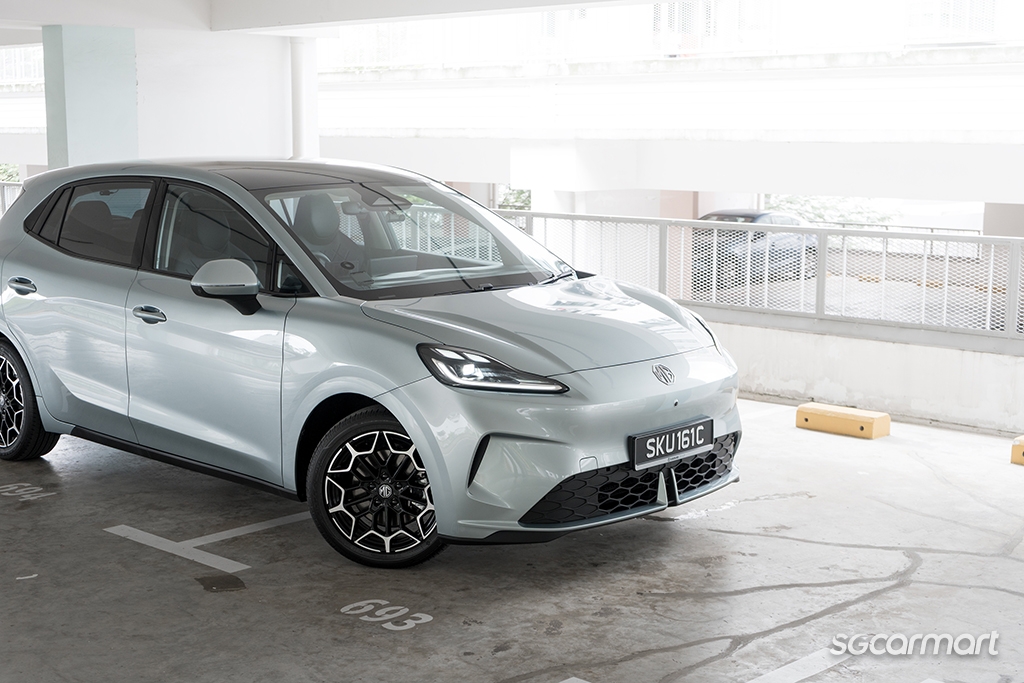
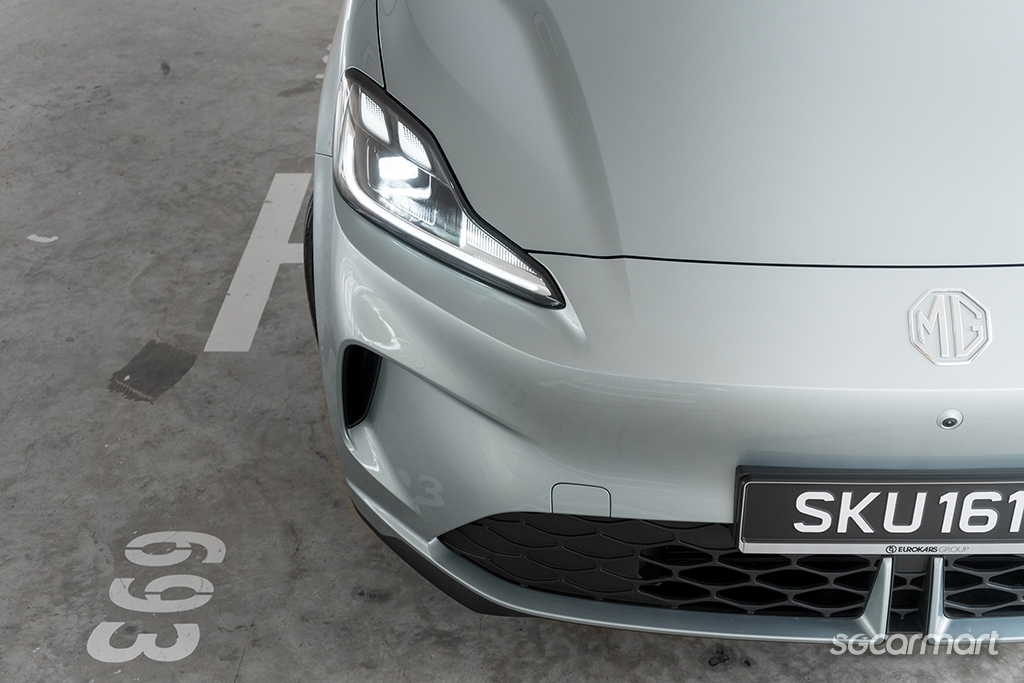
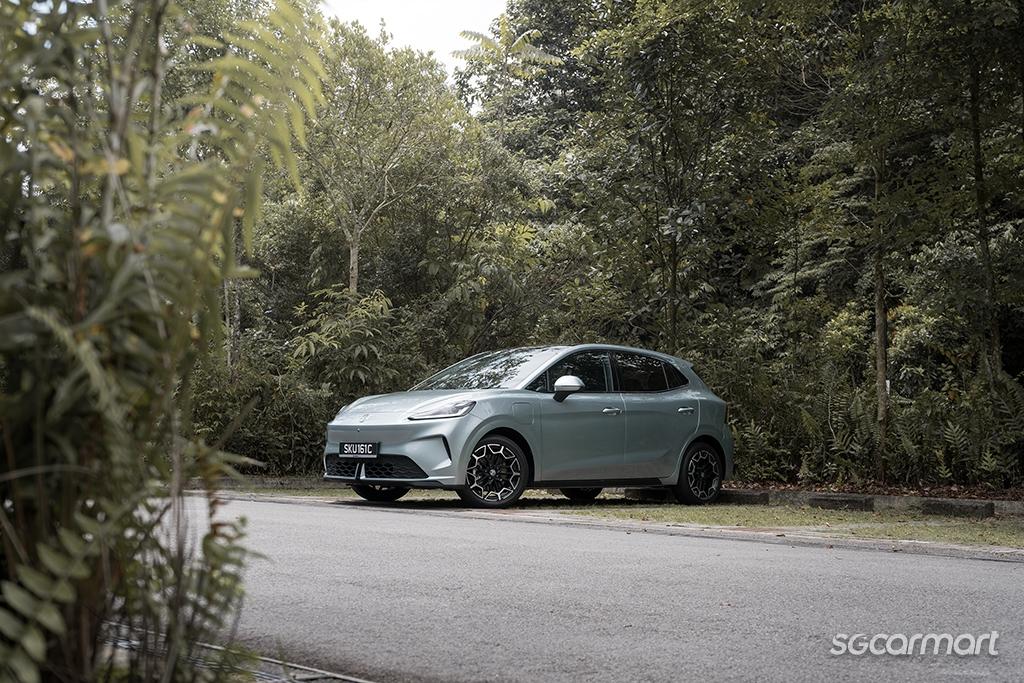
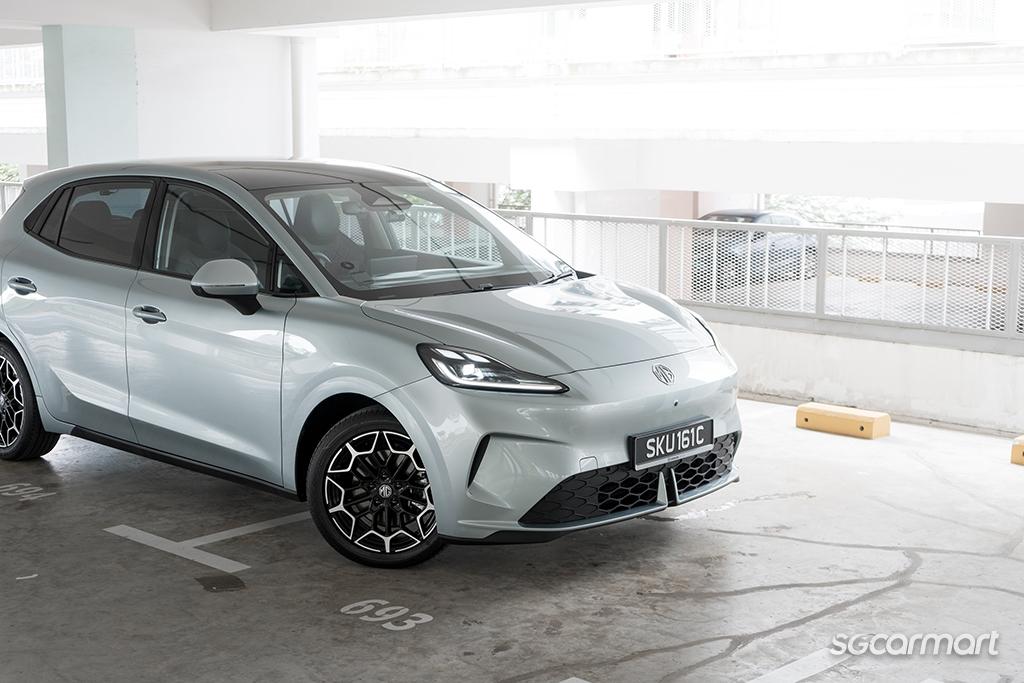
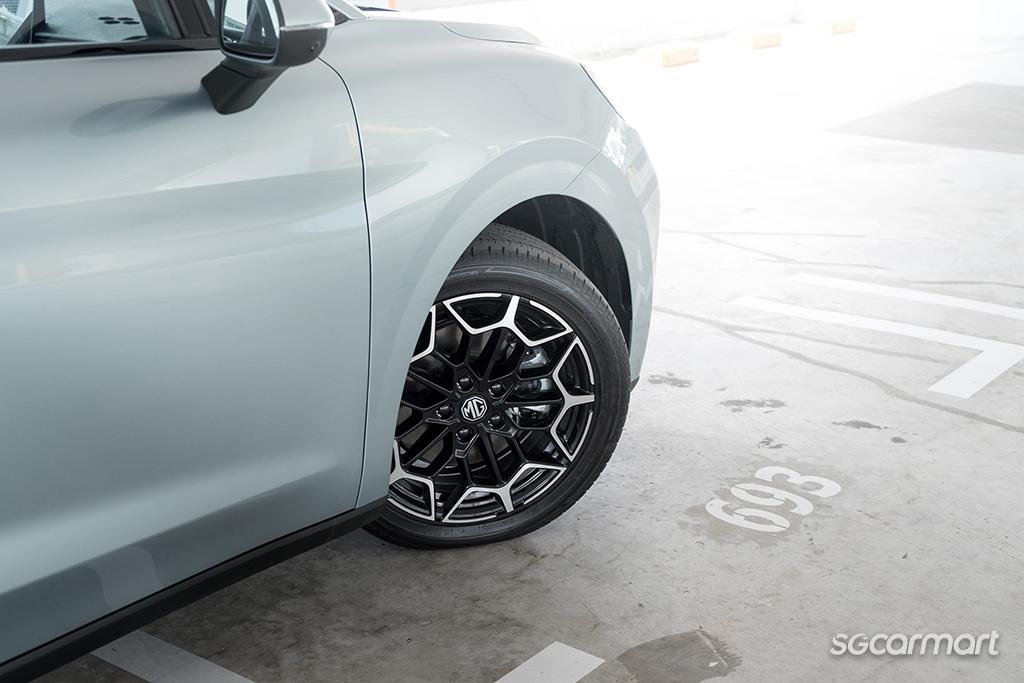
The MG 4 trades away its prior angry angularity for a softer, more rounded look
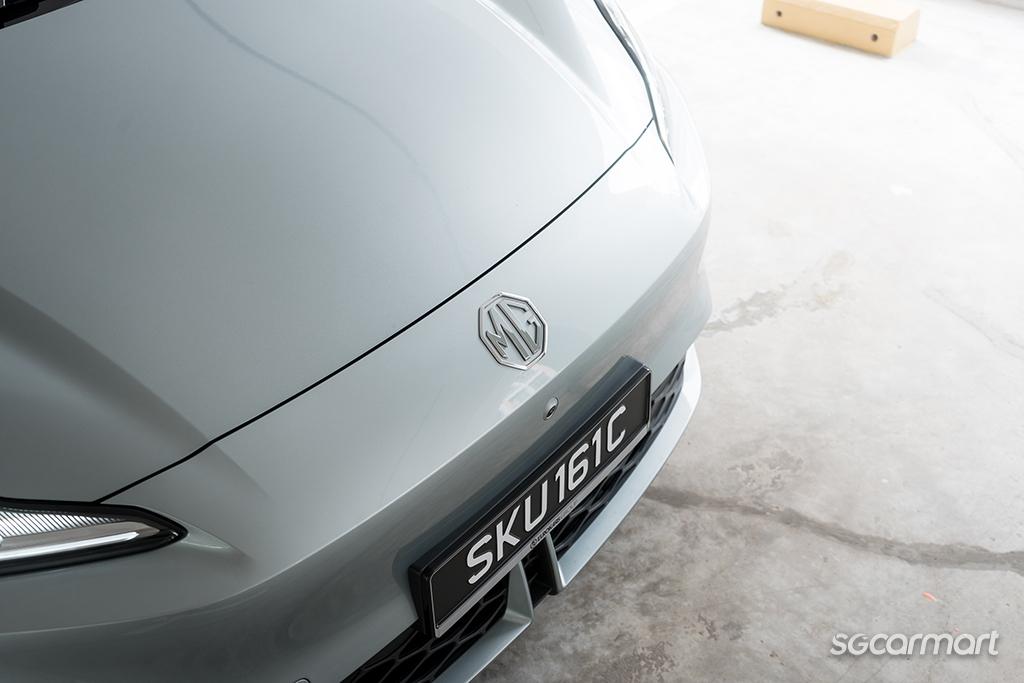
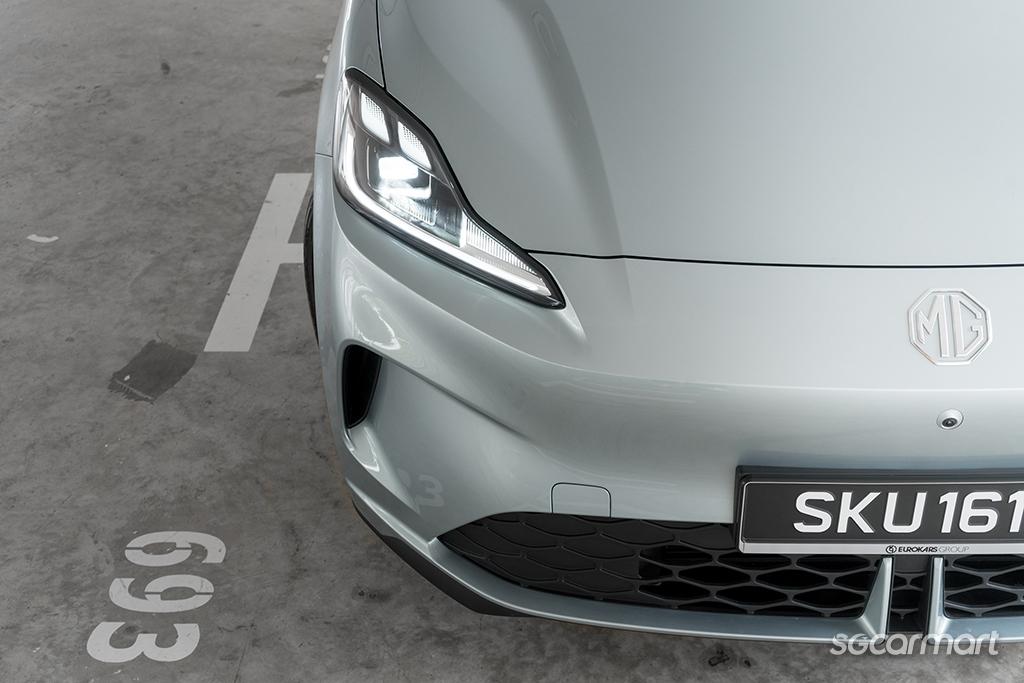
The second-generation MG 4 gets a distinctly new design, one that is decidedly softer-looking. Where the previous iteration was all pointy edges and sharp lines, here most of those sharp edges have been rounded off. So, the angry and pointy face has been smoothened out (even the head lights have been redesigned and doesn't even have a pointy edge). Does the new front-end have a hint of the new Macan in the way it looks now? Squint a little and you may see it.
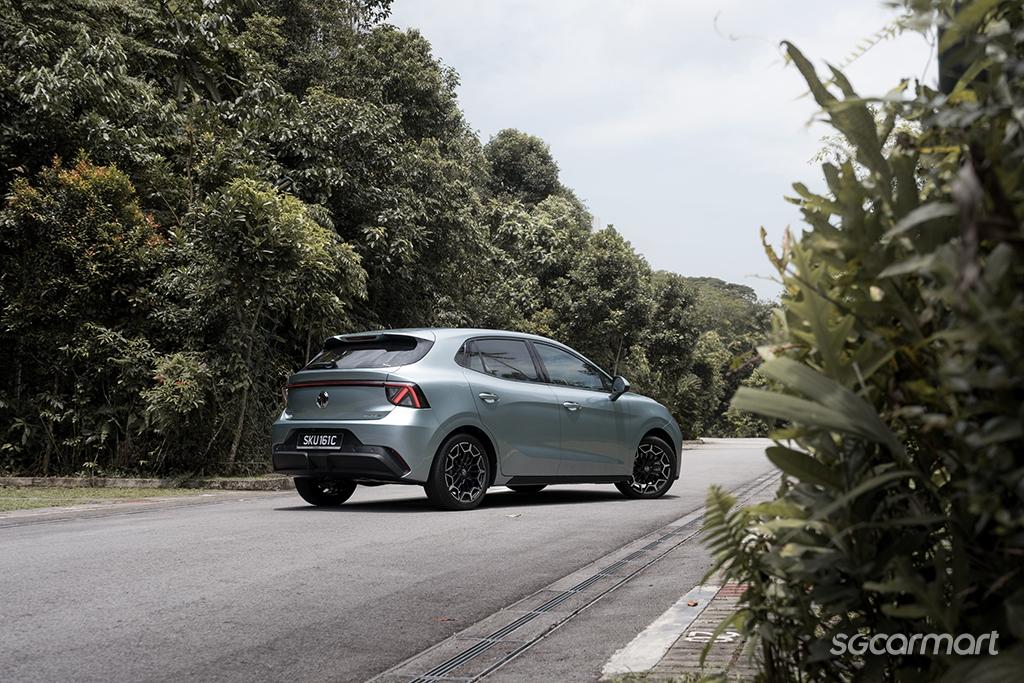
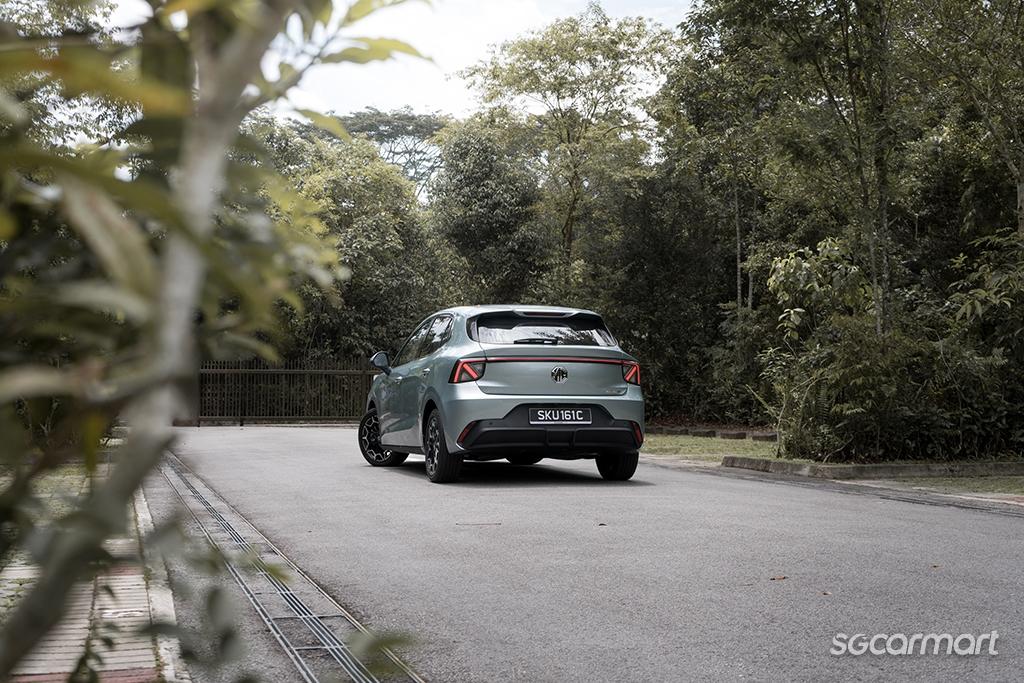
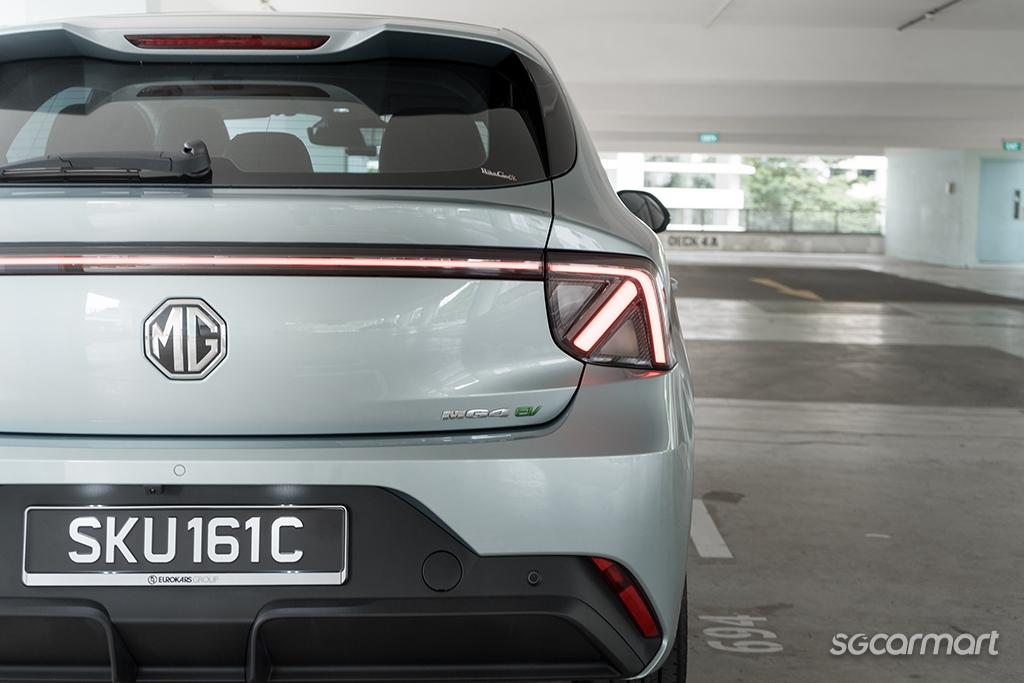
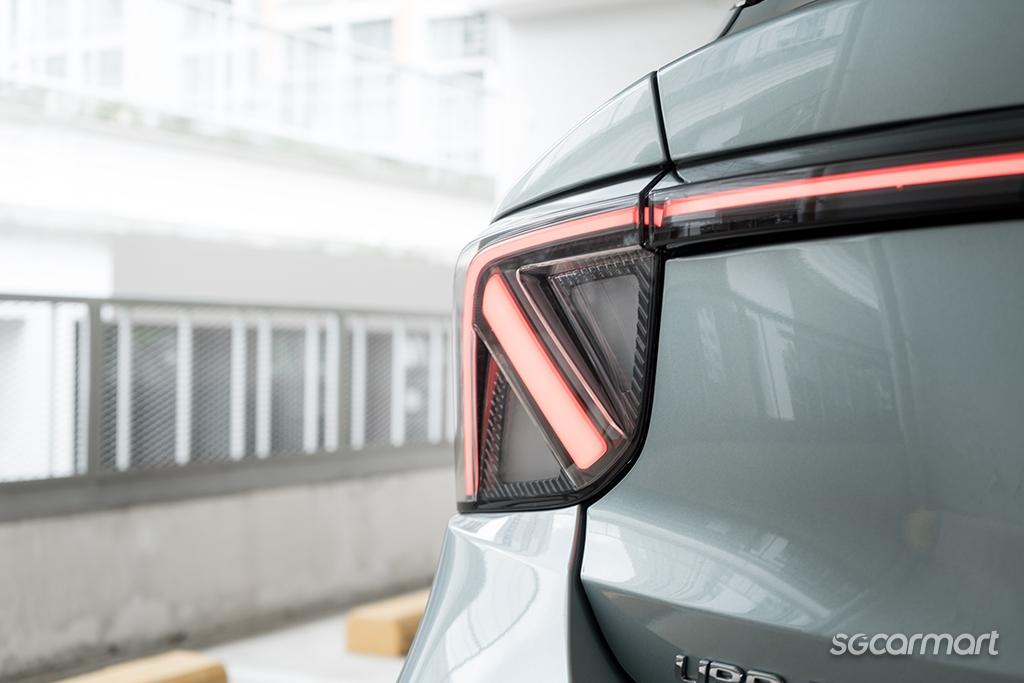
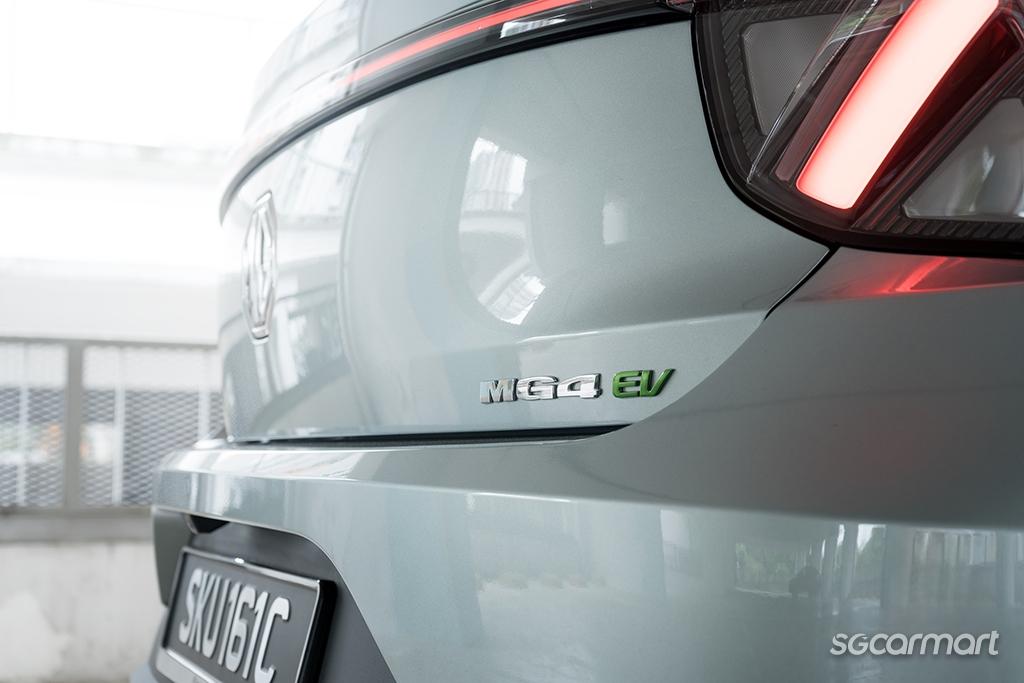
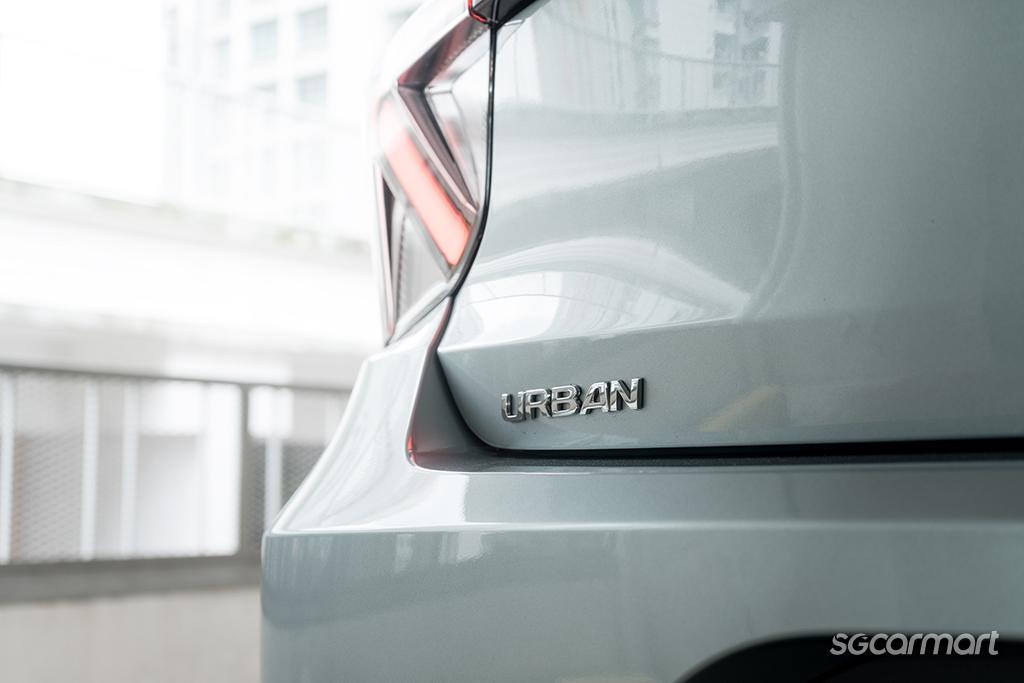
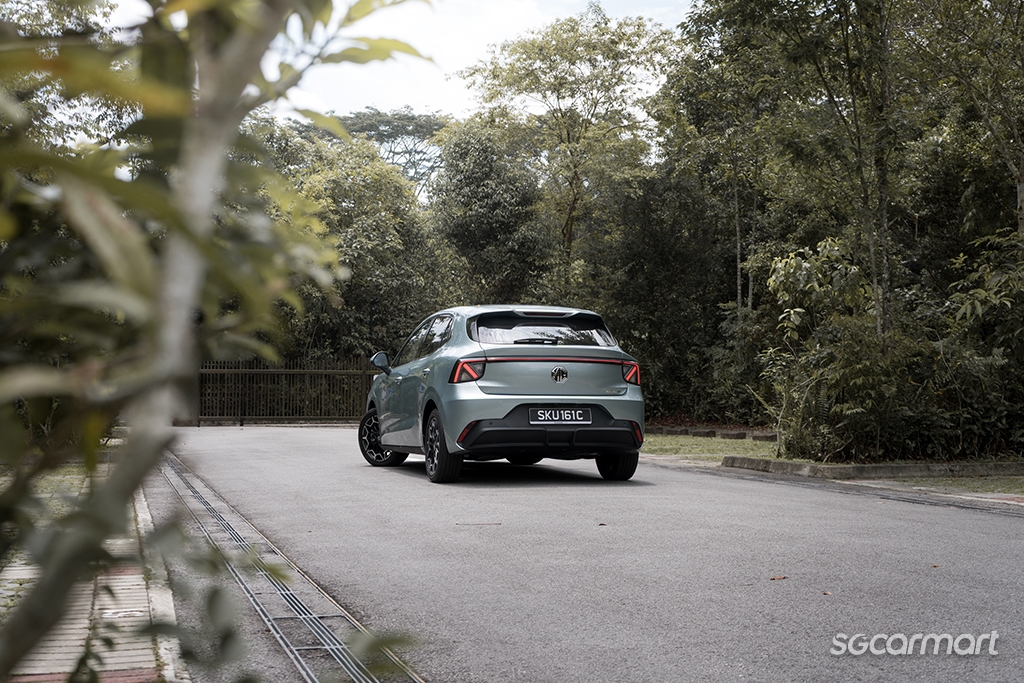
It's the same story at the back: The twin-spoiler design remains, but it is both smaller and less pronounced than before. The rear lights are also different. Again, it has traded a distinct angularity for a flatter, more 2D look.
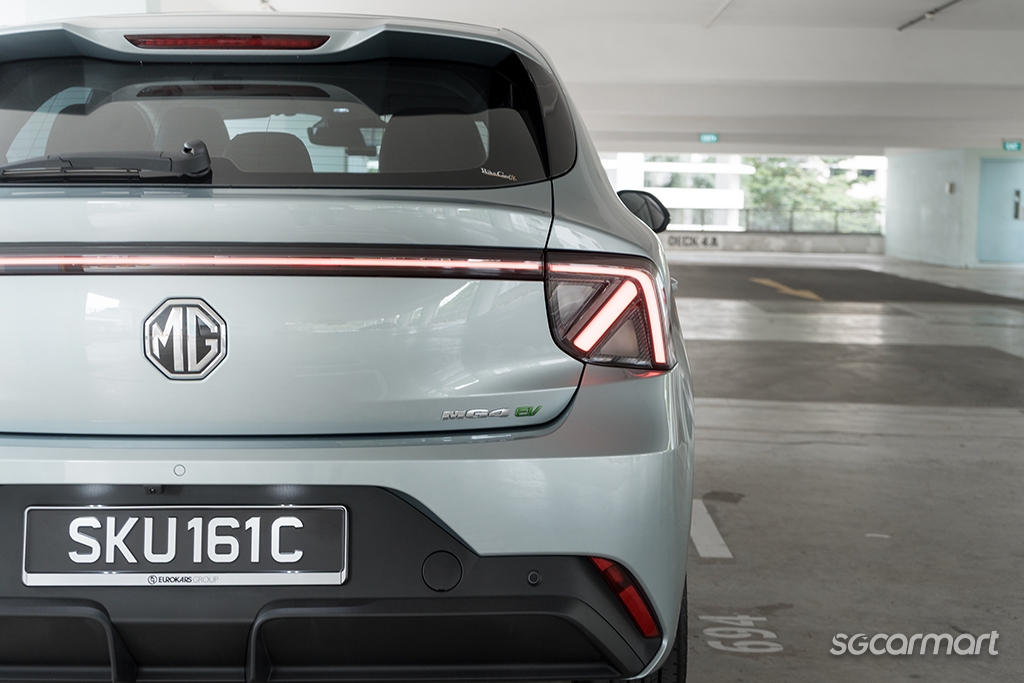
The redesigned rear end has a flatter, more 2D look
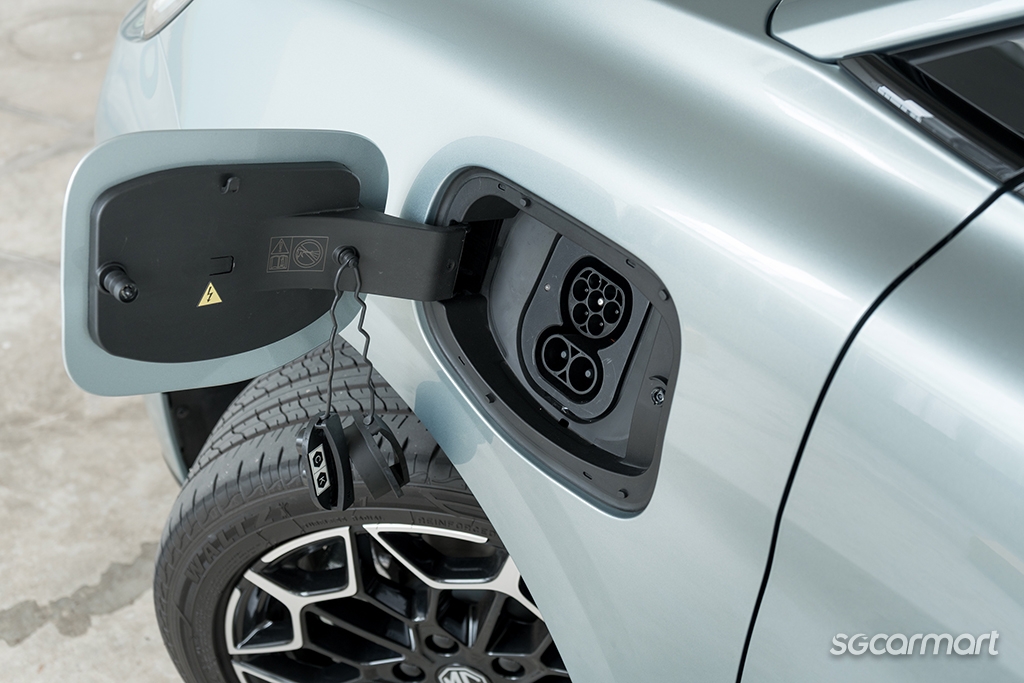
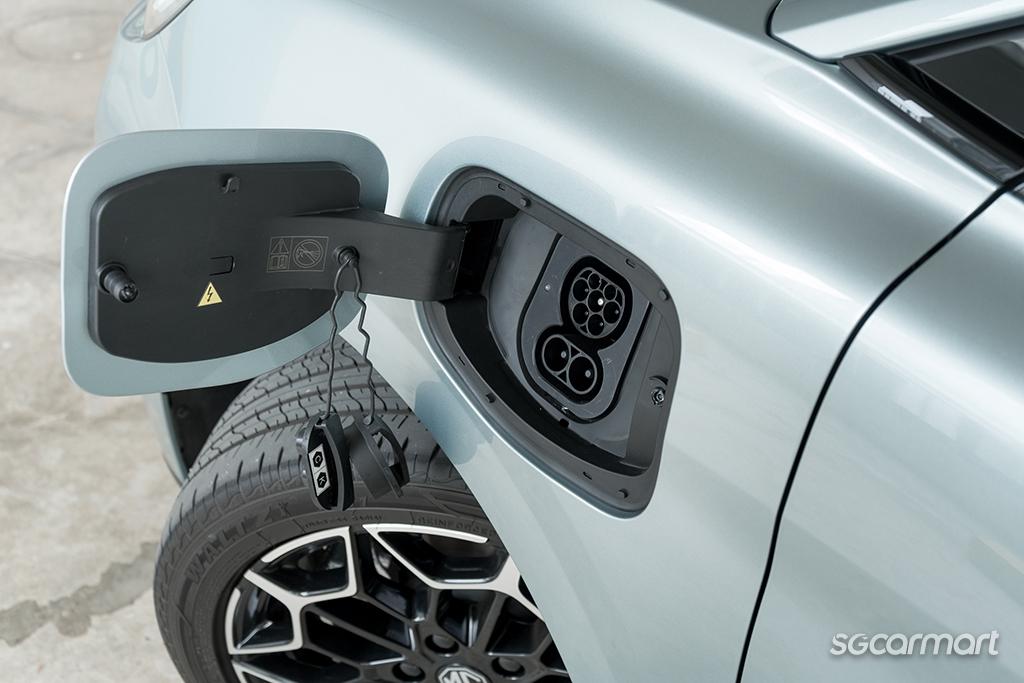
The charging port is now at the front section of the car
All things considered, it's arguably a less-divisive design - it looks more like a typical contemporary hatchback (consider the likes of the other EV hatchbacks like the Dongfeng Box and Aion UT, even the petrol-powered Honda Jazz) in that there's a roundedness to the way it looks. Personally, I did appreciate the radical aggressiveness of the pre-facelift model, though I can’t really fault the new car for how it looks.
In terms of overall size, the new model is slightly longer and wider at 4,395mm long and 1,842mm wide, but its 1,549mm height is shorter than before. Notably, wheelbase has increased by a not-insignificant 39mm. More on that later. The new EV platform also means the charging port has been moved to the front section of the car.
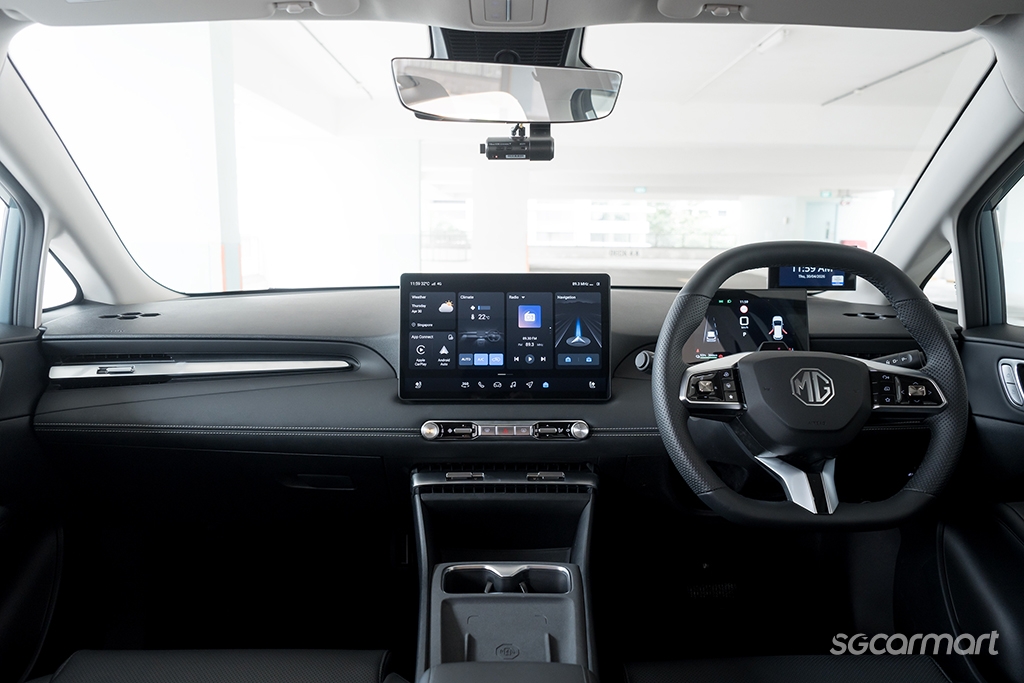
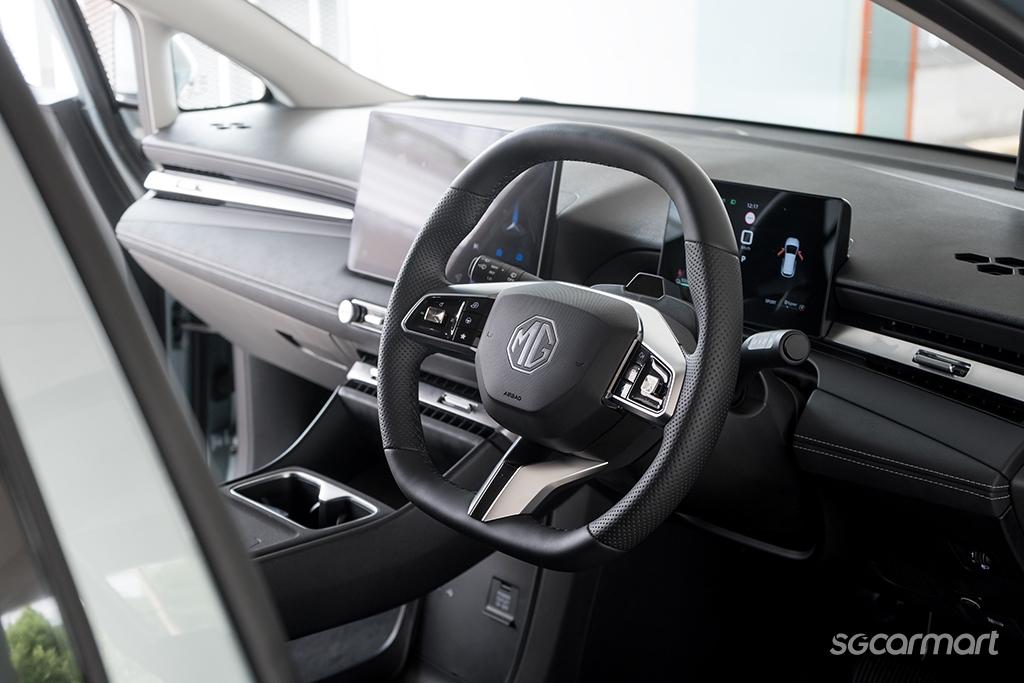
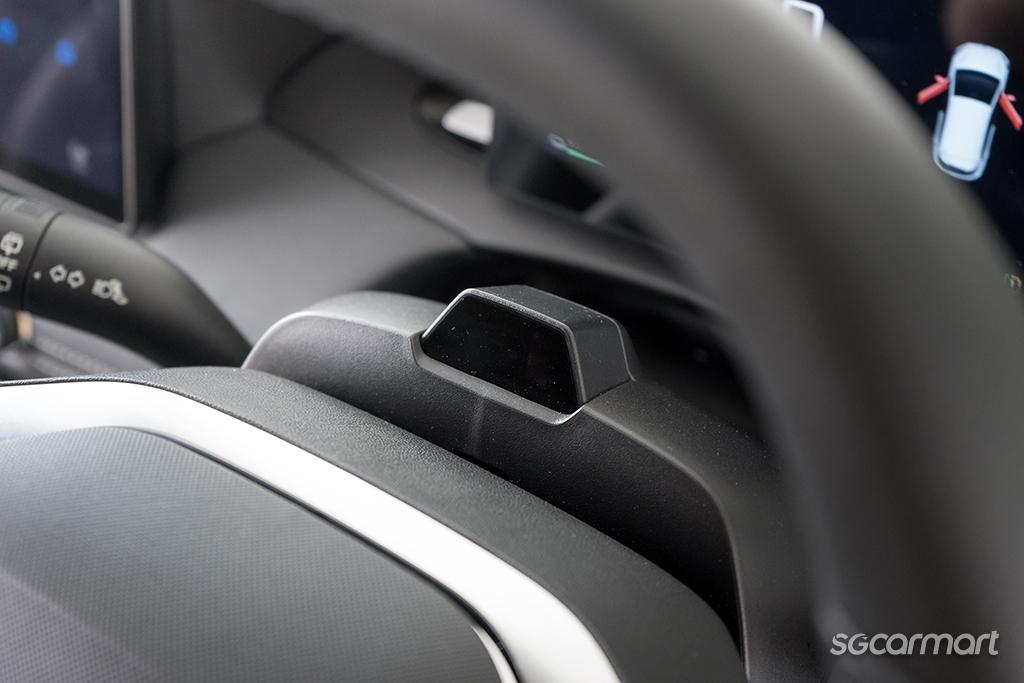
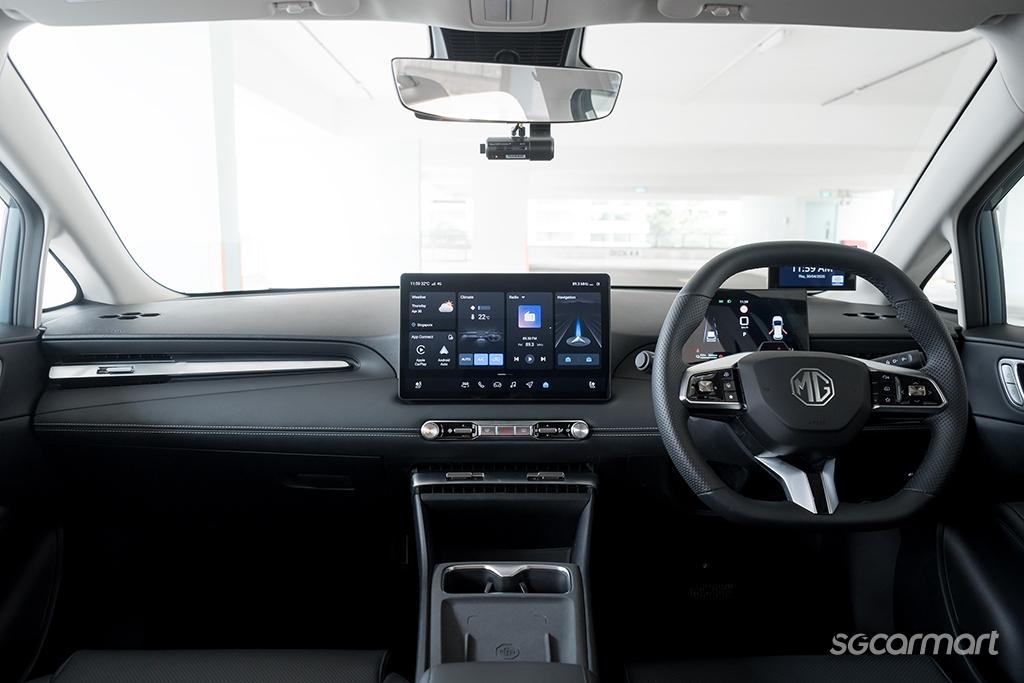
Move into the cabin, and there is a sense of familiarity. Unlike many of the new EVs, this one isn't dominated by digitalisation.
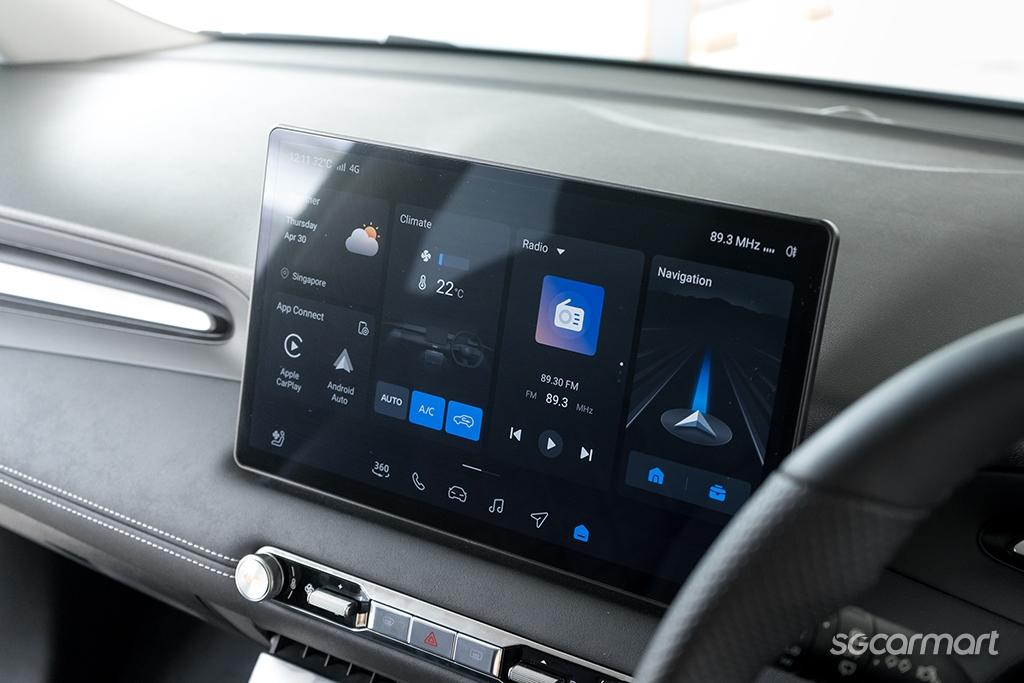
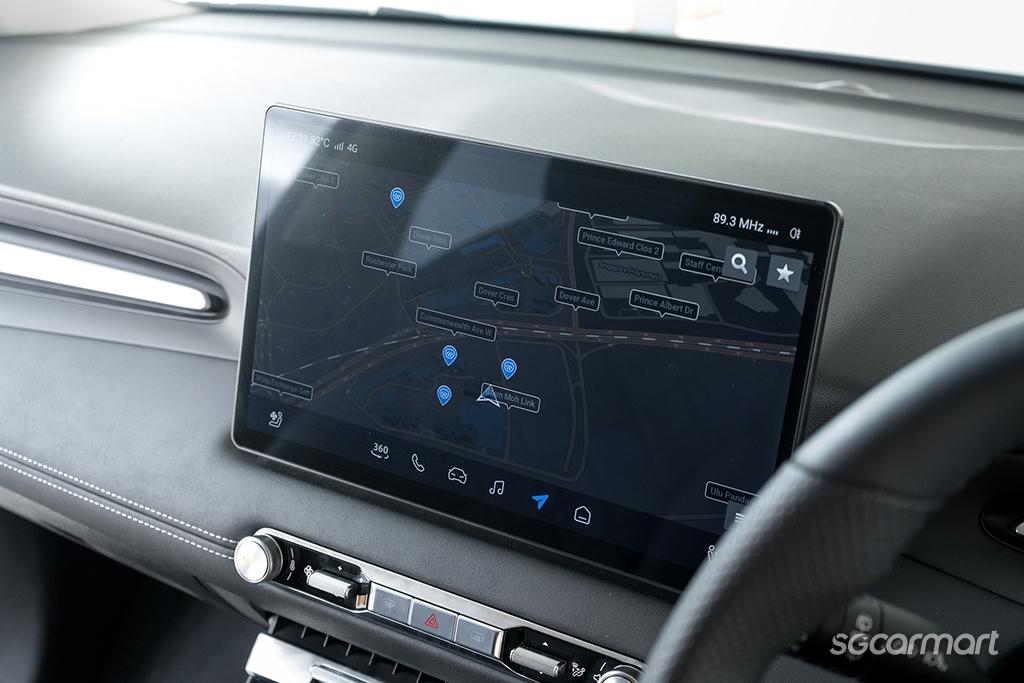
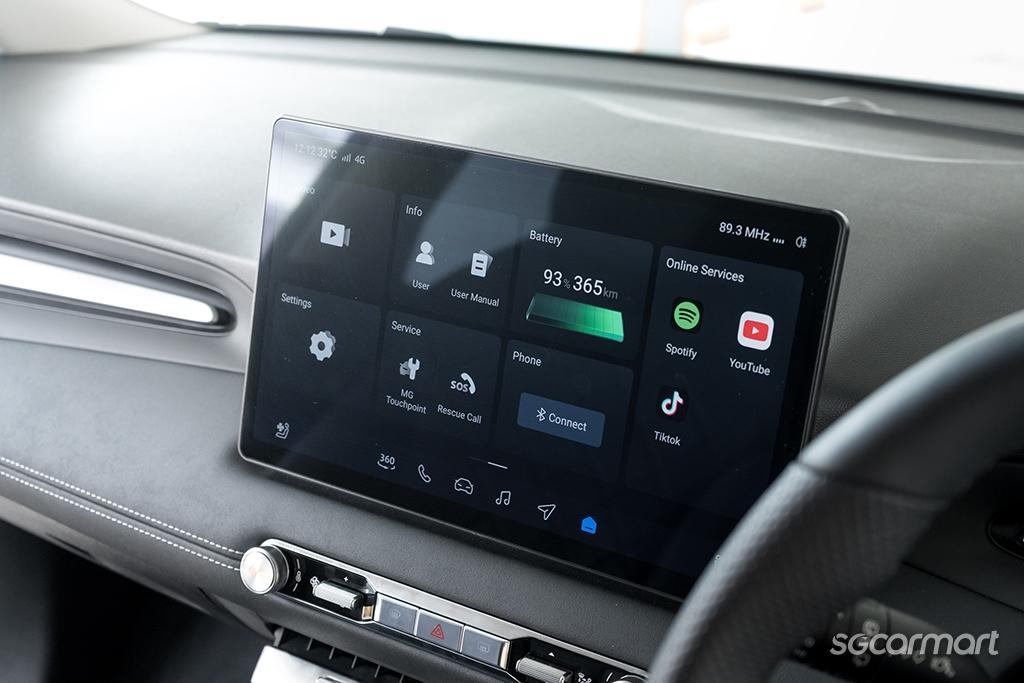
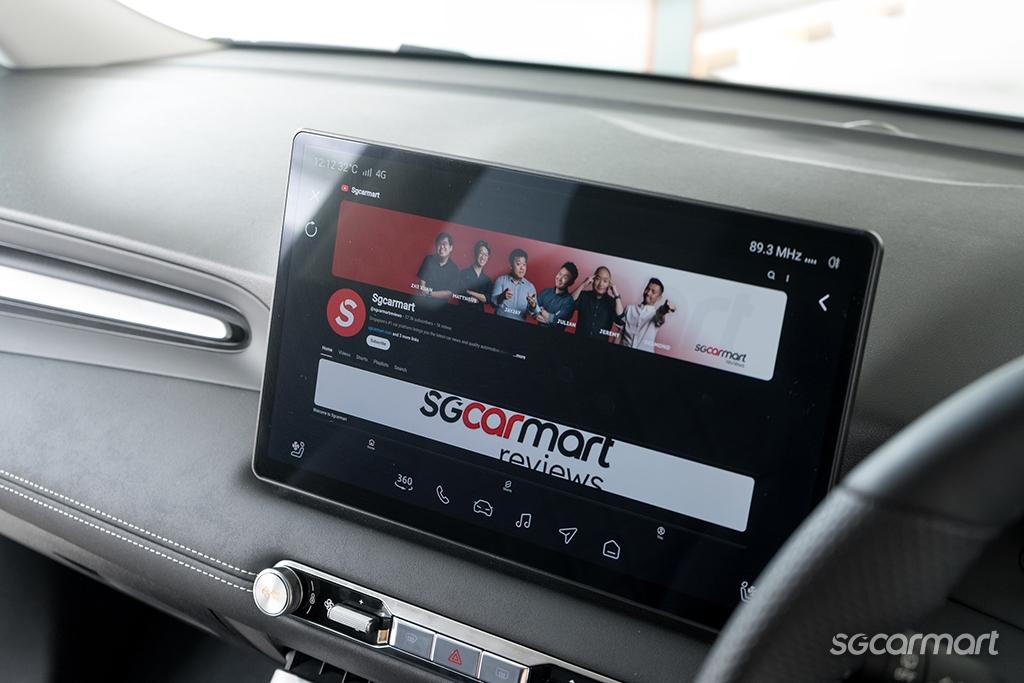
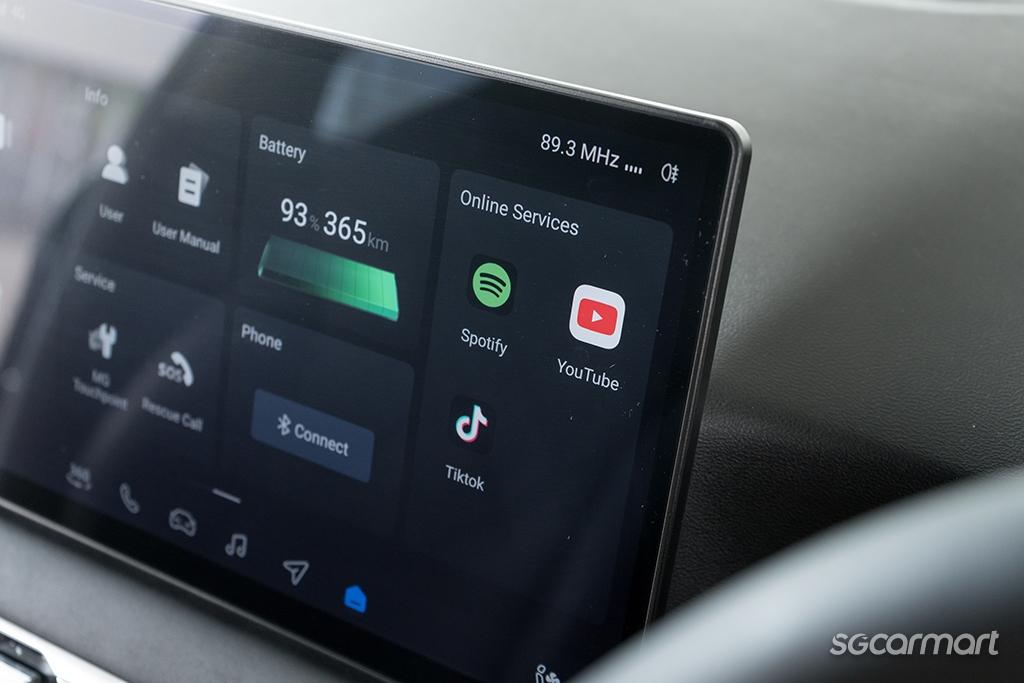
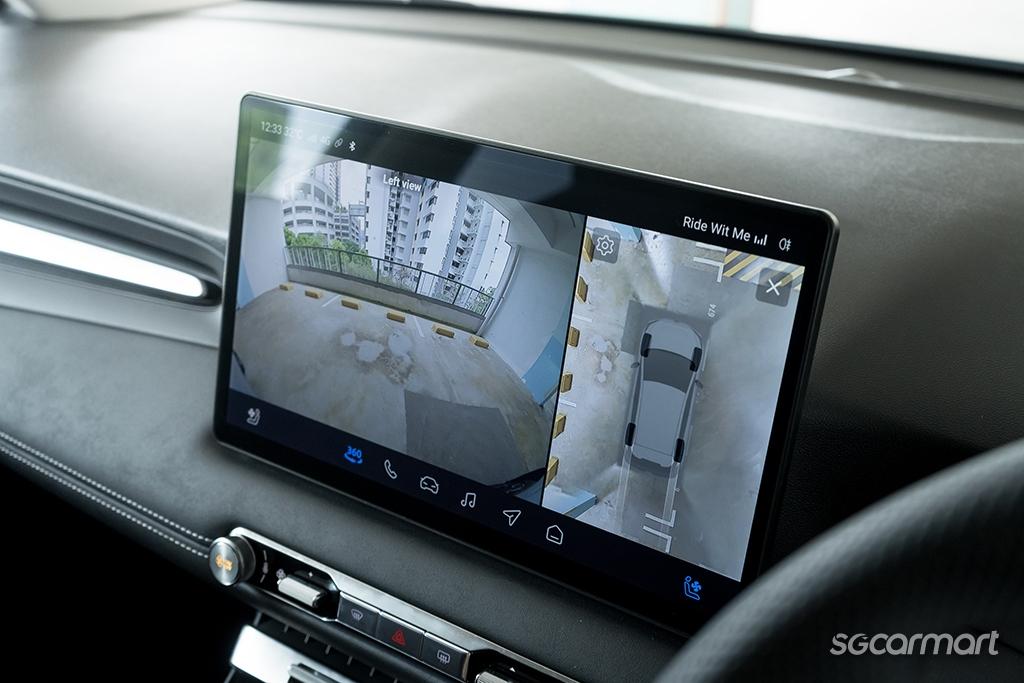
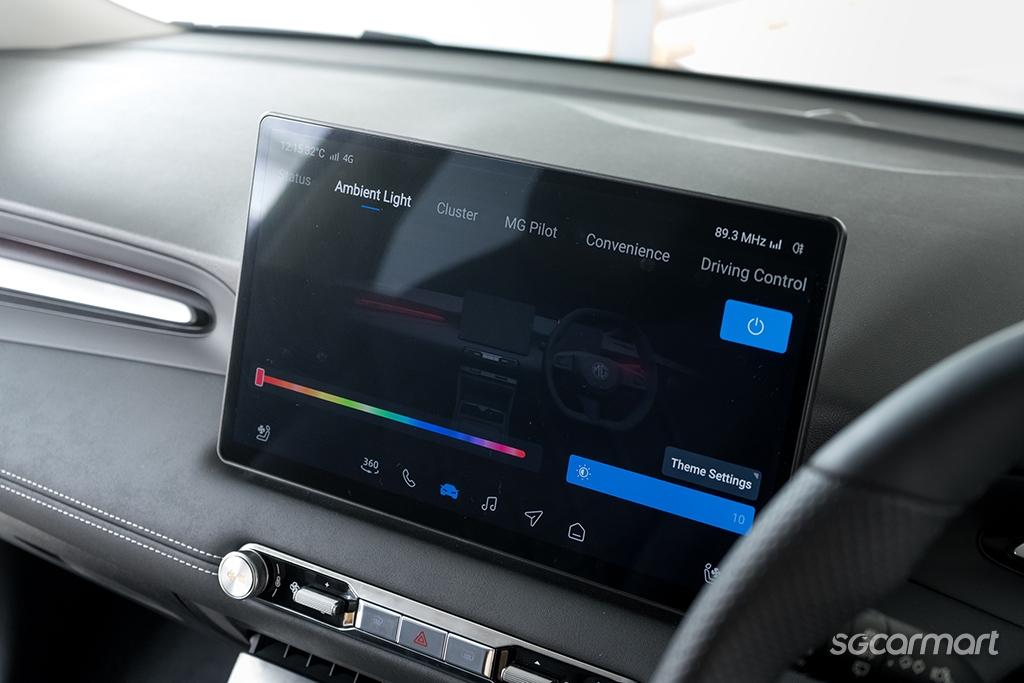
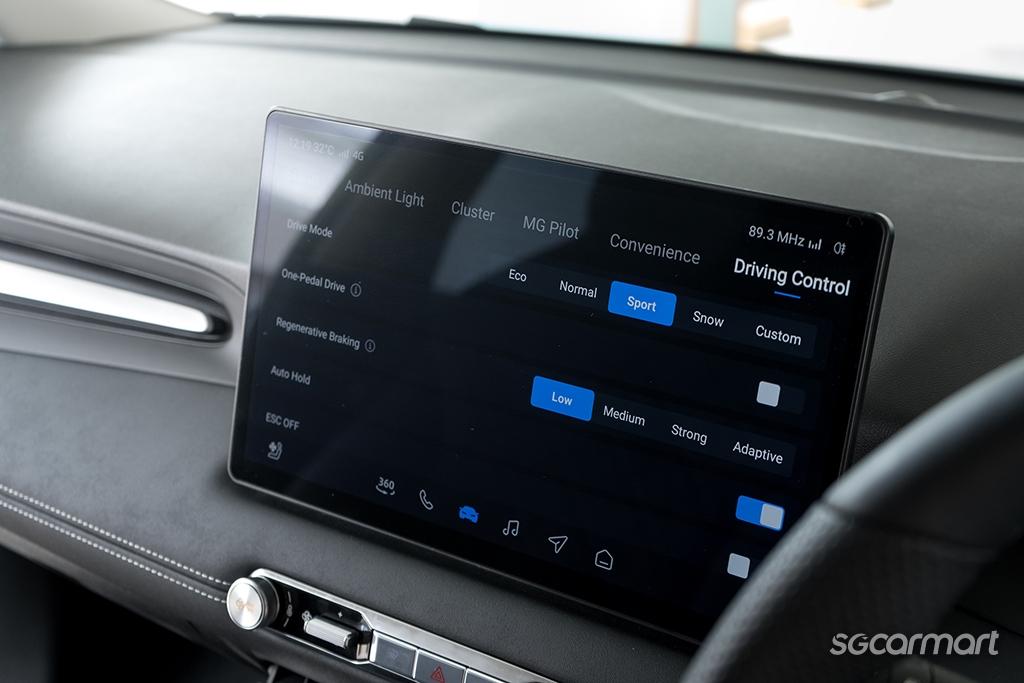
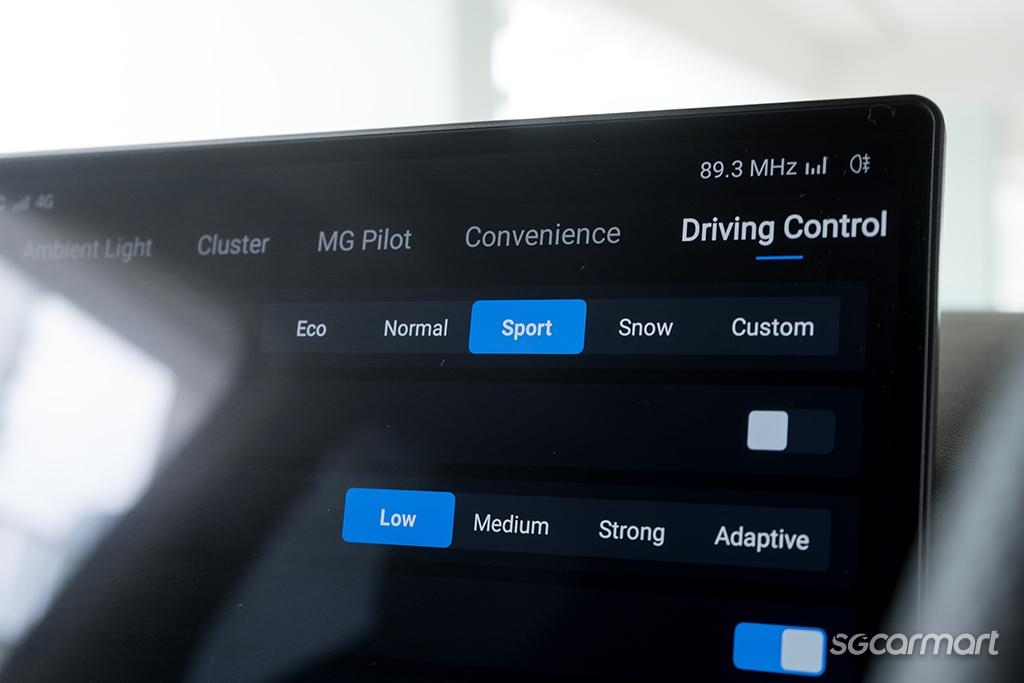
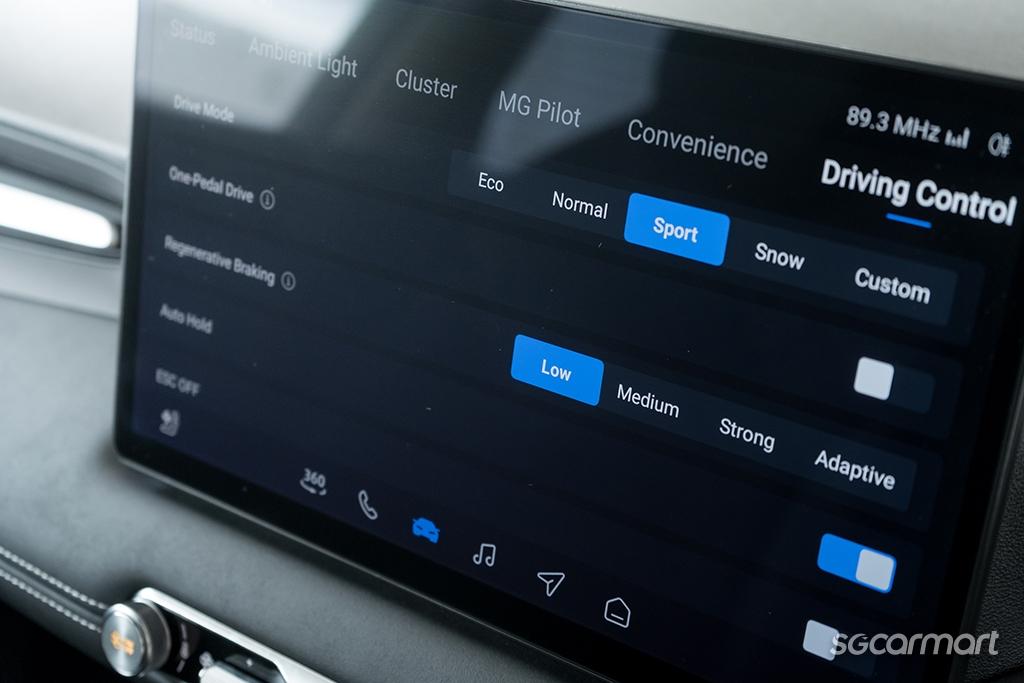
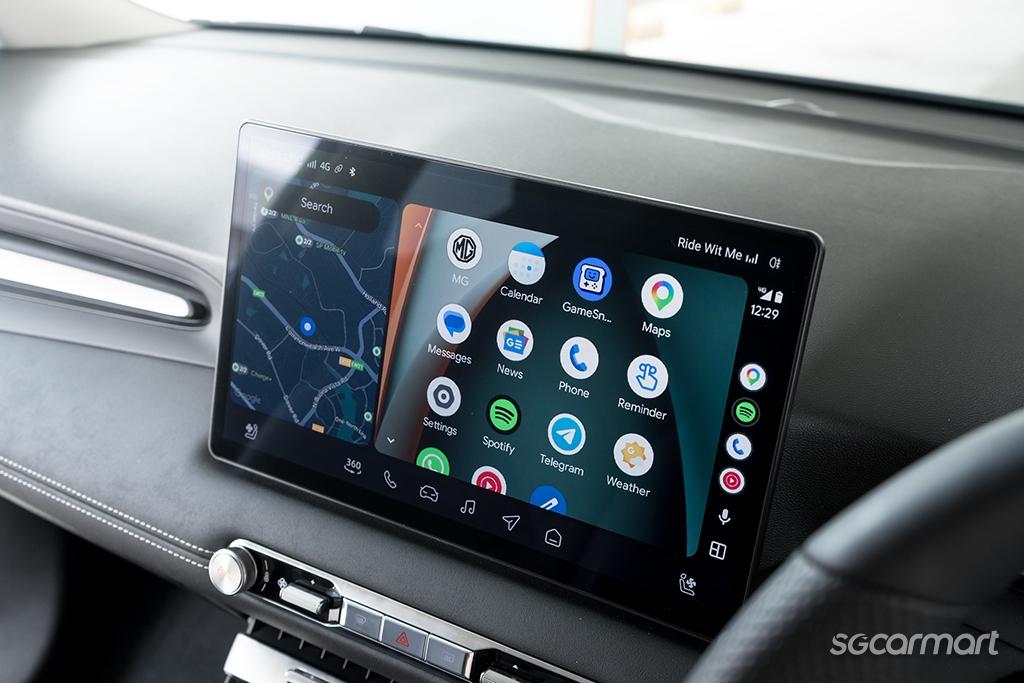
Yes, there are some digital upgrades. The screen has been upsized, now a 12.8-inch unit. The interface now sports sharper, more stylish graphics.
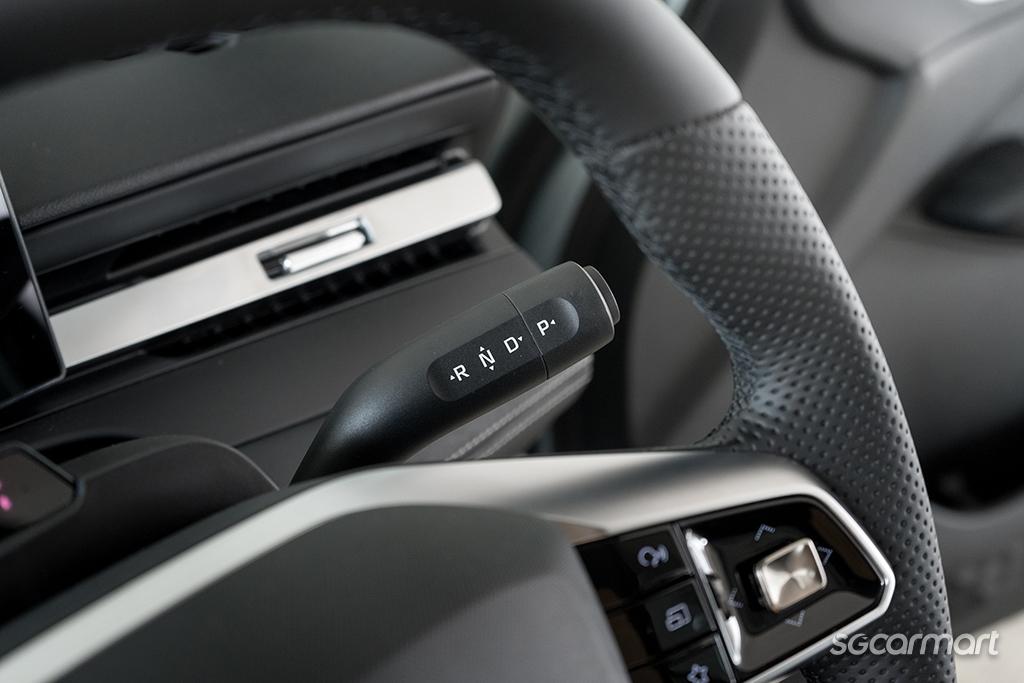
The centre console has been radically redesigned. The gear selector rotary dial has been ditched in favour of a steering column-mounted stalk.
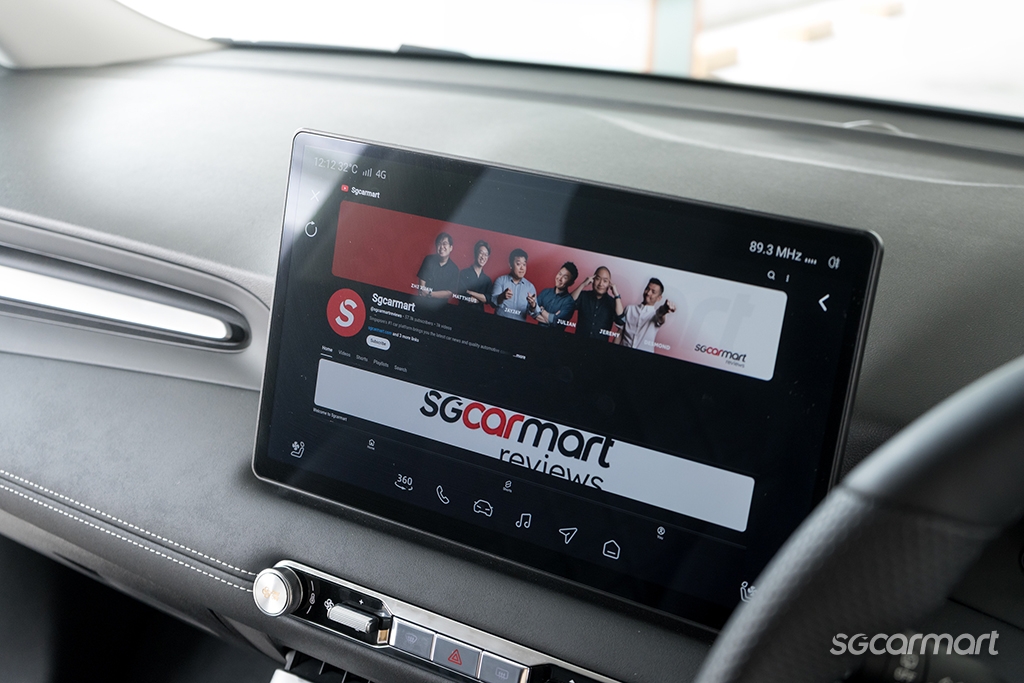
The infotainment screen has been upsized to 12.8-inches, and has sharper graphics
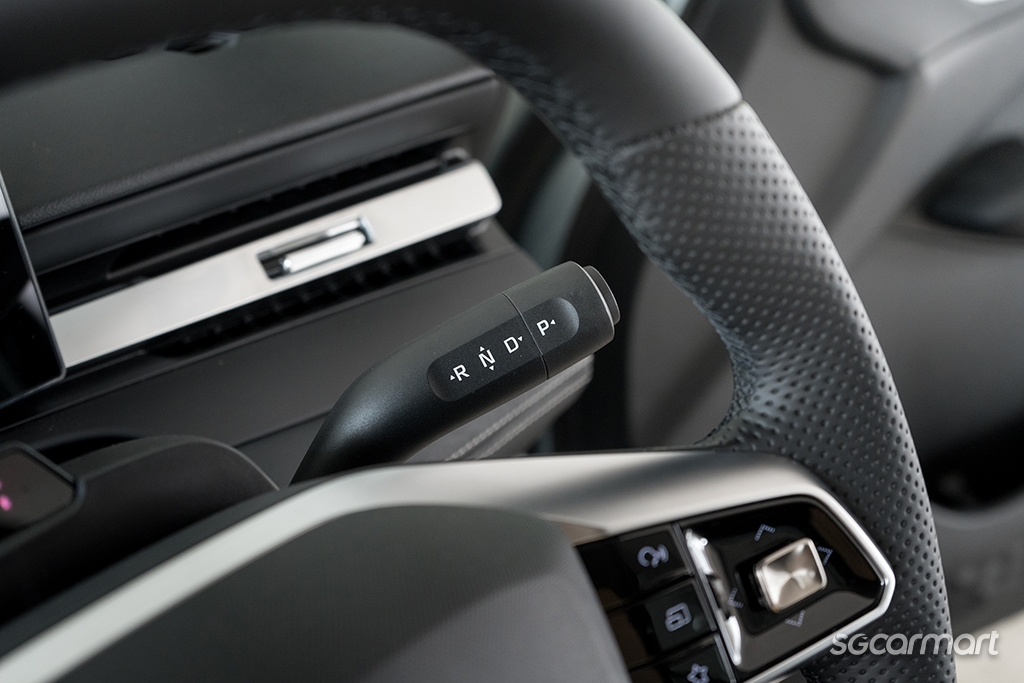
A steering column-mounted stalked is used to engage your driving gears
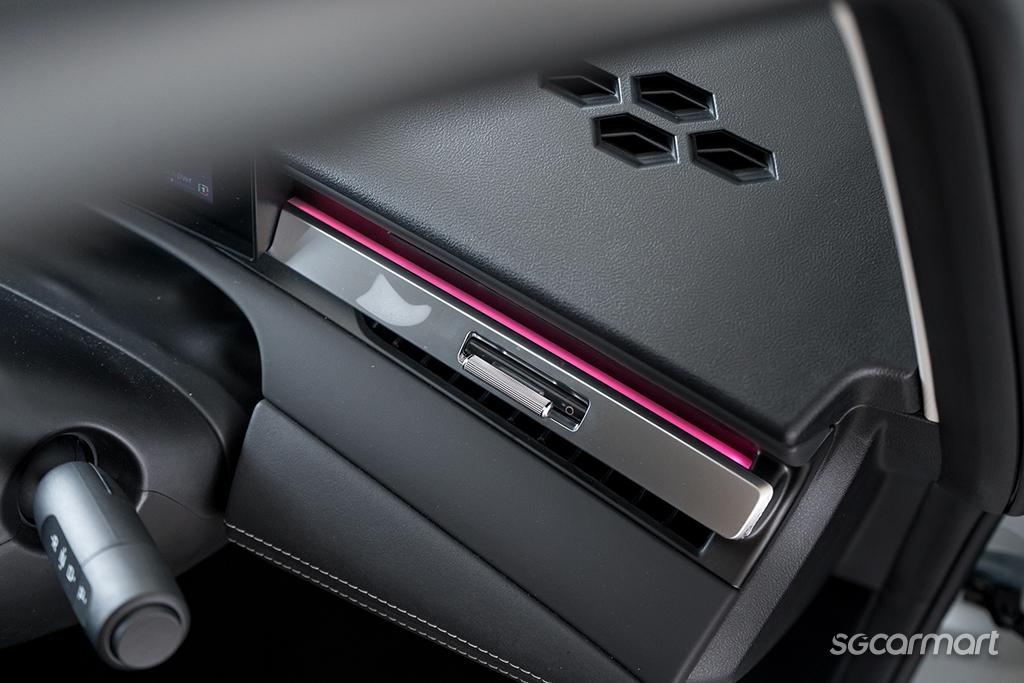
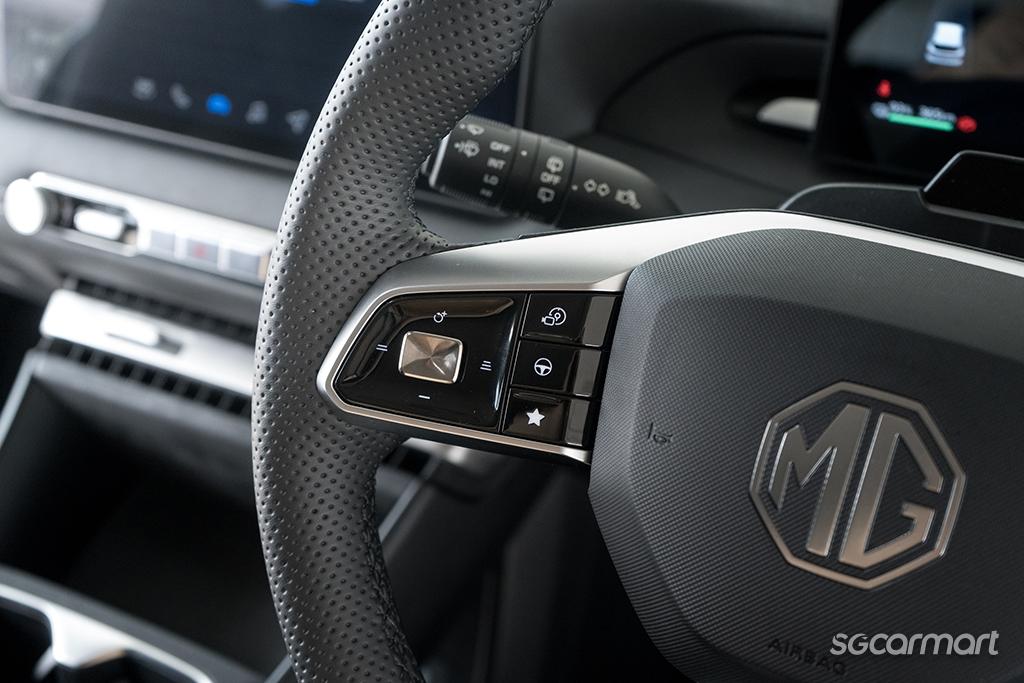
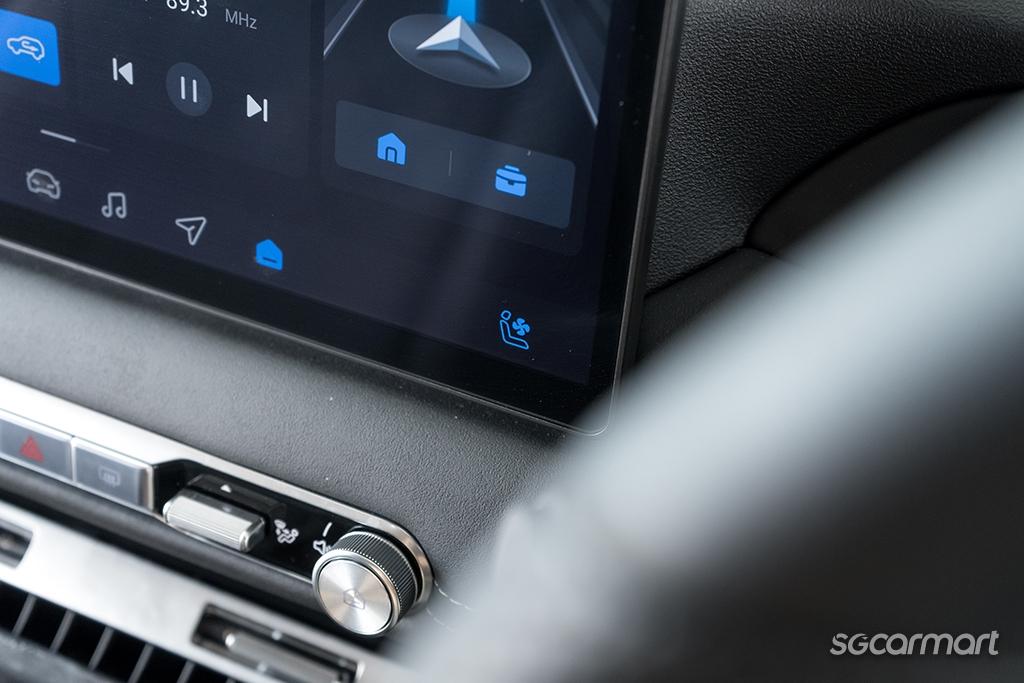
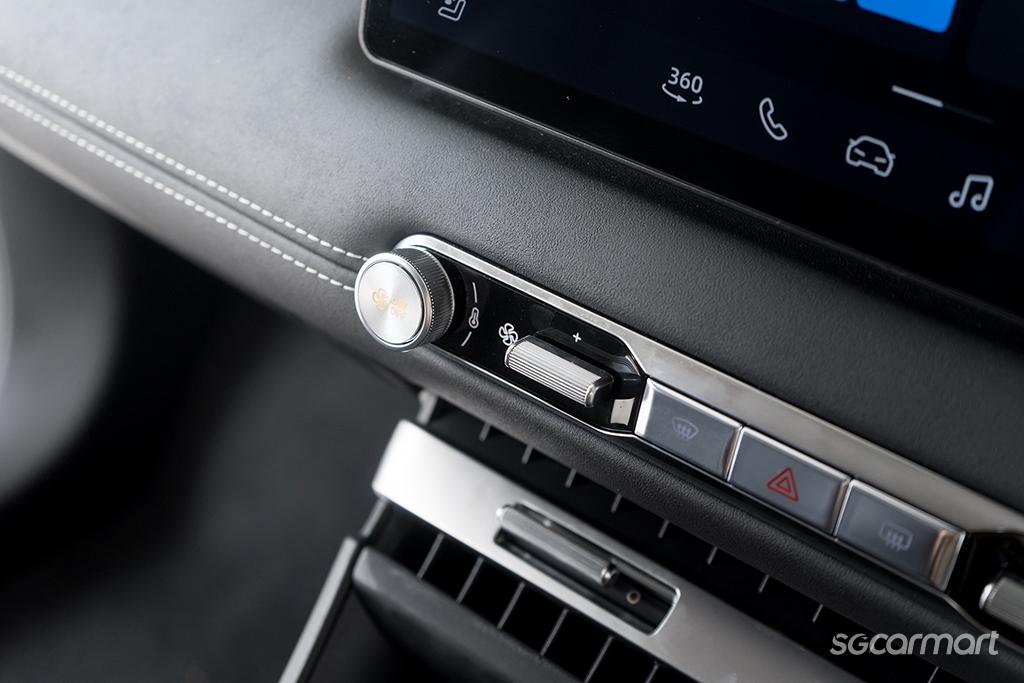
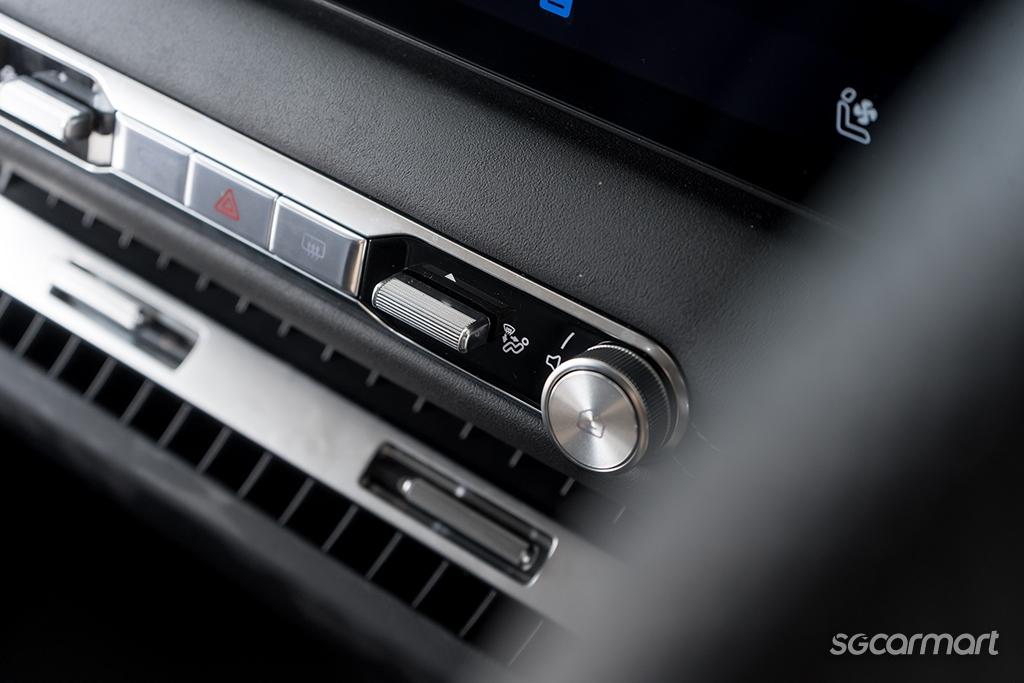
But what i appreciate is that there's still plenty of simple, physical controls, all of which are immediately intuitive and obvious to operate. Physical air-con controls, physical wind mirror adjustment controls (even though you can digitally adjust them from the screen), two assignable shortcut buttons on the steering wheel.
Heck, there's even a basic door handle - a surprising relief compared to the slew of button-based door-opening mechanisms these days. (I cannot recount how many times I've had friends in new cars who were perplexed about how to open the door.)
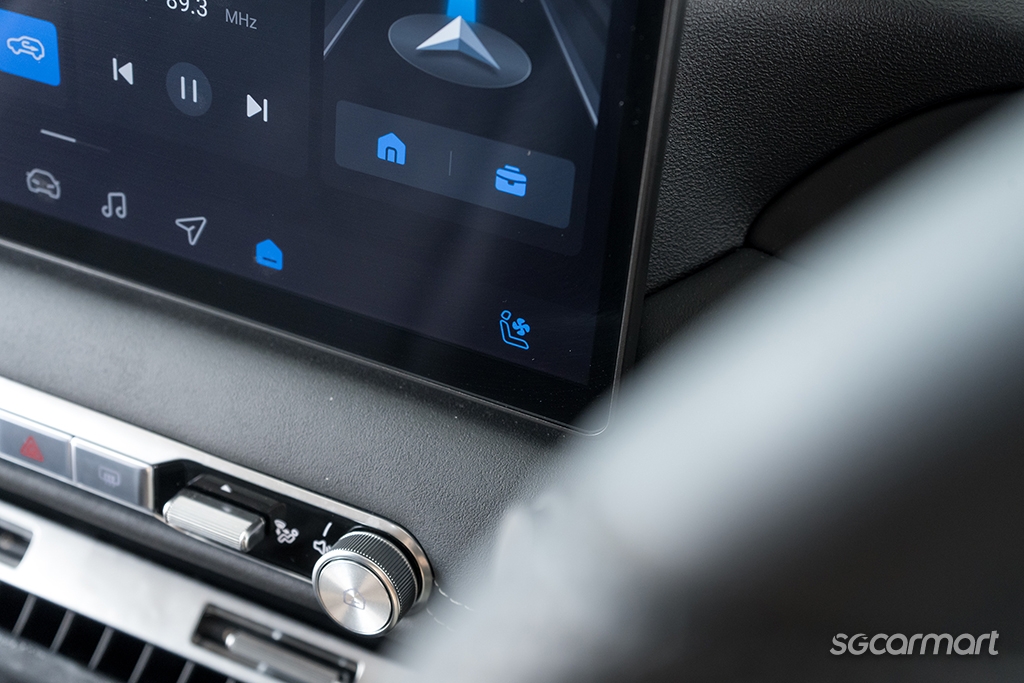
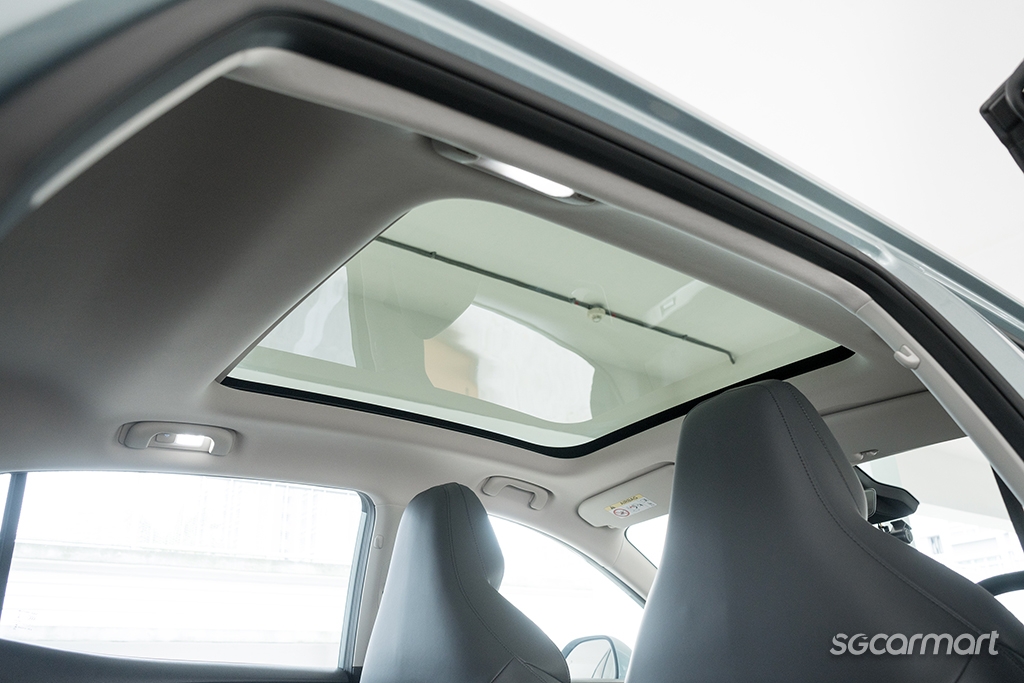
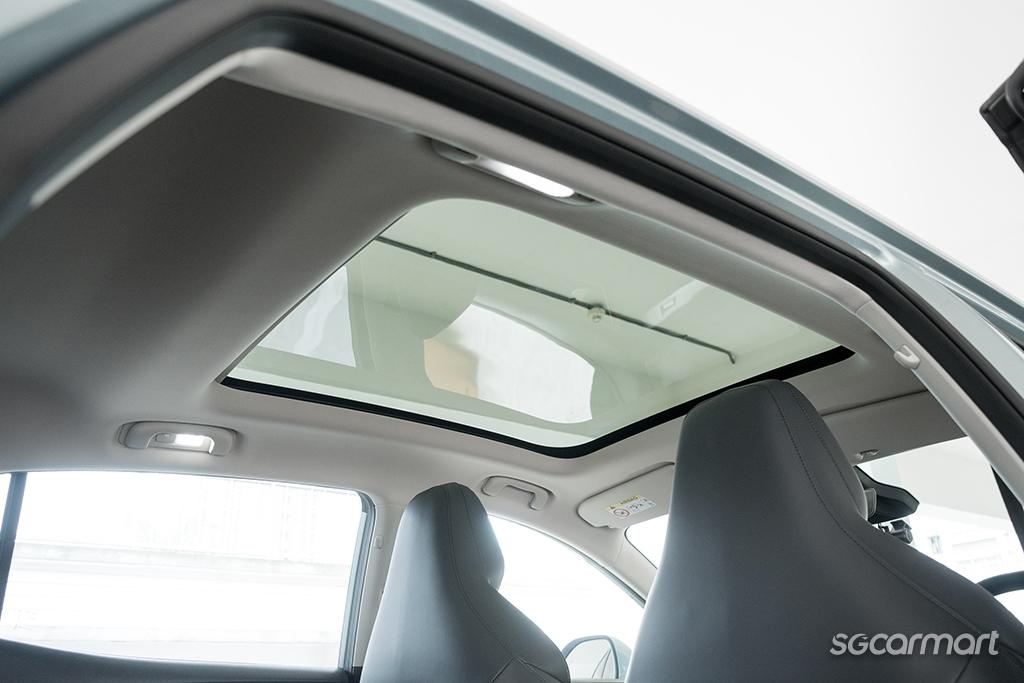
There's more standard equipment now, like ventilated front seats and a panoramic glass roof
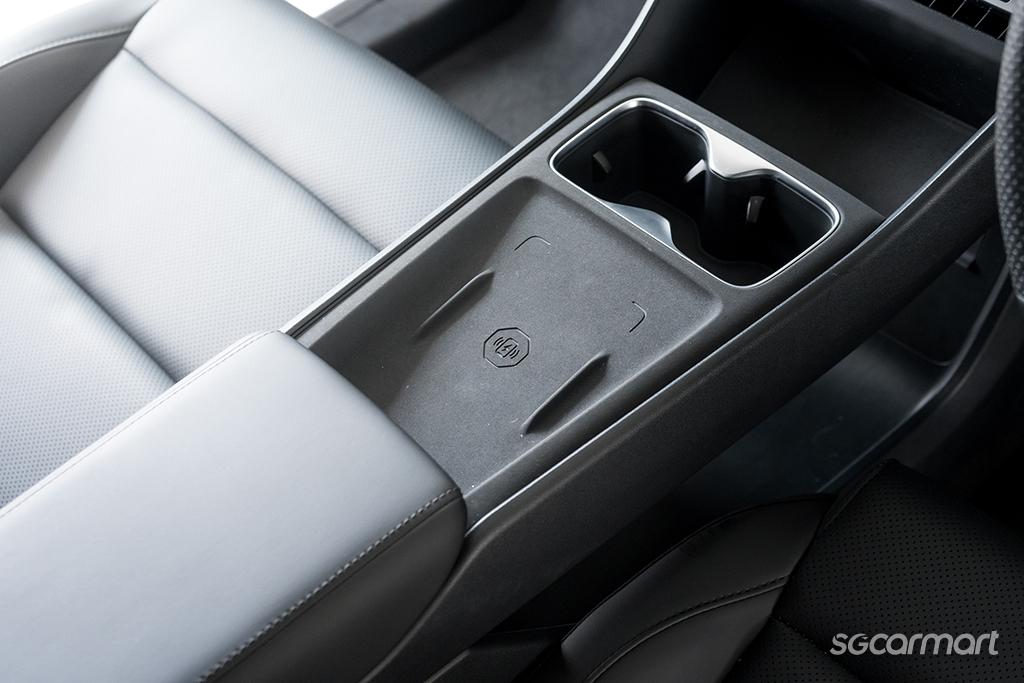
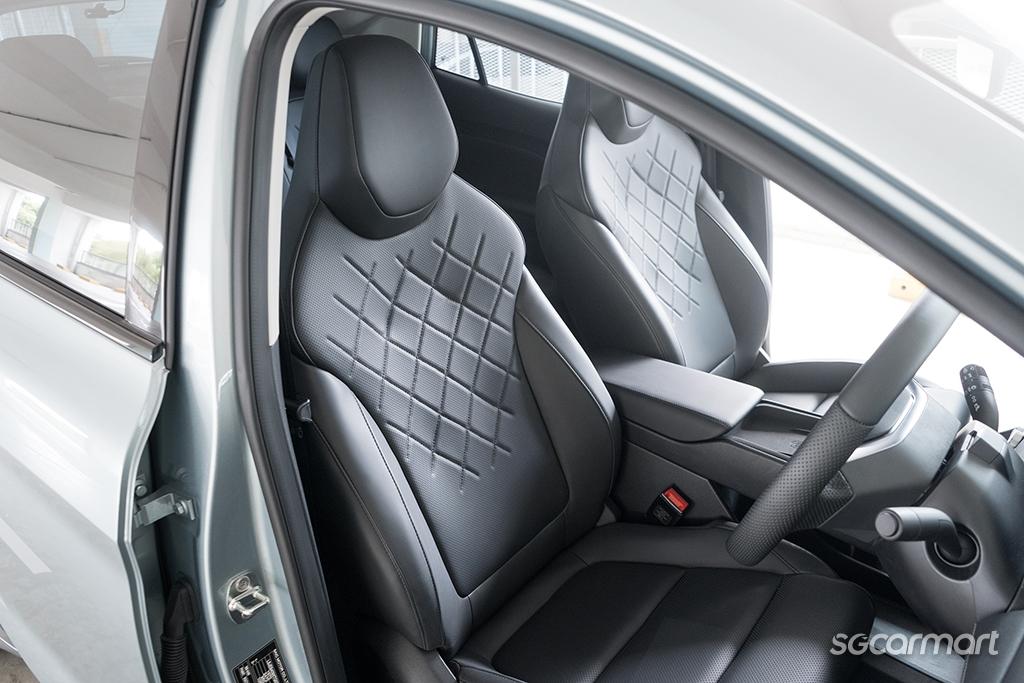
Equipment levels have improved, too. You get ventilated front seats, though there’s only one level of ventilation (i.e. on/off). The wireless charging pad tops out at 15W. There's now a panoramic glass roof.
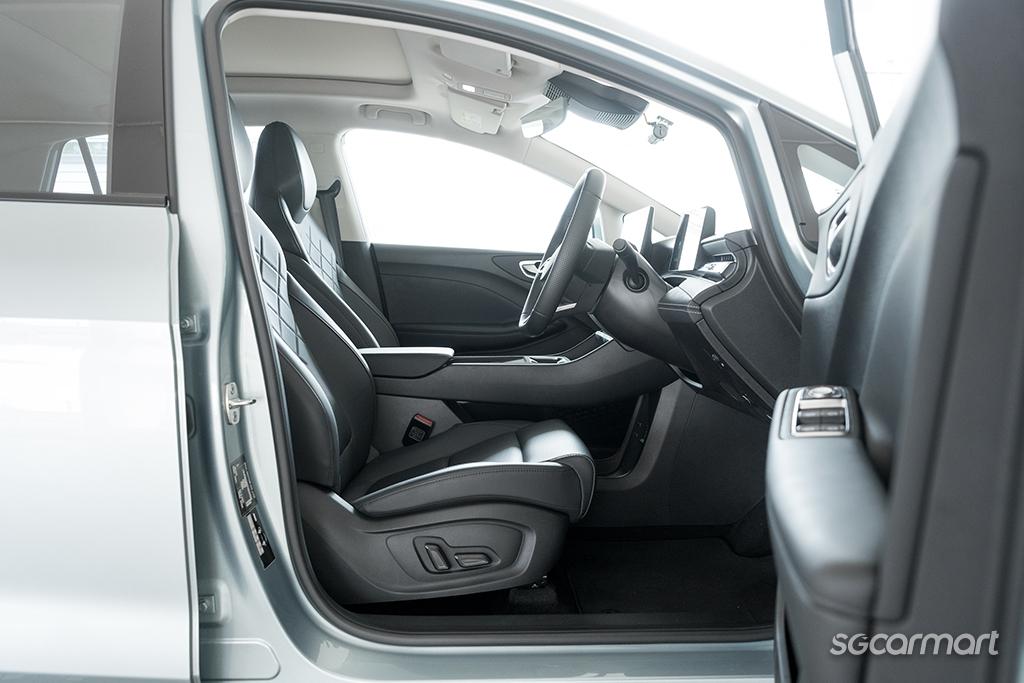
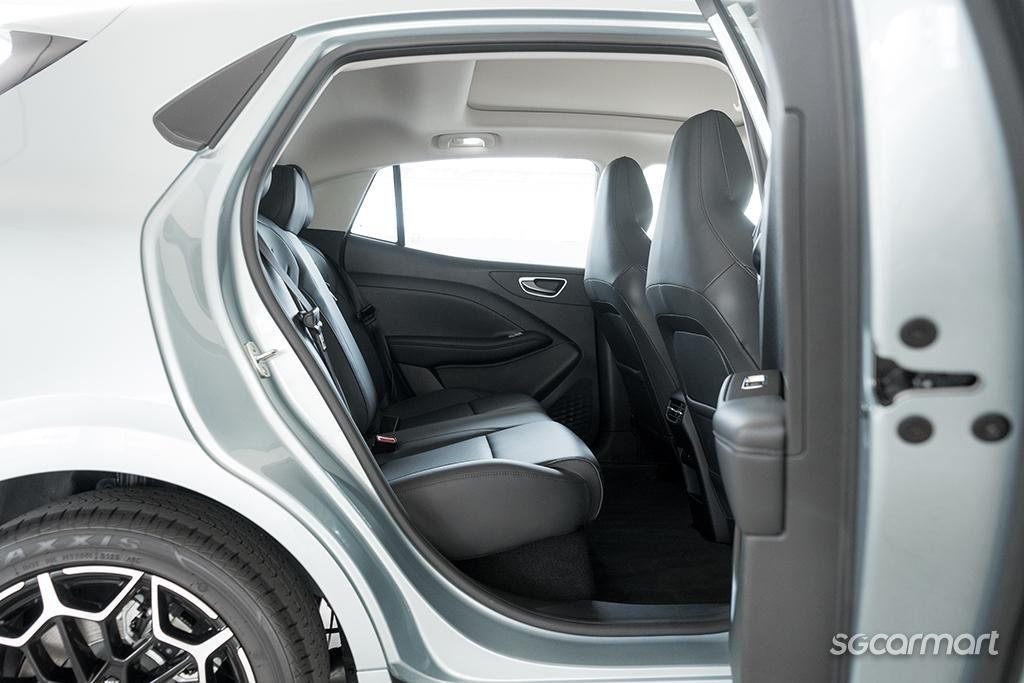
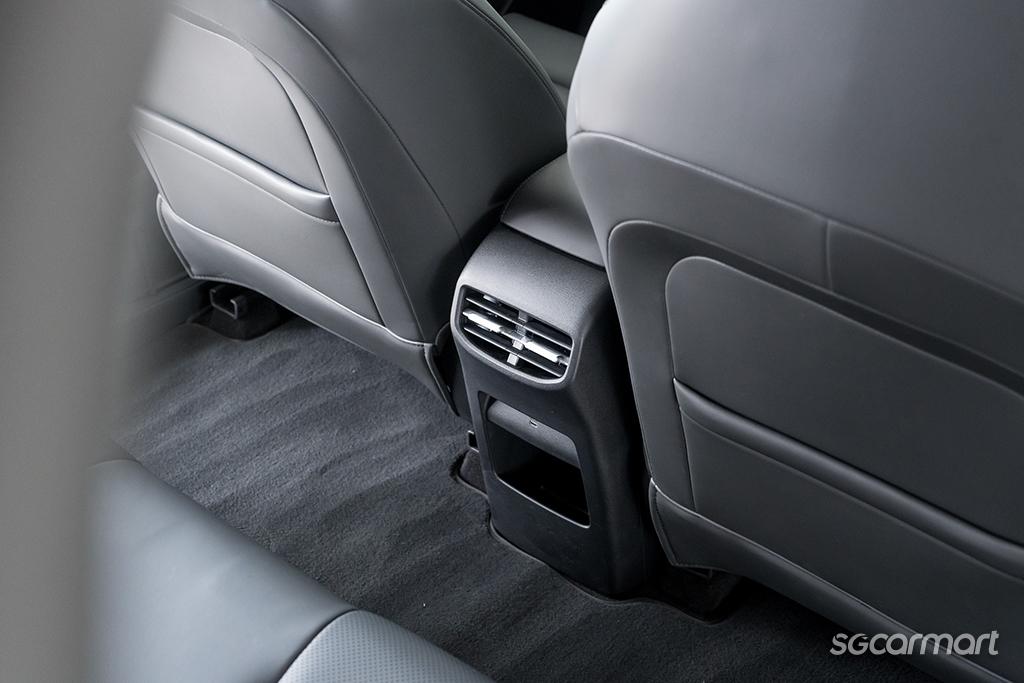
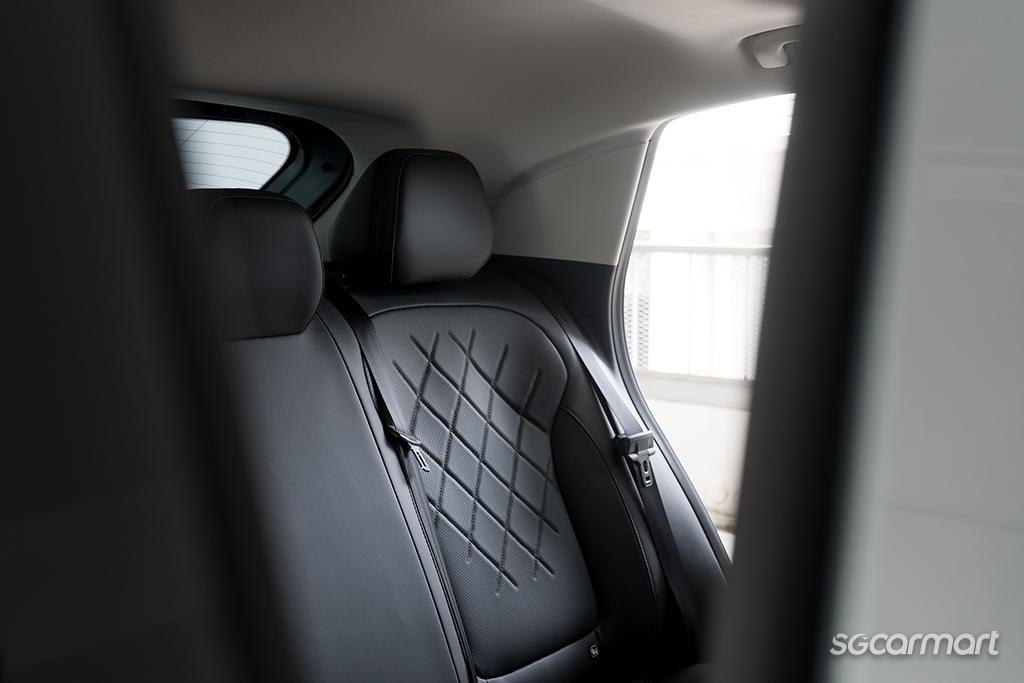
The extra wheelbase translates to more cabin space, which you will feel in the rear. While it’s still ultimately a small car, rear passengers benefit from slightly more legroom. The slight hump in the middle of the floor is also gone, so the middle passenger will feel more comfortable.
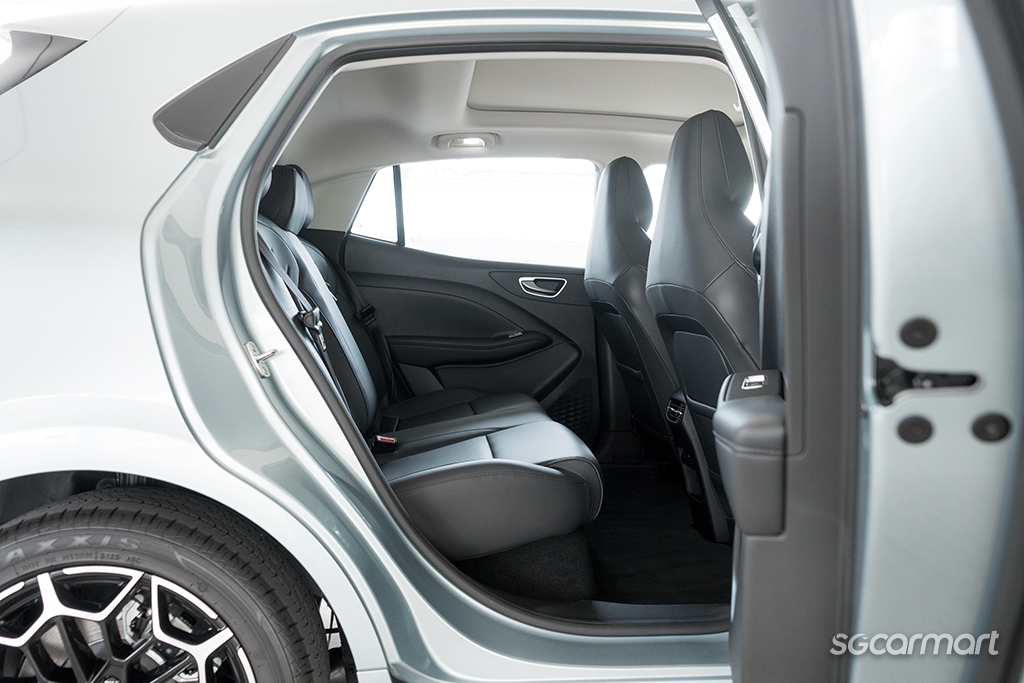
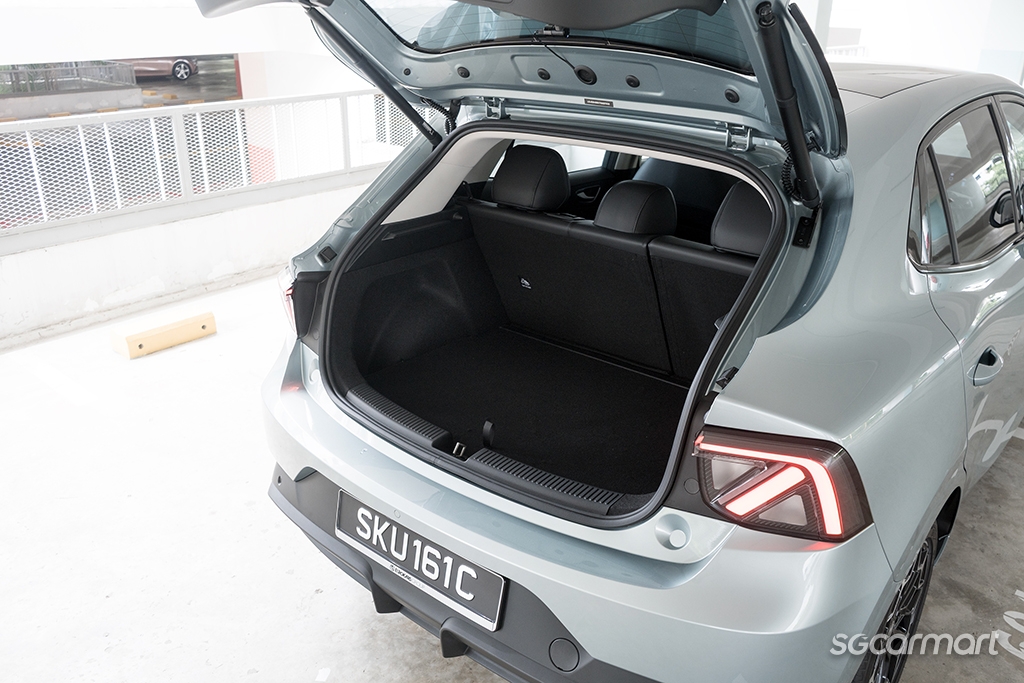
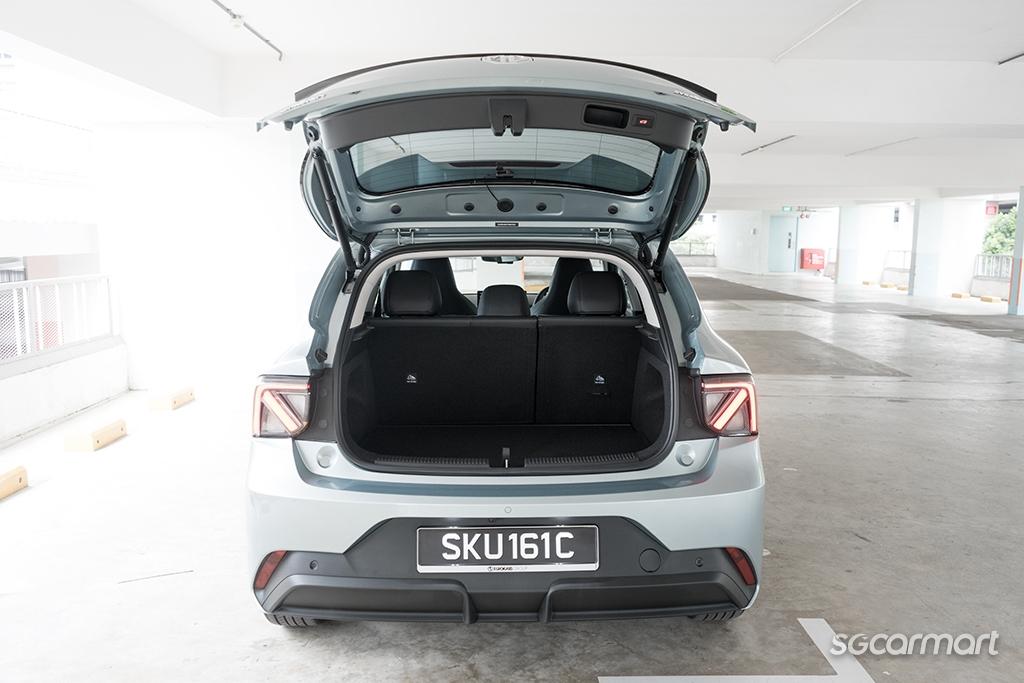
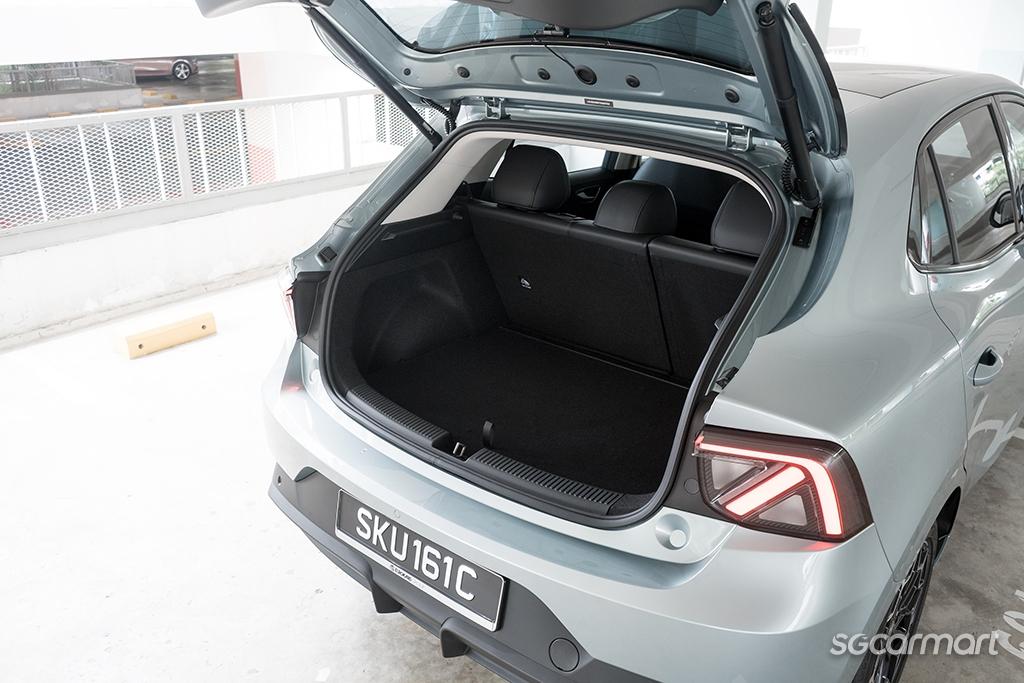
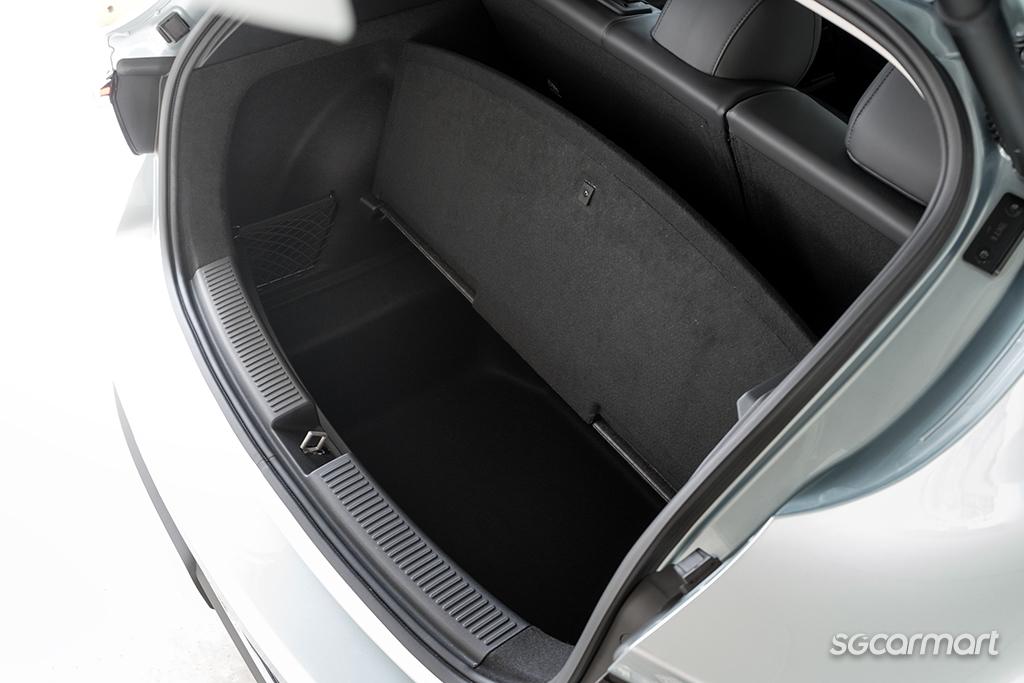
The move to a FWD platform as two notable packaging benefits - more rear legroom, as well as increased boot space
Cargo space has grown from 398 litres to 480 litres - another obvious benefit of the electric motor being moved from the rear axle to the front.
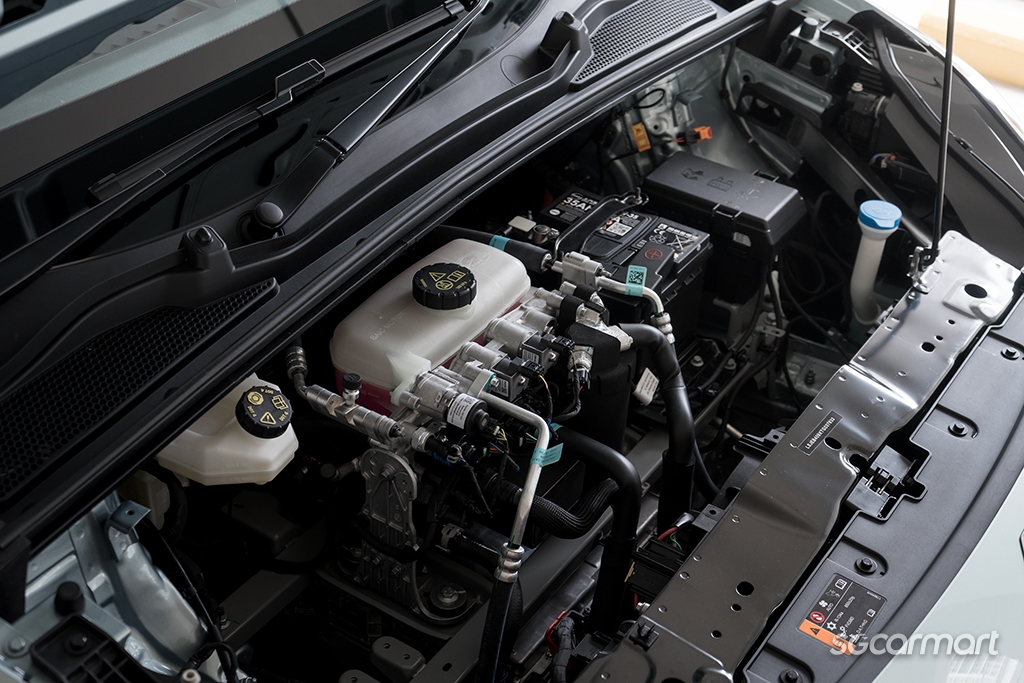
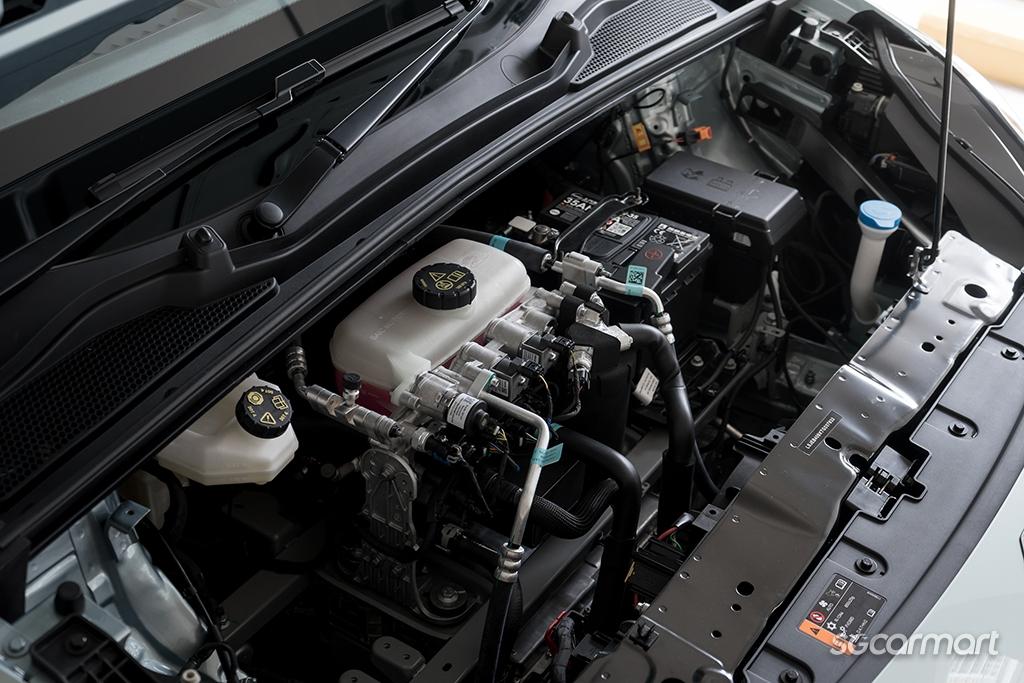
The single electric motor sends 99kW and 250Nm of torque to the front wheels
The move to this new platform means that the MG 4 Urban is now strictly front-wheel drive - the trade-off for more efficient packaging and all-around energy efficiency is some sportiness. And yes, the car has lost some of its sharpness and pointiness.
That said, I don’t think it's a great loss, nor one that most drivers will distinctly feel. The overall setup is still pliant with a touch of firmness, and there's still a nice weight to the steering wheel. From a handling standpoint, it is still responsive enough.
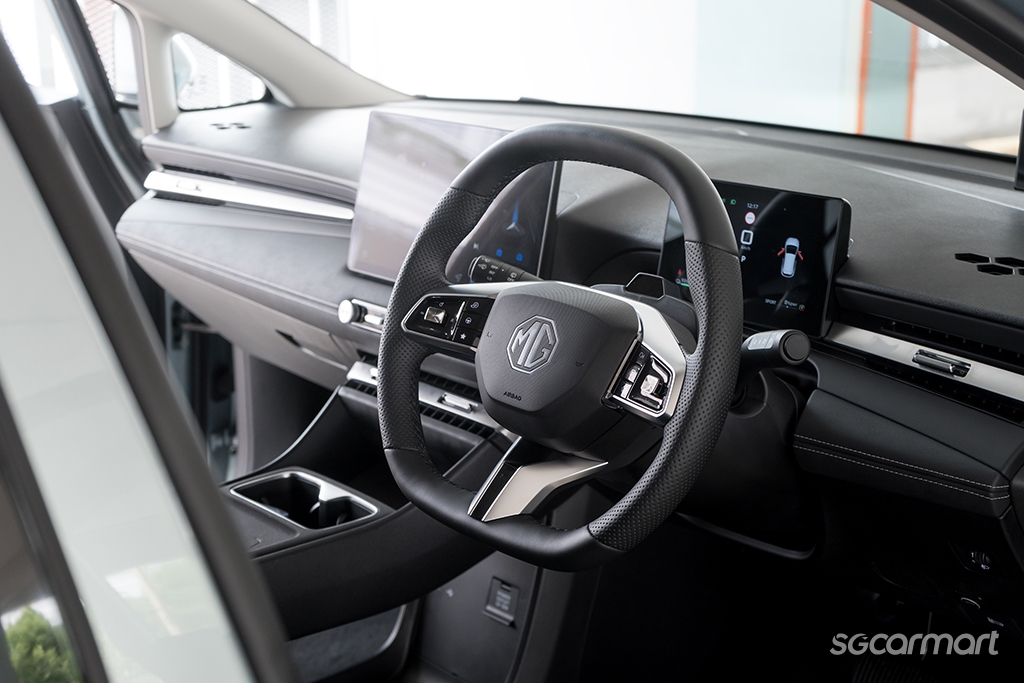
The steering wheel still has a nice weight to it
And, because power output is unchanged at 99kW and 250Nm of torque, there's still more than ample burst of speed even as a Cat A model.
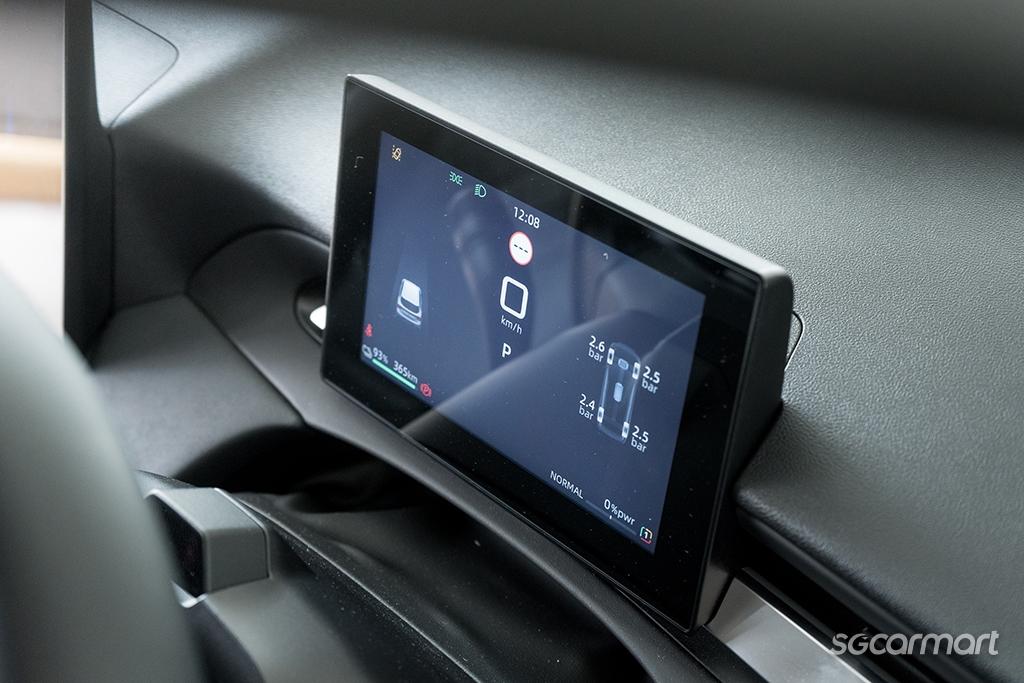
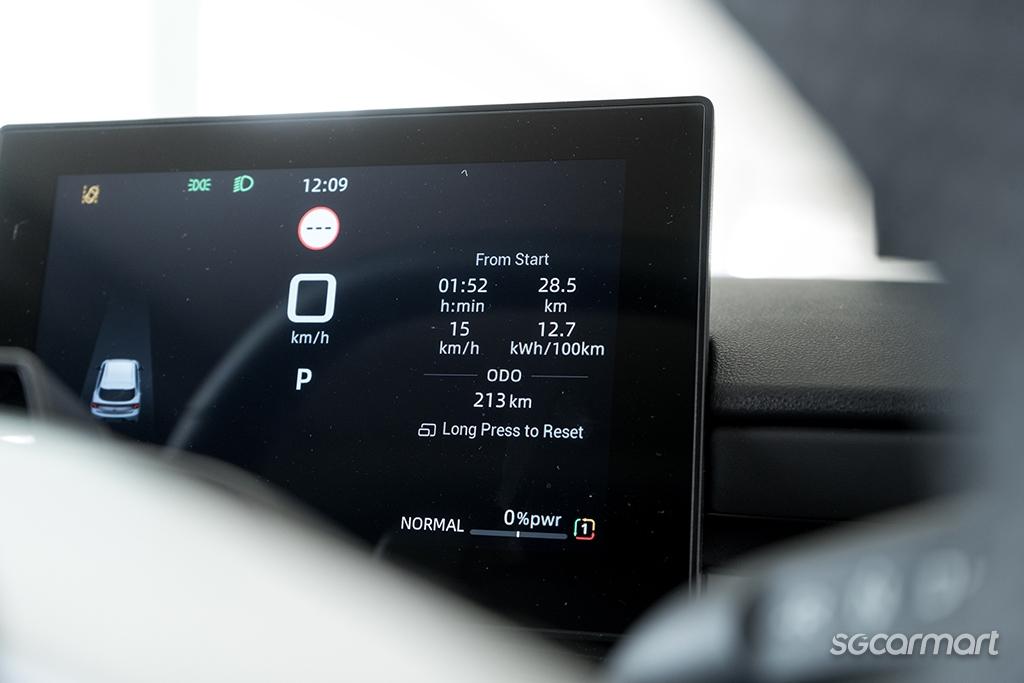
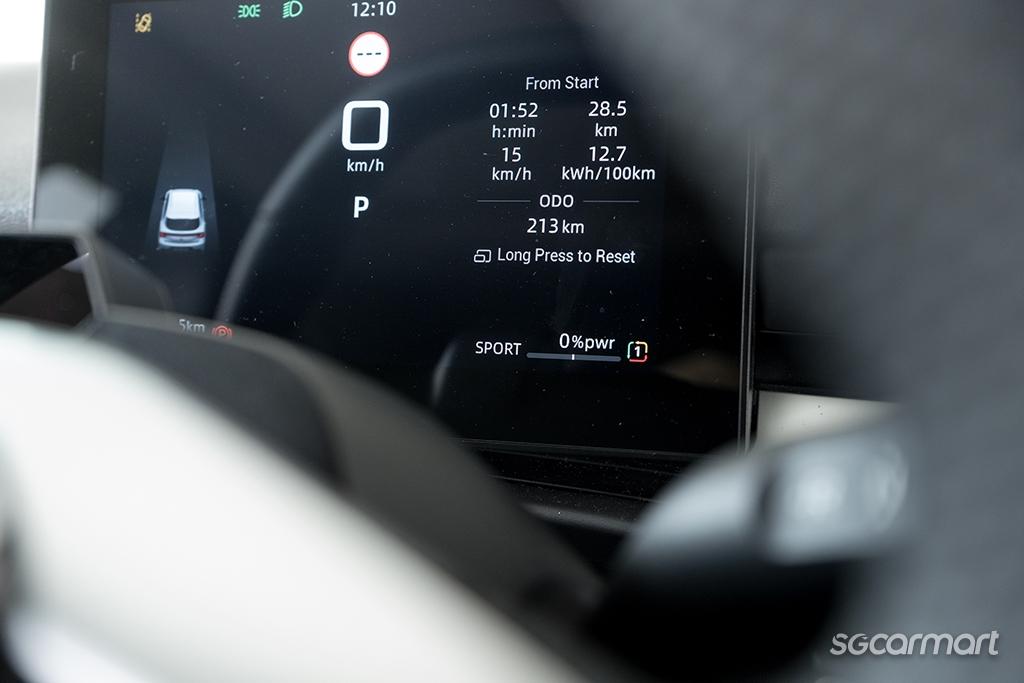
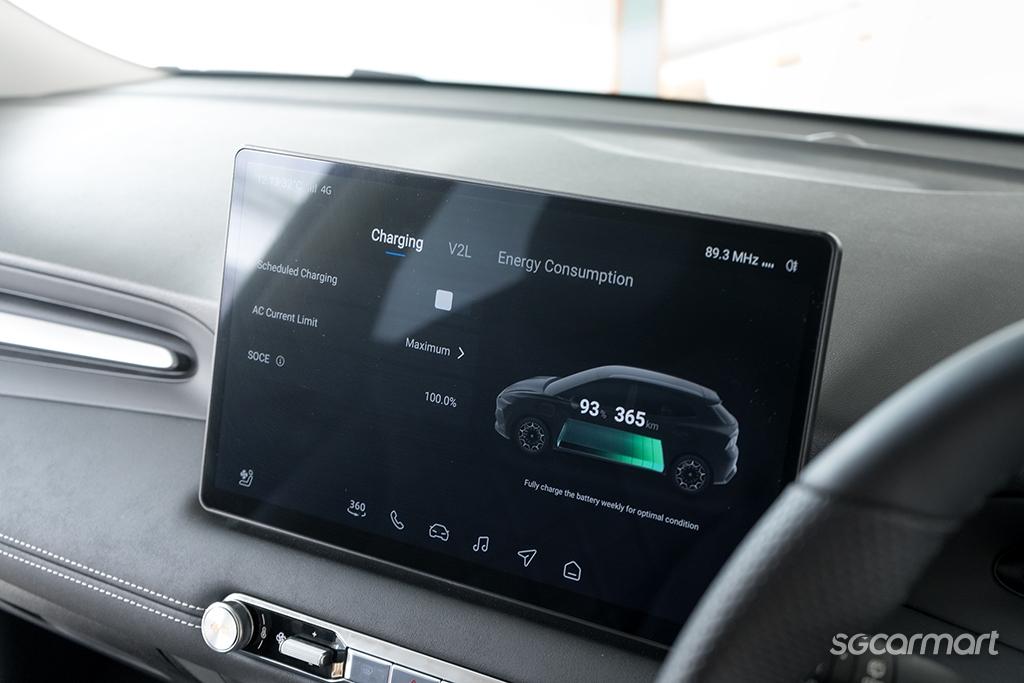
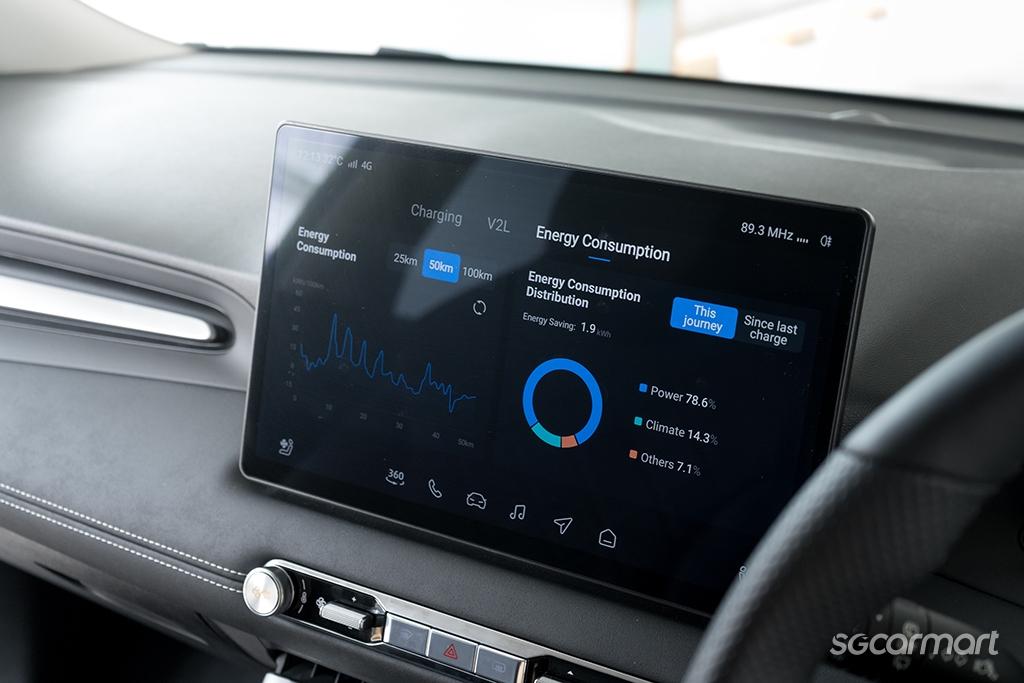
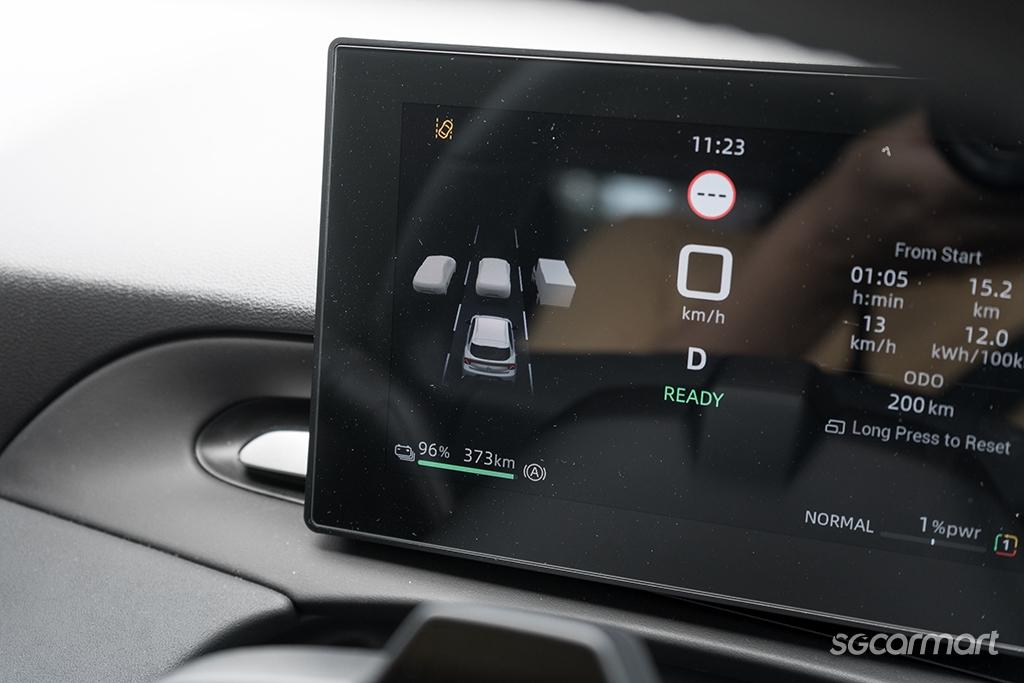
The MG 4 Urban also now has a smaller battery capacity, down from 64kWh to 54kWh. MG claims 405km of combined WLTP range, and with my driving patterns and a recorded figure of 6.76km/kWh (in fact better than the 5.8km/kWh we recorded in the first-gen Cat A model), I would be able to achieve 365km. For a somewhat small-capacity battery, that's a good number. Efficiency is also helped by the fact that the car is lighter, 1,685kg down to 1,520kg.
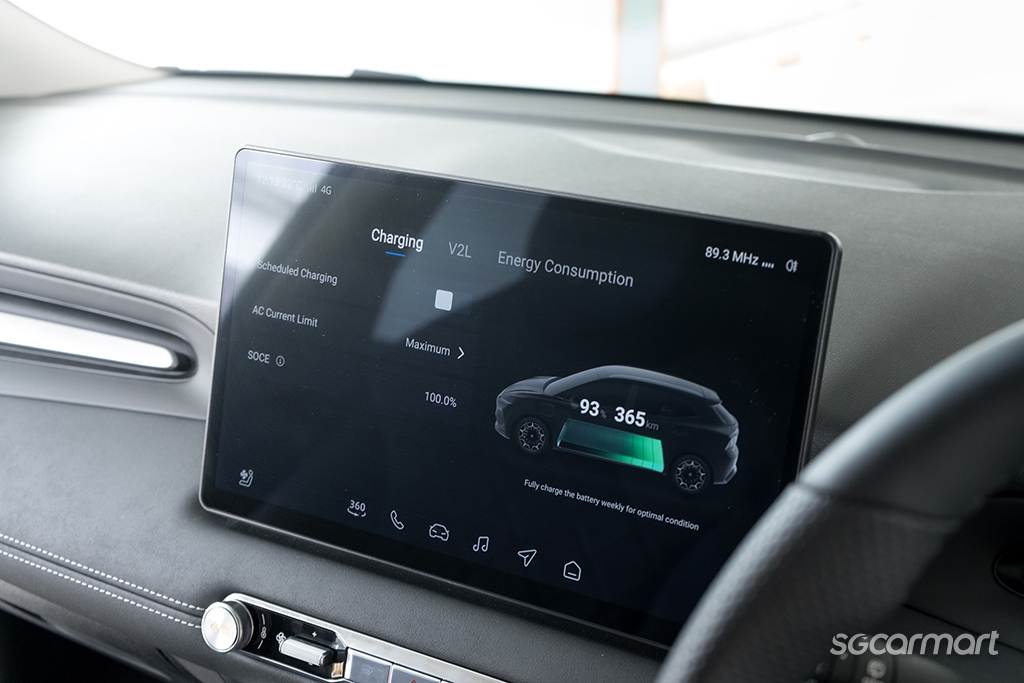
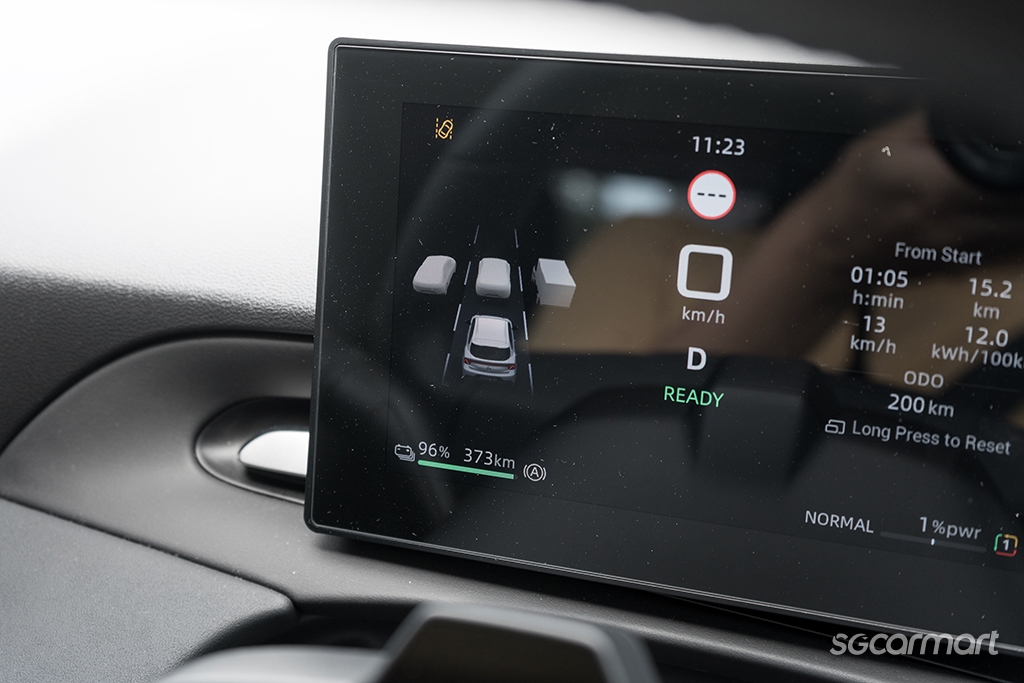
Drive reasonably and you should still be able to get around 370km of range on a full charge
Battery chemistry is also different - now LFP instead of NMC. I don't want to get bogged down in technical details, but the two important takeaways are that LFP batteries are cheaper to produce, and last longer. Also, AC charging has gone up to 11kW, though DC charging has dropped to max 82kW (not a worry, DC charging from 10-80% takes just 30 minutes).
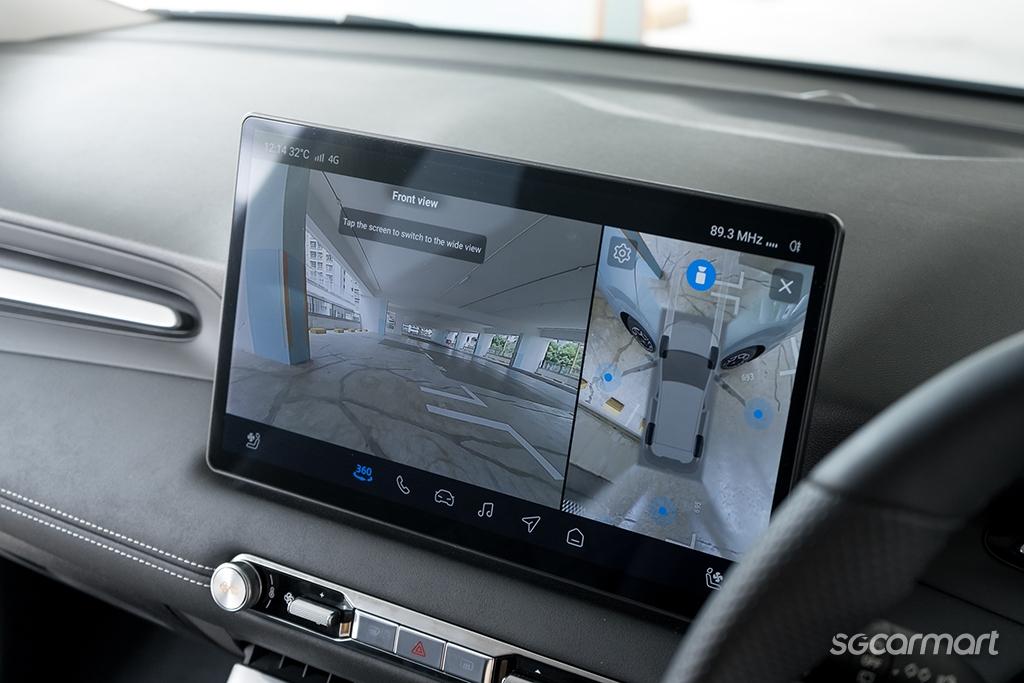
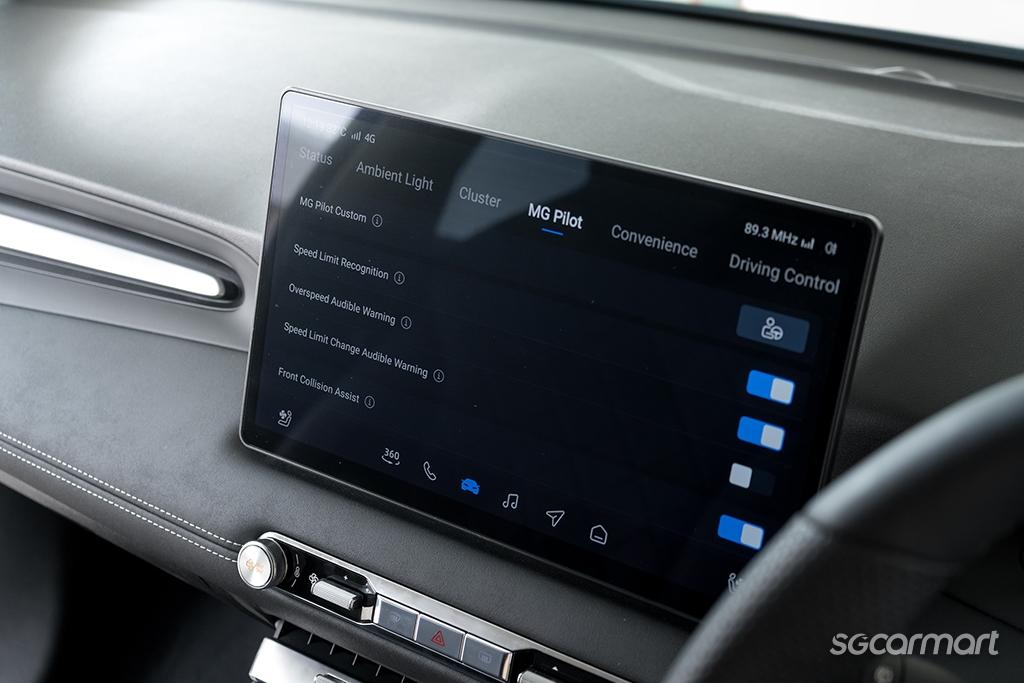
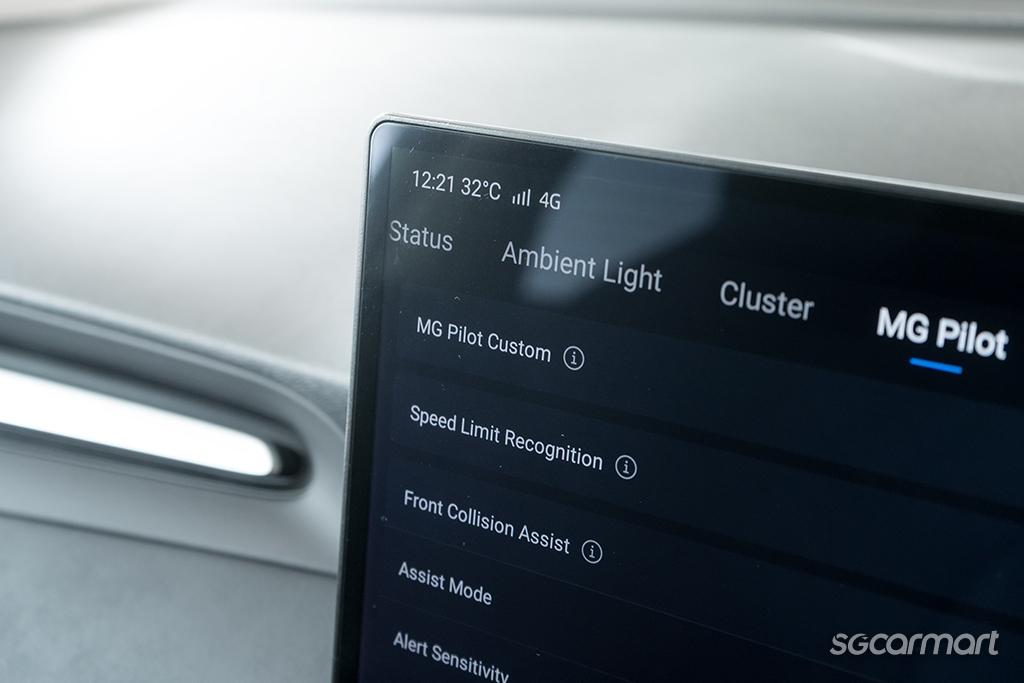
And, there's actually more ADAS systems than before, with this model now including driver distraction and fatigue monitoring, front collision assist, rear collision warning, and a speed assist warning that I always immediately switch off. It's also now got an auto-hold function - I personally like using it, though I know some drivers who always switch it off.
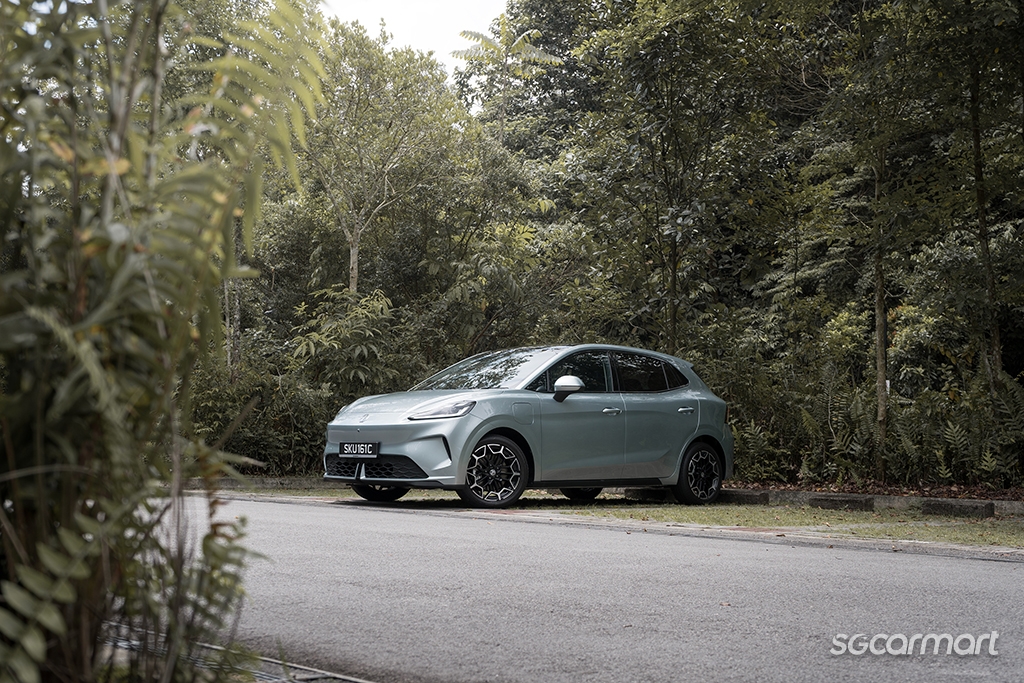
It's important to contextualise the brand's (global) intent with this MG4 Urban: To make a compact hatchback specifically targeted for city use, and concurrently also to make it more affordable for buyers.
The move to the new platform facilitates that: The cell-to-body construction, a smaller size battery, a "simpler" platform, these are all cost-saving measures from a manufacturing perspective.
And the numbers back that up: This MG4 Urban's OMV stands at $19,000, quite a lot lower than the first-gen model whose OMV was in the $23k range.
Not that the car feels any cheaper. In fact, equipment levels have gone up. Though the battery is smaller, the car is basically similarly efficient as before, with a comparable amount of range from the battery. And while some may moan the loss of RWD sportiness, the reality is that all things considered, this is just a better, more improved car than before. It's a trade off well worth making, in my opinion.
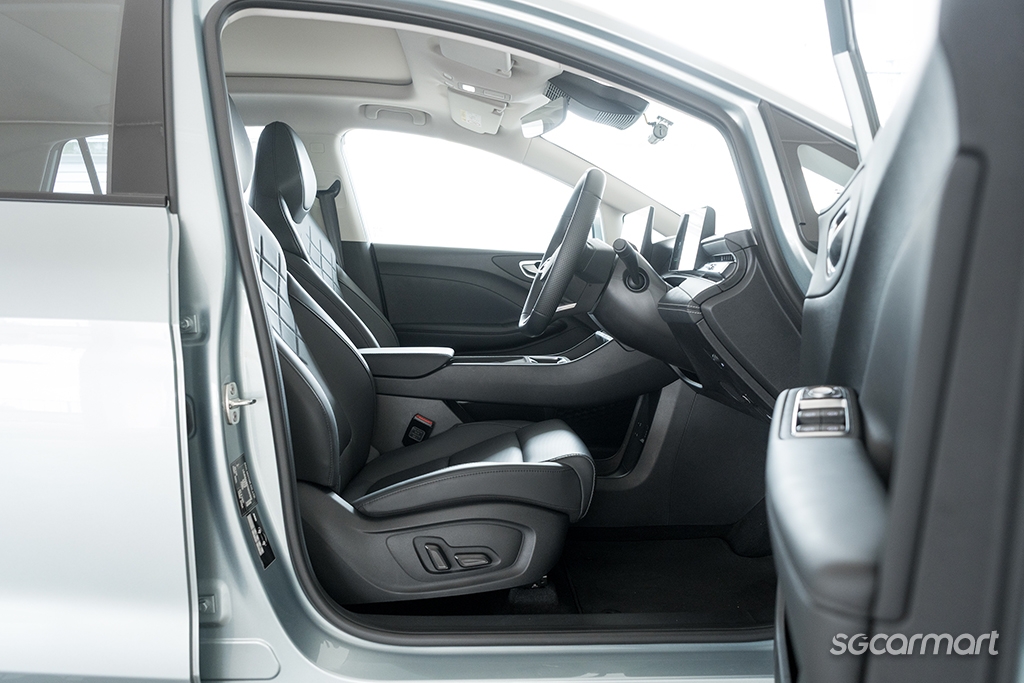
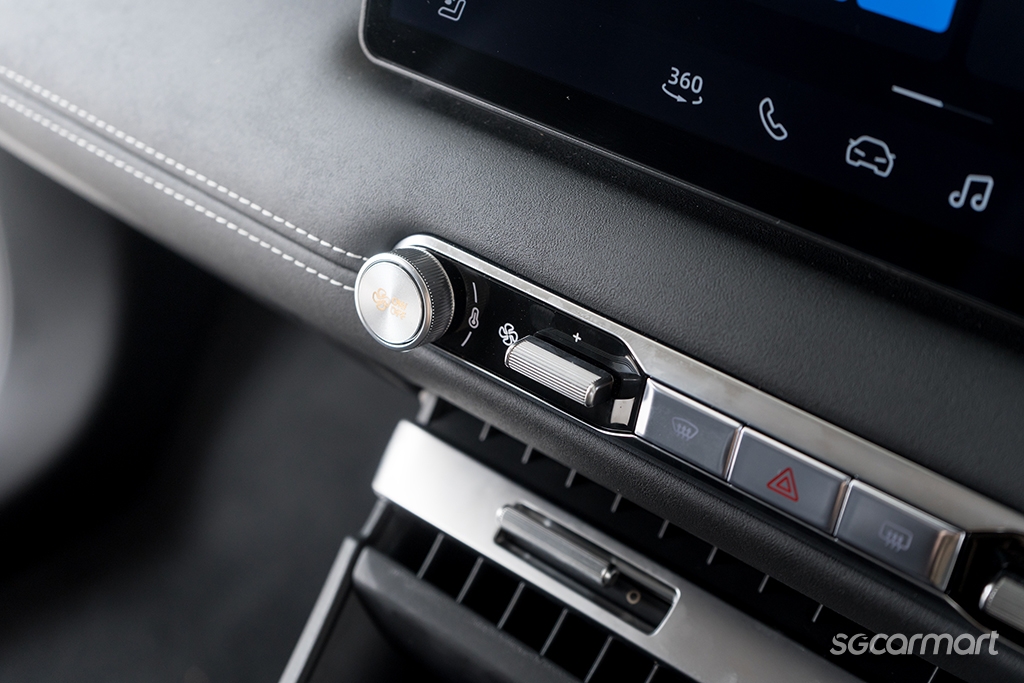
The MG 4 Urban actually offers improved equipment and practicality, while still remaining intuitive and simple to use
It’s worth noting that globally, this new FWD MG 4 Urban is sold alongside the original RWD/AWD model (after all, the original model was only launched in 2022, so it's still relatively current). The intent is to give customers a breadth of choice.
In this context, the MG 4 Urban makes a ton of sense. According to a quick Google, an MG 4 Urban in the U.K. is priced from £23,485, a good 22% less than a RWD first-gen model's £29,985 staring price.
But in Singapore, only this MG 4 Urban will be sold. I really do like this car, in the sense of a simple, practical day-to-day driver. It's a car that I can envision myself using with not many complains at all.
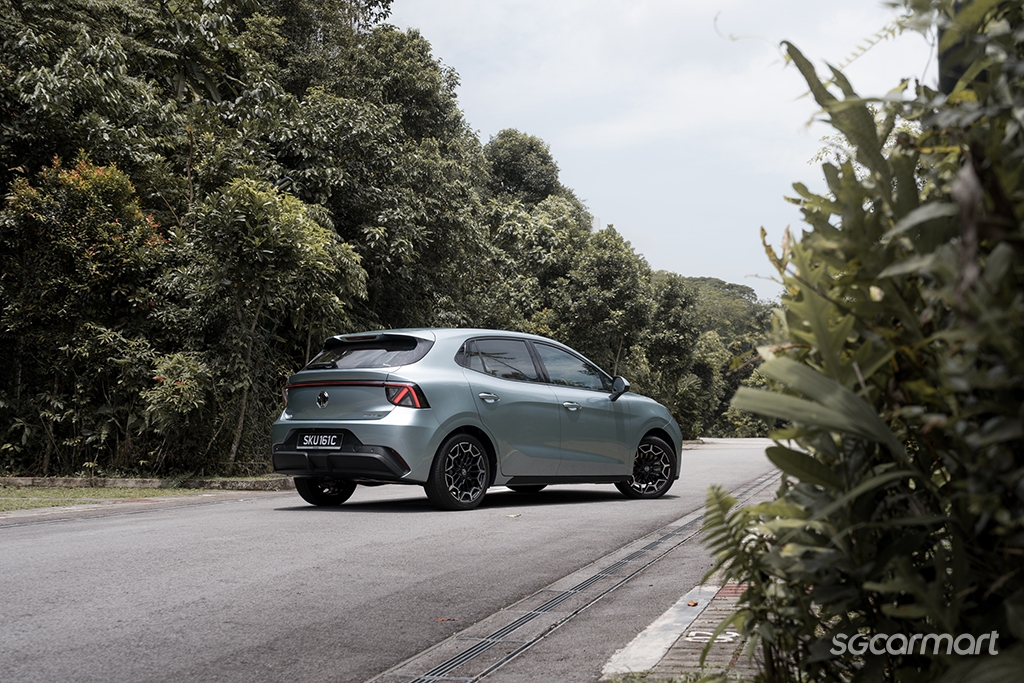
The intended affordability of the MG 4 Urban is hurt by the specific nature of Singapore taxes
But, and it's a big but, the MG 4 Urban has one huge problem: Singapore taxes (and yes, COE is an ownership tax).
Just consider these OMV values:
- MG 4 Urban: $19,000
- MG S5: $27,041
- MG S6: $29,248
The MG 4 Urban is specifically designed and developed to be a more affordable model. Putting aside dealer markup and what not, you can see that the 'value' gap between the MG 4 and its larger stablemates is significant.
Then, you look at the MG pricelist, and the MG 4 Urban's $184,888 pricetag is just $6k less than the MG S5's $190,888, and $14k less than the MGS6's $198,888. All these cars are Cat A models, so there's no COE gap either.
If we once more reference the U.K., the gap between an MG 4 Urban and MG S5 (the next cheapest model in the lineup) is about 19%. Here in Singapore, that gap is only 3%.
And that likely makes the MG 4 a tougher sell: Unless you are walking into the MG showroom and considering nothing else but a hatchback, it's entirely understandable that many shoppers would inevitably be drawn to the larger cars sitting in the same showroom.
But if you enjoy small cars and want a hatchback, well, certainly put this MG 4 Urban on your shopping list. I do like this car.
In the market for an electric compact hatchback? Here are other models to consider:
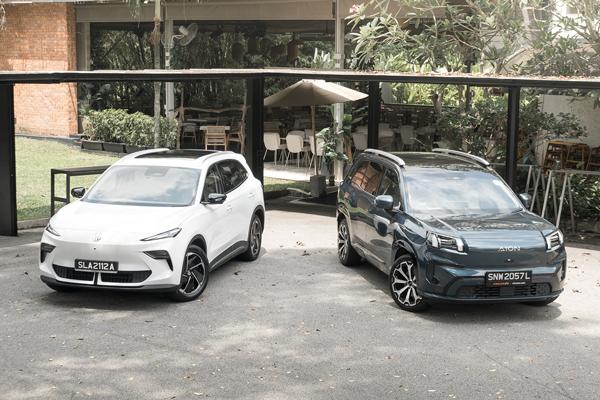
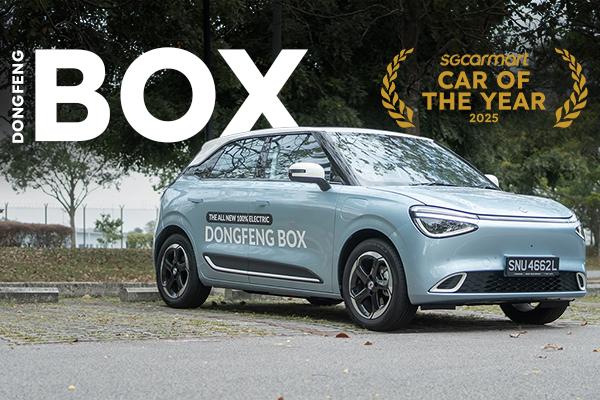
The Dongfeng Box is funky, well-specced and competitively priced
The Aion UT is big on space and charm
The Firefly is thoughtfully-designed and delivers nimble handling
What We Like
Increased interior and cargo space
Upgraded equipment levels
Simple and straightforward operation
No real drop-off in terms of range, even with a smaller battery
Perky drive
What We Dislike
Lost a little of its visual edge
Affordability hurt by local taxes
I've always liked the MG 4.
Small hatchback, rear-wheel drive agility, plenty of point and shoot pace, nicely weighted steering, simple to use car - it's the sort of car I can see myself driving (full disclosure: I like small cars).
Now, the second-generation model has been introduced, and with it comes a somewhat new name - this MG 4 Urban.
The second-generation MG 4 is now here, and the big news is that it now sits atop a dedicated EV platform that is strictly front-wheel drive
Besides the name, there are some significant differences: Most notably, the car now rides atop a new dedicated EV platform, with the headline change being that the car is now solely front-wheel driven.
So, is it still as likeable as I remembered?
The MG 4 trades away its prior angry angularity for a softer, more rounded look
The second-generation MG 4 gets a distinctly new design, one that is decidedly softer-looking. Where the previous iteration was all pointy edges and sharp lines, here most of those sharp edges have been rounded off. So, the angry and pointy face has been smoothened out (even the head lights have been redesigned and doesn't even have a pointy edge). Does the new front-end have a hint of the new Macan in the way it looks now? Squint a little and you may see it.
It's the same story at the back: The twin-spoiler design remains, but it is both smaller and less pronounced than before. The rear lights are also different. Again, it has traded a distinct angularity for a flatter, more 2D look.
The redesigned rear end has a flatter, more 2D look
The charging port is now at the front section of the car
All things considered, it's arguably a less-divisive design - it looks more like a typical contemporary hatchback (consider the likes of the other EV hatchbacks like the Dongfeng Box and Aion UT, even the petrol-powered Honda Jazz) in that there's a roundedness to the way it looks. Personally, I did appreciate the radical aggressiveness of the pre-facelift model, though I can’t really fault the new car for how it looks.
In terms of overall size, the new model is slightly longer and wider at 4,395mm long and 1,842mm wide, but its 1,549mm height is shorter than before. Notably, wheelbase has increased by a not-insignificant 39mm. More on that later. The new EV platform also means the charging port has been moved to the front section of the car.
Move into the cabin, and there is a sense of familiarity. Unlike many of the new EVs, this one isn't dominated by digitalisation.
Yes, there are some digital upgrades. The screen has been upsized, now a 12.8-inch unit. The interface now sports sharper, more stylish graphics.
The centre console has been radically redesigned. The gear selector rotary dial has been ditched in favour of a steering column-mounted stalk.
The infotainment screen has been upsized to 12.8-inches, and has sharper graphics
A steering column-mounted stalked is used to engage your driving gears
But what i appreciate is that there's still plenty of simple, physical controls, all of which are immediately intuitive and obvious to operate. Physical air-con controls, physical wind mirror adjustment controls (even though you can digitally adjust them from the screen), two assignable shortcut buttons on the steering wheel.
Heck, there's even a basic door handle - a surprising relief compared to the slew of button-based door-opening mechanisms these days. (I cannot recount how many times I've had friends in new cars who were perplexed about how to open the door.)
There's more standard equipment now, like ventilated front seats and a panoramic glass roof
Equipment levels have improved, too. You get ventilated front seats, though there’s only one level of ventilation (i.e. on/off). The wireless charging pad tops out at 15W. There's now a panoramic glass roof.
The extra wheelbase translates to more cabin space, which you will feel in the rear. While it’s still ultimately a small car, rear passengers benefit from slightly more legroom. The slight hump in the middle of the floor is also gone, so the middle passenger will feel more comfortable.
The move to a FWD platform as two notable packaging benefits - more rear legroom, as well as increased boot space
Cargo space has grown from 398 litres to 480 litres - another obvious benefit of the electric motor being moved from the rear axle to the front.
The single electric motor sends 99kW and 250Nm of torque to the front wheels
The move to this new platform means that the MG 4 Urban is now strictly front-wheel drive - the trade-off for more efficient packaging and all-around energy efficiency is some sportiness. And yes, the car has lost some of its sharpness and pointiness.
That said, I don’t think it's a great loss, nor one that most drivers will distinctly feel. The overall setup is still pliant with a touch of firmness, and there's still a nice weight to the steering wheel. From a handling standpoint, it is still responsive enough.
The steering wheel still has a nice weight to it
And, because power output is unchanged at 99kW and 250Nm of torque, there's still more than ample burst of speed even as a Cat A model.
The MG 4 Urban also now has a smaller battery capacity, down from 64kWh to 54kWh. MG claims 405km of combined WLTP range, and with my driving patterns and a recorded figure of 6.76km/kWh (in fact better than the 5.8km/kWh we recorded in the first-gen Cat A model), I would be able to achieve 365km. For a somewhat small-capacity battery, that's a good number. Efficiency is also helped by the fact that the car is lighter, 1,685kg down to 1,520kg.
Drive reasonably and you should still be able to get around 370km of range on a full charge
Battery chemistry is also different - now LFP instead of NMC. I don't want to get bogged down in technical details, but the two important takeaways are that LFP batteries are cheaper to produce, and last longer. Also, AC charging has gone up to 11kW, though DC charging has dropped to max 82kW (not a worry, DC charging from 10-80% takes just 30 minutes).
And, there's actually more ADAS systems than before, with this model now including driver distraction and fatigue monitoring, front collision assist, rear collision warning, and a speed assist warning that I always immediately switch off. It's also now got an auto-hold function - I personally like using it, though I know some drivers who always switch it off.
It's important to contextualise the brand's (global) intent with this MG4 Urban: To make a compact hatchback specifically targeted for city use, and concurrently also to make it more affordable for buyers.
The move to the new platform facilitates that: The cell-to-body construction, a smaller size battery, a "simpler" platform, these are all cost-saving measures from a manufacturing perspective.
And the numbers back that up: This MG4 Urban's OMV stands at $19,000, quite a lot lower than the first-gen model whose OMV was in the $23k range.
Not that the car feels any cheaper. In fact, equipment levels have gone up. Though the battery is smaller, the car is basically similarly efficient as before, with a comparable amount of range from the battery. And while some may moan the loss of RWD sportiness, the reality is that all things considered, this is just a better, more improved car than before. It's a trade off well worth making, in my opinion.
The MG 4 Urban actually offers improved equipment and practicality, while still remaining intuitive and simple to use
It’s worth noting that globally, this new FWD MG 4 Urban is sold alongside the original RWD/AWD model (after all, the original model was only launched in 2022, so it's still relatively current). The intent is to give customers a breadth of choice.
In this context, the MG 4 Urban makes a ton of sense. According to a quick Google, an MG 4 Urban in the U.K. is priced from £23,485, a good 22% less than a RWD first-gen model's £29,985 staring price.
But in Singapore, only this MG 4 Urban will be sold. I really do like this car, in the sense of a simple, practical day-to-day driver. It's a car that I can envision myself using with not many complains at all.
The intended affordability of the MG 4 Urban is hurt by the specific nature of Singapore taxes
But, and it's a big but, the MG 4 Urban has one huge problem: Singapore taxes (and yes, COE is an ownership tax).
Just consider these OMV values:
- MG 4 Urban: $19,000
- MG S5: $27,041
- MG S6: $29,248
The MG 4 Urban is specifically designed and developed to be a more affordable model. Putting aside dealer markup and what not, you can see that the 'value' gap between the MG 4 and its larger stablemates is significant.
Then, you look at the MG pricelist, and the MG 4 Urban's $184,888 pricetag is just $6k less than the MG S5's $190,888, and $14k less than the MGS6's $198,888. All these cars are Cat A models, so there's no COE gap either.
If we once more reference the U.K., the gap between an MG 4 Urban and MG S5 (the next cheapest model in the lineup) is about 19%. Here in Singapore, that gap is only 3%.
And that likely makes the MG 4 a tougher sell: Unless you are walking into the MG showroom and considering nothing else but a hatchback, it's entirely understandable that many shoppers would inevitably be drawn to the larger cars sitting in the same showroom.
But if you enjoy small cars and want a hatchback, well, certainly put this MG 4 Urban on your shopping list. I do like this car.
In the market for an electric compact hatchback? Here are other models to consider:
The Dongfeng Box is funky, well-specced and competitively priced
The Aion UT is big on space and charm
The Firefly is thoughtfully-designed and delivers nimble handling



Car Information
MG 4 Urban EV Luxury 54 kWh (A)
$186,888
CAT A|Electric|6.5km/kWh
Horsepower
99kW (133 bhp)
Torque
250 Nm
Acceleration
9.6sec (0-100km /hr)
Promotion
Drive away with $500 MG care vouchers, 500 kWh Shell Recharge credits and more with MG today.
Read more
Thank You For Your Subscription.



Tags
Products & Services

For Owners
Quick Links
About Sgcarmart