One year into its shift, where does Audi stand in Singapore?
26 Mar 2026|912 views


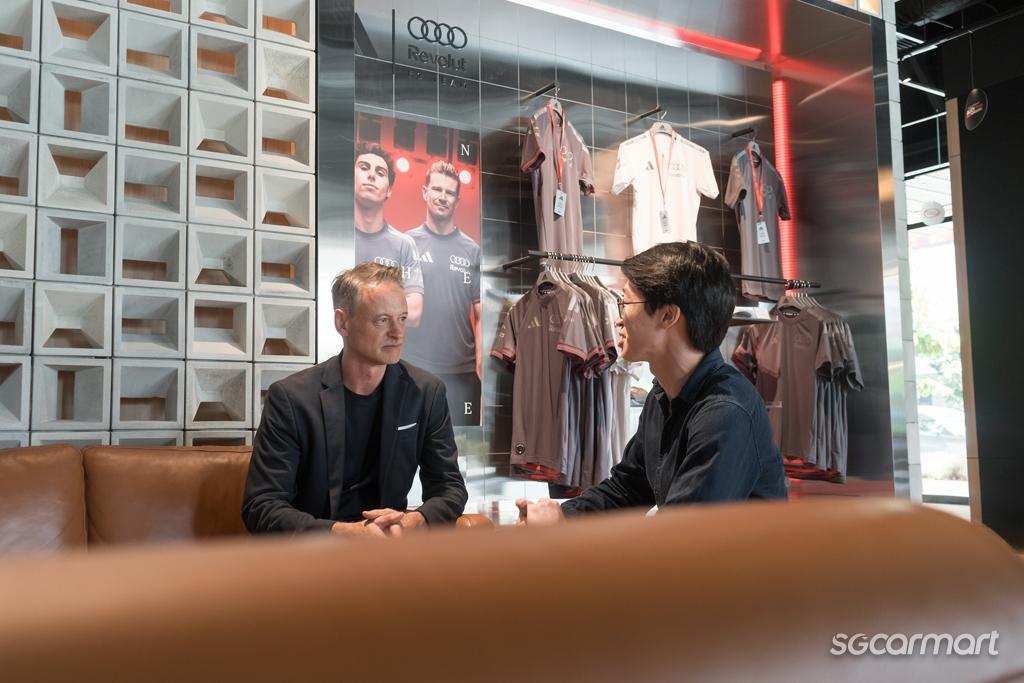
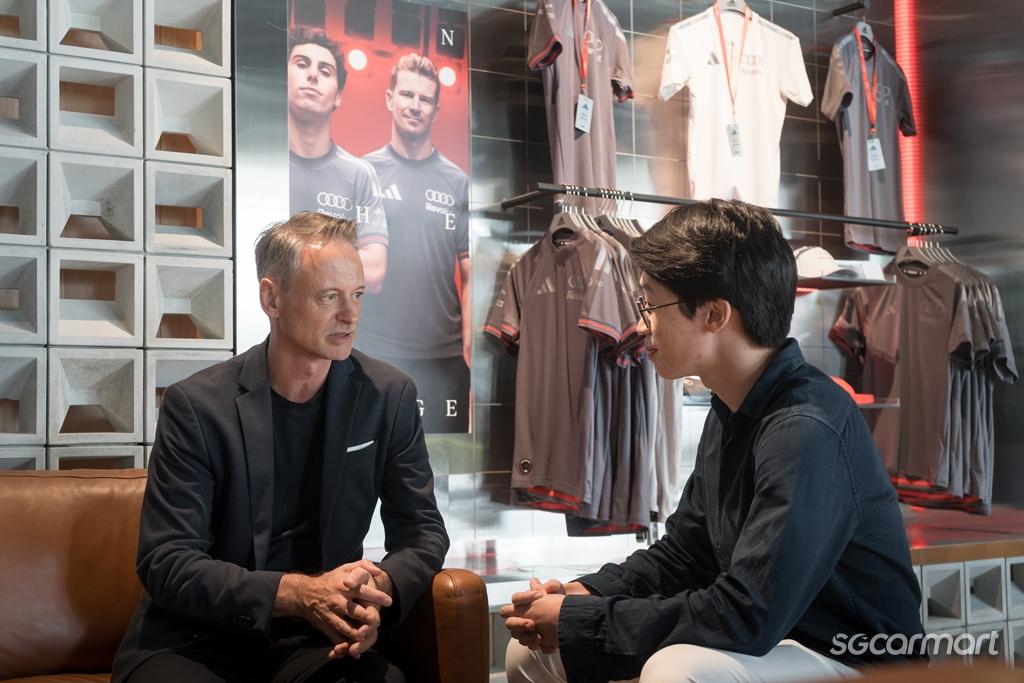
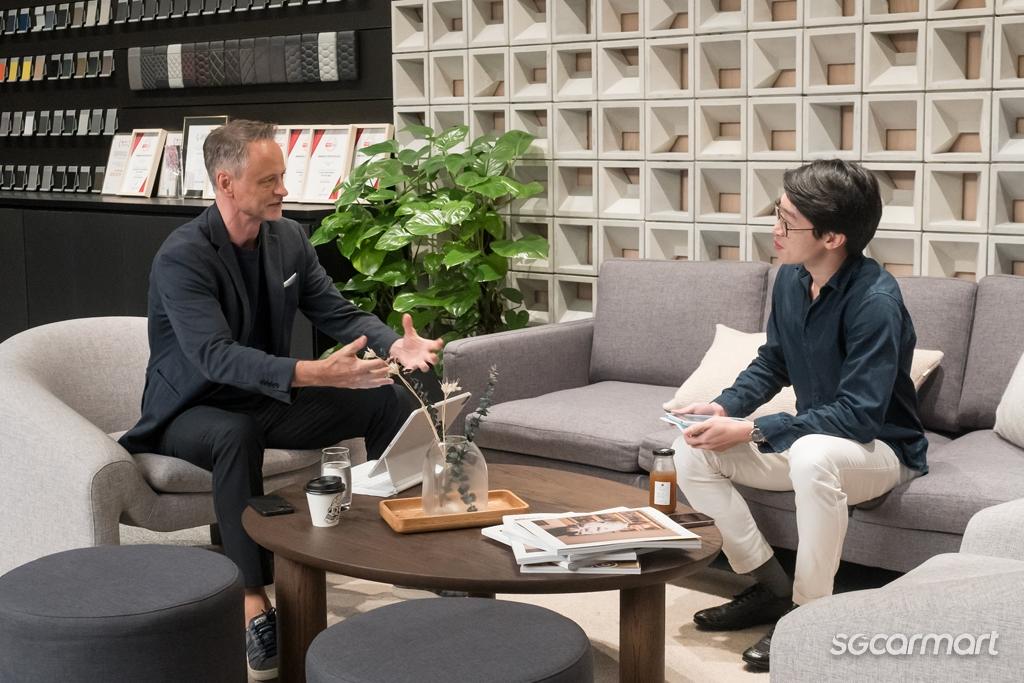
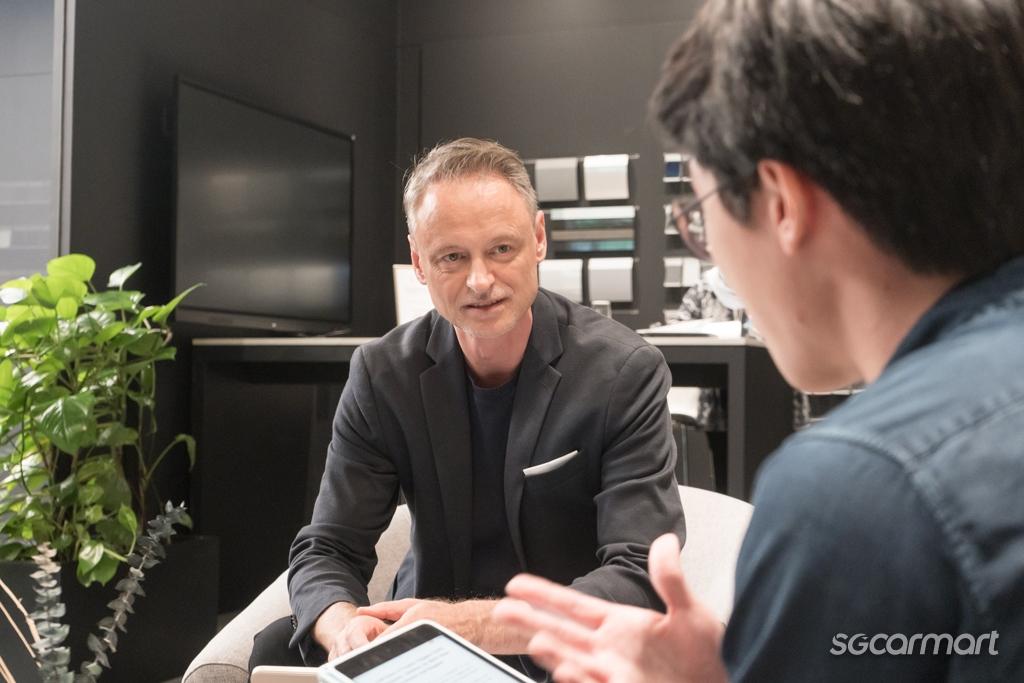
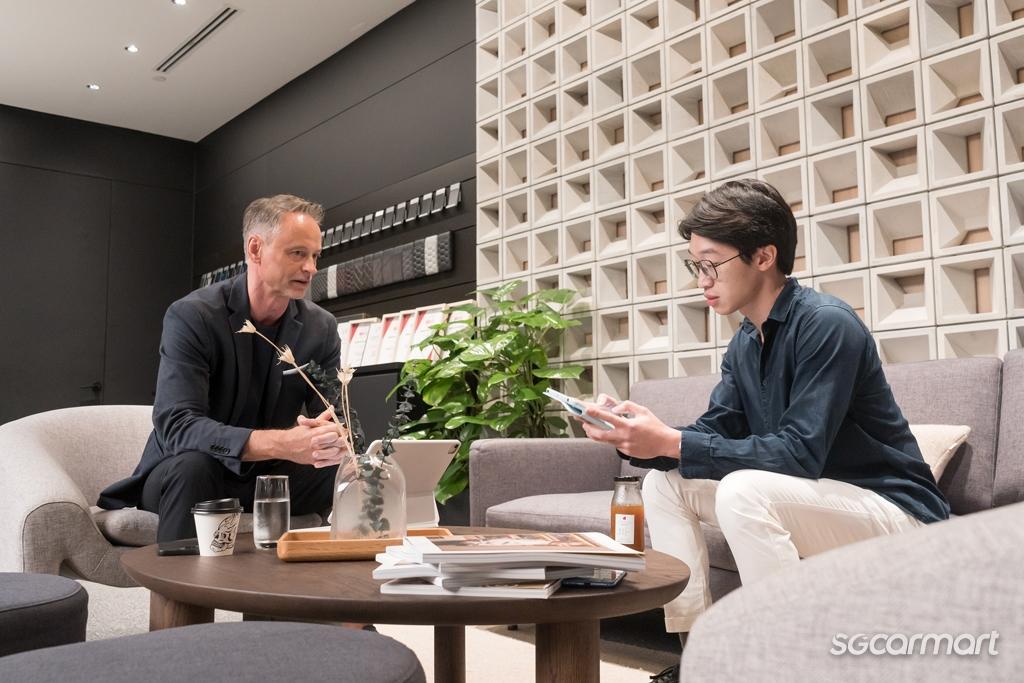
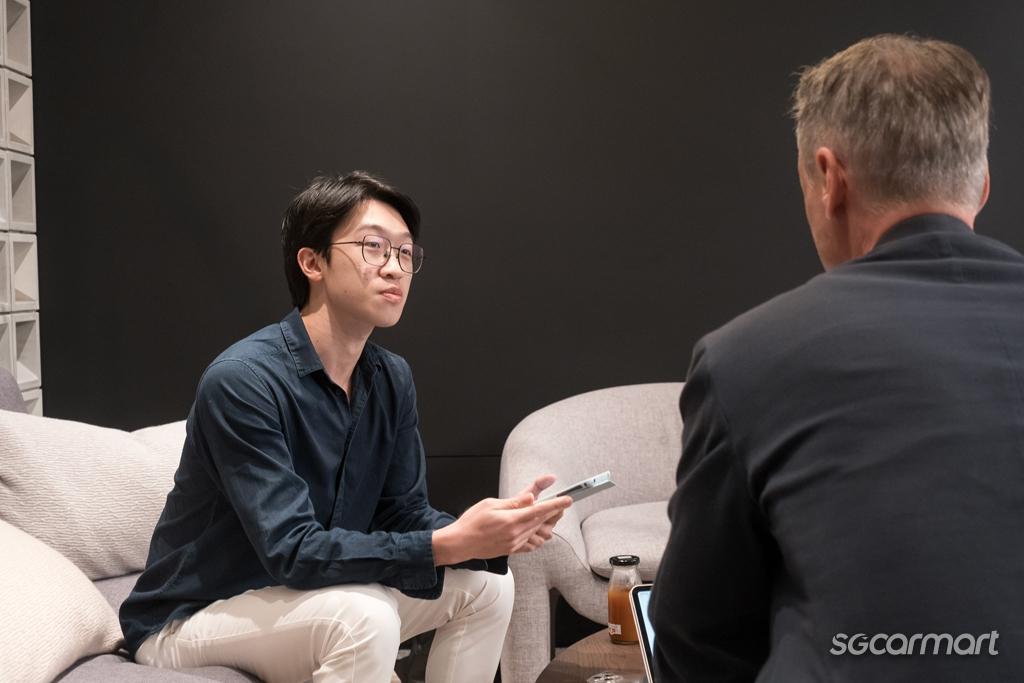
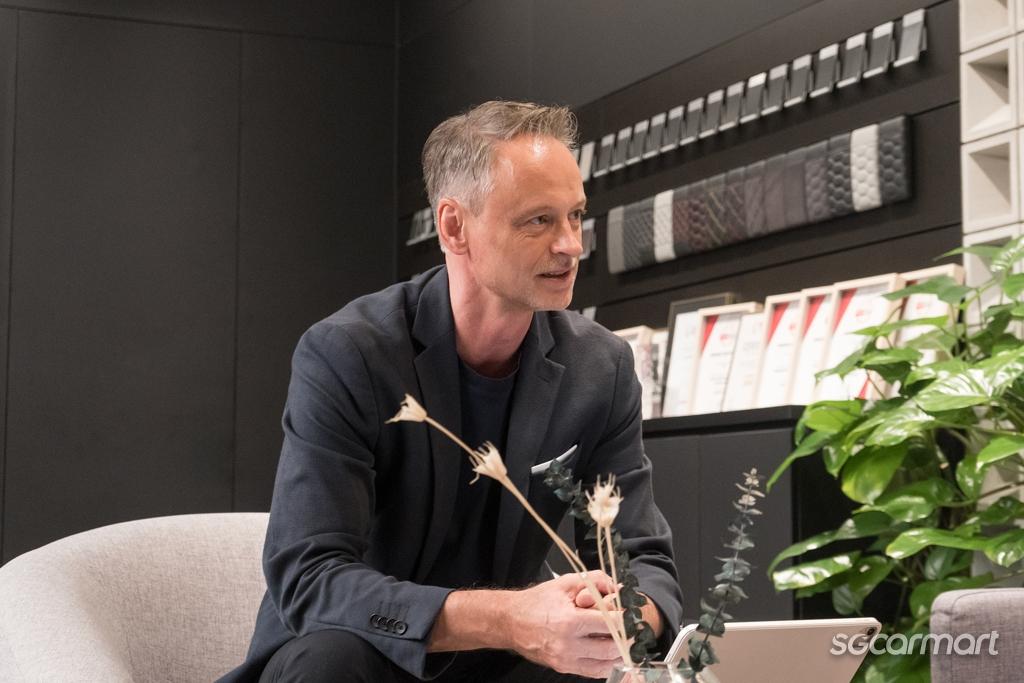




No one will call Audi a newcomer to the automotive scene. But in Singapore at least, it's more than fair to describe the brand as having gone through a rebirth over the past 12 months.
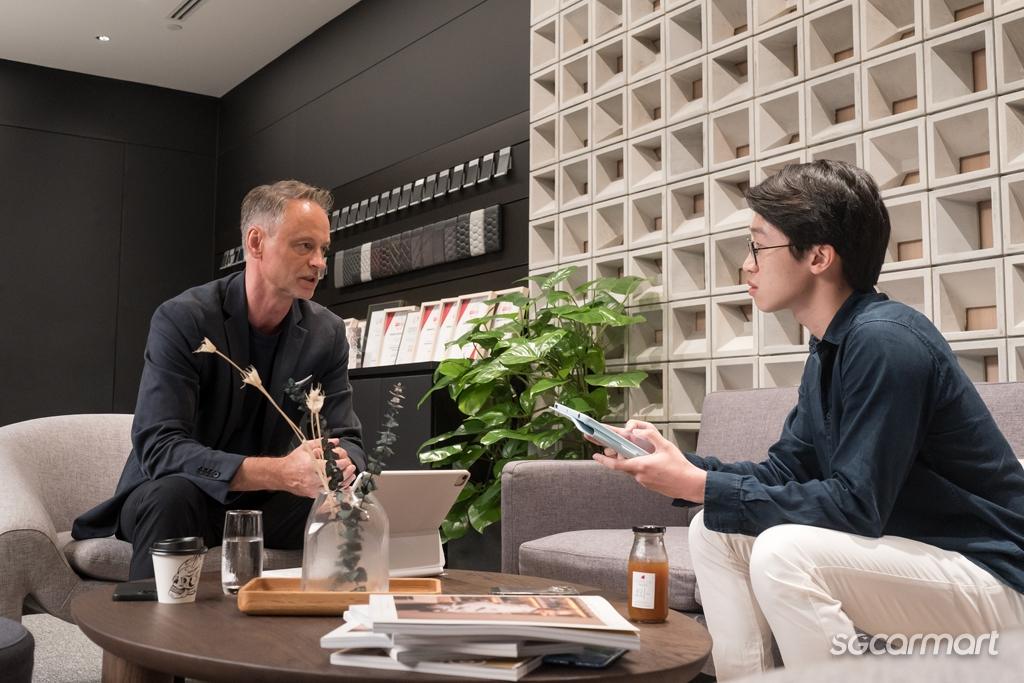
As Martin Bayer, Managing Director of Audi Singapore, reminds us, it's not just the brand's showroom - itself already quite a monumental shift into the heart of the city - but the brand's entire business model that was reshaped in the process. As do Tesla and Porsche, Audi now sells direct-to-consumer (or D2C), with its previous authorised dealer Premium Automobiles now serving solely as its aftersales partner.
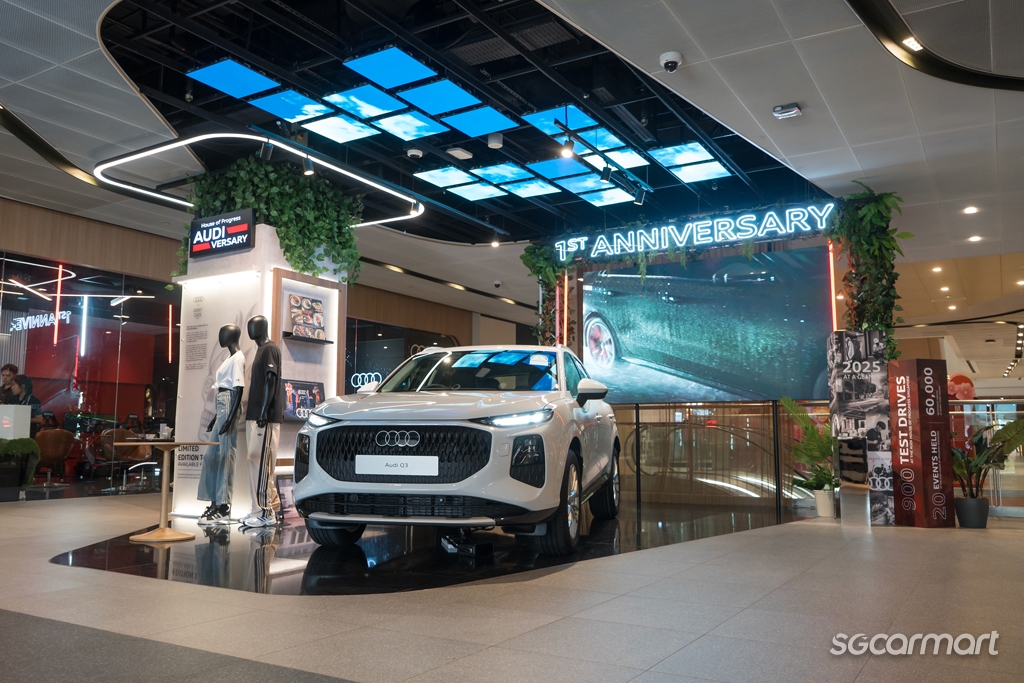
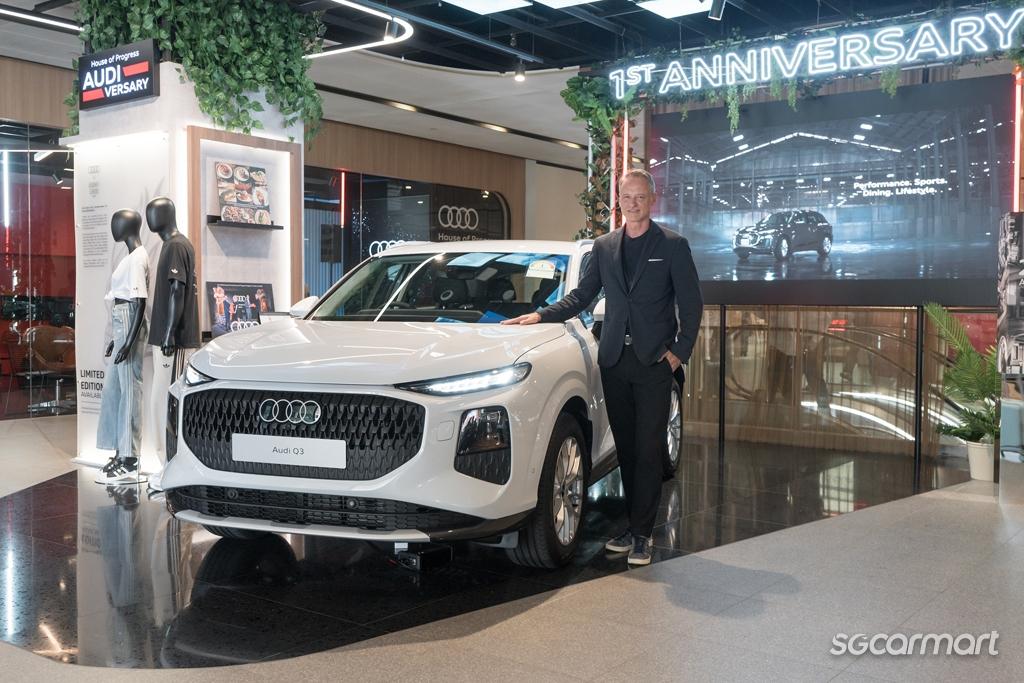
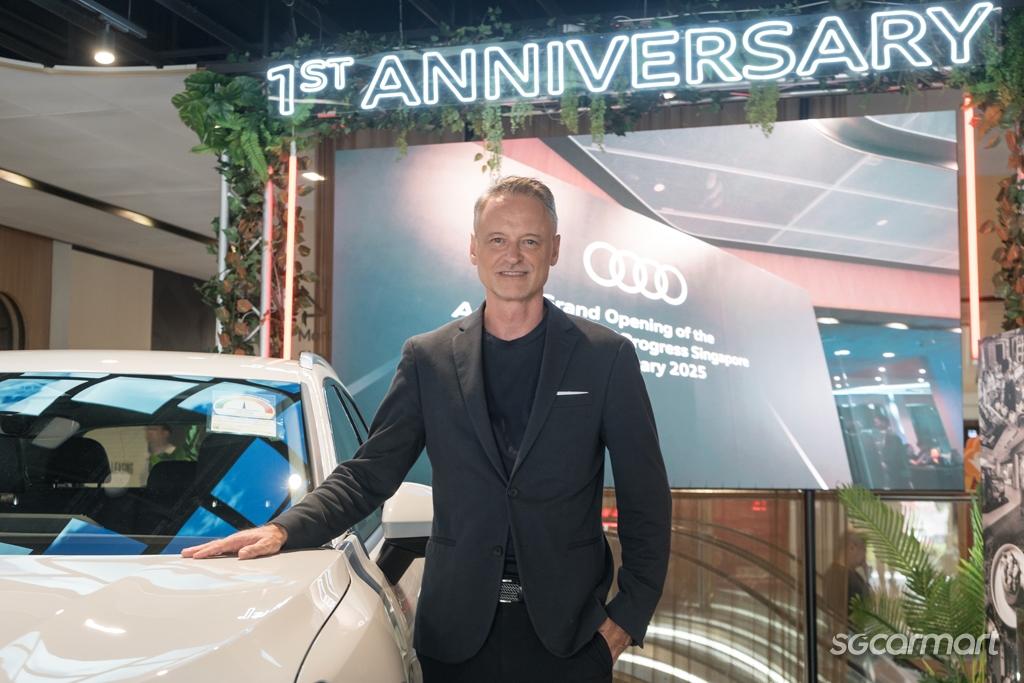
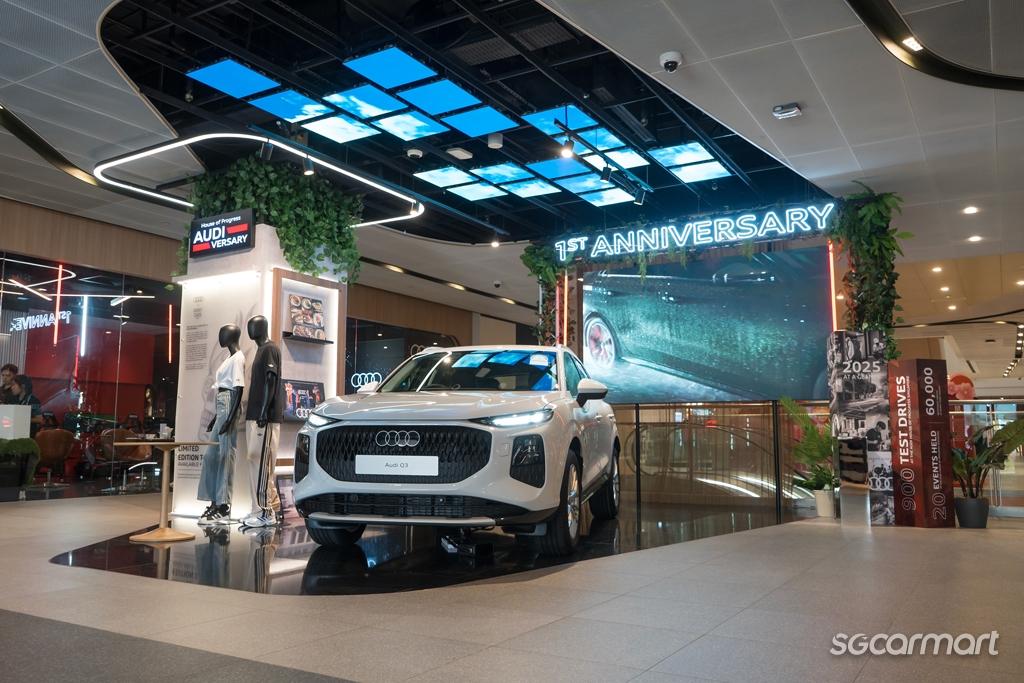
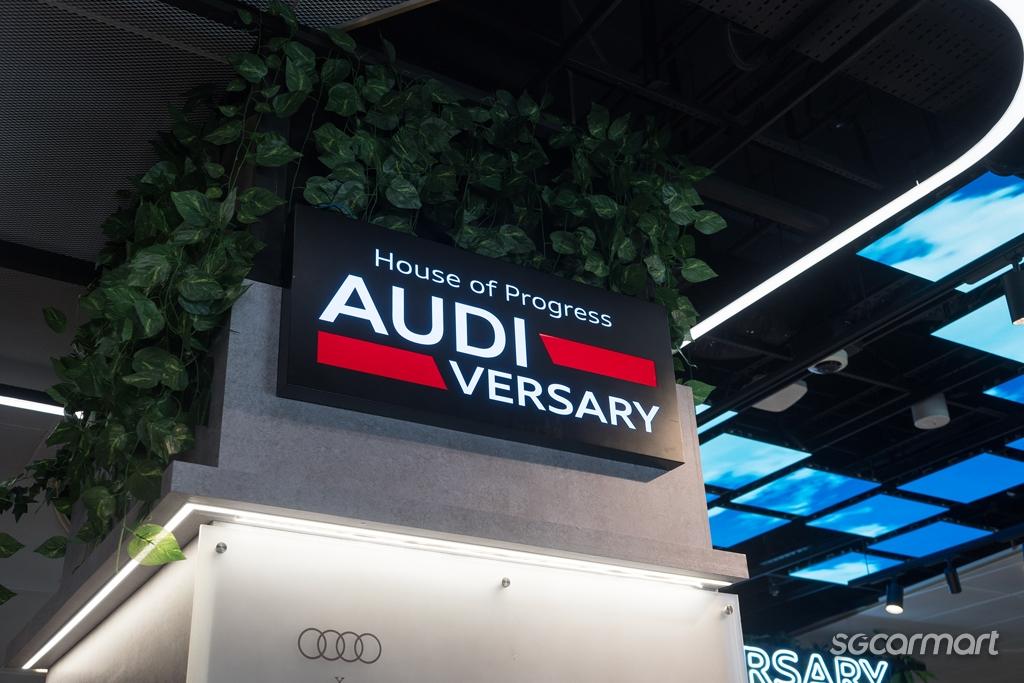
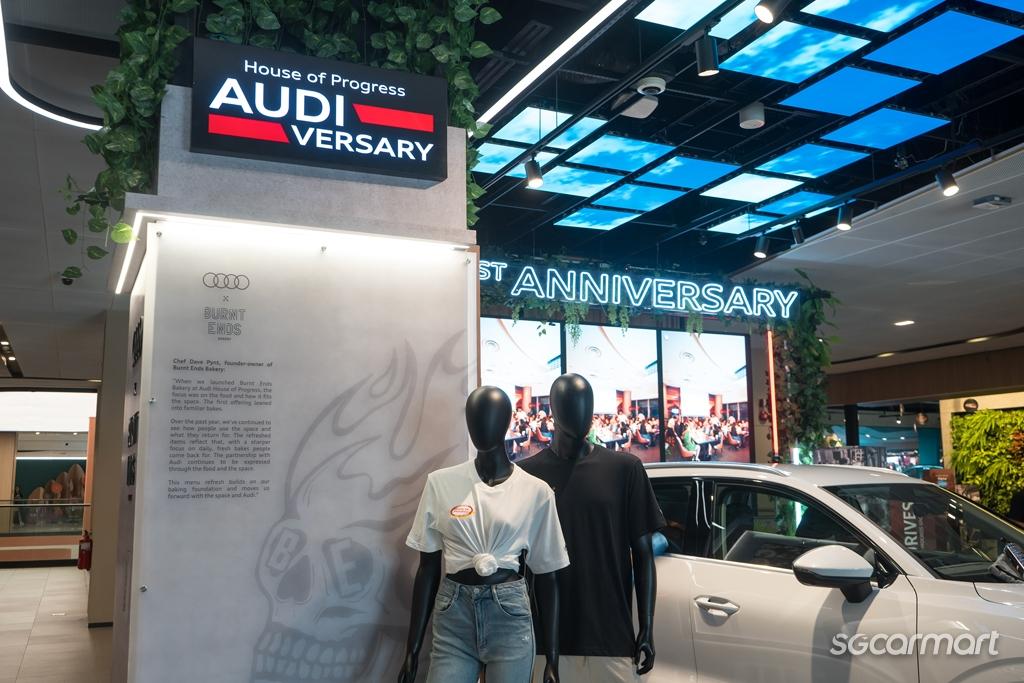
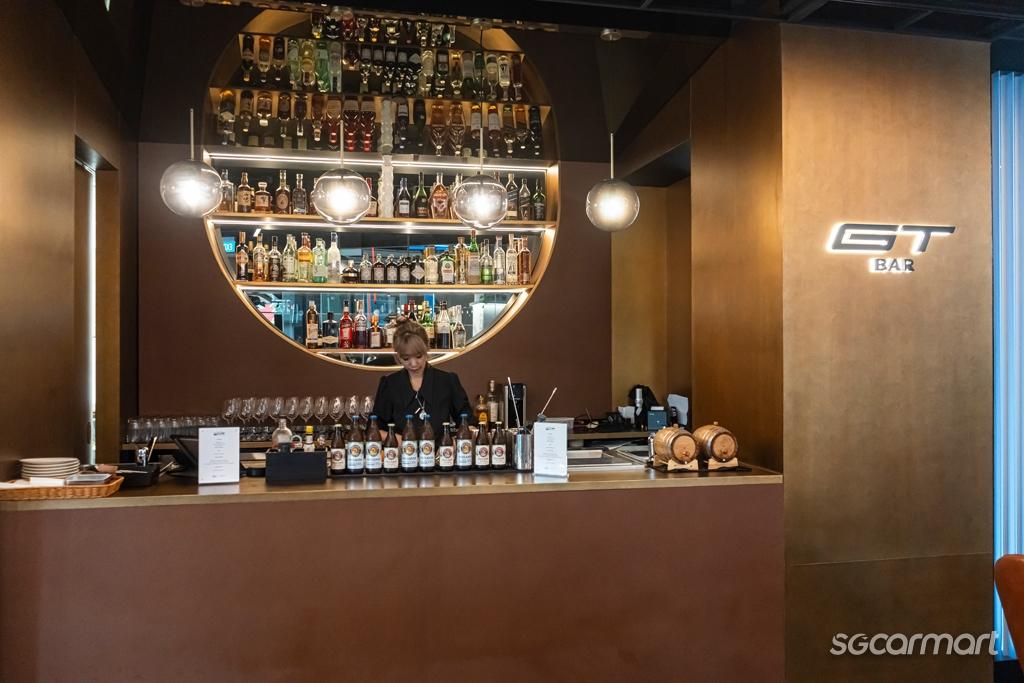
The Audi House of Progress, Audi's relatively new showroom concept located at Cross Street Exchange, is just celebrating its first year anniversary
Birthdays are an opportune time for reflection, the passing of a year presenting the chance to look back on how one has changed and grown.
With the Audi House of Progress recently turning one, Bayer - who took the helm just a month into its 2025 opening - is torn between two answers when asked about the single largest achievement Audi is proudest of so far since the move.
The first is in direct recognition of the House of Progress. Among all the awards Audi has amassed over the last year, Bayer says that the one that was handed out in recognition of it as the "most innovative showroom concept" feels the most special.
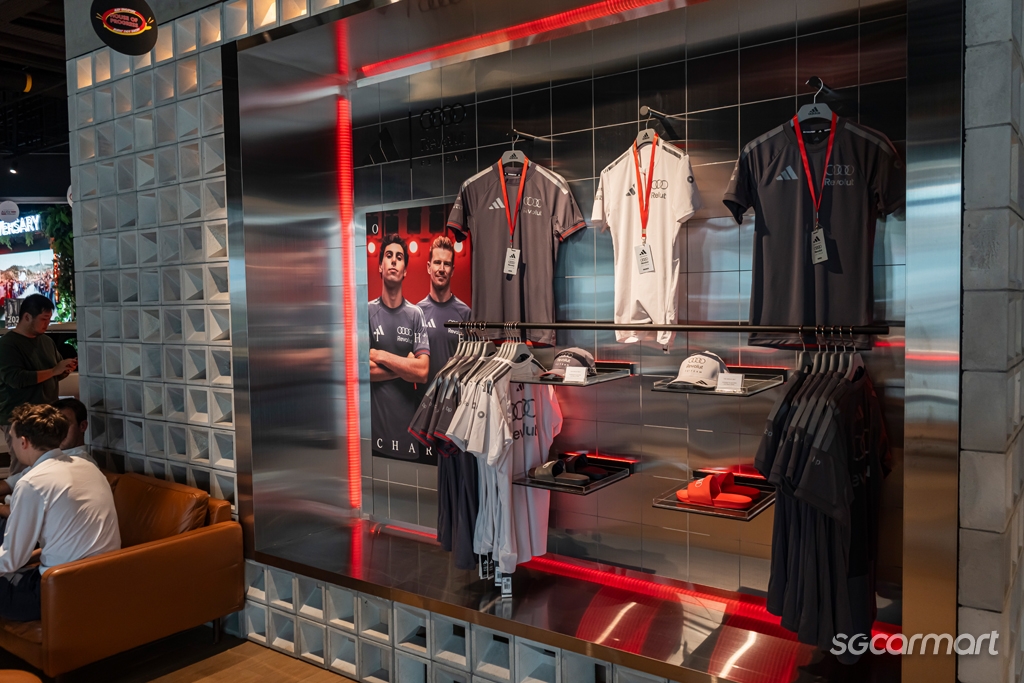
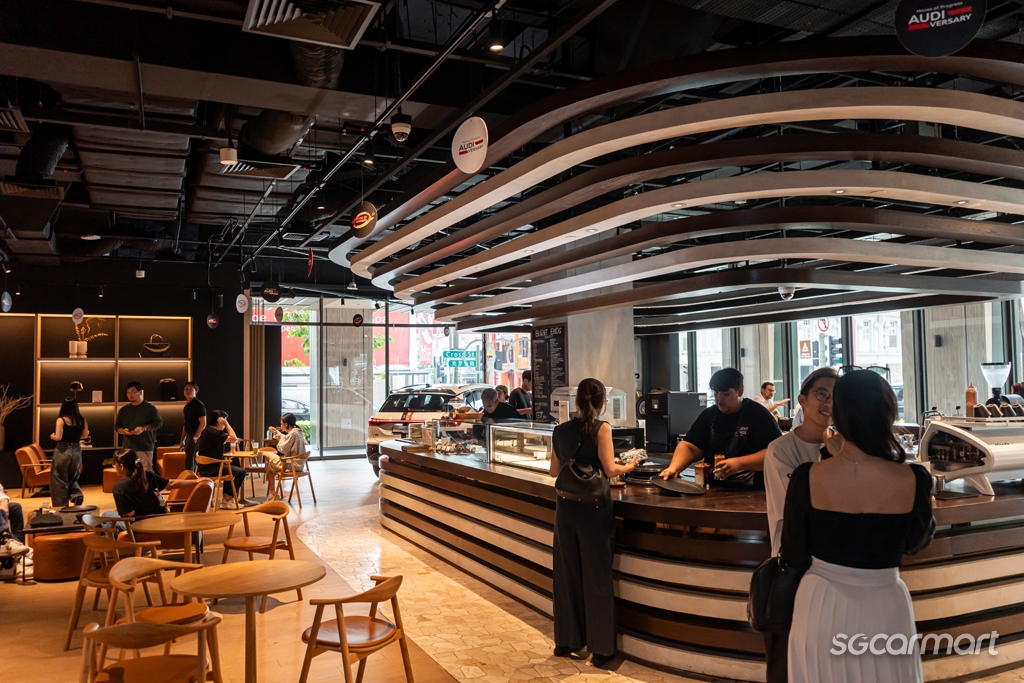
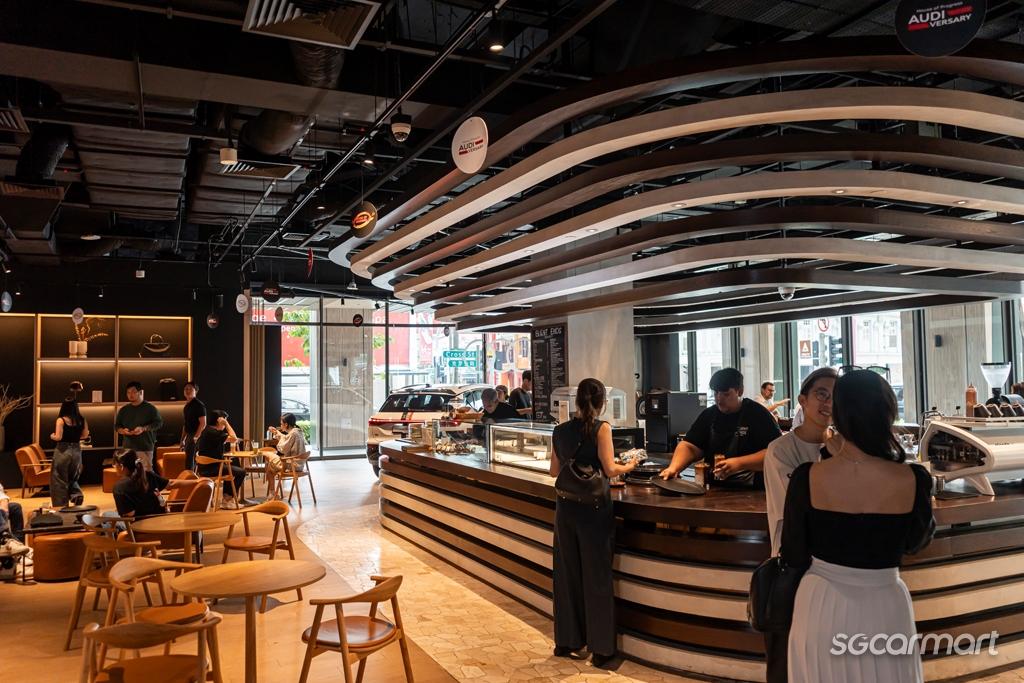
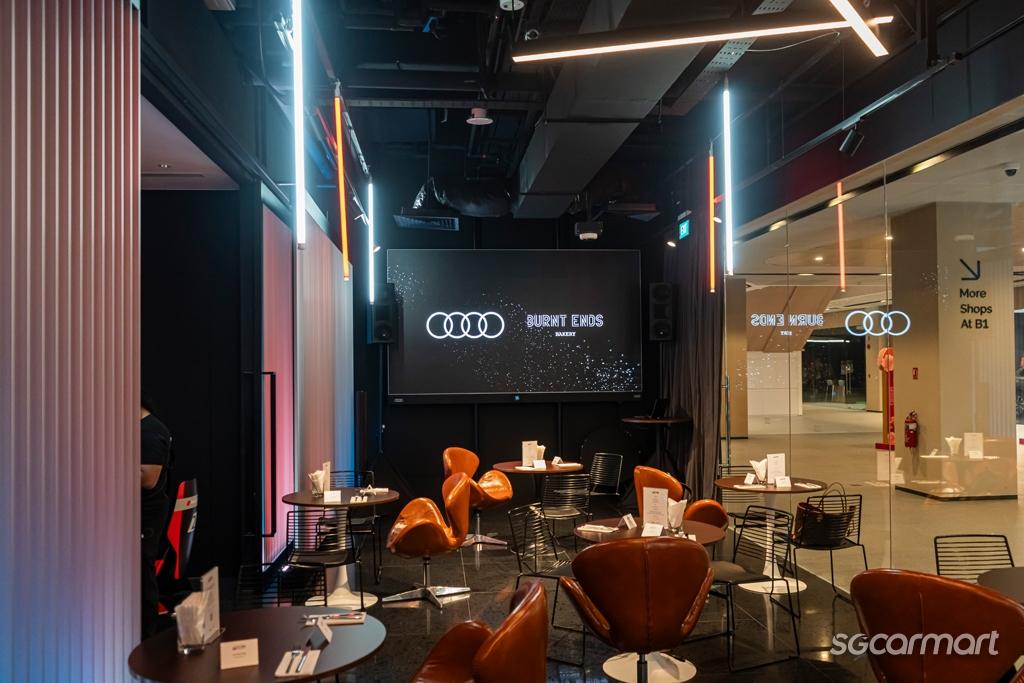
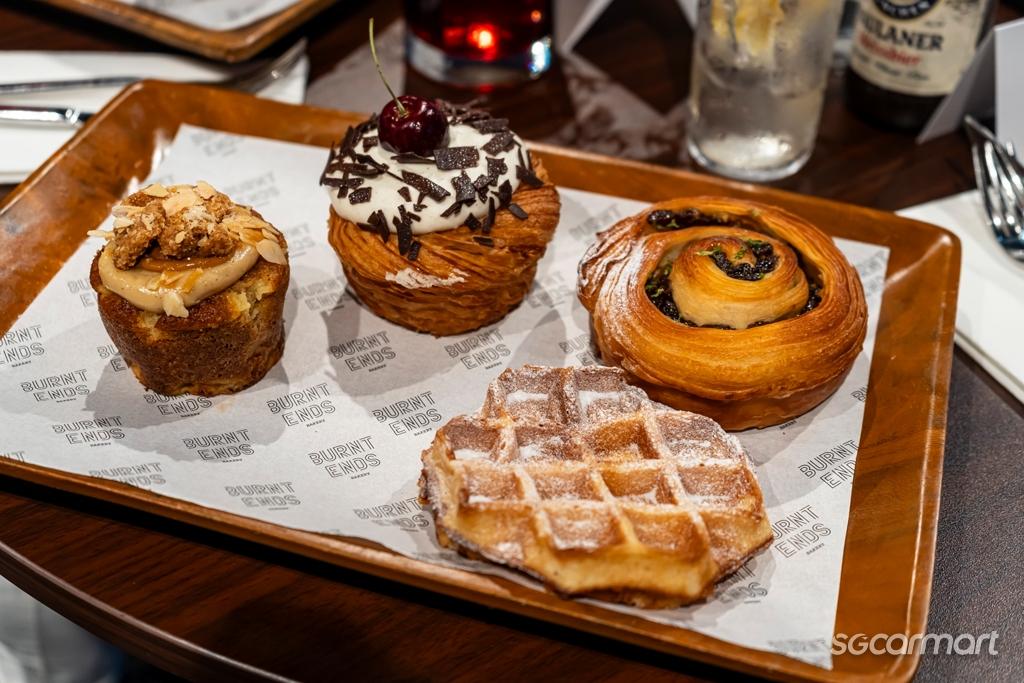
Bayer notes that the space has a less transactional atmosphere and welcomes more casual visitors - the latter aided by Audi's F&B partner, Burnt Ends Bakery
"The whole atmosphere is a bit less transactional… Everybody is welcome," Bayer shares about the space with palpable pride.
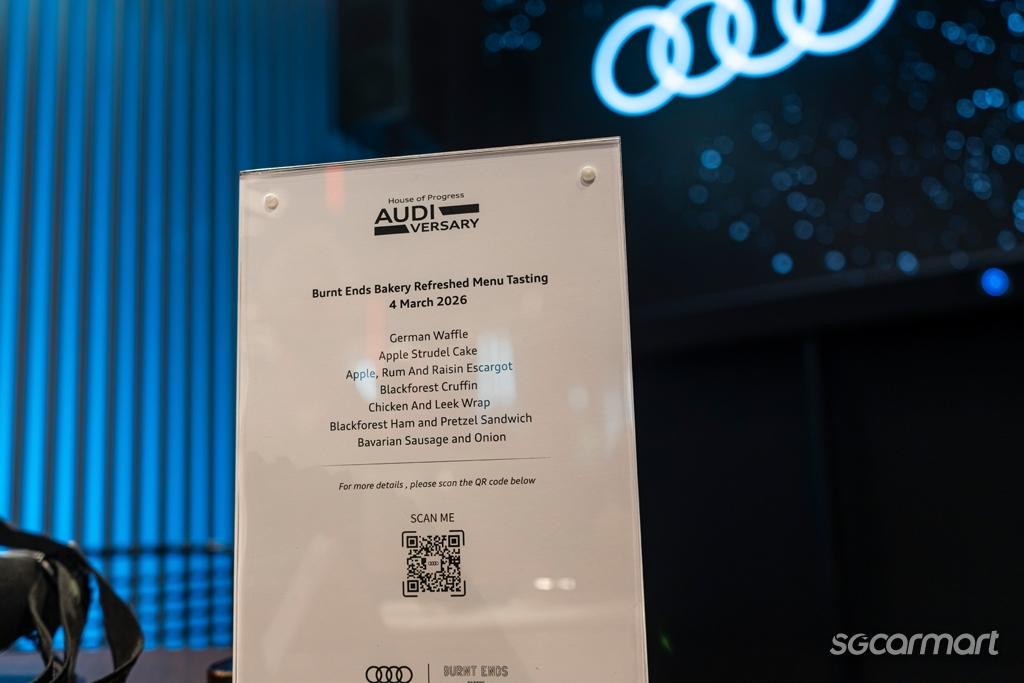
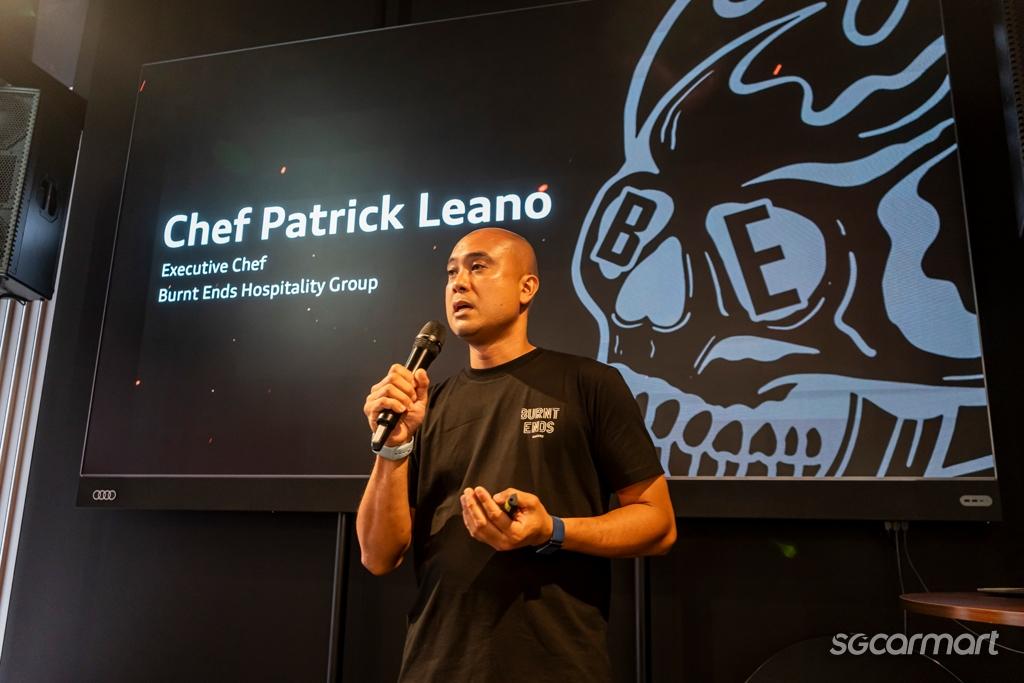
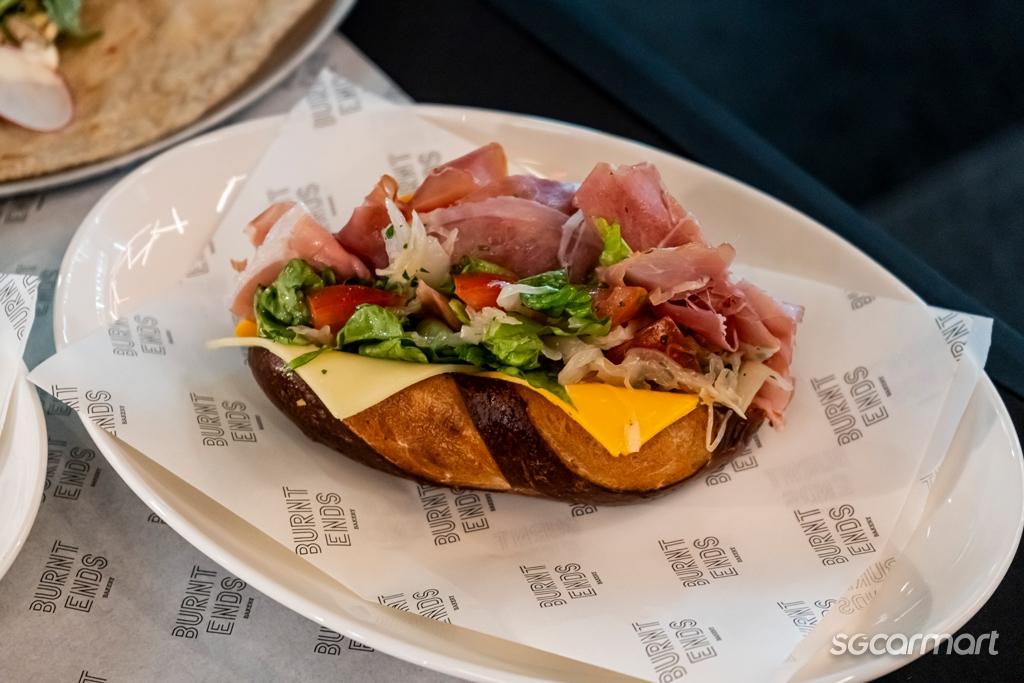
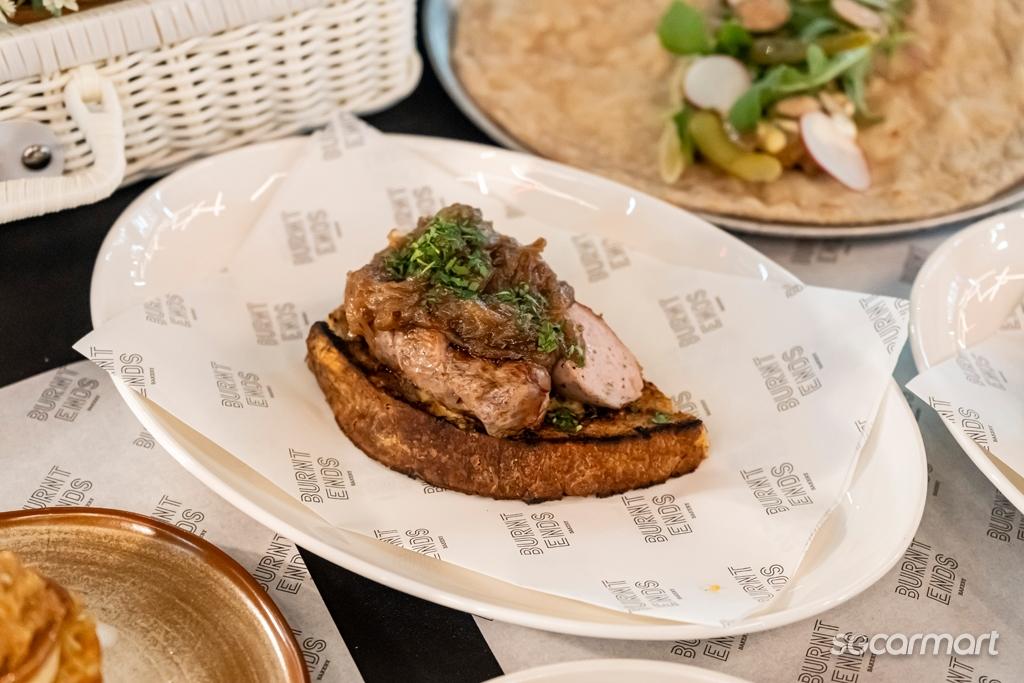
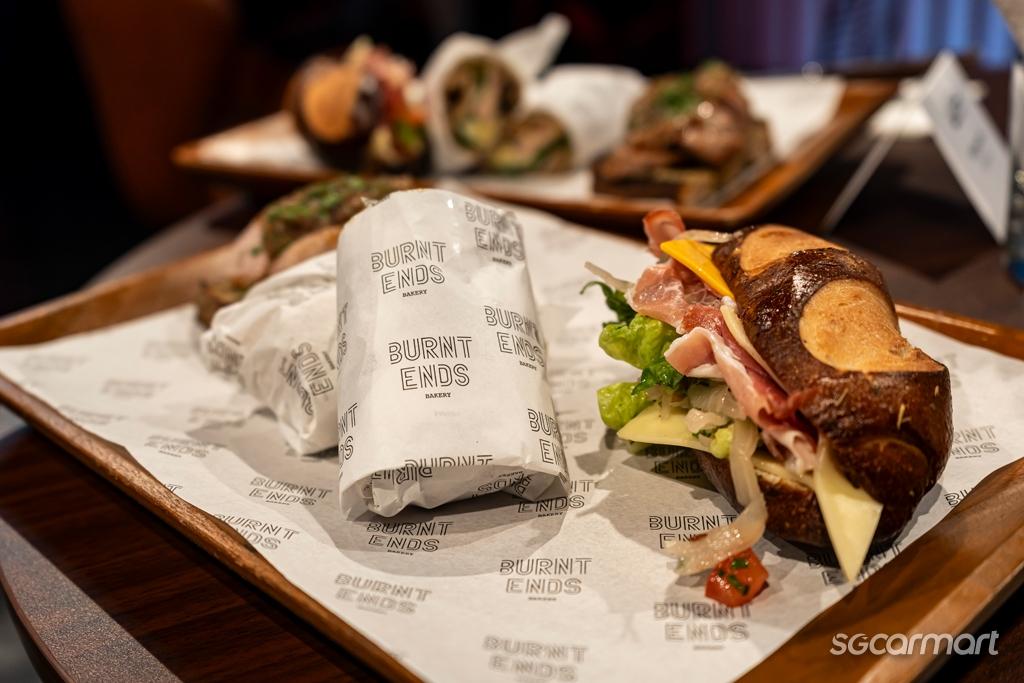
Specifically, he notes a relatively fresh crowd that has emerged since the shift; young professionals from the Central Business District (CBD) come here for their breakfast and lunch breaks, with some even choosing to use this as an extension of their workspaces. In tandem, Audi's esteemed F&B partner, Burnt Ends Bakery, has a staggering statistic to show off: More than 60,000 beverages served here thus far. (The two teams recently collaborated on a new menu in honour of the space's first anniversary.)
Bayer continues: "If you combine that with creating awareness for our brand and creating interest, [we've noticed] customers coming back on the weekend with their families, and then doing the real car shopping."
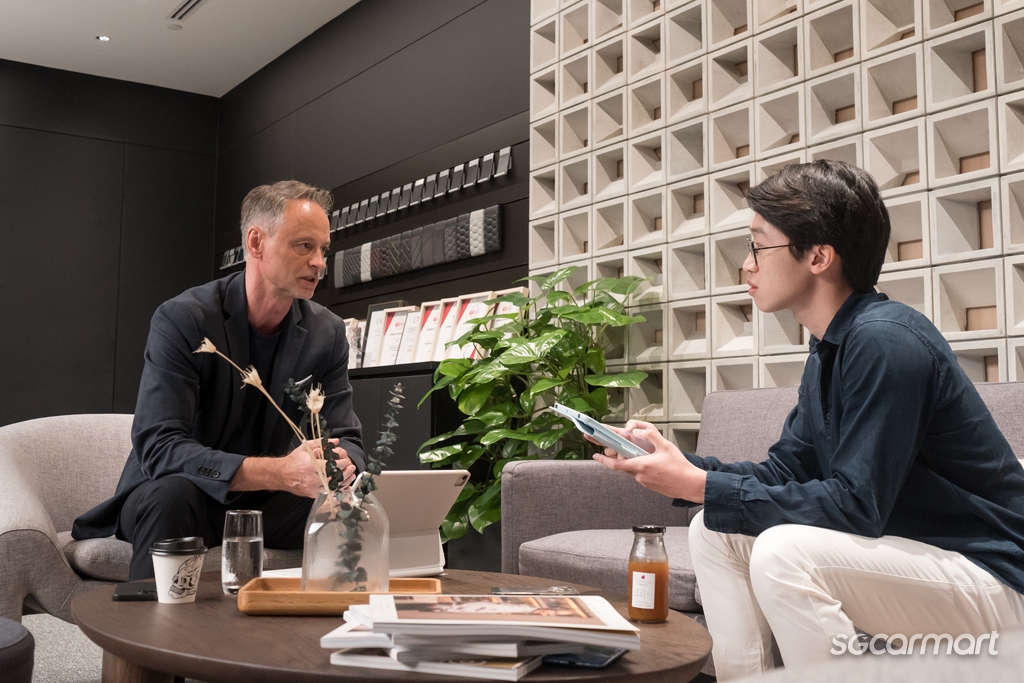
Steep learning curve
Still, it's Bayer's second reflection that reveals more of the brand's recent evolution.
Ending the year with 730 cars registered, Audi posted a respectable 24.4% year-on-year growth of sales in 2025. But all of that didn't come easy.
Calling it all a "journey" and a "steep learning curve", Bayer admits that it took a while for the team to find its footing after going D2C. "The data is very transparent. You can see the numbers. We started on a low level of sales when we started in February and then March last year."
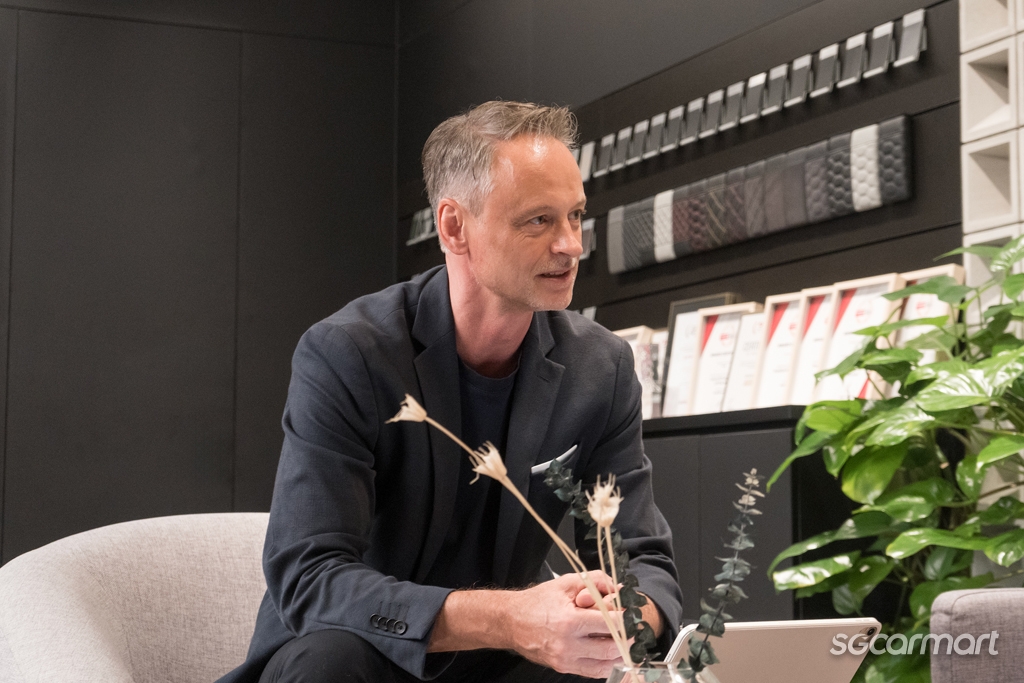
Showroom aside, Bayer is most proud of the changes implemented quickly within the team to tailor the new setup better to the needs of local customers
But key changes quickly followed. Flying solo without a dealer partner for the first time, the team went back to the drawing board and started to rebuild its expertise from scratch.
"It's not only sales; it's retail and marketing; it's financing, it's PR, it's everything, which is more now to the end-customer. Everything we do is always [answering the question of]: How can this help us at the end with selling cars?", Bayer shares.
"If you come from a wholesale perspective, I'm very proud that we did the shift until the end of the year very successfully, also in our team set up."
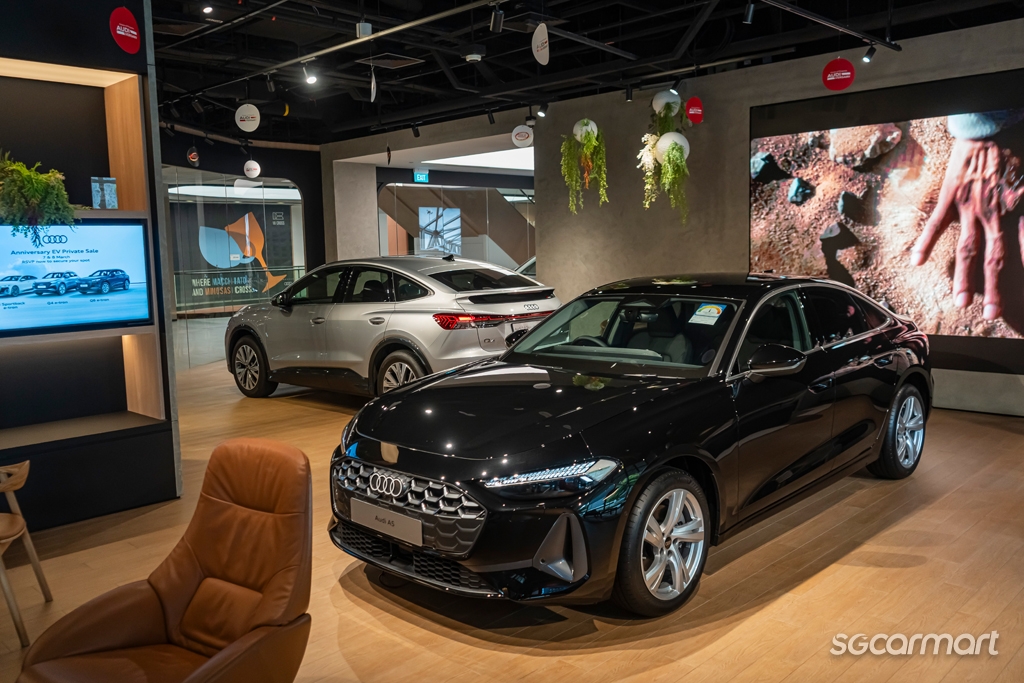
The progression through 2025 saw Audi doubling its number of sales staff on the ground
One of the most important changes Audi adopted was to double its number of salespeople on the ground. Much had already been invested in what the brand refers to as the "online journey" - the result of which is still one of the most fleshed out virtual configurators you’ll find among today's car brands. Still, the team was quickly reacquainted with the reality that no matter where your brand stands in the market, the same rules apply.
"The truth is Singaporean customers - who are also very tech savvy customers compared to [customers in] international markets - they prefer the human-to-human interaction when it comes to the closure of the deal. Because it's a very huge investment," Bayer concedes.
The result now? A heavier emphasis on the human touch again, even as Audi relentlessly sharpens the online journey.
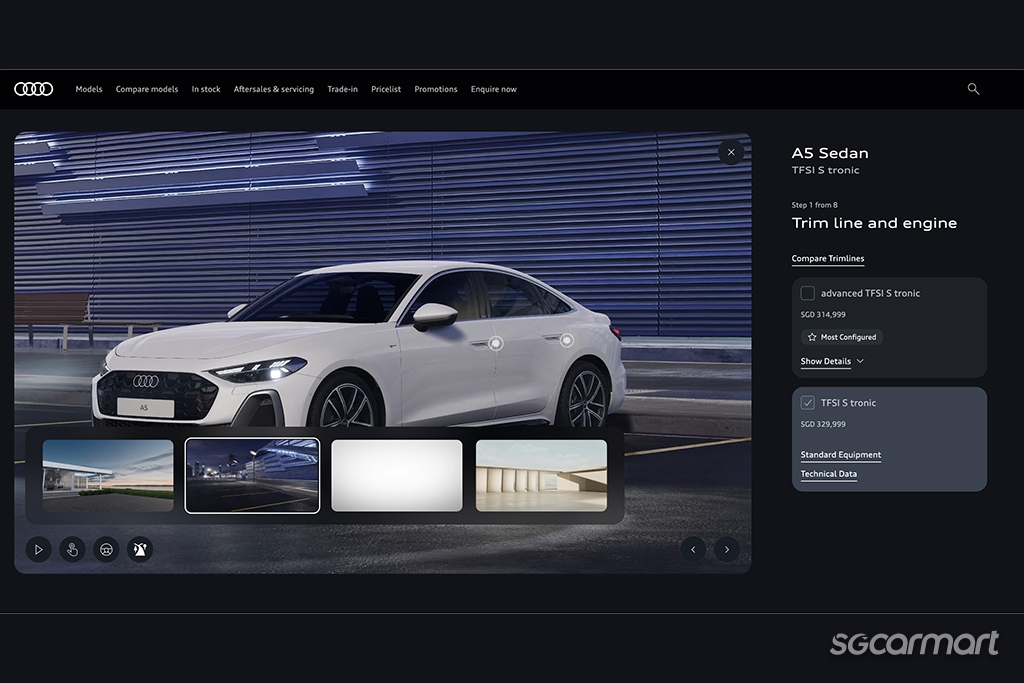
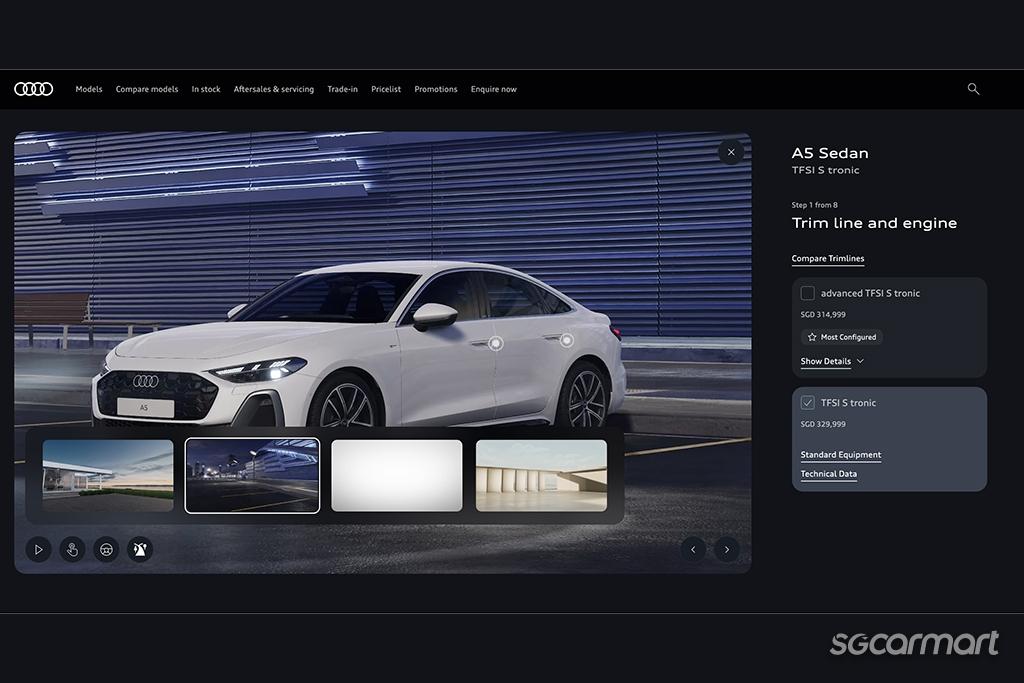
Audi's virtual configurator is among the more sophisticated you'll find for brands in Singapore today
Negotiating this balance hasn't negated the foundations first laid down when Audi first went D2C.
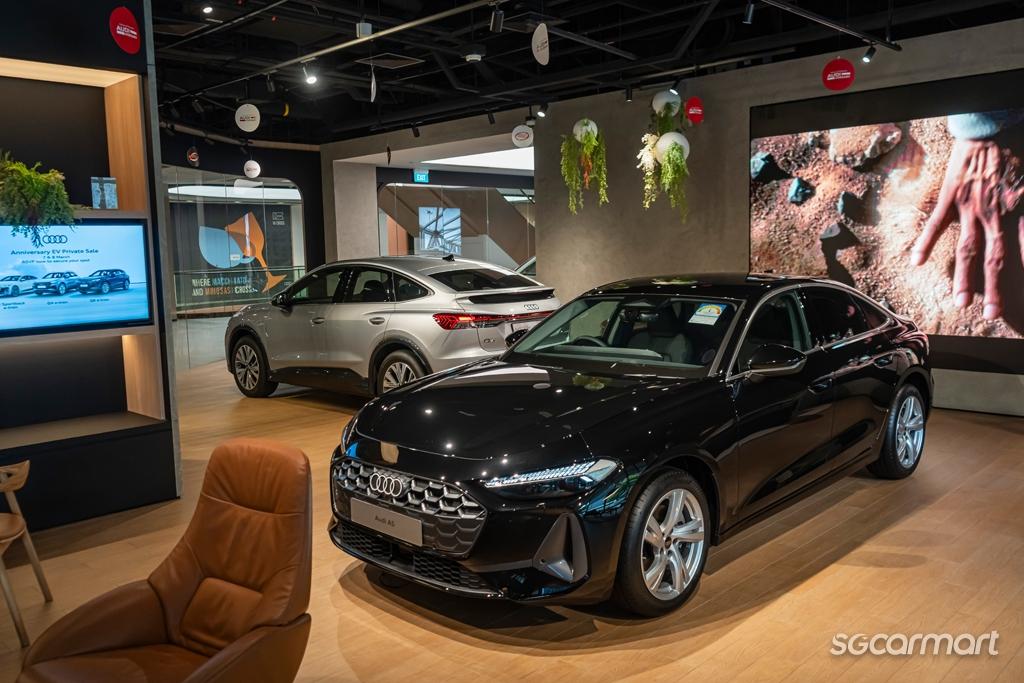
The House of Progress can accommodate nine cars physically - far less than the entire lineup that Audi has on offer here - so digital innovations were implemented from the outset. These remain in place still. Notably, all sales staff are equipped with a "3D visualiser", enabling them to show off every single detail of every model’s exterior and interior to customers, with different backgrounds to boot too.
"These are already-produced cars - already produced in one of our factories worldwide; already on the ship or in the bonded warehouse," Bayer notes. He cites the expanded possibilities of augmenting the ‘shopping’ experience with advanced digital tools. "You can expand your virtual showroom to over 100 cars if you want."
Taking the reins entirely also has other benefits for customers: Transparency.
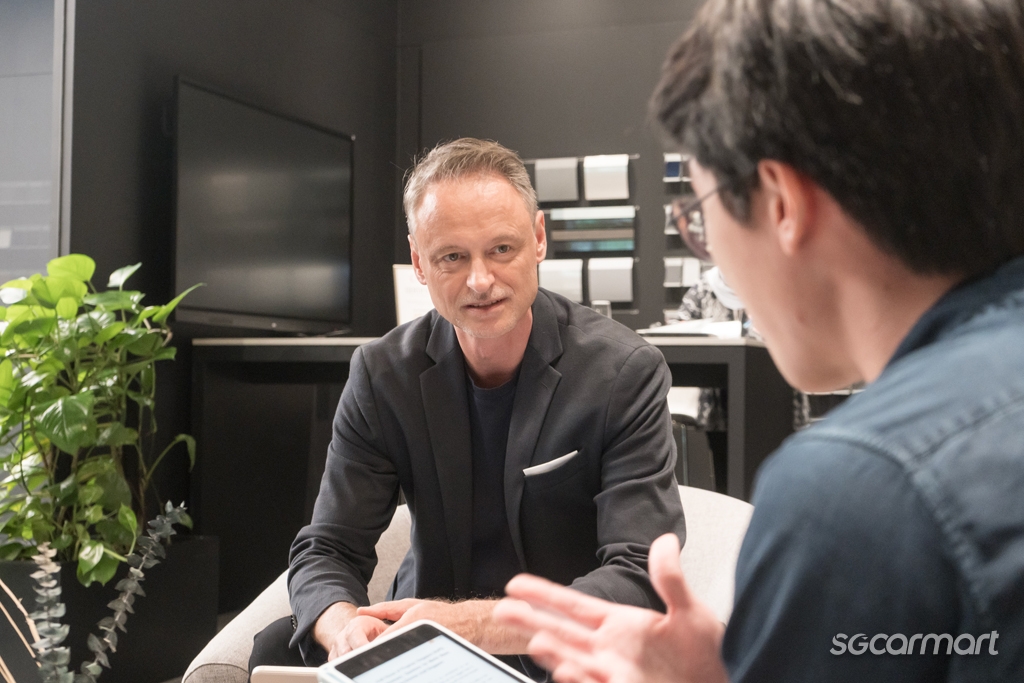
Bayer believes that the direct line between customers and the brand enables more transparency, and thus fosters extra buying confidence and trust
Since customers no longer have a middleman between themselves and the brand, they are afforded full visibility on what is currently in stock - down to the exact specification - as well as when they can take delivery.
"At the end, you're buying directly from Audi AG... That creates confidence and trust," Bayer proffers. Perhaps most importantly, he also assures that the brand can "guarantee attractive pricing" for its models. "We control - in some way - the pricing on our own," he shares.
But the biggest upshot of the D2C model now employed by the brand comes back to what Audi claims to have always believed in: Prioritising those who buy and drive its cars.
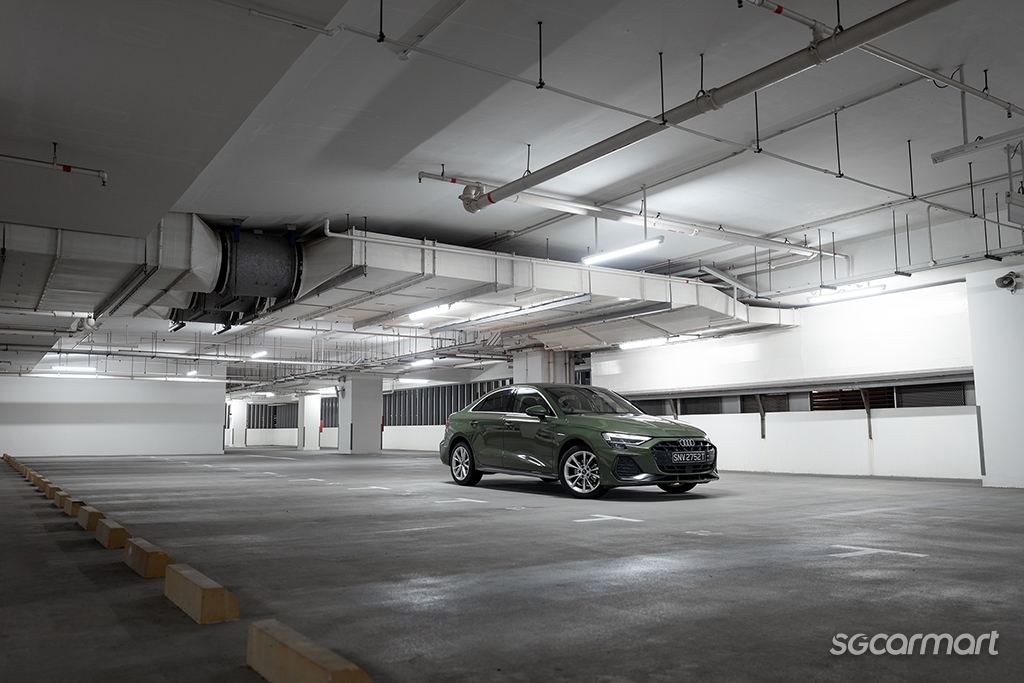
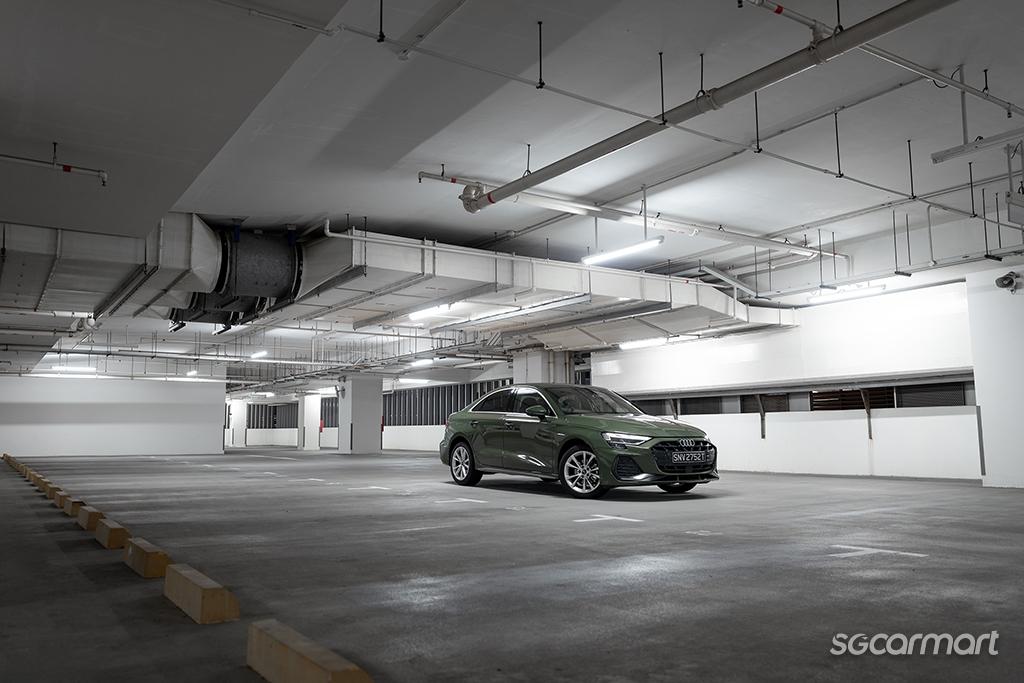
The A3 Sedan (pictured) and A3 Sportback are Audi's only Cat A COE models on sale in Singapore currently
Bayer points out that taking the reins directly gives the brand "much more data about the customer", which, in turn, allows it to tailor its products more towards what Singaporean buyers are on the hunt for.
For instance, the brand has ostensibly shifted its lineup slowly and strategically away from models sold with a Category A COE; buyers have followed in tandem, most choosing to opt for the brand's non entry-level models. ("We're selling more better-equipped cars at the moment," Bayer points out.)
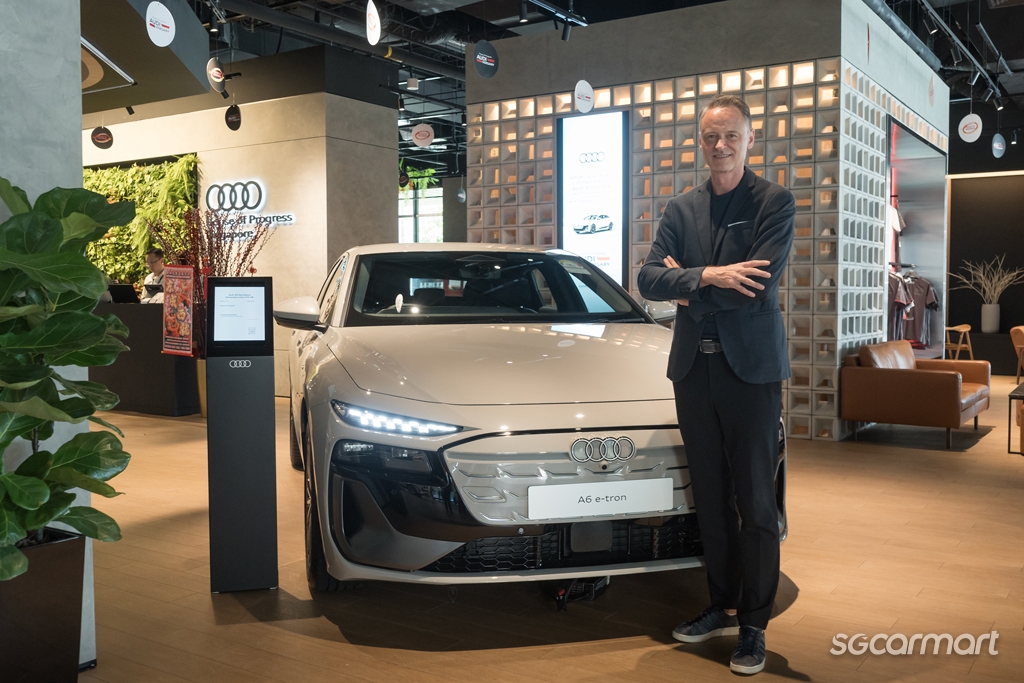
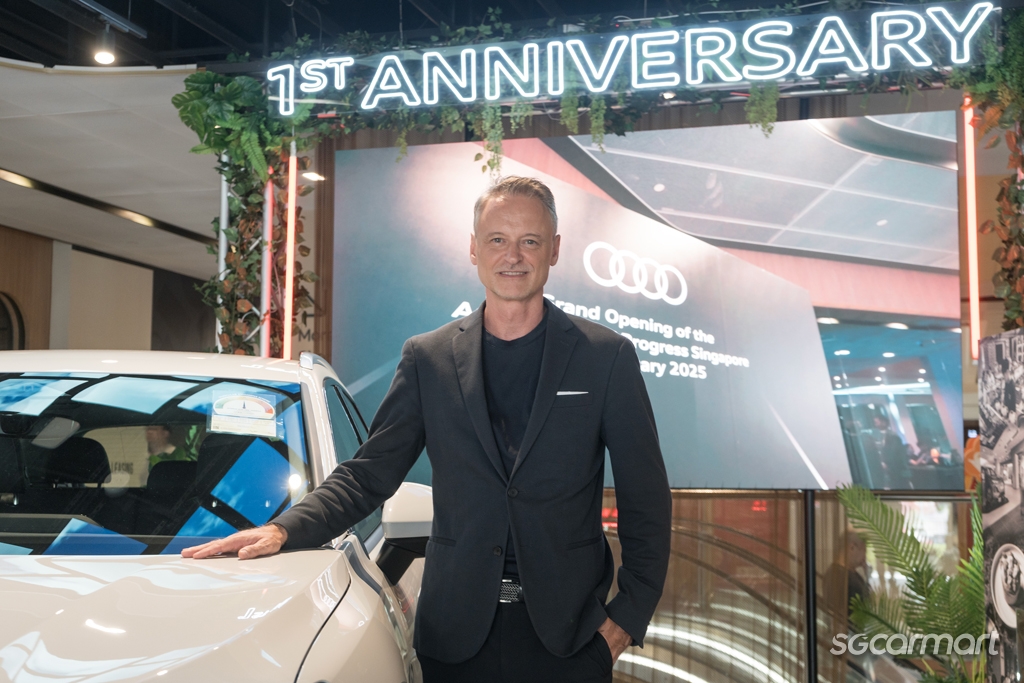
Audi already has one foot well into electrification with models like the Q6 e-tron and A6 e-tron (Pictured: Martin Bayer in front of the Audi A6 e-tron)
Fortified for the forward journey
In many ways, Audi's first-year residency at the House of Progress can be seen as it ploughing the grounds for the following year, or even following years ahead.
Absolute sales numbers are one thing. Despite Audi's year-on-year growth in 2025, its market share for new car registrations remained effectively flat from 2024 at 1.39% - a consequence of the market seeing a surge on the whole. Two months of data isn't anything to go on about considering all the factors that affect deliveries - but as of February this year, that number hadn't changed much, standing at just 1.2%.
Admittedly, the brand is also still some way behind its traditional German peers. In fact, for 2025 it was behind even several of the stronger performers from the new batch of electric names. (It must be said, though, that these have the benefit of being buzzy upstarts, riding both goodwill towards Chinese brands and the benefit of feeling fresh against more tried-and-tested formulae employed by legacy outfits.)
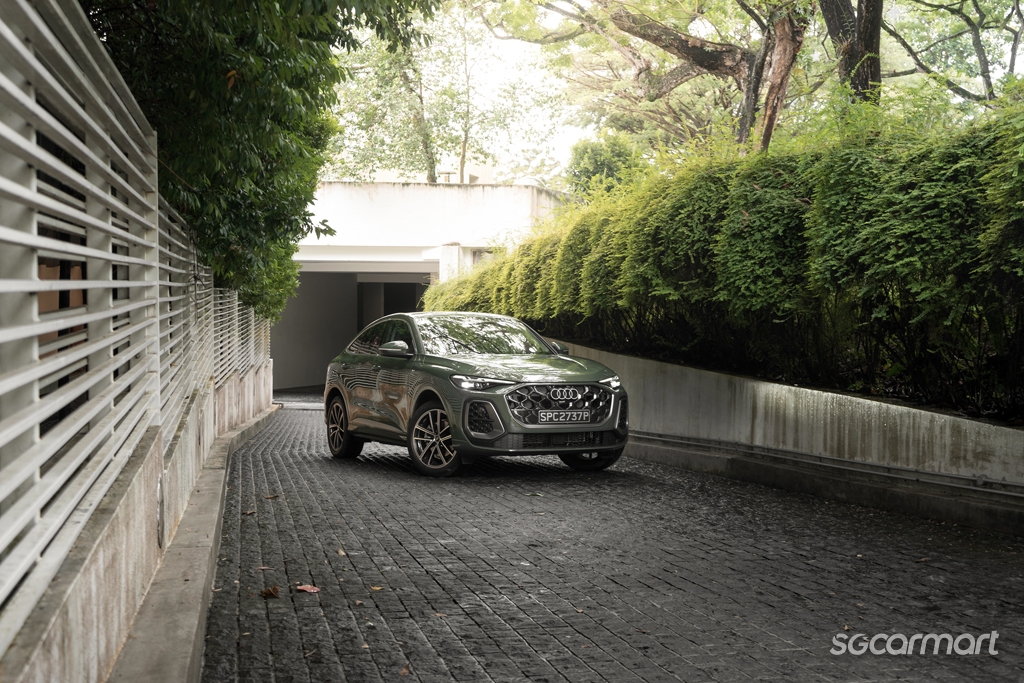
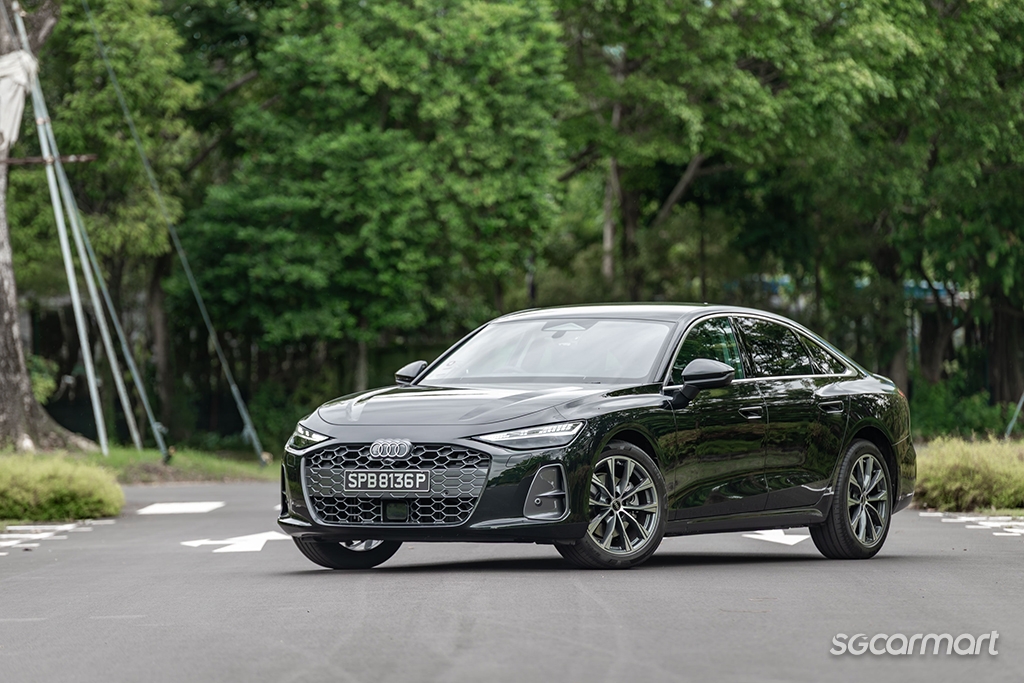
The close of 2025 saw some of Audi's most popular models, including the Q5 and A6, making latest-generation returns to Singapore
In 2026, however, Audi has already started on stronger footing.
Alongside fresh electric models like the Q6 e-tron and A6 e-tron, most of its lineup has been given generational overhauls. Counting different model families and body styles separately, a whopping 18 different models were launched here last year. Among them were heavy-hitters like the A6 and Q5, with the latest-generation Q3 - Audi's local bestseller here historically - also landing just two months ago.
"Being a premium brand, what you have to offer - a young and fresh portfolio - is [another] of the pre-requisites we really need to have," Bayer proffers. But well cognisant that competition will only grow stiffer, Audi is firing on multiple other cylinders this year too to sink its new roots even deeper into the market.
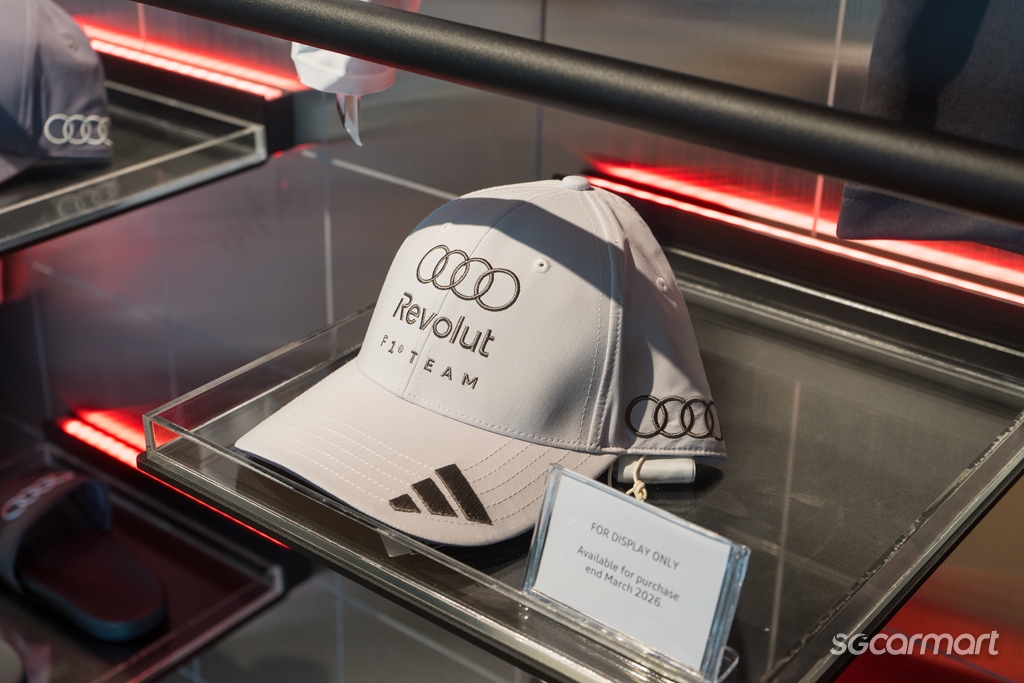
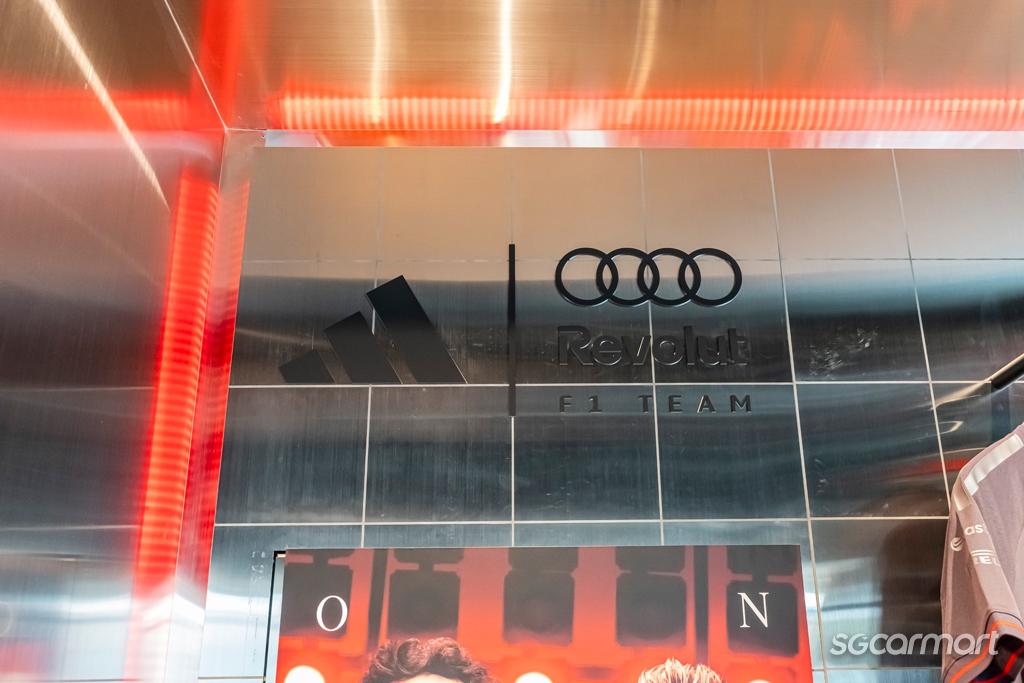
New customer engagement activities are also opening up in 2026, with Audi's entry into Formula One
Enhanced customer engagement via exclusive events and its myAudiWorld program, and an even more seamless ownership journey are among the key pillars. In tandem, the brand is hoping to tap on the one treasure trove that many of today's dime-a-dozen fresh faces lack.
"The heritage that you build over decades is something you cannot create in one year," Bayer declares emphatically. Specifically for the current year, both heritage and customer engagement are already converging like never before, thanks to Audi's long-awaited Formula One debut.
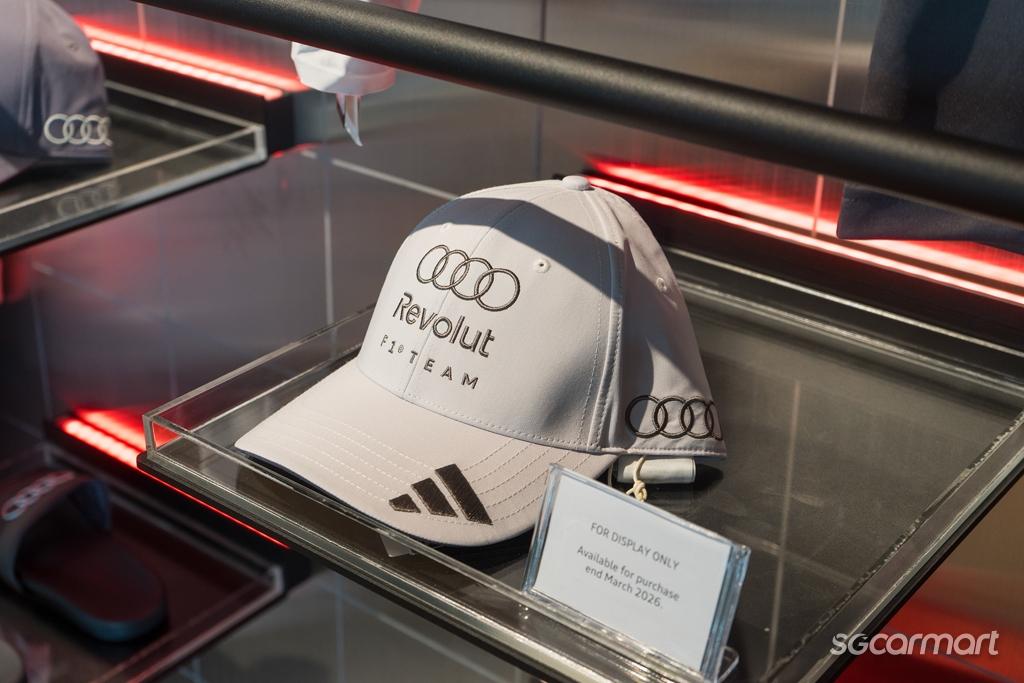
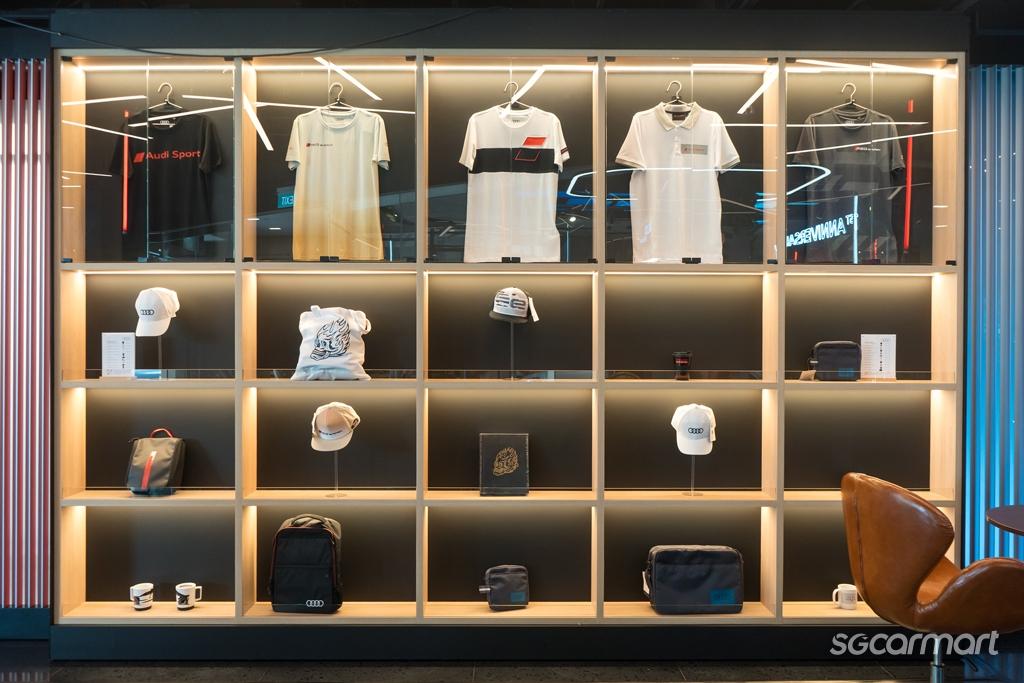
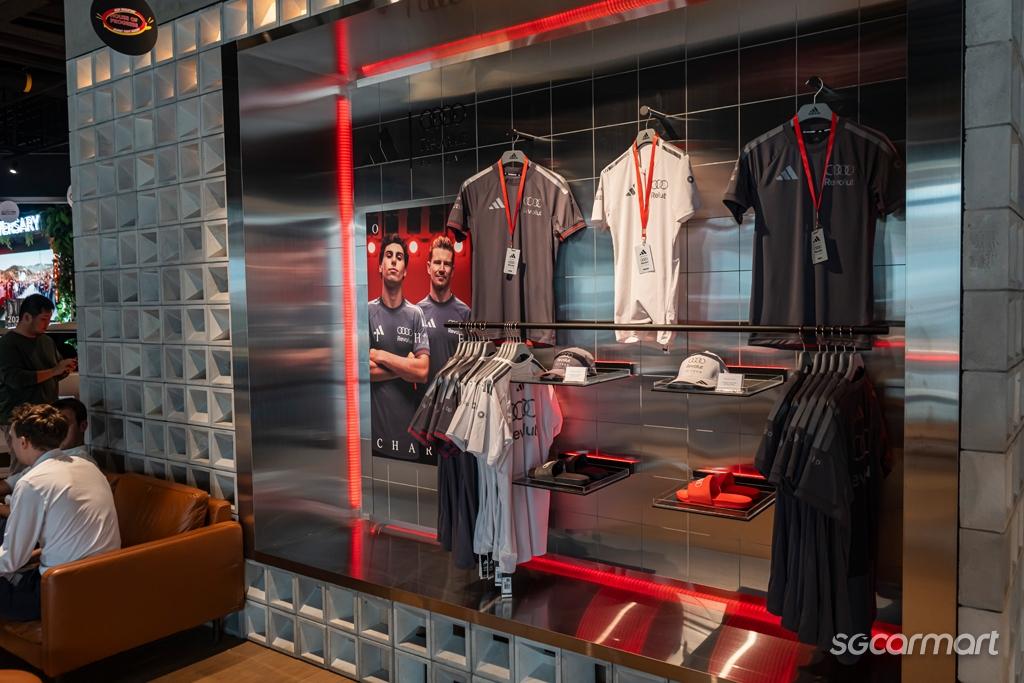
"We have new possibilities with F1 coming; we have F1 merchandising… We want to exploit this. So, customer activation is one key element I want to focus on this year."
Bayer further notes the transfers in technology and engineering know-how that the highest echelon of motorsports today promises.
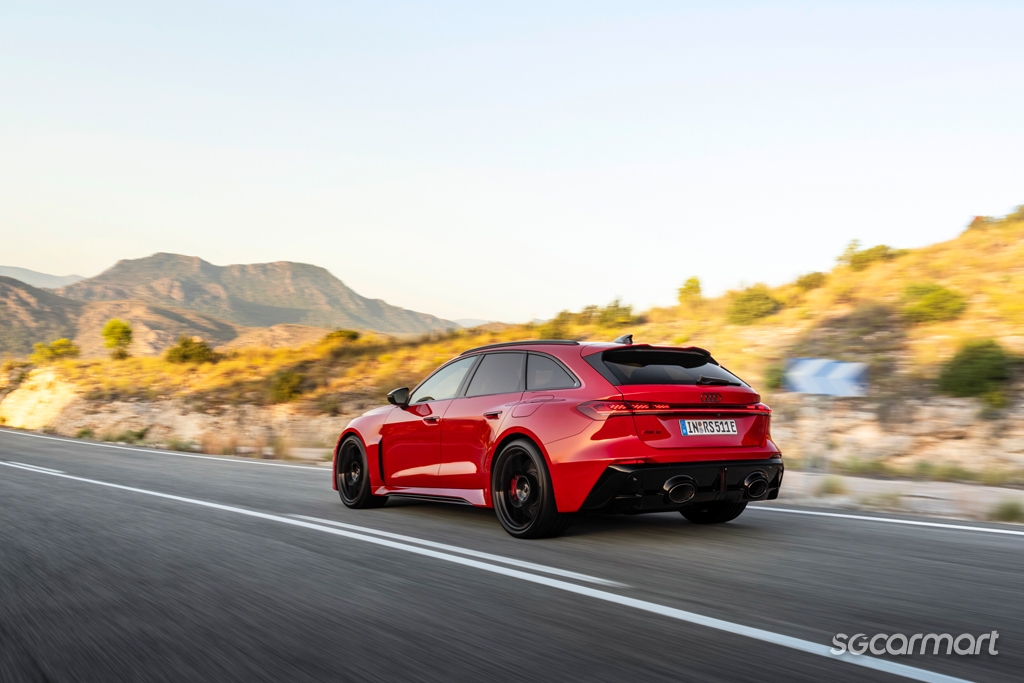
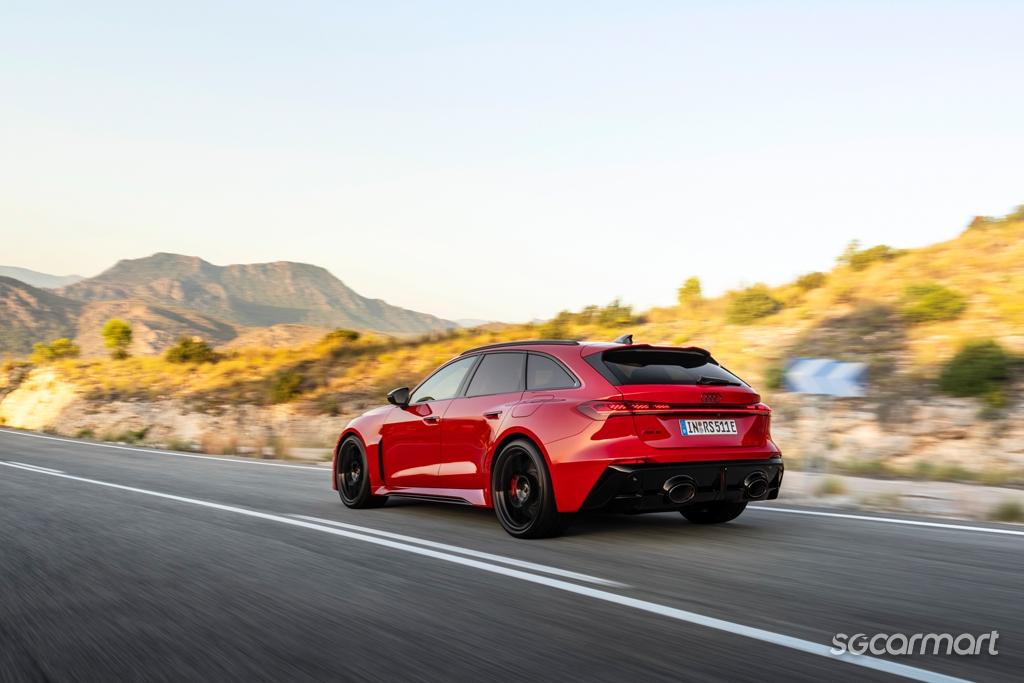
The RS5 is Audi's first-ever performance hybrid, boasting 630bhp, and the world's first electro-mechanical torque vectoring system
He singles out a highly-awaited new model as a good example: The Audi RS5, which is set to arrive in Singapore in 2026 in both Avant and Sedan guises. (Bayer is particularly excited for the RS5 Avant; one of his all-time favourite cars is the RS4 Avant, which he owned back in 2012.)
Though developed prior to Audi's Formula One debut, the model's plug-in hybrid drivetrain and aerodynamic treatment already exemplify how expertise gleaned from the sport could further augment Audi's electrification efforts, while keeping the flame going for its beloved performance models.
Cast your attention beyond Singapore toward what Audi has been teasing internationally, and the brand's future is also - at once - intriguing yet stylish.
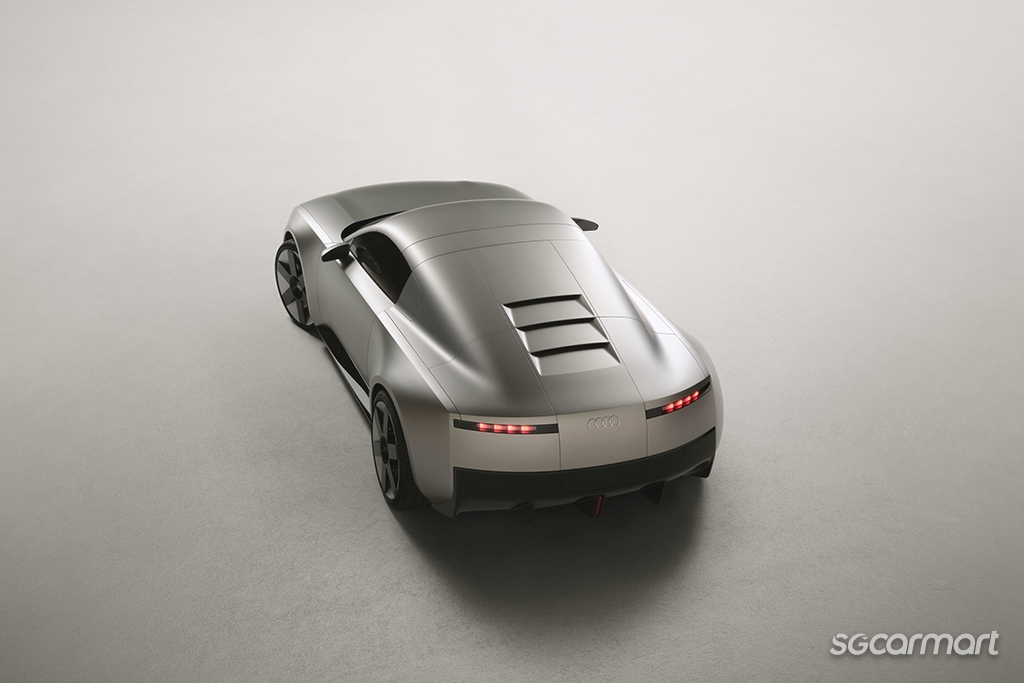
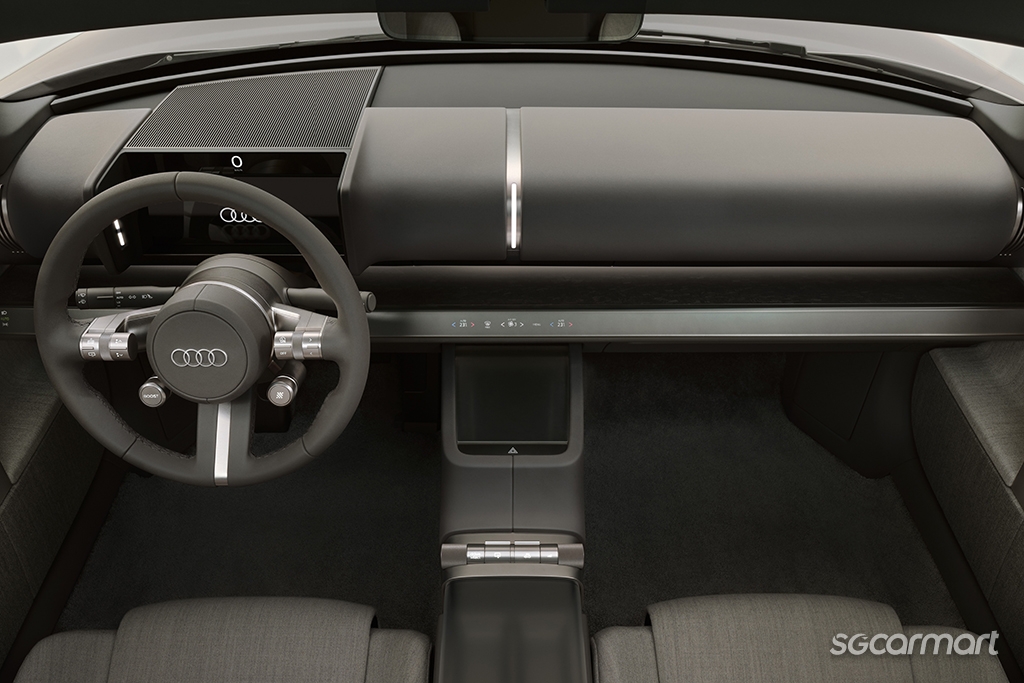
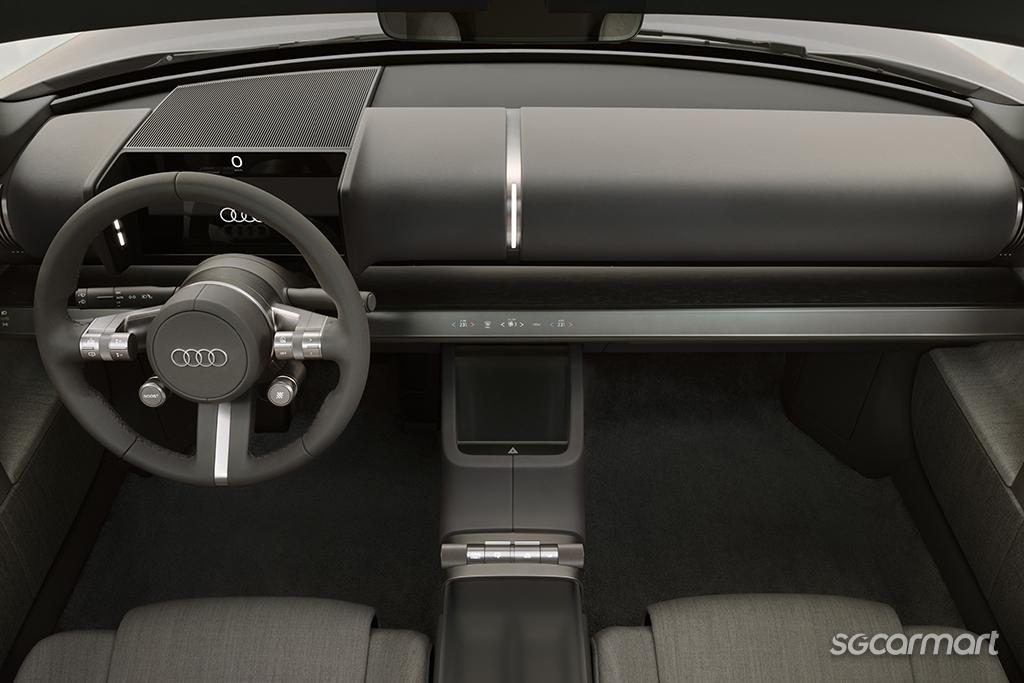
Bayer teases that many of the Concept C's stunning design elements - including its reduced exterior and interior styling - might find their way into future Audi models, including SUVs
Bayer praises the Concept C - arguably Audi's most magnetic concept car in recent memory - for its "very, very clear shapes and lines" and for its "very reduced" styling, opining that it has all the ingredients to be a future icon. "I think this is one of the future design language elements also to distinguish ourselves again; to stand out in the premium segment."
While Audi is unequivocal about its goal to have another growth year in 2026, it is Bayer's follow-up response once again that reveals more of where the brand's head is at.
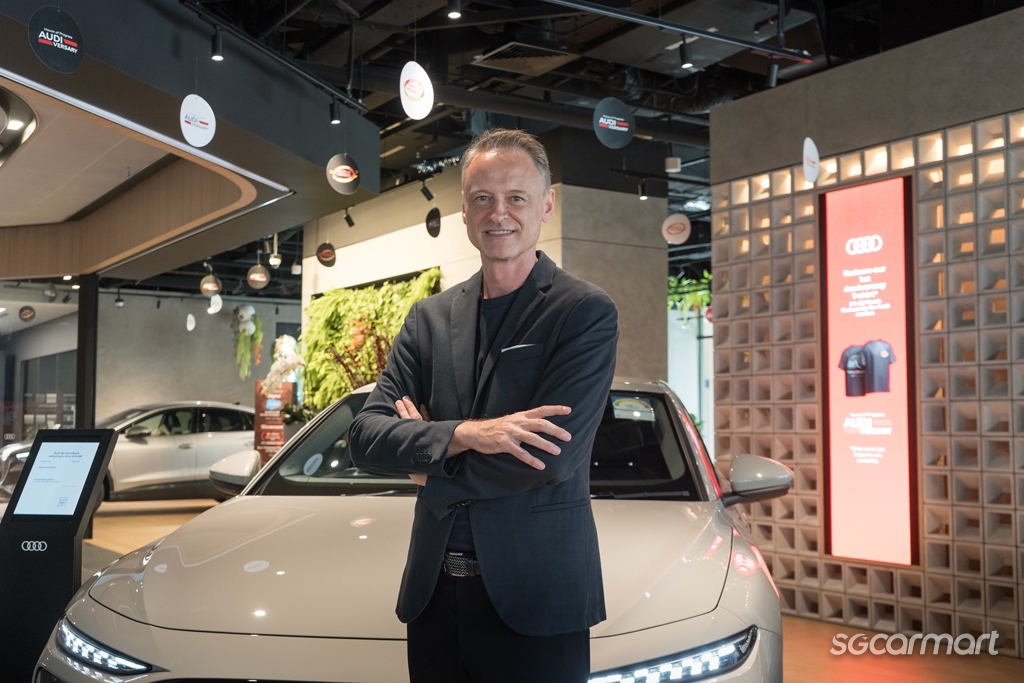
More than ever, Audi has its sights trained on customer engagement and customer satisfaction for 2026
"We have very ambitious KPIs when it comes to customer satisfaction," he declares, noting that he measures his team "very, very strongly" based on these metrics.
A short while after our conversation, he politely excuses himself for a routine keystone meeting (our chat happens right before the COE bidding results hit), choosing to be in on the discussions himself rather than continue with the rest of the festivities planned for guests that afternoon. Audi may very well still be in the festive mood for the first-year anniversary of its House of Progress. But you get the sense that the brand is already eagerly anticipating its second anniversary here - as well as the potential fruits that it could bring from all the seeds it has planted.
Don't forget to check out these other stories!
Singapore Grand Prix: Inside the fast lane with Team Sauber
Five things you ought to know about the all new Audi Q5
Malaysian roads with the right car is always enjoyable
No one will call Audi a newcomer to the automotive scene. But in Singapore at least, it's more than fair to describe the brand as having gone through a rebirth over the past 12 months.
As Martin Bayer, Managing Director of Audi Singapore, reminds us, it's not just the brand's showroom - itself already quite a monumental shift into the heart of the city - but the brand's entire business model that was reshaped in the process. As do Tesla and Porsche, Audi now sells direct-to-consumer (or D2C), with its previous authorised dealer Premium Automobiles now serving solely as its aftersales partner.
The Audi House of Progress, Audi's relatively new showroom concept located at Cross Street Exchange, is just celebrating its first year anniversary
Birthdays are an opportune time for reflection, the passing of a year presenting the chance to look back on how one has changed and grown.
With the Audi House of Progress recently turning one, Bayer - who took the helm just a month into its 2025 opening - is torn between two answers when asked about the single largest achievement Audi is proudest of so far since the move.
The first is in direct recognition of the House of Progress. Among all the awards Audi has amassed over the last year, Bayer says that the one that was handed out in recognition of it as the "most innovative showroom concept" feels the most special.
Bayer notes that the space has a less transactional atmosphere and welcomes more casual visitors - the latter aided by Audi's F&B partner, Burnt Ends Bakery
"The whole atmosphere is a bit less transactional… Everybody is welcome," Bayer shares about the space with palpable pride.
Specifically, he notes a relatively fresh crowd that has emerged since the shift; young professionals from the Central Business District (CBD) come here for their breakfast and lunch breaks, with some even choosing to use this as an extension of their workspaces. In tandem, Audi's esteemed F&B partner, Burnt Ends Bakery, has a staggering statistic to show off: More than 60,000 beverages served here thus far. (The two teams recently collaborated on a new menu in honour of the space's first anniversary.)
Bayer continues: "If you combine that with creating awareness for our brand and creating interest, [we've noticed] customers coming back on the weekend with their families, and then doing the real car shopping."
Steep learning curve
Still, it's Bayer's second reflection that reveals more of the brand's recent evolution.
Ending the year with 730 cars registered, Audi posted a respectable 24.4% year-on-year growth of sales in 2025. But all of that didn't come easy.
Calling it all a "journey" and a "steep learning curve", Bayer admits that it took a while for the team to find its footing after going D2C. "The data is very transparent. You can see the numbers. We started on a low level of sales when we started in February and then March last year."
Showroom aside, Bayer is most proud of the changes implemented quickly within the team to tailor the new setup better to the needs of local customers
But key changes quickly followed. Flying solo without a dealer partner for the first time, the team went back to the drawing board and started to rebuild its expertise from scratch.
"It's not only sales; it's retail and marketing; it's financing, it's PR, it's everything, which is more now to the end-customer. Everything we do is always [answering the question of]: How can this help us at the end with selling cars?", Bayer shares.
"If you come from a wholesale perspective, I'm very proud that we did the shift until the end of the year very successfully, also in our team set up."
The progression through 2025 saw Audi doubling its number of sales staff on the ground
One of the most important changes Audi adopted was to double its number of salespeople on the ground. Much had already been invested in what the brand refers to as the "online journey" - the result of which is still one of the most fleshed out virtual configurators you’ll find among today's car brands. Still, the team was quickly reacquainted with the reality that no matter where your brand stands in the market, the same rules apply.
"The truth is Singaporean customers - who are also very tech savvy customers compared to [customers in] international markets - they prefer the human-to-human interaction when it comes to the closure of the deal. Because it's a very huge investment," Bayer concedes.
The result now? A heavier emphasis on the human touch again, even as Audi relentlessly sharpens the online journey.
Audi's virtual configurator is among the more sophisticated you'll find for brands in Singapore today
Negotiating this balance hasn't negated the foundations first laid down when Audi first went D2C.
The House of Progress can accommodate nine cars physically - far less than the entire lineup that Audi has on offer here - so digital innovations were implemented from the outset. These remain in place still. Notably, all sales staff are equipped with a "3D visualiser", enabling them to show off every single detail of every model’s exterior and interior to customers, with different backgrounds to boot too.
"These are already-produced cars - already produced in one of our factories worldwide; already on the ship or in the bonded warehouse," Bayer notes. He cites the expanded possibilities of augmenting the ‘shopping’ experience with advanced digital tools. "You can expand your virtual showroom to over 100 cars if you want."
Taking the reins entirely also has other benefits for customers: Transparency.
Bayer believes that the direct line between customers and the brand enables more transparency, and thus fosters extra buying confidence and trust
Since customers no longer have a middleman between themselves and the brand, they are afforded full visibility on what is currently in stock - down to the exact specification - as well as when they can take delivery.
"At the end, you're buying directly from Audi AG... That creates confidence and trust," Bayer proffers. Perhaps most importantly, he also assures that the brand can "guarantee attractive pricing" for its models. "We control - in some way - the pricing on our own," he shares.
But the biggest upshot of the D2C model now employed by the brand comes back to what Audi claims to have always believed in: Prioritising those who buy and drive its cars.
The A3 Sedan (pictured) and A3 Sportback are Audi's only Cat A COE models on sale in Singapore currently
Bayer points out that taking the reins directly gives the brand "much more data about the customer", which, in turn, allows it to tailor its products more towards what Singaporean buyers are on the hunt for.
For instance, the brand has ostensibly shifted its lineup slowly and strategically away from models sold with a Category A COE; buyers have followed in tandem, most choosing to opt for the brand's non entry-level models. ("We're selling more better-equipped cars at the moment," Bayer points out.)
Audi already has one foot well into electrification with models like the Q6 e-tron and A6 e-tron (Pictured: Martin Bayer in front of the Audi A6 e-tron)
Fortified for the forward journey
In many ways, Audi's first-year residency at the House of Progress can be seen as it ploughing the grounds for the following year, or even following years ahead.
Absolute sales numbers are one thing. Despite Audi's year-on-year growth in 2025, its market share for new car registrations remained effectively flat from 2024 at 1.39% - a consequence of the market seeing a surge on the whole. Two months of data isn't anything to go on about considering all the factors that affect deliveries - but as of February this year, that number hadn't changed much, standing at just 1.2%.
Admittedly, the brand is also still some way behind its traditional German peers. In fact, for 2025 it was behind even several of the stronger performers from the new batch of electric names. (It must be said, though, that these have the benefit of being buzzy upstarts, riding both goodwill towards Chinese brands and the benefit of feeling fresh against more tried-and-tested formulae employed by legacy outfits.)
The close of 2025 saw some of Audi's most popular models, including the Q5 and A6, making latest-generation returns to Singapore
In 2026, however, Audi has already started on stronger footing.
Alongside fresh electric models like the Q6 e-tron and A6 e-tron, most of its lineup has been given generational overhauls. Counting different model families and body styles separately, a whopping 18 different models were launched here last year. Among them were heavy-hitters like the A6 and Q5, with the latest-generation Q3 - Audi's local bestseller here historically - also landing just two months ago.
"Being a premium brand, what you have to offer - a young and fresh portfolio - is [another] of the pre-requisites we really need to have," Bayer proffers. But well cognisant that competition will only grow stiffer, Audi is firing on multiple other cylinders this year too to sink its new roots even deeper into the market.
New customer engagement activities are also opening up in 2026, with Audi's entry into Formula One
Enhanced customer engagement via exclusive events and its myAudiWorld program, and an even more seamless ownership journey are among the key pillars. In tandem, the brand is hoping to tap on the one treasure trove that many of today's dime-a-dozen fresh faces lack.
"The heritage that you build over decades is something you cannot create in one year," Bayer declares emphatically. Specifically for the current year, both heritage and customer engagement are already converging like never before, thanks to Audi's long-awaited Formula One debut.
"We have new possibilities with F1 coming; we have F1 merchandising… We want to exploit this. So, customer activation is one key element I want to focus on this year."
Bayer further notes the transfers in technology and engineering know-how that the highest echelon of motorsports today promises.
The RS5 is Audi's first-ever performance hybrid, boasting 630bhp, and the world's first electro-mechanical torque vectoring system
He singles out a highly-awaited new model as a good example: The Audi RS5, which is set to arrive in Singapore in 2026 in both Avant and Sedan guises. (Bayer is particularly excited for the RS5 Avant; one of his all-time favourite cars is the RS4 Avant, which he owned back in 2012.)
Though developed prior to Audi's Formula One debut, the model's plug-in hybrid drivetrain and aerodynamic treatment already exemplify how expertise gleaned from the sport could further augment Audi's electrification efforts, while keeping the flame going for its beloved performance models.
Cast your attention beyond Singapore toward what Audi has been teasing internationally, and the brand's future is also - at once - intriguing yet stylish.
Bayer teases that many of the Concept C's stunning design elements - including its reduced exterior and interior styling - might find their way into future Audi models, including SUVs
Bayer praises the Concept C - arguably Audi's most magnetic concept car in recent memory - for its "very, very clear shapes and lines" and for its "very reduced" styling, opining that it has all the ingredients to be a future icon. "I think this is one of the future design language elements also to distinguish ourselves again; to stand out in the premium segment."
While Audi is unequivocal about its goal to have another growth year in 2026, it is Bayer's follow-up response once again that reveals more of where the brand's head is at.
More than ever, Audi has its sights trained on customer engagement and customer satisfaction for 2026
"We have very ambitious KPIs when it comes to customer satisfaction," he declares, noting that he measures his team "very, very strongly" based on these metrics.
A short while after our conversation, he politely excuses himself for a routine keystone meeting (our chat happens right before the COE bidding results hit), choosing to be in on the discussions himself rather than continue with the rest of the festivities planned for guests that afternoon. Audi may very well still be in the festive mood for the first-year anniversary of its House of Progress. But you get the sense that the brand is already eagerly anticipating its second anniversary here - as well as the potential fruits that it could bring from all the seeds it has planted.
Don't forget to check out these other stories!
Singapore Grand Prix: Inside the fast lane with Team Sauber
Five things you ought to know about the all new Audi Q5
Malaysian roads with the right car is always enjoyable



Thank You For Your Subscription.




Tags
Products & Services

For Owners
Quick Links
About Sgcarmart