Seven percent increase in average speeds per dollar increase in ERP rates
10 Sep 2014|2,477 views


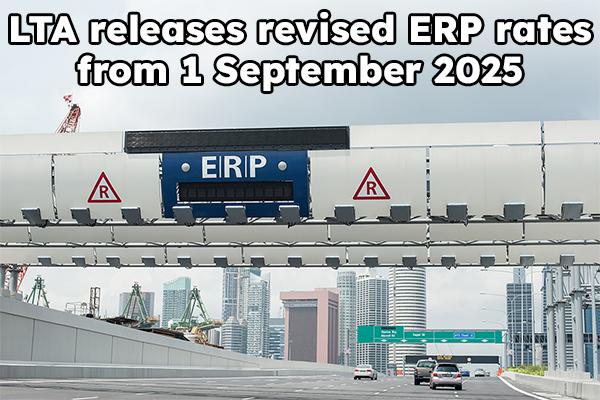
More than three-quarters of Singapore's 74 Electronic Road Pricing (ERP) gantries have not had their rates changed in the last three years, Senior Minister of State for Transport Josephine Teo said in Parliament yesterday, reported The Straits Times.


"As for the majority of the gantries which did not need a rate change... a balance has been achieved, with the ERP rate sustaining a traffic speed in the optimal range," she said.
Mrs. Teo gave these figures when replying to Mr. Baey Yam Keng (Tampines GRC), who had asked for proof that the ERP system was effective.
Mr. Baey also asked if rate revisions - which are made quarterly - had made it too daunting for motorists to remember the prevailing charges on the road.
Mrs. Teo said rates are changed only when average speeds fall outside the 'optimal range'. The 'optimal range' for expressways is 45km/h to 65km/h, and for arterial roads, 20km/h to 30km/h.
But she acknowledged that rate changes may elude motorists. "Speaking as a motorist myself, I have to confess that it is probably true of many motorists that even when rate changes are announced in advance through the media, we don't always pay attention," she said.
Mrs. Teo said the satellite-based ERP system, which the Land Transport Authority is working on, will be a 'fairer' system. Likely to be in place by 2020, the system offers 'the flexibility of charging drivers according to the distance they travel'. "This is an inherently fairer system as those who contribute more to congestion will pay more," Mrs. Teo said. "The incentive for these drivers to change their time, route or mode of travel would thus be stronger," she added.
More than three-quarters of Singapore's 74 Electronic Road Pricing (ERP) gantries have not had their rates changed in the last three years, Senior Minister of State for Transport Josephine Teo said in Parliament yesterday, reported The Straits Times.
Of those that saw changes, only eight showed a discernible upward trend in rates, she added. But it reduced congestion - speeds rose an average of seven percent per dollar increase, she noted of the eight gantries.
"As for the majority of the gantries which did not need a rate change... a balance has been achieved, with the ERP rate sustaining a traffic speed in the optimal range," she said.
Mrs. Teo gave these figures when replying to Mr. Baey Yam Keng (Tampines GRC), who had asked for proof that the ERP system was effective.
Mr. Baey also asked if rate revisions - which are made quarterly - had made it too daunting for motorists to remember the prevailing charges on the road.
Mrs. Teo said rates are changed only when average speeds fall outside the 'optimal range'. The 'optimal range' for expressways is 45km/h to 65km/h, and for arterial roads, 20km/h to 30km/h.
But she acknowledged that rate changes may elude motorists. "Speaking as a motorist myself, I have to confess that it is probably true of many motorists that even when rate changes are announced in advance through the media, we don't always pay attention," she said.
Mrs. Teo said the satellite-based ERP system, which the Land Transport Authority is working on, will be a 'fairer' system. Likely to be in place by 2020, the system offers 'the flexibility of charging drivers according to the distance they travel'. "This is an inherently fairer system as those who contribute more to congestion will pay more," Mrs. Teo said. "The incentive for these drivers to change their time, route or mode of travel would thus be stronger," she added.


Latest COE Prices
January 2026 | 2nd BIDDING
NEXT TENDER: 04 Feb 2026
CAT A$109,501
CAT B$121,634
CAT C$75,202
CAT E$120,891
View Full Results 
Thank You For Your Subscription.













Tags
Products & Services

For Owners
Quick Links
About Sgcarmart