The Rimac C_Two undergoes final aerodynamic tests
01 Feb 2021|827 views


Over the last two years, Rimac has exposed three different generations of C_Two prototypes to a series of wind tunnel tests. The objective was to ensure that its flagship's aerodynamics perform at the optimum level in terms of performance, range, and efficiency when it comes to handling the impact of the wind.
Rimac's engineering team ran thousands of Computational Fluid Dynamics (CFD) simulations for the C_Two. Each simulation model consists of over 120 million elements with up to 180 million for the detailed heat transfer models. With real-time testing, it is critical to validate expected results. The real-time tests are conducted in a controlled wind tunnel testing environment and on track.
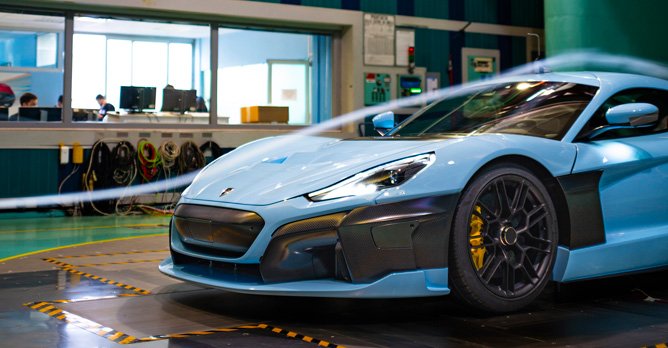

For example, on long-distance trips, the demands for cooling will naturally be lower than when the C_Two is being driven on the track. At the same time, ensuring optimum range from its batteries and the C_Two's overall ability to fully harness its immense power and torque is also key.
The C_Two has been carefully designed and engineered with aerodynamics firmly in mind. The C_Two has four specific active aerodynamic parts. Everything from the active front splitter and intelligent underbody air flaps to the adaptable air brake wing prove the C_Two is shaped by performance.
According to Rimac, the tests have all already gone extremely well in terms of correlation with their simulations. From the initial C_Two concept to the validation prototype, aerodynamic efficiency has been improved by 34% as a result of continuous optimisation.
Over the last two years, Rimac has exposed three different generations of C_Two prototypes to a series of wind tunnel tests. The objective was to ensure that its flagship's aerodynamics perform at the optimum level in terms of performance, range, and efficiency when it comes to handling the impact of the wind.
Rimac's engineering team ran thousands of Computational Fluid Dynamics (CFD) simulations for the C_Two. Each simulation model consists of over 120 million elements with up to 180 million for the detailed heat transfer models. With real-time testing, it is critical to validate expected results. The real-time tests are conducted in a controlled wind tunnel testing environment and on track.
For example, on long-distance trips, the demands for cooling will naturally be lower than when the C_Two is being driven on the track. At the same time, ensuring optimum range from its batteries and the C_Two's overall ability to fully harness its immense power and torque is also key.
The C_Two has been carefully designed and engineered with aerodynamics firmly in mind. The C_Two has four specific active aerodynamic parts. Everything from the active front splitter and intelligent underbody air flaps to the adaptable air brake wing prove the C_Two is shaped by performance.
According to Rimac, the tests have all already gone extremely well in terms of correlation with their simulations. From the initial C_Two concept to the validation prototype, aerodynamic efficiency has been improved by 34% as a result of continuous optimisation.


Latest COE Prices
March 2026 | 1st BIDDING
NEXT TENDER: 18 Mar 2026
CAT A$108,220
CAT B$114,002
CAT C$76,000
CAT E$114,890
View Full Results 
Thank You For Your Subscription.











Tags
Products & Services

For Owners
Quick Links
About Sgcarmart