View page in desktop
|
Report error
  •   Apple app store icon
  • Google play store icon
Terms of Service
|
Privacy Policy
|
PDPA
|
Site Map
©2004-2026 Sgcarmart, Singapore. All rights reserved.
  • Home
  • Car Articles
  • advice
  • advice Listings
  • Car Technical Advice
  • Electronic Stability Control - Do you need them?

    25 Feb 2011

    |

    22,459 views

    Will driving safety become the trend of the future with the emergence and increasing response to Electronic Stability Control for automobiles?


    Driving in unfavourable conditions is a very challenging task for a driver. One needs to be prepared for the various conditions for driving safely. However, there are times when human measures and controls aren't enough. This is where the challenge becomes even more dangerous and could lead to accidents. When driving in slippery or even icy roads, the dangers of slipping and skidding are very great. And it could just endanger the life of the driver and passengers.

    Today's modern car makers have the answer for this problem: Electronic Stability Control (ESC). When driving, this computerised technology detects the presence of skids and minimises the dangers that it could incur to the driver. What happens is that when the driver loses steering control, the ESC applies the brakes to the affected wheel to help the driver gain control of where the car should be heading. Each wheel has its own brake system for an efficient driving. Aside from brake systems, the ESC can also automatically lessen engine power. With lesser engine power, the driver can gain control of the car while driving.

    The technology behind the Electronic Stability Control was first implemented by Mercedes Benz in 1987 with their traction control systems. In this earlier predecessor for the ESC, the wheels were implemented with individual brakes as well as throttle to keep the traction of the car firm while speeding. Unlike the ESC, though, this is not an aid for steering. By the early 90s a computerised version of the technology was introduced and was the first one in the world.

    The Electronic stability control consists of the following components:

    • Anti lock braking system is the system that is used to prevent the wheels of the car to stop rotating while the brake is being implemented.
    • Traction control is a device that can provide control to the wheels while excessive throttle is being applied by the driver and the road cannot cope with the torque that was applied.
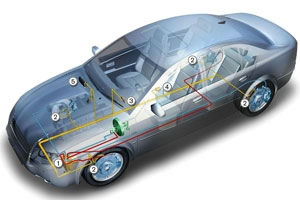
    • Driver input sensors are essential devices that provide the necessary information if a possible defect in various parts of the car is about to happen. It can detect the direction that the driver is steering, the rotating movement of the car, and the lateral acceleration of the car as well as the speed of the car.
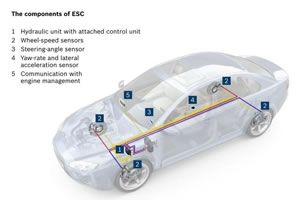

    The ESC could cost at a round a couple of hundred dollars but it is often not sold as a unit. This is usually sold together with expensive trims and so the cost could sometimes lead to a couple of thousand dollars. Usually, the Electronic Stability Control is fitted with the traction control. The sensors as well as the integrated control unit are also part of the system.

    There are currently no established regulations regarding implementing these devices into every car.
    From then on, the technology has been catapulted to a variety of terms done by various car manufacturers. The Electronic Stability Control has changed its name a number of times depending on the car manufacturer or the creator of the technology.

    The Electronic stability control does not only work on wet and icy surfaces. It could also work well on conditions when acceleration is great and especially when the car is moving towards a curve. What is great about this technology is that it can detect the possible skidding before it becomes a real threat. Even Government studies have proven that there was an increase in road safety upon the implementation of the ESC.


    However, there are federal regulations being raised now regarding improved car safety concerns. European countries are quickly taking advantage of the new technology as many of their cars are now being implemented with the Electronic Stability Control. Currently in Singapore, there is a considerable knowledge already about the benefits of the device but implementation on the used car market would still have to be pushed forward.

    Driving safety is an aspect in automobiles that has been met with a lot of new technologies for increased safety and protection. From the air bags, traction control and now, with the use of Electronic Stability Control, a driver will have a more capable control of the car for safe driving. If you have not yet checked your car for it, then it would be best to ask your car manufacturer about this system. If they have available trims regarding your car model, then it would be best to take advantage of this technology.

    After all, driving on our roads can be relatively dangerous. Improve your car safety and take advantage of what modern technology can give to the world right now.

    Freelancer
    Text by Menaaz Memon
    I've been writing about cars for many years, and I wonder if I'm getting any better at it.
    24.4k

    Tags

    safety electronic stability control car safety understanding electronic stability control should you have electronic stability control

    AllReviewsNewsAdviceFeaturesVideos
    • Home
    • Car Articles
    • advice
    • advice Listings
    • Car Technical Advice

    Electronic Stability Control - Do you need them?

    25 Feb 2011

    |

    22,459 views

    Will driving safety become the trend of the future with the emergence and increasing response to Electronic Stability Control for automobiles?


    Driving in unfavourable conditions is a very challenging task for a driver. One needs to be prepared for the various conditions for driving safely. However, there are times when human measures and controls aren't enough. This is where the challenge becomes even more dangerous and could lead to accidents. When driving in slippery or even icy roads, the dangers of slipping and skidding are very great. And it could just endanger the life of the driver and passengers.

    Today's modern car makers have the answer for this problem: Electronic Stability Control (ESC). When driving, this computerised technology detects the presence of skids and minimises the dangers that it could incur to the driver. What happens is that when the driver loses steering control, the ESC applies the brakes to the affected wheel to help the driver gain control of where the car should be heading. Each wheel has its own brake system for an efficient driving. Aside from brake systems, the ESC can also automatically lessen engine power. With lesser engine power, the driver can gain control of the car while driving.

    The technology behind the Electronic Stability Control was first implemented by Mercedes Benz in 1987 with their traction control systems. In this earlier predecessor for the ESC, the wheels were implemented with individual brakes as well as throttle to keep the traction of the car firm while speeding. Unlike the ESC, though, this is not an aid for steering. By the early 90s a computerised version of the technology was introduced and was the first one in the world.

    The Electronic stability control consists of the following components:

    • Anti lock braking system is the system that is used to prevent the wheels of the car to stop rotating while the brake is being implemented.
    • Traction control is a device that can provide control to the wheels while excessive throttle is being applied by the driver and the road cannot cope with the torque that was applied.
    • Driver input sensors are essential devices that provide the necessary information if a possible defect in various parts of the car is about to happen. It can detect the direction that the driver is steering, the rotating movement of the car, and the lateral acceleration of the car as well as the speed of the car.


    The ESC could cost at a round a couple of hundred dollars but it is often not sold as a unit. This is usually sold together with expensive trims and so the cost could sometimes lead to a couple of thousand dollars. Usually, the Electronic Stability Control is fitted with the traction control. The sensors as well as the integrated control unit are also part of the system.

    There are currently no established regulations regarding implementing these devices into every car.
    From then on, the technology has been catapulted to a variety of terms done by various car manufacturers. The Electronic Stability Control has changed its name a number of times depending on the car manufacturer or the creator of the technology.

    The Electronic stability control does not only work on wet and icy surfaces. It could also work well on conditions when acceleration is great and especially when the car is moving towards a curve. What is great about this technology is that it can detect the possible skidding before it becomes a real threat. Even Government studies have proven that there was an increase in road safety upon the implementation of the ESC.


    However, there are federal regulations being raised now regarding improved car safety concerns. European countries are quickly taking advantage of the new technology as many of their cars are now being implemented with the Electronic Stability Control. Currently in Singapore, there is a considerable knowledge already about the benefits of the device but implementation on the used car market would still have to be pushed forward.

    Driving safety is an aspect in automobiles that has been met with a lot of new technologies for increased safety and protection. From the air bags, traction control and now, with the use of Electronic Stability Control, a driver will have a more capable control of the car for safe driving. If you have not yet checked your car for it, then it would be best to ask your car manufacturer about this system. If they have available trims regarding your car model, then it would be best to take advantage of this technology.

    After all, driving on our roads can be relatively dangerous. Improve your car safety and take advantage of what modern technology can give to the world right now.
    Freelancer
    Text by Menaaz Memon
    I've been writing about cars for many years, and I wonder if I'm getting any better at it.
    24.4k

    Tags

    safety electronic stability control car safety understanding electronic stability control should you have electronic stability control

    All Advice Categories

    Car BuyingCar SellingCar OwnershipCar TechnicalCar MaintenanceMiscellaneous

    All Advice Categories

    Car BuyingCar SellingCar OwnershipCar TechnicalCar MaintenanceMiscellaneous

    Related Motor Directory Categories

      Power EnhancementBodykits & PartsRacing & Motorsports EquipmentAccident Repair & ClaimsHandling & Safety

    Related Motor Directory Categories

      Power EnhancementBodykits & PartsRacing & Motorsports EquipmentAccident Repair & ClaimsHandling & Safety

    You May Also Like

    Sgcarmart Explores: Bras Basah!

    Sgcarmart Explores: Bras Basah!

    New cars are safer: Opt for one when you can

    New cars are safer: Opt for one when you can

    Maxus MIFA 7 Elite: Going big for the little moments

    Maxus MIFA 7 Elite: Going big for the little moments

    Sgcarmart Explores: East Coast Park!

    Sgcarmart Explores: East Coast Park!

    We try out roadside parking with the new OBU!

    We try out roadside parking with the new OBU!

    Opinion: Why do we even need green number plates?

    Opinion: Why do we even need green number plates?

    The BYD Sealion 8 seven-seater SUV arrives in Singapore

    The BYD Sealion 8 seven-seater SUV arrives in Singapore

    Mazda 6e Fastback GT Electric review

    Mazda 6e Fastback GT Electric review

    Hongqi Singapore opens its showroom doors

    Hongqi Singapore opens its showroom doors

    Opinion: Is it time for a change to our road traffic laws?

    Opinion: Is it time for a change to our road traffic laws?

    Mercedes-Benz GLB250+ Review

    Mercedes-Benz GLB250+ Review

    A first look at Chery's iCaur V23 and Jaecoo J8 in Singapore

    A first look at Chery's iCaur V23 and Jaecoo J8 in Singapore

    Is parallel import hesitancy growing among car buyers?

    Is parallel import hesitancy growing among car buyers?

    New to driving? Here's how to become a better driver

    New to driving? Here's how to become a better driver

    Tesla launches Model Y L in Singapore, first six-seater here

    Tesla launches Model Y L in Singapore, first six-seater here

    Toyota RAV4 Hybrid vs Subaru Forester e-Boxer

    Toyota RAV4 Hybrid vs Subaru Forester e-Boxer

    You May Also Like

    Sgcarmart Explores: Bras Basah!

    Sgcarmart Explores: Bras Basah!

    New cars are safer: Opt for one when you can

    New cars are safer: Opt for one when you can

    Maxus MIFA 7 Elite: Going big for the little moments

    Maxus MIFA 7 Elite: Going big for the little moments

    Sgcarmart Explores: East Coast Park!

    Sgcarmart Explores: East Coast Park!

    We try out roadside parking with the new OBU!

    We try out roadside parking with the new OBU!

    Opinion: Why do we even need green number plates?

    Opinion: Why do we even need green number plates?

    The BYD Sealion 8 seven-seater SUV arrives in Singapore

    The BYD Sealion 8 seven-seater SUV arrives in Singapore

    Mazda 6e Fastback GT Electric review

    Mazda 6e Fastback GT Electric review

    Hongqi Singapore opens its showroom doors

    Hongqi Singapore opens its showroom doors

    Opinion: Is it time for a change to our road traffic laws?

    Opinion: Is it time for a change to our road traffic laws?

    Mercedes-Benz GLB250+ Review

    Mercedes-Benz GLB250+ Review

    A first look at Chery's iCaur V23 and Jaecoo J8 in Singapore

    A first look at Chery's iCaur V23 and Jaecoo J8 in Singapore

    Is parallel import hesitancy growing among car buyers?

    Is parallel import hesitancy growing among car buyers?

    New to driving? Here's how to become a better driver

    New to driving? Here's how to become a better driver

    Tesla launches Model Y L in Singapore, first six-seater here

    Tesla launches Model Y L in Singapore, first six-seater here

    Toyota RAV4 Hybrid vs Subaru Forester e-Boxer

    Toyota RAV4 Hybrid vs Subaru Forester e-Boxer

    Related Articles

    Must-Have Car Accessories Every EV Driver Should Own

    Must-Have Car Accessories Every EV Driver Should Own

    The BYD Sealion 8 seven-seater SUV arrives in Singapore

    The BYD Sealion 8 seven-seater SUV arrives in Singapore

    Tesla launches Model Y L in Singapore, first six-seater here

    Tesla launches Model Y L in Singapore, first six-seater here

    New cars are safer: Opt for one when you can

    New cars are safer: Opt for one when you can

    Which electric vehicle charging provider should you use?

    Which electric vehicle charging provider should you use?

    We try out roadside parking with the new OBU!

    We try out roadside parking with the new OBU!

    DENZA B5 luxury SUV launched in Singapore

    DENZA B5 luxury SUV launched in Singapore

    BMW iX3 Review

    BMW iX3 Review

    Related Articles

    Must-Have Car Accessories Every EV Driver Should Own

    Must-Have Car Accessories Every EV Driver Should Own

    The BYD Sealion 8 seven-seater SUV arrives in Singapore

    The BYD Sealion 8 seven-seater SUV arrives in Singapore

    Tesla launches Model Y L in Singapore, first six-seater here

    Tesla launches Model Y L in Singapore, first six-seater here

    New cars are safer: Opt for one when you can

    New cars are safer: Opt for one when you can

    Which electric vehicle charging provider should you use?

    Which electric vehicle charging provider should you use?

    We try out roadside parking with the new OBU!

    We try out roadside parking with the new OBU!

    DENZA B5 luxury SUV launched in Singapore

    DENZA B5 luxury SUV launched in Singapore

    BMW iX3 Review

    BMW iX3 Review