View page in desktop
|
Report error
  •   Apple app store icon
  • Google play store icon
Terms of Service
|
Privacy Policy
|
PDPA
|
Site Map
|
Whistleblowing Portal
©2004-2026 Sgcarmart, Singapore. All rights reserved.
  • Home
  • Car Articles
  • advice
  • advice Listings
  • Car Ownership Advice
  • Fuel economy hacks that will benefit newbie and seasoned drivers

    06 Oct 2022

    |

    27,416 views

    Fuel economy is top of mind for most, if not all drivers. Here are some sure-fire ways to help you lower your fuel consumption and running costs.


    You've recently earned your licence and have purchased or are about to buy your first car. At this point, you should have figured out how much you need to budget every month for car-related expenses.

    Most of these costs, such as season parking, monthly payments and road tax, are fixed. But if there's one thing you can reduce, it would be your petrol costs. The key to this is bettering your fuel economy.

    It may seem trivial to improve your consumption from 13km/L to 15km/L. But that extra 2km/L means that for every 40 litres, you would be covering an extra 80 kilometres!

    Here are some useful tips that they may not have taught you at driving school.

    1. A light touch
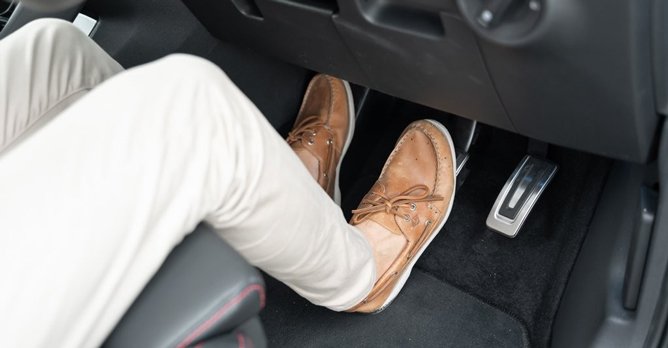
    Smooth and gradual pedal inputs will make you a better and more efficient driver
    You've probably learned that shifting up early helps reduce fuel consumption by keeping the engine speed (revolutions per minute) lower.

    Another technique you should practice is using a light touch on the accelerator. Do this by imagining there's an egg between your foot and the accelerator pedal.

    The goal is to press the accelerator without 'cracking the egg'. Sure, the car won't pick up speed as quickly, but with a light touch, you'll enhance your efficiency and even provide a smoother ride.

    2. Use 'Eco' mode

    When you're not in a hurry, using the 'Eco' setting can help further reduce fuel consumption
    Many modern cars today offer a variety of driving modes for the driver to choose from. These typically consist of 'Normal', 'Sport' and 'Eco'.

    If your car has a drive mode switch or button, try cycling through the modes till you see 'Eco'.

    Along with using a light touch, activating Eco mode tells the car to reduce the engine's responsiveness and instructs the gearbox to shift up earlier as well.

    In some models, the air-con compressor's power will also be reduced, lowering the power drain on the engine and thereby helping improve fuel economy.

    3. Activate the stop-start function

    Stop-start can have other names - Mazda, for instance, refers to it as 'i-stop'
    Along with using Eco mode, another way to save fuel is by activating your car's stop-start feature.

    As its name suggests, the function turns the engine off when conditions are ideal, such as when you're stopped and otherwise idling at a red light, thereby saving petrol.

    Many motorists dislike this feature since it turns off the air-con and makes everyone feel warm. But if you're keen to reduce your fuel expenses, you should keep it switched on.

    If you're not convinced, try utilising it for a month before checking the trip computer. Most cars with stop-start have a menu that displays how much fuel you've saved with this feature.

    4. Choose the right fuel

    More expensive isn't always better - fill up with the grade that your manufacturer recommends
    Perhaps friends or relatives have told you that 98 RON or premium fuel like V-Power is best for your car. But a higher RON doesn't always mean it's better.

    The higher the RON (research octane number), the more resistant a petrol is to premature combustion, which causes knocking or pinging.

    However, unless you're driving a high-performance or sports car, stick with 95 RON, which is adequate for most car models. Honestly, a regular runabout is unlikely to require 98 RON. 
     
    If in doubt, check your owner's manual. There's nothing wrong with 98 RON or even premium petrol, as filling up with it won't damage your engine. But if your car does not require it, you'll end up spending more without enjoying any discernible benefits.

    Click here to compare fuel prices.

    5. Journey planning

    You don't need a map and notebook - a shared Google Calendar can help families plan their weekly journeys
    Navigation apps like Waze or Google Maps are helpful in guiding you to your destination. Journey planning, on the other hand, is seeing the bigger picture by scheduling and figuring out who needs to go where and when.

    If you live in the east or west and need to head in the other direction for work or to meet up with friends, run any errands you need to run there when you're heading there, instead of returning again another day.

    It may seem troublesome at first to have to discuss logistics, but better fuel economy is definitely worth the effort.

    6. Waze is useful

    Waze can certainly be useful, but you should help yourself by learning your driving routes, too
    After you've planned your journey, using an app like Waze to navigate there - even if you know the way - is still useful.

    That's because the data is crowdsourced. Based on users' traffic reports, Waze can recommend a quicker route. And sometimes, the route isn't always the shortest, but the one with the least congestion.

    Waze also lets drivers report traffic jams, road works, accidents and yes, even police presence. So, keeping it running can certainly be a time and fuel-saver!

    7. Timely servicing

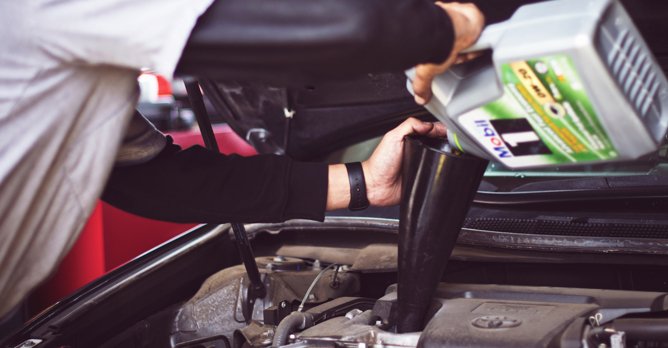
    Regular oil changes with high-quality lubricants will help ensure your car remains in tip-top condition for years to come
    A car engine requires timely servicing. For most Japanese and Korean makes, a service interval is either every six months of 10,000km, whichever comes first.

    Maintaining your car's condition goes a long way towards ensuring lower or at least optimal fuel economy. Apart from replacing the engine oil and oil filter, mechanics will also replace any other required fluids, inspect the drive belts, and etc.

    Never believe anyone who tells you that 'cars are reliable and don't need servicing'. That person won't be there to help you when your car inevitably breaks down!

    8. Check your tyre pressures

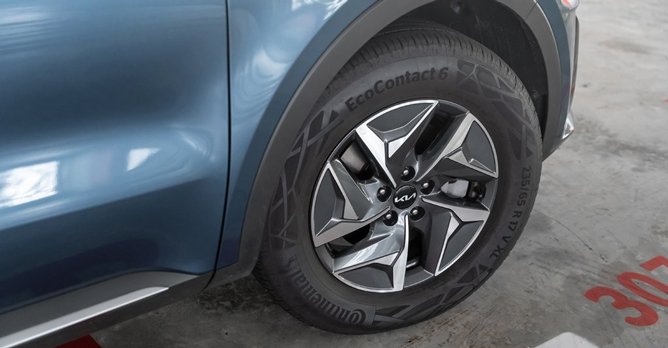
    Apart from maintaining the correct tyre pressures, you could also consider fitting eco tyres as well
    Correctly inflated tyres improve fuel economy by reducing rolling resistance and helping provide optimal grip. Lower rolling resistance means the engine exerts less effort to turn the wheels, thereby reducing fuel consumption.

    Check your tyre pressures at least once a month, and do it when they're still cold. If you have to top-up air, do it at the nearest petrol kiosk so the tyres don't get too warm and the air inside doesn't expand too much.

    To determine the correct pressure, check the label located on the door sill on the driver's side. It will state the correct pressures that the tyres should be inflated to.

    Want more car advice for newbies? These stories may interest you

    Helpful hacks for newbie drivers to improve safety

    Are you a new driver taking to the road? Read our helpful hints first

    9 things that new car owners should have in their car

    First time car buyers: What to check when taking delivery

    Beyond sticker shock: Running costs first-time car owners must consider
    Jeremy Chua
    Jeremy Chua
    Jeremy loves fast cars, the sweet smell of petrol and the burbling, erotic noises from a V8.
    Photos by Unsplash
    Editorial Team
    Manufacturers
    24.4k

    Tags

    advice car advice fuel economy fuel consumption fuel saving fuel economy tips fuel economy hacks fuel saving tips light touch eco mode stop-start function journey planning waze servicing

    AllReviewsNewsAdviceFeaturesVideos
    • Home
    • Car Articles
    • advice
    • advice Listings
    • Car Ownership Advice

    Fuel economy hacks that will benefit newbie and seasoned drivers

    06 Oct 2022

    |

    27,416 views

    Fuel economy is top of mind for most, if not all drivers. Here are some sure-fire ways to help you lower your fuel consumption and running costs.


    You've recently earned your licence and have purchased or are about to buy your first car. At this point, you should have figured out how much you need to budget every month for car-related expenses.

    Most of these costs, such as season parking, monthly payments and road tax, are fixed. But if there's one thing you can reduce, it would be your petrol costs. The key to this is bettering your fuel economy.

    It may seem trivial to improve your consumption from 13km/L to 15km/L. But that extra 2km/L means that for every 40 litres, you would be covering an extra 80 kilometres!

    Here are some useful tips that they may not have taught you at driving school.

    1. A light touch

    Smooth and gradual pedal inputs will make you a better and more efficient driver
    You've probably learned that shifting up early helps reduce fuel consumption by keeping the engine speed (revolutions per minute) lower.

    Another technique you should practice is using a light touch on the accelerator. Do this by imagining there's an egg between your foot and the accelerator pedal.

    The goal is to press the accelerator without 'cracking the egg'. Sure, the car won't pick up speed as quickly, but with a light touch, you'll enhance your efficiency and even provide a smoother ride.

    2. Use 'Eco' mode
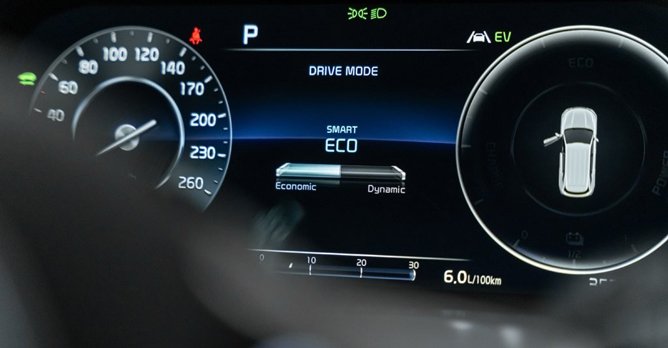
    When you're not in a hurry, using the 'Eco' setting can help further reduce fuel consumption
    Many modern cars today offer a variety of driving modes for the driver to choose from. These typically consist of 'Normal', 'Sport' and 'Eco'.

    If your car has a drive mode switch or button, try cycling through the modes till you see 'Eco'.

    Along with using a light touch, activating Eco mode tells the car to reduce the engine's responsiveness and instructs the gearbox to shift up earlier as well.

    In some models, the air-con compressor's power will also be reduced, lowering the power drain on the engine and thereby helping improve fuel economy.

    3. Activate the stop-start function
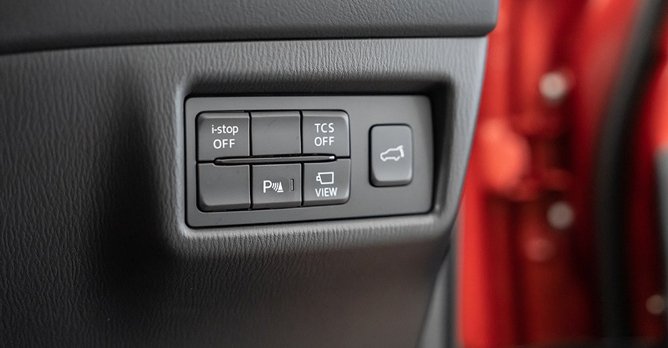
    Stop-start can have other names - Mazda, for instance, refers to it as 'i-stop'
    Along with using Eco mode, another way to save fuel is by activating your car's stop-start feature.

    As its name suggests, the function turns the engine off when conditions are ideal, such as when you're stopped and otherwise idling at a red light, thereby saving petrol.

    Many motorists dislike this feature since it turns off the air-con and makes everyone feel warm. But if you're keen to reduce your fuel expenses, you should keep it switched on.

    If you're not convinced, try utilising it for a month before checking the trip computer. Most cars with stop-start have a menu that displays how much fuel you've saved with this feature.

    4. Choose the right fuel
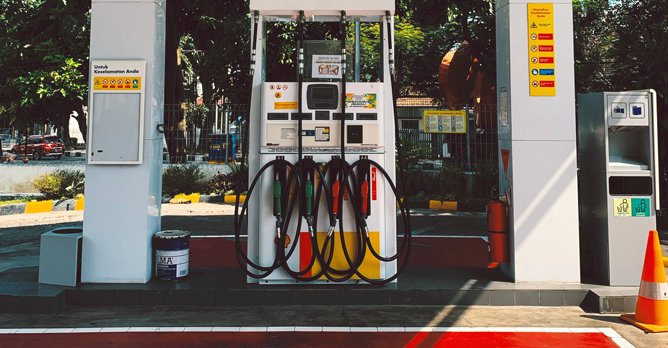
    More expensive isn't always better - fill up with the grade that your manufacturer recommends
    Perhaps friends or relatives have told you that 98 RON or premium fuel like V-Power is best for your car. But a higher RON doesn't always mean it's better.

    The higher the RON (research octane number), the more resistant a petrol is to premature combustion, which causes knocking or pinging.

    However, unless you're driving a high-performance or sports car, stick with 95 RON, which is adequate for most car models. Honestly, a regular runabout is unlikely to require 98 RON. 
     
    If in doubt, check your owner's manual. There's nothing wrong with 98 RON or even premium petrol, as filling up with it won't damage your engine. But if your car does not require it, you'll end up spending more without enjoying any discernible benefits.

    Click here to compare fuel prices.

    5. Journey planning

    You don't need a map and notebook - a shared Google Calendar can help families plan their weekly journeys
    Navigation apps like Waze or Google Maps are helpful in guiding you to your destination. Journey planning, on the other hand, is seeing the bigger picture by scheduling and figuring out who needs to go where and when.

    If you live in the east or west and need to head in the other direction for work or to meet up with friends, run any errands you need to run there when you're heading there, instead of returning again another day.

    It may seem troublesome at first to have to discuss logistics, but better fuel economy is definitely worth the effort.

    6. Waze is useful
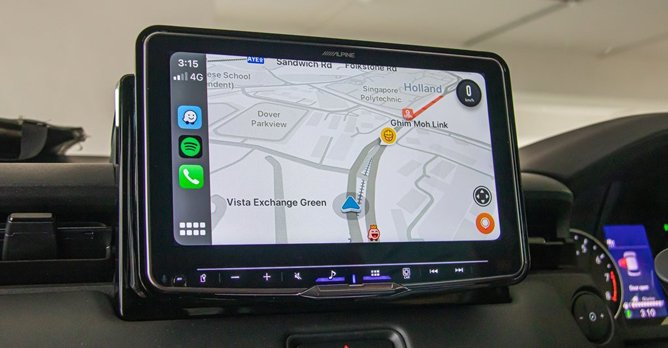
    Waze can certainly be useful, but you should help yourself by learning your driving routes, too
    After you've planned your journey, using an app like Waze to navigate there - even if you know the way - is still useful.

    That's because the data is crowdsourced. Based on users' traffic reports, Waze can recommend a quicker route. And sometimes, the route isn't always the shortest, but the one with the least congestion.

    Waze also lets drivers report traffic jams, road works, accidents and yes, even police presence. So, keeping it running can certainly be a time and fuel-saver!

    7. Timely servicing
    Regular oil changes with high-quality lubricants will help ensure your car remains in tip-top condition for years to come
    A car engine requires timely servicing. For most Japanese and Korean makes, a service interval is either every six months of 10,000km, whichever comes first.

    Maintaining your car's condition goes a long way towards ensuring lower or at least optimal fuel economy. Apart from replacing the engine oil and oil filter, mechanics will also replace any other required fluids, inspect the drive belts, and etc.

    Never believe anyone who tells you that 'cars are reliable and don't need servicing'. That person won't be there to help you when your car inevitably breaks down!

    8. Check your tyre pressures
    Apart from maintaining the correct tyre pressures, you could also consider fitting eco tyres as well
    Correctly inflated tyres improve fuel economy by reducing rolling resistance and helping provide optimal grip. Lower rolling resistance means the engine exerts less effort to turn the wheels, thereby reducing fuel consumption.

    Check your tyre pressures at least once a month, and do it when they're still cold. If you have to top-up air, do it at the nearest petrol kiosk so the tyres don't get too warm and the air inside doesn't expand too much.

    To determine the correct pressure, check the label located on the door sill on the driver's side. It will state the correct pressures that the tyres should be inflated to.

    Want more car advice for newbies? These stories may interest you

    Helpful hacks for newbie drivers to improve safety

    Are you a new driver taking to the road? Read our helpful hints first

    9 things that new car owners should have in their car

    First time car buyers: What to check when taking delivery

    Beyond sticker shock: Running costs first-time car owners must consider

    Jeremy Chua
    Jeremy Chua
    Jeremy loves fast cars, the sweet smell of petrol and the burbling, erotic noises from a V8.
    Photos by Unsplash
    Editorial Team
    Manufacturers
    24.4k

    Tags

    advice car advice fuel economy fuel consumption fuel saving fuel economy tips fuel economy hacks fuel saving tips light touch eco mode stop-start function journey planning waze servicing

    maintenance
    tyre pressure
    fuel type
    fuel ron
    octane
    fuel octane
    ron
    research octane number
    maintenance
    tyre pressure
    fuel type
    fuel ron
    octane
    fuel octane
    ron
    research octane number

    All Advice Categories

    Car BuyingCar SellingCar OwnershipCar TechnicalCar MaintenanceMiscellaneous

    All Advice Categories

    Car BuyingCar SellingCar OwnershipCar TechnicalCar MaintenanceMiscellaneous

    Related Motor Directory Categories

      Solar Films & TintingPaint ProtectionTyres & RimsSpray PaintingUpholstery - Seats & TopsDecals, Stickers & Number Plates

    Related Motor Directory Categories

      Solar Films & TintingPaint ProtectionTyres & RimsSpray PaintingUpholstery - Seats & TopsDecals, Stickers & Number Plates

    Related Articles

    Which electric vehicle charging provider should you use?

    Which electric vehicle charging provider should you use?

    Cars of 2026

    Cars of 2026

    Big Test: Which brand makes the best hybrid?

    Big Test: Which brand makes the best hybrid?

    Leapmotor B10: The electric SUV focused on what matters

    Leapmotor B10: The electric SUV focused on what matters

    BYD unveils the Seal 08 and Sealion 08 at Auto China 2026

    BYD unveils the Seal 08 and Sealion 08 at Auto China 2026

    Tesla Model Y L Premium AWD 88kWh Review

    Tesla Model Y L Premium AWD 88kWh Review

    Hongqi E-HS9 Review

    Hongqi E-HS9 Review

    COE Results September 2026 2nd Bidding: Falls all round!

    COE Results September 2026 2nd Bidding: Falls all round!

    Related Articles

    Which electric vehicle charging provider should you use?

    Which electric vehicle charging provider should you use?

    Cars of 2026

    Cars of 2026

    Big Test: Which brand makes the best hybrid?

    Big Test: Which brand makes the best hybrid?

    Leapmotor B10: The electric SUV focused on what matters

    Leapmotor B10: The electric SUV focused on what matters

    BYD unveils the Seal 08 and Sealion 08 at Auto China 2026

    BYD unveils the Seal 08 and Sealion 08 at Auto China 2026

    Tesla Model Y L Premium AWD 88kWh Review

    Tesla Model Y L Premium AWD 88kWh Review

    Hongqi E-HS9 Review

    Hongqi E-HS9 Review

    COE Results September 2026 2nd Bidding: Falls all round!

    COE Results September 2026 2nd Bidding: Falls all round!

    You May Also Like

    Sgcarmart Explores: Bras Basah!

    Sgcarmart Explores: Bras Basah!

    New cars are safer: Opt for one when you can

    New cars are safer: Opt for one when you can

    Leapmotor B10: The electric SUV focused on what matters

    Leapmotor B10: The electric SUV focused on what matters

    LTA sets up poll to decide the least-ugliest EV plate

    LTA sets up poll to decide the least-ugliest EV plate

    Multi-Pathway approach: Toyota was always right

    Multi-Pathway approach: Toyota was always right

    Cars of 2026

    Cars of 2026

    Inside Foton's commercial vehicle range in Singapore

    Inside Foton's commercial vehicle range in Singapore

    Don't get yourself trapped in your high-tech EV

    Don't get yourself trapped in your high-tech EV

    iCaur V23 100kW Review

    iCaur V23 100kW Review

    The all new XPENG Mona L03 is one smart coupe SUV

    The all new XPENG Mona L03 is one smart coupe SUV

    The rise of PHEVs: A closer look at the numbers

    The rise of PHEVs: A closer look at the numbers

    Opinion: Why do we even need green number plates?

    Opinion: Why do we even need green number plates?

    Sgcarmart Explores: East Coast Park!

    Sgcarmart Explores: East Coast Park!

    Is parallel import hesitancy growing among car buyers?

    Is parallel import hesitancy growing among car buyers?

    Big Test: Which brand makes the best hybrid?

    Big Test: Which brand makes the best hybrid?

    Must-Have Car Accessories Every EV Driver Should Own

    Must-Have Car Accessories Every EV Driver Should Own

    You May Also Like

    Sgcarmart Explores: Bras Basah!

    Sgcarmart Explores: Bras Basah!

    New cars are safer: Opt for one when you can

    New cars are safer: Opt for one when you can

    Leapmotor B10: The electric SUV focused on what matters

    Leapmotor B10: The electric SUV focused on what matters

    LTA sets up poll to decide the least-ugliest EV plate

    LTA sets up poll to decide the least-ugliest EV plate

    Multi-Pathway approach: Toyota was always right

    Multi-Pathway approach: Toyota was always right

    Cars of 2026

    Cars of 2026

    Inside Foton's commercial vehicle range in Singapore

    Inside Foton's commercial vehicle range in Singapore

    Don't get yourself trapped in your high-tech EV

    Don't get yourself trapped in your high-tech EV

    iCaur V23 100kW Review

    iCaur V23 100kW Review

    The all new XPENG Mona L03 is one smart coupe SUV

    The all new XPENG Mona L03 is one smart coupe SUV

    The rise of PHEVs: A closer look at the numbers

    The rise of PHEVs: A closer look at the numbers

    Opinion: Why do we even need green number plates?

    Opinion: Why do we even need green number plates?

    Sgcarmart Explores: East Coast Park!

    Sgcarmart Explores: East Coast Park!

    Is parallel import hesitancy growing among car buyers?

    Is parallel import hesitancy growing among car buyers?

    Big Test: Which brand makes the best hybrid?

    Big Test: Which brand makes the best hybrid?

    Must-Have Car Accessories Every EV Driver Should Own

    Must-Have Car Accessories Every EV Driver Should Own