Is the all-new BMW i3 the most important 3 Series yet?
10 Apr 2026|2,878 views
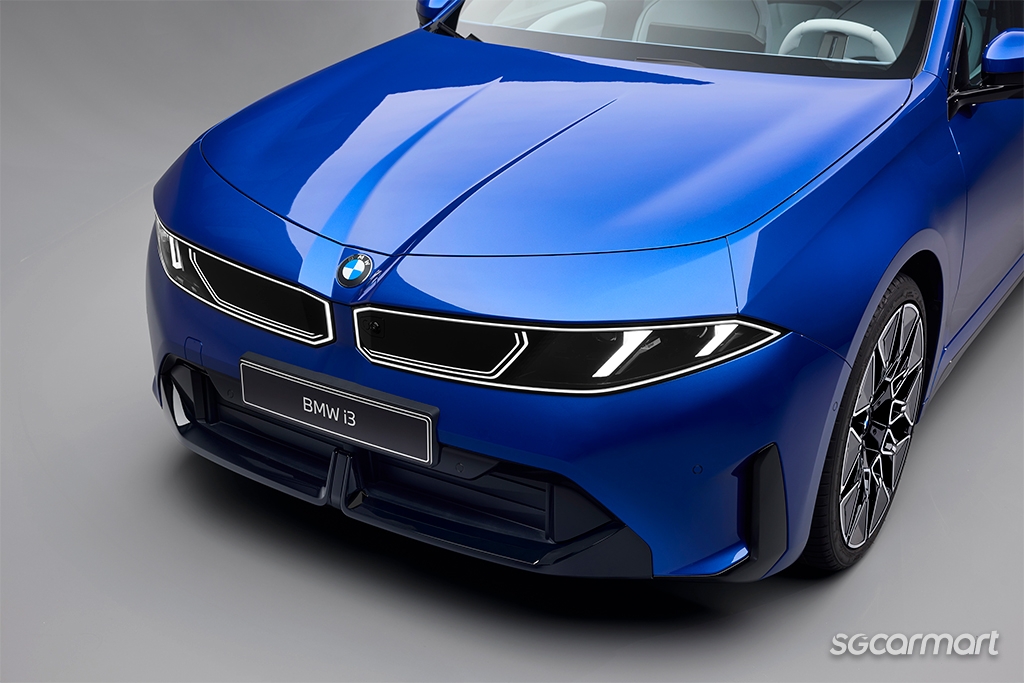
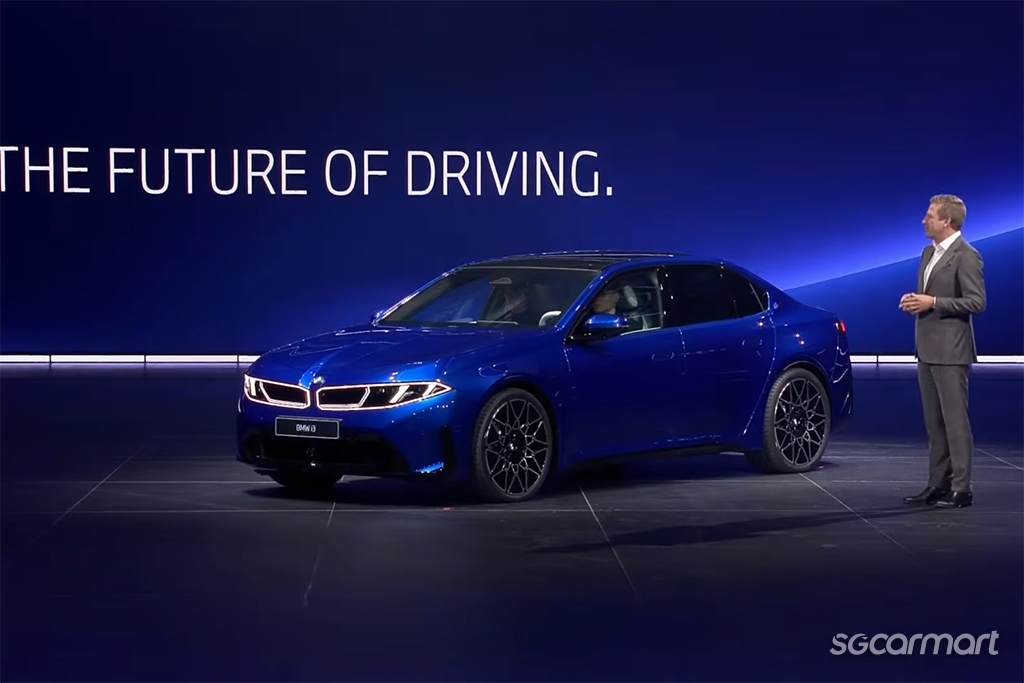
Into a basketball arena packed with 4,000 onlookers, on a late winter's day in Munich, the soft glow of BMW's iconic 'twin-kidney' shape peeking from the corner of the glossy floors heralded in the arrival of the all-new BMW 3 Series.
Except that a couple of things separated this from past world premieres, including that of the groundbreaking iX3.
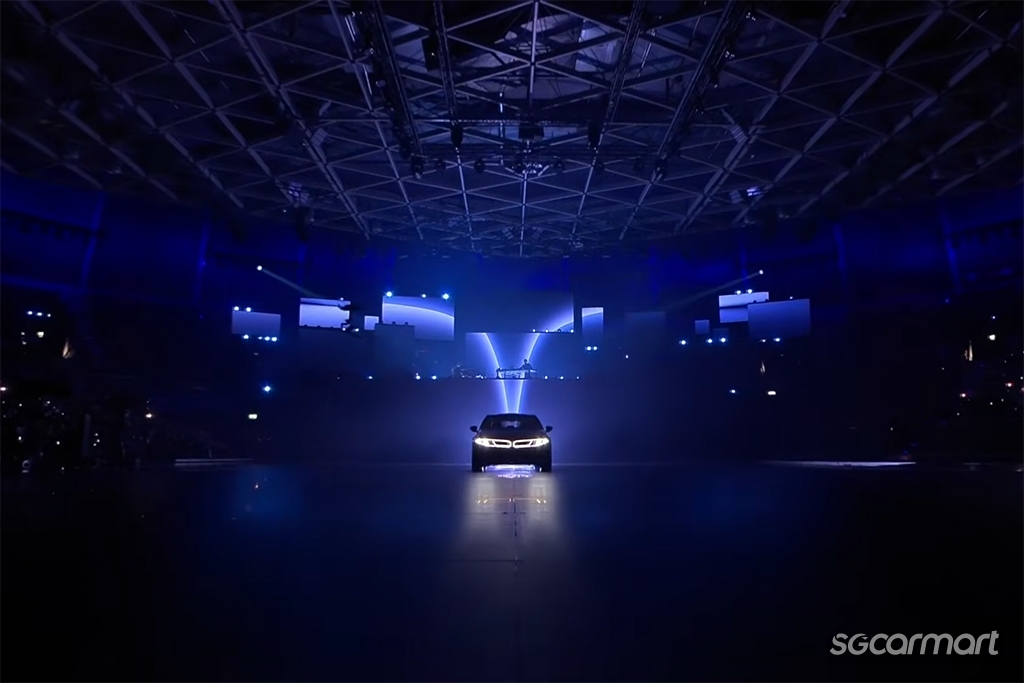
Despite the lingering smell of burnt petrol in the air from all seven past generations of the 3 Series that had rolled the red carpet out, the new car didn't have any tailpipes nor a combustion engine. Its name: The i3.
Neither was the crowd being played to a uniform gathering of journalists. Members of the media only numbered in the hundreds. The remaining thousands? All BMW employees.
While the ostensible breaks from car launch tradition (motor shows, media-only guest lists) may be hard to piece together at first, it's worth remembering: The BMW 3 Series is not like any other nameplate in the entire automotive world. (What more, then, in BMW's own history?)
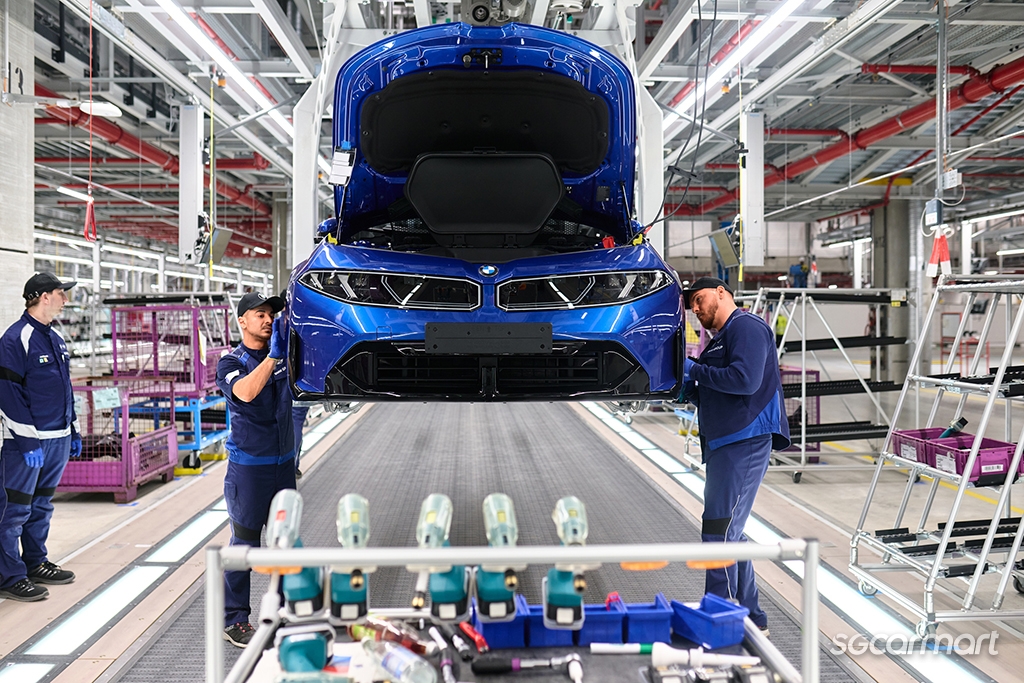
In fact, so highly revered is the 3 Series that out of all of BMW's many factories worldwide, it is still the brand's home plant, Plant Munich, that has continued to churn out the G20 generation car. Come August this year, it will hand that honour over to none other than the i3. To shift production over to a press shop, paint shop and assembly lines that would be appropriate for the new Neue Klasse architecture, BMW is estimated to have spent millions upgrading the facility all in preparation for its new electric sedan.
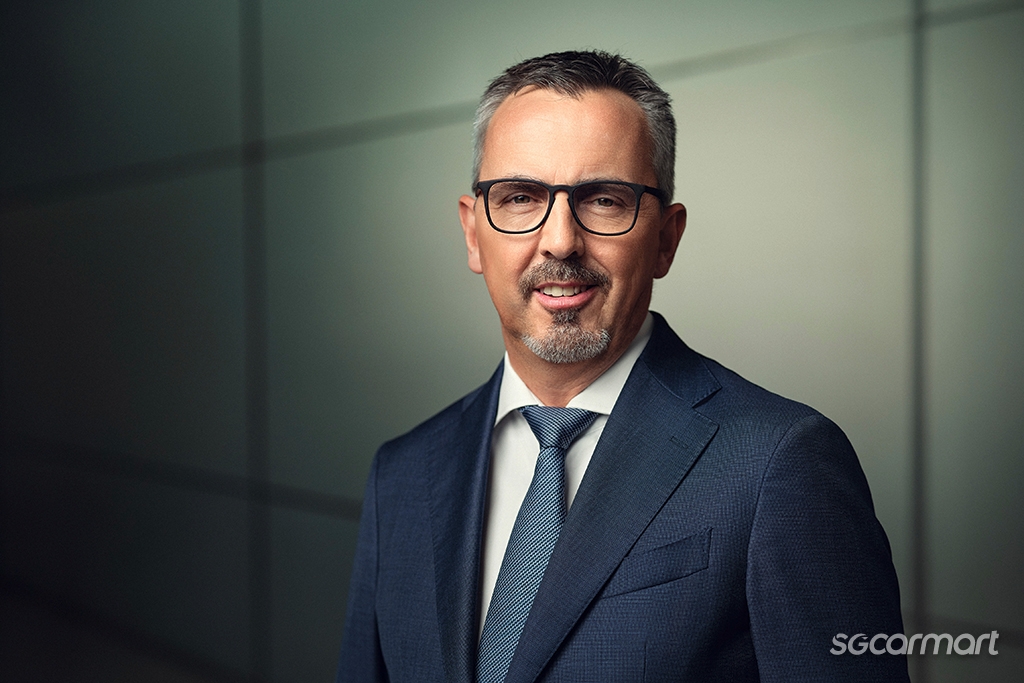
"It's a special moment also for us," Dr Joachim Post, Board Member of Production at BMW AG, shares with Sgcarmart in the immediate wake of the premiere. "That's why we said, Let's invite the whole team. Because it's a celebration not only for us and not only with journalists; it's a celebration of the company, where we bring this as a new project to life. That's why we chose it in this way."
A lot of love has gone into the i3 to make sure the 3 Series DNA is firmly embedded within its glossy new shell. But to first make sure it has what it takes to fend off the growing electric competition, BMW has made a concerted push toward some headline-grabbing numbers - the sort that should satisfy those who have found themselves swayed a bit more toward newer names.
In short, the Neue Klasse architecture is seriously impressive. Those who want speed will get plenty; the 50 xDrive variant that the i3 launches in gets dual motors that put out nearly 500bhp and should see it launch from 0-100km/h in under five seconds. Those who want range will get even more. The i3 can do a nearly-unrivalled 900km on a full charge per the WLTP cycle. Charging speeds with its 800V platform are equally lofty - up to 400kW.
But there's no question that sheer numbers are not what BMW has gunned for with what it has come to refer to as its "heartbeat of the new era".
"It's always been the core of the brand," Dr Post asserts about the 3 Series.
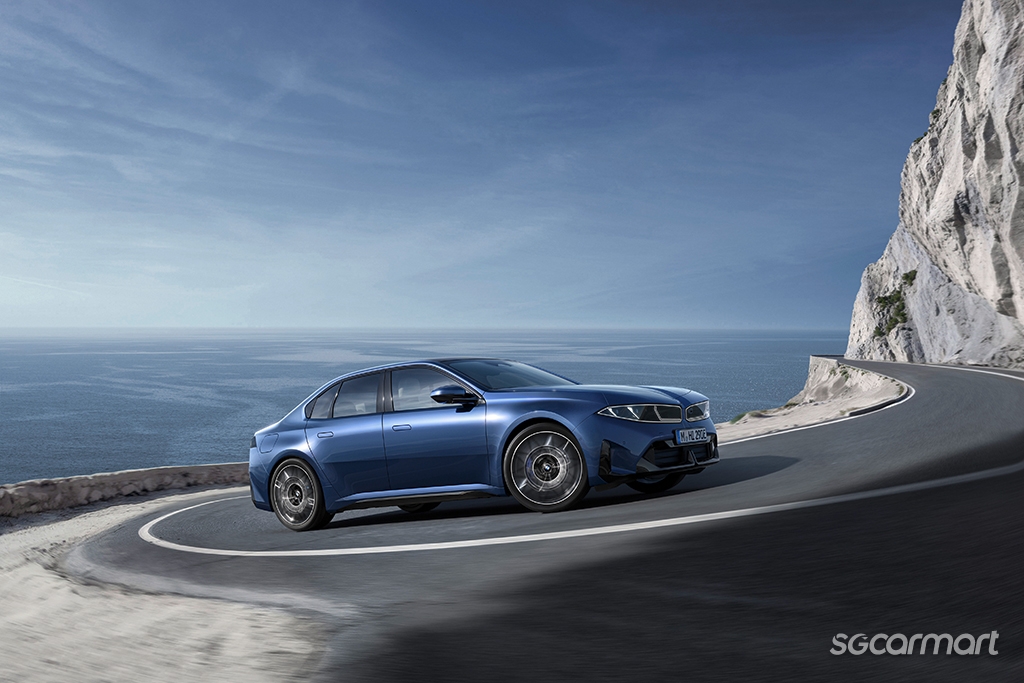
While electric drivetrains have democratised 0-100km/h timings, they have not democratised driving dynamics. All that the iX3 has already flexed will go into the i3 too. Bursting into the world of what is now generally referred to as 'software-defined cars', a four-supercomputer setup also lies at the core of this new sporty sedan.
The main key to driving fun amongst them? A Playstation 5-sized control unit called the 'Heart of Joy'. Admittedly, if you've already followed BMW's press junket for the iX3 closely, the term should no longer sound foreign. But the iX3 is a different machine fundamentally; an SUV that also wants to be big on space and presence. The 3 Series' remit, on the other hand, has always been different - to the best compact-sized executive sedan to drive.
Mid-conversation, Dr Post casually brings in the sort of science you'd expect a German brand built on driving pleasure to be unquestionably mindful about: The Kammscher Kreis, also known as the friction circle or circle of forces.
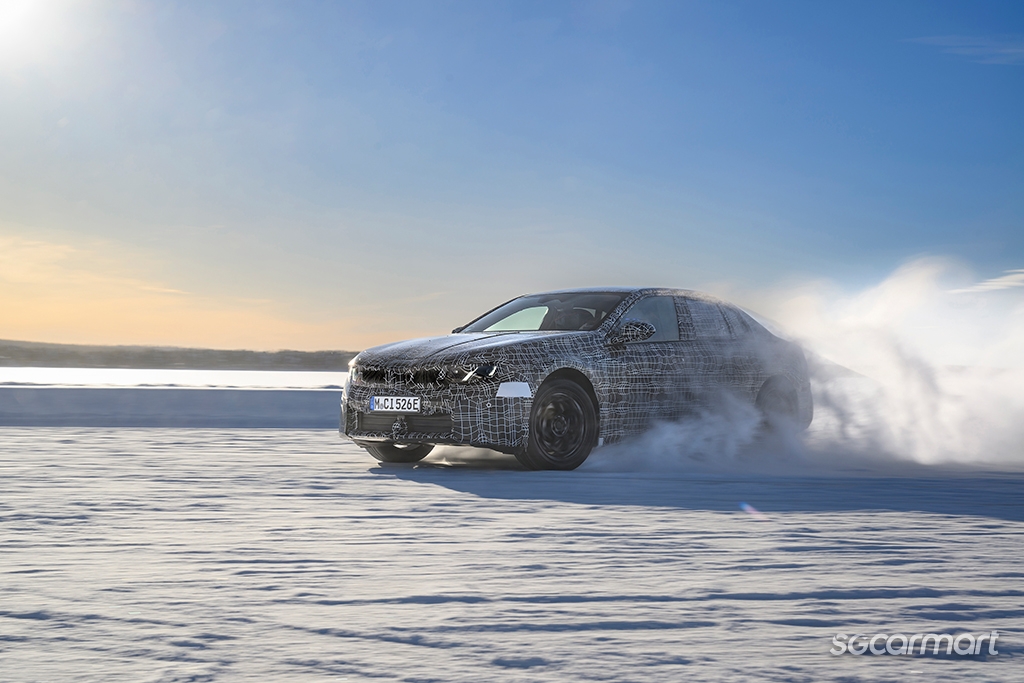
With an electric powertrain and the 'Heart of Joy', the i3 could offer responsiveness and agility like no 3 Series before (Pictured: Prototypes of the i3 in the Arctic Circle)
The i3 has been put through its paces (most recently in another circle - the Arctic) to ensure it doesn't just live up to expectations. With the unprecedented might of full electrification now, it's also promised to break new grounds in driving dynamics.
"With this car and this computing power, you can really drive [at] this stability level, whereas other cars in the past have always flown out and [been] thrown out," Dr Post shares. In fact, so confident is BMW in the Neue Klasse architecture and its Heart of Joy that the i3 will serve as the basis of what should become the first fully-electric M3.
"That makes the difference when you talk about what is the difference in the competition from our i3 to some competitors," Dr Post continues. "Driving dynamics, driving behaviour, and how the car feels, how is the chassis configuration… together with the powertrain."
Considering the global impact that the 3 Series has always had, BMW has leaned even more strongly into international partnerships with tech giants - a move that evinces how perceptive the brand has become of the growing might of tech giants in different regions.
A good example is the i3's advanced driving assistance system (ADAS) suite. In the "Western world" BMW has chosen to collaborate with Qualcomm on the ADAS stack. But the approach is not a blanket one worldwide. "In China, you must use a local stack," Dr Post emphasises. Its partner of choice is Momenta, one of the nation's leading autonomous driving technology companies.
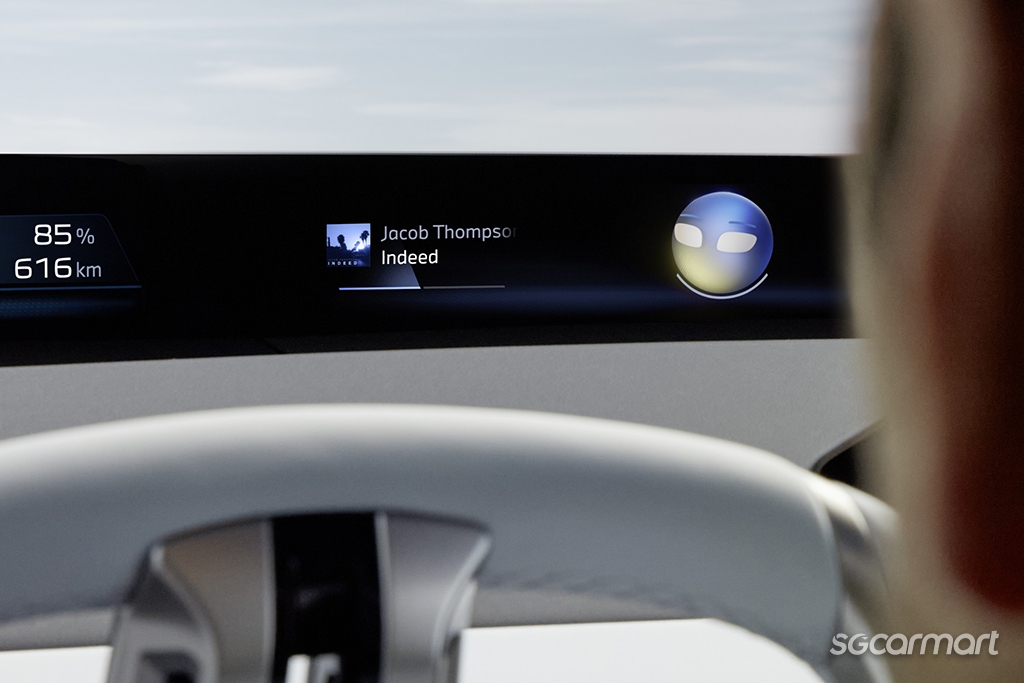
Another key area of focus is the i3's Intelligent Personal Assistant, which relies on Large Language Models (LLMs) to help execute tasks more intuitively. (Imagine a world, for instance, where you can tell your i3 that you want to navigate to the castle that inspired Walt Disney, and it has the contextual knowledge and intelligence to immediately set the nav for Schloss Neuschwanstein.)
BMW has made sure to diversify its technological partnerships with the i3, and is working with different partners to power its ADAS stacks and the LLMs behind its BMW Intelligent Personal Assistant
Cars in the U.S.A. and Europe (probably Singapore too) will be powered by Amazon's Alexa Plus, but the approach is again more varied in Asia Pacific. "In China, we use DeepSeek to integrate this AI function in the car. And so it's different - or mapping is different in Japan, in Korea," Dr Post notes. "They're all over the world, so we can integrate regional things."
"It's not our thing to make large language models," he follows up. But he is emphatic that the brand retains full mastery of how exactly it plugs and plays these different components from its partners.
"This integration know-how [is something] you must have. You must know and define the architecture [and] requirements. What makes a car a BMW?", he invites us to ponder. "And then you have the chance to integrate good things, where you get on the supplier market, or [engage with] tech players from all over the world to say: We know how to do it, and make out of these things a BMW."
A combustion-powered 3 Series will eventually be shown off to the world, sporting the same design language as the i3
With the world premiere of the i3, BMW is also trumpeting its commitment to a technology-open approach more than before. The goal again? Strengthened presence all over the globe.
Unlike fellow legacy carmakers that have experimented with electric sub-brands or carved out specific (and often controversial) design languages for their EVs, however, Bavaria's largest auto brand is sticking to a singular BMW identity. For those who want a combustion engine under the hood that can breathe and sputter to life, a combustion-powered 3 Series is exactly what will follow in the coming months. Official images haven't been revealed yet, but expect it to follow the same design language as the i3.
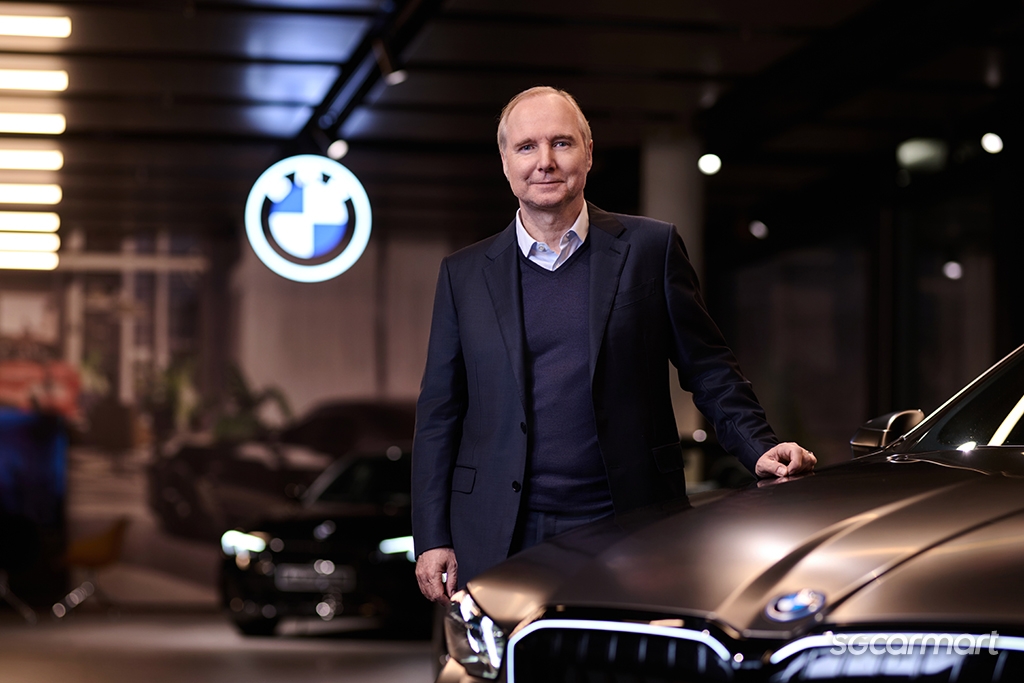
"For us, it's clear that we believe BMW - especially with the history of i3 and i8 at their time - has a lot of credibility in both [combustion and electric] worlds," Dr Jochen Goller, Board Member of Customer, Brands, Sales at BMW AG, says.
While the iX3 looks markedly different from the fourth-gen X3, the i3 and impending 3 Series should serve as the first proper example of the brand's technology-open approach, to be applied to its other models in time to come.
"When you look at, for example, the cars - and we spoke about the upcoming X models - we will have one design and then different choices, whether it's diesel, plug-in hybrid, hydrogen," Dr Goller asserts. "And we believe this is the strength."
"But I would say our approach is as one BMW brand. The customers come to us because of brand technology, and then ultimately choose the drivetrain and not vice versa."
With arguably the most important generation of BMW's most important model entering a bold new era, it doesn't feel like a stretch to say that all eyes will be on the i3. In many ways, how it performs could determine whether the 3 Series continues as one of the automotive world's most storied nameplates.
Don't forget to check out these other stories!
5 key under-the-skin developments in the new BMW iX3
Looking, but not turning back: BMW embraces new era with iX3
Into a basketball arena packed with 4,000 onlookers, on a late winter's day in Munich, the soft glow of BMW's iconic 'twin-kidney' shape peeking from the corner of the glossy floors heralded in the arrival of the all-new BMW 3 Series.
Except that a couple of things separated this from past world premieres, including that of the groundbreaking iX3.
Despite the lingering smell of burnt petrol in the air from all seven past generations of the 3 Series that had rolled the red carpet out, the new car didn't have any tailpipes nor a combustion engine. Its name: The i3.
Neither was the crowd being played to a uniform gathering of journalists. Members of the media only numbered in the hundreds. The remaining thousands? All BMW employees.
While the ostensible breaks from car launch tradition (motor shows, media-only guest lists) may be hard to piece together at first, it's worth remembering: The BMW 3 Series is not like any other nameplate in the entire automotive world. (What more, then, in BMW's own history?)
In fact, so highly revered is the 3 Series that out of all of BMW's many factories worldwide, it is still the brand's home plant, Plant Munich, that has continued to churn out the G20 generation car. Come August this year, it will hand that honour over to none other than the i3. To shift production over to a press shop, paint shop and assembly lines that would be appropriate for the new Neue Klasse architecture, BMW is estimated to have spent millions upgrading the facility all in preparation for its new electric sedan.
"It's a special moment also for us," Dr Joachim Post, Board Member of Production at BMW AG, shares with Sgcarmart in the immediate wake of the premiere. "That's why we said, Let's invite the whole team. Because it's a celebration not only for us and not only with journalists; it's a celebration of the company, where we bring this as a new project to life. That's why we chose it in this way."
A lot of love has gone into the i3 to make sure the 3 Series DNA is firmly embedded within its glossy new shell. But to first make sure it has what it takes to fend off the growing electric competition, BMW has made a concerted push toward some headline-grabbing numbers - the sort that should satisfy those who have found themselves swayed a bit more toward newer names.
In short, the Neue Klasse architecture is seriously impressive. Those who want speed will get plenty; the 50 xDrive variant that the i3 launches in gets dual motors that put out nearly 500bhp and should see it launch from 0-100km/h in under five seconds. Those who want range will get even more. The i3 can do a nearly-unrivalled 900km on a full charge per the WLTP cycle. Charging speeds with its 800V platform are equally lofty - up to 400kW.
But there's no question that sheer numbers are not what BMW has gunned for with what it has come to refer to as its "heartbeat of the new era".
"It's always been the core of the brand," Dr Post asserts about the 3 Series.
While electric drivetrains have democratised 0-100km/h timings, they have not democratised driving dynamics. All that the iX3 has already flexed will go into the i3 too. Bursting into the world of what is now generally referred to as 'software-defined cars', a four-supercomputer setup also lies at the core of this new sporty sedan.
The main key to driving fun amongst them? A Playstation 5-sized control unit called the 'Heart of Joy'. Admittedly, if you've already followed BMW's press junket for the iX3 closely, the term should no longer sound foreign. But the iX3 is a different machine fundamentally; an SUV that also wants to be big on space and presence. The 3 Series' remit, on the other hand, has always been different - to the best compact-sized executive sedan to drive.
Mid-conversation, Dr Post casually brings in the sort of science you'd expect a German brand built on driving pleasure to be unquestionably mindful about: The Kammscher Kreis, also known as the friction circle or circle of forces.
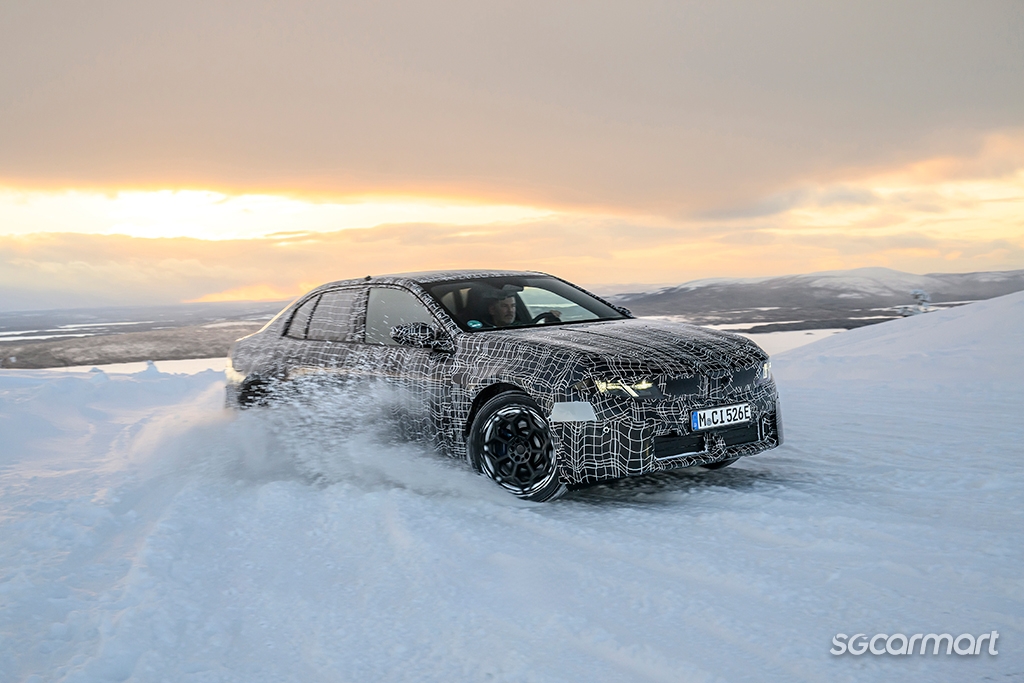
With an electric powertrain and the 'Heart of Joy', the i3 could offer responsiveness and agility like no 3 Series before (Pictured: Prototypes of the i3 in the Arctic Circle)
The i3 has been put through its paces (most recently in another circle - the Arctic) to ensure it doesn't just live up to expectations. With the unprecedented might of full electrification now, it's also promised to break new grounds in driving dynamics.
"With this car and this computing power, you can really drive [at] this stability level, whereas other cars in the past have always flown out and [been] thrown out," Dr Post shares. In fact, so confident is BMW in the Neue Klasse architecture and its Heart of Joy that the i3 will serve as the basis of what should become the first fully-electric M3.
"That makes the difference when you talk about what is the difference in the competition from our i3 to some competitors," Dr Post continues. "Driving dynamics, driving behaviour, and how the car feels, how is the chassis configuration… together with the powertrain."
Considering the global impact that the 3 Series has always had, BMW has leaned even more strongly into international partnerships with tech giants - a move that evinces how perceptive the brand has become of the growing might of tech giants in different regions.
A good example is the i3's advanced driving assistance system (ADAS) suite. In the "Western world" BMW has chosen to collaborate with Qualcomm on the ADAS stack. But the approach is not a blanket one worldwide. "In China, you must use a local stack," Dr Post emphasises. Its partner of choice is Momenta, one of the nation's leading autonomous driving technology companies.
Another key area of focus is the i3's Intelligent Personal Assistant, which relies on Large Language Models (LLMs) to help execute tasks more intuitively. (Imagine a world, for instance, where you can tell your i3 that you want to navigate to the castle that inspired Walt Disney, and it has the contextual knowledge and intelligence to immediately set the nav for Schloss Neuschwanstein.)
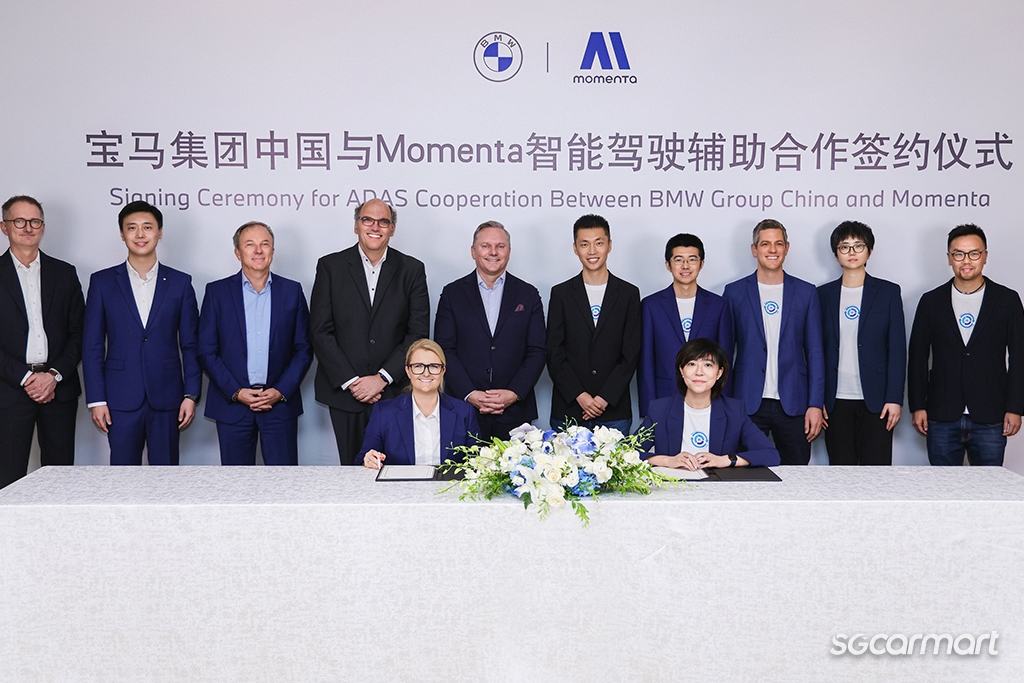
BMW has made sure to diversify its technological partnerships with the i3, and is working with different partners to power its ADAS stacks and the LLMs behind its BMW Intelligent Personal Assistant
Cars in the U.S.A. and Europe (probably Singapore too) will be powered by Amazon's Alexa Plus, but the approach is again more varied in Asia Pacific. "In China, we use DeepSeek to integrate this AI function in the car. And so it's different - or mapping is different in Japan, in Korea," Dr Post notes. "They're all over the world, so we can integrate regional things."
"It's not our thing to make large language models," he follows up. But he is emphatic that the brand retains full mastery of how exactly it plugs and plays these different components from its partners.
"This integration know-how [is something] you must have. You must know and define the architecture [and] requirements. What makes a car a BMW?", he invites us to ponder. "And then you have the chance to integrate good things, where you get on the supplier market, or [engage with] tech players from all over the world to say: We know how to do it, and make out of these things a BMW."
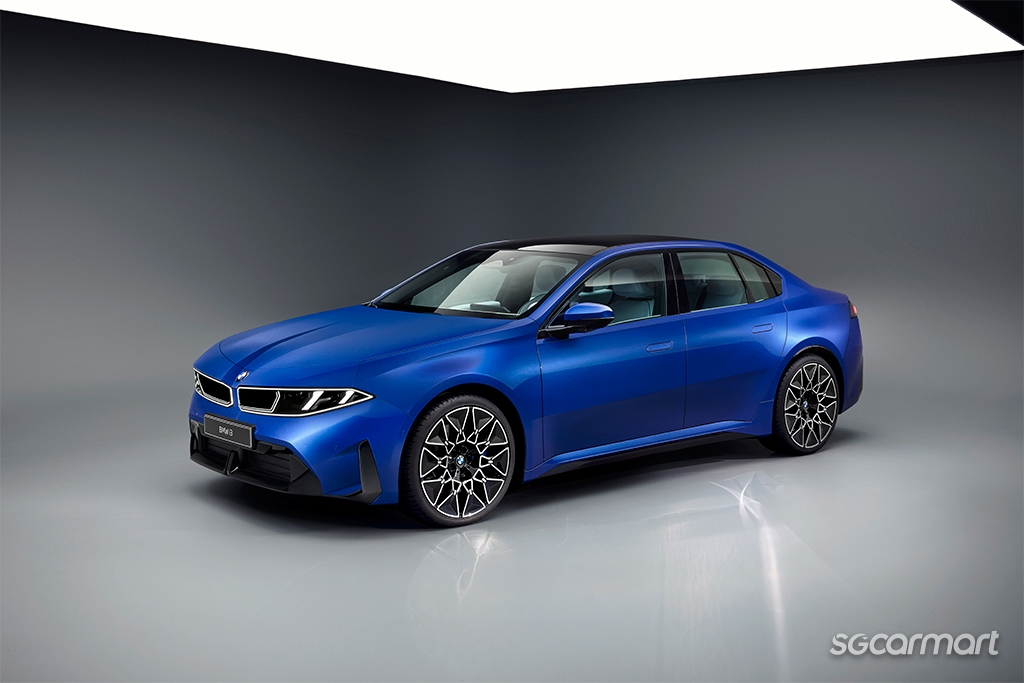
A combustion-powered 3 Series will eventually be shown off to the world, sporting the same design language as the i3
With the world premiere of the i3, BMW is also trumpeting its commitment to a technology-open approach more than before. The goal again? Strengthened presence all over the globe.
Unlike fellow legacy carmakers that have experimented with electric sub-brands or carved out specific (and often controversial) design languages for their EVs, however, Bavaria's largest auto brand is sticking to a singular BMW identity. For those who want a combustion engine under the hood that can breathe and sputter to life, a combustion-powered 3 Series is exactly what will follow in the coming months. Official images haven't been revealed yet, but expect it to follow the same design language as the i3.
"For us, it's clear that we believe BMW - especially with the history of i3 and i8 at their time - has a lot of credibility in both [combustion and electric] worlds," Dr Jochen Goller, Board Member of Customer, Brands, Sales at BMW AG, says.
While the iX3 looks markedly different from the fourth-gen X3, the i3 and impending 3 Series should serve as the first proper example of the brand's technology-open approach, to be applied to its other models in time to come.
"When you look at, for example, the cars - and we spoke about the upcoming X models - we will have one design and then different choices, whether it's diesel, plug-in hybrid, hydrogen," Dr Goller asserts. "And we believe this is the strength."
"But I would say our approach is as one BMW brand. The customers come to us because of brand technology, and then ultimately choose the drivetrain and not vice versa."
With arguably the most important generation of BMW's most important model entering a bold new era, it doesn't feel like a stretch to say that all eyes will be on the i3. In many ways, how it performs could determine whether the 3 Series continues as one of the automotive world's most storied nameplates.
Don't forget to check out these other stories!
5 key under-the-skin developments in the new BMW iX3
Looking, but not turning back: BMW embraces new era with iX3

Thank You For Your Subscription.