NTU and Volvo launch world's first full-sized autonomous electric bus
05 Mar 2019|1,745 views
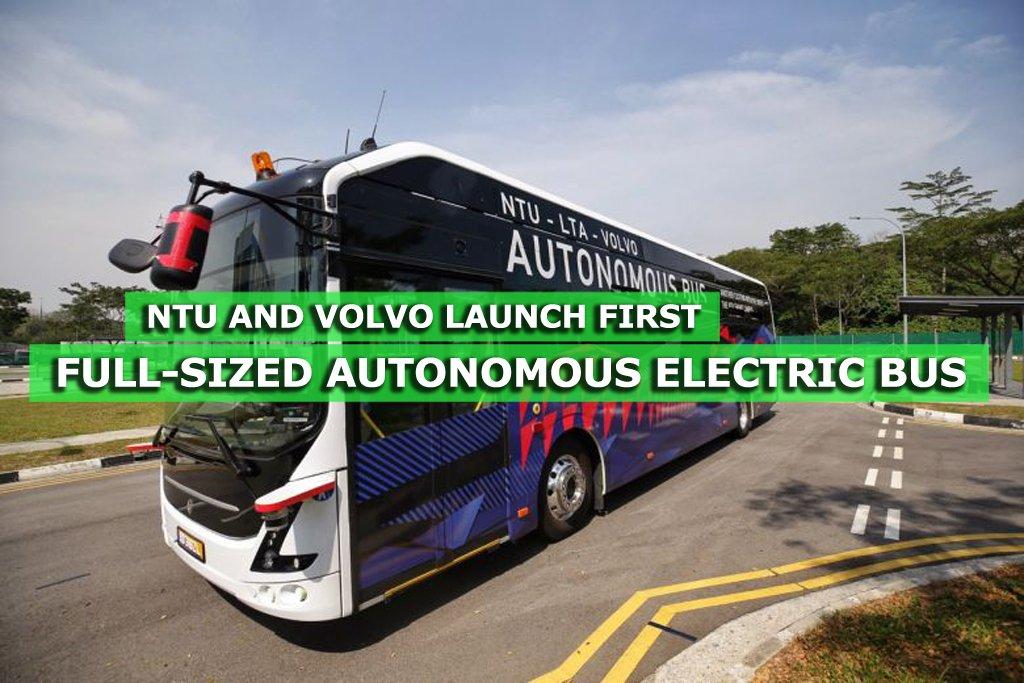
Road users near Nanyang Technological University (NTU) could see a self-driving bus on the road later this year, as autonomous vehicles edge closer to becoming a viable form of transport.
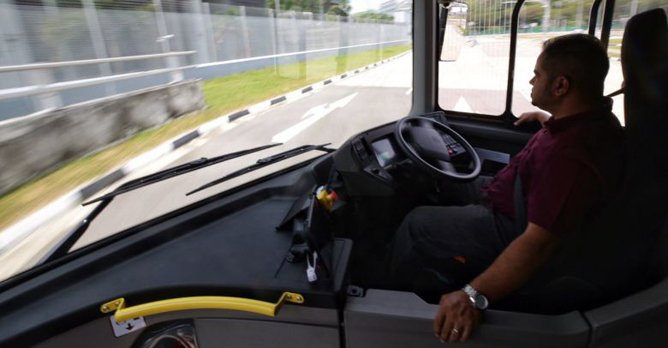

It is able to travel 25km on a full charge. Through a 300kW fast charge system from engineering giant ABB, the bus can be charged to full capacity within six minutes.
At an event unveiling the bus on Tuesday (5 March) at the CETRAN, NTU President Subra Suresh said, "This fully autonomous electric bus will play a role in shaping the future of public transportation that is safe, efficient, reliable and comfortable for all commuters."
"This research project not only involves cutting-edge science, technology and artificial intelligence, but is also an excellent example of close partnership among academia, industry and Government agencies in translating basic research into products and services for the benefit of Singapore and beyond," he added.
Mr. Lam Wee Shann, Chief Innovation and Technology Officer at the Land Transport Authority (LTA), said the launch of the bus for on-road trials marks an important milestone in the joint project between LTA and NTU to develop autonomous buses for fixed route and scheduled services. The partnership was previously announced in October 2016.
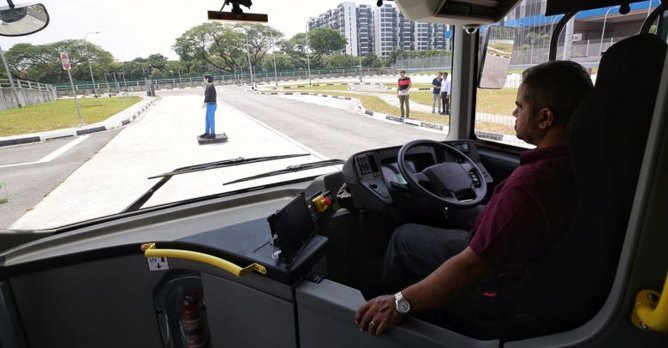
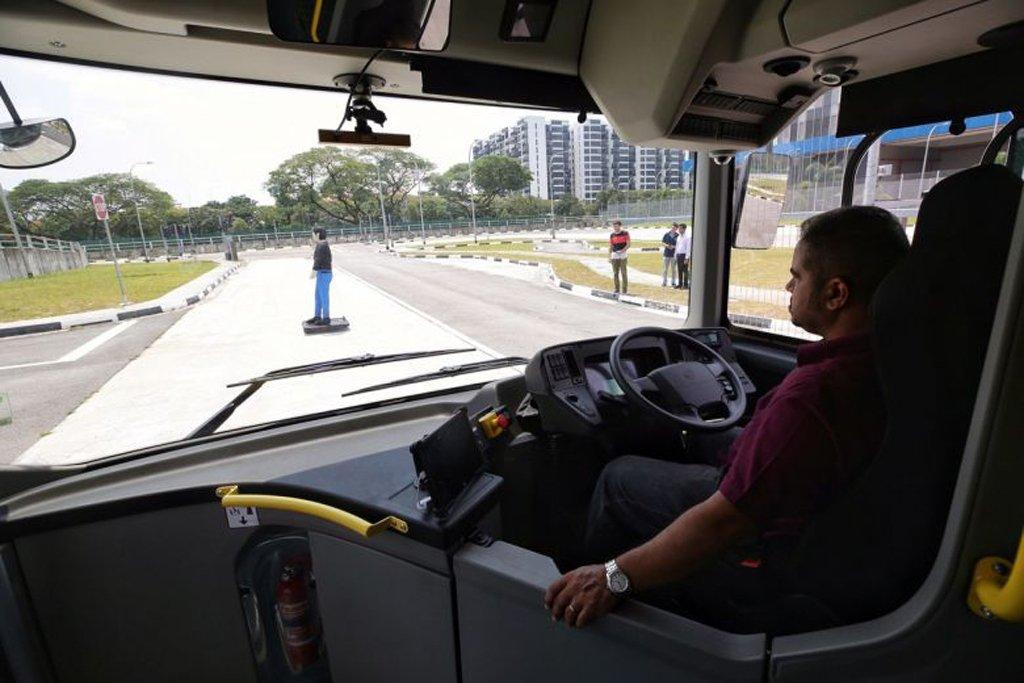
The bus is equipped with Global Positioning System antennas, light detection and ranging sensors and stereo-vision cameras that record a three-dimensional view of the surroundings. Inputs from these sensors are combined and managed by an artificial intelligence system developed by a 23-man team at NTU.
The system then determines the bus' position to as accurate as 1cm of its actual location. This platform is built into a 2m-tall container that is placed in the bus and is protected with cyber security measures.
Speaking to The Straits Times on Monday, NTU's Energy Research Institute Executive Director Subodh Mhaisalkar said the bus is classified to have near Level 4 autonomy.
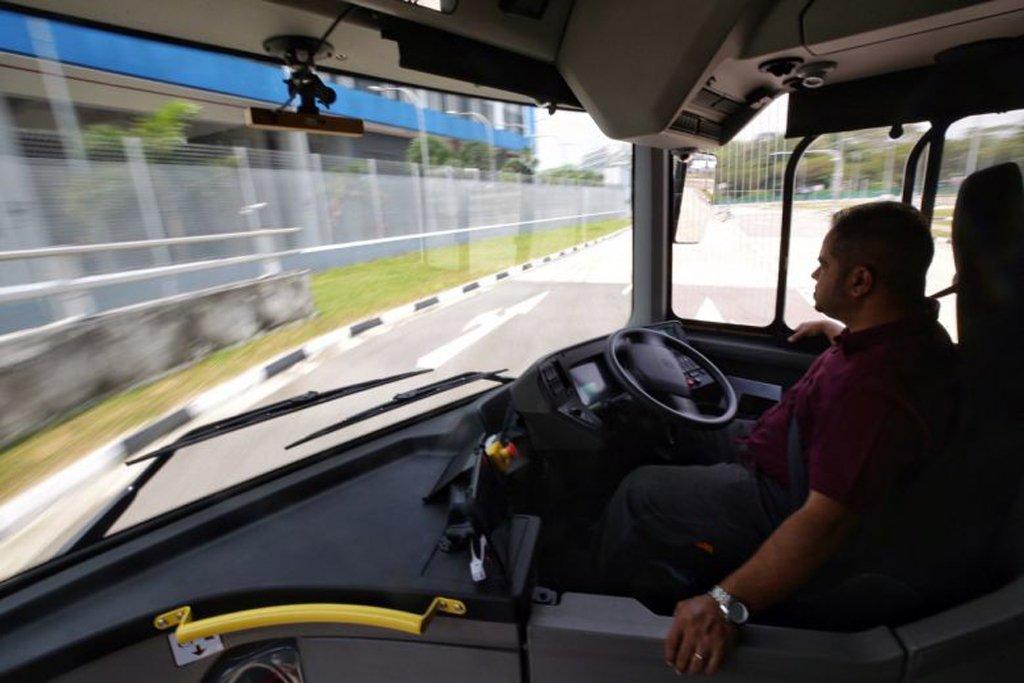
Level 4 is when a vehicle can drive by itself but is still manned, whereas Level 5 is the highest level of autonomy when the vehicle can operate on its own with no one on board. To reach full Level 4 autonomy, the bus will have to be tested in residential areas and in mixed traffic conditions with other vehicles.
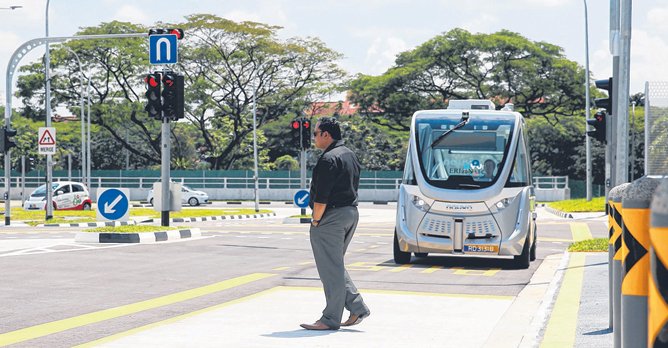
There are two such buses, which were provided by Volvo last year as part of a partnership with NTU.
The on-the-road trials will start later this year, with one bus to be tested at the university without any passenger pick-ups.
The other bus will be trialled at an SMRT depot to check if it can navigate itself into washing bays and park at charging stations. One goal for the NTU-Volvo team is to be one of the successful tenderers for the Government's plans to have autonomous vehicles in Punggol, Tengah and the Jurong Innovation District from 2022 for commuter use.
Prof. Subodh said the team is excited about the potential of the NTU-developed platform. "It's a platform technology that could be used for other types of vehicles... Potentially it could also be used for transportation on the sea," he said. "This is a platform that will catalyse other autonomous applications," he added.
Road users near Nanyang Technological University (NTU) could see a self-driving bus on the road later this year, as autonomous vehicles edge closer to becoming a viable form of transport.
It is able to travel 25km on a full charge. Through a 300kW fast charge system from engineering giant ABB, the bus can be charged to full capacity within six minutes.
At an event unveiling the bus on Tuesday (5 March) at the CETRAN, NTU President Subra Suresh said, "This fully autonomous electric bus will play a role in shaping the future of public transportation that is safe, efficient, reliable and comfortable for all commuters."
"This research project not only involves cutting-edge science, technology and artificial intelligence, but is also an excellent example of close partnership among academia, industry and Government agencies in translating basic research into products and services for the benefit of Singapore and beyond," he added.
Mr. Lam Wee Shann, Chief Innovation and Technology Officer at the Land Transport Authority (LTA), said the launch of the bus for on-road trials marks an important milestone in the joint project between LTA and NTU to develop autonomous buses for fixed route and scheduled services. The partnership was previously announced in October 2016.
The bus is equipped with Global Positioning System antennas, light detection and ranging sensors and stereo-vision cameras that record a three-dimensional view of the surroundings. Inputs from these sensors are combined and managed by an artificial intelligence system developed by a 23-man team at NTU.
The system then determines the bus' position to as accurate as 1cm of its actual location. This platform is built into a 2m-tall container that is placed in the bus and is protected with cyber security measures.
Speaking to The Straits Times on Monday, NTU's Energy Research Institute Executive Director Subodh Mhaisalkar said the bus is classified to have near Level 4 autonomy.
Level 4 is when a vehicle can drive by itself but is still manned, whereas Level 5 is the highest level of autonomy when the vehicle can operate on its own with no one on board. To reach full Level 4 autonomy, the bus will have to be tested in residential areas and in mixed traffic conditions with other vehicles.
There are two such buses, which were provided by Volvo last year as part of a partnership with NTU.
The on-the-road trials will start later this year, with one bus to be tested at the university without any passenger pick-ups.
The other bus will be trialled at an SMRT depot to check if it can navigate itself into washing bays and park at charging stations. One goal for the NTU-Volvo team is to be one of the successful tenderers for the Government's plans to have autonomous vehicles in Punggol, Tengah and the Jurong Innovation District from 2022 for commuter use.
Prof. Subodh said the team is excited about the potential of the NTU-developed platform. "It's a platform technology that could be used for other types of vehicles... Potentially it could also be used for transportation on the sea," he said. "This is a platform that will catalyse other autonomous applications," he added.


Latest COE Prices
April 2026 | 1st BIDDING
NEXT TENDER: 22 Apr 2026
CAT A$118,000
CAT B$121,000
CAT C$80,001
CAT E$121,001
View Full Results 
Thank You For Your Subscription.


Tags
Products & Services

For Owners
Quick Links
About Sgcarmart