Renault works with SCOOP to prepare infrastructure for autonomous connected cars
02 Dec 2017|1,113 views
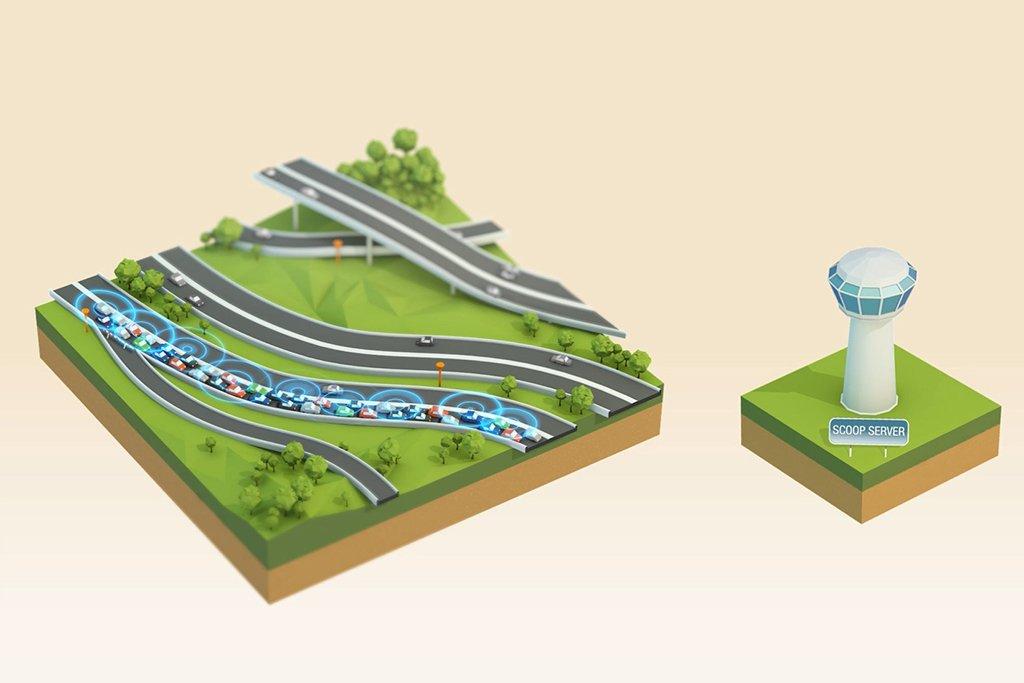

SCOOP is a pilot project for the deployment of cooperative intelligent transportation systems. This EU project facilitates trials of future vehicle-to-vehicle and vehicle-to-infrastructure connectivity solutions under real world driving conditions. It is carried out alongside a range of partners in France, including the French Ministry for the Ecological and Inclusive Transition, regional authorities, infrastructure operators, universities and research centres.
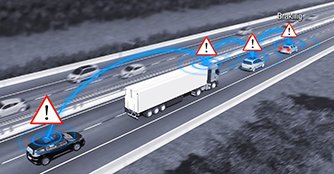

This includes sensors and computers that gather and analyse vehicle data such as speed, steering wheel angle, possible tyre grip problems in relation to the weather, windscreen wiper operation and deployment of airbags.
If a problem is detected, the car's on-board computer automatically sends a warning message to other SCOOP-enabled vehicles and to units positioned along motorways. These units then notify emergency services if a major incident is detected. In the pre-deployment phase, the units will be installed along 2,000km of roads in the greater Paris region, along the A4 motorway, in the Isere department in eastern France and on the Bordeaux ring road and in Brittany.
The on-board computer, which issues the warning messages, uses a high-performance wireless communication protocol that harnesses latest generation Intelligent Transportation Systems G5 technology, operating on a dedicated frequency (5.9GHz). These systems have been developed for moving objects and offer a range of up to 1,000m.
The protocol systematically verifies the authenticity of each message and operates quickly in real-time to avoid any collisions. It also guarantees that data is processed and held anonymously to protect users' privacy. The EU's SCOOP project got underway in 2014 and has now entered an active trial phase, thanks to 1,000 Renault Meganes produced at its Palencia facility in Spain.
SCOOP is a pilot project for the deployment of cooperative intelligent transportation systems. This EU project facilitates trials of future vehicle-to-vehicle and vehicle-to-infrastructure connectivity solutions under real world driving conditions. It is carried out alongside a range of partners in France, including the French Ministry for the Ecological and Inclusive Transition, regional authorities, infrastructure operators, universities and research centres.
This includes sensors and computers that gather and analyse vehicle data such as speed, steering wheel angle, possible tyre grip problems in relation to the weather, windscreen wiper operation and deployment of airbags.
If a problem is detected, the car's on-board computer automatically sends a warning message to other SCOOP-enabled vehicles and to units positioned along motorways. These units then notify emergency services if a major incident is detected. In the pre-deployment phase, the units will be installed along 2,000km of roads in the greater Paris region, along the A4 motorway, in the Isere department in eastern France and on the Bordeaux ring road and in Brittany.
The on-board computer, which issues the warning messages, uses a high-performance wireless communication protocol that harnesses latest generation Intelligent Transportation Systems G5 technology, operating on a dedicated frequency (5.9GHz). These systems have been developed for moving objects and offer a range of up to 1,000m.
The protocol systematically verifies the authenticity of each message and operates quickly in real-time to avoid any collisions. It also guarantees that data is processed and held anonymously to protect users' privacy. The EU's SCOOP project got underway in 2014 and has now entered an active trial phase, thanks to 1,000 Renault Meganes produced at its Palencia facility in Spain.


Latest COE Prices
March 2026 | 1st BIDDING
NEXT TENDER: 18 Mar 2026
CAT A$108,220
CAT B$114,002
CAT C$76,000
CAT E$114,890
View Full Results 
Thank You For Your Subscription.















Tags
Products & Services

For Owners
Quick Links
About Sgcarmart