Want to avoid traffic jams? Ants might have the answer!
10 Feb 2009|3,681 views

 |
But our fellow human compatriot, Audrey Dussutour of the Sydney University, Australia, has been doing the deed. Aside them being able to carry up to 50 times their own weight, they never, ever get caught in traffic jams.
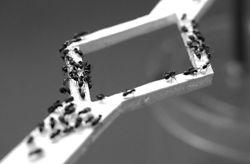
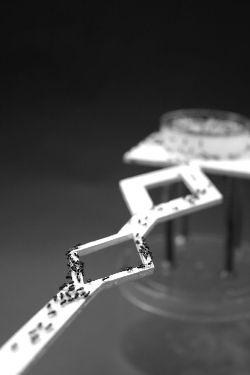
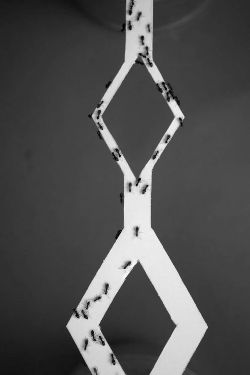
As part of a handsomely-funded research effort, Dussutour observed that even on a path as slim as a tree branch, leafcutter ants had the talent to optimise their own traffic, coming and going both ways without any kinks, jams, start-stop situations or pileups.
So how is this supposed to aid a silly, pointless Monday morning jam?
The key to doing this is to slow down and maintain an even spacing of cars, meaning there should be no lane hogging. Lane hogging causes other road users to cut a line by means of changing back and forth between lanes. Changing lanes causes a disruption in the flow of traffic.
Also, not being in a big rush to get to your destination might actually speed up the flow of vehicular traffic. Dussutour noted that when faster moving ants without a payload got behind their slower weight-bearing counterparts, they obediently stuck behind them instead of passing the burdened ant. This actually sped up flow of the entire colony.
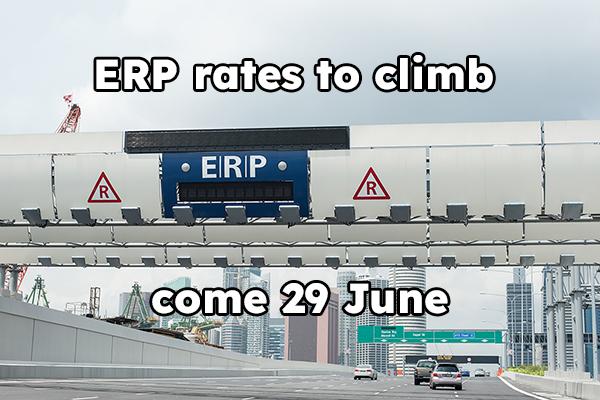
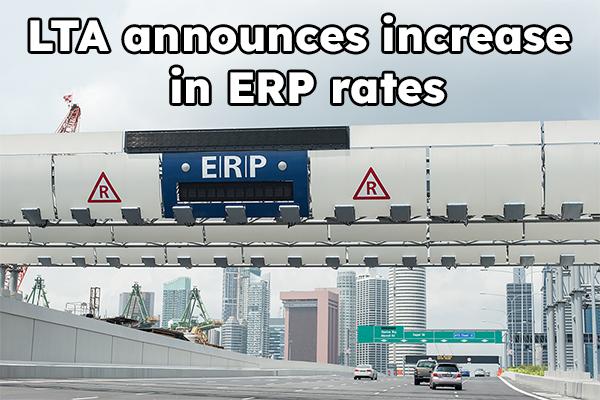
This might just help delay the onset of those "deadly" ERP gantries!
Hence, the part that intrigues us the most - scientists are trying their luck with algorithms taken from the colonial behaviours of ants in order to develop a master navigation system that might possibly lead the driverless car era.
Below is Dussutour's explanation, taken from her webpage:
Traffic organization in ants under crowded conditions
The collective displacement of assemblies of organisms is certainly one of the most spectacular phenomena one can observe in nature. A column of army ants, a swarm of locusts, a herd of migrating wildebeests, a flock of birds or a shoal of fish can sometimes comprise several millions of individuals.
Collective displacements are characterized by a high degree of coordination among individuals. This coordination is allowed by short response latencies: the movement of an individual is almost immediately followed by a parallel movement of the neighbouring individuals located within perceptual range.
Each individual in a formation is submitted to conflicting forces of interattraction and repulsion and a rupture in the balance between the two categories of forces can lead to the collapse of the group. A number of recent reviews attests of the growing interest for the study of collective motion.
A higher proximity between individuals is generally beneficial, because it promotes cooperation by facilitating the exchanges of information that is essential for the maintenance of group cohesion. Too much proximity however can lead to a high concentration of individuals.
Detrimental effects may then occur and lead to a failure in the functioning of the group, which will affect the individuals in turn. In extreme cases, a high density may even lead to a total standstill of group activity. This standstill can be avoided if some dispersion mechanism intervenes before the slowing down of the group activity reaches a critical point. This is frequently observed for animals living in groups and human beings, where forces of inter-attraction are particularly powerful.
Ants provide an excellent model for the study of collective movement because of their highly social organization that functions in a completely decentralized manner.
|
But our fellow human compatriot, Audrey Dussutour of the Sydney University, Australia, has been doing the deed. Aside them being able to carry up to 50 times their own weight, they never, ever get caught in traffic jams.
As part of a handsomely-funded research effort, Dussutour observed that even on a path as slim as a tree branch, leafcutter ants had the talent to optimise their own traffic, coming and going both ways without any kinks, jams, start-stop situations or pileups.
So how is this supposed to aid a silly, pointless Monday morning jam?
The key to doing this is to slow down and maintain an even spacing of cars, meaning there should be no lane hogging. Lane hogging causes other road users to cut a line by means of changing back and forth between lanes. Changing lanes causes a disruption in the flow of traffic.
Also, not being in a big rush to get to your destination might actually speed up the flow of vehicular traffic. Dussutour noted that when faster moving ants without a payload got behind their slower weight-bearing counterparts, they obediently stuck behind them instead of passing the burdened ant. This actually sped up flow of the entire colony.
This might just help delay the onset of those "deadly" ERP gantries!
Hence, the part that intrigues us the most - scientists are trying their luck with algorithms taken from the colonial behaviours of ants in order to develop a master navigation system that might possibly lead the driverless car era.
Below is Dussutour's explanation, taken from her webpage:
Traffic organization in ants under crowded conditions
The collective displacement of assemblies of organisms is certainly one of the most spectacular phenomena one can observe in nature. A column of army ants, a swarm of locusts, a herd of migrating wildebeests, a flock of birds or a shoal of fish can sometimes comprise several millions of individuals.
Collective displacements are characterized by a high degree of coordination among individuals. This coordination is allowed by short response latencies: the movement of an individual is almost immediately followed by a parallel movement of the neighbouring individuals located within perceptual range.
Each individual in a formation is submitted to conflicting forces of interattraction and repulsion and a rupture in the balance between the two categories of forces can lead to the collapse of the group. A number of recent reviews attests of the growing interest for the study of collective motion.
A higher proximity between individuals is generally beneficial, because it promotes cooperation by facilitating the exchanges of information that is essential for the maintenance of group cohesion. Too much proximity however can lead to a high concentration of individuals.
Detrimental effects may then occur and lead to a failure in the functioning of the group, which will affect the individuals in turn. In extreme cases, a high density may even lead to a total standstill of group activity. This standstill can be avoided if some dispersion mechanism intervenes before the slowing down of the group activity reaches a critical point. This is frequently observed for animals living in groups and human beings, where forces of inter-attraction are particularly powerful.
Ants provide an excellent model for the study of collective movement because of their highly social organization that functions in a completely decentralized manner.


Latest COE Prices
June 2026 | 1st BIDDING
NEXT TENDER: 17 Jun 2026
CAT A$126,009
CAT B$126,989
CAT C$94,000
CAT E$129,000
View Full Results 
Thank You For Your Subscription.




Tags
Products & Services

For Owners
Quick Links
About Sgcarmart