Jeep Wrangler Rubicon 4-Door Facelift Review
13 Feb 2026|3,270 views























Facelift (What's New)
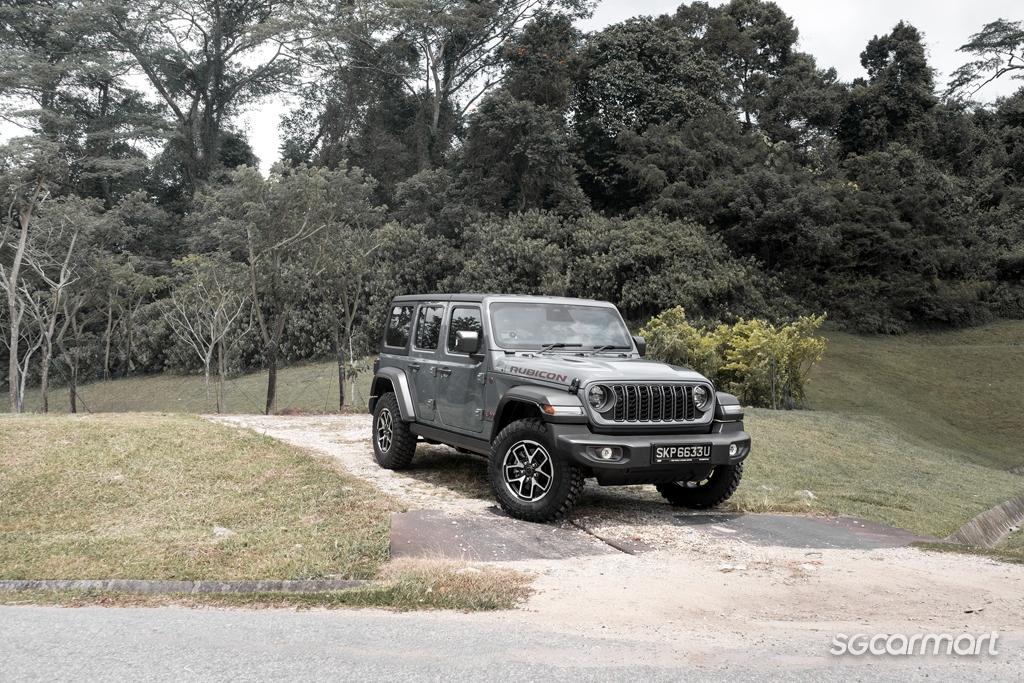
Revised seven-slot grille
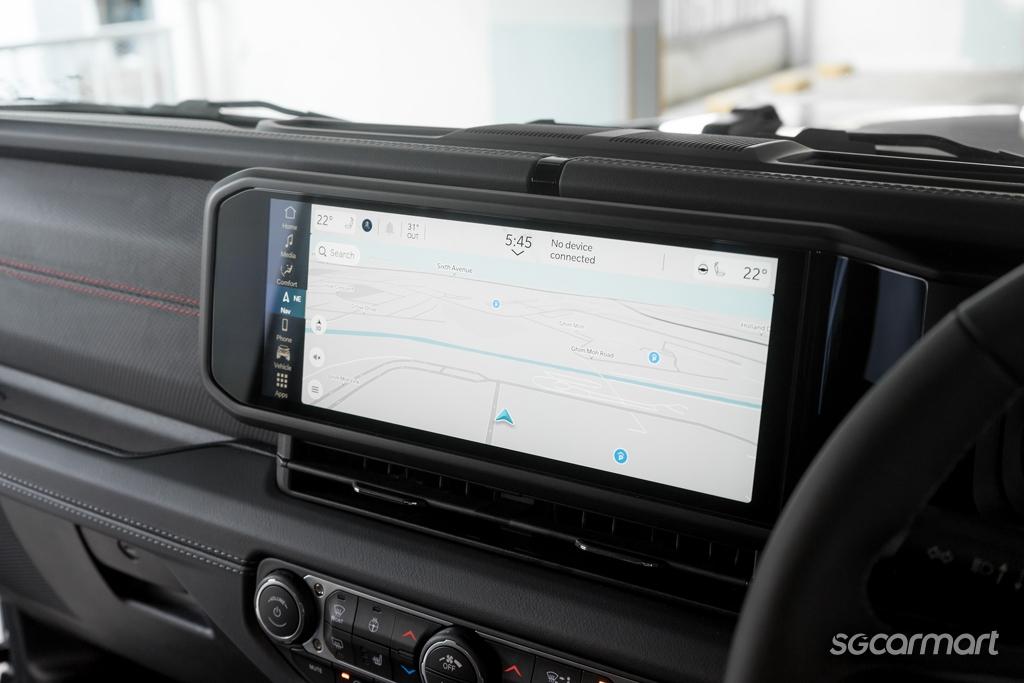
Updated infotainment system with larger 12.3-inch central touchscreen, featuring wireless Apple CarPlay and Android Auto
Now equipped with full-float Dana 44 HD rear axle as standard
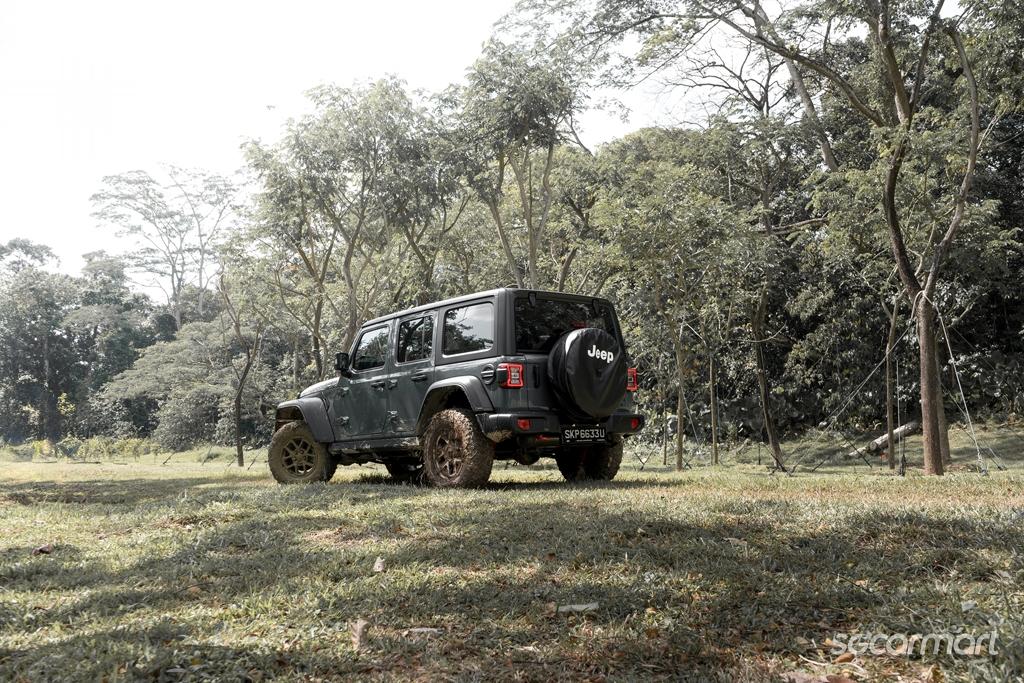
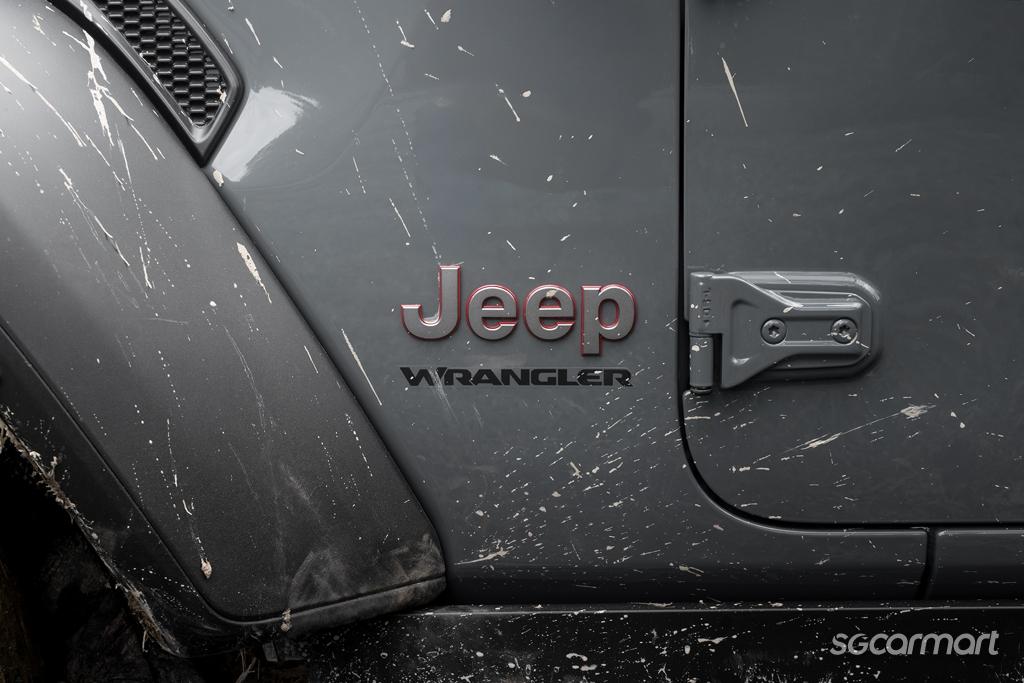
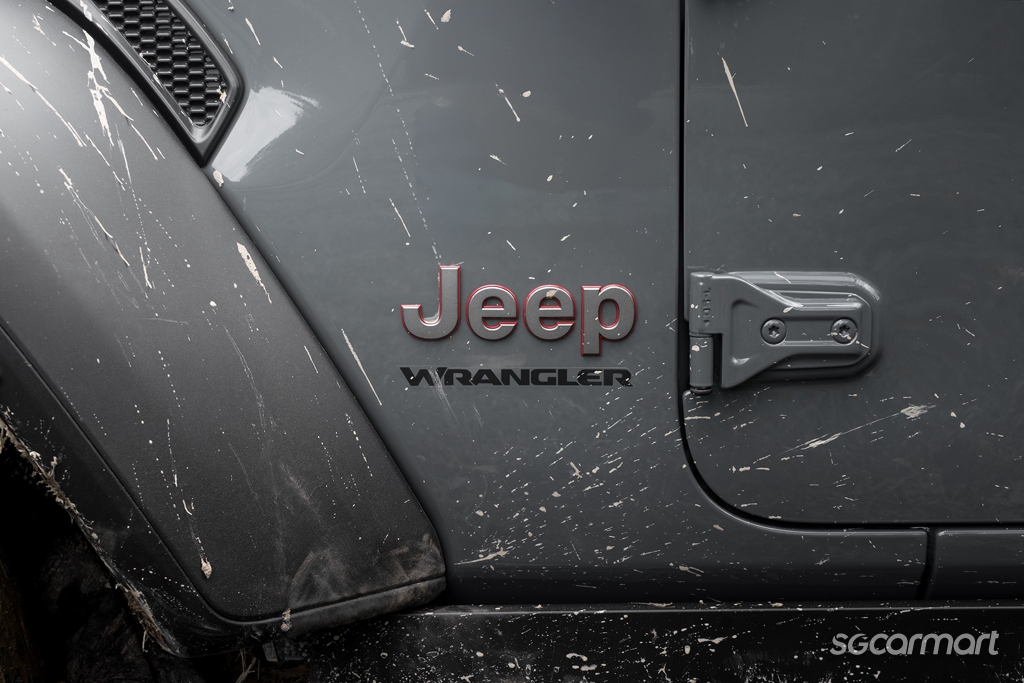
Emerging from an unexpectedly wet field, the square-jawed boxy behemoth we've picked up just this morning has more than its fair share of battle scars to show: Mud painted over its chunky tyres, and flecks of dirt just starting to dry on its unpainted fenders.
Weirdly, however, it's also never looked better.
Typical drivers wear a spotless paintcoat and shiny black wheels on their cars as precious badges of honour. But the Jeep Wrangler is not your typical car.
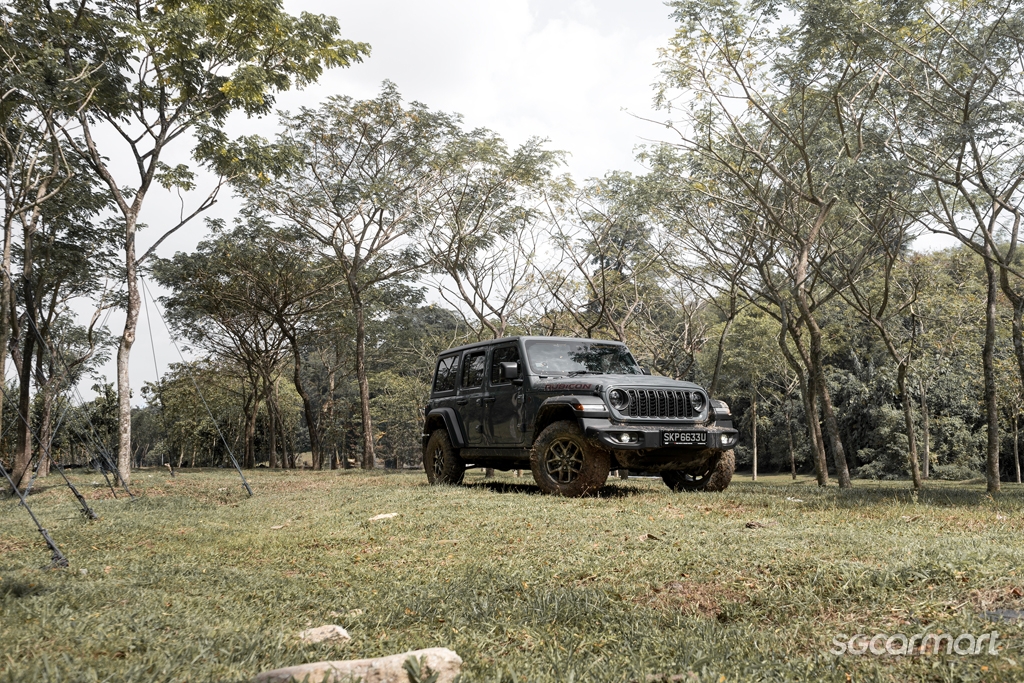
If any car can make having a bit of mud splattered on look good, it's the Wrangler
Genuinely capable off-roaders still persist; softroaders aiming for their aesthetic have seen a resurgence in popularity too. But for those with rumbling hunger to seek out paths less-travelled (or even completely unpaved), the Wrangler has occupied an irreplaceable spot for decades.
For a brief period last year, its future in Singapore seemed uncertain, when the fate of the the Jeep brand was suddenly thrown up in the air. Almost as quickly, however, in swooped a new custodian by the name of Red Rock and Rosso Motor. New life is now being breathed into the American marque at The Southern Depot. And rather unsurprisingly, the Wrangler has unofficially risen to the occasion to front this revival, as the first member of the family to go on sale here again.
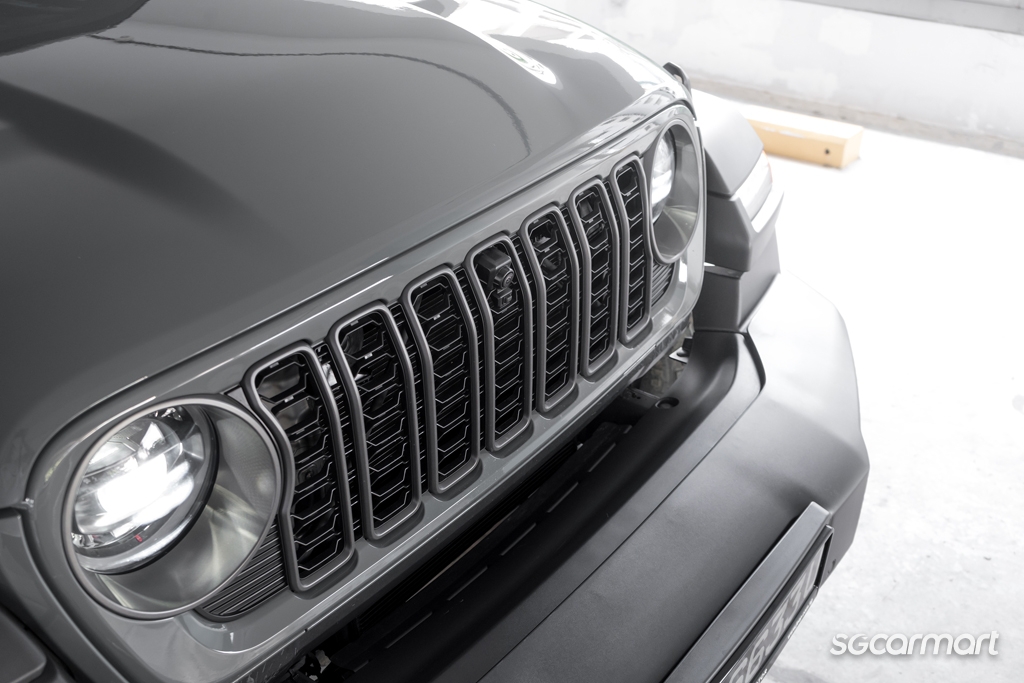
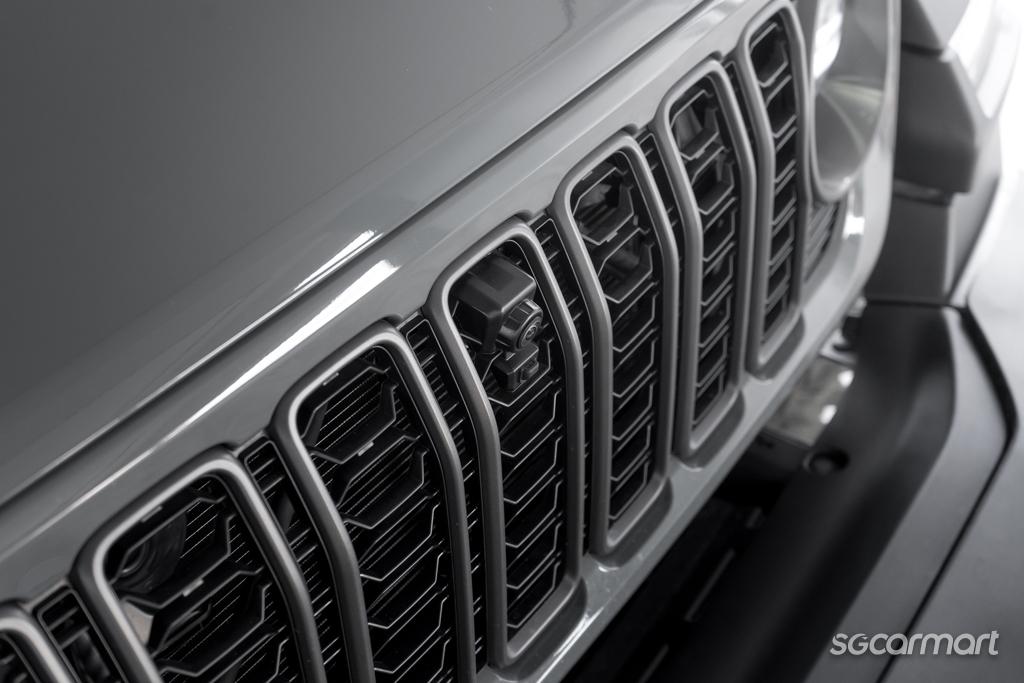
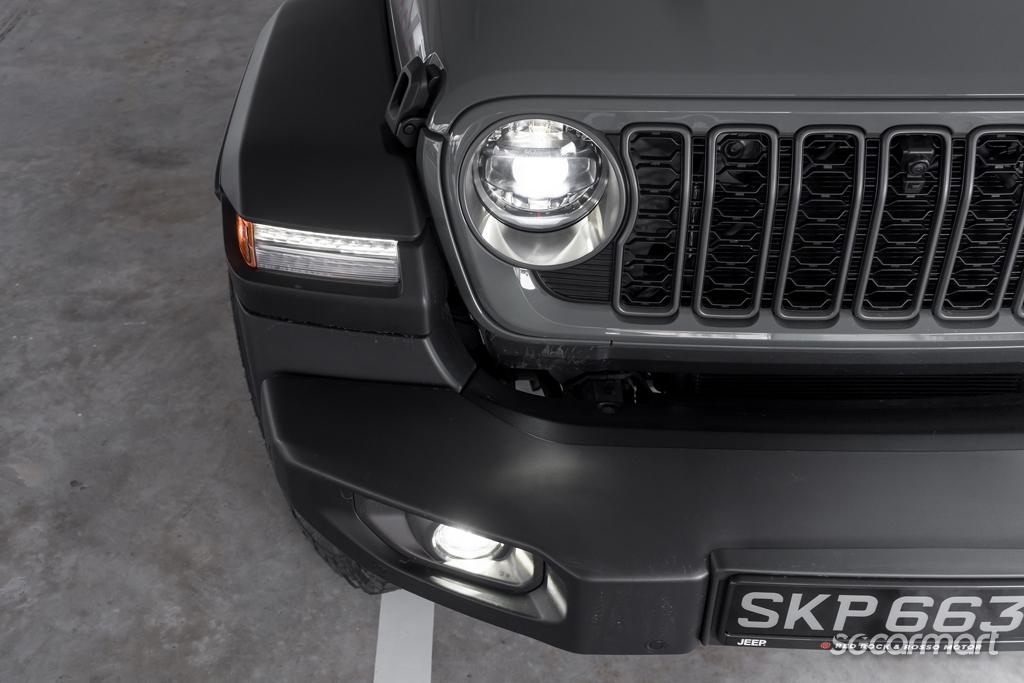
The updated Wrangler gets a neater and more compact seven-slot grille that doesn't erode its unmistakable styling
It is the name and image of the Wrangler, after all, that one will think of first when it comes to Jeep. Credit is perhaps due to the fact that its design has largely been untainted by the reaches of time. Even with a mid-life refresh that landed internationally in 2024, there's not much new that needs pointing out.
This facelifted car does get a refreshed and neater take on the iconic seven-slot grille. In isolation, it doesn't feel too different, but park it next to the pre-facelifted one, and it somehow manages to make its predecessor look dated.
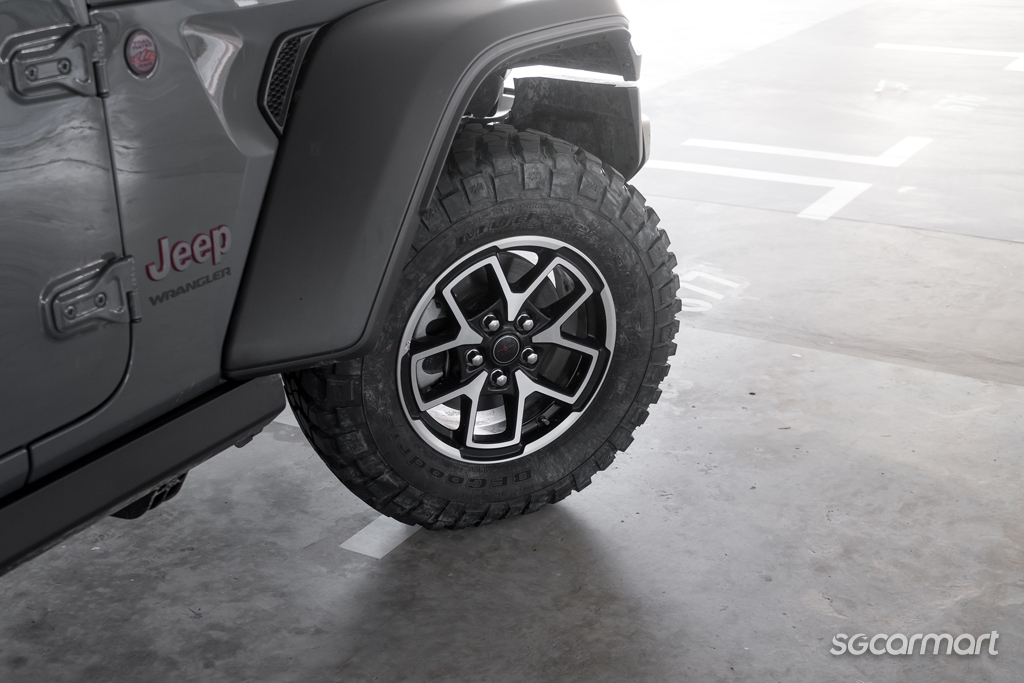
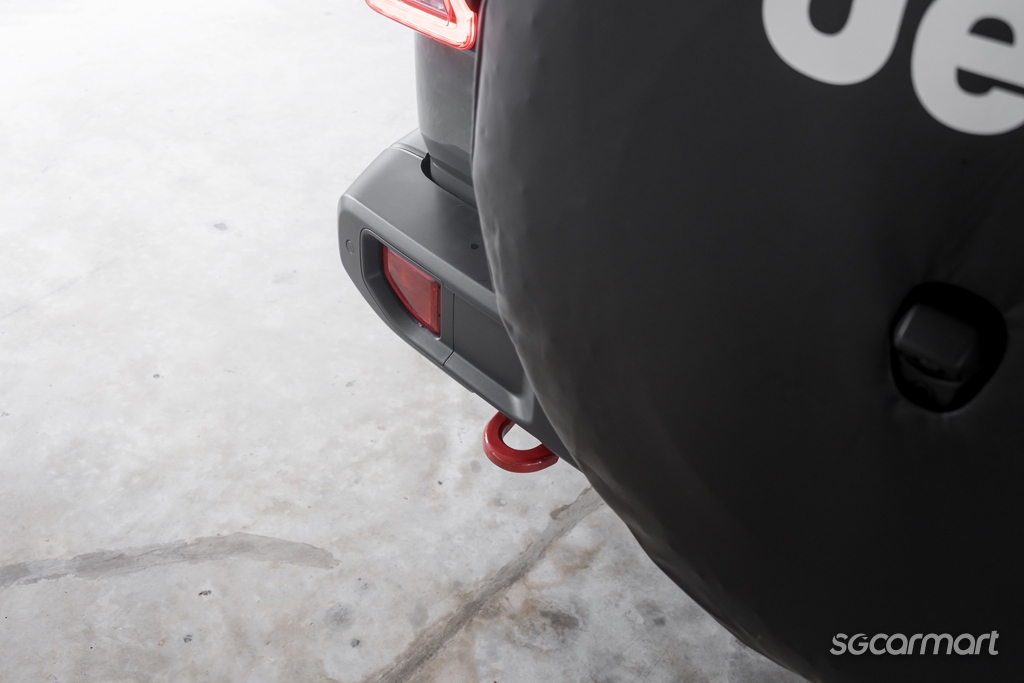
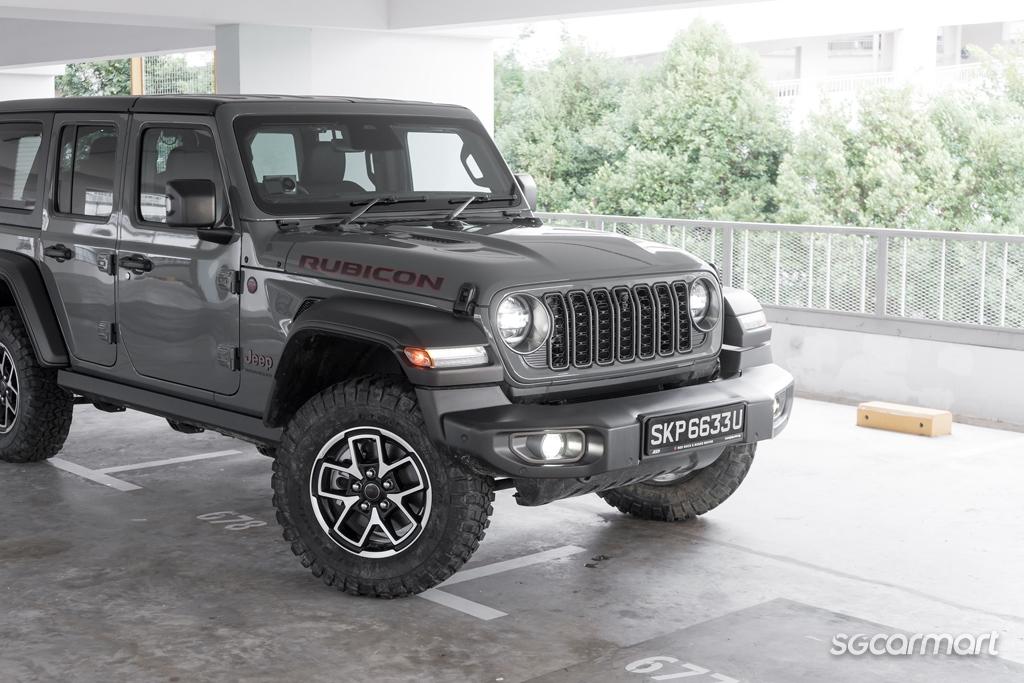
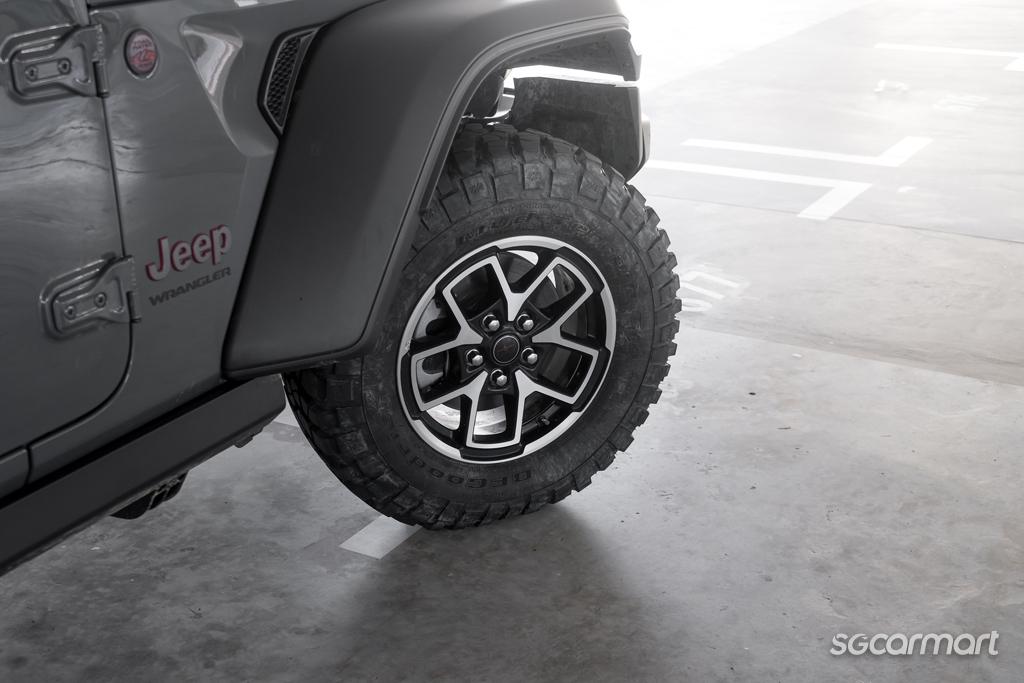
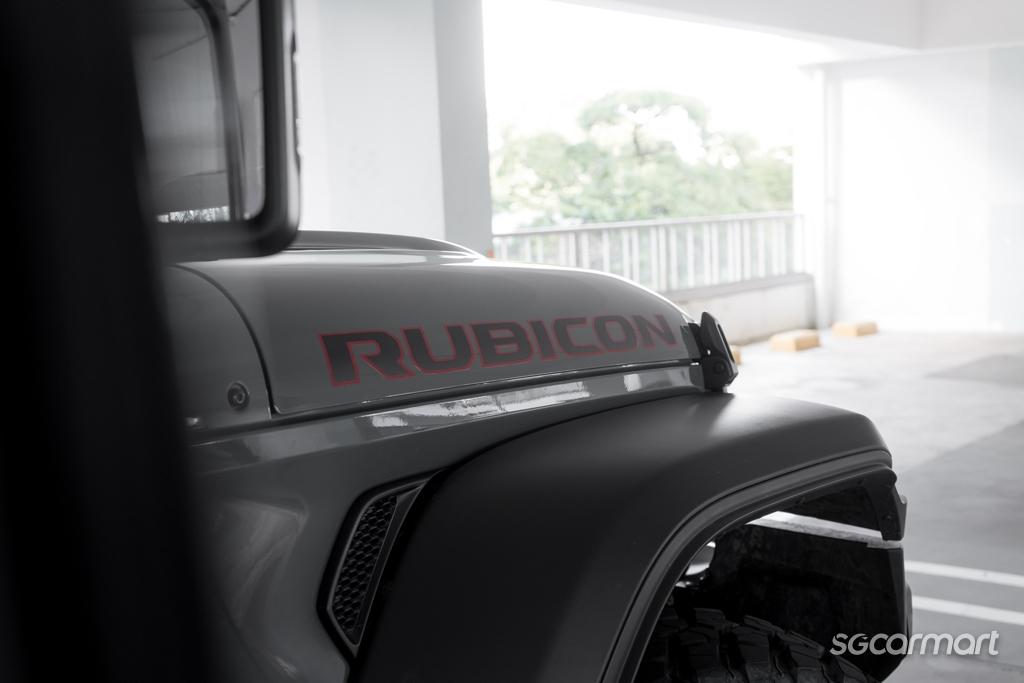
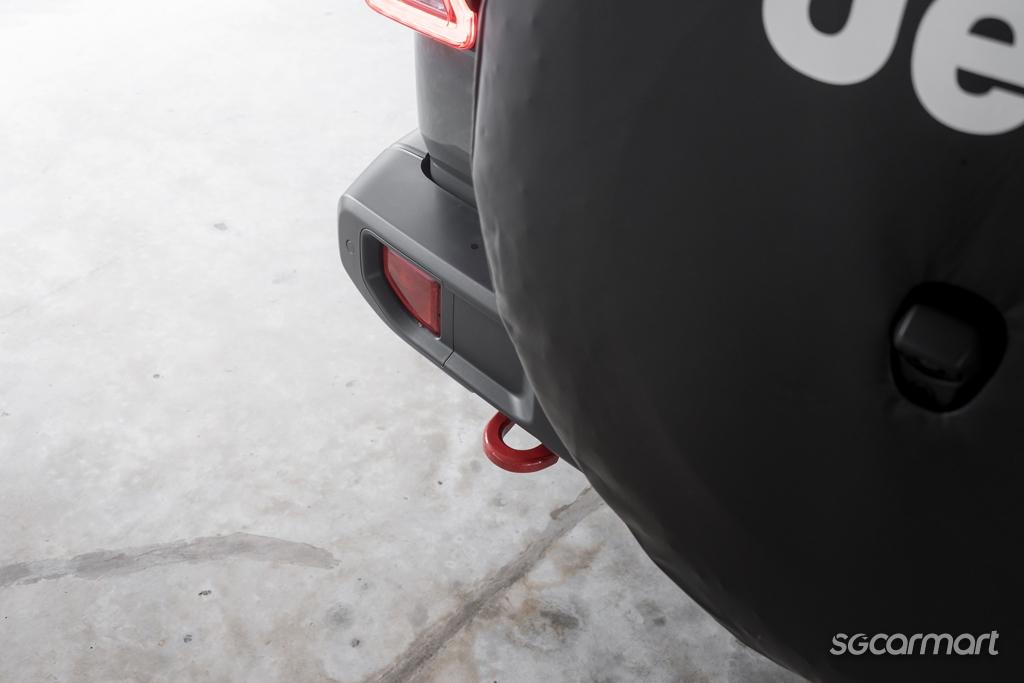
Bold lettering on its bonnet aside, the Rubicon also sets itself from the entry-level Sahara with its off-road tyres and a red tow hook
But the Wrangler's familiarity is exactly what makes it so magnetic - especially on this hardcore Rubicon variant, whose dirt-seeking intentions are wrought even clearer.
Those unpainted trapezoidal fender flares won't be mistaken for any other car's. The same can be said for the way those chunky tyres (again, a Rubicon-exclusive) seem to jut out of its frame, and for the way the entire cabin almost seems to float above them.
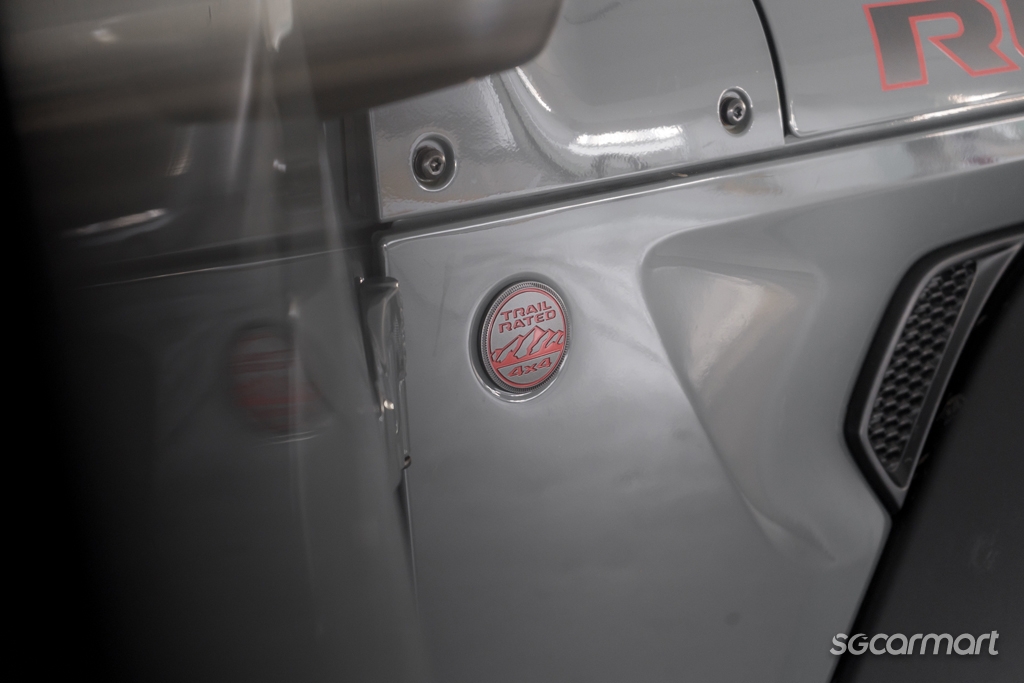
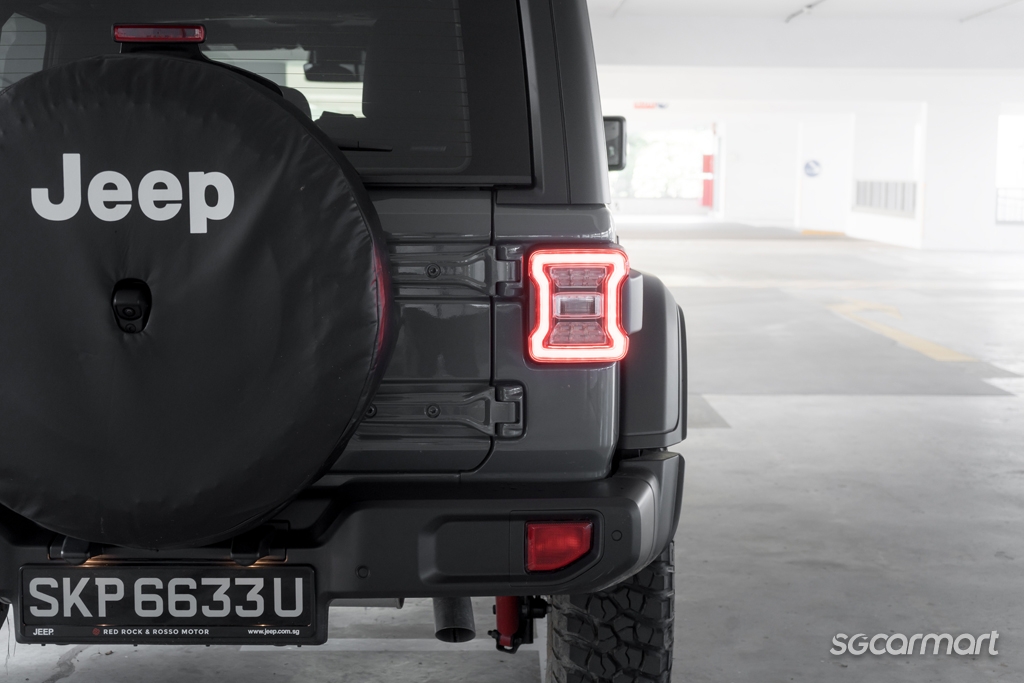
As the automotive world around it has evolved, its virtually unbroken lineage to the wartime Willys Jeeps has only grown more charming still. And even against the flashiest and largest of modern SUVs, the Wrangler reaches such heights in sheer presence that it can still be the most head-turning in any given carpark.
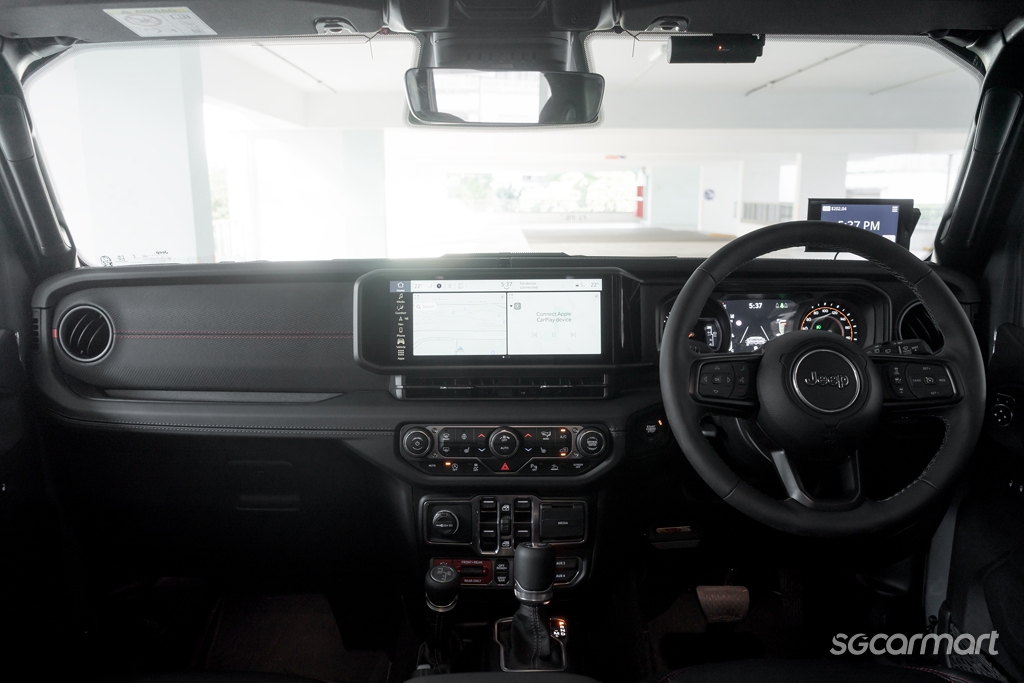
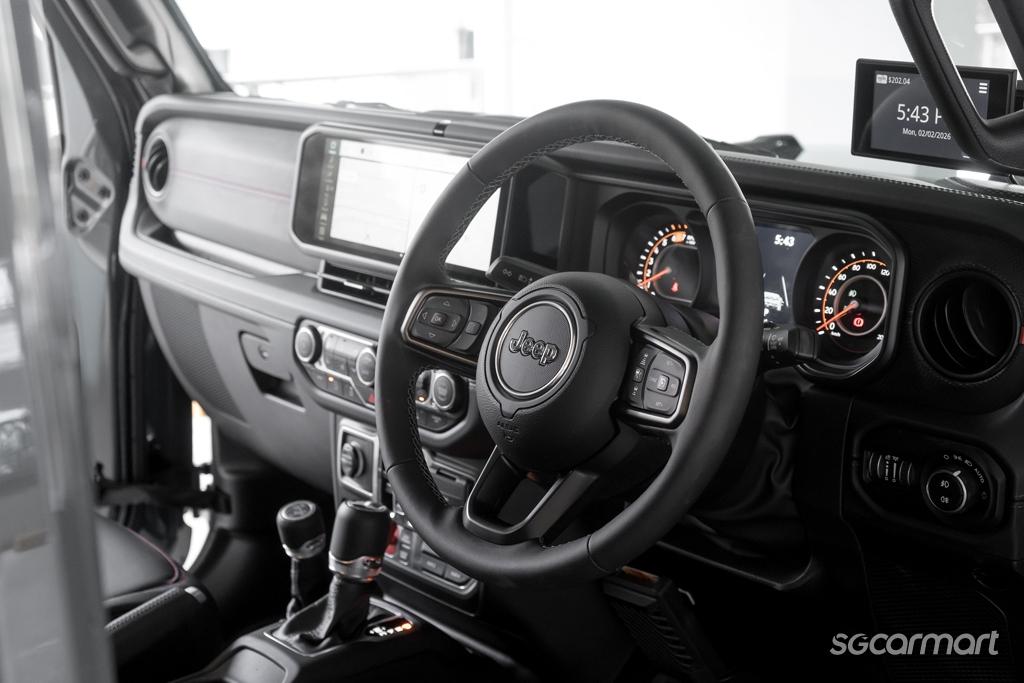
The Wrangler's rugged identity is evident even from within the cabin
While Merc's G-Wagon and Land Rover's Defender are often mentioned in the same breath as the Wrangler, you truthfully couldn't imagine subjecting their sumptuous interiors to proper abuse. Even from within, however, the Wrangler seems to constantly pose you the question of when your next off-road adventure is going to happen.
Wireless charging trays? Nah. Ambient lighting strips? You might want to look elsewhere. But to seek out trending interior accoutrements like those in a Wrangler would be to miss the point.
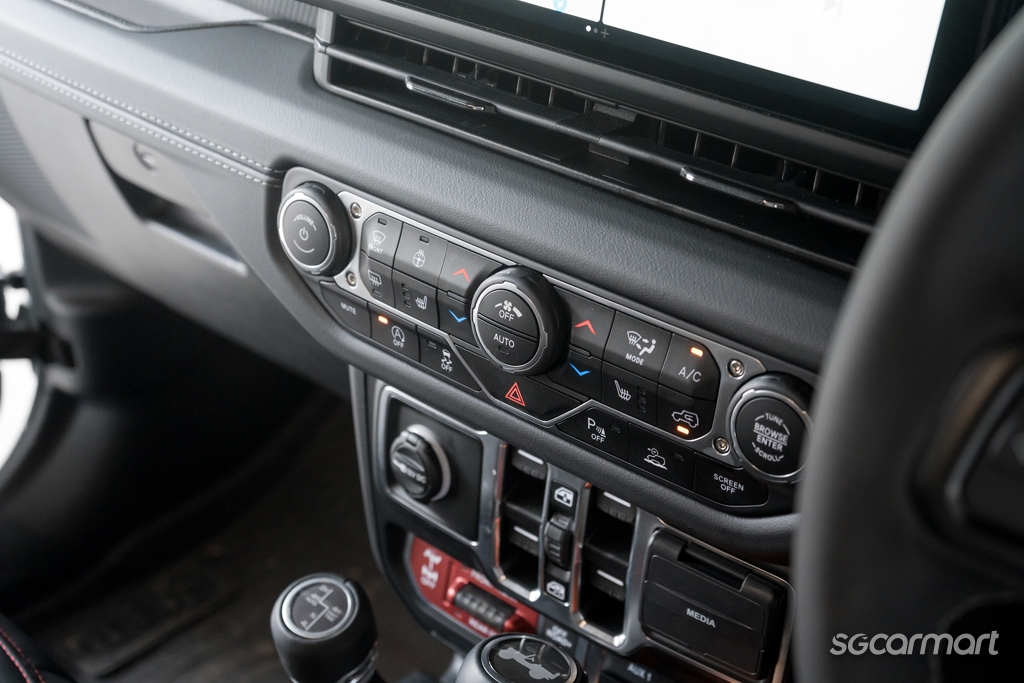
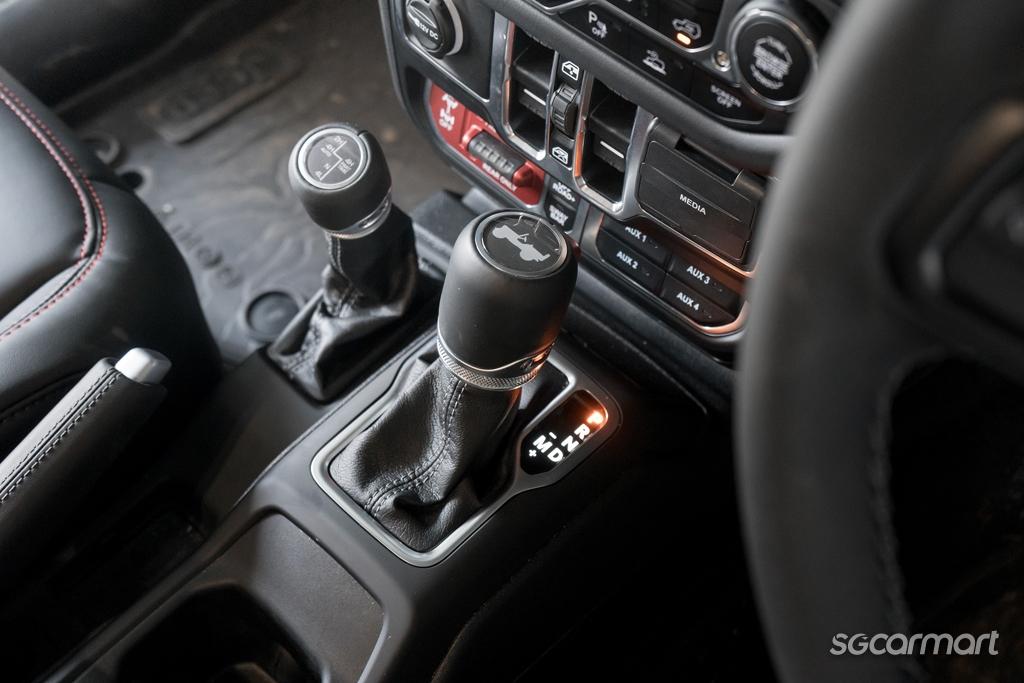
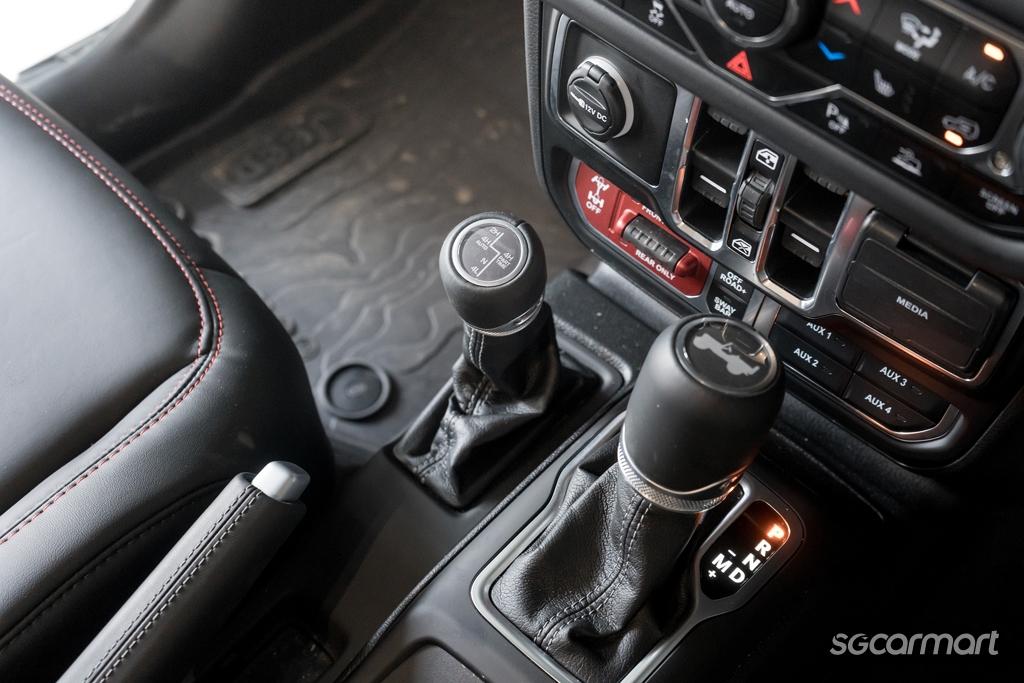
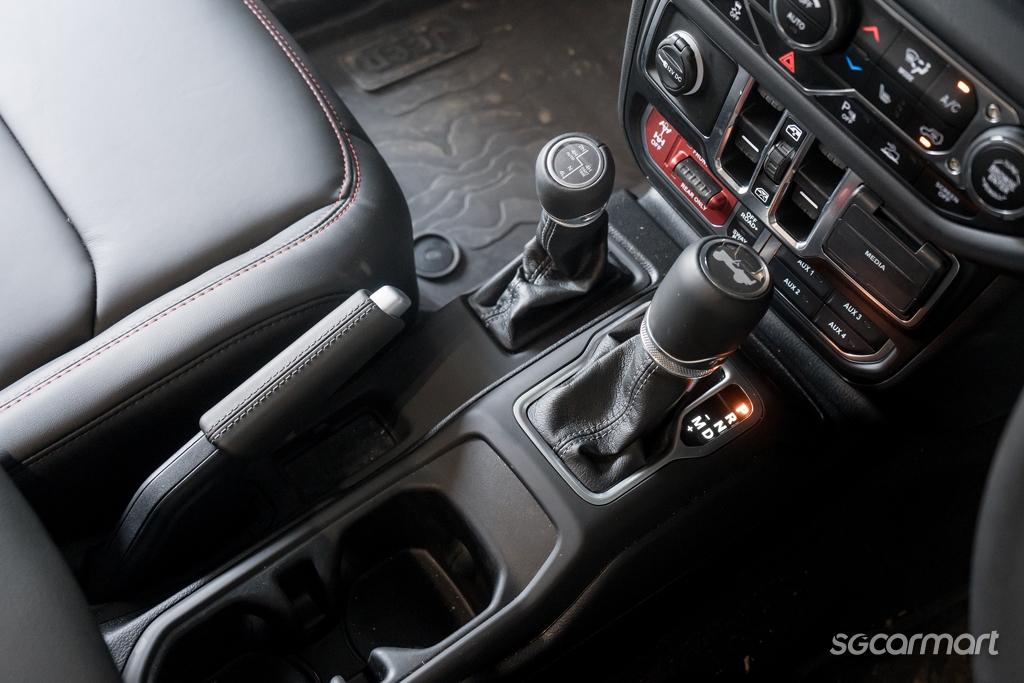
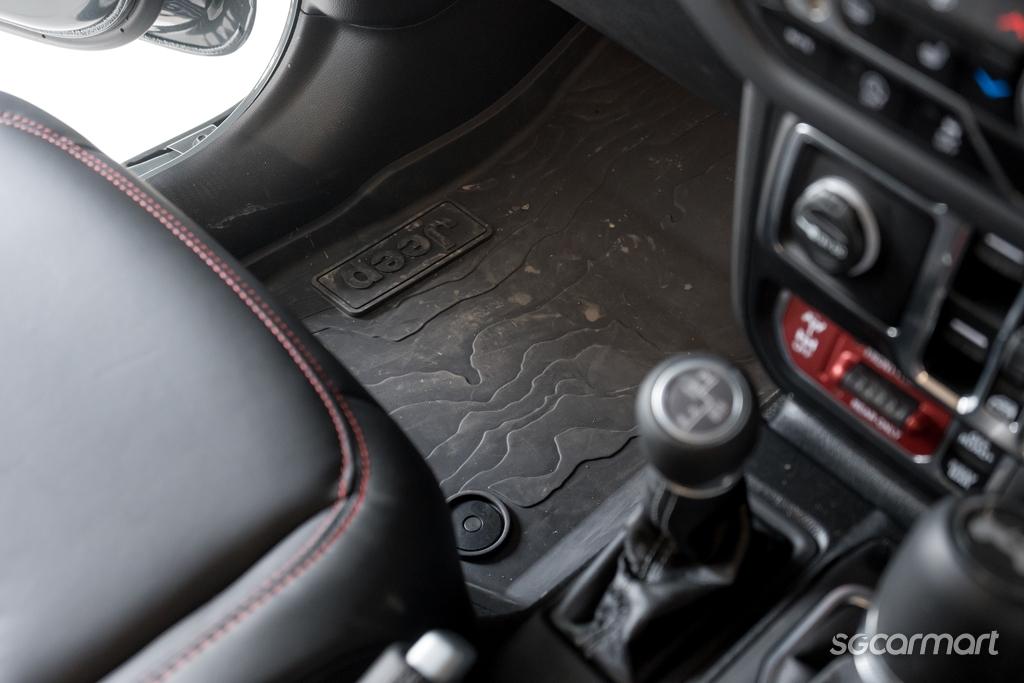
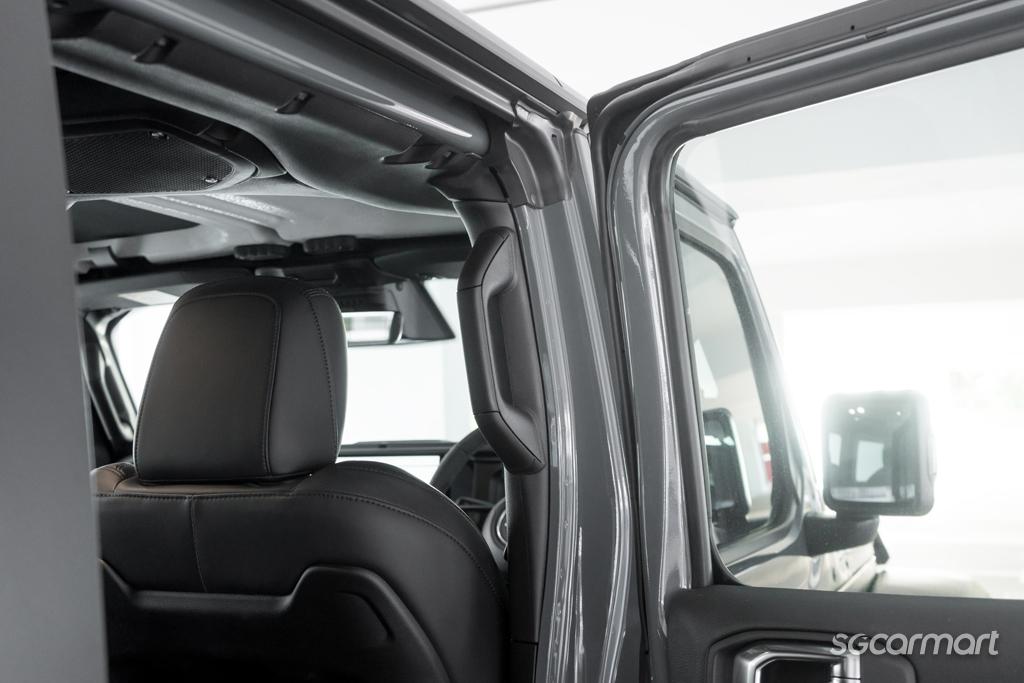
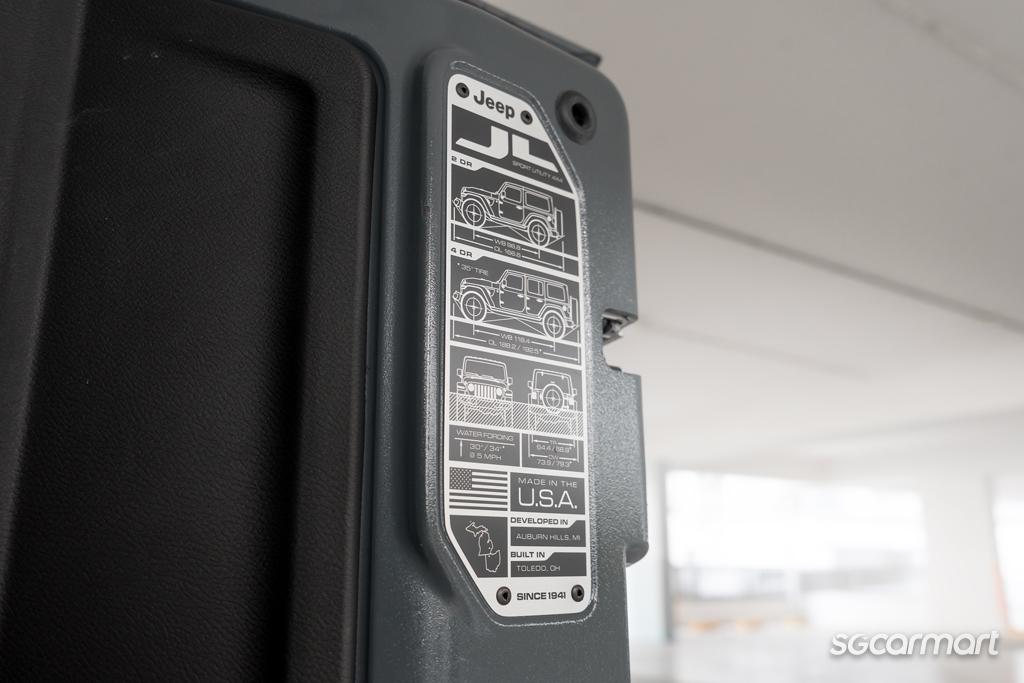
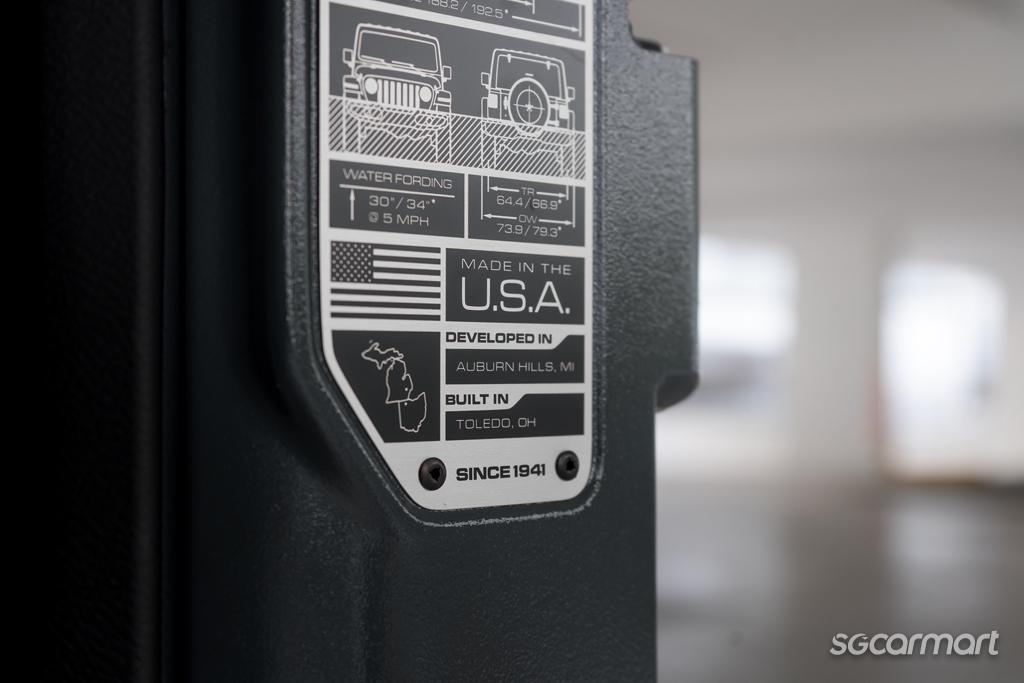
Built for tough-wearing abuse, the Wrangler's cabin places function over form, but still feels tightly pieced together
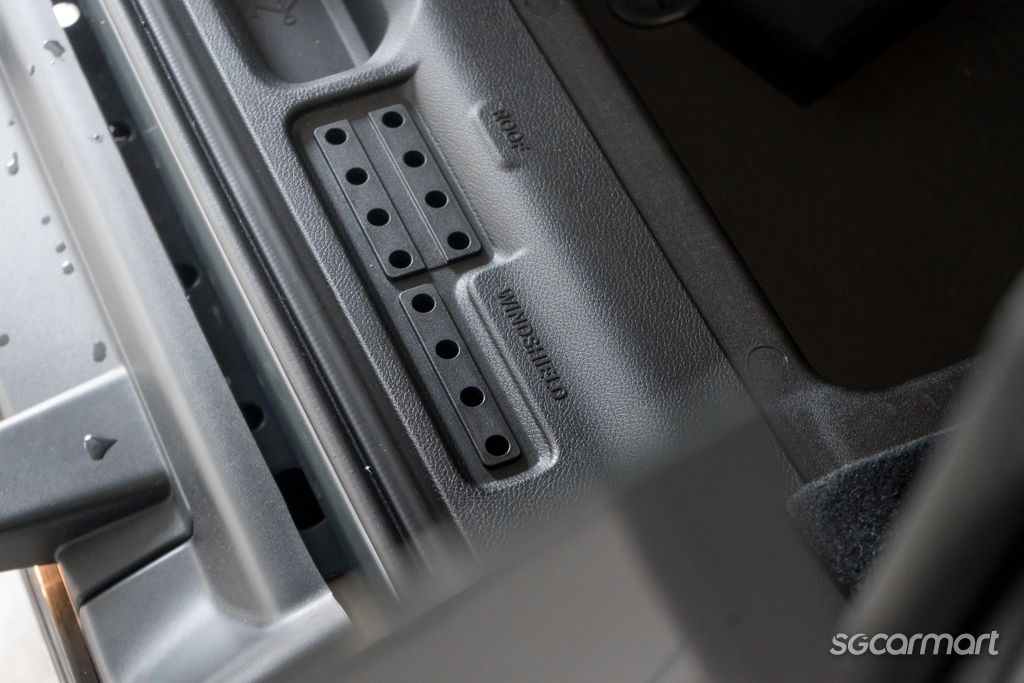
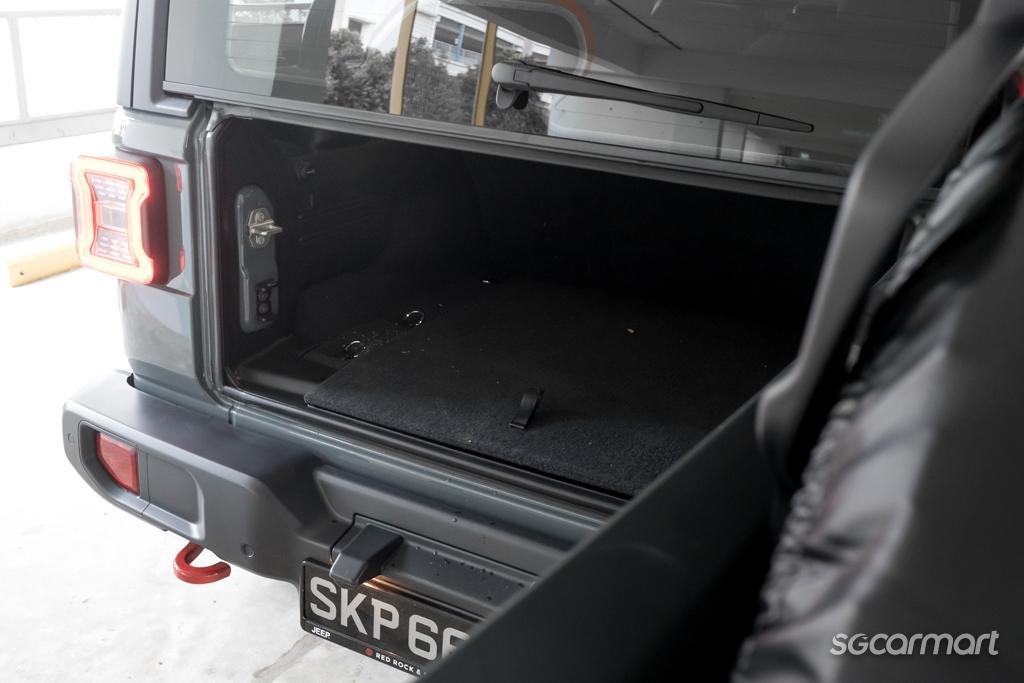
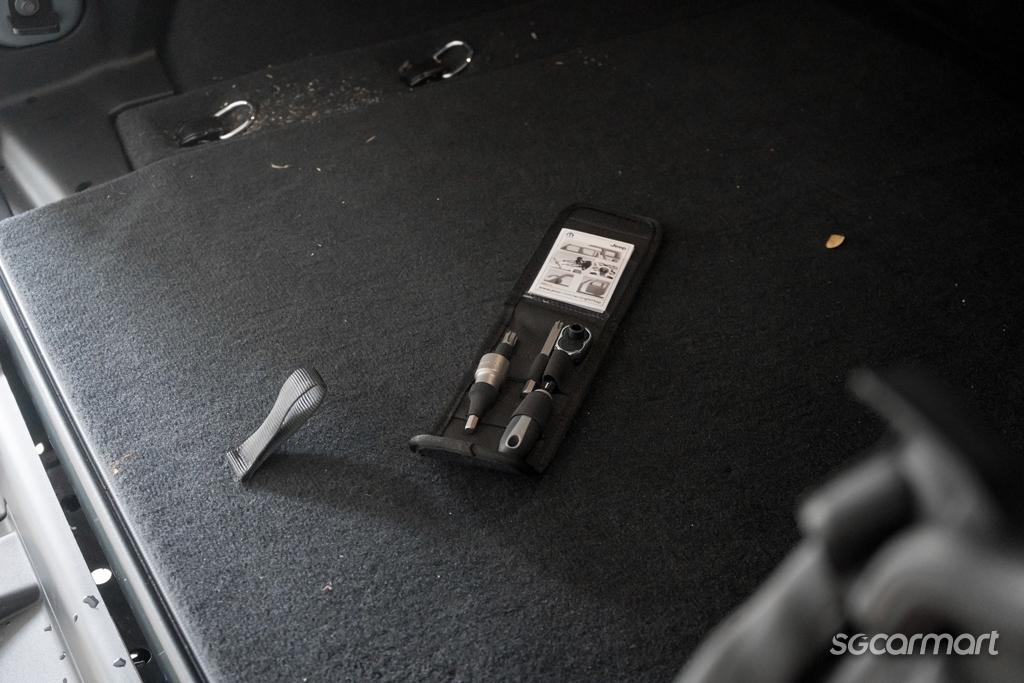
The Wrangler's boot even comes with handy slots for storing the screws from its removable doors and targa roof
What the Wrangler offers instead is the promise of tough-wearing use, with a cabin built unambiguously for utility rather than cossetting luxury. Its signature customisability remains its own monopoly too: All of its four aluminium doors can be removed, as can its targa roof.
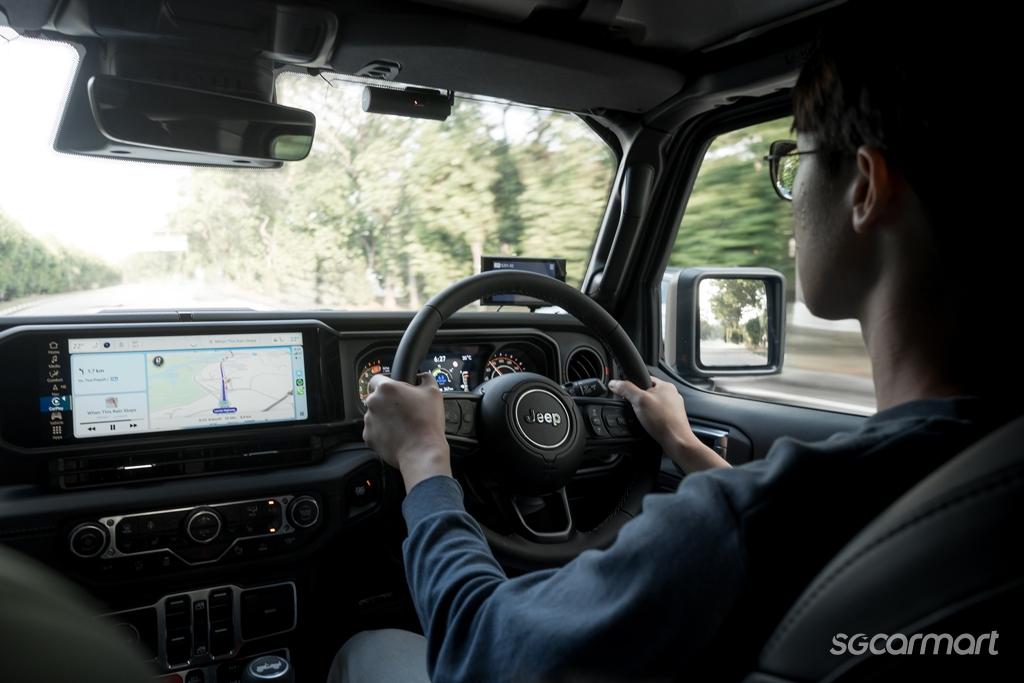
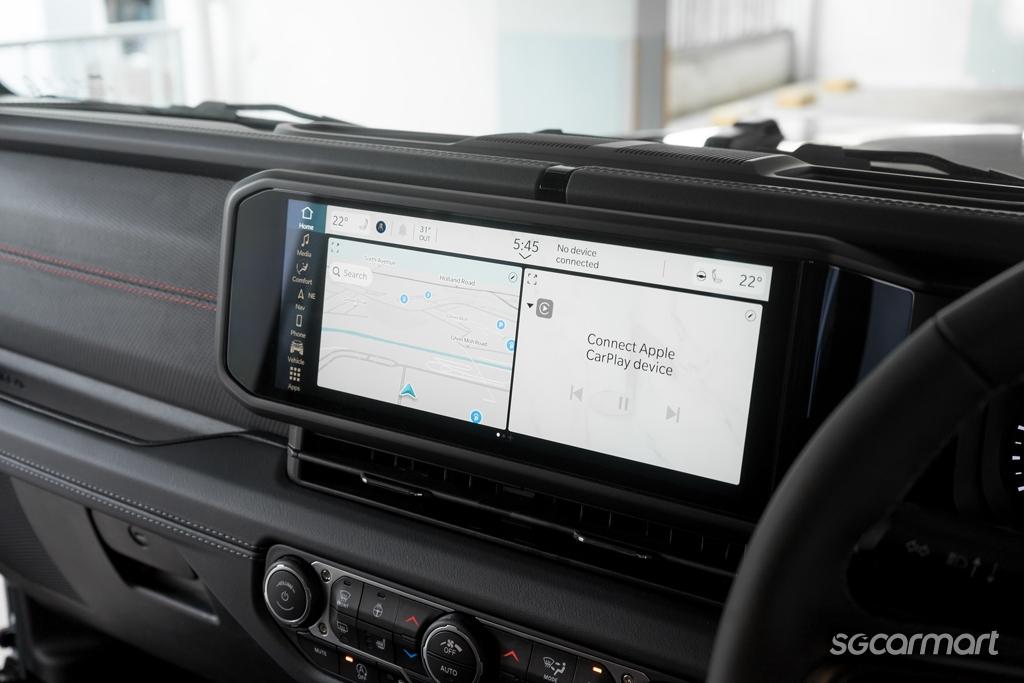
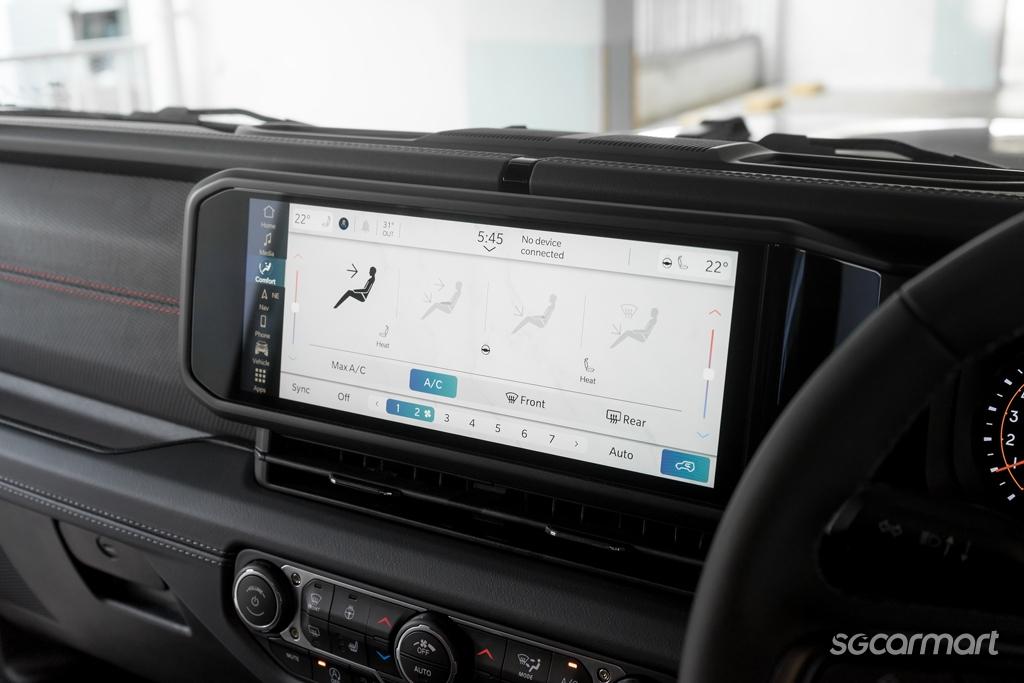
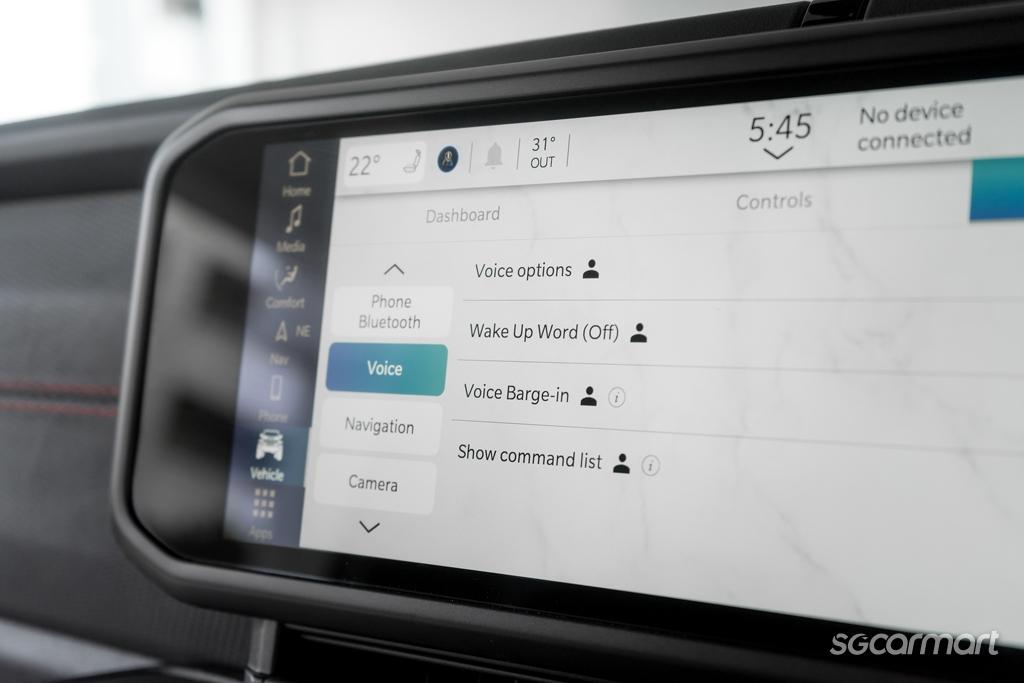
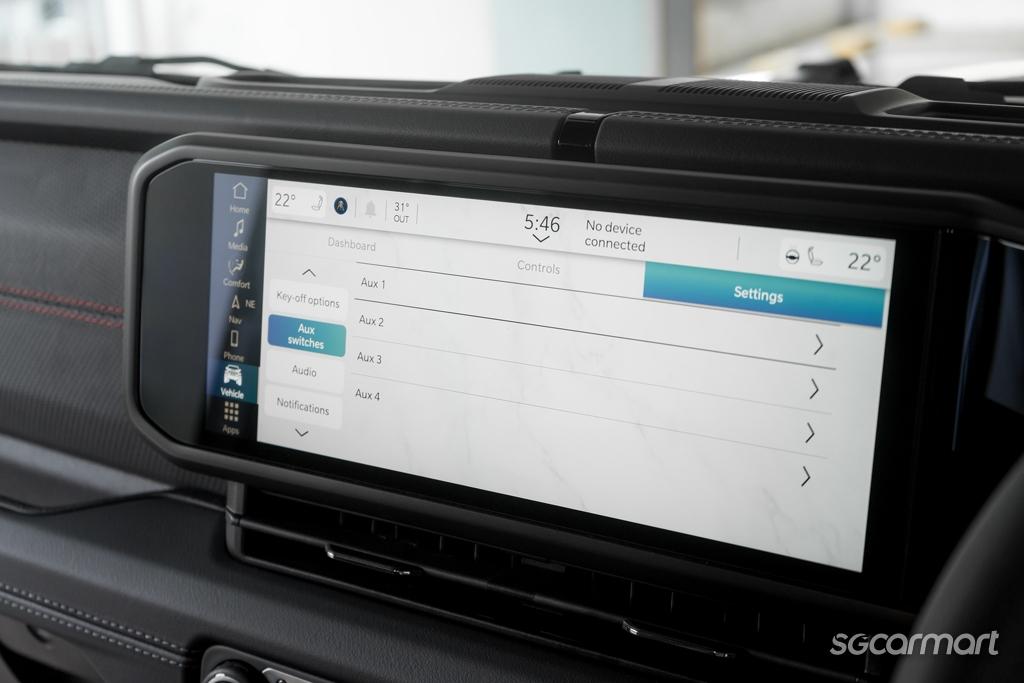
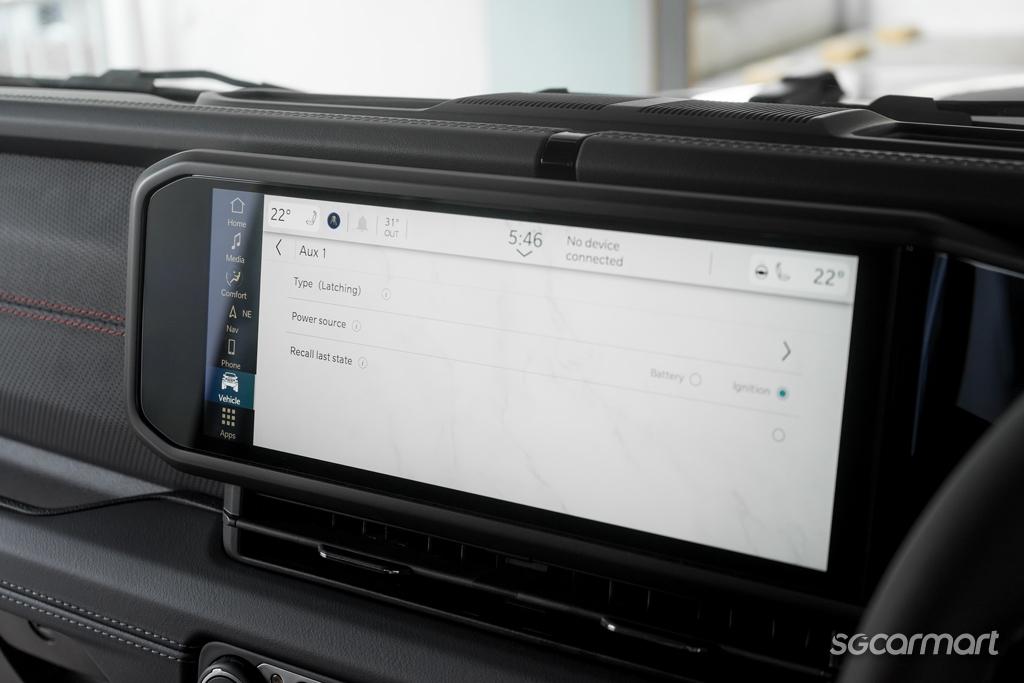
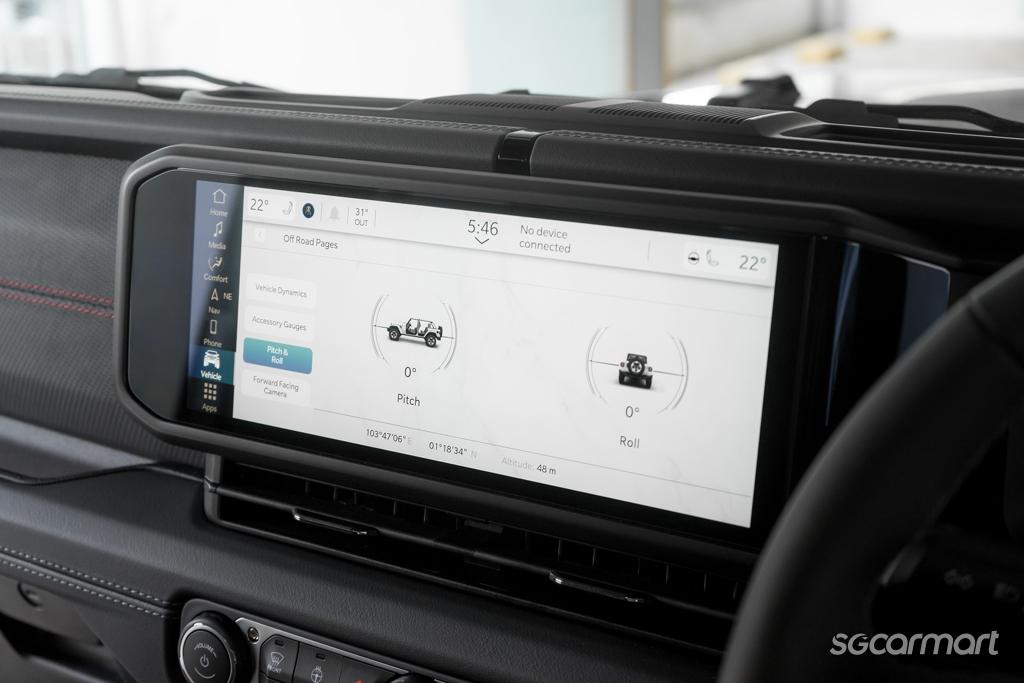
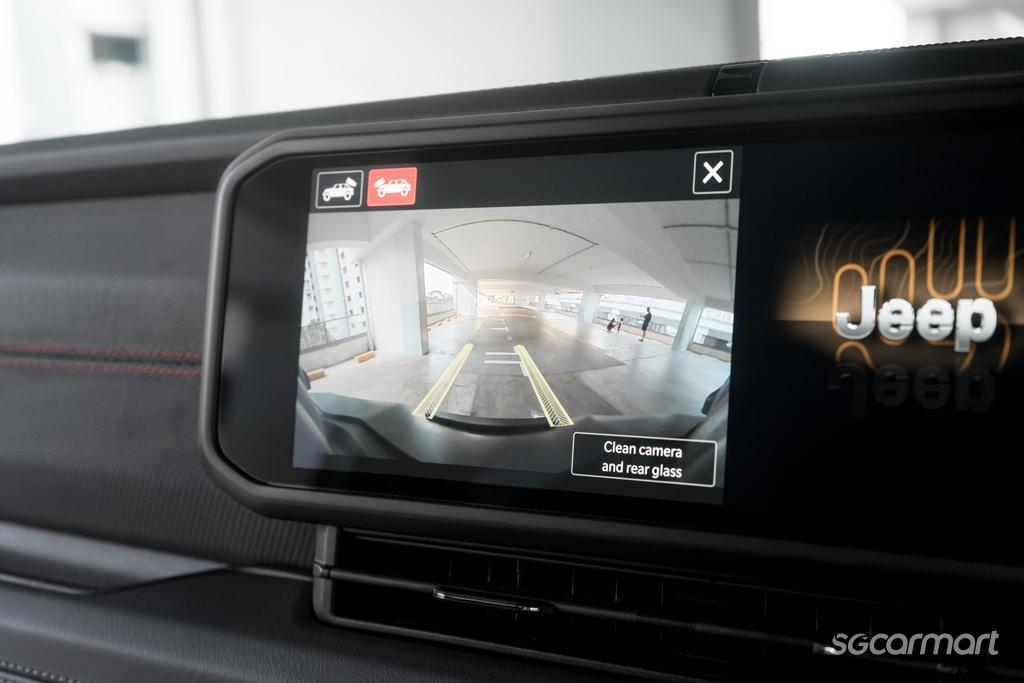
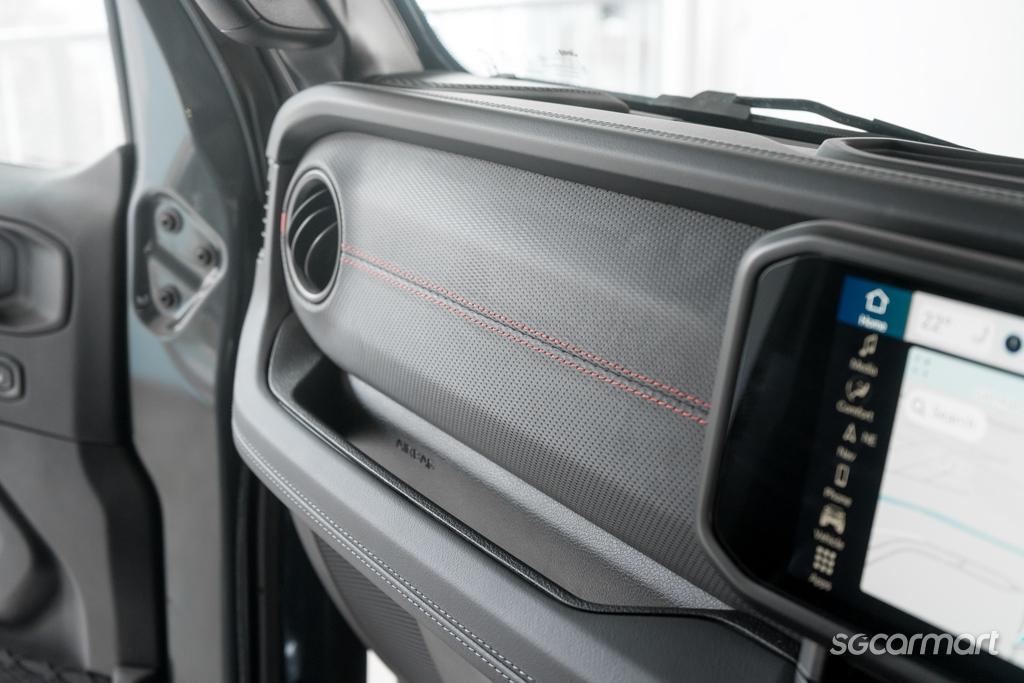
Again, the mid-life update does bring it with a handy equipment upgrade in the form of a larger 12.3-inch infotainment touchscreen. Coupled with the crispness of the display, the extra digital real estate does mean a more pleasant user experience when you've activated Apple CarPlay or Android Auto (both wirelessly).
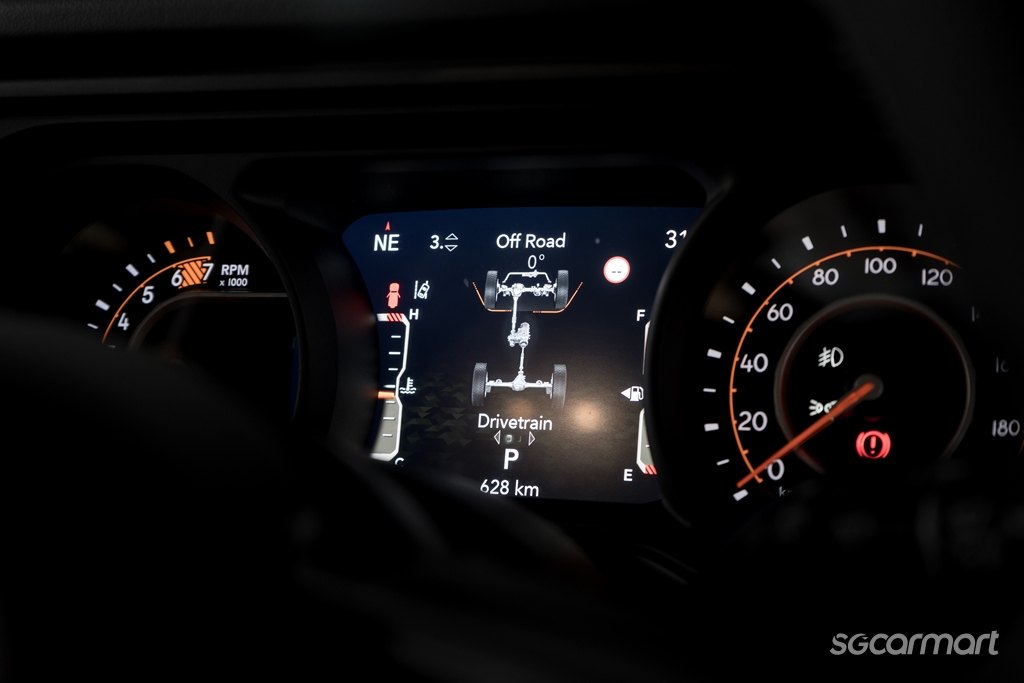
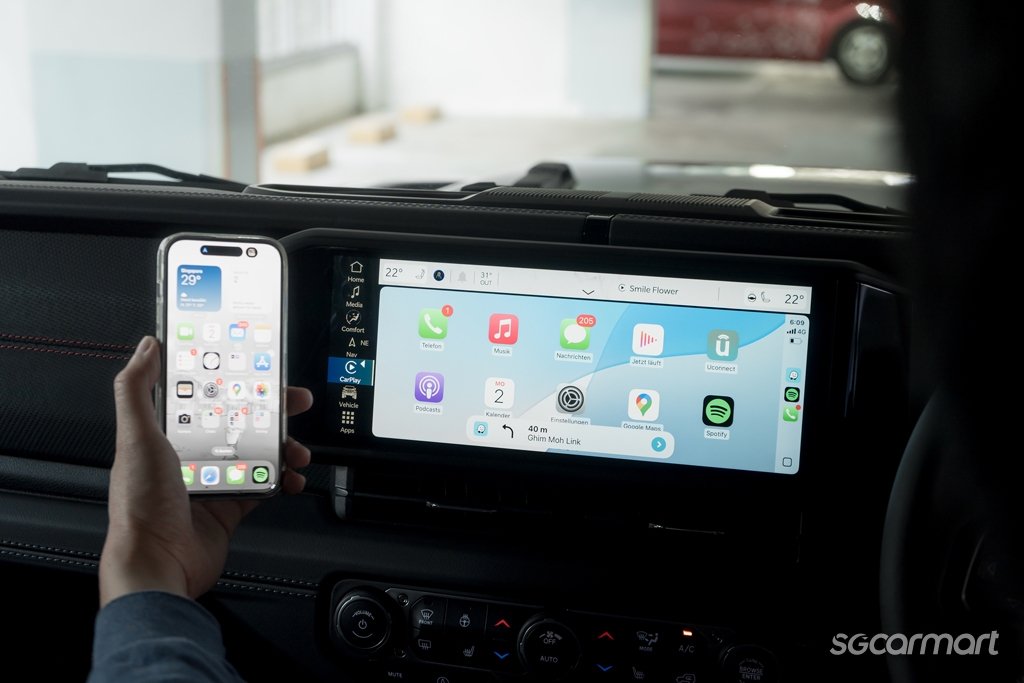
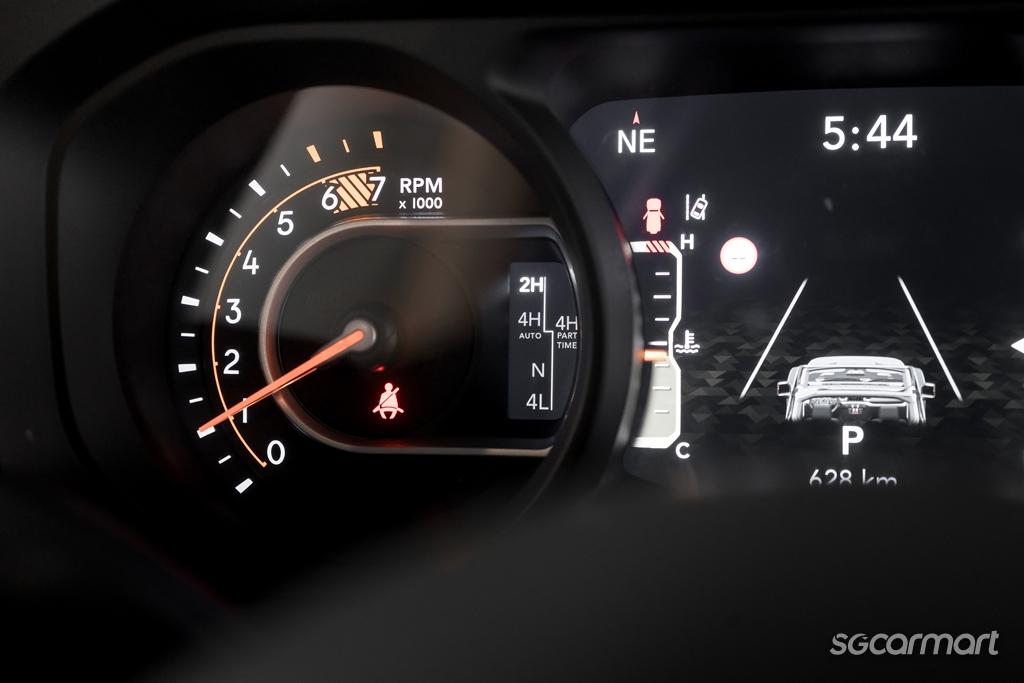
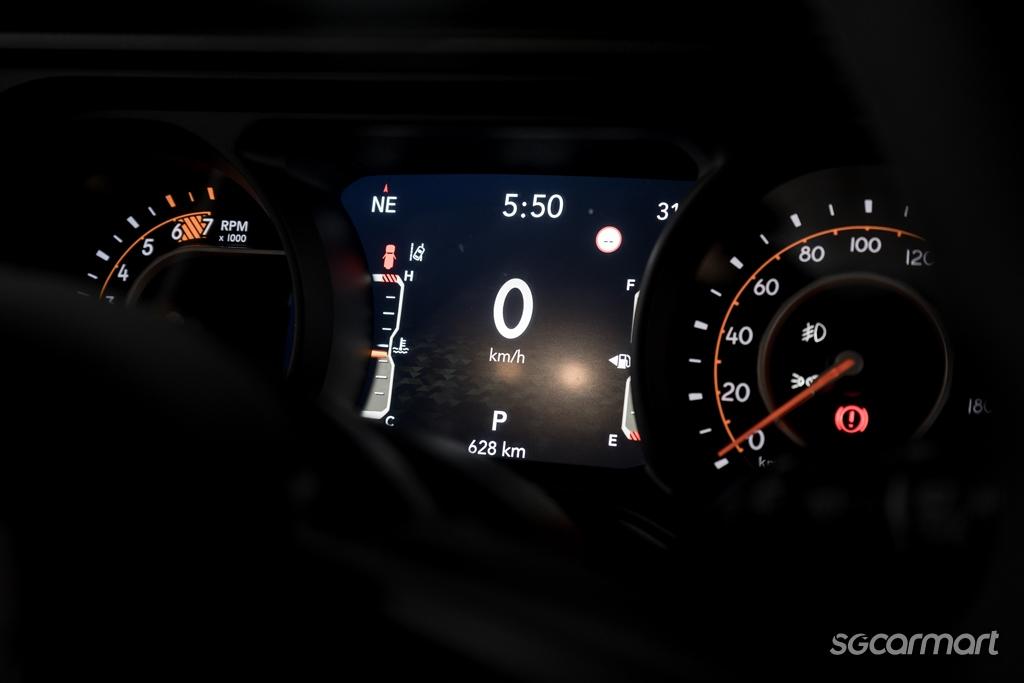
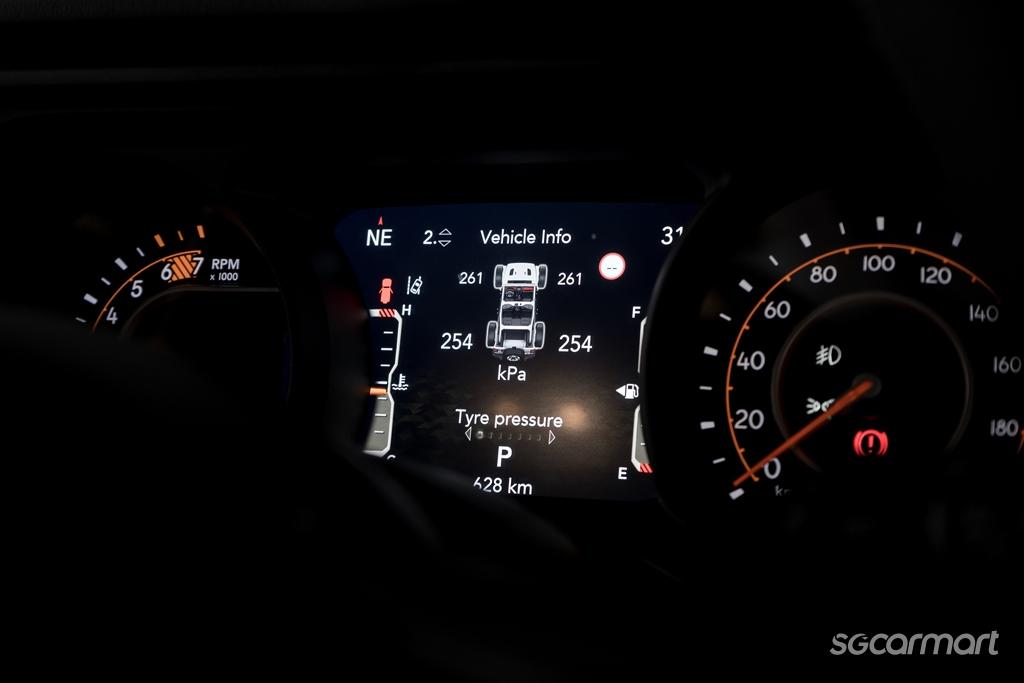
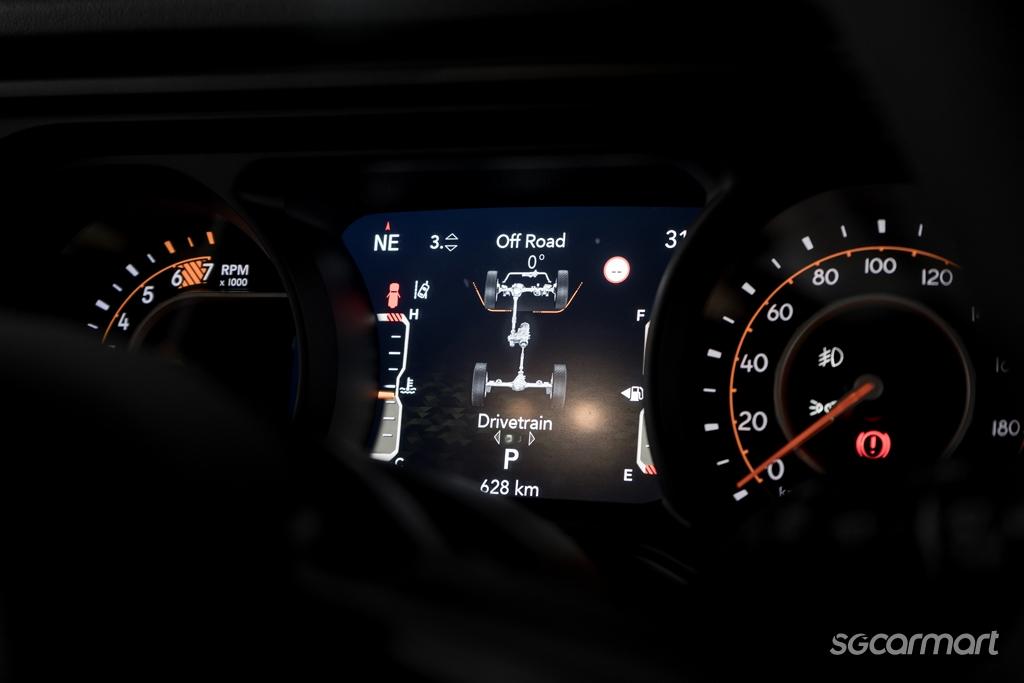
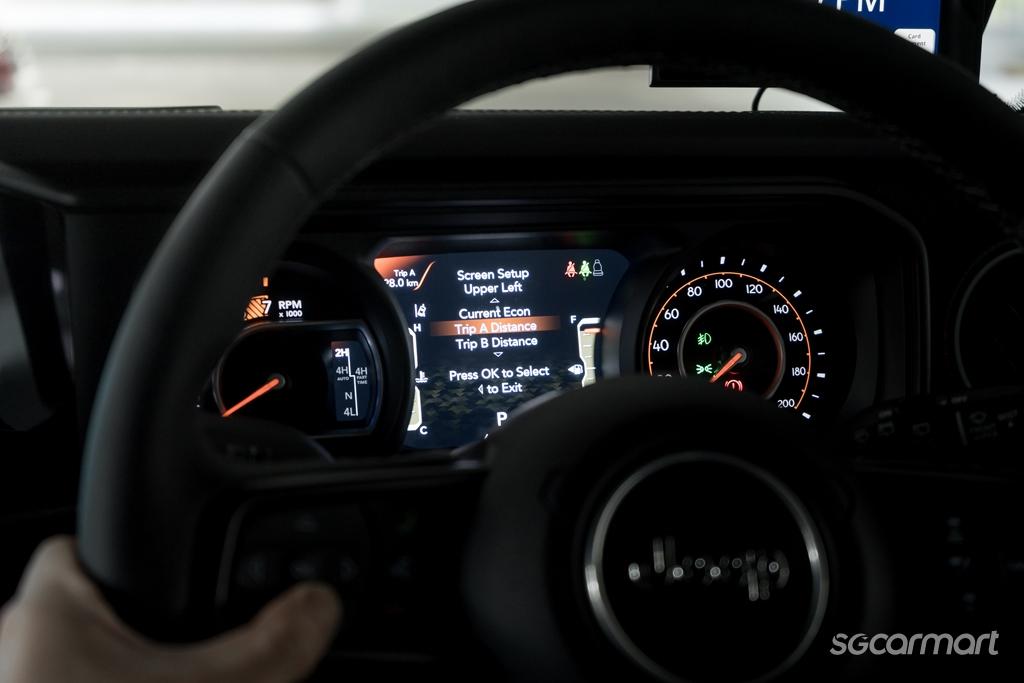
There's still plentiful digitalisation on the Wrangler, thanks to its 7.0-inch driver's display and upsized 12.3-inch infotainment touchscreen, which is crisp and responsive
But the fact that Jeep hasn't meddled too much with the interior otherwise works to the Wrangler's gain.
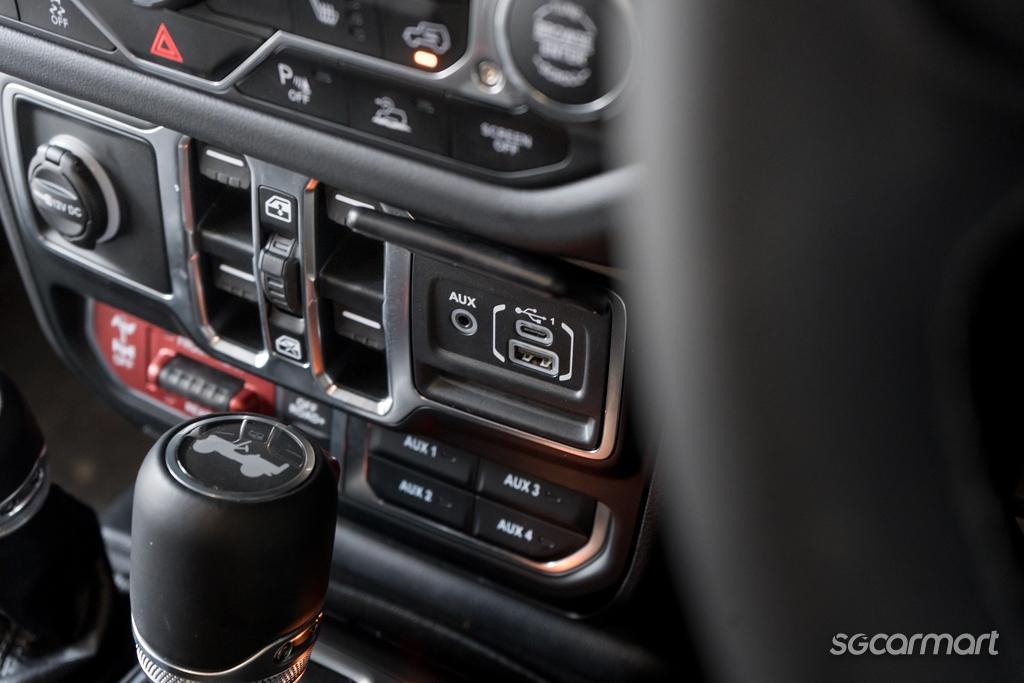
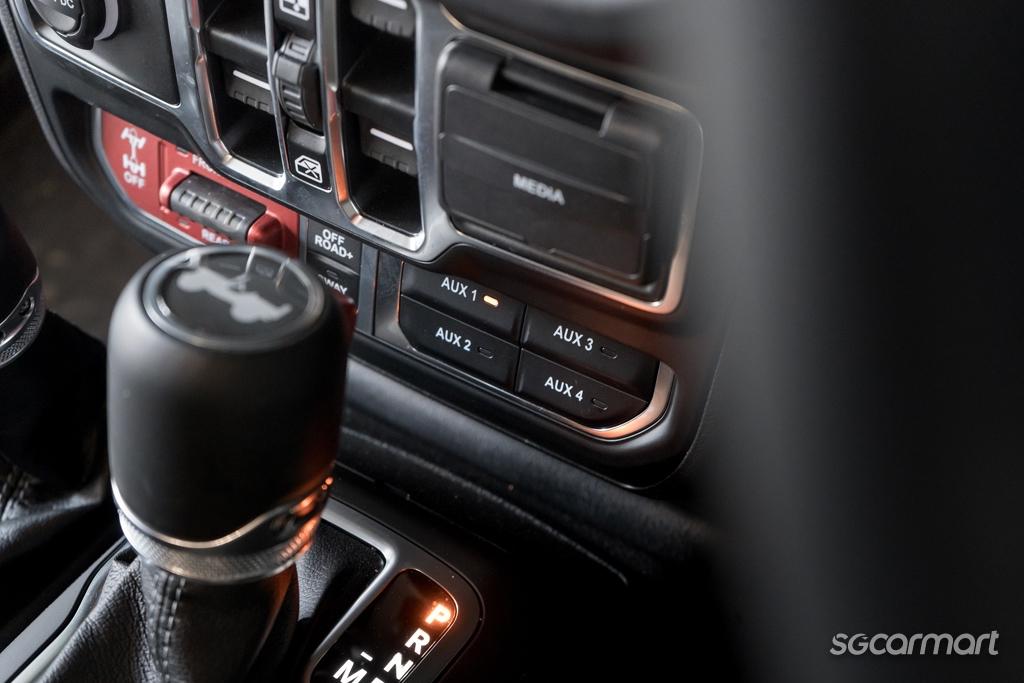
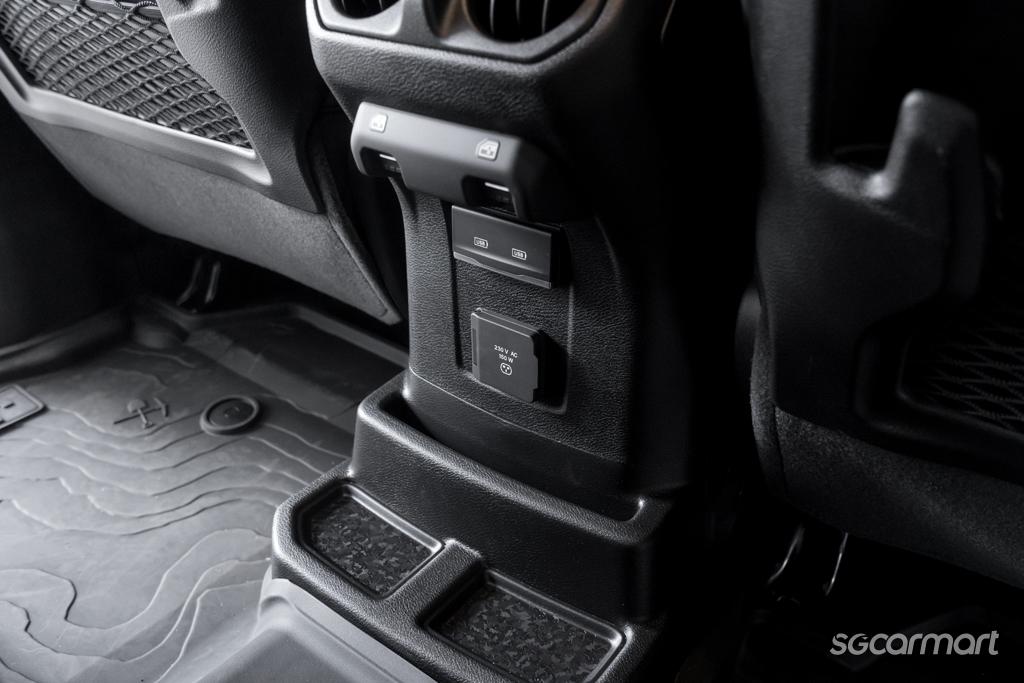
No one wants to be wrestling solely with a touchscreen for essential controls when out in a muddy field, so there are physical buttons aplenty all over the steering wheel and centre console. Idiosyncratic reminders that you can dismantle the Wrangler's doors and/or hose its interior down when required also come through the centrally-mounted window switches and cover-flap for the USB and AUX ports.
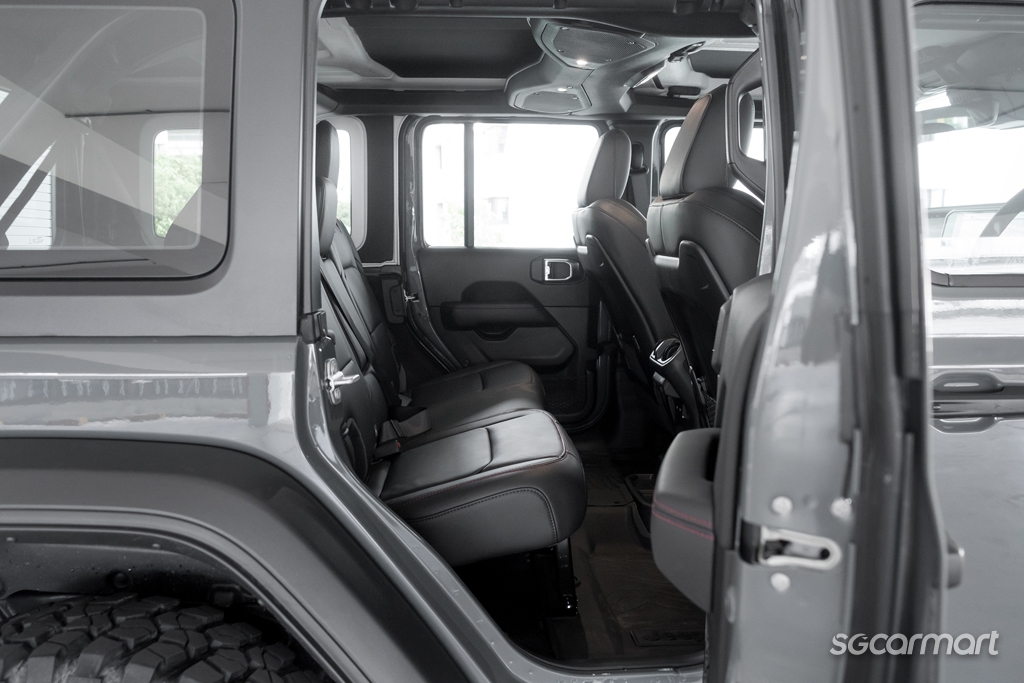
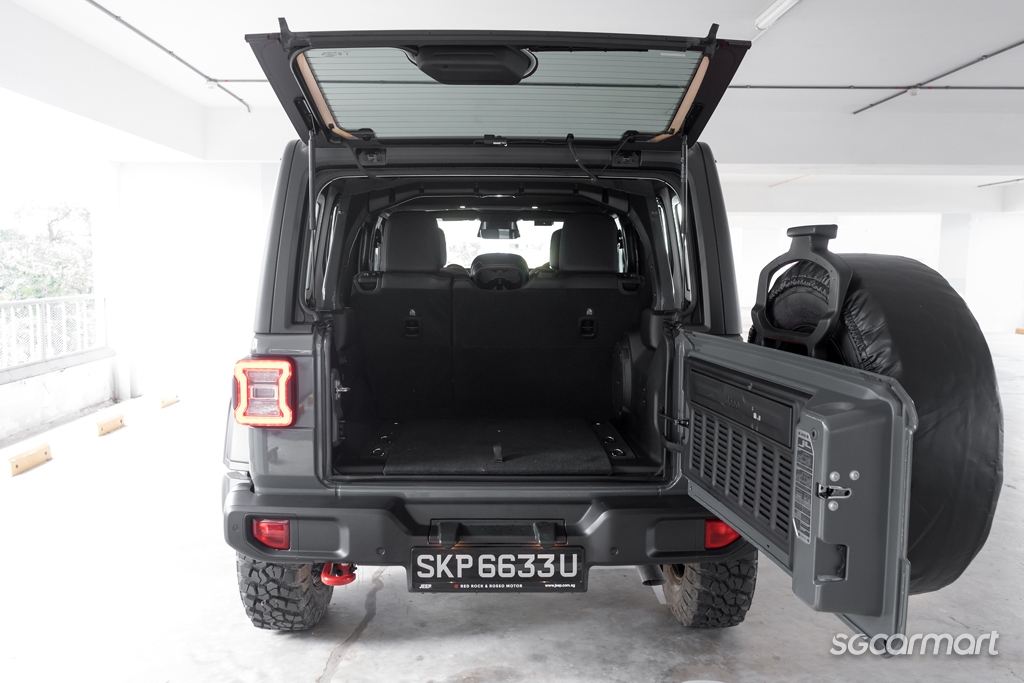
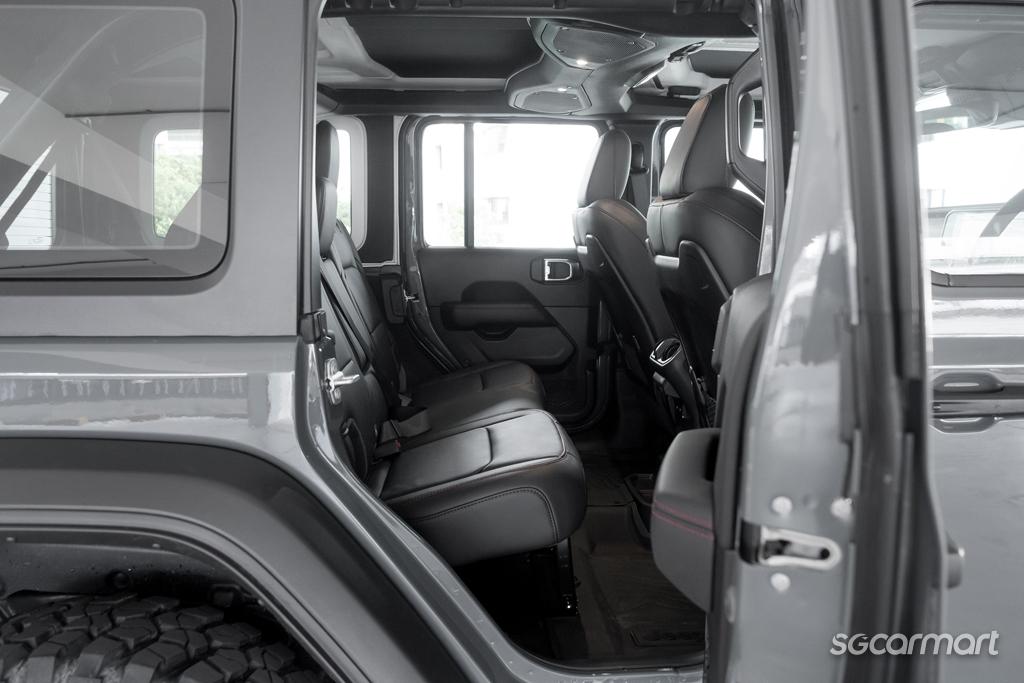
The Wrangler isn't the most spacious car for something of its size, but it does come with a large 897-litre trunk
As you might expect, however, the Wrangler's all-out embrace of off-roading prowess inevitably does translate to certain compromises in passenger space.
The high floor and lower ceiling mean headroom isn't fantastic despite the car's rather towering height (the same odd protrusion in to driver's footwell is also there still). Legroom and shoulder room for second row passengers is decent, but nowhere as generous as you might expect from a car this size too - though the rear bench does get its own dedicated air vents.
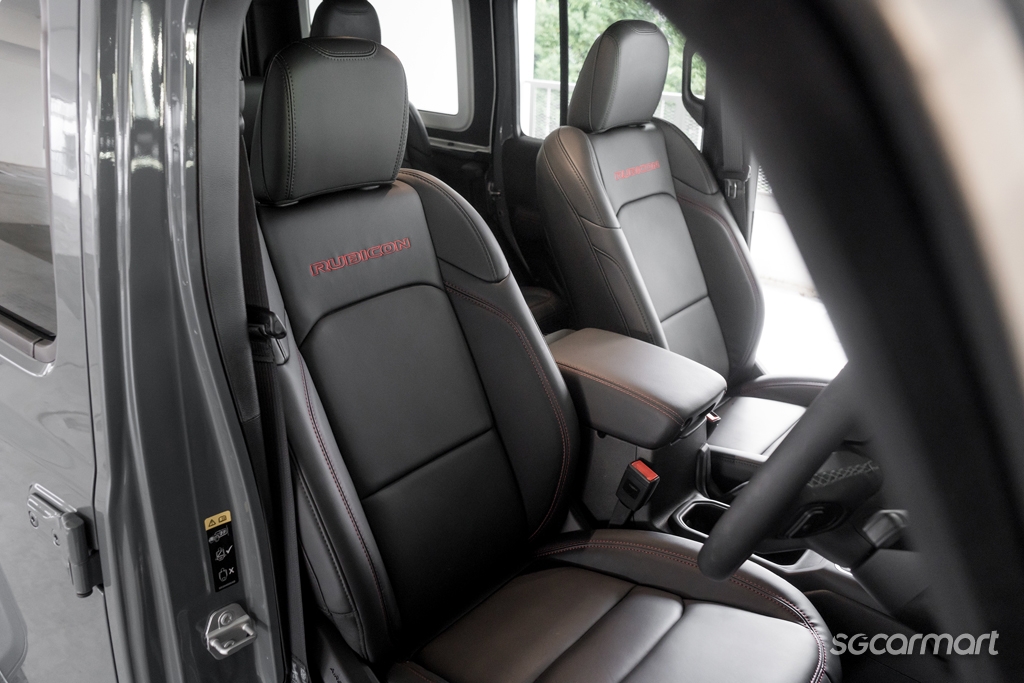
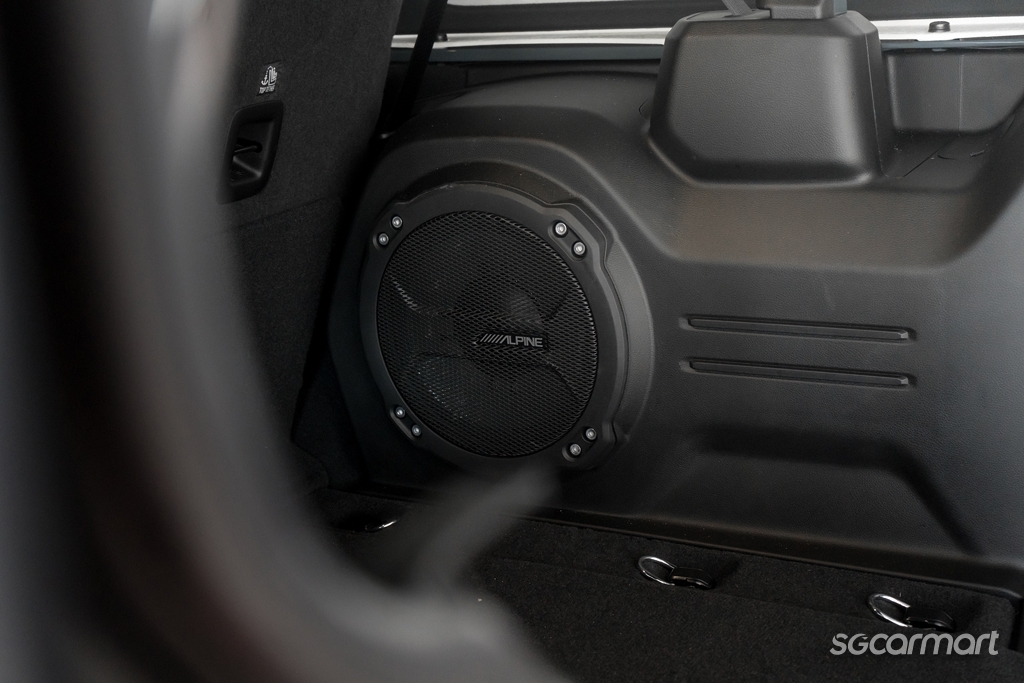
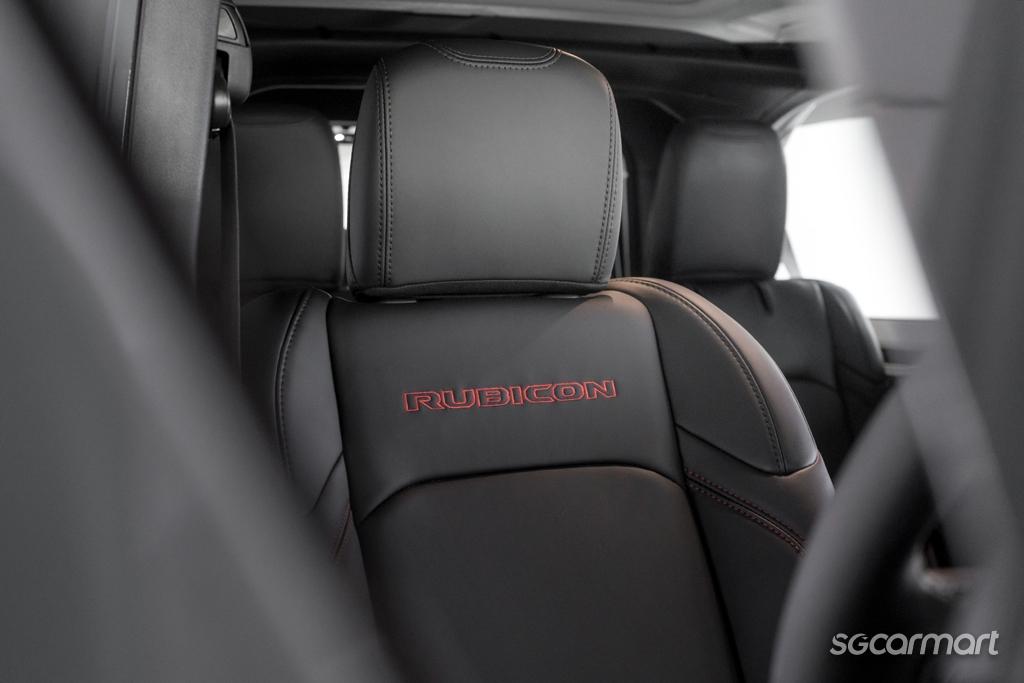
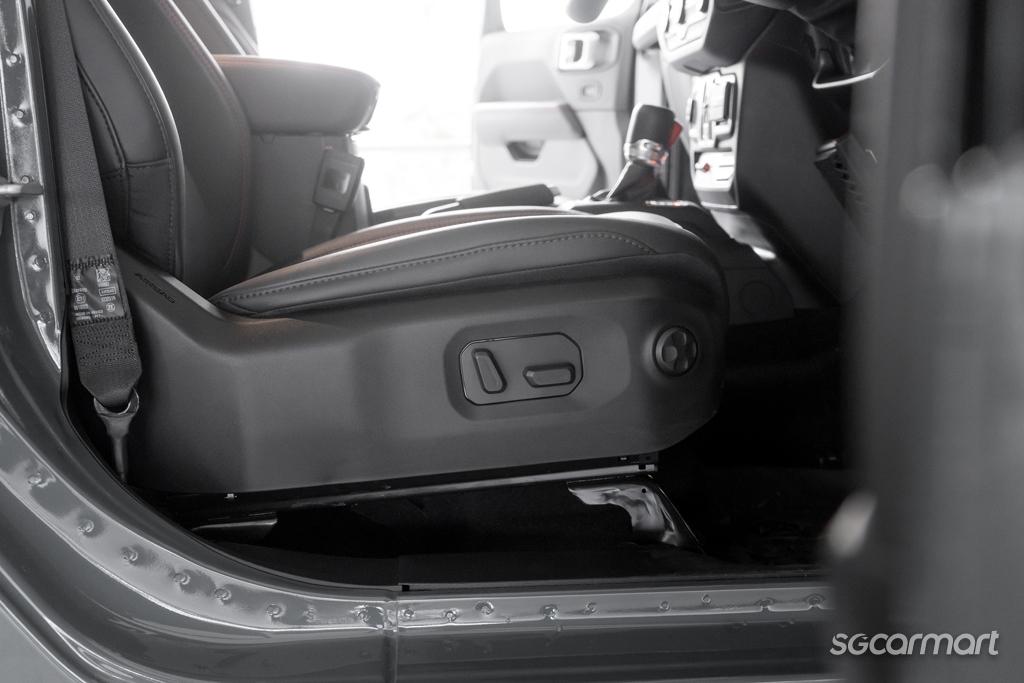
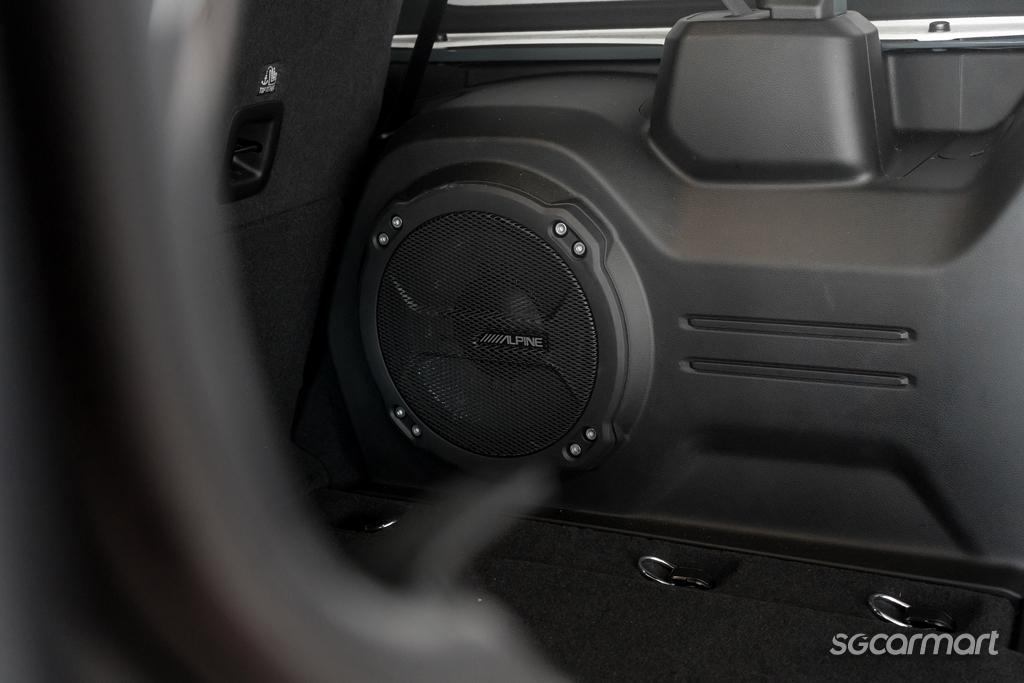
Standard features also include electric front seats with eight-way adjustment and lumbar support, and a nine-speaker Alpine sound system. The Rubicon even gets Nappa leather upholstery
What's certainly generous, however, is the Wrangler's 897-litre trunk. And to its credit, there are modern creature comforts to be enjoyed still, including standard electric front seats with eight-way adjustment and lumbar support, and a nine-speaker Alpine sound system. The Rubicon even gets Nappa leather upholstery.
While the Wrangler doesn't deal in traditional concepts of luxury, then, there's no denying the robust build quality of its interior. In all, whatever intrigue its exterior manages to conjure will continue to hold strongly inside.
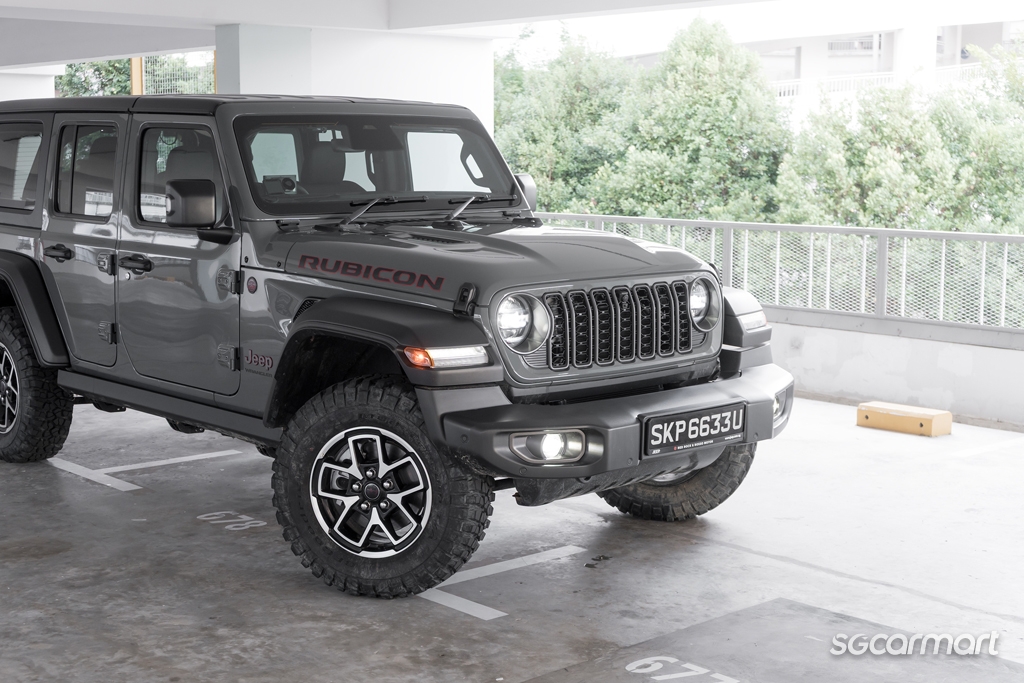
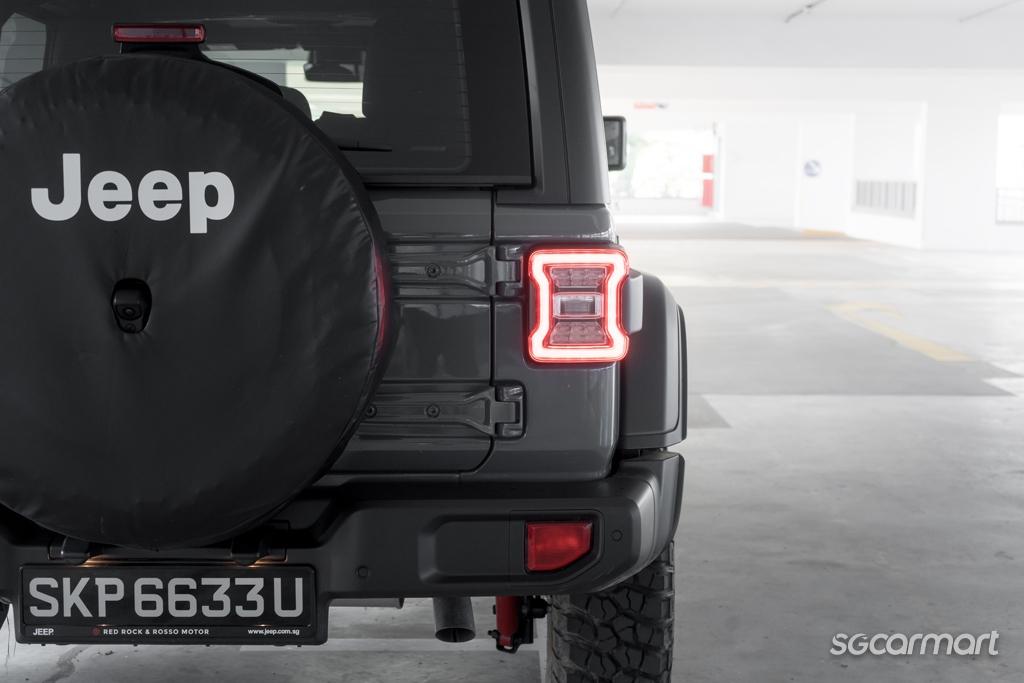
Despite its imposing presence, the Wrangler's sub-1.9 metre height allows it to slip more easily into carparks than some modern MPVs
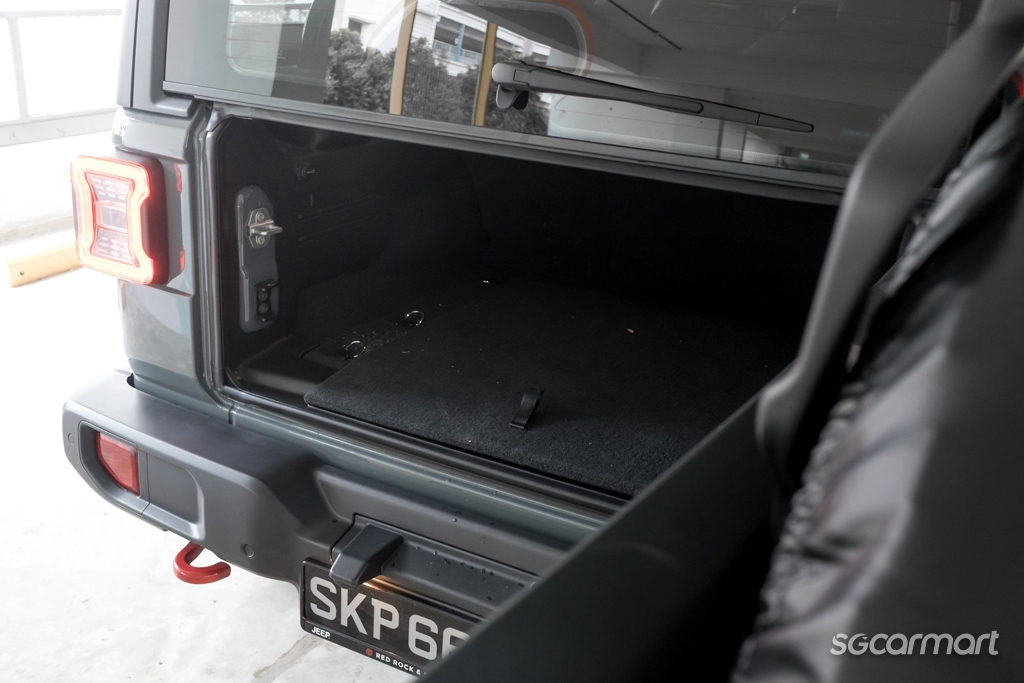
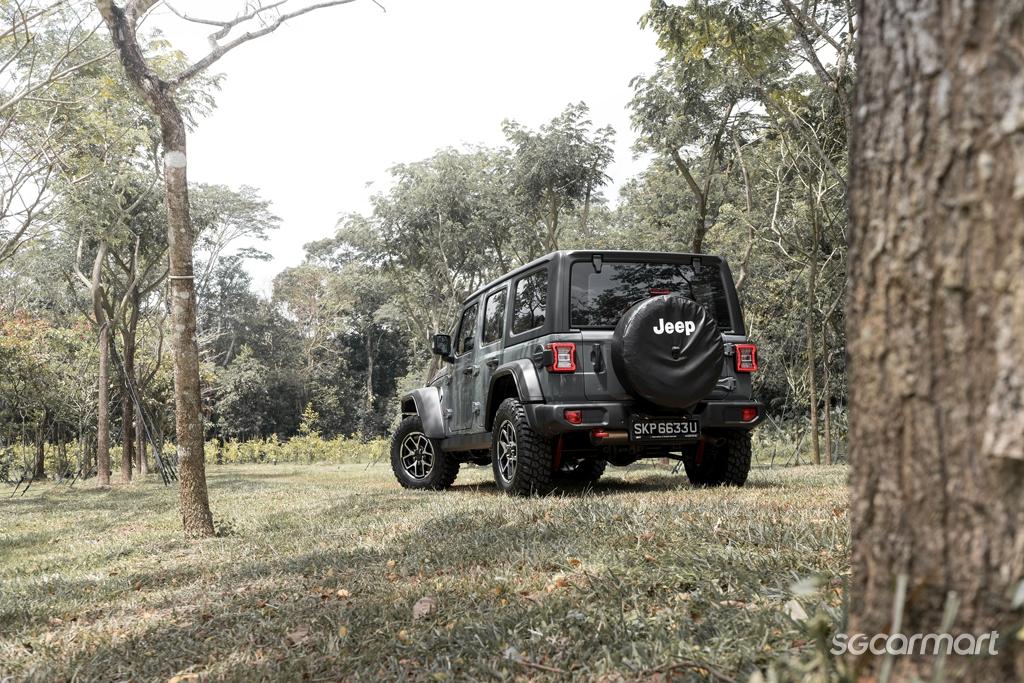
The split tailgate design also means less effort is required to retrieve items than on conventional 4x4s with a full side-hinged rear door
For all that might be made about how the Wrangler can feel like a fish out of water when rolling through a built-up environment, it's worth highlighting where it actually fits in better than you'd expect.
Since the car is under 1.9 metres tall even in Rubicon guise, the Wrangler takes to multi-storey or basement carparks better than a good handful of modern MPVs. (Start sliding down the endless modification rabbit hole, though - a very probable outcome - and this might no longer hold.) Speaking of tight spaces, the split tailgate design is also more practical than the full side-hinged rear doors on other 4x4s.
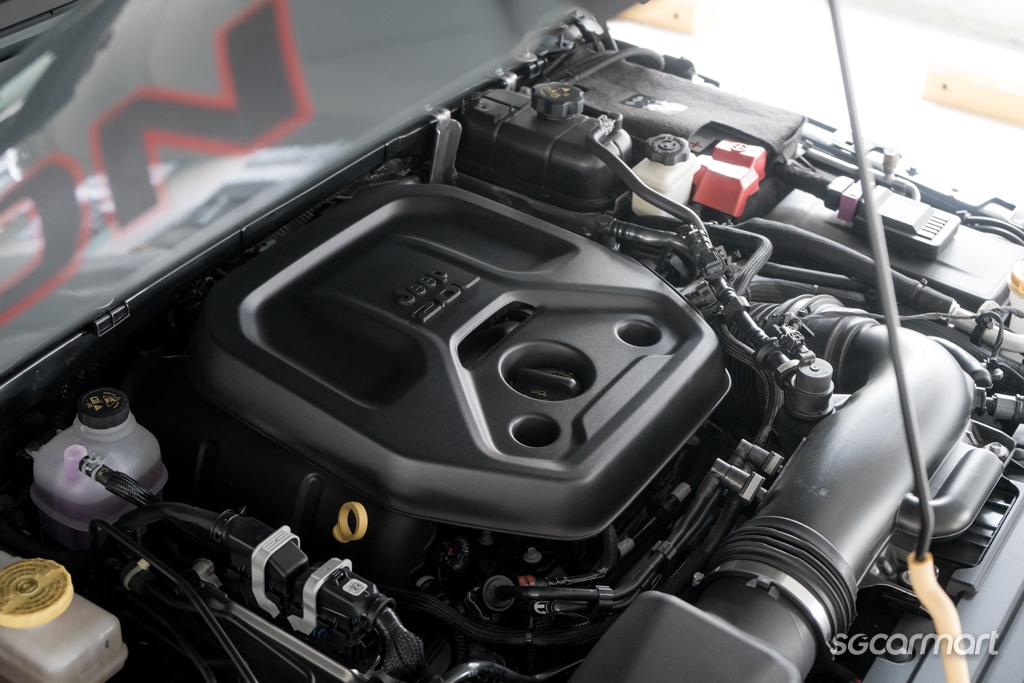
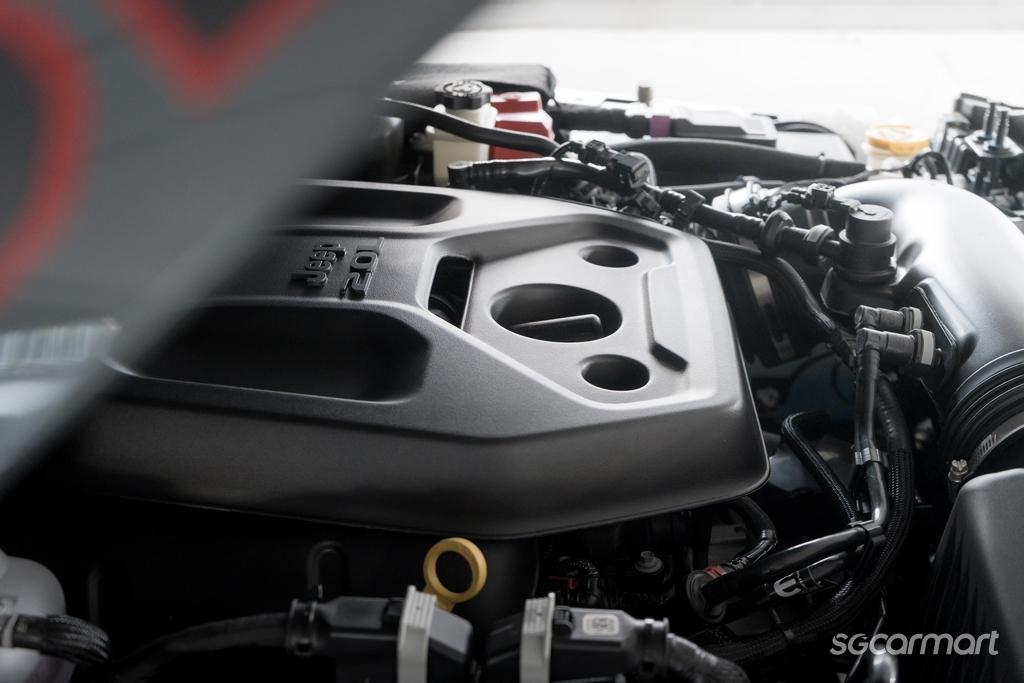
The Wrangler's gutsy 2.0-litre turbocharged engine puts out an impressive 268bhp and 400Nm
For such a gargantuan vehicle, the Wrangler's turning radius isn't outrageous either. Don't expect too much feedback from the front wheels, and you'll appreciate that its steering is fairly quick for a metal giant of its ilk too.
Best of all, that gutsy 2.0-litre engine - putting out an impressive 268bhp and 400Nm of torque - even pulls exuberantly, helping to propel the Wrangler forward with gusto. While it wouldn't be misguided to think of the Wrangler as a heavy truck, it certainly doesn't have the sluggish acceleration of one; 0-100km/h takes just 7.3 seconds, though you might have to put up with its rougher vocals on the way there. Still, put the Wrangler through its paces on the fast lane of an expressway, and it demonstrates decent stability and more refinement than expected at speed.
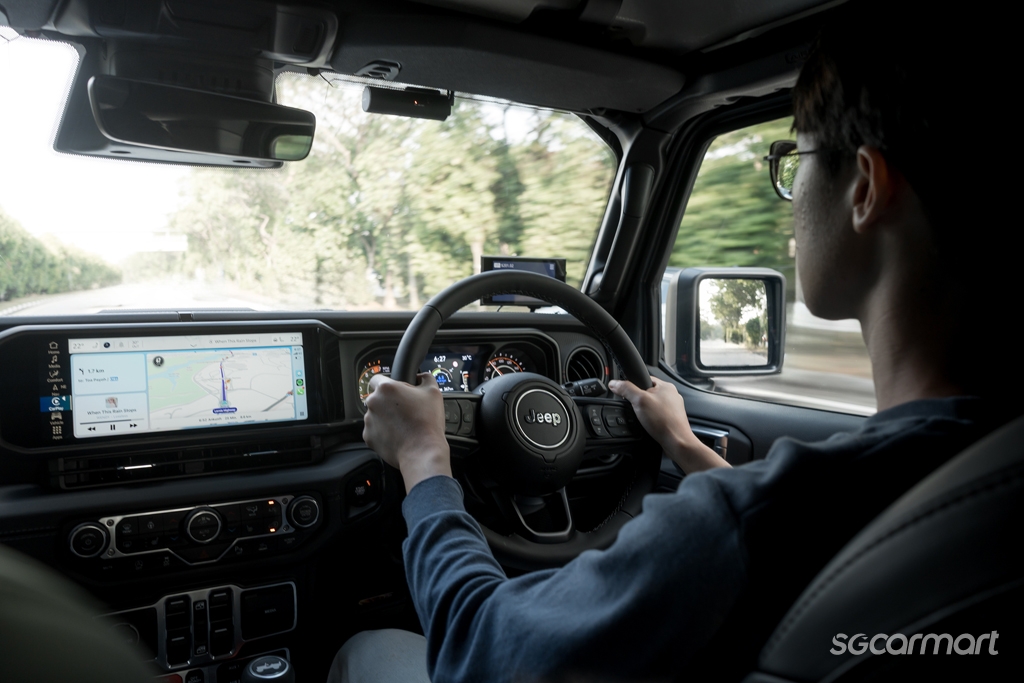
Despite its off-road focus, the Wrangler still feels comfortable enough in an urban environment thanks to its surprising manoeuvrability
Naturally, Wranglers are bought purely for their ability to tackle treacherous terrain, and in hardcore Rubicon guise, this is once more amplified by several magnitudes.
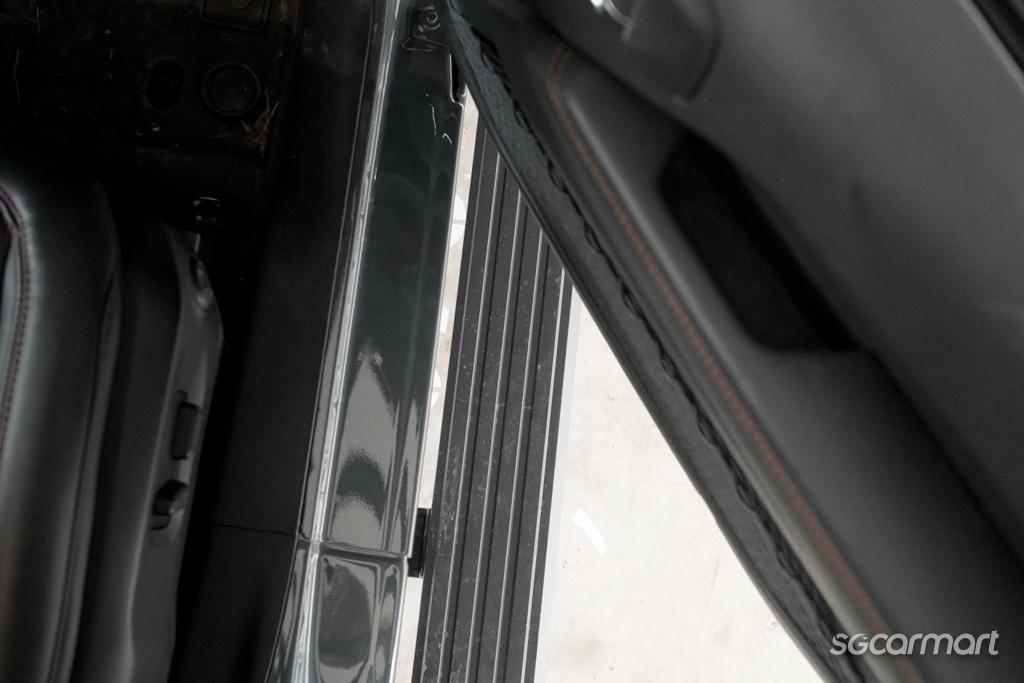
From the outset of this JL generation car, Jeep had already thrown every conceivable off-roading goodie at the car: A heavier-duty Rock-Trac four-wheel drive system with a torquey-er 4:1 low-range ratio, electronic locking front and rear differentials (the Sahara gets open diffs), and a nifty electronic front sway bar disconnect system - for increased front axle articulation on your next rock crawl.
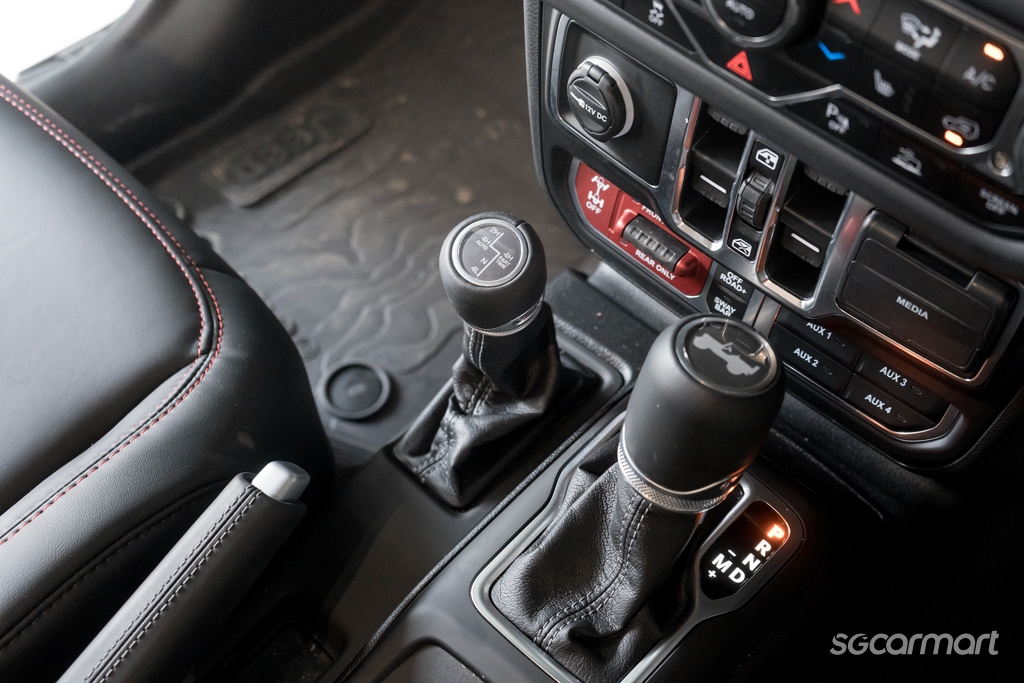
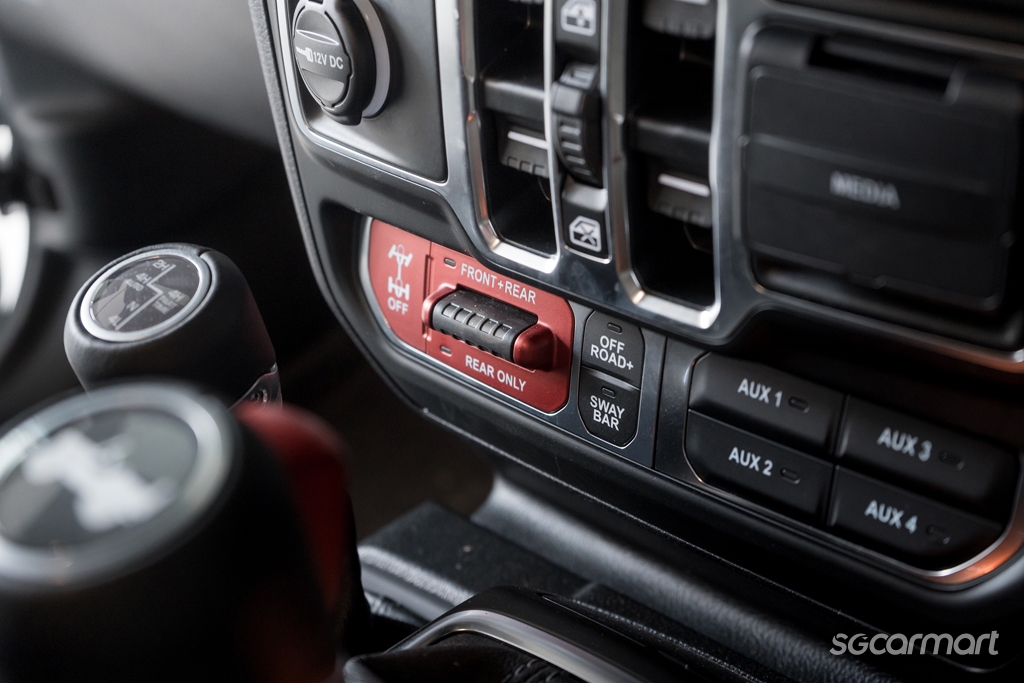
Apart from its heavier-duty four-wheel drive system and electronic front sway bar disconnect system, the Wrangler Rubicon now also gets a Dana 44 HD full-float rear axle
But the mid-life refresh toughens it up further with a Dana 44 HD full-float rear axle that promises extra durability and versatility in those sorts of treacherous conditions. In other words, the Wrangler can still rough it out like no other car.
But off-roading is admittedly not in our wheelhouse, nor in the average Singaporean car buyer's. And in more pedestrian day to day driving, there are inevitable compromises to the the Wrangler's on-road manners.
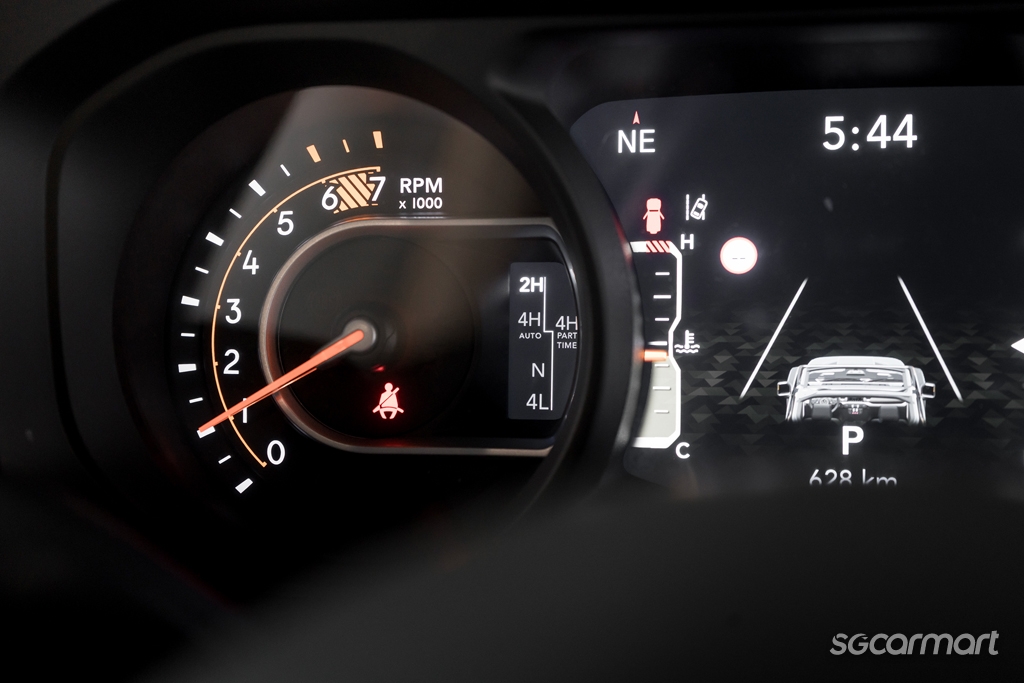
It's not all bad, since small bumps and larger humps are softened with effortless ease at lower speeds by way of those massive tyres. But despite the general pliancy marking its ride quality, the Wrangler's suspension also never really seems to settle, yielding almost too willingly to every surface imperfection that suddenly presents itself. This is particularly perceptible in slower moving traffic.
There's also the car's sheer heft. While the elevated seating position is great for helping drivers gauge the front end of the car, the same cannot be side for the sides, since the massive fender flares are still tucked out of view.
King of the jungle, the Wrangler very well could be; in an urban jungle, however, it invariably feels like too much car. That's putting aside the fact that it's neither very affordable, nor affordable to run.
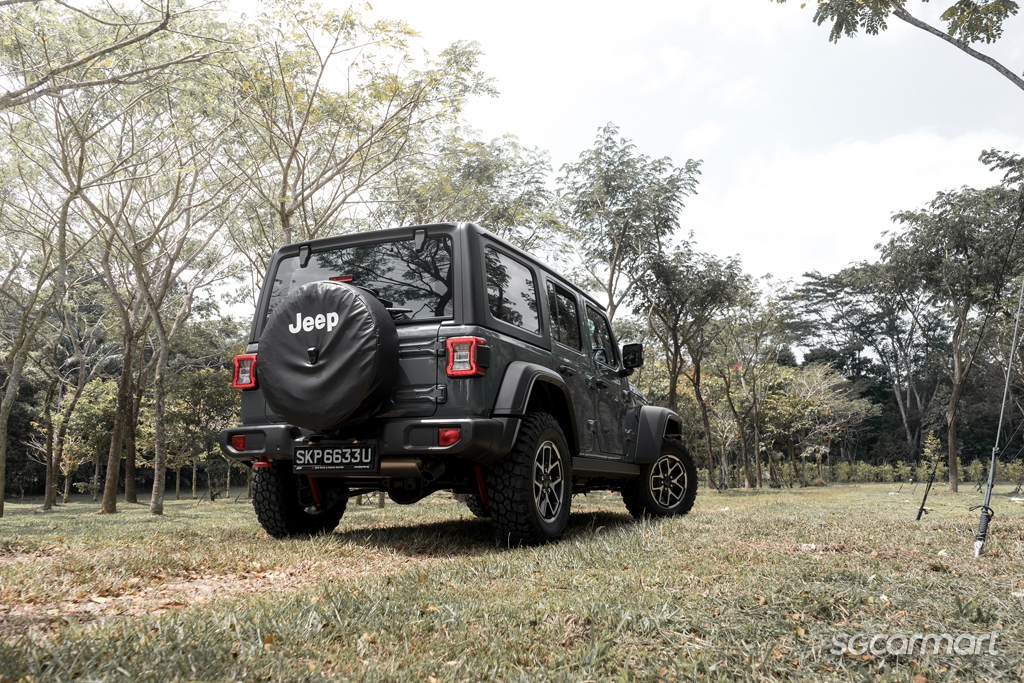
The Wrangler's singularity - even among certified off-roaders - feels all the more special in the current automotive climate
Yet the fact remains that not a single one of these foibles is likely to deter someone already determined to own a Wrangler.
Perhaps the only point of hesitation will emerge in choosing between the tamer Sahara or this Rubicon (Jeep sees them as having "lifestyle versus hardcore" identities respectively). With the latter costing just $10,000 more, it's no surprise that it's the one most would-be buyers gravitate toward.
Against the tide of for-the-road SUVs four years ago, Jeep's off-roading icon had already felt like such a strong counter-proposition. Against the tide of electric for-the-road SUVs now, its singularity cuts through even more strongly still.
Reset buttons are hard to come by in what feels like an increasingly homogeneous automotive space these days. But those willing to take the path less travelled (and also well-heeled enough) will find in the updated Wrangler one of the most effective and characterful ones today.
There's nothing quite like the Wrangler - but don't forget to check out these other off-roaders on sale in Singapore!
Facelift (What's New)
Revised seven-slot grille
Updated infotainment system with larger 12.3-inch central touchscreen, featuring wireless Apple CarPlay and Android Auto
Now equipped with full-float Dana 44 HD rear axle as standard
Emerging from an unexpectedly wet field, the square-jawed boxy behemoth we've picked up just this morning has more than its fair share of battle scars to show: Mud painted over its chunky tyres, and flecks of dirt just starting to dry on its unpainted fenders.
Weirdly, however, it's also never looked better.
Typical drivers wear a spotless paintcoat and shiny black wheels on their cars as precious badges of honour. But the Jeep Wrangler is not your typical car.
If any car can make having a bit of mud splattered on look good, it's the Wrangler
Genuinely capable off-roaders still persist; softroaders aiming for their aesthetic have seen a resurgence in popularity too. But for those with rumbling hunger to seek out paths less-travelled (or even completely unpaved), the Wrangler has occupied an irreplaceable spot for decades.
For a brief period last year, its future in Singapore seemed uncertain, when the fate of the the Jeep brand was suddenly thrown up in the air. Almost as quickly, however, in swooped a new custodian by the name of Red Rock and Rosso Motor. New life is now being breathed into the American marque at The Southern Depot. And rather unsurprisingly, the Wrangler has unofficially risen to the occasion to front this revival, as the first member of the family to go on sale here again.
The updated Wrangler gets a neater and more compact seven-slot grille that doesn't erode its unmistakable styling
It is the name and image of the Wrangler, after all, that one will think of first when it comes to Jeep. Credit is perhaps due to the fact that its design has largely been untainted by the reaches of time. Even with a mid-life refresh that landed internationally in 2024, there's not much new that needs pointing out.
This facelifted car does get a refreshed and neater take on the iconic seven-slot grille. In isolation, it doesn't feel too different, but park it next to the pre-facelifted one, and it somehow manages to make its predecessor look dated.
Bold lettering on its bonnet aside, the Rubicon also sets itself from the entry-level Sahara with its off-road tyres and a red tow hook
But the Wrangler's familiarity is exactly what makes it so magnetic - especially on this hardcore Rubicon variant, whose dirt-seeking intentions are wrought even clearer.
Those unpainted trapezoidal fender flares won't be mistaken for any other car's. The same can be said for the way those chunky tyres (again, a Rubicon-exclusive) seem to jut out of its frame, and for the way the entire cabin almost seems to float above them.
As the automotive world around it has evolved, its virtually unbroken lineage to the wartime Willys Jeeps has only grown more charming still. And even against the flashiest and largest of modern SUVs, the Wrangler reaches such heights in sheer presence that it can still be the most head-turning in any given carpark.
The Wrangler's rugged identity is evident even from within the cabin
While Merc's G-Wagon and Land Rover's Defender are often mentioned in the same breath as the Wrangler, you truthfully couldn't imagine subjecting their sumptuous interiors to proper abuse. Even from within, however, the Wrangler seems to constantly pose you the question of when your next off-road adventure is going to happen.
Wireless charging trays? Nah. Ambient lighting strips? You might want to look elsewhere. But to seek out trending interior accoutrements like those in a Wrangler would be to miss the point.
Built for tough-wearing abuse, the Wrangler's cabin places function over form, but still feels tightly pieced together
The Wrangler's boot even comes with handy slots for storing the screws from its removable doors and targa roof
What the Wrangler offers instead is the promise of tough-wearing use, with a cabin built unambiguously for utility rather than cossetting luxury. Its signature customisability remains its own monopoly too: All of its four aluminium doors can be removed, as can its targa roof.
Again, the mid-life update does bring it with a handy equipment upgrade in the form of a larger 12.3-inch infotainment touchscreen. Coupled with the crispness of the display, the extra digital real estate does mean a more pleasant user experience when you've activated Apple CarPlay or Android Auto (both wirelessly).
There's still plentiful digitalisation on the Wrangler, thanks to its 7.0-inch driver's display and upsized 12.3-inch infotainment touchscreen, which is crisp and responsive
But the fact that Jeep hasn't meddled too much with the interior otherwise works to the Wrangler's gain.
No one wants to be wrestling solely with a touchscreen for essential controls when out in a muddy field, so there are physical buttons aplenty all over the steering wheel and centre console. Idiosyncratic reminders that you can dismantle the Wrangler's doors and/or hose its interior down when required also come through the centrally-mounted window switches and cover-flap for the USB and AUX ports.
The Wrangler isn't the most spacious car for something of its size, but it does come with a large 897-litre trunk
As you might expect, however, the Wrangler's all-out embrace of off-roading prowess inevitably does translate to certain compromises in passenger space.
The high floor and lower ceiling mean headroom isn't fantastic despite the car's rather towering height (the same odd protrusion in to driver's footwell is also there still). Legroom and shoulder room for second row passengers is decent, but nowhere as generous as you might expect from a car this size too - though the rear bench does get its own dedicated air vents.
Standard features also include electric front seats with eight-way adjustment and lumbar support, and a nine-speaker Alpine sound system. The Rubicon even gets Nappa leather upholstery
What's certainly generous, however, is the Wrangler's 897-litre trunk. And to its credit, there are modern creature comforts to be enjoyed still, including standard electric front seats with eight-way adjustment and lumbar support, and a nine-speaker Alpine sound system. The Rubicon even gets Nappa leather upholstery.
While the Wrangler doesn't deal in traditional concepts of luxury, then, there's no denying the robust build quality of its interior. In all, whatever intrigue its exterior manages to conjure will continue to hold strongly inside.
Despite its imposing presence, the Wrangler's sub-1.9 metre height allows it to slip more easily into carparks than some modern MPVs
The split tailgate design also means less effort is required to retrieve items than on conventional 4x4s with a full side-hinged rear door
For all that might be made about how the Wrangler can feel like a fish out of water when rolling through a built-up environment, it's worth highlighting where it actually fits in better than you'd expect.
Since the car is under 1.9 metres tall even in Rubicon guise, the Wrangler takes to multi-storey or basement carparks better than a good handful of modern MPVs. (Start sliding down the endless modification rabbit hole, though - a very probable outcome - and this might no longer hold.) Speaking of tight spaces, the split tailgate design is also more practical than the full side-hinged rear doors on other 4x4s.
The Wrangler's gutsy 2.0-litre turbocharged engine puts out an impressive 268bhp and 400Nm
For such a gargantuan vehicle, the Wrangler's turning radius isn't outrageous either. Don't expect too much feedback from the front wheels, and you'll appreciate that its steering is fairly quick for a metal giant of its ilk too.
Best of all, that gutsy 2.0-litre engine - putting out an impressive 268bhp and 400Nm of torque - even pulls exuberantly, helping to propel the Wrangler forward with gusto. While it wouldn't be misguided to think of the Wrangler as a heavy truck, it certainly doesn't have the sluggish acceleration of one; 0-100km/h takes just 7.3 seconds, though you might have to put up with its rougher vocals on the way there. Still, put the Wrangler through its paces on the fast lane of an expressway, and it demonstrates decent stability and more refinement than expected at speed.
Despite its off-road focus, the Wrangler still feels comfortable enough in an urban environment thanks to its surprising manoeuvrability
Naturally, Wranglers are bought purely for their ability to tackle treacherous terrain, and in hardcore Rubicon guise, this is once more amplified by several magnitudes.
From the outset of this JL generation car, Jeep had already thrown every conceivable off-roading goodie at the car: A heavier-duty Rock-Trac four-wheel drive system with a torquey-er 4:1 low-range ratio, electronic locking front and rear differentials (the Sahara gets open diffs), and a nifty electronic front sway bar disconnect system - for increased front axle articulation on your next rock crawl.
Apart from its heavier-duty four-wheel drive system and electronic front sway bar disconnect system, the Wrangler Rubicon now also gets a Dana 44 HD full-float rear axle
But the mid-life refresh toughens it up further with a Dana 44 HD full-float rear axle that promises extra durability and versatility in those sorts of treacherous conditions. In other words, the Wrangler can still rough it out like no other car.
But off-roading is admittedly not in our wheelhouse, nor in the average Singaporean car buyer's. And in more pedestrian day to day driving, there are inevitable compromises to the the Wrangler's on-road manners.
It's not all bad, since small bumps and larger humps are softened with effortless ease at lower speeds by way of those massive tyres. But despite the general pliancy marking its ride quality, the Wrangler's suspension also never really seems to settle, yielding almost too willingly to every surface imperfection that suddenly presents itself. This is particularly perceptible in slower moving traffic.
There's also the car's sheer heft. While the elevated seating position is great for helping drivers gauge the front end of the car, the same cannot be side for the sides, since the massive fender flares are still tucked out of view.
King of the jungle, the Wrangler very well could be; in an urban jungle, however, it invariably feels like too much car. That's putting aside the fact that it's neither very affordable, nor affordable to run.
The Wrangler's singularity - even among certified off-roaders - feels all the more special in the current automotive climate
Yet the fact remains that not a single one of these foibles is likely to deter someone already determined to own a Wrangler.
Perhaps the only point of hesitation will emerge in choosing between the tamer Sahara or this Rubicon (Jeep sees them as having "lifestyle versus hardcore" identities respectively). With the latter costing just $10,000 more, it's no surprise that it's the one most would-be buyers gravitate toward.
Against the tide of for-the-road SUVs four years ago, Jeep's off-roading icon had already felt like such a strong counter-proposition. Against the tide of electric for-the-road SUVs now, its singularity cuts through even more strongly still.
Reset buttons are hard to come by in what feels like an increasingly homogeneous automotive space these days. But those willing to take the path less travelled (and also well-heeled enough) will find in the updated Wrangler one of the most effective and characterful ones today.
There's nothing quite like the Wrangler - but don't forget to check out these other off-roaders on sale in Singapore!



Car Information
Jeep Wrangler Rubicon 4-Door 2.0 Turbo (A)
$369,888
CAT B|Petrol|9.1km/L
Horsepower
200kW (268 bhp)
Torque
400 Nm
Acceleration
7.3sec (0-100km /hr)

Thank You For Your Subscription.



Tags
Products & Services

For Owners
Quick Links
About Sgcarmart