Test your car battery at your convenience for a more enjoyable drive
31 Mar 2009|4,938 views
Well, maybe some of us were luckier. Repeated twisting of the key yields a clicking sound or a depressingly slow 'turn-over' of your engine that immediately seals the fate on how you're going to spend the next couple of hours and a considerable portion of your spending money.
Your car not starting can be attributed to things like the starter or the alternator, but more often than not the blame falls on the battery. It's only been a year since your battery was changed so why has it died so suddenly? As often as it happens, motorists do not understand enough about the causes of battery failure and how they can be prevented.
Why is my car's battery so important?
The battery is an essential component in the running of a motor vehicle. It supplies the power to the starter motor which then allows you to crank your engine to life. It also assists the alternator in supplying power to electrical equipment in the car like headlamps, power windows and the stereo should it require more power than what the alternator can generate.
The battery gets charged by the alternator when on the move and the longer the engine runs each time, the more optimally the battery will be charged.
A typical lead-acid battery has a series of lead plates sitting in an electrolyte bath of sulfuric acid mixed with water. These lead plates that sit in the bath are separated from each other by insulating material. When the battery's electrical power is drained, the lead plates "dissolve" in the electrolyte solution. And when the battery is charged again, the lead is "re-plated" onto the lead plates in the battery.
Batteries fail when these lead plates start to deteriorate from the repeated discharge of the battery.
But in Singapore, where typical journeys between destinations last just shy of an hour, the heavy auxiliary power drawn during the short distance driven usually never allows the full charge that is important to the longevity of a lead-acid battery.
 |
With this many determinants that could deal the fatal blow to your battery, wouldn't driving be a little less stressful if we knew exactly how much juice was left in them?
The empowerment of 'Power Check-ing'
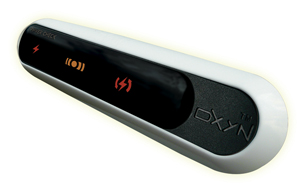
Made in Singapore, DXYN (pronounced "design") has developed the "Power Check" - a device that rids any driver of the uncertainty of their battery's reliability.
Three indicators representing the battery's status, alternator status and an overall system status inform you of exactly what the conditions of each are.
One of the basic functions of this product is to measure your battery's state of charge, and giving you a rough idea of how much of charge is left in it. Running a weak battery forces the alternator to supply more power to charge the battery thus increasing the engine rev and essentially affecting your fuel consumption and even contributing to engine wear.
Power Check also tests the Cranking Power Index (CPI) of your battery. This patented feature measures the actual power required to crank your vehicle, comparing it to the battery's output capability. The index also reflects the condition and the compatibility of your battery to the vehicles electrical demand.
With devices like Power Check, there should never be reason for us to waste any more of our time, helplessly stranded at the side of the road again.
As mentioned much earlier in this article, the alternator plays a vital role in the functioning of a motor vehicle. Thus the "Power Check" device has been made to incorporate the measurement of the alternator charging.
The charging system keeps the battery charged and supplies power for the entire electrical system, so any faults with the alternator can cause serious problems. If there is no charging output, the battery will quickly discharge. Once the battery voltage drops below a certain threshold, the onboard electronics, ignition and fuel systems will stop working normally causing your vehicle to stall and restarting your car would be impossible.
With the existence of devices like "Power Check", there should never be a reason for us to waste any more of our time helplessly or even dangerously stranded again.
With devices like Power Check, there should never be reason for us to waste any more of our time, helplessly stranded at the side of the road again.
Additionally, it's a bonus to know exactly when you need to service your electrical system, to maintain good fuel efficiency and reduce engine wear.
For more information, visit www.dxyn-auto.com/sg
Well, maybe some of us were luckier. Repeated twisting of the key yields a clicking sound or a depressingly slow 'turn-over' of your engine that immediately seals the fate on how you're going to spend the next couple of hours and a considerable portion of your spending money.
Your car not starting can be attributed to things like the starter or the alternator, but more often than not the blame falls on the battery. It's only been a year since your battery was changed so why has it died so suddenly? As often as it happens, motorists do not understand enough about the causes of battery failure and how they can be prevented.
Why is my car's battery so important?
The battery is an essential component in the running of a motor vehicle. It supplies the power to the starter motor which then allows you to crank your engine to life. It also assists the alternator in supplying power to electrical equipment in the car like headlamps, power windows and the stereo should it require more power than what the alternator can generate.
The battery gets charged by the alternator when on the move and the longer the engine runs each time, the more optimally the battery will be charged.
A typical lead-acid battery has a series of lead plates sitting in an electrolyte bath of sulfuric acid mixed with water. These lead plates that sit in the bath are separated from each other by insulating material. When the battery's electrical power is drained, the lead plates "dissolve" in the electrolyte solution. And when the battery is charged again, the lead is "re-plated" onto the lead plates in the battery.
Batteries fail when these lead plates start to deteriorate from the repeated discharge of the battery.
But in Singapore, where typical journeys between destinations last just shy of an hour, the heavy auxiliary power drawn during the short distance driven usually never allows the full charge that is important to the longevity of a lead-acid battery.
|
With this many determinants that could deal the fatal blow to your battery, wouldn't driving be a little less stressful if we knew exactly how much juice was left in them?
The empowerment of 'Power Check-ing'
Made in Singapore, DXYN (pronounced "design") has developed the "Power Check" - a device that rids any driver of the uncertainty of their battery's reliability.
Three indicators representing the battery's status, alternator status and an overall system status inform you of exactly what the conditions of each are.
One of the basic functions of this product is to measure your battery's state of charge, and giving you a rough idea of how much of charge is left in it. Running a weak battery forces the alternator to supply more power to charge the battery thus increasing the engine rev and essentially affecting your fuel consumption and even contributing to engine wear.
Power Check also tests the Cranking Power Index (CPI) of your battery. This patented feature measures the actual power required to crank your vehicle, comparing it to the battery's output capability. The index also reflects the condition and the compatibility of your battery to the vehicles electrical demand.
With devices like Power Check, there should never be reason for us to waste any more of our time, helplessly stranded at the side of the road again.
As mentioned much earlier in this article, the alternator plays a vital role in the functioning of a motor vehicle. Thus the "Power Check" device has been made to incorporate the measurement of the alternator charging.
The charging system keeps the battery charged and supplies power for the entire electrical system, so any faults with the alternator can cause serious problems. If there is no charging output, the battery will quickly discharge. Once the battery voltage drops below a certain threshold, the onboard electronics, ignition and fuel systems will stop working normally causing your vehicle to stall and restarting your car would be impossible.
With the existence of devices like "Power Check", there should never be a reason for us to waste any more of our time helplessly or even dangerously stranded again.
With devices like Power Check, there should never be reason for us to waste any more of our time, helplessly stranded at the side of the road again.
Additionally, it's a bonus to know exactly when you need to service your electrical system, to maintain good fuel efficiency and reduce engine wear.
For more information, visit www.dxyn-auto.com/sg



Thank You For Your Subscription.














Tags
Products & Services

For Owners
Quick Links
About Sgcarmart