Volvo EX60 P6 Ultra First Drive Review
20 May 2026|7 views

What We Like
Simple and elegant good looks
Calming, comfortable and well-insulated cabin
Spacious with substantial cargo space
The wing grip handles is a smart idea
Amazing suspension
Powerful drive
What We Dislike
Google Gemini AI integration needs to be improved
Android Auto and Apple Carplay isn't ready yet
Steering feel is a little too light
While the EX30 might be the smallest Volvo car, and the EX90 the most powerful production Volvo made, the new EX60 might very well be the smartest.
Being the first to be built upon Volvo's Scalable Product Architecture 3 (SPA3) platform, the EX60 is a new-generation Volvo, made with everything Volvo knows thrown into it.
Optimised for the new era of electric cars, the EX60 gets 800V technology, cell-to-body, a mega casted rear structure, and crucially, it is powered by Volvo's in-house developed HuginCore compute technology - what Volvo calls its complete core system, encompassing the electrical architecture, core computer, zone controllers and software.
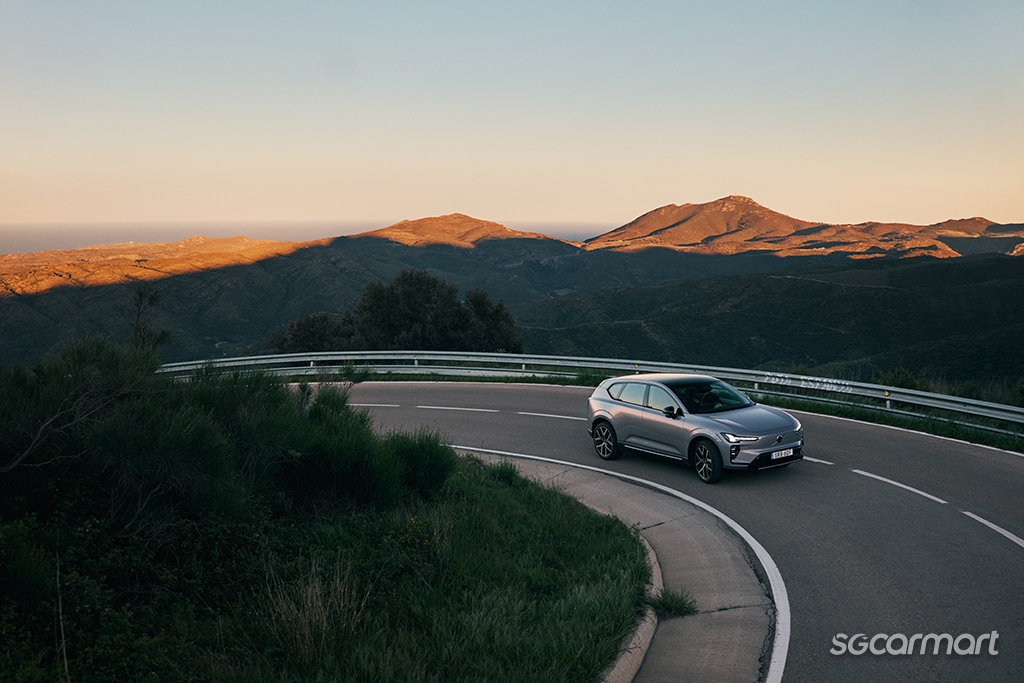
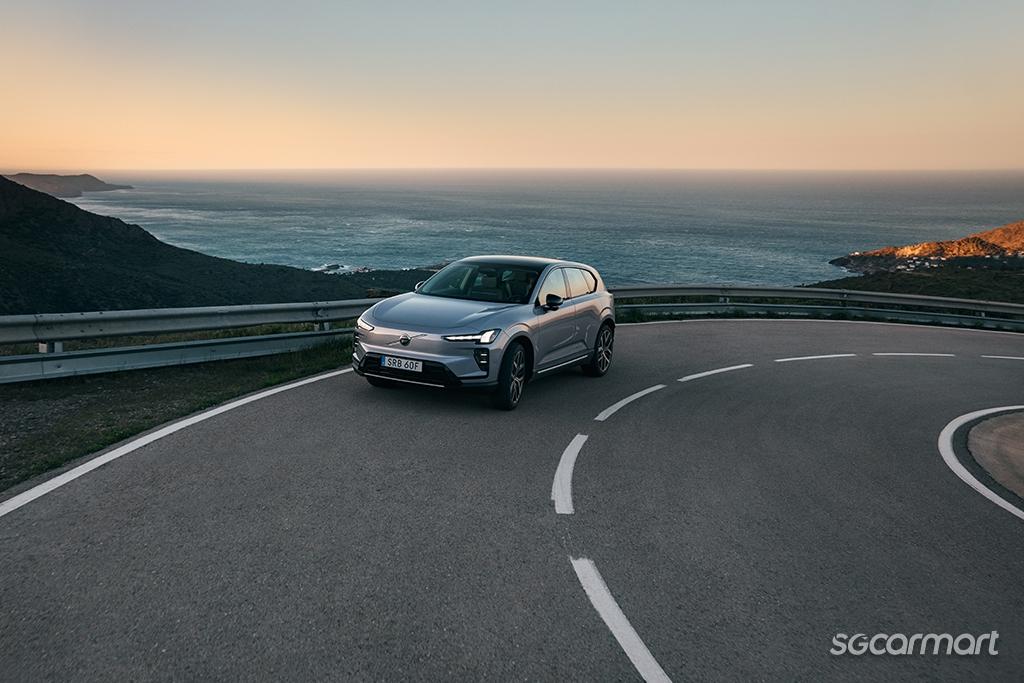
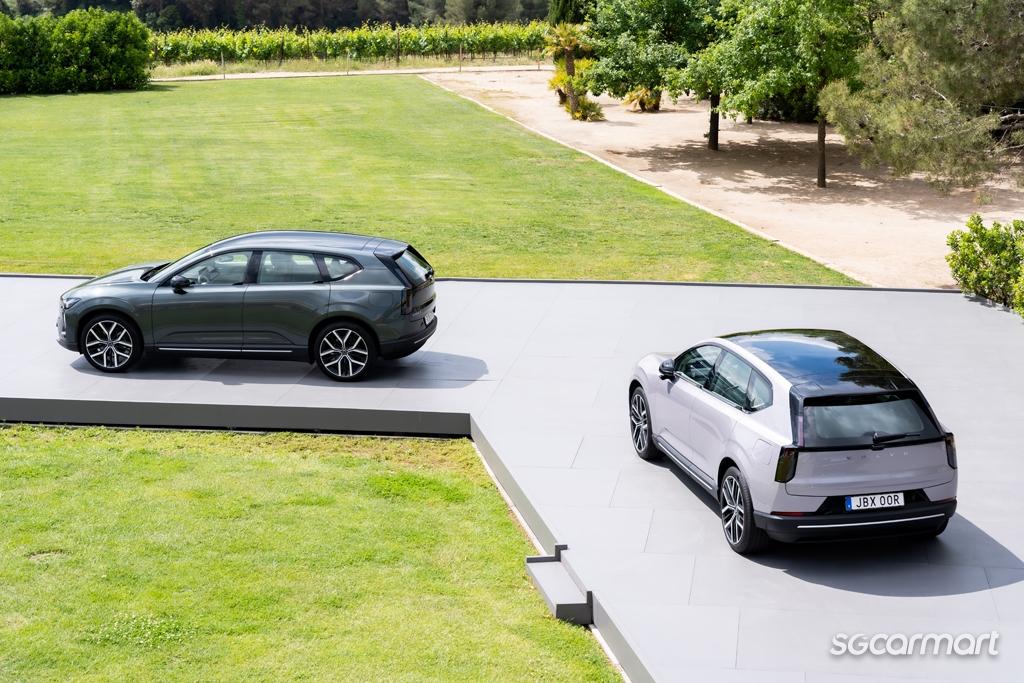
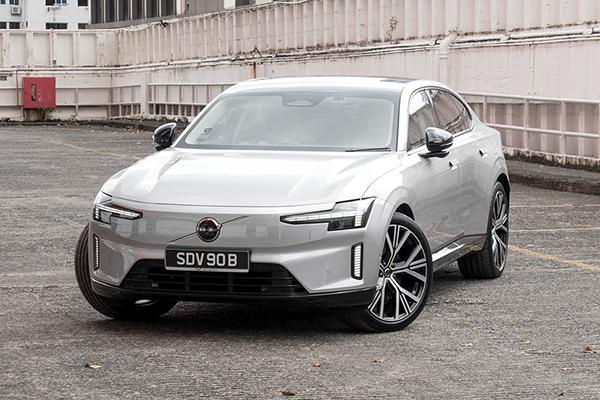
While simple, the EX60 doesn't even need to have its badges to be identified as a Volvo
A clean, calm, yet very identifiable design language
Hailing from Sweden, Volvo cars have always incorporated clean, thoughtful and pleasant elements that are often associated with Scandinavian designs. The EX60 continues this trend, in fact, it is immediately recognisable as part of the Volvo EX family of EVs.
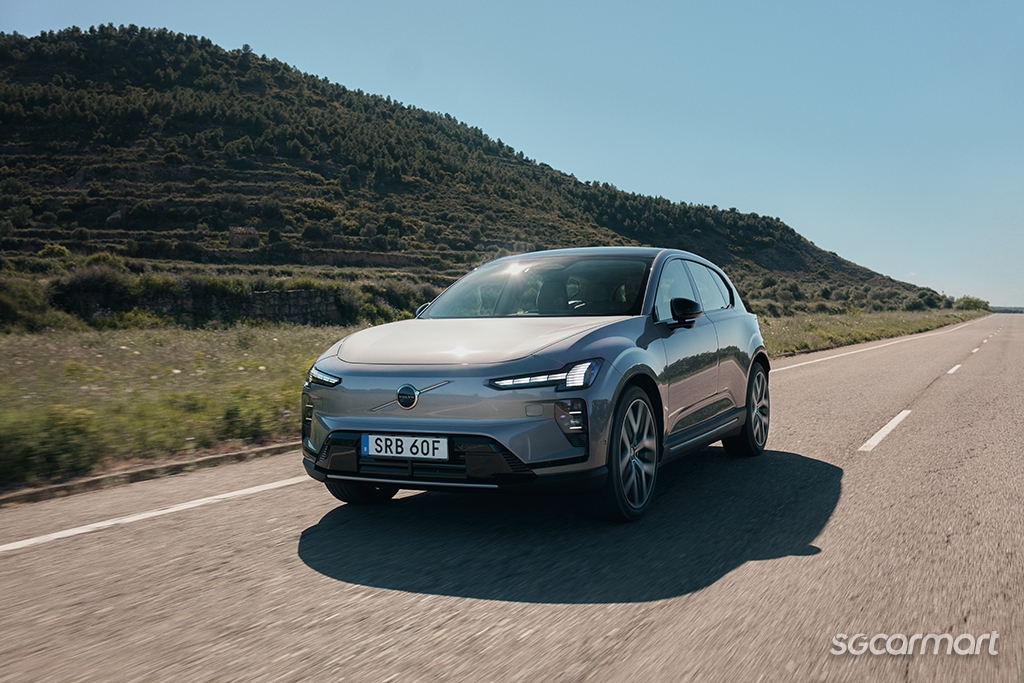
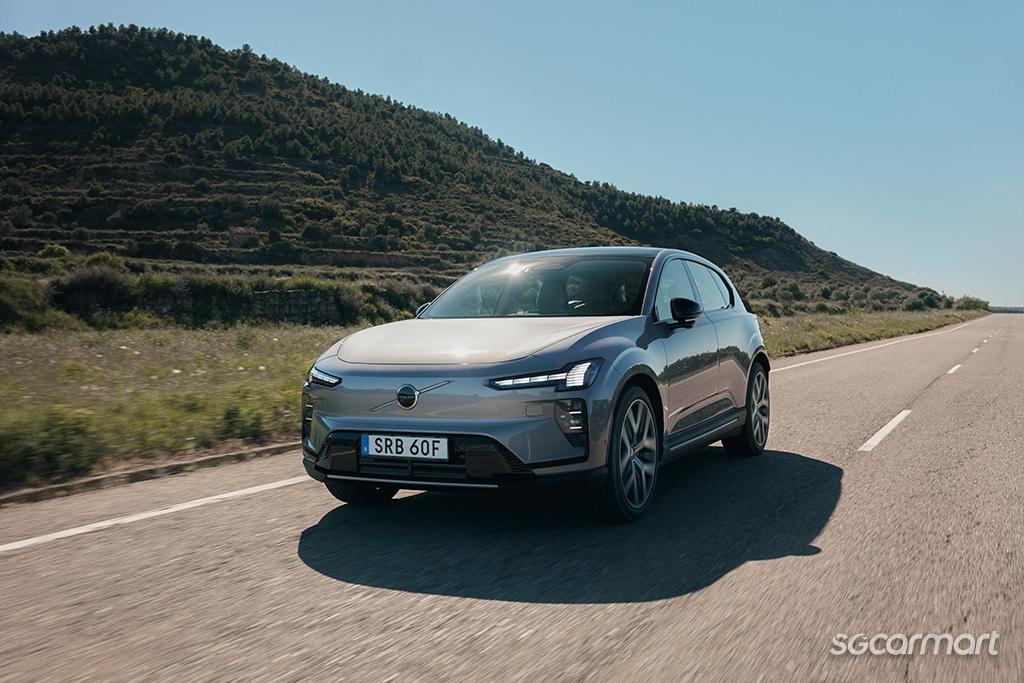
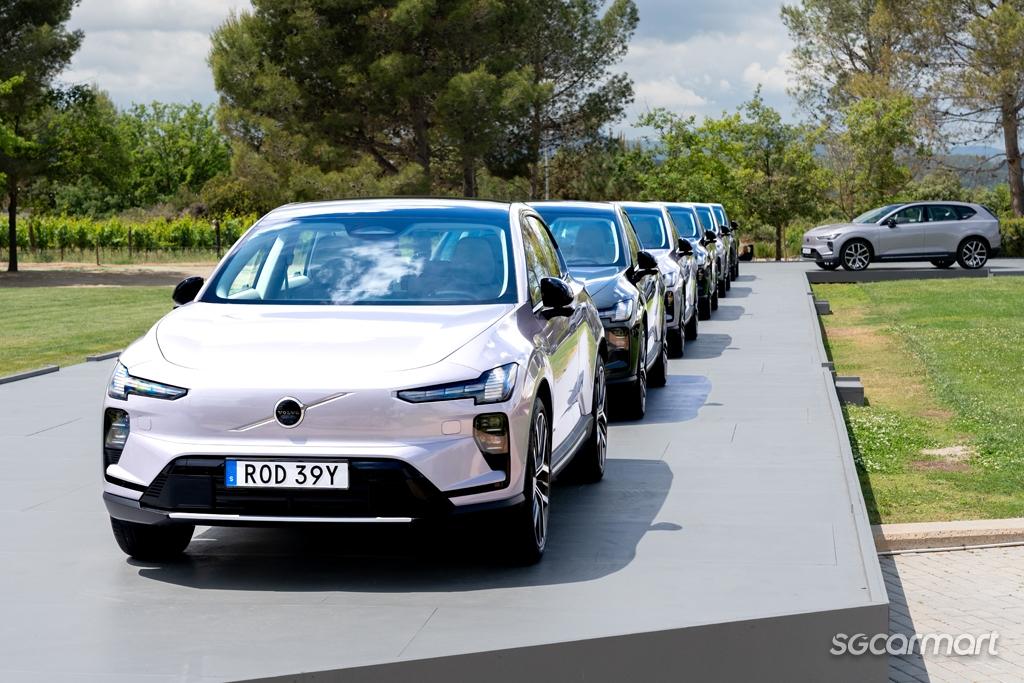
The signature segmented Thor's Hammer LED head lights and the grille-less face reminds of the EX30 and EX90 that came before this car
Up front, the EX60 continues with the signature segmented Thor's Hammer LED head lights that you'll find on both the EX30 and the flagship EX90, along with a simple grille-less design and a central air-intake on the lower part of the front bumper.
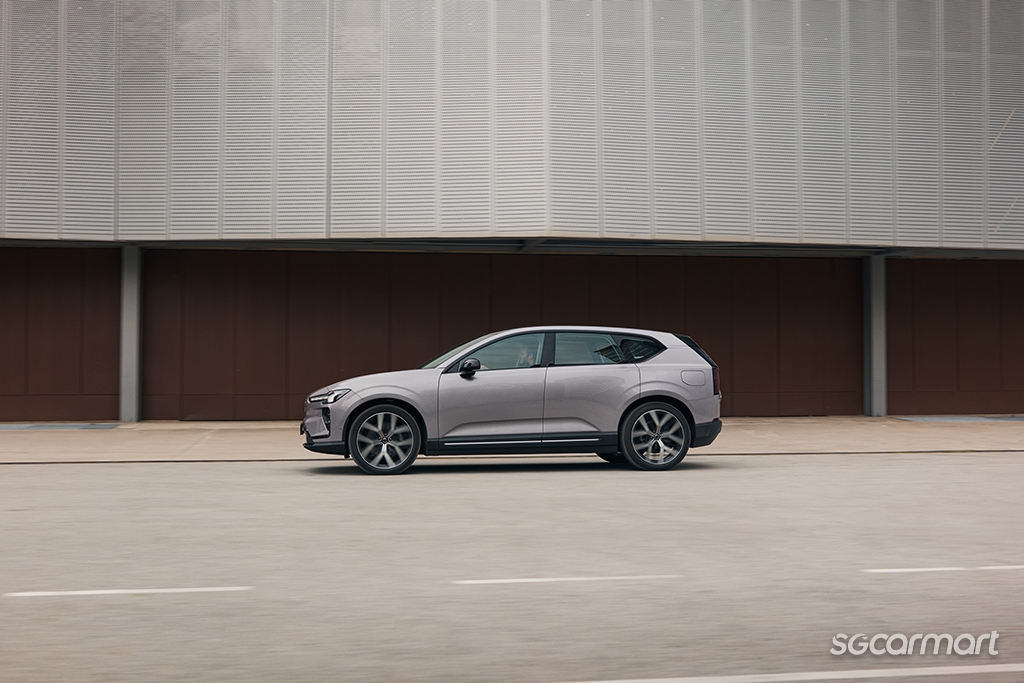
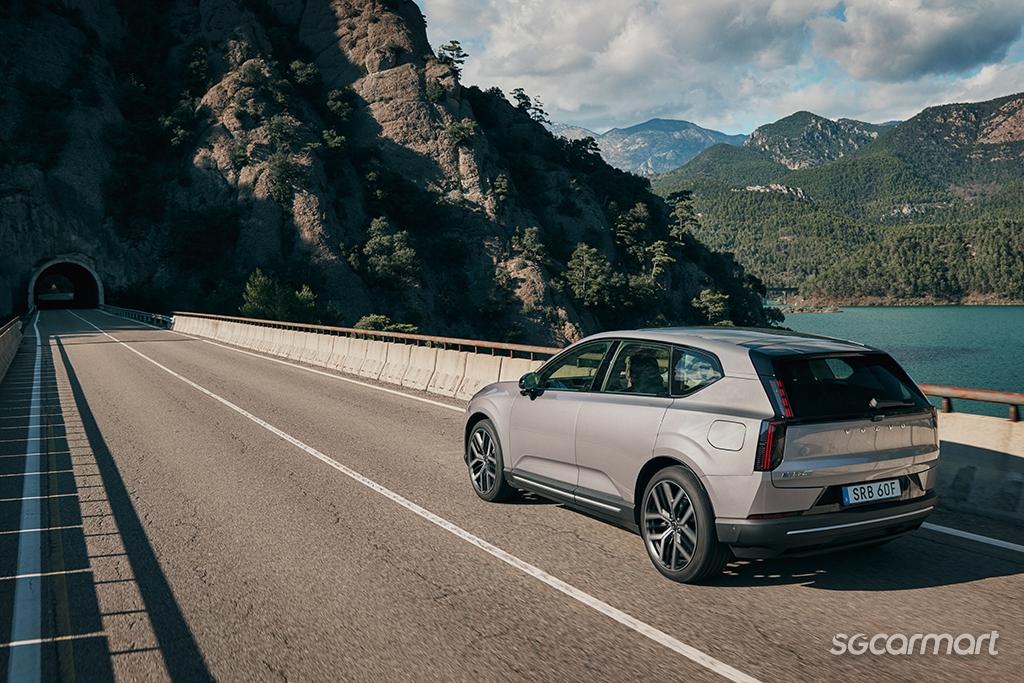
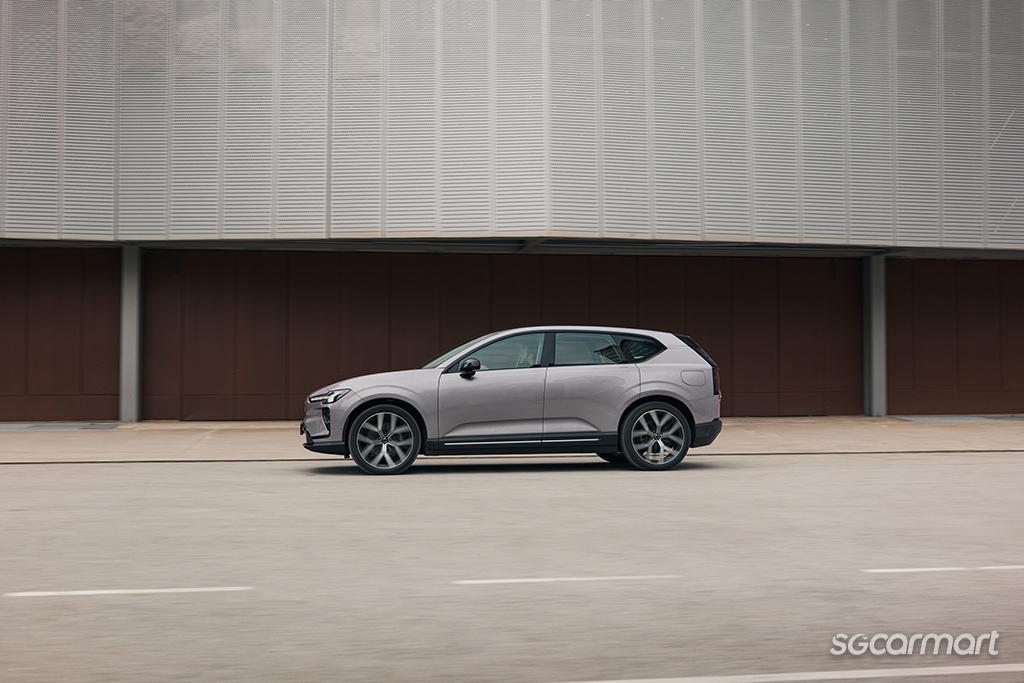
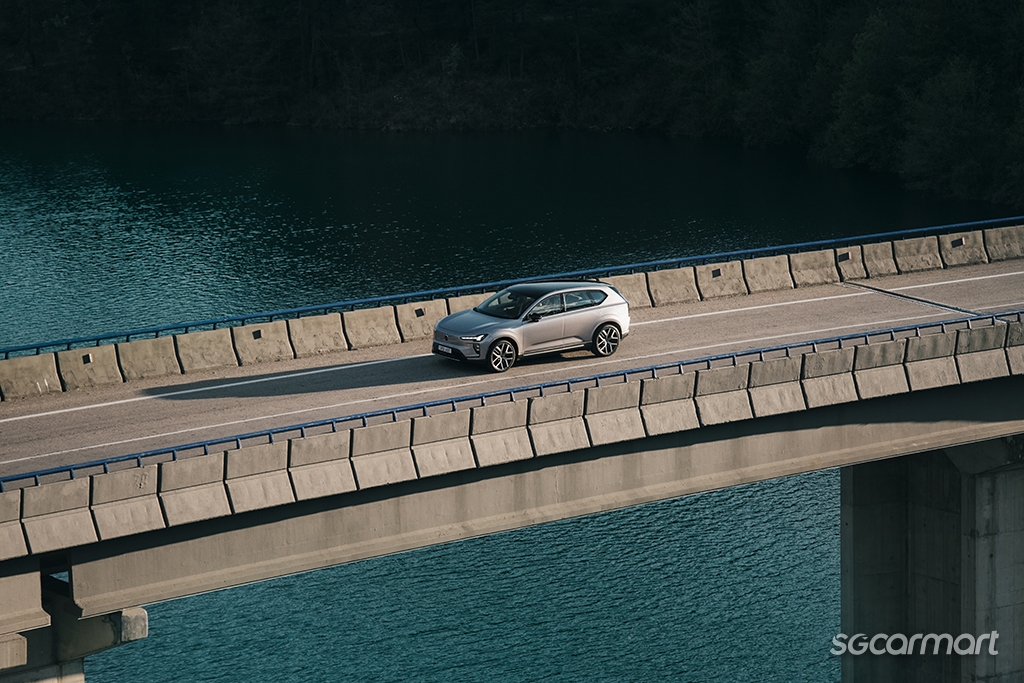
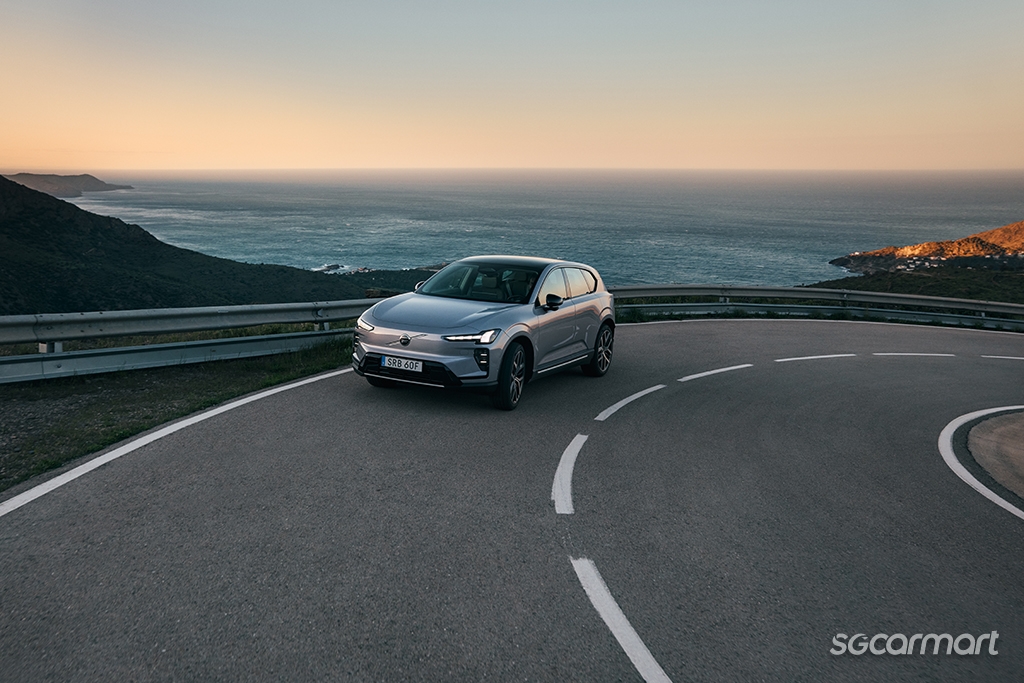
Longer, wider and lower than the XC60, the EX60 looks less like an SUV, and more like a stationwagon
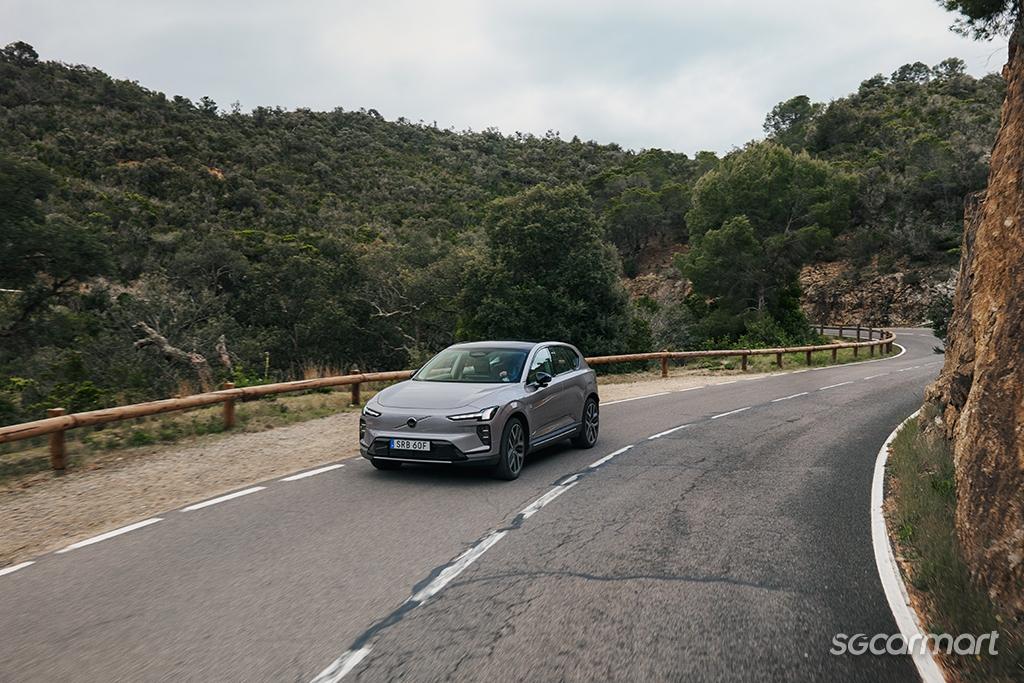
Despite being a 60-series car, the EX60 is actually longer, wider and lower than its internal-combustion powered peer, the XC60. The EX60 is also designed with aerodynamics in mind, including a low front-end and a streamlined rear - the result is a silhouette that reminds more of a lifted stationwagon, like the V60 Cross Country, instead of a traditional SUV.
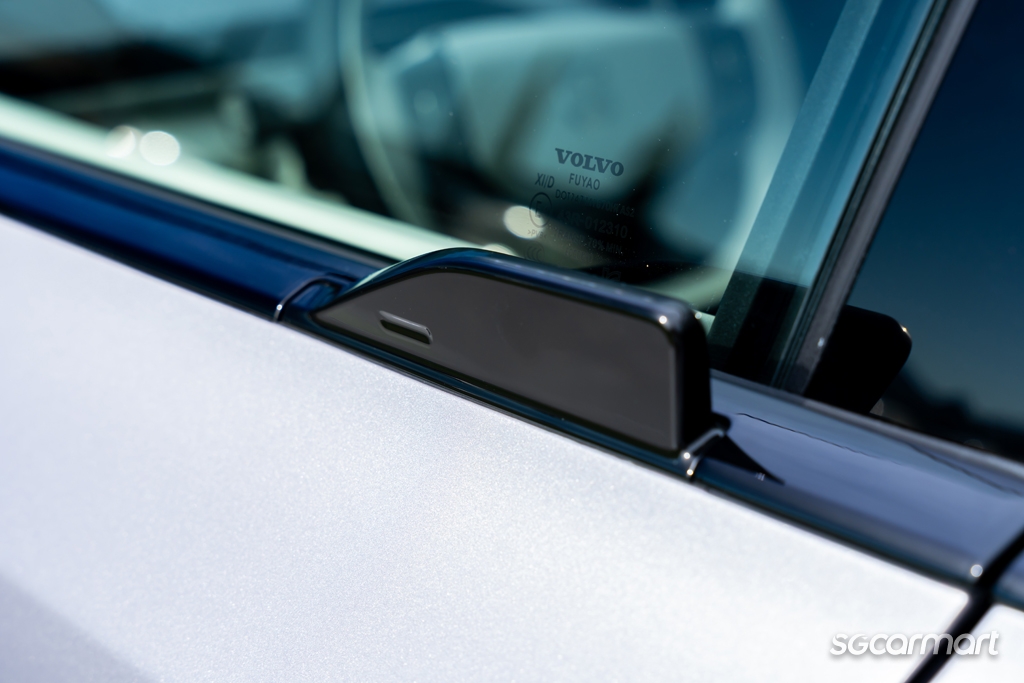
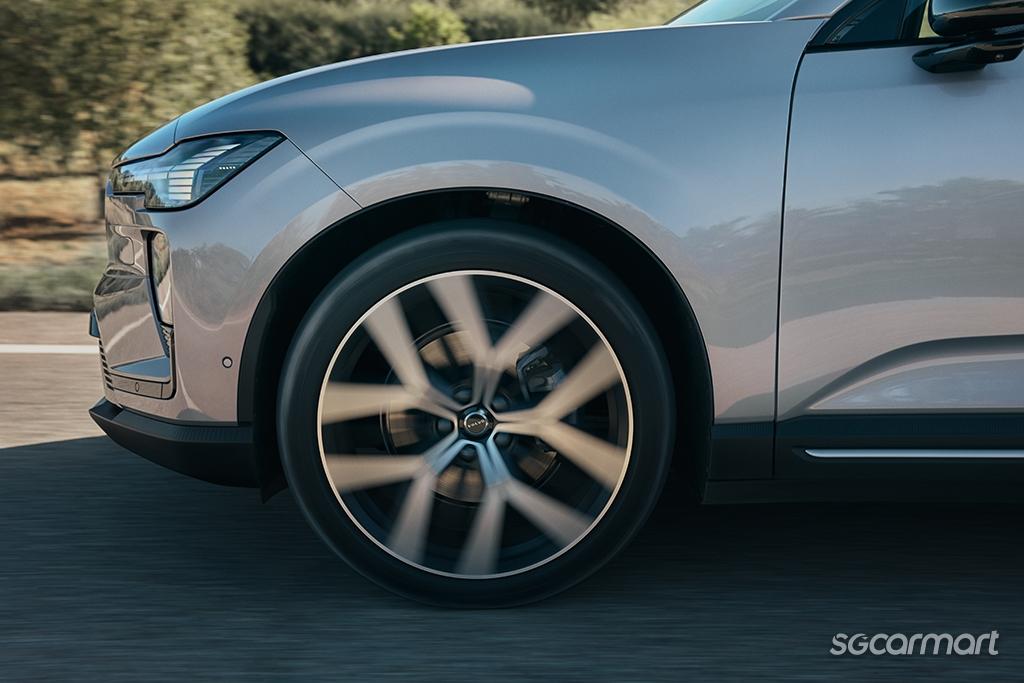
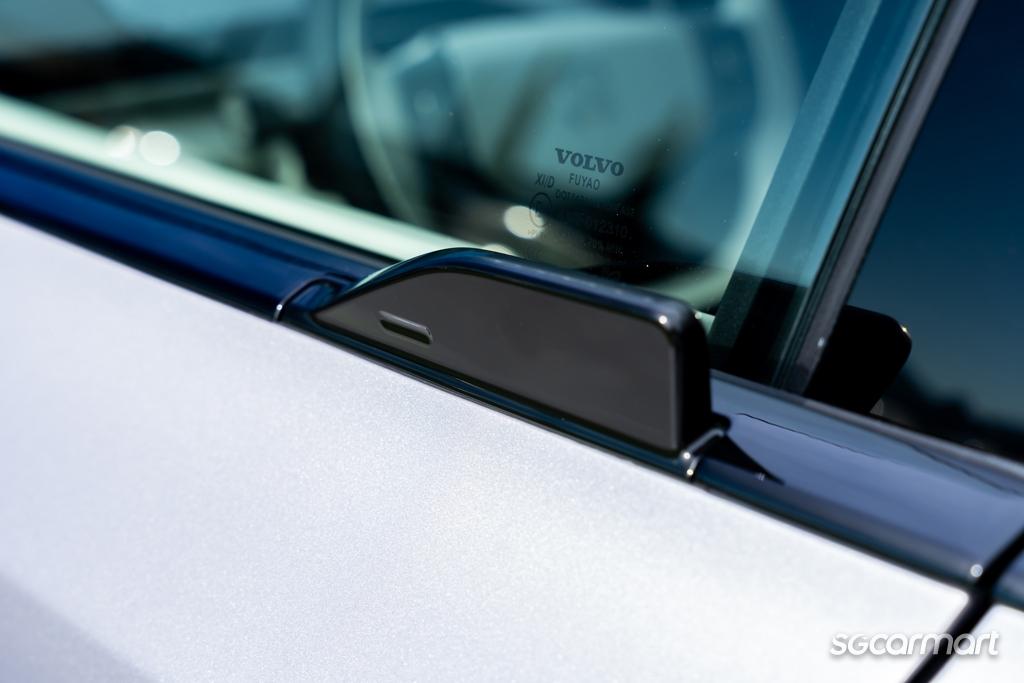
These peculiar-looking winglets on the doors of the EX60 are the door handles, the special design improves aerodynamics and allows a cleaner design for the car's body
There is yet another interesting feature on the EX60. Its unique wing grip door handles improve aerodynamics to increase range and allow for a cleaner body design, all without the complications of motorised handles. While peculiar, the wing grip handle is intuitive and ergonomic to operate.
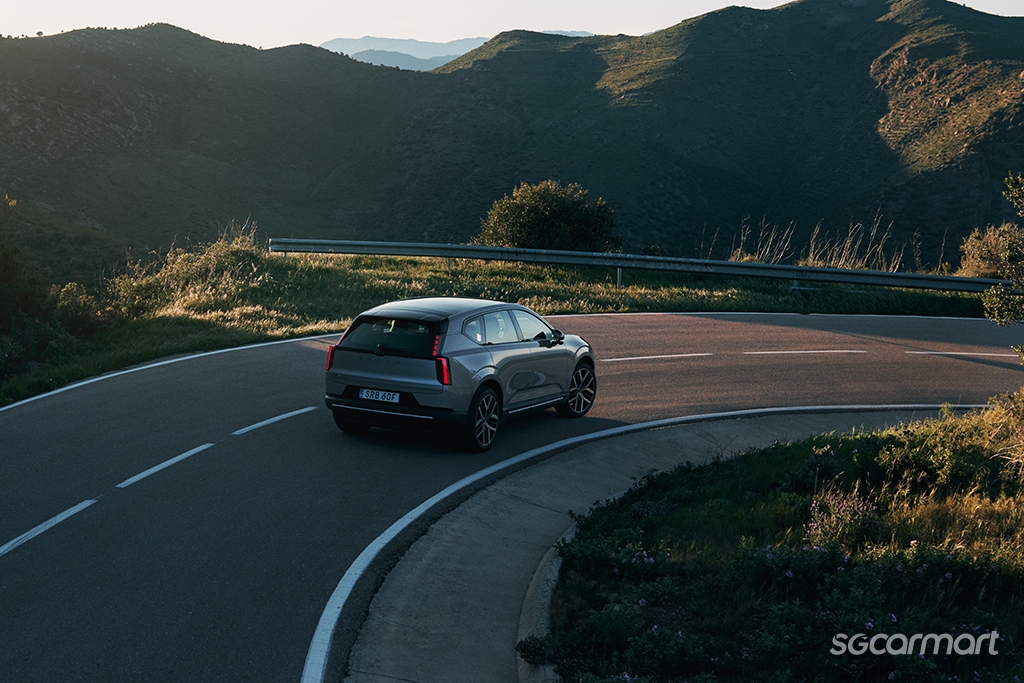
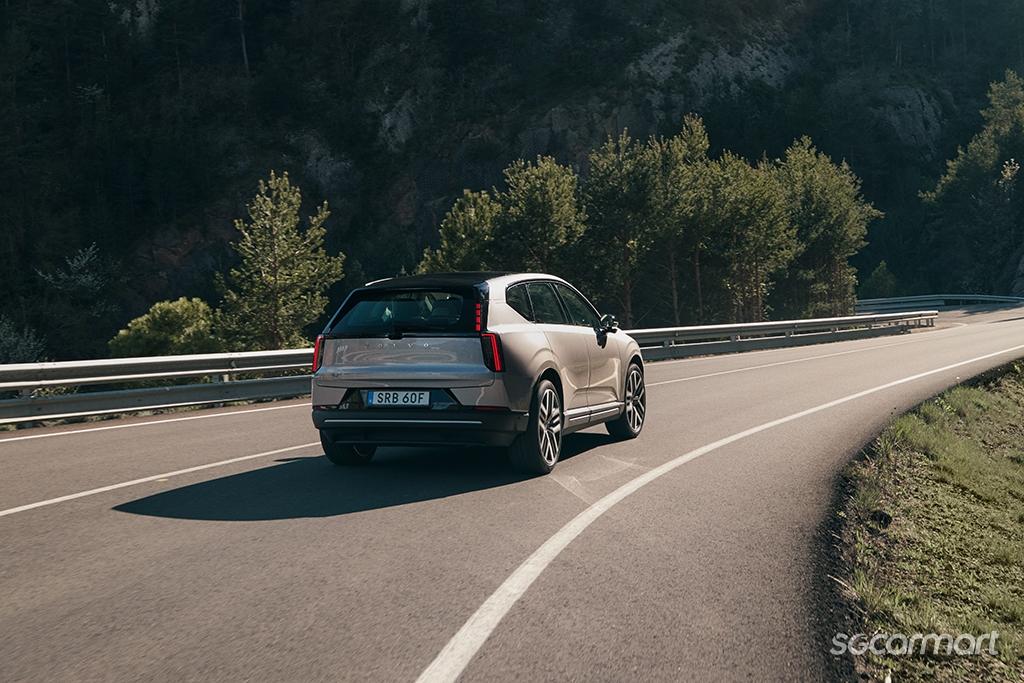
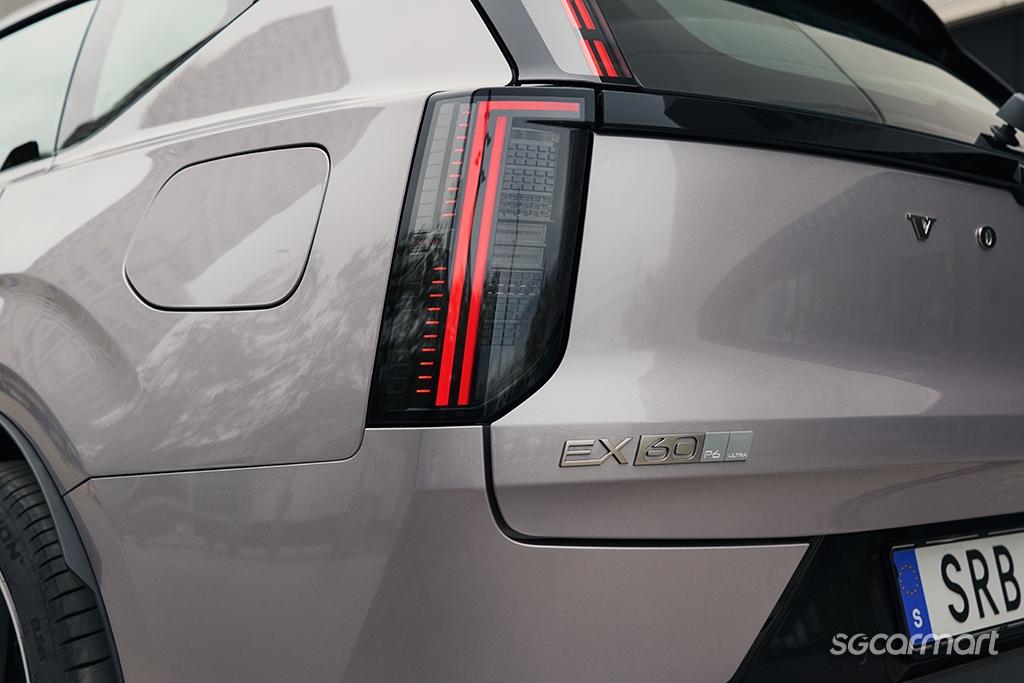
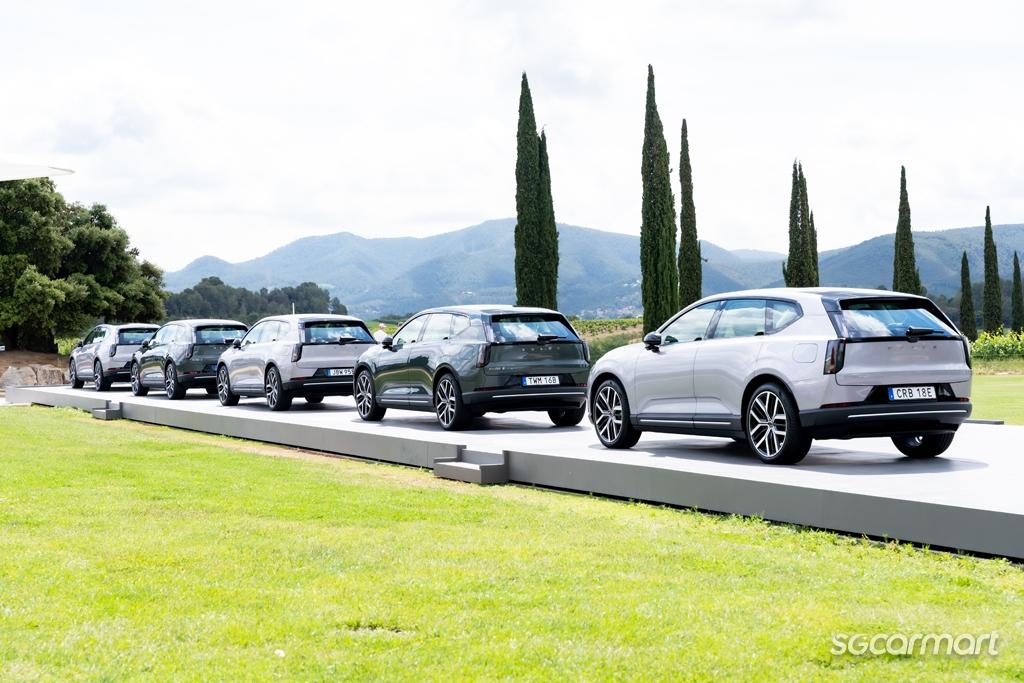
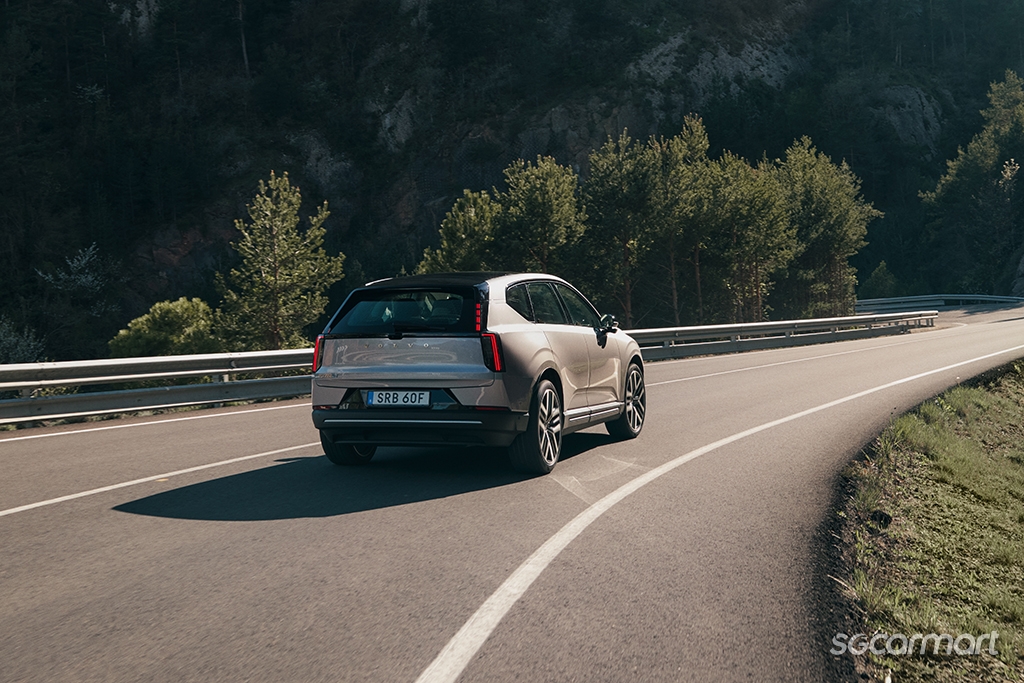
While simple, the rear of the EX60 is easily identifiable
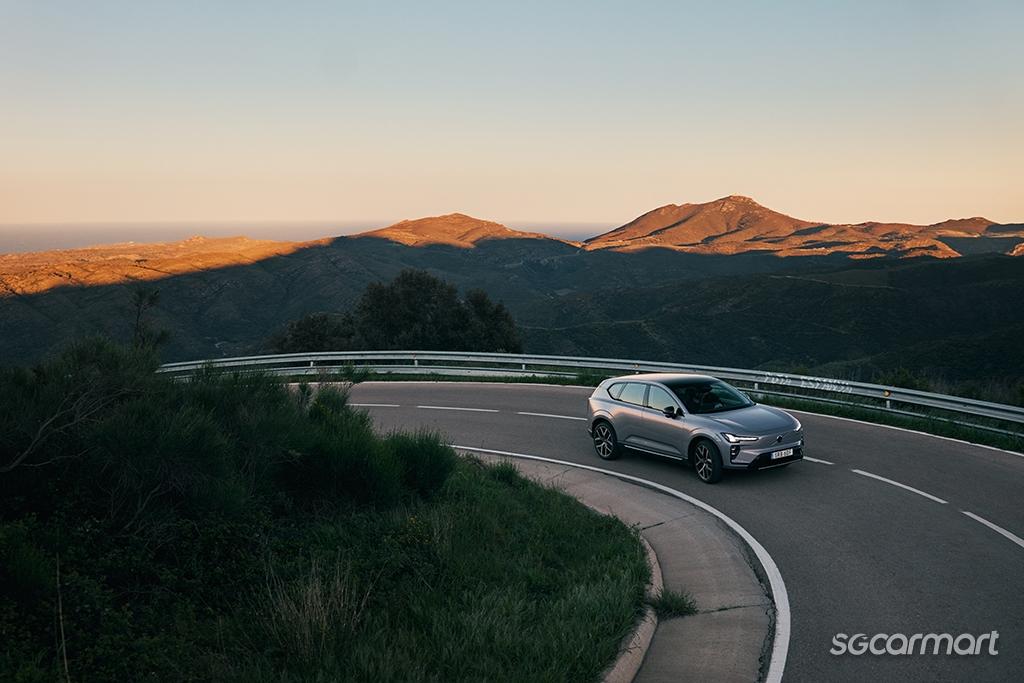
Meanwhile, at the rear, the narrow greenhouse blends into the wide shoulders of the body - even though you don't get the C-shaped taillights found on so many Volvos, the iconic shape is immediately identifiable.
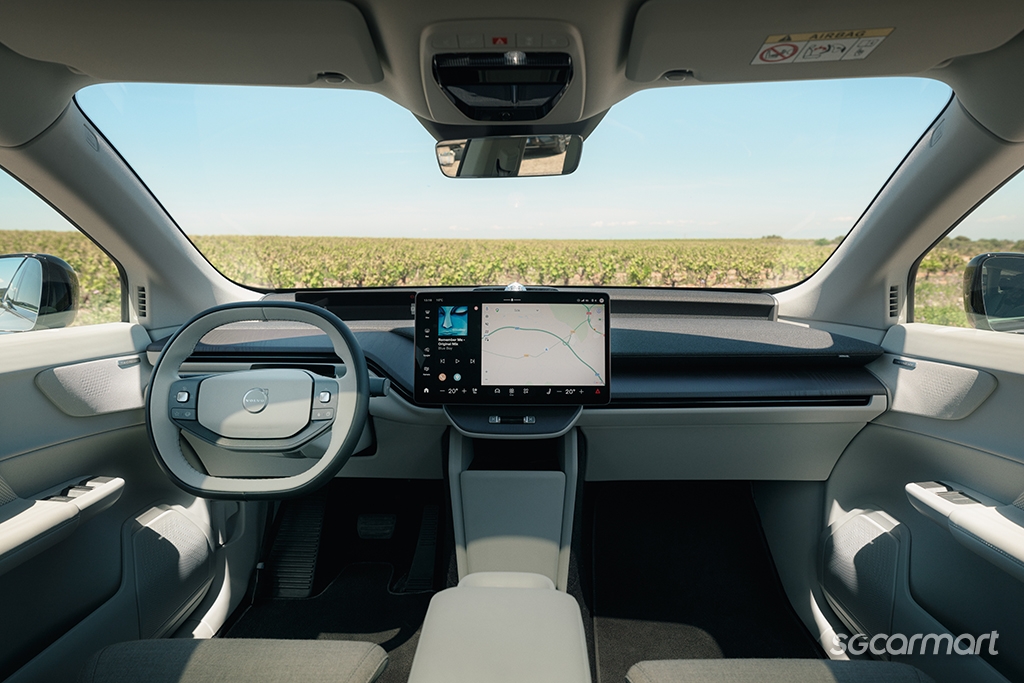
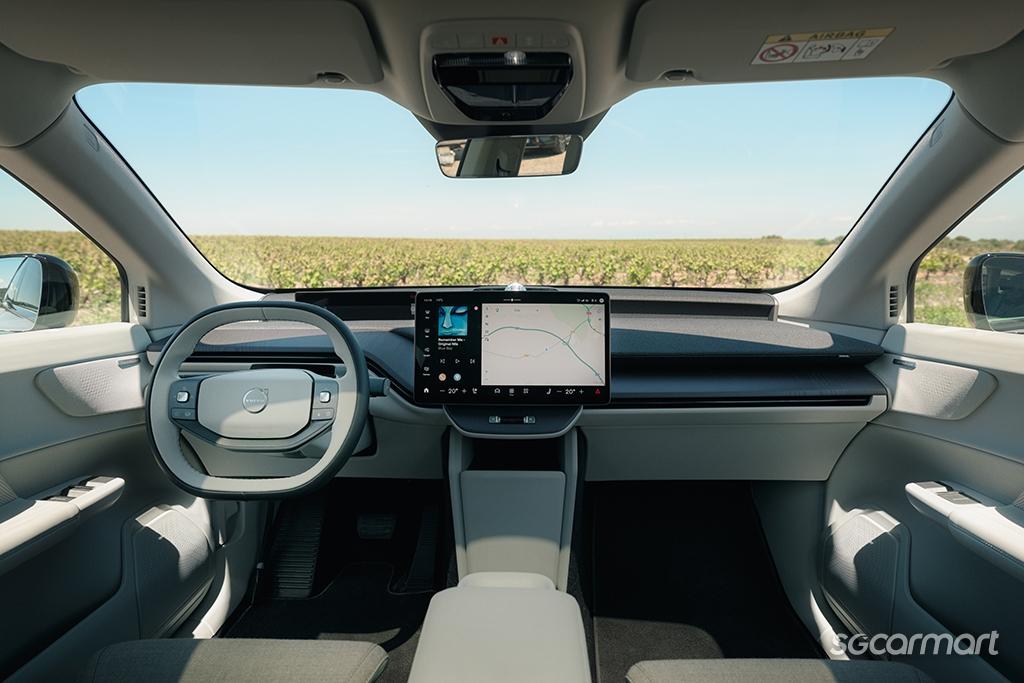
Simple, thoughtful and calming, the interior of the EX60 is designed the Scandinavian way
Simple and thoughtful place to be in
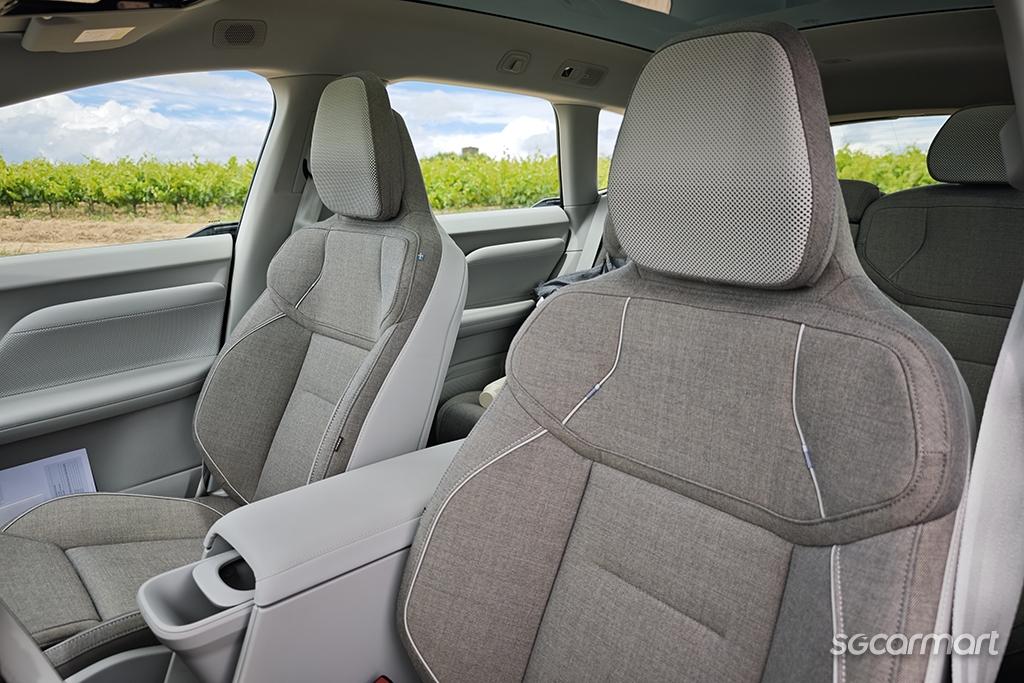
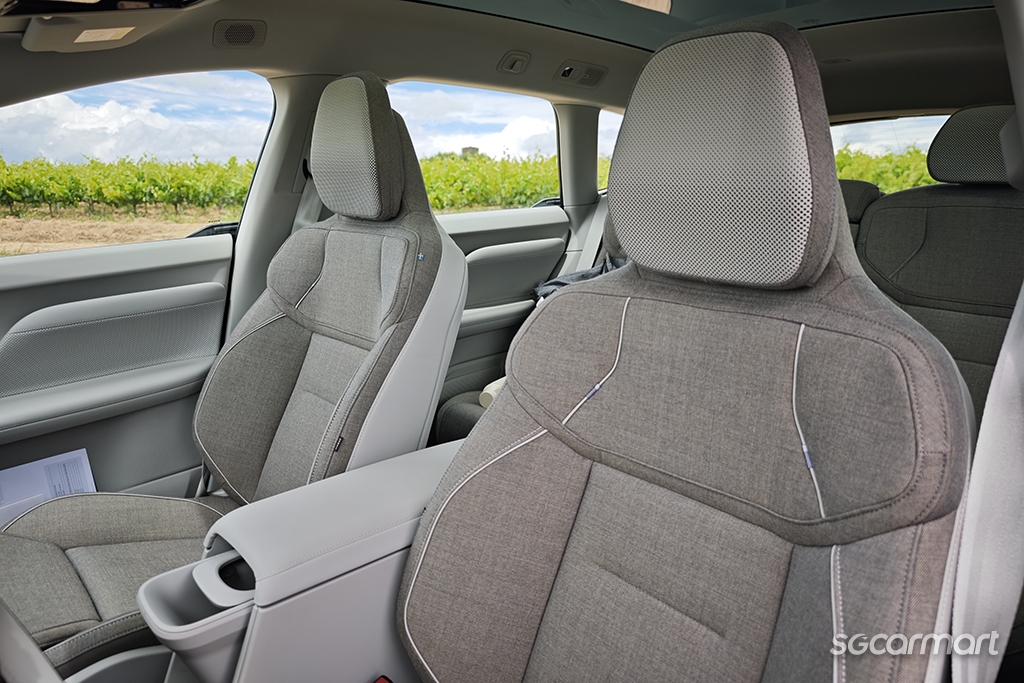
The interior of the EX60 is what we've come to expect from the brand - calming, simple and thoughtful - the Scandinavian way.
You'll notice how I chose 'simple' instead of 'minimalist' as the description. While the result is rather similar, minimalism, especially in the context of cars, tends to sacrifice function for form, and it simply isn't the case for Volvo.
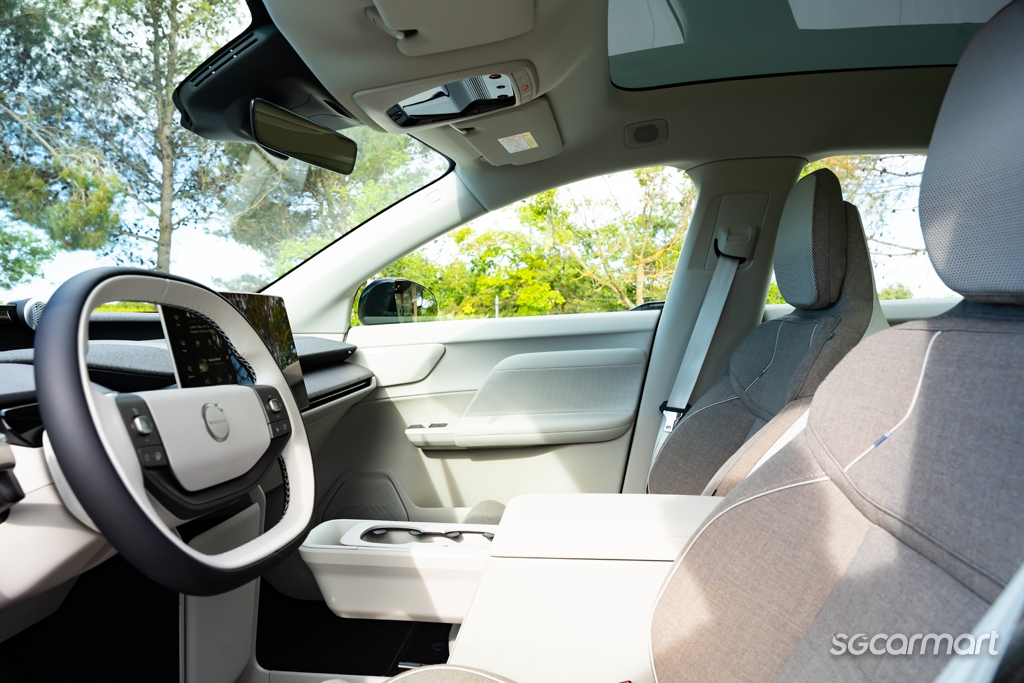
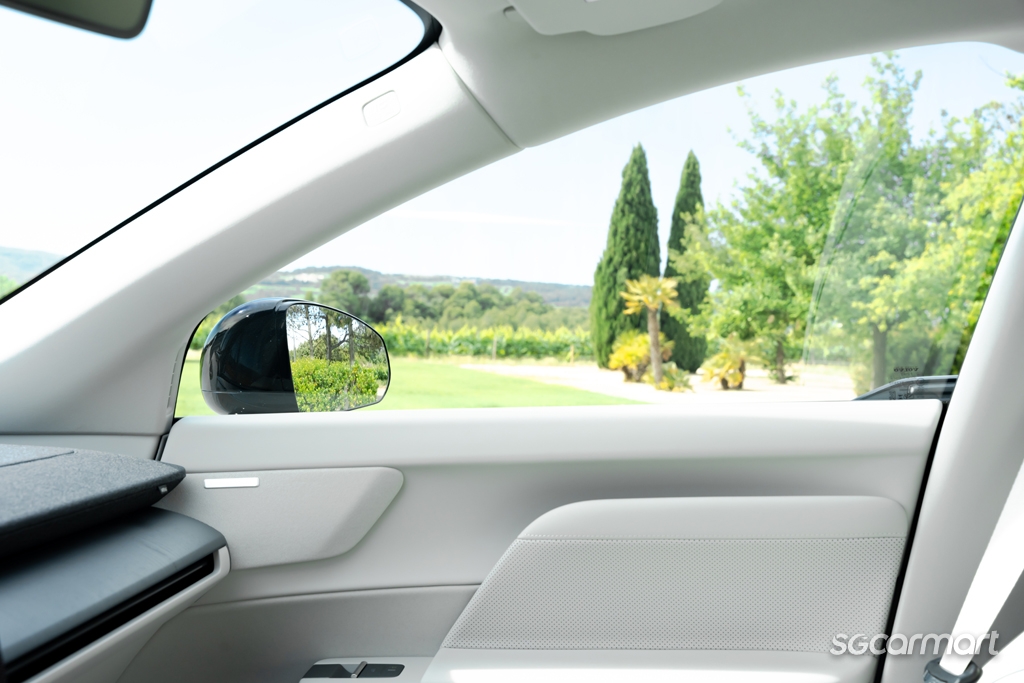
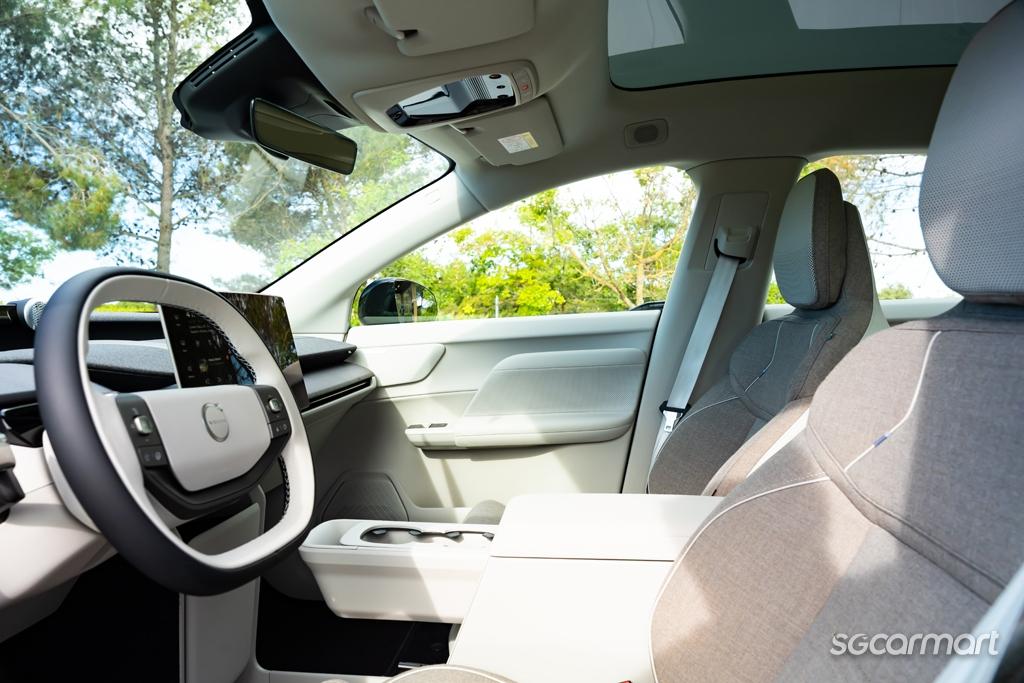
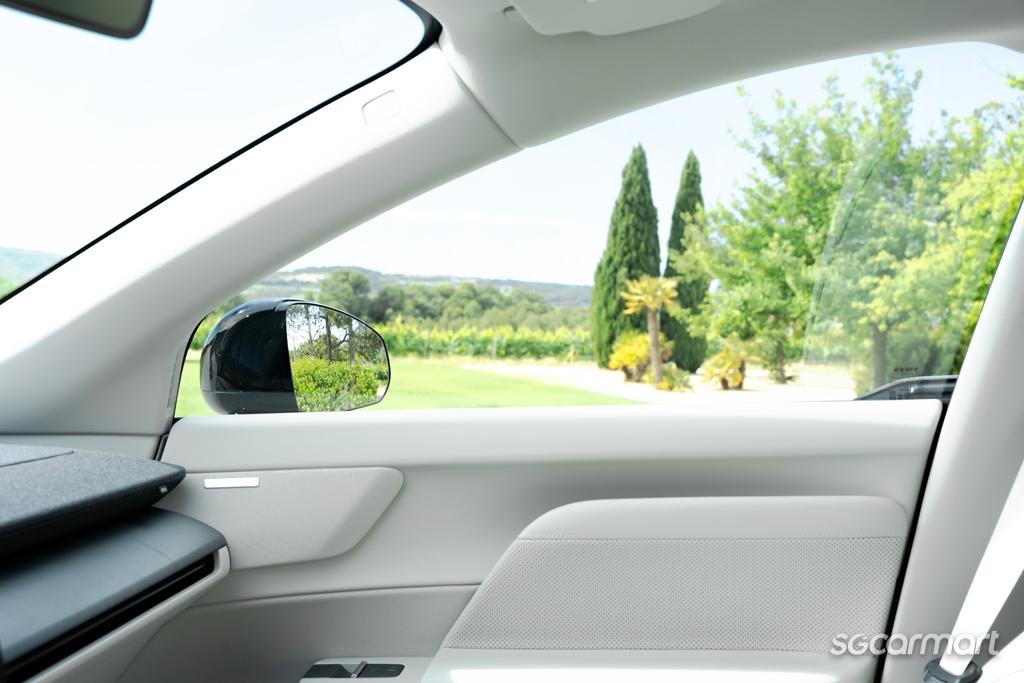
A welcoming interior with excellent fit, feel and finish; the grab handles on the door cards are nicely integrated
The interior is built with leather alternatives, recycled materials and wool, but without compromise on the fit, feel and finish, resulting in a welcoming and quality interior. The door cards have neatly integrated grab handles, but the window switches are still conventionally operated despite being stylishly integrated.
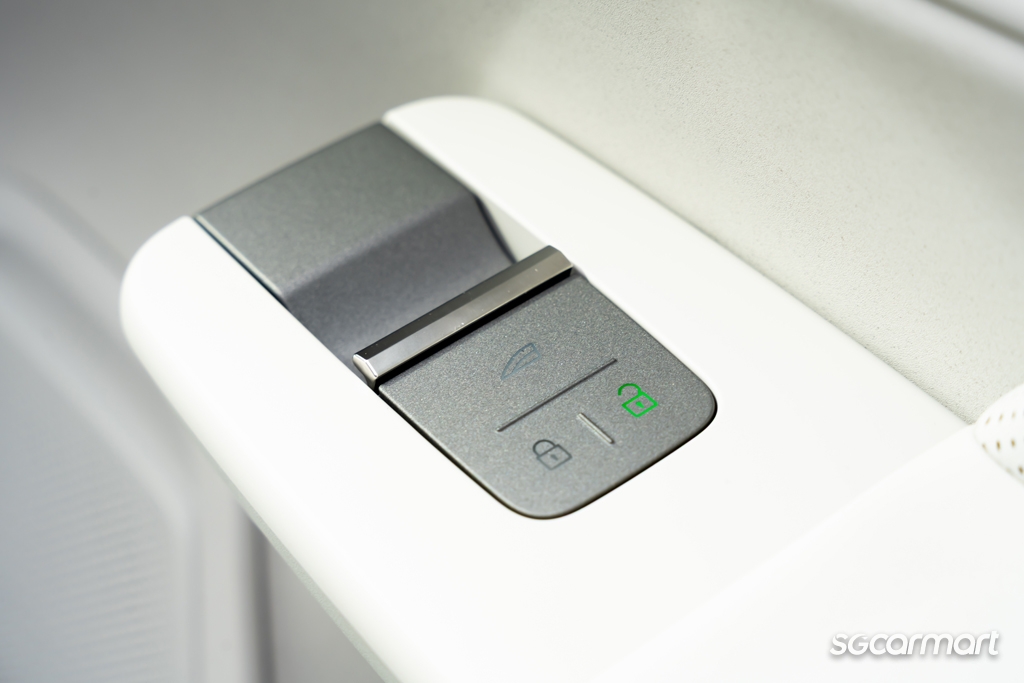
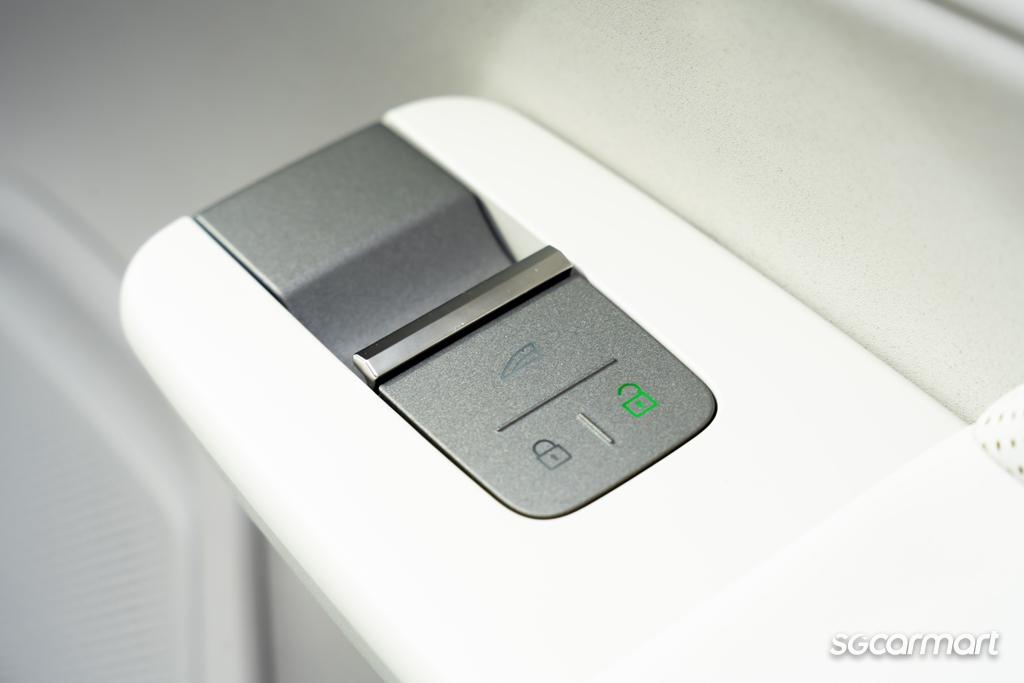
Both the window switches and the door release lever are neatly integrated into the edge of the armrest on the door cards
Then you have the door release lever at the edge of the armrest, which cleverly integrates both the electric release and the emergency mechanical release into one - a light tug for the former, and a complete pull to open the door mechanically. Over here, form and function goes hand in hand.
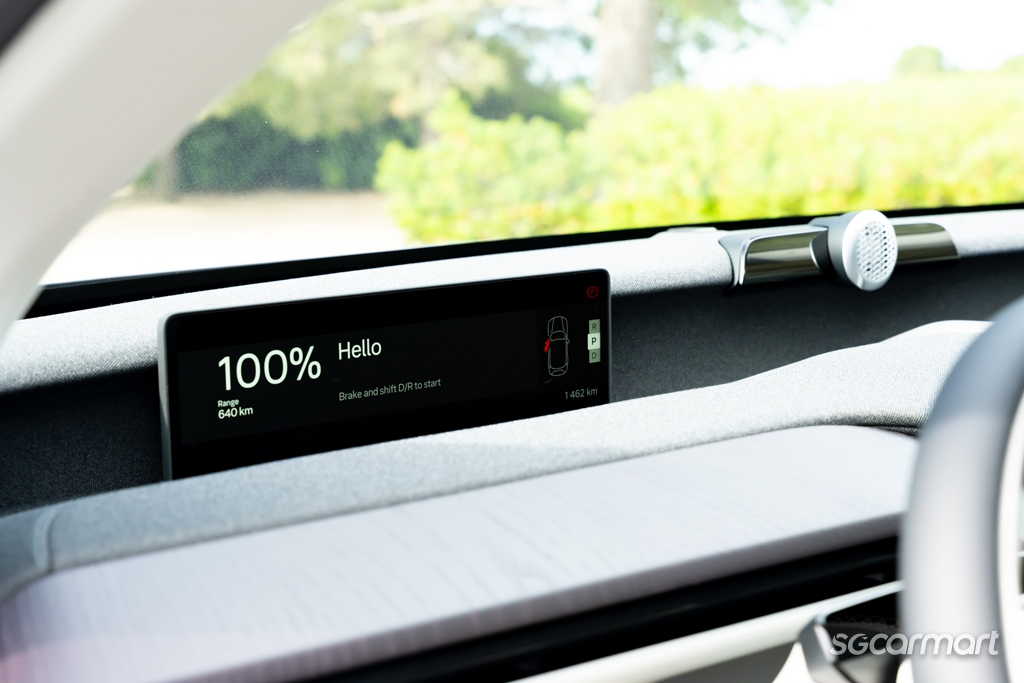
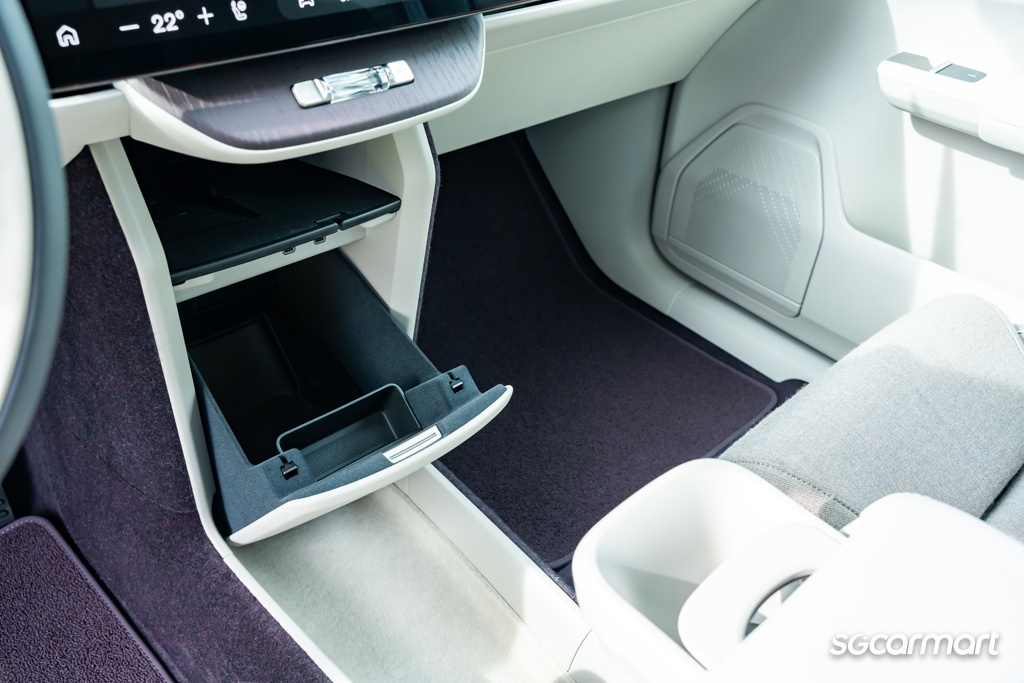
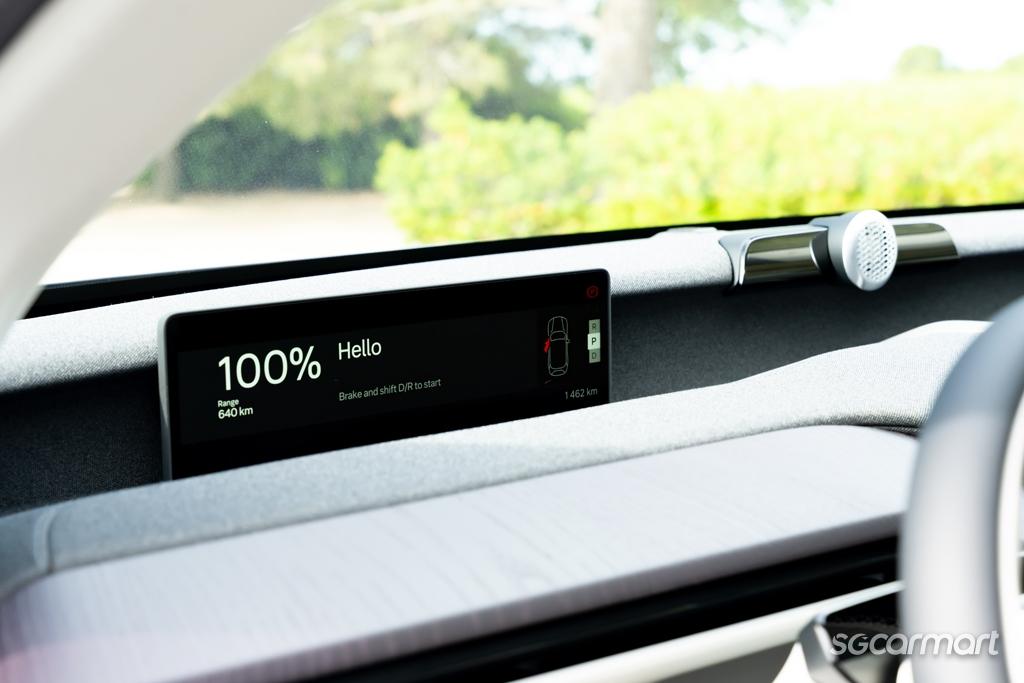
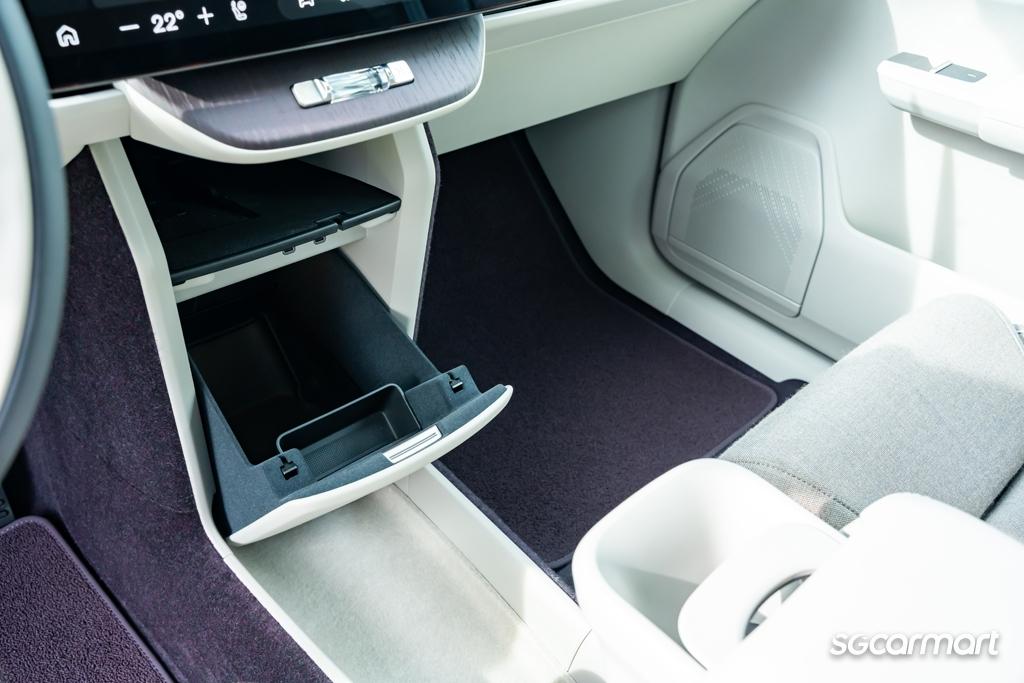
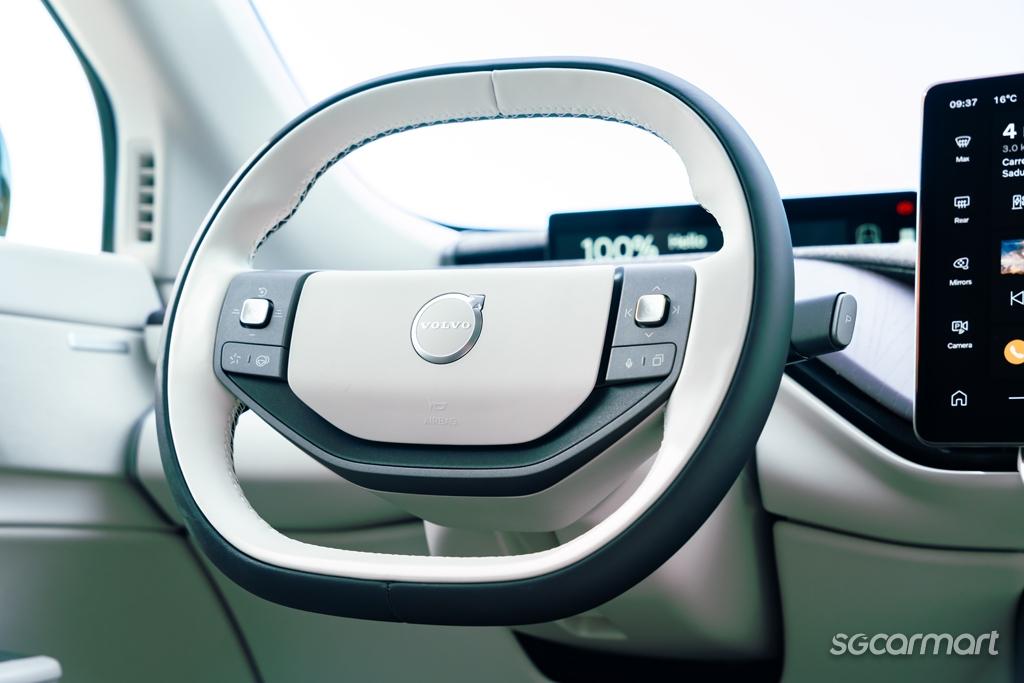
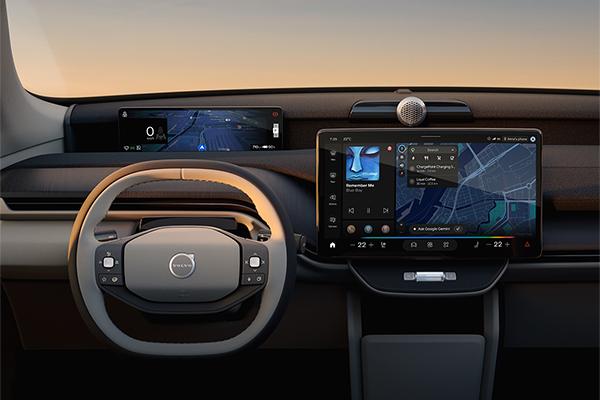
The driver's display is intentionally placed as far forward as possible for improved visibility; meanwhile the glovebox is located centrally for easy access all-around
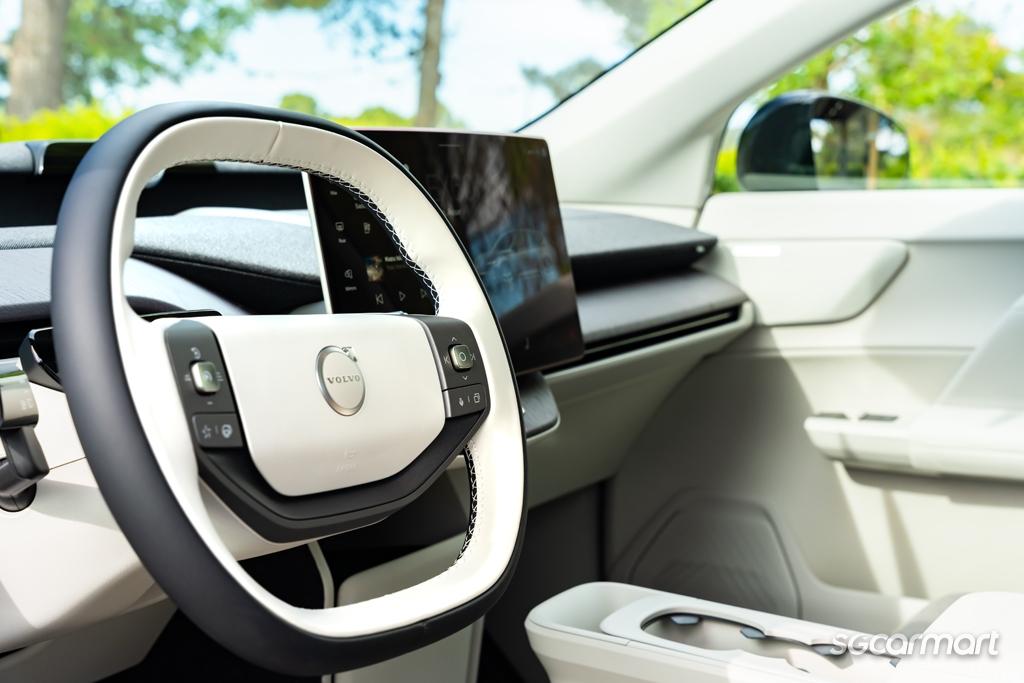
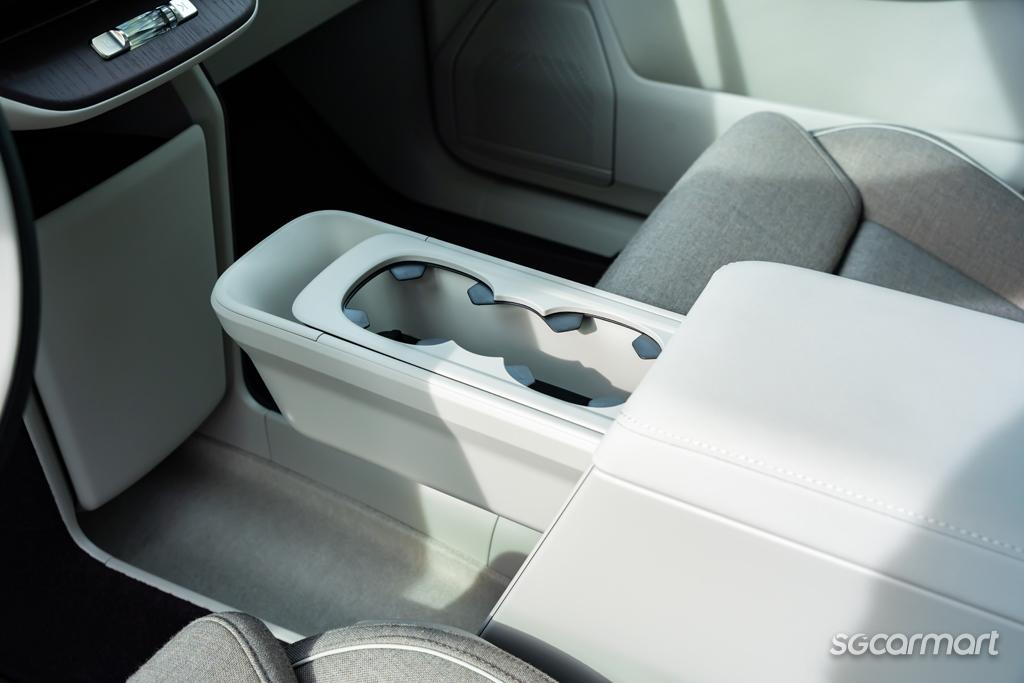
Hop into the driver seat and you'll see that the thoughtful design elements continues. The driver's display is placed as close to the front of the car as possible to minimise focus shift from the road as you drive, the glovebox is placed in the centre to allow easy access for both front occupants (it has a nicely hidden mechanical latch that's easy to operate), and the cup holders can be retracted when not in use.
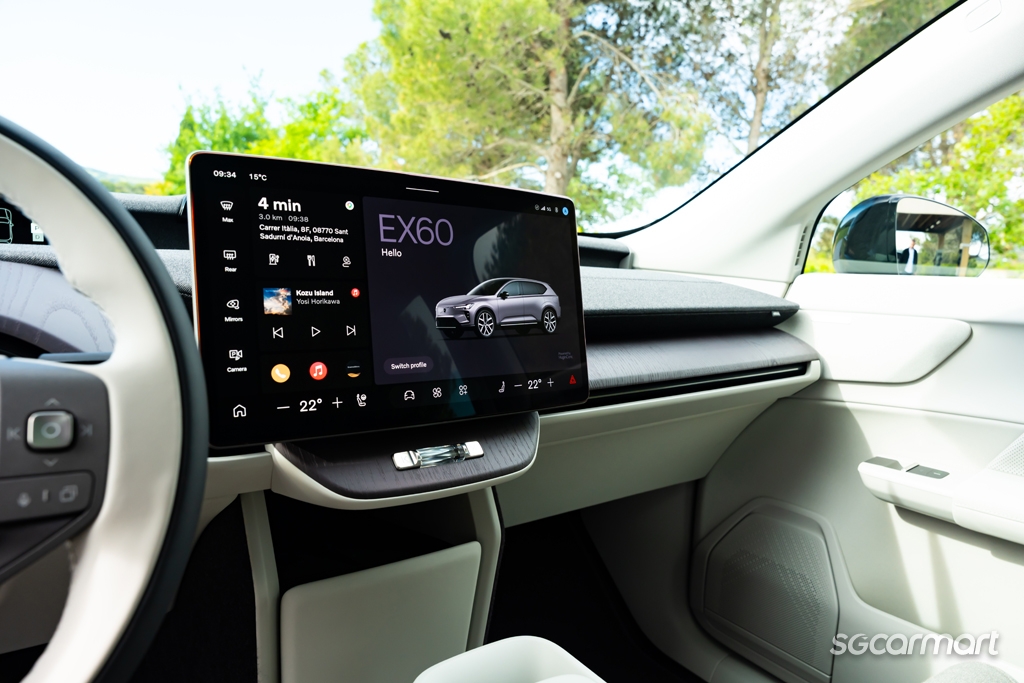
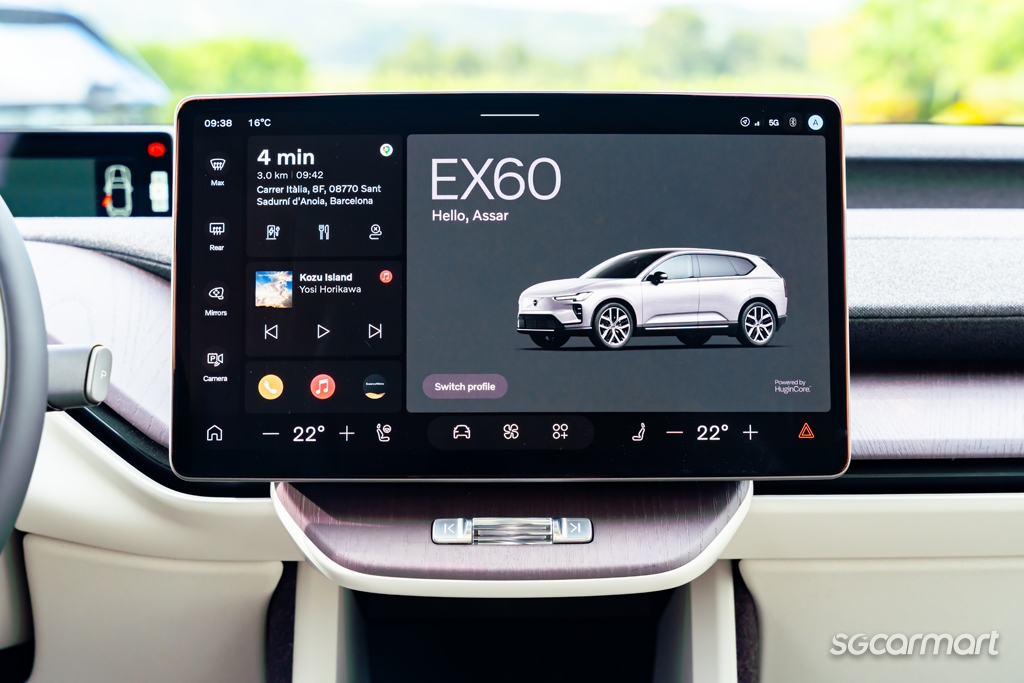
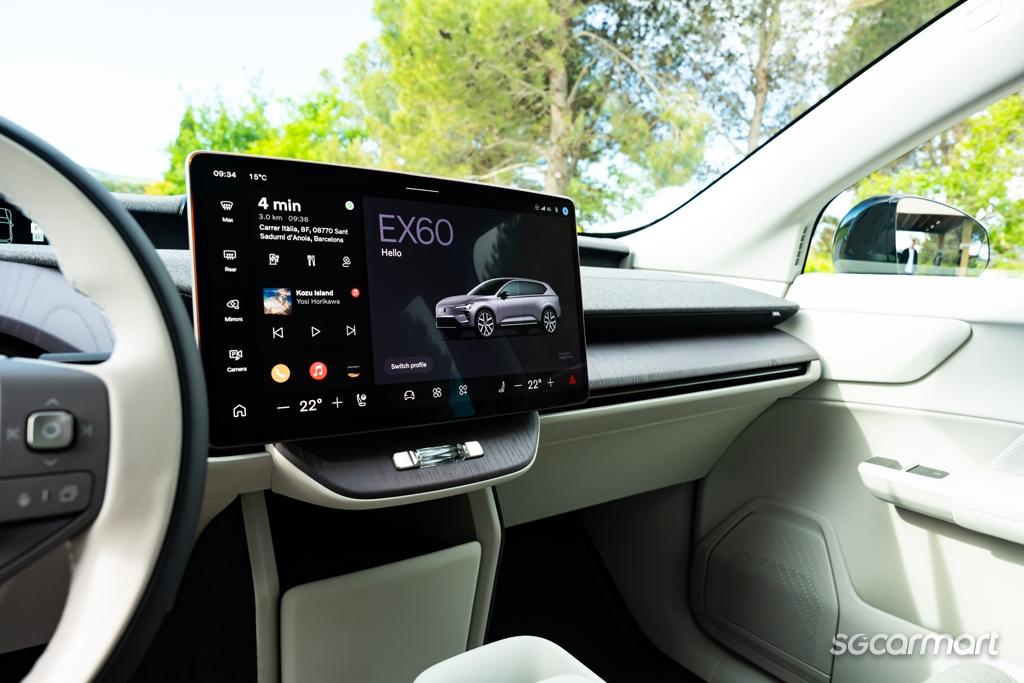
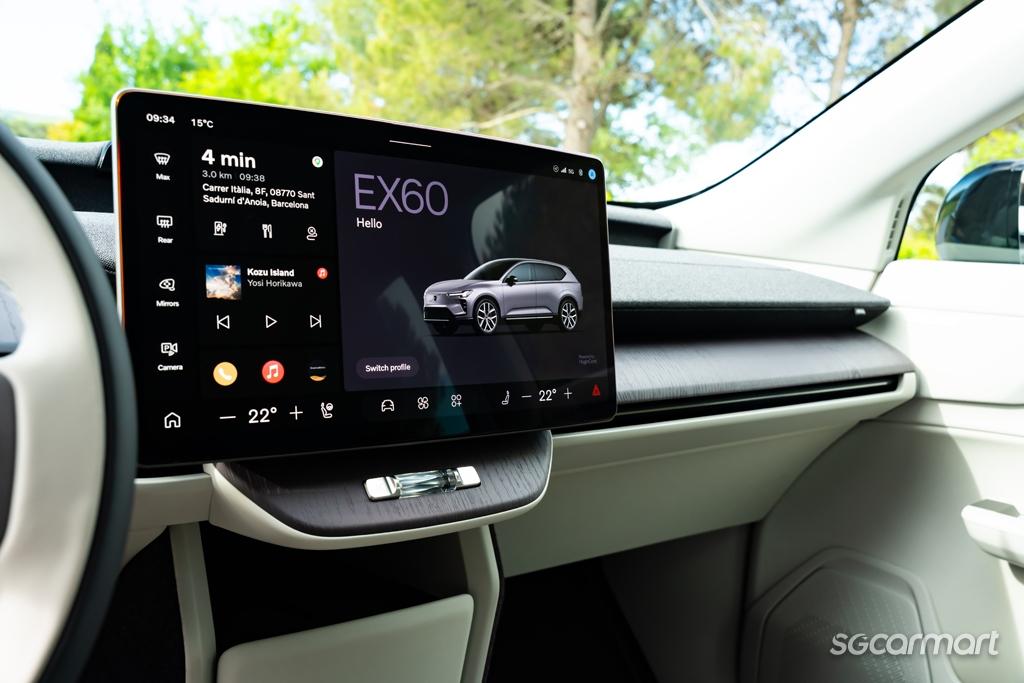
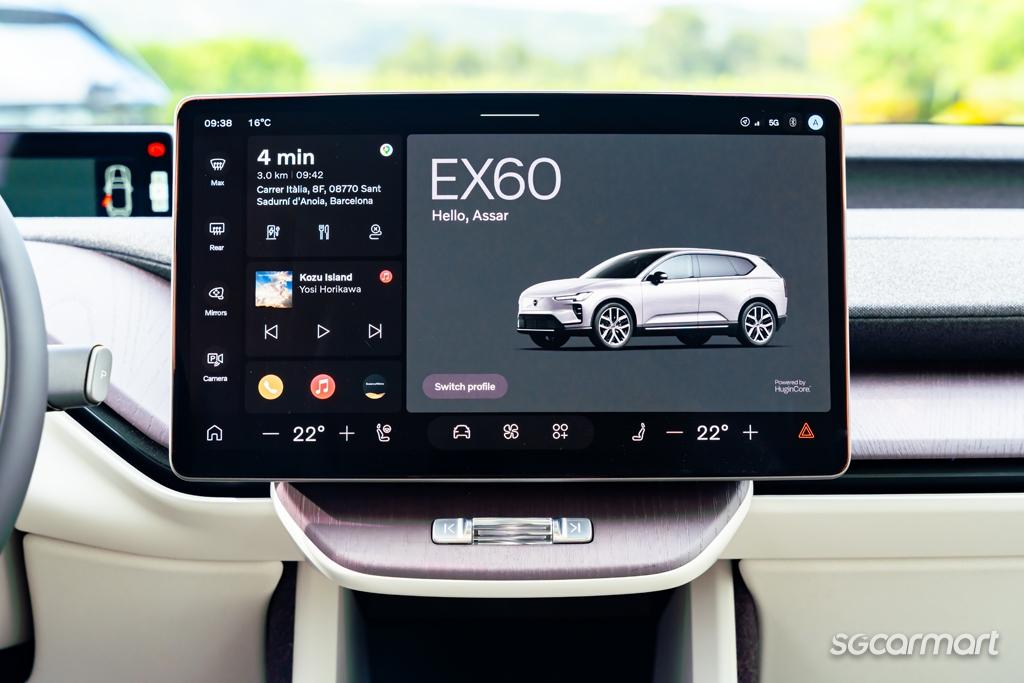
The curved 15.04-inch infotainment display is positioned in a landscape orientation, with easy access to handy features placed close to the driver
And unlike past Volvos, the EX60 gets a 15.04-inch infotainment display in landscape orientation. I've been told that part of the reason for the shift to landscape lies in the quick access bar on the driver side of the screen - this puts several frequently-used features such as the mirrors adjustment and the windscreen defoggers within easy reach. The infotainment display is also slightly curved to increase its viewing angle for all occupants.
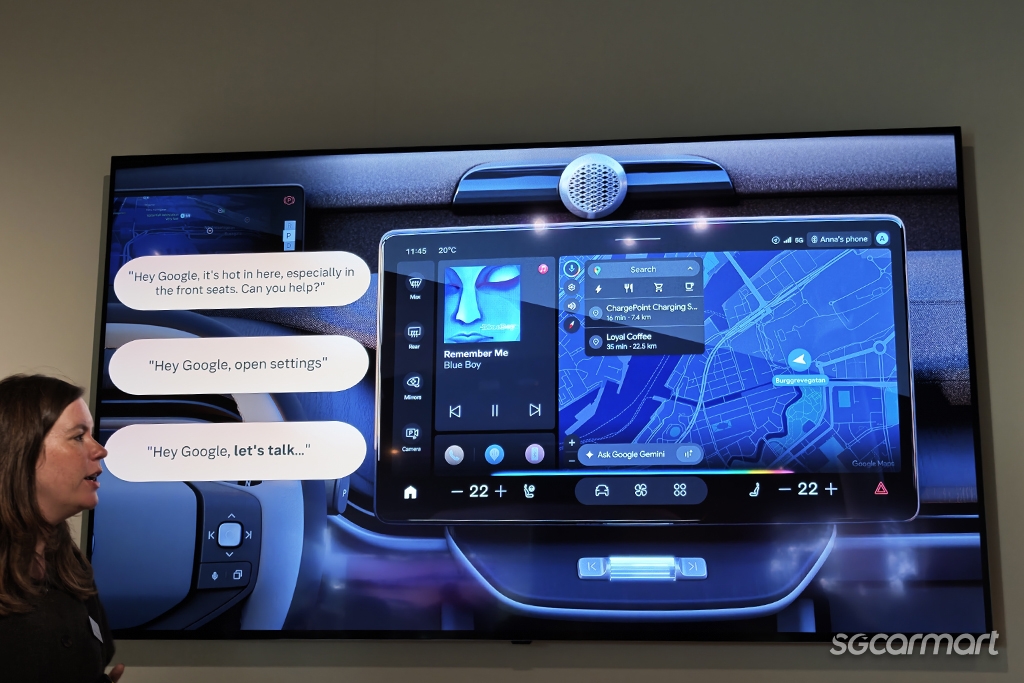
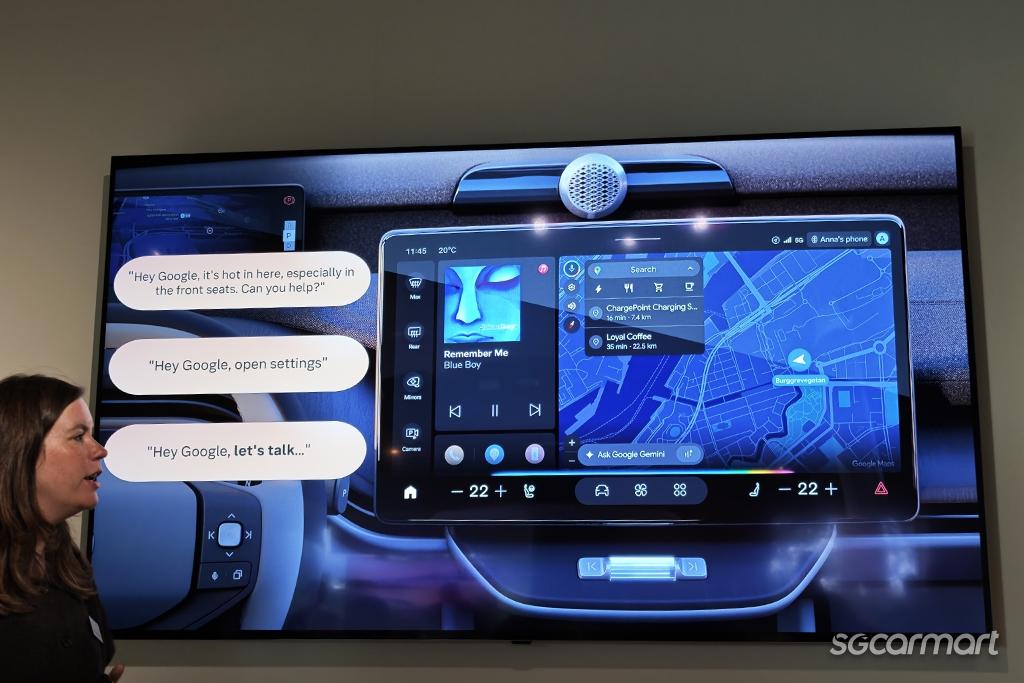
The entire cabin is designed for optimal user experience: Google's Gemini AI is employed as your personal assistant within the EX60
By now, it should be clear that user experience is of top priority with the team that designed the cabin of the EX60, and this can also be felt when operating the infotainment system with simple and intuitive to menus. And here, you'll also experience the smart part of the car. Equipped with Google's Gemini AI as your personal assistant, voice commands can be used to operate features such as the climate control, and you can even have a chat with your car.
That said, as the implementation is still in its early stages and features are still limited - Gemini couldn't open the windows or operate Google Maps for me, and takes some time to reply when I tried chatting with it. Likewise, Android Auto and Apple CarPlay connectivity is also unavailable when we tested the car, however, we have been assured that they will be rolled out in the future through over-the-air updates.
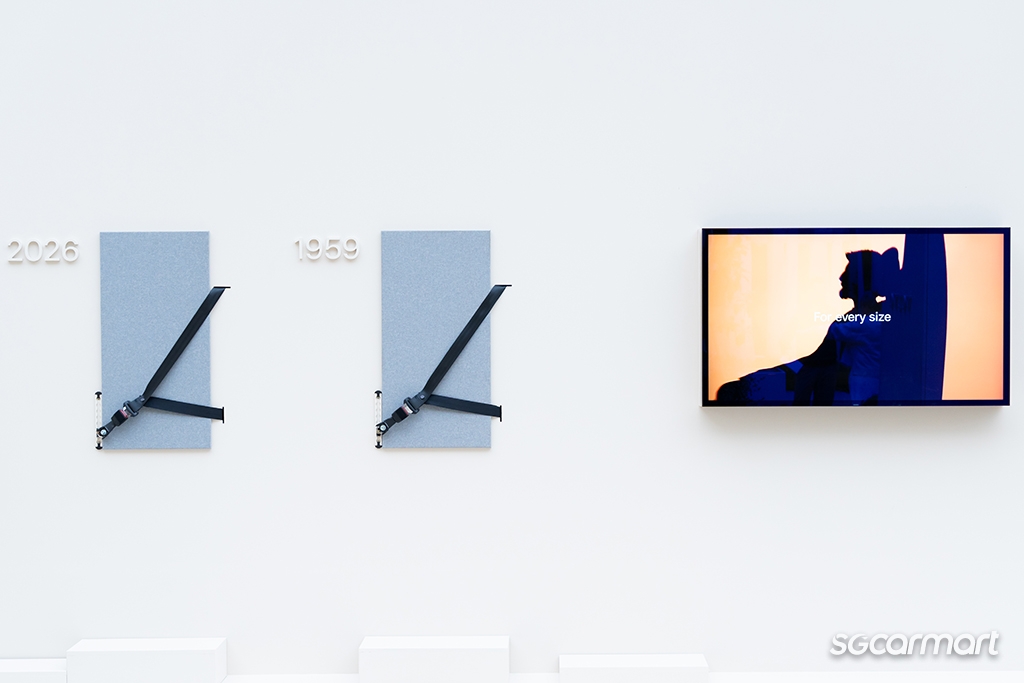
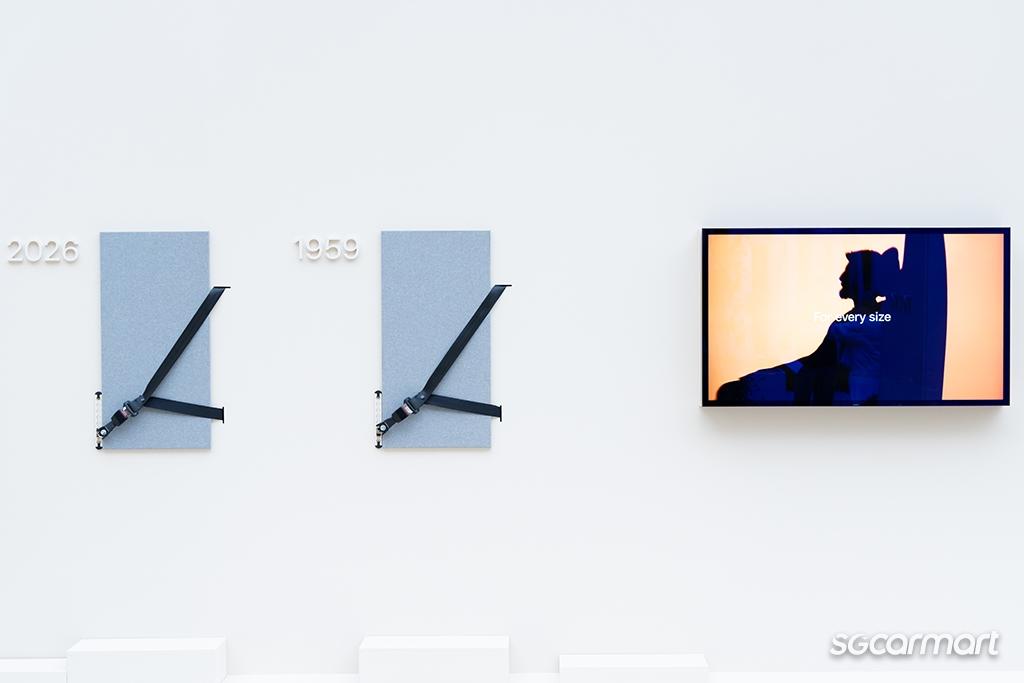
The EX60 has been equipped with new multi-adaptive front safety belts that will reduce the risk of injuries in the event of an accident
A comfortable and safe journey
Volvo is known for safety, and the EX60 has been engineered in many ways with safety in mind. The most impressive component is the new multi-adaptive front safety belts, which is also part of the smart systems within the car. This new belt uses data from the interior and exterior sensors on the car to adapt its setting based on the situation and individual profiles to manage the force applied to occupants in accidents.
When you put it on, the safety belts feel just like the pre-tensioning seatbelts that self-tighten after you put them on. While you probably wouldn't even notice its presence, this technology will potentially reduce the risk of injuries in the event of an accident.
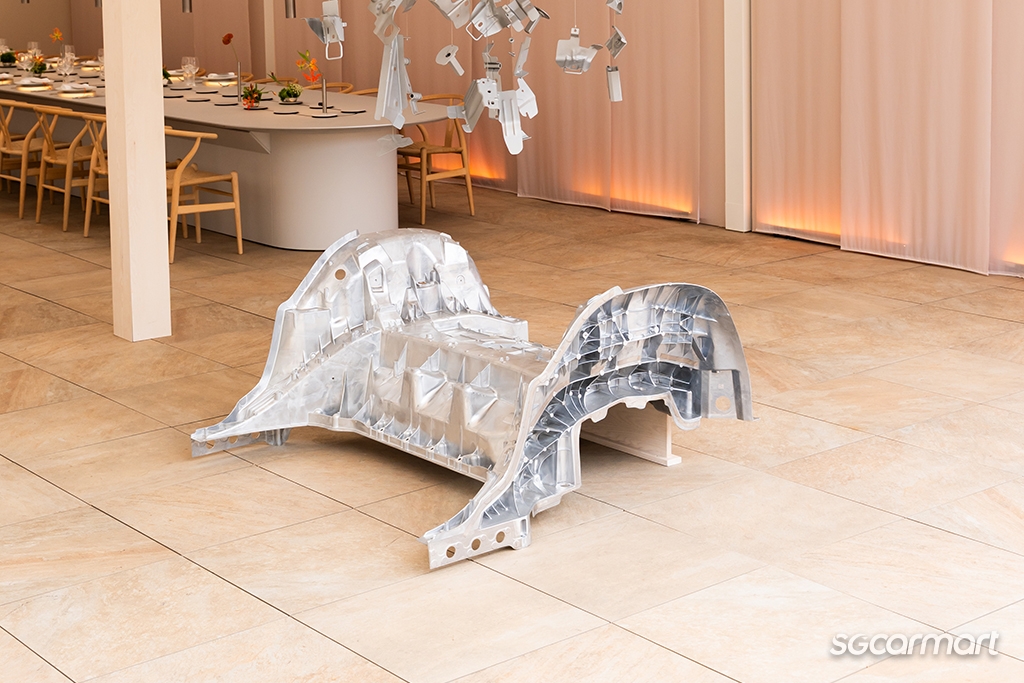
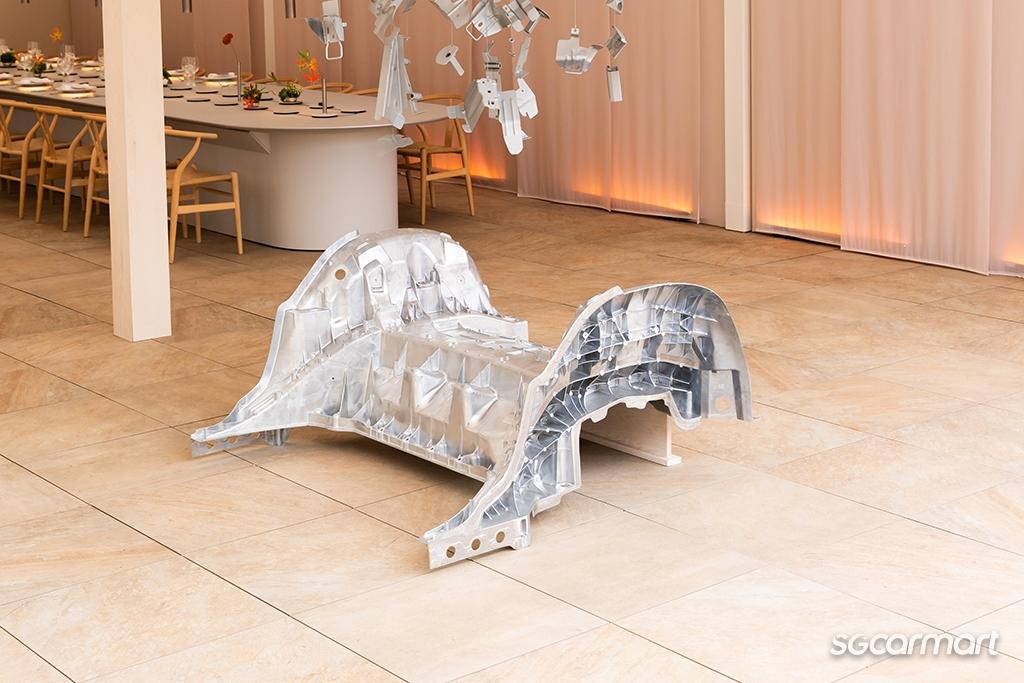
The EX60 gets a stiff and strong chassis thanks to its cell-to-body construction and a mega casted rear floor section
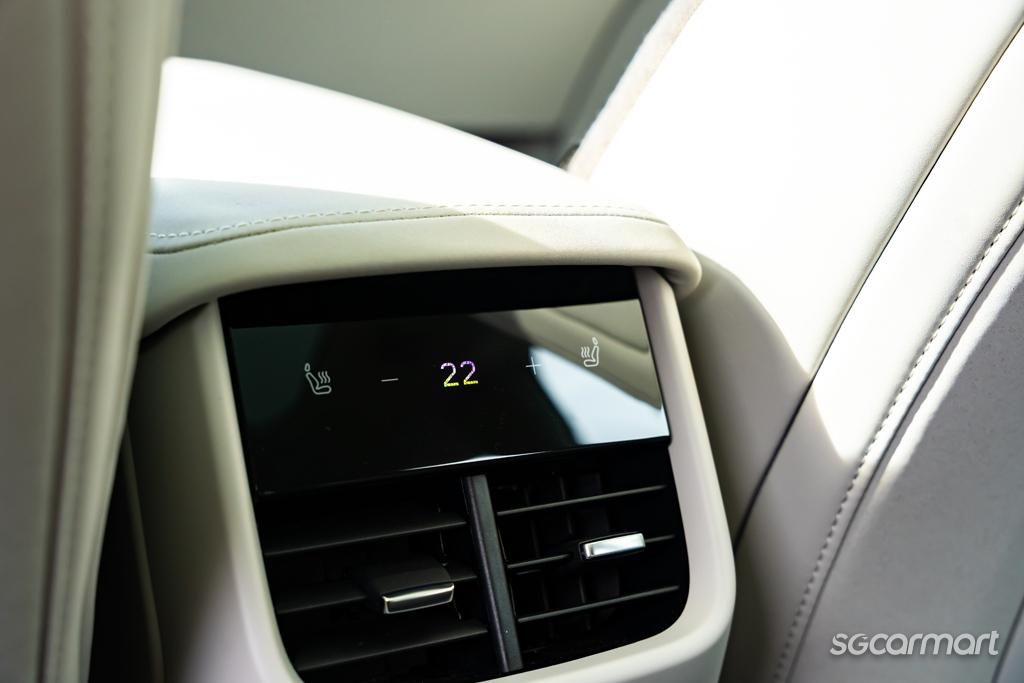
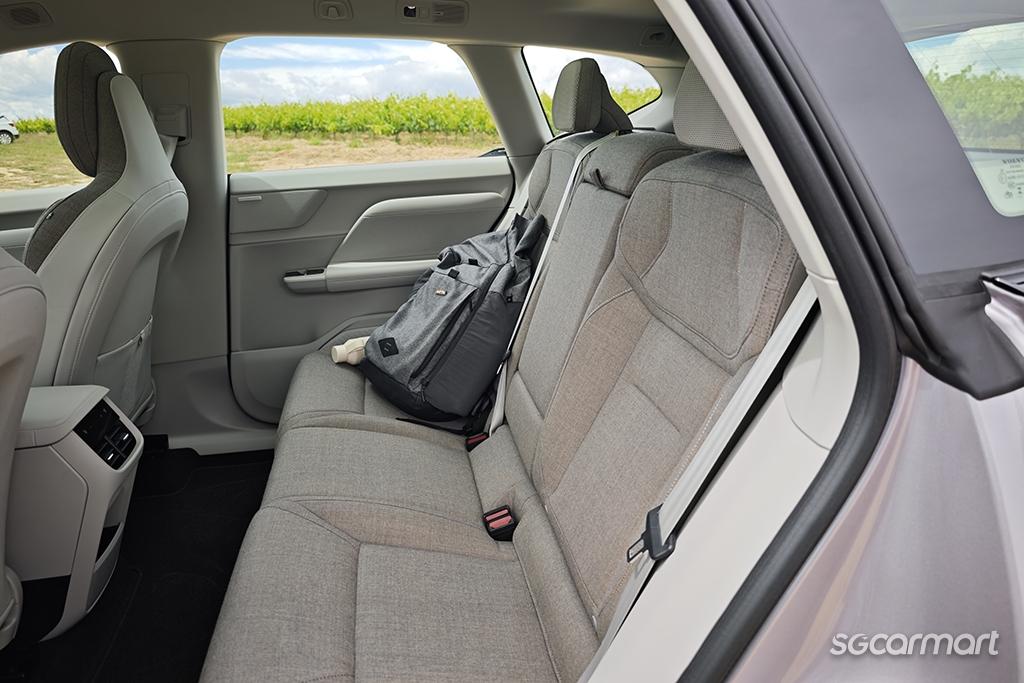
The EX60 also benefits from a stiff and stable chassis thanks to its cell-to-body construction and a mega casted rear floor section, both technologies that improve chassis rigidity, reduce weight and improve cabin space. As a result, head and legroom, whether you are sitting in front or in the rear, are very generous.
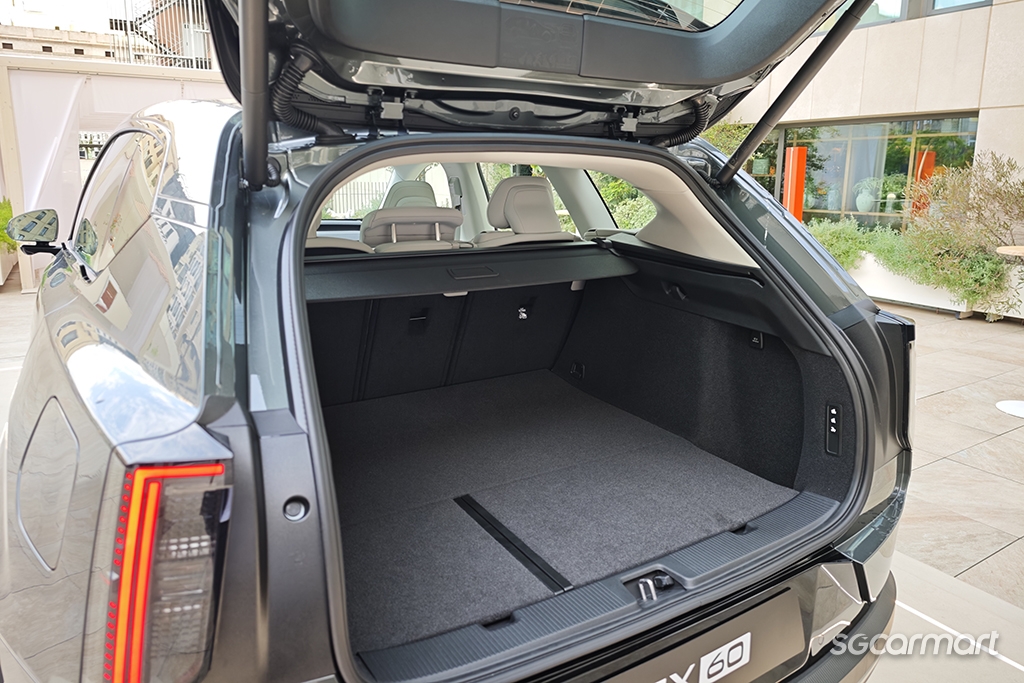
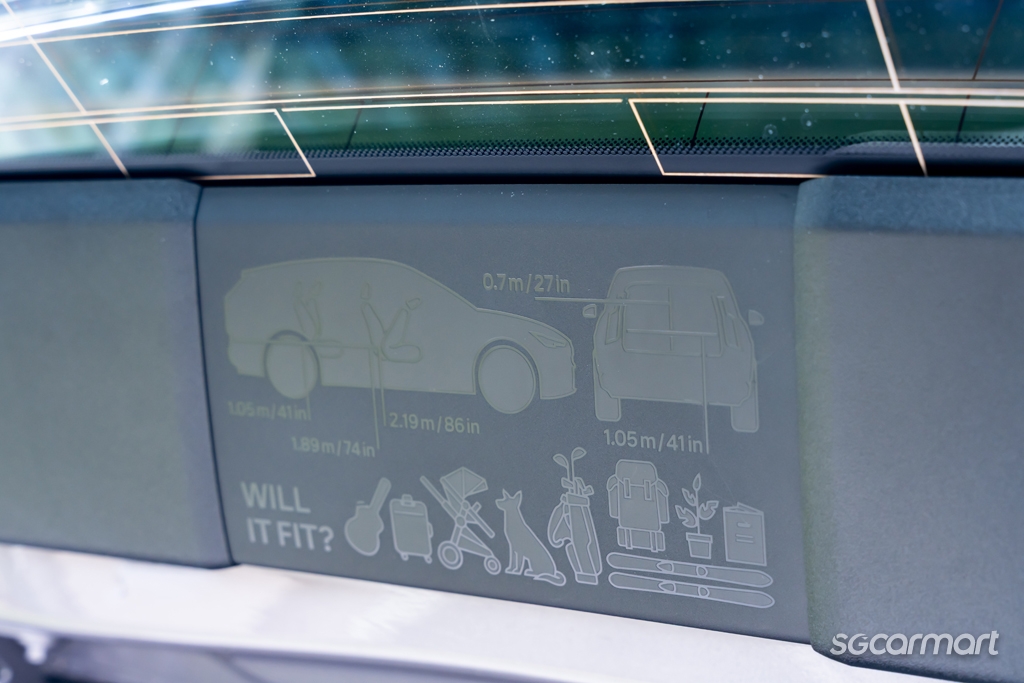
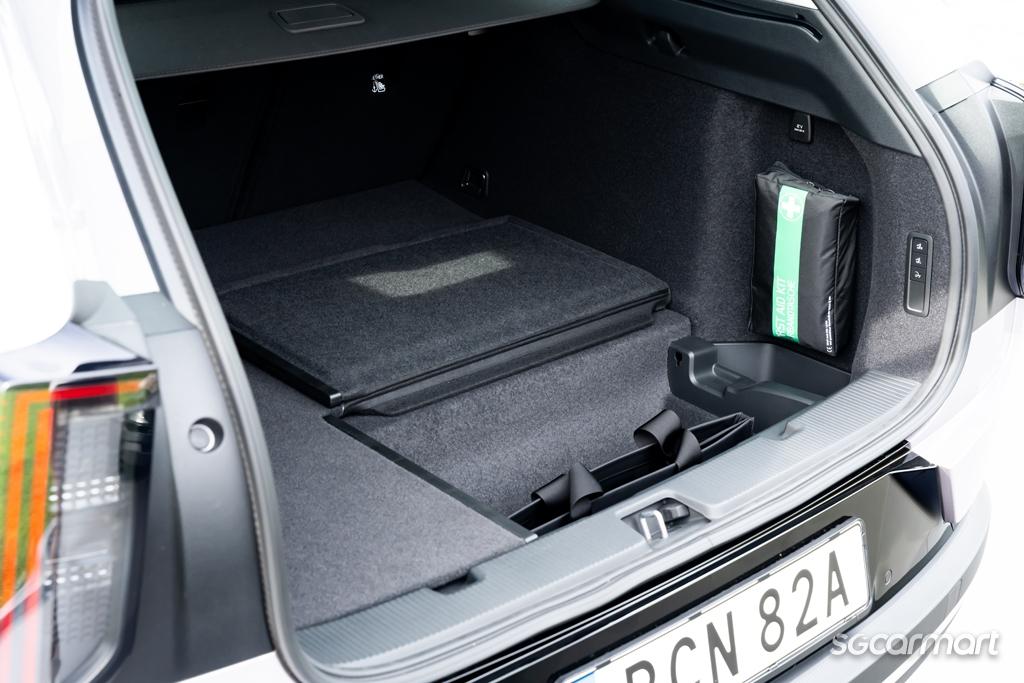
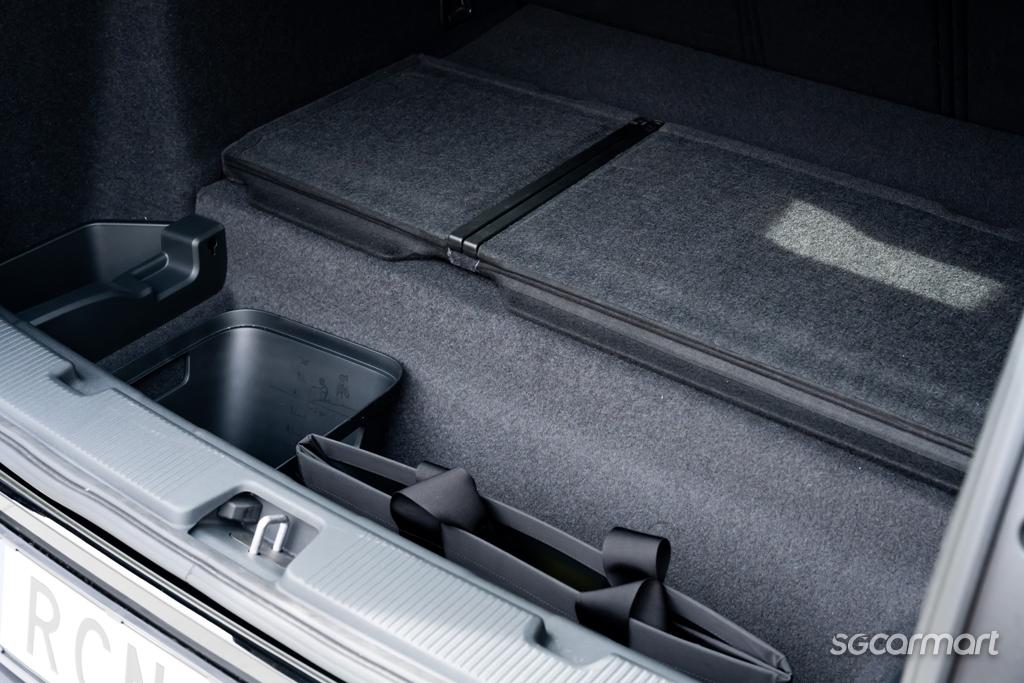
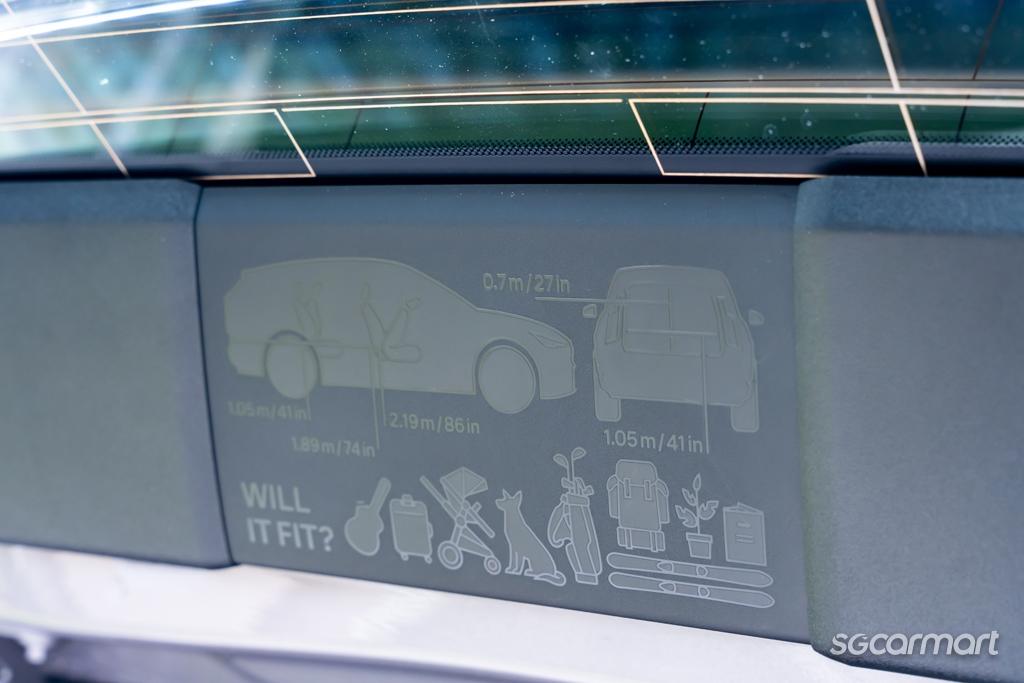
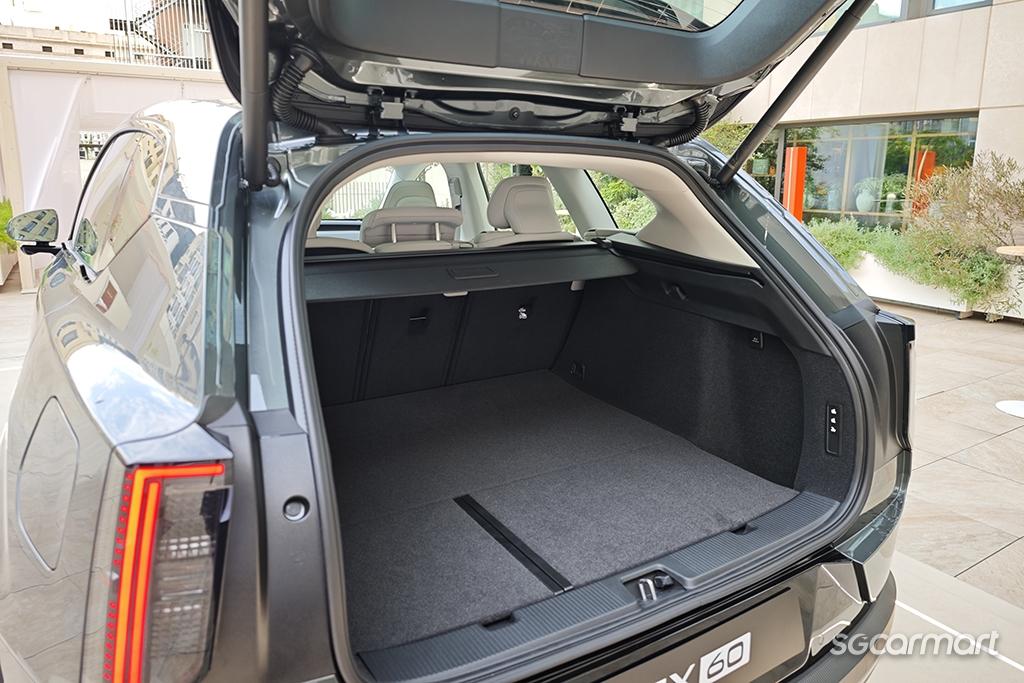
There's plenty of boot space here: 523 litres that expands to 1,647 litres; there's a handy guide with the cargo space dimensions printed on the rear boot cover as well!
There are also lots of boot space with 523 litres, inclusive of the substantial under-floor compartments, and is expandable to a maximum of 1,647 litres when you knock the seats down. A handy guide is also printed on the rear boot cover, showing the dimensions of the cargo space. Thoughtful, once again.
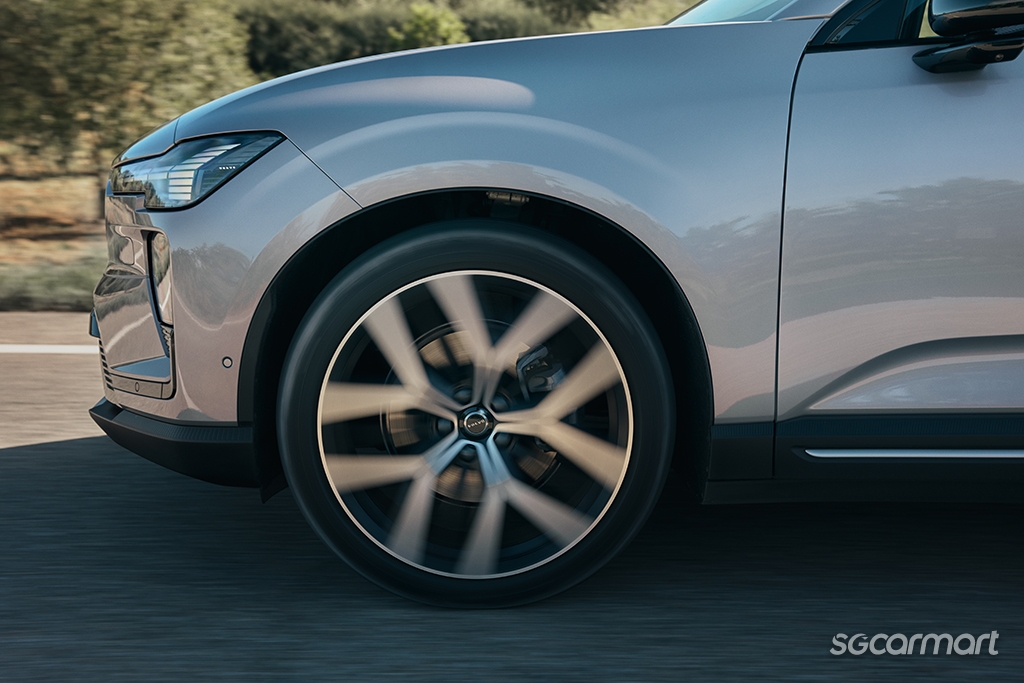
Special Frequency Selective Dampers provide comfort, stability and dynamism
On the move, the EX60 is well-insulated, with the cabin whisper-quiet even way above expressway speeds. Furthermore, the EX60 P60 Ultra is equipped with Frequency Selective Dampers that mechanically adapts to road conditions for optimised comfort, stability and dynamism.
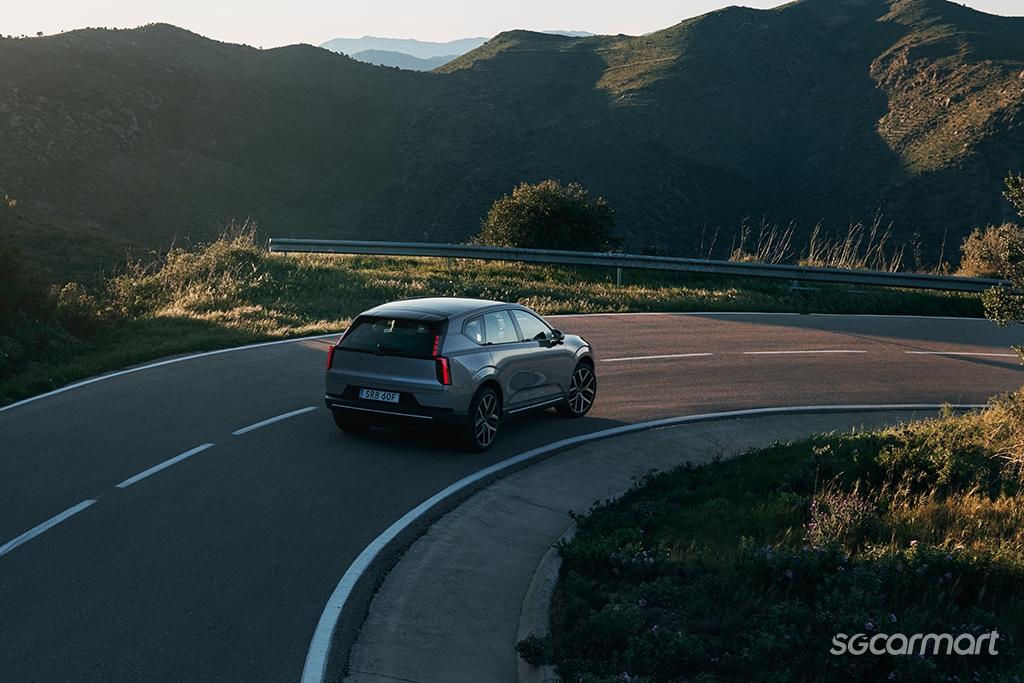
Through my time both as a driver and passenger, driving on the twisty mountain roads in Barcelona, and the long expressways, I've found the suspension to be exceptional. The car remains sufficiently flat and confidence-inspiring (though steering is a little on the lighter side for my liking) on twisty roads, all while still being effective at absorbing bumps and uneven surfaces without excessive harshness. In fact, I would say it almost negates the need for the high-tech Active Chassis found on the P10 (dual motor all-wheel drive) variant.
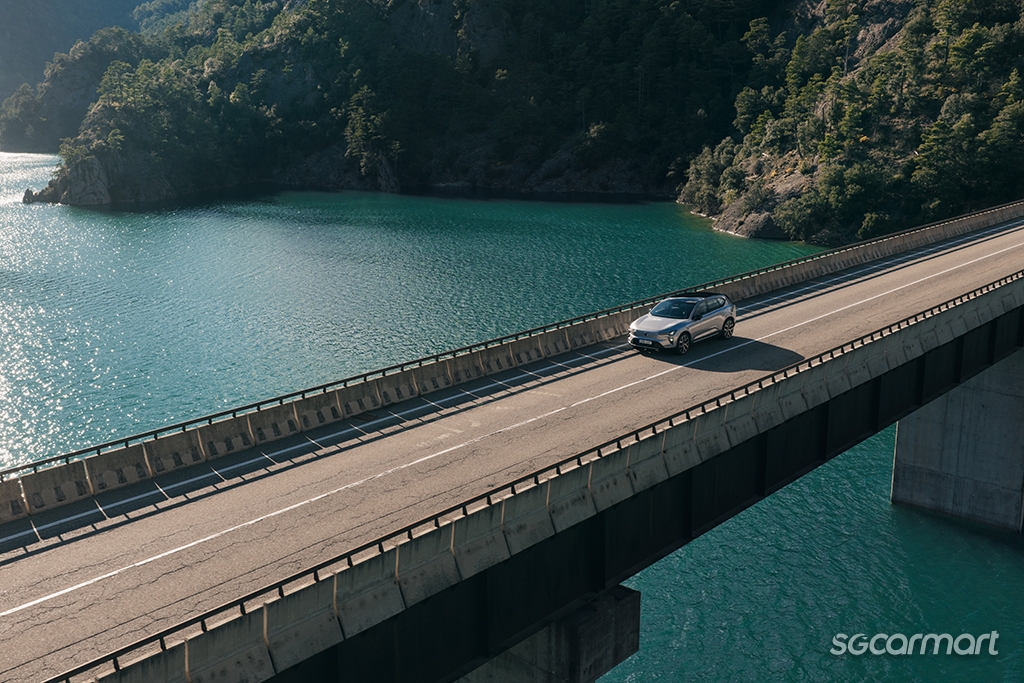
The EX60, even in the rear-wheel drive single-motor guise offers plenty of power and range
A powerful drive without range anxiety
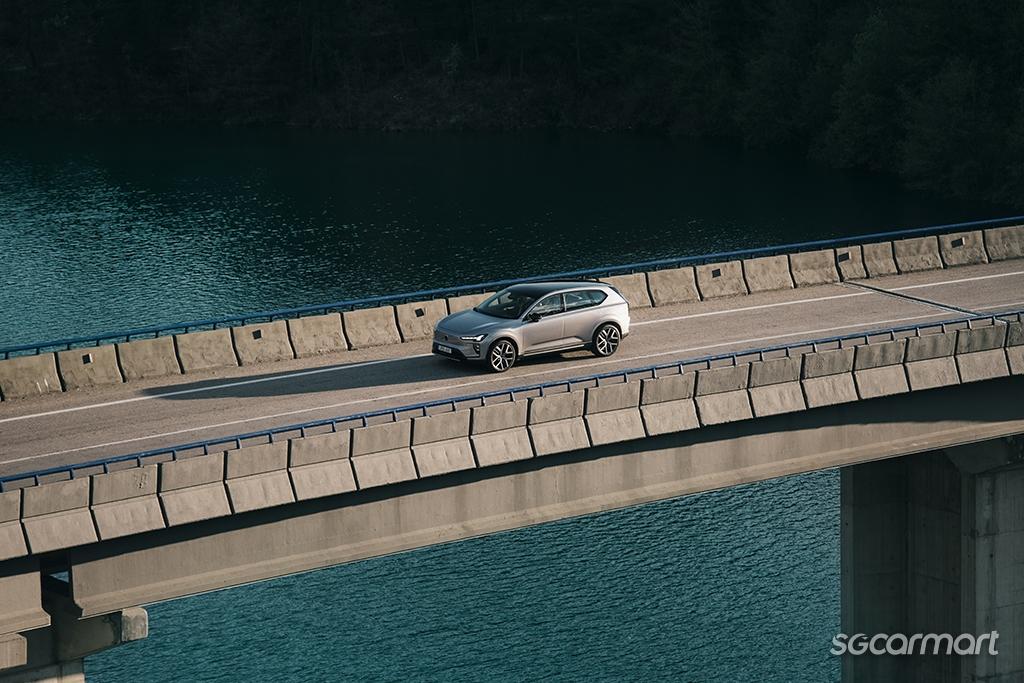
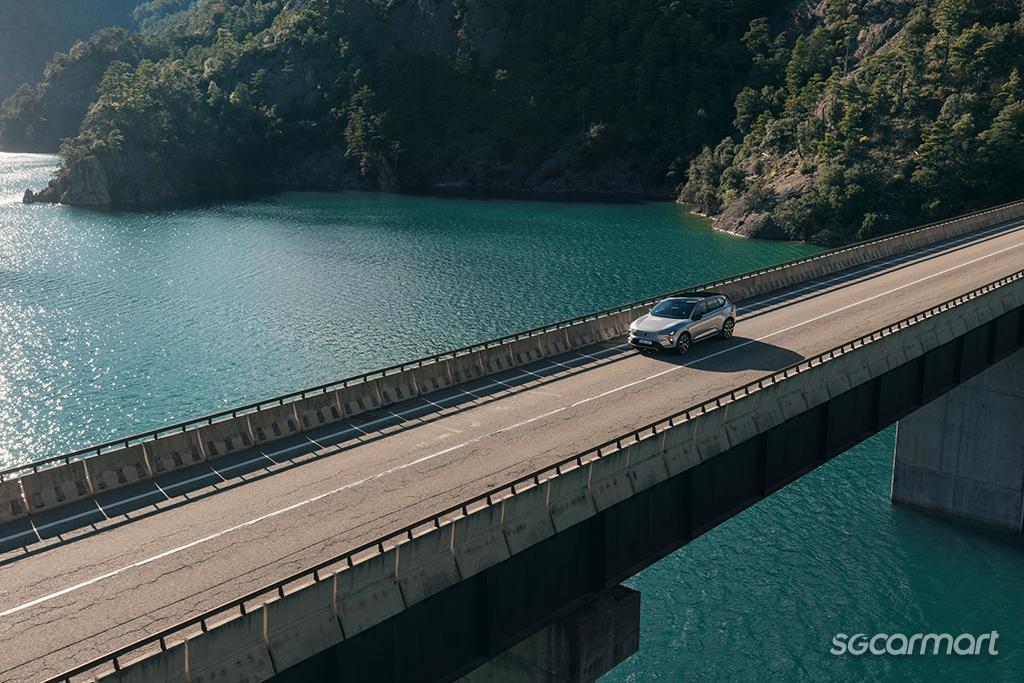
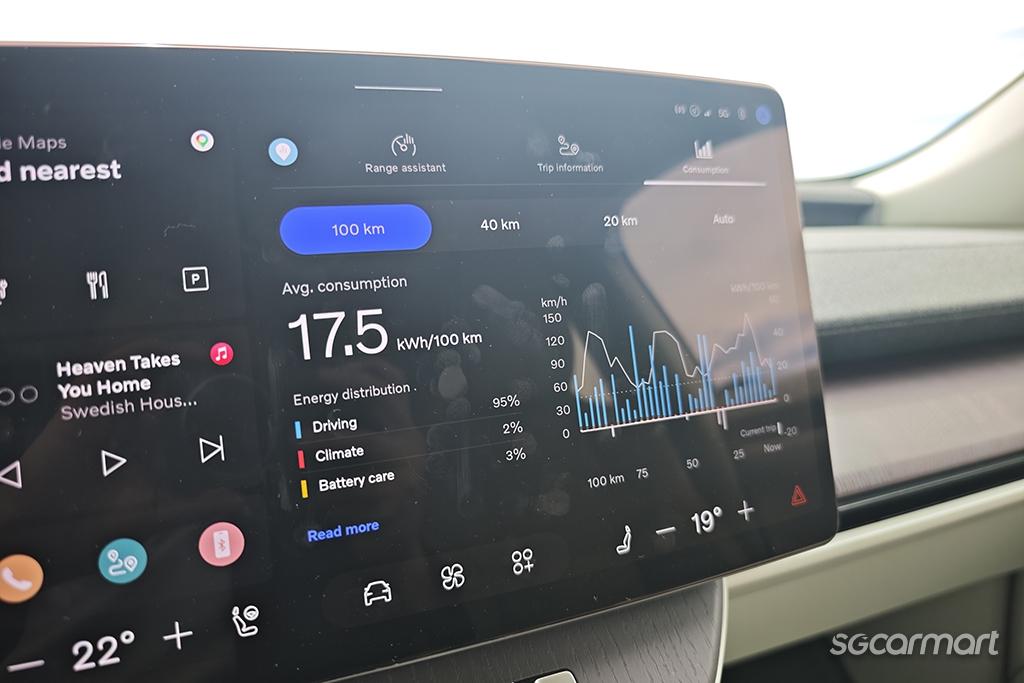
The EX60 P6 Ultra is a rear-wheel drive, single-motor variant that will be coming to Singapore in the future. Equipped with an 83kWh battery, the P6 manages a WLTP range of 611km, and this seems attainable - even with lots of speedy highway driving and aggressive mountain driving, we managed an average consumption of 17.5kWh/100km, which works out to a range in the ballpark of 450km.
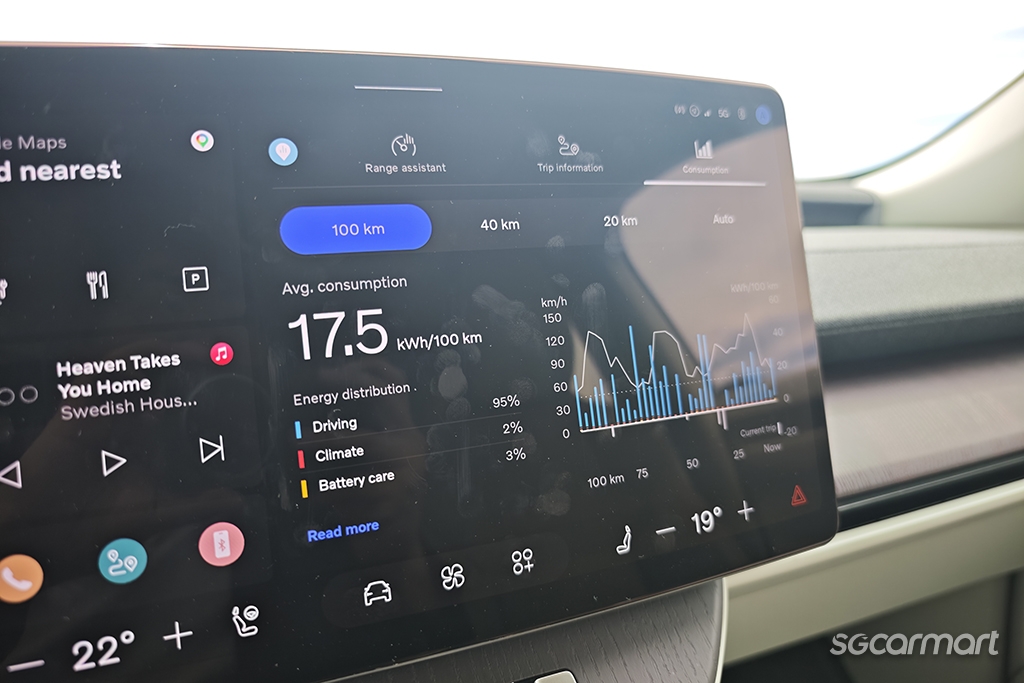
We managed an estimated range in the ballpark of 450km despite high-speeds on the expressway and aggressive driving on the twisty mountain roads
Despite being a single-motor variant, the EX60 P6 is no slouch as it puts out 275kW (369bhp) and 480Nm of torque, allowing the century sprint to be completed in just 5.9 seconds. Meanwhile, the dual-motor P10 variant, which we also drove, puts out 375kW (503bhp) and 710Nm of torque, completing the century sprint in just 4.6 seconds. However, 369bhp is definitely sufficient - both cars have a top speed of 180km/h, and both have no qualms reaching it when you try.
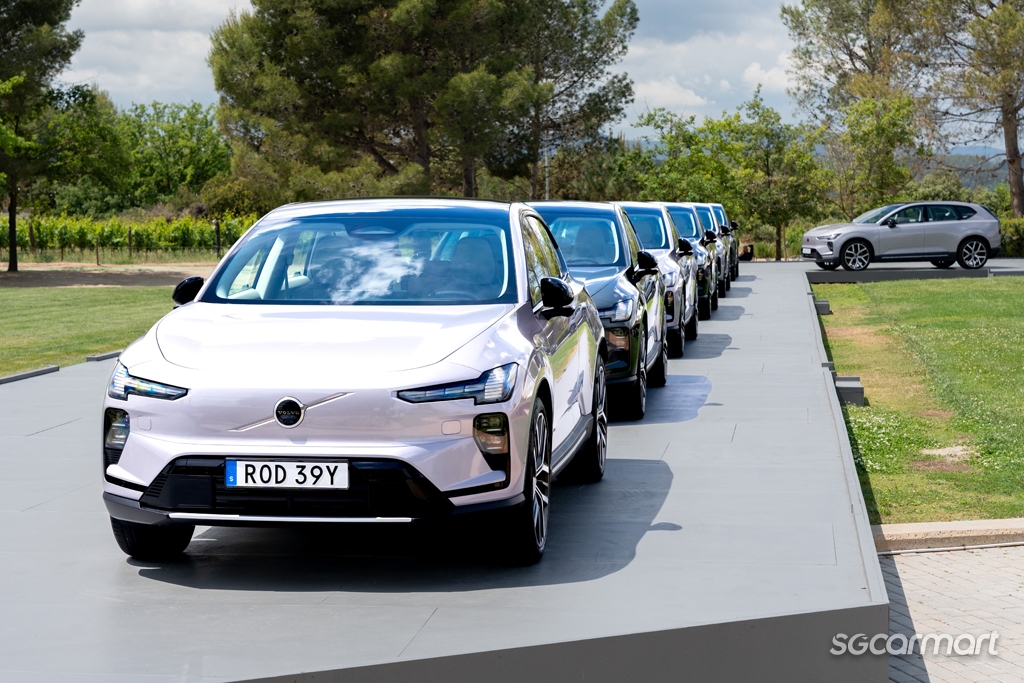
The Volvo EX60 is properly impressive!
Might be Volvo's best EV yet
Being the 'middle child' of the EX-series, the EX60 is right-sized in my opinion, especially in Singapore, where mid-sized SUVs are some of the most popular options.
Volvo has got many things right with then EX60 - it looks good, it is comfortable, spacious, rides well and drives well. My only gripe with it is the current implementation of Google Gemini and the lack of smartphone connectivity options, though these could all be resolved via over-the-air updates. Once these little issues are sorted out, the EX60 could be the best electric Volvo yet, if you were to ask me.
What We Like
Simple and elegant good looks
Calming, comfortable and well-insulated cabin
Spacious with substantial cargo space
The wing grip handles is a smart idea
Amazing suspension
Powerful drive
What We Dislike
Google Gemini AI integration needs to be improved
Android Auto and Apple Carplay isn't ready yet
Steering feel is a little too light
While the EX30 might be the smallest Volvo car, and the EX90 the most powerful production Volvo made, the new EX60 might very well be the smartest.
Being the first to be built upon Volvo's Scalable Product Architecture 3 (SPA3) platform, the EX60 is a new-generation Volvo, made with everything Volvo knows thrown into it.
Optimised for the new era of electric cars, the EX60 gets 800V technology, cell-to-body, a mega casted rear structure, and crucially, it is powered by Volvo's in-house developed HuginCore compute technology - what Volvo calls its complete core system, encompassing the electrical architecture, core computer, zone controllers and software.
While simple, the EX60 doesn't even need to have its badges to be identified as a Volvo
A clean, calm, yet very identifiable design language
Hailing from Sweden, Volvo cars have always incorporated clean, thoughtful and pleasant elements that are often associated with Scandinavian designs. The EX60 continues this trend, in fact, it is immediately recognisable as part of the Volvo EX family of EVs.
The signature segmented Thor's Hammer LED head lights and the grille-less face reminds of the EX30 and EX90 that came before this car
Up front, the EX60 continues with the signature segmented Thor's Hammer LED head lights that you'll find on both the EX30 and the flagship EX90, along with a simple grille-less design and a central air-intake on the lower part of the front bumper.
Longer, wider and lower than the XC60, the EX60 looks less like an SUV, and more like a stationwagon
Despite being a 60-series car, the EX60 is actually longer, wider and lower than its internal-combustion powered peer, the XC60. The EX60 is also designed with aerodynamics in mind, including a low front-end and a streamlined rear - the result is a silhouette that reminds more of a lifted stationwagon, like the V60 Cross Country, instead of a traditional SUV.
These peculiar-looking winglets on the doors of the EX60 are the door handles, the special design improves aerodynamics and allows a cleaner design for the car's body
There is yet another interesting feature on the EX60. Its unique wing grip door handles improve aerodynamics to increase range and allow for a cleaner body design, all without the complications of motorised handles. While peculiar, the wing grip handle is intuitive and ergonomic to operate.
While simple, the rear of the EX60 is easily identifiable
Meanwhile, at the rear, the narrow greenhouse blends into the wide shoulders of the body - even though you don't get the C-shaped taillights found on so many Volvos, the iconic shape is immediately identifiable.
Simple, thoughtful and calming, the interior of the EX60 is designed the Scandinavian way
Simple and thoughtful place to be in
The interior of the EX60 is what we've come to expect from the brand - calming, simple and thoughtful - the Scandinavian way.
You'll notice how I chose 'simple' instead of 'minimalist' as the description. While the result is rather similar, minimalism, especially in the context of cars, tends to sacrifice function for form, and it simply isn't the case for Volvo.
A welcoming interior with excellent fit, feel and finish; the grab handles on the door cards are nicely integrated
The interior is built with leather alternatives, recycled materials and wool, but without compromise on the fit, feel and finish, resulting in a welcoming and quality interior. The door cards have neatly integrated grab handles, but the window switches are still conventionally operated despite being stylishly integrated.
Both the window switches and the door release lever are neatly integrated into the edge of the armrest on the door cards
Then you have the door release lever at the edge of the armrest, which cleverly integrates both the electric release and the emergency mechanical release into one - a light tug for the former, and a complete pull to open the door mechanically. Over here, form and function goes hand in hand.
The driver's display is intentionally placed as far forward as possible for improved visibility; meanwhile the glovebox is located centrally for easy access all-around
Hop into the driver seat and you'll see that the thoughtful design elements continues. The driver's display is placed as close to the front of the car as possible to minimise focus shift from the road as you drive, the glovebox is placed in the centre to allow easy access for both front occupants (it has a nicely hidden mechanical latch that's easy to operate), and the cup holders can be retracted when not in use.
The curved 15.04-inch infotainment display is positioned in a landscape orientation, with easy access to handy features placed close to the driver
And unlike past Volvos, the EX60 gets a 15.04-inch infotainment display in landscape orientation. I've been told that part of the reason for the shift to landscape lies in the quick access bar on the driver side of the screen - this puts several frequently-used features such as the mirrors adjustment and the windscreen defoggers within easy reach. The infotainment display is also slightly curved to increase its viewing angle for all occupants.
The entire cabin is designed for optimal user experience: Google's Gemini AI is employed as your personal assistant within the EX60
By now, it should be clear that user experience is of top priority with the team that designed the cabin of the EX60, and this can also be felt when operating the infotainment system with simple and intuitive to menus. And here, you'll also experience the smart part of the car. Equipped with Google's Gemini AI as your personal assistant, voice commands can be used to operate features such as the climate control, and you can even have a chat with your car.
That said, as the implementation is still in its early stages and features are still limited - Gemini couldn't open the windows or operate Google Maps for me, and takes some time to reply when I tried chatting with it. Likewise, Android Auto and Apple CarPlay connectivity is also unavailable when we tested the car, however, we have been assured that they will be rolled out in the future through over-the-air updates.
The EX60 has been equipped with new multi-adaptive front safety belts that will reduce the risk of injuries in the event of an accident
A comfortable and safe journey
Volvo is known for safety, and the EX60 has been engineered in many ways with safety in mind. The most impressive component is the new multi-adaptive front safety belts, which is also part of the smart systems within the car. This new belt uses data from the interior and exterior sensors on the car to adapt its setting based on the situation and individual profiles to manage the force applied to occupants in accidents.
When you put it on, the safety belts feel just like the pre-tensioning seatbelts that self-tighten after you put them on. While you probably wouldn't even notice its presence, this technology will potentially reduce the risk of injuries in the event of an accident.
The EX60 gets a stiff and strong chassis thanks to its cell-to-body construction and a mega casted rear floor section
The EX60 also benefits from a stiff and stable chassis thanks to its cell-to-body construction and a mega casted rear floor section, both technologies that improve chassis rigidity, reduce weight and improve cabin space. As a result, head and legroom, whether you are sitting in front or in the rear, are very generous.
There's plenty of boot space here: 523 litres that expands to 1,647 litres; there's a handy guide with the cargo space dimensions printed on the rear boot cover as well!
There are also lots of boot space with 523 litres, inclusive of the substantial under-floor compartments, and is expandable to a maximum of 1,647 litres when you knock the seats down. A handy guide is also printed on the rear boot cover, showing the dimensions of the cargo space. Thoughtful, once again.
Special Frequency Selective Dampers provide comfort, stability and dynamism
On the move, the EX60 is well-insulated, with the cabin whisper-quiet even way above expressway speeds. Furthermore, the EX60 P60 Ultra is equipped with Frequency Selective Dampers that mechanically adapts to road conditions for optimised comfort, stability and dynamism.
Through my time both as a driver and passenger, driving on the twisty mountain roads in Barcelona, and the long expressways, I've found the suspension to be exceptional. The car remains sufficiently flat and confidence-inspiring (though steering is a little on the lighter side for my liking) on twisty roads, all while still being effective at absorbing bumps and uneven surfaces without excessive harshness. In fact, I would say it almost negates the need for the high-tech Active Chassis found on the P10 (dual motor all-wheel drive) variant.
The EX60, even in the rear-wheel drive single-motor guise offers plenty of power and range
A powerful drive without range anxiety
The EX60 P6 Ultra is a rear-wheel drive, single-motor variant that will be coming to Singapore in the future. Equipped with an 83kWh battery, the P6 manages a WLTP range of 611km, and this seems attainable - even with lots of speedy highway driving and aggressive mountain driving, we managed an average consumption of 17.5kWh/100km, which works out to a range in the ballpark of 450km.
We managed an estimated range in the ballpark of 450km despite high-speeds on the expressway and aggressive driving on the twisty mountain roads
Despite being a single-motor variant, the EX60 P6 is no slouch as it puts out 275kW (369bhp) and 480Nm of torque, allowing the century sprint to be completed in just 5.9 seconds. Meanwhile, the dual-motor P10 variant, which we also drove, puts out 375kW (503bhp) and 710Nm of torque, completing the century sprint in just 4.6 seconds. However, 369bhp is definitely sufficient - both cars have a top speed of 180km/h, and both have no qualms reaching it when you try.
The Volvo EX60 is properly impressive!
Might be Volvo's best EV yet
Being the 'middle child' of the EX-series, the EX60 is right-sized in my opinion, especially in Singapore, where mid-sized SUVs are some of the most popular options.
Volvo has got many things right with then EX60 - it looks good, it is comfortable, spacious, rides well and drives well. My only gripe with it is the current implementation of Google Gemini and the lack of smartphone connectivity options, though these could all be resolved via over-the-air updates. Once these little issues are sorted out, the EX60 could be the best electric Volvo yet, if you were to ask me.


Thank You For Your Subscription.


Tags
Products & Services

For Owners
Quick Links
About Sgcarmart