Aston Martin announces new sustainability strategy
24 Apr 2022|177 views


Aston Martin has announced a new sustainability strategy, titled 'Racing.Green.' as part of its commemoration of Earth Day.
As part of this new sustainability strategy, the firm is targeting net-zero emissions from its manufacturing facilities by 2030, with a 30% reduction in supply chain emissions, using 2020 as a baseline. Aston Martin is further targeting to achieve net-zero emissions across its entire supply chain by 2039.
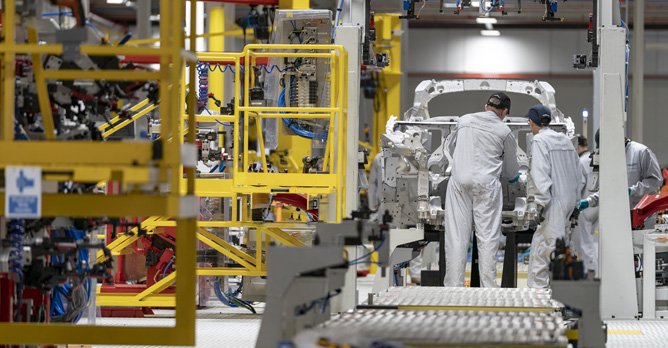
 Aston Martin's St. Athan site is also set to get more than 14,000 solar panels, whihc will see to some 20% of its energy needs The new targets build on Aston Martin's sustainability progress to date, which include a 44% reduction in emissions intensity in its U.K. operations between 2020 and 2021 and 100% renewable energy used across all its U.K. manufacturing facilities since 2019.
A major project will see Aston Martin install more than 14,000 solar panels at its St. Athan site in Wales, capable of delivering 20% of the plant's annual energy demands.
100% of the waste at Aston Martin is already successfully diverted from landfill, with a target to eliminate all plastic packaging waste at Aston Martin within three years. The Racing.Green. strategy also targets the reduction of water consumption by 15%, maximisation of sustainable materials and enhancement of biodiversity across all sites.
Sustainability principles will also be embedded into Aston Martin's future product strategy, including a clear roadmap to electrification. Aston Martin is developing alternatives to the internal combustion engine, with its first plug-in hybrid - the mid-engine supercar Valhalla - to commence deliveries in early 2024.
Aston Martin's first battery electric vehicle meanwhile, is targeted for launch in 2025, and by 2026, all new Aston Martin product lines will have an electrified powertrain option. Aston Martin plans for its entire core portfolio of GT sports cars and SUVs to be fully electrified by 2030.
The use of innovative sustainable materials in Aston Martin cars is also being expanded, including exploring the use of green aluminium alloy - manufactured using 100% renewable energy - and leather-free vegan interior options, to provide greater customer choice and reduce environmental impact.
As part of this new sustainability strategy, the firm is targeting net-zero emissions from its manufacturing facilities by 2030, with a 30% reduction in supply chain emissions, using 2020 as a baseline. Aston Martin is further targeting to achieve net-zero emissions across its entire supply chain by 2039.
A major project will see Aston Martin install more than 14,000 solar panels at its St. Athan site in Wales, capable of delivering 20% of the plant's annual energy demands.
100% of the waste at Aston Martin is already successfully diverted from landfill, with a target to eliminate all plastic packaging waste at Aston Martin within three years. The Racing.Green. strategy also targets the reduction of water consumption by 15%, maximisation of sustainable materials and enhancement of biodiversity across all sites.
Sustainability principles will also be embedded into Aston Martin's future product strategy, including a clear roadmap to electrification. Aston Martin is developing alternatives to the internal combustion engine, with its first plug-in hybrid - the mid-engine supercar Valhalla - to commence deliveries in early 2024.
Aston Martin's first battery electric vehicle meanwhile, is targeted for launch in 2025, and by 2026, all new Aston Martin product lines will have an electrified powertrain option. Aston Martin plans for its entire core portfolio of GT sports cars and SUVs to be fully electrified by 2030.
The use of innovative sustainable materials in Aston Martin cars is also being expanded, including exploring the use of green aluminium alloy - manufactured using 100% renewable energy - and leather-free vegan interior options, to provide greater customer choice and reduce environmental impact.
Aston Martin has announced a new sustainability strategy, titled 'Racing.Green.' as part of its commemoration of Earth Day.
As part of this new sustainability strategy, the firm is targeting net-zero emissions from its manufacturing facilities by 2030, with a 30% reduction in supply chain emissions, using 2020 as a baseline. Aston Martin is further targeting to achieve net-zero emissions across its entire supply chain by 2039.
Aston Martin's St. Athan site is also set to get more than 14,000 solar panels, whihc will see to some 20% of its energy needs The new targets build on Aston Martin's sustainability progress to date, which include a 44% reduction in emissions intensity in its U.K. operations between 2020 and 2021 and 100% renewable energy used across all its U.K. manufacturing facilities since 2019.
A major project will see Aston Martin install more than 14,000 solar panels at its St. Athan site in Wales, capable of delivering 20% of the plant's annual energy demands.
100% of the waste at Aston Martin is already successfully diverted from landfill, with a target to eliminate all plastic packaging waste at Aston Martin within three years. The Racing.Green. strategy also targets the reduction of water consumption by 15%, maximisation of sustainable materials and enhancement of biodiversity across all sites.
Sustainability principles will also be embedded into Aston Martin's future product strategy, including a clear roadmap to electrification. Aston Martin is developing alternatives to the internal combustion engine, with its first plug-in hybrid - the mid-engine supercar Valhalla - to commence deliveries in early 2024.
Aston Martin's first battery electric vehicle meanwhile, is targeted for launch in 2025, and by 2026, all new Aston Martin product lines will have an electrified powertrain option. Aston Martin plans for its entire core portfolio of GT sports cars and SUVs to be fully electrified by 2030.
The use of innovative sustainable materials in Aston Martin cars is also being expanded, including exploring the use of green aluminium alloy - manufactured using 100% renewable energy - and leather-free vegan interior options, to provide greater customer choice and reduce environmental impact.
As part of this new sustainability strategy, the firm is targeting net-zero emissions from its manufacturing facilities by 2030, with a 30% reduction in supply chain emissions, using 2020 as a baseline. Aston Martin is further targeting to achieve net-zero emissions across its entire supply chain by 2039.
A major project will see Aston Martin install more than 14,000 solar panels at its St. Athan site in Wales, capable of delivering 20% of the plant's annual energy demands.
100% of the waste at Aston Martin is already successfully diverted from landfill, with a target to eliminate all plastic packaging waste at Aston Martin within three years. The Racing.Green. strategy also targets the reduction of water consumption by 15%, maximisation of sustainable materials and enhancement of biodiversity across all sites.
Sustainability principles will also be embedded into Aston Martin's future product strategy, including a clear roadmap to electrification. Aston Martin is developing alternatives to the internal combustion engine, with its first plug-in hybrid - the mid-engine supercar Valhalla - to commence deliveries in early 2024.
Aston Martin's first battery electric vehicle meanwhile, is targeted for launch in 2025, and by 2026, all new Aston Martin product lines will have an electrified powertrain option. Aston Martin plans for its entire core portfolio of GT sports cars and SUVs to be fully electrified by 2030.
The use of innovative sustainable materials in Aston Martin cars is also being expanded, including exploring the use of green aluminium alloy - manufactured using 100% renewable energy - and leather-free vegan interior options, to provide greater customer choice and reduce environmental impact.


Latest COE Prices
June 2026 | 1st BIDDING
NEXT TENDER: 17 Jun 2026
CAT A$126,009
CAT B$126,989
CAT C$94,000
CAT E$129,000
View Full Results 
Thank You For Your Subscription.
















Tags
Products & Services

For Owners
Quick Links
About Sgcarmart