View page in desktop
|
Report error
  •   Apple app store icon
  • Google play store icon
Terms of Service
|
Privacy Policy
|
PDPA
|
Site Map
©2004-2026 Sgcarmart, Singapore. All rights reserved.
  • Home
  • Car Articles
  • features
  • features Listings
  • Features
  • Four improvements that make the 2017 Honda Civic Type R the best one yet

    03 Aug 2017

    |

    28,775 views

    We speak with Hideki Kakinuma, Assistant Large Project Leader of the 2017 Honda Civic Type R, to find out why it is the best iteration to date.


    The Honda Civic Type R has long been a favourite among many petrolheads and has proven itself, time and again, both on the road and on the track. Made to set lap times, the Type R badge has always been synonymous with high-revving, lightweight and fun-to-drive characteristics that make even the manliest of men squeal with excitement.

    20 years ago, the EK9 was introduced to the world. Capturing the hearts of street racers and trackies alike, the Type R has since evolved into the outrageously designed, highly-anticipated FK8 that we see today. The FK8 boasts an impressive spec sheet, which promises to deliver a Type R that is better than all its predecessors combined. We speak with Hideki Kakinuma, Assistant Large Project Leader of the 2017 Honda Civic Type R, to find out why it just might be the best iteration to date.
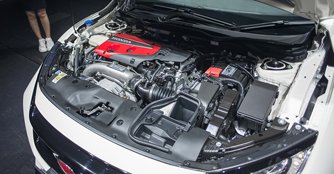
    Kakinuma-san says it is possible to squeeze even more power out of the 2.0-litre VTEC turbo, with some engine tuning

    1. It's the most powerful and fastest Type R around the track

    Now in its fifth generation, the 2017 Type R was recently launched in Singapore and already holds the title for the fastest front-wheel drive car lap around the Nurburgring Nordschleife, with a time of 7:43.8. With 316bhp and 400Nm of torque, the 2.0-litre VTEC turbo engine propels the FK8 to 100km/h in just 5.7 seconds and on to a top speed of 272km/h.

    Kakinuma-san says that the previous generations had high-revving, highly responsive, naturally aspirated engines synonymous with the Type R badge, but had limitations in terms of power output. In order to get more muscle, the team decided to go with the 2.0-litre VTEC turbo for the FK2, which was later found to be less responsive. The FK8, however, has received some upgrades in terms of a new single-mass flywheel, lightweight clutch and some engineering magic under the hood to increase its responsiveness, along with more power.
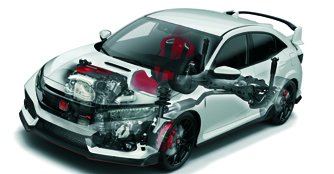
    The FK8 has a stiffer platform and a new multi-link rear suspension for improved stability

    2. It handles better

    Evident through its Nurburgring lap record, it comes as no surprise that the FK8 has gotten an upgrade in terms of handling. According to Kakinuma-san, the basic function of the Type R is to provide stability.

    In order to improve the car's stability, the torsion beam in the rear of the FK2 had to be replaced with a new multi-link rear suspension for the FK8. Kakinuma-san highlights that "to improve the stability of the car is to improve the stability of the rear", noting that the torsion beam had its limitations.

    In addition to that, the FK8's unibody platform - which is based on the 10th generation Civic hatchback - gets a 37 percent improvement in torsional stiffness and 45 percent improvement in static bending rigidity. These, among other factors, contribute to better steering response and cornering stability.
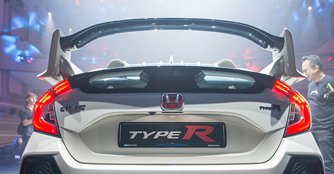
    The FK8's lightweight rear wing contributes to the car's negative lift and improved road-holding capabilities

    3. It has improved aerodynamics

    The FK8 Type R has also received an upgrade in terms of aerodynamics and features a more comprehensive aerodynamic package than its predecessor. This includes a smoother underbody, front tyre air curtain, a slim rear wing and vortex generators at the trailing edge of the roof line.

    Working in conjunction with vortex generator strakes on the roofline, the lightweight rear wing diverts air flow across the tail and generates more downforce on the rear axle. It also plays a part in the FK8's over negative lift, which enhances road-holding capabilities, especially around high-speed corners.

    On top of that, the smoother underbody - coupled with the rear diffuser - helps to 'suck' the car onto the road. This results in a three percent reduction in the car's overall drag coefficient. What this all means is the FK8 is now better able to slice through the air, go faster and corner better.
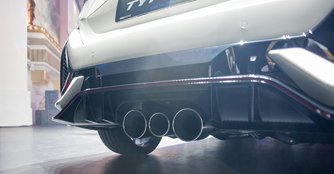
    The middle tailpipe helps to reduce the exhaust's booming sound at lower speeds and makes for a quieter ride

    4. It's easier to live with day to day

    For the first time in Type R history, the FK8 features an unprecedented Comfort mode; on top of the standard Sport and +R modes. This may seem counter-intuitive since the Type R name isn't typically associated with comfort. But Kakinuma-san explains that on top of its basic function of stability, the FK8 had to receive improvements in its speed around the circuit, as well as its grand tourer functions.

    He says that the previous versions were stripped down to be lightweight but as a result, they were 'very noisy and bumpy'. "That kind of sports car doesn't have a future," he adds. Kakinuma-san also mentions that putting aside the (Type R) name, it's good to have more choices. Some people enjoy the bumpiness while those who don't like the Comfort mode can choose not to use it. Thus, he felt the need to give customers the choice of how they want to enjoy the sports car.

    The FK8 doesn't just get an improvement in ride comfort, though. It has a funky triple-exit exhaust design that may be unsettling to the more obsessive compulsive, but has a unique function. Main tailpipes on either side expel exhaust from the engine while the third, smaller tailpipe in the centre serves two purposes. It helps to amplify the engine's aggressive tone at higher speeds but at mid-load engine speeds, the middle tailpipe sucks in ambient air to reduce the exhaust's booming sound and provides a quieter, more comfortable ride.

    Of course, these enhancements remain to be seen on the road as we have not driven the car. But if the 2017 Honda Civic Type R is anything like what it seems to be on paper, we'll be in for a real treat.

    Anthony Lim
    Text by Anthony Lim
    Writing may be my thing, but cars, well, that's just pure passion that I simply cannot get rid off.
    Photos by Low Fai Ming
    24.4k

    Tags

    honda civic honda civic type r civic type r honda civic type r best honda civic type r hideki kakinuma honda civic type r fk8 fk8 type r

    AllReviewsNewsAdviceFeaturesVideos
    • Home
    • Car Articles
    • features
    • features Listings
    • Features

    Four improvements that make the 2017 Honda Civic Type R the best one yet

    03 Aug 2017

    |

    28,775 views

    We speak with Hideki Kakinuma, Assistant Large Project Leader of the 2017 Honda Civic Type R, to find out why it is the best iteration to date.


    The Honda Civic Type R has long been a favourite among many petrolheads and has proven itself, time and again, both on the road and on the track. Made to set lap times, the Type R badge has always been synonymous with high-revving, lightweight and fun-to-drive characteristics that make even the manliest of men squeal with excitement.

    20 years ago, the EK9 was introduced to the world. Capturing the hearts of street racers and trackies alike, the Type R has since evolved into the outrageously designed, highly-anticipated FK8 that we see today. The FK8 boasts an impressive spec sheet, which promises to deliver a Type R that is better than all its predecessors combined. We speak with Hideki Kakinuma, Assistant Large Project Leader of the 2017 Honda Civic Type R, to find out why it just might be the best iteration to date.

    Kakinuma-san says it is possible to squeeze even more power out of the 2.0-litre VTEC turbo, with some engine tuning

    1. It's the most powerful and fastest Type R around the track

    Now in its fifth generation, the 2017 Type R was recently launched in Singapore and already holds the title for the fastest front-wheel drive car lap around the Nurburgring Nordschleife, with a time of 7:43.8. With 316bhp and 400Nm of torque, the 2.0-litre VTEC turbo engine propels the FK8 to 100km/h in just 5.7 seconds and on to a top speed of 272km/h.

    Kakinuma-san says that the previous generations had high-revving, highly responsive, naturally aspirated engines synonymous with the Type R badge, but had limitations in terms of power output. In order to get more muscle, the team decided to go with the 2.0-litre VTEC turbo for the FK2, which was later found to be less responsive. The FK8, however, has received some upgrades in terms of a new single-mass flywheel, lightweight clutch and some engineering magic under the hood to increase its responsiveness, along with more power.

    The FK8 has a stiffer platform and a new multi-link rear suspension for improved stability

    2. It handles better

    Evident through its Nurburgring lap record, it comes as no surprise that the FK8 has gotten an upgrade in terms of handling. According to Kakinuma-san, the basic function of the Type R is to provide stability.

    In order to improve the car's stability, the torsion beam in the rear of the FK2 had to be replaced with a new multi-link rear suspension for the FK8. Kakinuma-san highlights that "to improve the stability of the car is to improve the stability of the rear", noting that the torsion beam had its limitations.

    In addition to that, the FK8's unibody platform - which is based on the 10th generation Civic hatchback - gets a 37 percent improvement in torsional stiffness and 45 percent improvement in static bending rigidity. These, among other factors, contribute to better steering response and cornering stability.

    The FK8's lightweight rear wing contributes to the car's negative lift and improved road-holding capabilities

    3. It has improved aerodynamics

    The FK8 Type R has also received an upgrade in terms of aerodynamics and features a more comprehensive aerodynamic package than its predecessor. This includes a smoother underbody, front tyre air curtain, a slim rear wing and vortex generators at the trailing edge of the roof line.

    Working in conjunction with vortex generator strakes on the roofline, the lightweight rear wing diverts air flow across the tail and generates more downforce on the rear axle. It also plays a part in the FK8's over negative lift, which enhances road-holding capabilities, especially around high-speed corners.

    On top of that, the smoother underbody - coupled with the rear diffuser - helps to 'suck' the car onto the road. This results in a three percent reduction in the car's overall drag coefficient. What this all means is the FK8 is now better able to slice through the air, go faster and corner better.

    The middle tailpipe helps to reduce the exhaust's booming sound at lower speeds and makes for a quieter ride

    4. It's easier to live with day to day

    For the first time in Type R history, the FK8 features an unprecedented Comfort mode; on top of the standard Sport and +R modes. This may seem counter-intuitive since the Type R name isn't typically associated with comfort. But Kakinuma-san explains that on top of its basic function of stability, the FK8 had to receive improvements in its speed around the circuit, as well as its grand tourer functions.

    He says that the previous versions were stripped down to be lightweight but as a result, they were 'very noisy and bumpy'. "That kind of sports car doesn't have a future," he adds. Kakinuma-san also mentions that putting aside the (Type R) name, it's good to have more choices. Some people enjoy the bumpiness while those who don't like the Comfort mode can choose not to use it. Thus, he felt the need to give customers the choice of how they want to enjoy the sports car.

    The FK8 doesn't just get an improvement in ride comfort, though. It has a funky triple-exit exhaust design that may be unsettling to the more obsessive compulsive, but has a unique function. Main tailpipes on either side expel exhaust from the engine while the third, smaller tailpipe in the centre serves two purposes. It helps to amplify the engine's aggressive tone at higher speeds but at mid-load engine speeds, the middle tailpipe sucks in ambient air to reduce the exhaust's booming sound and provides a quieter, more comfortable ride.

    Of course, these enhancements remain to be seen on the road as we have not driven the car. But if the 2017 Honda Civic Type R is anything like what it seems to be on paper, we'll be in for a real treat.

    Anthony Lim
    Text by Anthony Lim
    Writing may be my thing, but cars, well, that's just pure passion that I simply cannot get rid off.
    Photos by Low Fai Ming
    24.4k

    Tags

    honda civic honda civic type r civic type r honda civic type r best honda civic type r hideki kakinuma honda civic type r fk8 fk8 type r

    Newsletter

    Be Notified On The Latest News

    Newsletter

    Be Notified On The Latest News

    You May Also Like

    We try out roadside parking with the new OBU!

    We try out roadside parking with the new OBU!

    New cars are safer: Opt for one when you can

    New cars are safer: Opt for one when you can

    EV NEXT: Peace of mind with battery SOH certification

    EV NEXT: Peace of mind with battery SOH certification

    Sgcarmart Explores: East Coast Park!

    Sgcarmart Explores: East Coast Park!

    Sgcarmart Explores: Bras Basah!

    Sgcarmart Explores: Bras Basah!

    Mazda 6e Fastback GT Electric review

    Mazda 6e Fastback GT Electric review

    Opinion: Is it time for a change to our road traffic laws?

    Opinion: Is it time for a change to our road traffic laws?

    The BYD Sealion 8 seven-seater SUV arrives in Singapore

    The BYD Sealion 8 seven-seater SUV arrives in Singapore

    Hongqi Singapore opens its showroom doors

    Hongqi Singapore opens its showroom doors

    A first look at Chery's iCaur V23 and Jaecoo J8 in Singapore

    A first look at Chery's iCaur V23 and Jaecoo J8 in Singapore

    Opinion: Why do we even need green number plates?

    Opinion: Why do we even need green number plates?

    Is parallel import hesitancy growing among car buyers?

    Is parallel import hesitancy growing among car buyers?

    Toyota RAV4 Hybrid vs Subaru Forester e-Boxer

    Toyota RAV4 Hybrid vs Subaru Forester e-Boxer

    Tesla launches Model Y L in Singapore, first six-seater here

    Tesla launches Model Y L in Singapore, first six-seater here

    Mercedes-Benz GLC debuts alongside Studio opening

    Mercedes-Benz GLC debuts alongside Studio opening

    Motoring Icons: JDM legends - Honda NSX

    Motoring Icons: JDM legends - Honda NSX

    You May Also Like

    We try out roadside parking with the new OBU!

    We try out roadside parking with the new OBU!

    New cars are safer: Opt for one when you can

    New cars are safer: Opt for one when you can

    EV NEXT: Peace of mind with battery SOH certification

    EV NEXT: Peace of mind with battery SOH certification

    Sgcarmart Explores: East Coast Park!

    Sgcarmart Explores: East Coast Park!

    Sgcarmart Explores: Bras Basah!

    Sgcarmart Explores: Bras Basah!

    Mazda 6e Fastback GT Electric review

    Mazda 6e Fastback GT Electric review

    Opinion: Is it time for a change to our road traffic laws?

    Opinion: Is it time for a change to our road traffic laws?

    The BYD Sealion 8 seven-seater SUV arrives in Singapore

    The BYD Sealion 8 seven-seater SUV arrives in Singapore

    Hongqi Singapore opens its showroom doors

    Hongqi Singapore opens its showroom doors

    A first look at Chery's iCaur V23 and Jaecoo J8 in Singapore

    A first look at Chery's iCaur V23 and Jaecoo J8 in Singapore

    Opinion: Why do we even need green number plates?

    Opinion: Why do we even need green number plates?

    Is parallel import hesitancy growing among car buyers?

    Is parallel import hesitancy growing among car buyers?

    Toyota RAV4 Hybrid vs Subaru Forester e-Boxer

    Toyota RAV4 Hybrid vs Subaru Forester e-Boxer

    Tesla launches Model Y L in Singapore, first six-seater here

    Tesla launches Model Y L in Singapore, first six-seater here

    Mercedes-Benz GLC debuts alongside Studio opening

    Mercedes-Benz GLC debuts alongside Studio opening

    Motoring Icons: JDM legends - Honda NSX

    Motoring Icons: JDM legends - Honda NSX

    Related Articles

    New cars are safer: Opt for one when you can

    New cars are safer: Opt for one when you can

    BYD Seal 6 Premium Review

    BYD Seal 6 Premium Review

    Honda Super-ONE Review

    Honda Super-ONE Review

    ERP 2.0: 5 things we know, 2 things we don't

    ERP 2.0: 5 things we know, 2 things we don't

    Mazda 6e Fastback GT Electric review

    Mazda 6e Fastback GT Electric review

    Volvo EX60 P6 Ultra First Drive Review

    Volvo EX60 P6 Ultra First Drive Review

    Is parallel import hesitancy growing among car buyers?

    Is parallel import hesitancy growing among car buyers?

    The 5 main things you must know about the XPENG L03

    The 5 main things you must know about the XPENG L03

    Related Articles

    New cars are safer: Opt for one when you can

    New cars are safer: Opt for one when you can

    BYD Seal 6 Premium Review

    BYD Seal 6 Premium Review

    Honda Super-ONE Review

    Honda Super-ONE Review

    ERP 2.0: 5 things we know, 2 things we don't

    ERP 2.0: 5 things we know, 2 things we don't

    Mazda 6e Fastback GT Electric review

    Mazda 6e Fastback GT Electric review

    Volvo EX60 P6 Ultra First Drive Review

    Volvo EX60 P6 Ultra First Drive Review

    Is parallel import hesitancy growing among car buyers?

    Is parallel import hesitancy growing among car buyers?

    The 5 main things you must know about the XPENG L03

    The 5 main things you must know about the XPENG L03