View page in desktop
|
Report error
  •   Apple app store icon
  • Google play store icon
Terms of Service
|
Privacy Policy
|
PDPA
|
Site Map
©2004-2026 Sgcarmart, Singapore. All rights reserved.
  • Home
  • Car Articles
  • advice
  • advice Listings
  • Car Maintenance Advice
  • Taking care of your car's cooling system

    25 Feb 2016

    |

    100,520 views

    We take a look at a car's cooling system and its importance, as well as how to prevent engine overheating with proper care and maintenance.


    Imagine being stuck in traffic on your way to an important meeting and your car's water temperature is rising as rapidly as your blood pressure. That doesn't sound like fun at all.
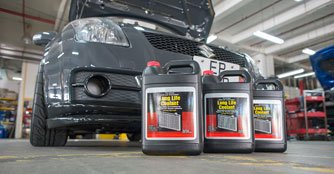
    Remember to check the vehicle manual or with your mechanic to find out the correct coolant for your engine - different engine types may require different coolants
    Problems like hot weather conditions, low water and coolant levels in the radiator, a faulty electric fan assembly and small cracks that allow coolant to leak can arise and cause the engine to run hotter than normal, resulting in engine overheating.

    In a nutshell, anything that decreases the cooling system's ability to absorb, transport and dissipate heat will cause overheating and should never be ignored. An overheated engine causes damage to the rings, pistons and rod bearings, leading to its untimely death - or what mechanics will sometimes term as 'engine piang.'

    To better understand the cooling system in our car, we approached Sonny from renowed car racing specialists ST Powered and his mechanic Andy to find out more.

    On the go

    In the unfortunate event that the temperature gauge in your car rises from its normal idling spot and the 'Check Engine' or 'Temperature' malfunction indicator lights up, stop driving.
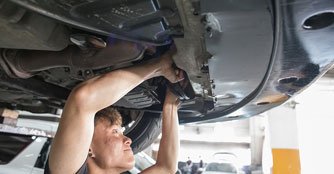
    Andy ensuring that all hoses are intact and that no leaks are present
    Turn the engine off, give the car some time to cool down and try to find a temporary solution before driving to your nearest workshop. More often than not, adding coolant into the radiator and coolant reservoir tank (if you carry a bottle around) will be a great temporary solution. Otherwise, a bottle of water will also do as a last resort.

    Never remove the radiator cap when the engine is running or still hot and do not pour cold water into a hot radiator. This could cause the engine block to crack due to the sudden change in temperature and only in an emergency should you add only water to the coolant system. Most modern engines have aluminium cylinder heads that require the protective anti-corrosive properties.

    Also check the coolant reservoir tank. If the coolant reservoir tank is empty, you may have sprung a leak. Once that's done, give your mechanic a call to check if it's safe for you to drive down to the workshop. In more serious cases, assistance from a tow truck may be necessary.
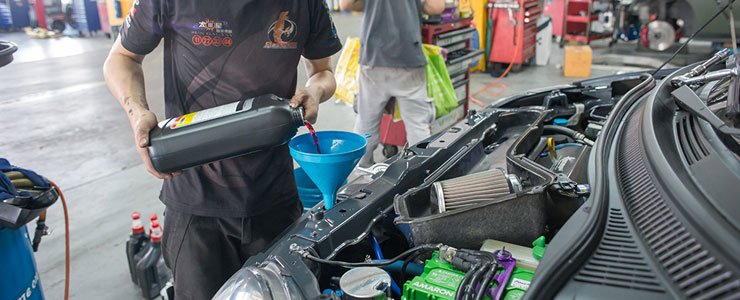

    What to check?

    At ST Powered, we did a coolant flush. Performing it at least once a year stops corrosion from building up in your radiator, keeping things nice and cool. Andy started by hoisting the car up, allowing it to cool. Metal surfaces and coolant in a recently-run engine can be extremely hot and will cause injury if it comes in contact with your skin.
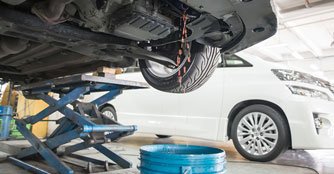
    Use a disposable pan or bucket for coolant drainage, and label all fluid correctly before properly disposing them
    When it cooled, Andy gently brushed the radiator to remove dirt and grime. He then removed the radiator cap and procedeed to drain out the existing coolant into a pan.

    Draining your radiator will only remove above 40-50 percent of your old coolant, so Andy flushed the radiator with radiator flush fluid and a pressurised air gun to get the rest out.

    Coolant is usually red, green, blue, or yellow. If it looks colourless, rusty, or has bits and pieces of foreign particles floating around in it, flush your cooling system and add new coolant. If the coolant has a sludgy, oily surface, Andy recommends immediately taking the vehicle to your mechanic to check for internal head gasket leakage.

    While doing so, Andy advises that you should always roll up or remove loose clothing and keep your arms away from the cooling fan. Again, never remove the coolant reservoir cap when the engine is running or still hot. Let it cool down first. Enjoying a packet of kopi while waiting is recommended.
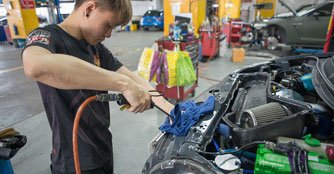
    Air pressure is used intermittently to loosen scale and sediment - excessive air pressure should be avoided to prevent damage to the radiator
    While you're messing around with your cooling system, feel the radiator hoses too. They're the big hoses that go into the top and come out of the bottom of the radiator. Check for large patches of rust, corrosion, or leaky pipes and hoses. Also, if they're leaking, cracked, bulgy, or squishy, they should be replaced. Get a garage to investigate.

    All in a day's work

    Lastly, fresh coolant was filled back into the radiator and the coolant reservoir tank. Andy checked for leaks again and thankfully there were none. Our car was then ready to tackle the roads and hot Singapore weather.

    Five minutes out of your day and a little effort will help reduce the risk of overheating and engine damage in your car. Considering how much we are paying to have our cars on the road, not doing so would be daft.

    Here are some related articles that might interest you 

    Is servicing your car on time really that important

    7 of the best European car specialist workshops in North, Singapore

    8 of the best European car specialist workshops in the East, Singapore

    Neglecting these things in your car will cost you a fortune 

    Spark plugs - why you should replace them 

    Nigel Yong
    Nigel Yong
    Writing may be my thing, but cars, well, that's just pure passion that I simply cannot get rid off.
    Photos by Low Fai Ming
    24.4k

    Tags

    car cooling system coolant cooling radiator coolant reservoir overheating checking maintenance advice

    AllReviewsNewsAdviceFeaturesVideos
    • Home
    • Car Articles
    • advice
    • advice Listings
    • Car Maintenance Advice

    Taking care of your car's cooling system

    25 Feb 2016

    |

    100,520 views

    We take a look at a car's cooling system and its importance, as well as how to prevent engine overheating with proper care and maintenance.


    Imagine being stuck in traffic on your way to an important meeting and your car's water temperature is rising as rapidly as your blood pressure. That doesn't sound like fun at all.

    Remember to check the vehicle manual or with your mechanic to find out the correct coolant for your engine - different engine types may require different coolants
    Problems like hot weather conditions, low water and coolant levels in the radiator, a faulty electric fan assembly and small cracks that allow coolant to leak can arise and cause the engine to run hotter than normal, resulting in engine overheating.

    In a nutshell, anything that decreases the cooling system's ability to absorb, transport and dissipate heat will cause overheating and should never be ignored. An overheated engine causes damage to the rings, pistons and rod bearings, leading to its untimely death - or what mechanics will sometimes term as 'engine piang.'

    To better understand the cooling system in our car, we approached Sonny from renowed car racing specialists ST Powered and his mechanic Andy to find out more.

    On the go

    In the unfortunate event that the temperature gauge in your car rises from its normal idling spot and the 'Check Engine' or 'Temperature' malfunction indicator lights up, stop driving.

    Andy ensuring that all hoses are intact and that no leaks are present
    Turn the engine off, give the car some time to cool down and try to find a temporary solution before driving to your nearest workshop. More often than not, adding coolant into the radiator and coolant reservoir tank (if you carry a bottle around) will be a great temporary solution. Otherwise, a bottle of water will also do as a last resort.

    Never remove the radiator cap when the engine is running or still hot and do not pour cold water into a hot radiator. This could cause the engine block to crack due to the sudden change in temperature and only in an emergency should you add only water to the coolant system. Most modern engines have aluminium cylinder heads that require the protective anti-corrosive properties.

    Also check the coolant reservoir tank. If the coolant reservoir tank is empty, you may have sprung a leak. Once that's done, give your mechanic a call to check if it's safe for you to drive down to the workshop. In more serious cases, assistance from a tow truck may be necessary.


    What to check?

    At ST Powered, we did a coolant flush. Performing it at least once a year stops corrosion from building up in your radiator, keeping things nice and cool. Andy started by hoisting the car up, allowing it to cool. Metal surfaces and coolant in a recently-run engine can be extremely hot and will cause injury if it comes in contact with your skin.

    Use a disposable pan or bucket for coolant drainage, and label all fluid correctly before properly disposing them
    When it cooled, Andy gently brushed the radiator to remove dirt and grime. He then removed the radiator cap and procedeed to drain out the existing coolant into a pan.

    Draining your radiator will only remove above 40-50 percent of your old coolant, so Andy flushed the radiator with radiator flush fluid and a pressurised air gun to get the rest out.

    Coolant is usually red, green, blue, or yellow. If it looks colourless, rusty, or has bits and pieces of foreign particles floating around in it, flush your cooling system and add new coolant. If the coolant has a sludgy, oily surface, Andy recommends immediately taking the vehicle to your mechanic to check for internal head gasket leakage.

    While doing so, Andy advises that you should always roll up or remove loose clothing and keep your arms away from the cooling fan. Again, never remove the coolant reservoir cap when the engine is running or still hot. Let it cool down first. Enjoying a packet of kopi while waiting is recommended.

    Air pressure is used intermittently to loosen scale and sediment - excessive air pressure should be avoided to prevent damage to the radiator
    While you're messing around with your cooling system, feel the radiator hoses too. They're the big hoses that go into the top and come out of the bottom of the radiator. Check for large patches of rust, corrosion, or leaky pipes and hoses. Also, if they're leaking, cracked, bulgy, or squishy, they should be replaced. Get a garage to investigate.

    All in a day's work

    Lastly, fresh coolant was filled back into the radiator and the coolant reservoir tank. Andy checked for leaks again and thankfully there were none. Our car was then ready to tackle the roads and hot Singapore weather.

    Five minutes out of your day and a little effort will help reduce the risk of overheating and engine damage in your car. Considering how much we are paying to have our cars on the road, not doing so would be daft.

    Here are some related articles that might interest you 

    Is servicing your car on time really that important

    7 of the best European car specialist workshops in North, Singapore

    8 of the best European car specialist workshops in the East, Singapore

    Neglecting these things in your car will cost you a fortune 

    Spark plugs - why you should replace them 

    Nigel Yong
    Nigel Yong
    Writing may be my thing, but cars, well, that's just pure passion that I simply cannot get rid off.
    Photos by Low Fai Ming
    24.4k

    Tags

    car cooling system coolant cooling radiator coolant reservoir overheating checking maintenance advice

    All Advice Categories

    Car BuyingCar SellingCar OwnershipCar TechnicalCar MaintenanceMiscellaneous

    All Advice Categories

    Car BuyingCar SellingCar OwnershipCar TechnicalCar MaintenanceMiscellaneous

    Related Motor Directory Categories

      Repair & ServicingCar Grooming - Wash & PolishAir ConditioningSpecialty WorkshopsCommercial Vehicle WorkshopsTransmission & Gearbox

    Related Motor Directory Categories

      Repair & ServicingCar Grooming - Wash & PolishAir ConditioningSpecialty WorkshopsCommercial Vehicle WorkshopsTransmission & Gearbox

    Merchant Information

    ST Powered Pte Ltd

    ST Powered Pte Ltd

    ★★★★★★★★★
    4/5

    Address

    128 Woodlands Industrial Park E5 S(757851)(map)

    Operating hours

    9am - 6pm (Mon - Sat)

    Phone

    62820330 / 64810908

    Merchant Information

    ST Powered Pte Ltd

    ST Powered Pte Ltd

    ★★★★★★★★★
    4/5

    Address

    128 Woodlands Industrial Park E5 S(757851)(map)

    Operating hours

    9am - 6pm (Mon - Sat)

    Phone

    62820330 / 64810908

    You May Also Like

    Get your next rental from AKA Car Rental

    Get your next rental from AKA Car Rental

    New to driving? Here's how to become a better driver

    New to driving? Here's how to become a better driver

    Sgcarmart Explores: 2026 National Day Edition!

    Sgcarmart Explores: 2026 National Day Edition!

    Dunlop's new tyres for an electrified world

    Dunlop's new tyres for an electrified world

    Corvette Stingray Review

    Corvette Stingray Review

    Omoda & Jaecoo is forging ahead with its Super AI cockpit

    Omoda & Jaecoo is forging ahead with its Super AI cockpit

    A first look at the Sitrak Light eTruck!

    A first look at the Sitrak Light eTruck!

    The new Pirelli Cinturato Rosso with Seal Inside Tech!

    The new Pirelli Cinturato Rosso with Seal Inside Tech!

    You May Also Like

    Get your next rental from AKA Car Rental

    Get your next rental from AKA Car Rental

    New to driving? Here's how to become a better driver

    New to driving? Here's how to become a better driver

    Sgcarmart Explores: 2026 National Day Edition!

    Sgcarmart Explores: 2026 National Day Edition!

    Dunlop's new tyres for an electrified world

    Dunlop's new tyres for an electrified world

    Corvette Stingray Review

    Corvette Stingray Review

    Omoda & Jaecoo is forging ahead with its Super AI cockpit

    Omoda & Jaecoo is forging ahead with its Super AI cockpit

    A first look at the Sitrak Light eTruck!

    A first look at the Sitrak Light eTruck!

    The new Pirelli Cinturato Rosso with Seal Inside Tech!

    The new Pirelli Cinturato Rosso with Seal Inside Tech!

    Related Articles

    Motoring Icons: JDM legends - Honda NSX

    Motoring Icons: JDM legends - Honda NSX

    Sgcarmart Explores: Bras Basah!

    Sgcarmart Explores: Bras Basah!

    Hongqi Singapore opens its showroom doors

    Hongqi Singapore opens its showroom doors

    The all new XPENG Mona L03 is one smart coupe SUV

    The all new XPENG Mona L03 is one smart coupe SUV

    New cars are safer: Opt for one when you can

    New cars are safer: Opt for one when you can

    Should I buy a car in July / August / September 2026?

    Should I buy a car in July / August / September 2026?

    Deepal S07 Electric Review

    Deepal S07 Electric Review

    DENZA Z9 GT First Drive Review

    DENZA Z9 GT First Drive Review

    Related Articles

    Motoring Icons: JDM legends - Honda NSX

    Motoring Icons: JDM legends - Honda NSX

    Sgcarmart Explores: Bras Basah!

    Sgcarmart Explores: Bras Basah!

    Hongqi Singapore opens its showroom doors

    Hongqi Singapore opens its showroom doors

    The all new XPENG Mona L03 is one smart coupe SUV

    The all new XPENG Mona L03 is one smart coupe SUV

    New cars are safer: Opt for one when you can

    New cars are safer: Opt for one when you can

    Should I buy a car in July / August / September 2026?

    Should I buy a car in July / August / September 2026?

    Deepal S07 Electric Review

    Deepal S07 Electric Review

    DENZA Z9 GT First Drive Review

    DENZA Z9 GT First Drive Review