Think you know how to look after your ride? Think again. You could be shortening your car's lifespan without even realising it. That said, here are 12 things you need to stop doing right now in order to reduce your chances of a vehicle breakdown, minimise wear and tear, and save yourself a trip to the scrapyard.
1. Shifting gears before coming to a complete stop
It may not be physically possible for you to shift gears from Drive to Park or Reverse while you're on the move in some modern automatic cars but for the most part, it's not a good idea to do so in any car.
Automatic transmissions are made up of clutch plates, bands, locking pins, and other moving parts that can wear out more easily if you don't treat them with some tender loving care.
Shifting gears while on the move will place unnecessary stress on these intricate components and will, over time, wear them out or even damage them.
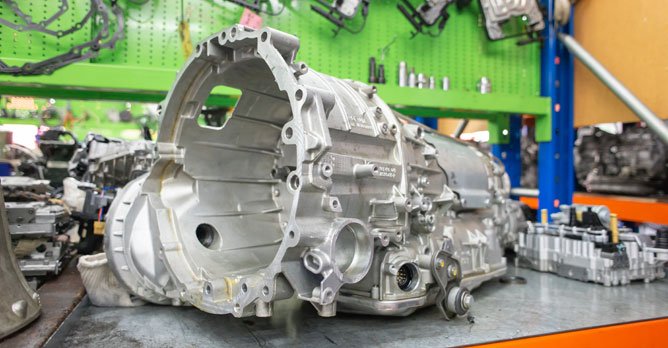
 Shifting gears before stopping may save you a few seconds but will cost you hundreds, if not thousands, in transmission repairsIt also goes without saying that you should never do this in a manual car, where the damage will be more pronounced. After all, where do you think the saying 'grind your gears' came from?
2. Driving off with your handbrake still engaged
You may be wondering how some drivers can be so ignorant to leave their handbrakes on while driving. But you'd be surprised at how many drivers actually forget that their handbrakes are still engaged, especially when it rains.
The reduced friction caused by rain water will make it easier for your car to move off but it will wear out your brake pads relatively quickly if you leave your handbrake up.
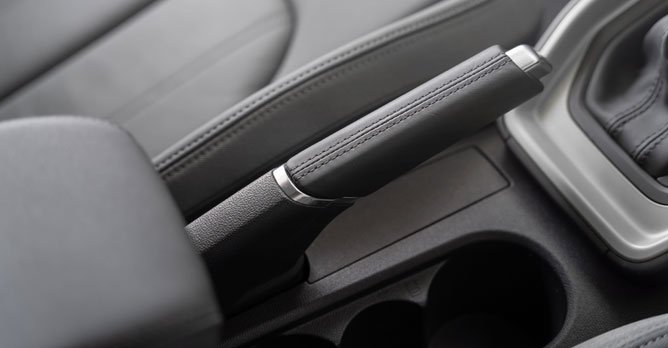 A good rule of thumb is 'all the way up, all the way down' when using your handbrake
3. Filling up only when your fuel tank hits reserve
Waiting for your fuel gauge needle to hit reserve before paying a visit to the petrol station can cause more problems for you than you expected. Leaving it till the eleventh hour will not only stress you out at times (think traffic jam at the Causeway), but will also make your fuel pump work overtime and cause wear and tear. In case you haven't noticed, fuel pumps aren't exactly cheap.
And since fuel isn't 100% 'clean', it leaves behind residue and contaminants in your fuel tank, which will circulate your engine and bring all that nastiness to other areas of your car.
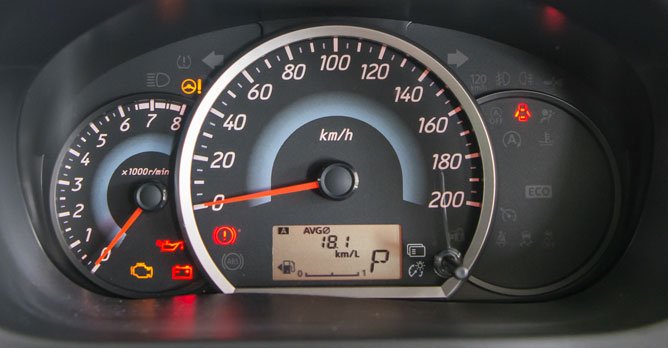
Fill up your fuel tank before it goes empty and you'll avoid the circulation of nasty contaminants
4. Inflating your tyres while they're hot
We learn from a young age that when an object heats up, it expands. The same goes for the air in your tyres. Inflating your tyres after a long drive isn't recommended as the expanded air within them will give your air pump/monitor inaccurate pressure readings.
Since the air expands, your air pump will get a higher reading than usual and you'll end up with underinflated tyres once they cool down. Instead of inflating your tyres after a long drive, make it the first thing you do in the morning.
This way, your tyres will remain relatively cool once you pull into a petrol station and you'll get a more accurate PSI reading, or kPa, whichever you prefer.
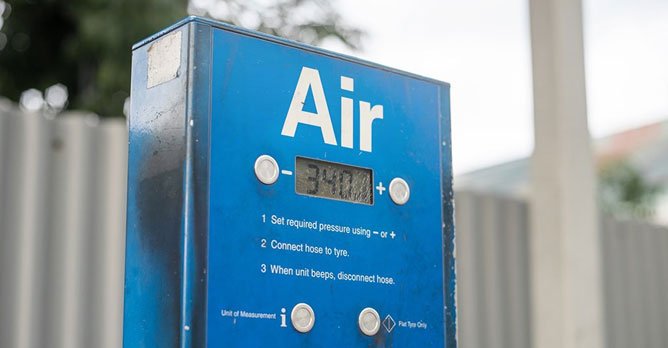 Inflating your tyres while they're hot will give you inaccurate readings
5. Resting your left foot on the brake pedal while accelerating
Resting your left foot on the brake pedal while accelerating with the right is like trying to swim against the current, which isn't exactly the smartest idea.
Not only does this slow your vehicle down, it also causes excessive amounts of brake fade, which, in turn, leads to a higher number of brake pad replacements over time.
6. Slamming your steering to either side when performing a full-lock
We get it, you like it hard and fast. But don't take it out on your steering wheel, it hasn't done anything to offend you. It's completely fine to turn the wheel fast, but slamming it from end to end is entirely unnecessary.
Constantly banging your wheel to either side will mess up your steering rack and wheel alignment over time, which equates to more repairs and higher costs in the long run. Be gentle with your steering and your car, as well as your wallet, will thank you in the long run.
7. Using water to fill up your coolant reservoir
"I don't need to waste money on coolant, water will do just fine." Sound familiar? If this is you, stop. Right now.
1. Shifting gears before coming to a complete stop
It may not be physically possible for you to shift gears from Drive to Park or Reverse while you're on the move in some modern automatic cars but for the most part, it's not a good idea to do so in any car.
Automatic transmissions are made up of clutch plates, bands, locking pins, and other moving parts that can wear out more easily if you don't treat them with some tender loving care.
Shifting gears while on the move will place unnecessary stress on these intricate components and will, over time, wear them out or even damage them.
2. Driving off with your handbrake still engaged
You may be wondering how some drivers can be so ignorant to leave their handbrakes on while driving. But you'd be surprised at how many drivers actually forget that their handbrakes are still engaged, especially when it rains.
The reduced friction caused by rain water will make it easier for your car to move off but it will wear out your brake pads relatively quickly if you leave your handbrake up.
3. Filling up only when your fuel tank hits reserve
Waiting for your fuel gauge needle to hit reserve before paying a visit to the petrol station can cause more problems for you than you expected. Leaving it till the eleventh hour will not only stress you out at times (think traffic jam at the Causeway), but will also make your fuel pump work overtime and cause wear and tear. In case you haven't noticed, fuel pumps aren't exactly cheap.
And since fuel isn't 100% 'clean', it leaves behind residue and contaminants in your fuel tank, which will circulate your engine and bring all that nastiness to other areas of your car.
Fill up your fuel tank before it goes empty and you'll avoid the circulation of nasty contaminants
4. Inflating your tyres while they're hot
We learn from a young age that when an object heats up, it expands. The same goes for the air in your tyres. Inflating your tyres after a long drive isn't recommended as the expanded air within them will give your air pump/monitor inaccurate pressure readings.
Since the air expands, your air pump will get a higher reading than usual and you'll end up with underinflated tyres once they cool down. Instead of inflating your tyres after a long drive, make it the first thing you do in the morning.
This way, your tyres will remain relatively cool once you pull into a petrol station and you'll get a more accurate PSI reading, or kPa, whichever you prefer.
5. Resting your left foot on the brake pedal while accelerating
Resting your left foot on the brake pedal while accelerating with the right is like trying to swim against the current, which isn't exactly the smartest idea.
Not only does this slow your vehicle down, it also causes excessive amounts of brake fade, which, in turn, leads to a higher number of brake pad replacements over time.
6. Slamming your steering to either side when performing a full-lock
We get it, you like it hard and fast. But don't take it out on your steering wheel, it hasn't done anything to offend you. It's completely fine to turn the wheel fast, but slamming it from end to end is entirely unnecessary.
Constantly banging your wheel to either side will mess up your steering rack and wheel alignment over time, which equates to more repairs and higher costs in the long run. Be gentle with your steering and your car, as well as your wallet, will thank you in the long run.
7. Using water to fill up your coolant reservoir
"I don't need to waste money on coolant, water will do just fine." Sound familiar? If this is you, stop. Right now.
Using water as a substitute for coolant in a pinch is harmless, but using it constantly will cause your radiator to rust over time and pave the way for overheating issues.
So the next time you're about to pour more water into your coolant reservoir, don't. Use, you know, proper coolant.
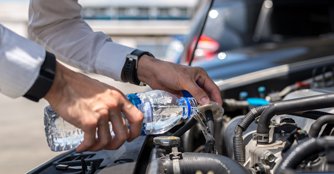 Water is fine for emergencies but always opt for proper coolant when you can
8. Letting your dual-clutch creep forward
Dual-clutch transmissions are really popular these days, and for good reason. They shift so much faster than conventional automatic transmissions and manual gearboxes. The reason for this is, well, the use of two clutches. How they work is, when one clutch engages a gear, the other is already lying in wait with the next gear.
The drawback of the dual-clutch system, however, is that when you creep forward (while waiting in a turning junction, for example), it's in a limbo state where it's constantly half-clutching. This, obviously, will wear out your clutch plate and end up costing you lots of money in the long run. And don't forget you have two clutches, which means double the cost.
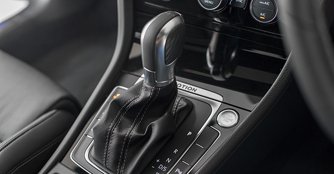 Letting your dual-clutch creep forward will wear out both your clutches, which means double the repair cost
9. Choosing the wrong gear for the job
You've heard the saying 'Drop a gear and disappear'. Yes, downshifting is a technique to pick up speed while on the move but notice that it says 'a gear' and not 'four gears'?
If you do it incorrectly and drop three or four gears, for example, you'll place insane amounts of stress on your engine and may just end up with a seized engine.
Dropping one or two gears is fine for picking up speed, but any more than that is not going to help you go any faster and may set you up for engine detonation.
On the flip side, upshifting too early with insufficient speed will also place unnecessary load on the engine and give you a one-way ticket to scrap city.
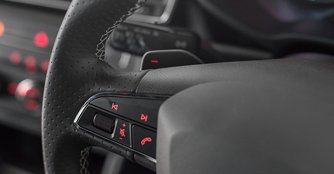 Dropping too many gears at once is a one-way ticket to scrap city
10. Launching your automatic car by revving in Neutral and shifting to Drive
If your car doesn't come with launch control, you may have heard of this 'hack'. Leave your transmission in Neutral, hold your accelerator down, then shift to Drive. And although it may achieve similar results, what goes on under the hood is anything but.
You see, cars equipped with launch control are designed to maintain approximately 4,000rpm and shift gears automatically. Those that don't come with launch control, however, aren't. The clutches and bands in these cars' transmissions are placed under huge amounts of mechanical stress due to the abrupt mashing of a stationary clutch plate with a high-revving engine.
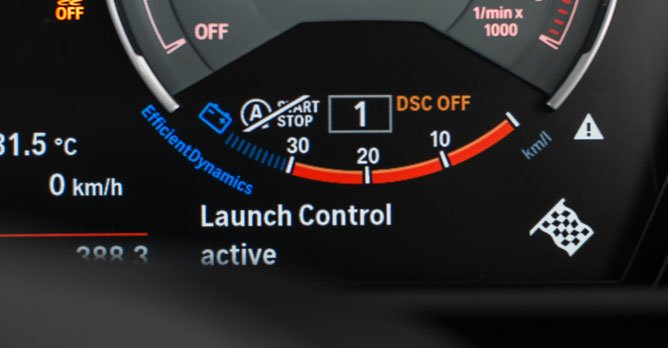
Cars with a dedicated launch control mode are calibrated to limit the stress inflicted on the transmission
11. Overloading your car with too many passengers or too much cargo
Overloading your vehicle with too many passengers or cargo won't just get you into trouble with the law, but will also force your suspension to work extra hard to deal with the added weight. This not only causes it to work at sub-optimal levels, but also sends jolts up your spine every time you hit a bump or a pothole.
Over time, your suspension will lose its effectiveness and you'll feel like you're on a bouncy castle instead of in a luxury sedan. This, in case you haven't already noticed, will inevitably lead to pretty steep repair costs.
12. Leaving your car in Neutral while waiting at a traffic junction
Many drivers tend to shift to Neutral while waiting at a traffic junction. The main reason being that it saves fuel, which, logically speaking, makes sense. But does it really?
 Don't bother shifting to Neutral while waiting at a traffic junction, it doesn't do much to help fuel economyNo it doesn't. Your RPM actually fluctuates and, in some cases, rises when you shift from Drive to Neutral. Not only does this not help you save fuel, but the fluctuation in RPM also stresses the bands and clutch plates in your gearbox, which, over time, will wear them out.
Here are some related articles that might interest you
5 things you can do to make your tyres last longer
7 ways to reduce car running costs
How to choose the best tyres for your needs
Neglecting these things in your car will cost you a fortune
Must-know tips for cheaper car maintenance
Top 8 car breakdown problems in Singapore
So the next time you're about to pour more water into your coolant reservoir, don't. Use, you know, proper coolant.
8. Letting your dual-clutch creep forward
Dual-clutch transmissions are really popular these days, and for good reason. They shift so much faster than conventional automatic transmissions and manual gearboxes. The reason for this is, well, the use of two clutches. How they work is, when one clutch engages a gear, the other is already lying in wait with the next gear.
The drawback of the dual-clutch system, however, is that when you creep forward (while waiting in a turning junction, for example), it's in a limbo state where it's constantly half-clutching. This, obviously, will wear out your clutch plate and end up costing you lots of money in the long run. And don't forget you have two clutches, which means double the cost.
9. Choosing the wrong gear for the job
You've heard the saying 'Drop a gear and disappear'. Yes, downshifting is a technique to pick up speed while on the move but notice that it says 'a gear' and not 'four gears'?
If you do it incorrectly and drop three or four gears, for example, you'll place insane amounts of stress on your engine and may just end up with a seized engine.
Dropping one or two gears is fine for picking up speed, but any more than that is not going to help you go any faster and may set you up for engine detonation.
On the flip side, upshifting too early with insufficient speed will also place unnecessary load on the engine and give you a one-way ticket to scrap city.
10. Launching your automatic car by revving in Neutral and shifting to Drive
If your car doesn't come with launch control, you may have heard of this 'hack'. Leave your transmission in Neutral, hold your accelerator down, then shift to Drive. And although it may achieve similar results, what goes on under the hood is anything but.
You see, cars equipped with launch control are designed to maintain approximately 4,000rpm and shift gears automatically. Those that don't come with launch control, however, aren't. The clutches and bands in these cars' transmissions are placed under huge amounts of mechanical stress due to the abrupt mashing of a stationary clutch plate with a high-revving engine.
Cars with a dedicated launch control mode are calibrated to limit the stress inflicted on the transmission
11. Overloading your car with too many passengers or too much cargo
Overloading your vehicle with too many passengers or cargo won't just get you into trouble with the law, but will also force your suspension to work extra hard to deal with the added weight. This not only causes it to work at sub-optimal levels, but also sends jolts up your spine every time you hit a bump or a pothole.
Over time, your suspension will lose its effectiveness and you'll feel like you're on a bouncy castle instead of in a luxury sedan. This, in case you haven't already noticed, will inevitably lead to pretty steep repair costs.
12. Leaving your car in Neutral while waiting at a traffic junction
Many drivers tend to shift to Neutral while waiting at a traffic junction. The main reason being that it saves fuel, which, logically speaking, makes sense. But does it really?
Here are some related articles that might interest you
5 things you can do to make your tyres last longer
7 ways to reduce car running costs
How to choose the best tyres for your needs
Neglecting these things in your car will cost you a fortune
Must-know tips for cheaper car maintenance
Top 8 car breakdown problems in Singapore